

ProductPRODUCT
Featured products
Contact Us
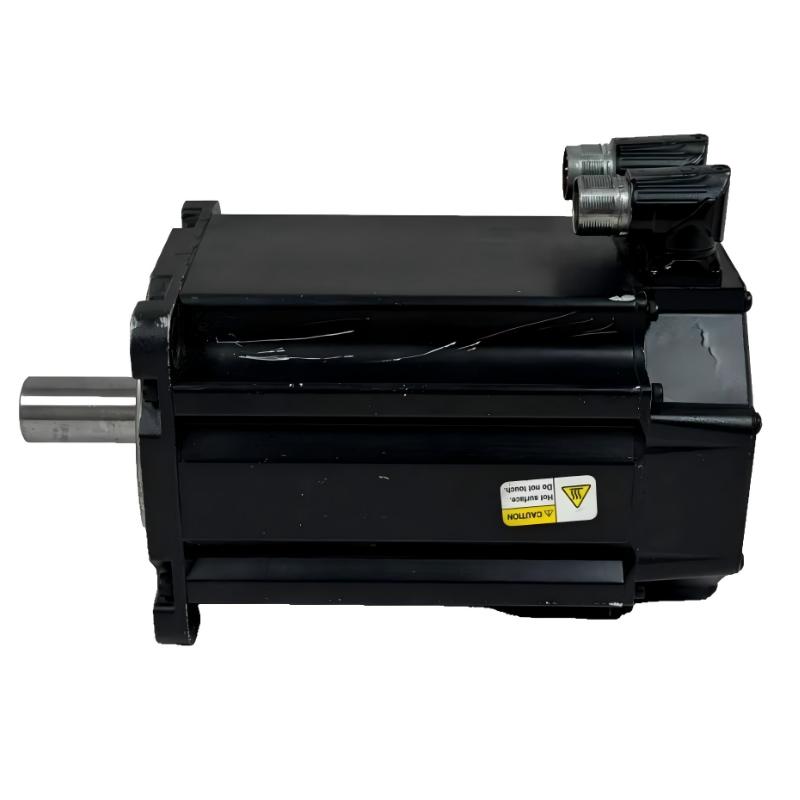
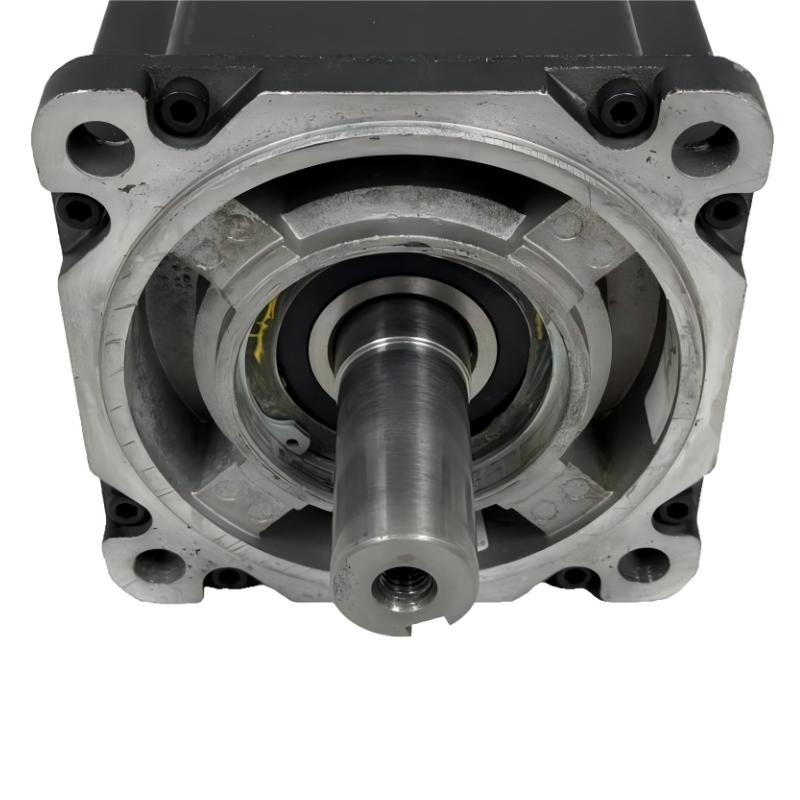
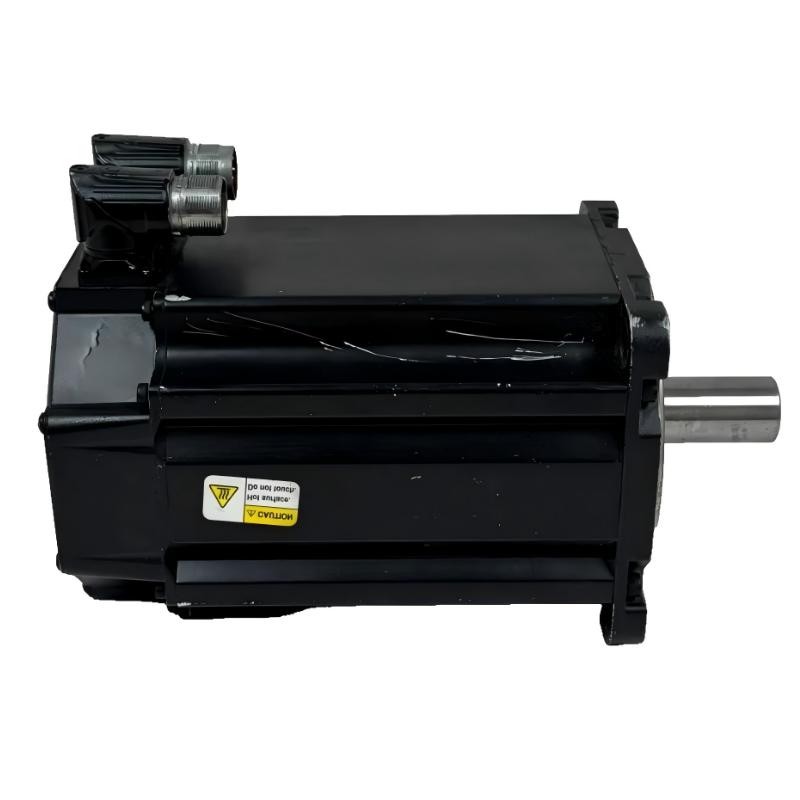
- Allen Bradley
- MPL-B520K-SJ72AA
- Low-Inertia Brushless Servo Motors Product
- USA
- 165 × 133 × 85 mm
- 9.98kg
- Xiamen, China
- New & In Stock
- T/T, PayPal, Western Union
- 1 Year
- 1-3 Working Days
- DHL, UPS, TNT, FedEx and EMS.
- 24-Hour Service
- COO
- 5
Our advantage

Global Logistics
We have a 10-year logistics and express cooperation agreement, so our products can be shipped to any place in the world.

Brand new and original
Our products are imported in bulk from the place of origin. Because of the cooperative relationship, our products are all original and 100% new.

24-hour service
We provide 7*24 hours service to our customers. We will be there whenever you need us.

Price advantage
All our products are priced very favorably because we have our own warehouse and supply.
| Company Information | |||
| [email protected] | |||
| Mobile | +8615980777398 | ||
| +8615980777398 | |||
| 15980777398 |
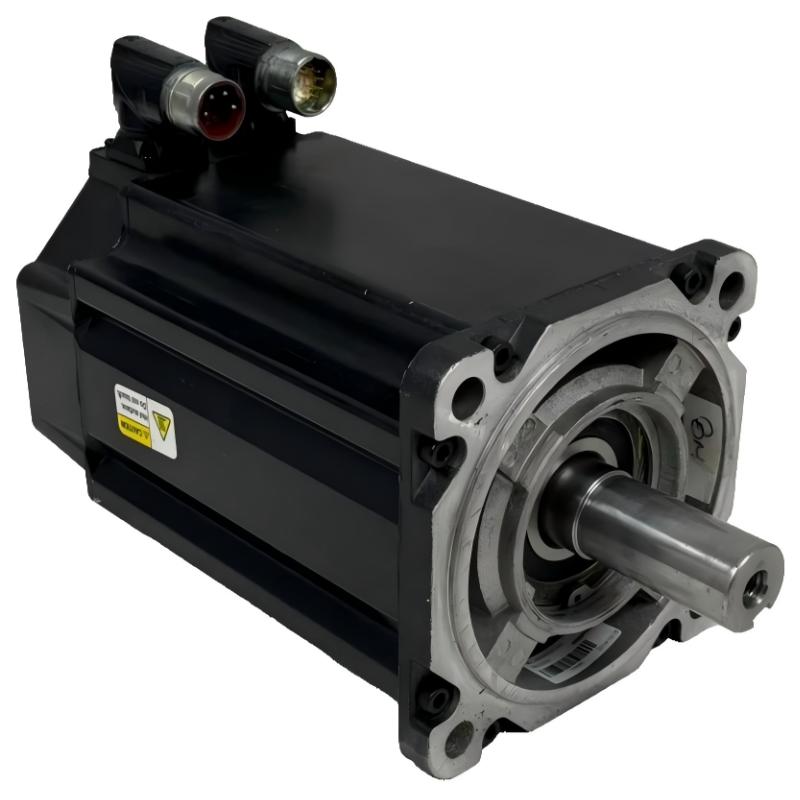
MPL-B520K-SJ72AA Servo Motor
1. Product Overview
The MPL-B520K-SJ72AA is a high-performance low-inertia rotary servo motor designed for industrial motion-control systems where fast response, accurate positioning, stable speed control, and reliable continuous operation are important.
It belongs to the MP-Series MPL low-inertia brushless servo motor family and is configured as a 460 V class motor with a 165 mm frame, 50.8 mm magnetic stack length, and a rated speed of 4000 rpm. The motor uses a single-turn high-resolution encoder, a keyed shaft extension, a right-angle SpeedTEC DIN connector, and a no-brake configuration.
The combination of a relatively compact motor frame, high operating speed, low-inertia rotor design, and high-resolution feedback makes this model suitable for machinery that repeatedly accelerates, decelerates, stops, reverses, and performs precise positioning movements.
The motor is particularly appropriate for automated machinery where the servo system must respond quickly to changing commands without introducing unnecessary mechanical delay.
The MPL-B520K-SJ72AA is therefore not simply a general-purpose rotating motor. It is intended for closed-loop motion applications in which the motor, feedback device, servo drive, mechanical transmission, and motion controller work together as one coordinated system.
2. Brand and Product Series
| Item | Description |
|---|---|
| Brand | Allen-Bradley |
| Product Family | MP-Series |
| Product Series | MPL Low-Inertia Brushless Servo Motors |
| Product Type | AC Rotary Servo Motor |
| Motor Construction | Brushless Permanent-Magnet Servo Motor |
| Voltage Class | 460 V |
| Product Configuration | High-speed, low-inertia servo motor |
| Frame Size | 165 mm |
| Magnetic Stack | 50.8 mm |
| Rated Speed | 4000 rpm |
| Feedback | Single-turn High-Resolution Encoder |
| Shaft | Keyed Shaft Extension |
| Brake | No Brake |
| Connector | SpeedTEC DIN, Right Angle |
| Mounting | IEC Metric |
| Model | MPL-B520K-SJ72AA |
The model belongs to the MPL low-inertia family. The product designation itself identifies the main configuration: frame size, magnetic stack length, speed class, feedback arrangement, shaft configuration, connector arrangement, and brake option.
3. Model Number Explanation
Understanding the model number is useful when selecting a replacement or comparing similar servo motors.
| Model Section | Meaning |
|---|---|
| MPL | Low-inertia brushless servo motor family |
| B | 460 V class |
| 5 | 165 mm frame size |
| 20 | 50.8 mm magnetic stack length |
| K | 4000 rpm speed class |
| S | Single-turn high-resolution encoder |
| J | Keyed shaft extension |
| 7 | SpeedTEC DIN right-angle connector |
| 2 | No brake |
| AA | Product configuration/revision designation |
The important point is that the final letters and numbers are not merely a catalog naming convention. They describe meaningful mechanical and electrical differences between otherwise similar MPL motors.
For example, changing the S feedback designation to a multi-turn configuration changes the feedback behavior. Changing the J shaft designation to a keyless configuration changes the mechanical shaft arrangement. Similarly, brake configurations can alter the overall motor selection and mechanical installation requirements.
4. Main Technical Parameters
The following table summarizes the principal specifications of the MPL-B520K-SJ72AA.
| Parameter | Specification |
|---|---|
| Model | MPL-B520K-SJ72AA |
| Brand | Allen-Bradley |
| Series | MP-Series MPL |
| Motor Type | Low-Inertia Brushless AC Servo Motor |
| Voltage | 460 V class |
| AC System Designation | 480 V AC |
| Frame Size | 165 mm / 6.50 in |
| Magnetic Stack Length | 50.8 mm / 2.0 in |
| Rated Speed | 4000 rpm |
| Feedback Type | Single-Turn High-Resolution Encoder |
| Encoder Information | Absolute single-turn feedback; 1024 Sin/Cos / Hiperface configuration is commonly specified for this model |
| Shaft Type | Keyed Shaft Extension |
| Shaft Seal | No shaft seal |
| Brake | No Brake |
| Connector | SpeedTEC DIN Connector |
| Connector Orientation | Right Angle |
| Connector Rotation | 180° Rotatable |
| Mounting | IEC Metric |
| Mounting Hole Configuration | Free Mounting Holes, Type FF |
| Approx. Weight | 9.98 kg / 22.0 lb |
| Motor Family | Low-Inertia MPL |
| Maximum Listed Speed Class | 4000 rpm |
| Overall Envelope Dimensions | Verify against the mechanical drawing for the exact installation envelope |
| Frame Dimension | 165 mm |
| Stack Dimension | 50.8 mm |
The official product configuration identifies the motor as a 460 V product with a 165 mm frame, 50.8 mm magnetic stack, 4000 rpm rating, single-turn high-resolution encoder, keyed shaft, right-angle rotatable SpeedTEC DIN connector, and no brake.
The commonly listed shipping/product weight is approximately 9.98 kg, or about 22.0 lb.
For mechanical planning, the 165 mm frame and 50.8 mm stack length should not be confused with the complete external envelope of the motor. The actual overall length, shaft projection, connector clearance, mounting dimensions, and installation space should be checked against the mechanical drawing before final machine design.
5. Electrical Characteristics
The motor is designed for high-performance AC servo operation rather than direct connection to a conventional fixed-frequency motor starter.
Its electrical characteristics are intended to work with a compatible servo drive and feedback system. The nominal product description identifies a 460 V armature-voltage class and 480 V AC product designation.
| Electrical Parameter | Specification |
|---|---|
| Model | MPL-B520K-SJ72AA |
| Motor Type | Permanent-Magnet AC Servo Motor |
| Voltage Class | 460 V |
| System Designation | 480 V AC |
| Control Method | Closed-loop servo control |
| Feedback | Single-turn high-resolution encoder |
| Rated Speed | 4000 rpm |
| Rotor Design | Low Inertia |
| Brake | None |
| Connector | SpeedTEC DIN |
| Connector Type | Right-angle, rotatable |
| Mounting | IEC Metric |
A servo motor such as this one is normally selected together with a compatible servo drive rather than evaluated as an independent motor.
The drive controls current, torque, speed, and position according to the requirements of the motion-control application. The encoder continuously supplies feedback to the control system so that commanded motion can be compared with actual motor position and speed.
6. Low-Inertia Motor Design
One of the most important characteristics of the MPL-B520K-SJ72AA is its low-inertia construction.
Low rotor inertia is particularly valuable in applications where the motor needs to change speed quickly.
When a servo motor is commanded to accelerate, the drive must produce sufficient torque not only to move the machine load but also to accelerate the rotating components of the motor itself.
A lower rotor inertia means that less torque is required to change the motor’s own rotational speed. This leaves more of the available motor torque available for accelerating the external load.
This becomes especially useful in machinery that performs repeated indexing cycles.
For example, a packaging machine may accelerate a mechanism, stop it at a specific position, reverse direction, and then repeat the same movement hundreds or thousands of times per operating shift.
A low-inertia motor is well suited to this type of motion profile.
7. 4000 RPM High-Speed Operation
The 4000 rpm speed rating is another major feature of this motor.
High rotational speed can provide several benefits.
The first is the ability to complete motion cycles quickly.
The second is the ability to achieve higher linear or rotary machine speeds without requiring an excessively large mechanical transmission ratio.
The third is improved productivity in machines where cycle time directly affects output.
However, high motor speed should always be considered together with the mechanical load, coupling, gearbox, belt system, screw mechanism, and bearings.
The motor may be capable of high rotational speed, but the complete mechanical system must also be capable of operating safely and reliably at the selected speed.
8. Single-Turn High-Resolution Encoder
The MPL-B520K-SJ72AA uses a single-turn high-resolution encoder.
Feedback is one of the most important components of a servo motor system.
A servo controller needs to know the actual position and movement of the motor. The encoder provides this information.
The single-turn configuration is especially suitable for applications where the machine’s operating position can be established within one mechanical revolution or where the control system manages the machine’s absolute position through the overall motion-control architecture.
The high-resolution feedback arrangement also helps the servo drive detect small changes in motor position and speed.
This supports smooth operation, accurate positioning, controlled acceleration and deceleration, and stable closed-loop motion.
9. Keyed Shaft Configuration
The motor is equipped with a keyed shaft extension.
A keyed shaft provides a positive mechanical interface between the motor shaft and a suitable coupling, pulley, gear, or other mechanical transmission component.
This configuration is useful where mechanical torque transmission requires a keyed connection.
The keyway helps prevent relative rotational movement between the shaft and the mounted component when properly assembled.
For machine builders, this can make the motor easier to integrate into existing mechanical designs that already use keyed couplings or keyed transmission components.
Because the motor does not include a shaft seal in this configuration, the installation environment should also be considered carefully.
Where dust, liquid, coolant, oil, or other contaminants may be present, the complete mechanical installation should provide appropriate protection.
10. No-Brake Configuration
The MPL-B520K-SJ72AA is supplied without a motor brake.
A no-brake configuration is often appropriate for horizontal-axis machinery where the mechanical load does not require the motor to hold position when servo power is removed.
Removing the brake can also simplify the motor configuration and reduce the number of components associated with the motor.
However, a no-brake motor should not automatically be selected for vertical or gravity-loaded applications.
If a vertical axis could move when motor torque is removed, the machine may require a separate holding mechanism or a motor configuration specifically intended for that application.
This is an important selection point when replacing another servo motor.
11. SpeedTEC DIN Right-Angle Connector
The motor uses a SpeedTEC DIN connector with a right-angle configuration and 180-degree rotation capability.
The right-angle connector can be useful in machines where straight cable exits would interfere with guards, panels, neighboring motors, or other mechanical components.
The 180-degree rotatable configuration gives the installer additional flexibility when routing the motor and feedback cables.
This can be especially helpful in compact machine assemblies.
Good cable routing is important for servo applications because power and feedback wiring must be installed correctly to reduce the possibility of electrical interference and mechanical cable damage.
12. Mechanical Dimensions and Weight
The primary dimensional characteristics of the model are the 165 mm frame size and 50.8 mm magnetic stack length.
| Mechanical Parameter | Value |
|---|---|
| Model | MPL-B520K-SJ72AA |
| Frame Size | 165 mm |
| Frame Size in Inches | 6.50 in |
| Magnetic Stack Length | 50.8 mm |
| Magnetic Stack in Inches | 2.0 in |
| Shaft Configuration | Keyed |
| Shaft Seal | None |
| Mounting Standard | IEC Metric |
| Mounting Hole Style | Free Mounting Holes / Type FF |
| Connector Position | Right Angle |
| Connector Rotation | 180° |
| Brake | None |
| Approx. Product Weight | 9.98 kg |
| Approx. Weight in Pounds | 22.0 lb |
The 9.98 kg figure is a useful value for machine weight calculations and handling considerations.
For cabinet, machine-frame, and motor-mount calculations, the complete motor envelope should be checked separately. Frame size and stack length alone do not define the complete external dimensions.
13. Typical Applications
The MPL-B520K-SJ72AA is suitable for industrial automation equipment requiring accurate and repeatable servo motion.
Typical applications include:
CNC and Machine Tools
The motor can be used in machine-tool motion systems where controlled acceleration, precise positioning, and repeatable movement are required.
Typical examples include rotary axes, indexing mechanisms, tool-handling systems, and auxiliary machine axes.
Packaging Machinery
Packaging equipment often requires fast repetitive motion.
Pick-and-place mechanisms, indexing systems, sealing mechanisms, cutting systems, labeling equipment, and product-positioning mechanisms can benefit from the motor’s low-inertia characteristics and high-speed operation.
Material Handling
Automated material-handling equipment can use servo motors for controlled positioning and synchronized movement.
Examples include conveyors, indexing stations, transfer mechanisms, and automated positioning systems.
Robotics and Automation Equipment
Servo motors are commonly used in automated mechanisms that require controlled movement.
The high-speed characteristics of this model can be useful where rapid repetitive movement is more important than simple continuous rotation.
Printing Machinery
Printing and converting equipment often requires coordinated speed and position control.
Servo motors can provide the controlled acceleration, deceleration, and synchronization required by web-handling and positioning mechanisms.
Semiconductor and Electronics Equipment
Precision automation systems often require repeatable positioning and rapid response.
The low-inertia design and high-resolution feedback configuration are suitable characteristics for this type of machinery.
Assembly Machines
Automated assembly equipment frequently performs repeated positioning operations.
A servo motor allows the machine controller to coordinate position, velocity, and acceleration throughout each cycle.
14. Main Product Advantages
14.1 Low-Inertia Response
The low-inertia motor design is one of the most significant advantages of this model.
It allows the motor to respond quickly to changes in commanded speed and position.
This is valuable in applications where short cycle times are important.
14.2 High-Speed Operation
The 4000 rpm rating gives the motor a strong speed capability for high-cycle industrial machinery.
This can be advantageous when the machine needs rapid movement or high productivity.
14.3 High-Resolution Feedback
The single-turn high-resolution encoder provides detailed position feedback to the servo control system.
This supports accurate positioning and stable closed-loop control.
14.4 Keyed Shaft
The keyed shaft provides a familiar mechanical connection method for couplings and other machine components.
This can make the motor easier to integrate into machinery designed around keyed mechanical transmission components.
14.5 Flexible Connector Orientation
The right-angle SpeedTEC DIN connector can be rotated through 180 degrees.
This provides additional flexibility for cable routing and can be particularly useful in compact machine layouts.
14.6 No-Brake Simplicity
The no-brake configuration is suitable for applications where a holding brake is not required.
It provides a straightforward motor configuration without adding brake-related components.
14.7 IEC Metric Mounting
The IEC metric mounting arrangement makes the motor suitable for machine designs based around metric mechanical dimensions.
This is useful for many international industrial-machine applications.
15. Five Related Models in the Same or Closely Related MPL Family
The following models are useful when comparing alternatives around the MPL-B520K-SJ72AA configuration.
| Model | Series / Type | Voltage Class | Frame | Stack Length | Speed | Feedback | Shaft | Brake | Approx. Weight |
|---|---|---|---|---|---|---|---|---|---|
| MPL-B520K-SJ72AA | MPL Low-Inertia | 460 V | 165 mm | 50.8 mm | 4000 rpm | Single-turn high-resolution | Keyed | No | 9.98 kg |
| MPL-B520K-SJ74AA | MPL Low-Inertia | 460 V | 165 mm | 50.8 mm | 4000 rpm | Single-turn high-resolution | Keyed | Brake configuration | Approx. 11–12 kg* |
| MPL-B520K-MK72AA | MPL Low-Inertia | 460 V class | 165 mm | 50.8 mm | 4000 rpm | Multi-turn absolute | Keyless | No | Approx. 10 kg* |
| MPL-B520K-MK74AA | MPL Low-Inertia | 460 V class | 165 mm | 50.8 mm | 4000 rpm | Multi-turn absolute | Keyless | Brake configuration | Approx. 12 kg* |
| MPL-B540K-MK72AA | MPL Low-Inertia | 460 V class | 165 mm | 101.6 mm | 4000 rpm | Multi-turn absolute | Keyless | No | Approx. 15 kg* |
*Weight values for the comparison models can vary with the exact factory configuration and should be confirmed against the applicable mechanical specification before procurement.
The MPL-B520K-SJ72AA is the most straightforward choice when a keyed shaft and single-turn feedback are required.
The MPL-B520K-MK72AA is more appropriate when multi-turn feedback and a keyless shaft are preferred.
The longer-stack MPL-B540K configuration is useful when a higher torque class is required while retaining the general 165 mm frame concept.
The model family comparison shows that the MPL range offers multiple combinations of feedback, shaft configuration, brake configuration, and magnetic stack length.
16. Five Popular Models for Broader Brand Comparison
The following models are useful for broader comparison when selecting a servo motor for industrial automation equipment.
| Model | Product Family | Frame Size | Stack / Motor Class | Speed | Feedback | Shaft | Brake | Typical Use |
|---|---|---|---|---|---|---|---|---|
| MPL-B520K-SJ72AA | MP-Series MPL | 165 mm | 50.8 mm | 4000 rpm | Single-turn | Keyed | No | High-speed precision motion |
| MPL-B4530K-MJ72AA | MP-Series MPL | 130 mm | 76.2 mm | 4000 rpm | Multi-turn | Keyed | No | Compact high-speed axes |
| MPL-B4540F-MK72AA | MP-Series MPL | 130 mm | 101.6 mm | 3000 rpm | Multi-turn | Keyless | No | Higher-torque compact machines |
| MPL-B540K-MJ72AA | MP-Series MPL | 165 mm | 101.6 mm | 4000 rpm | Multi-turn | Keyed | No | Higher-output motion systems |
| MPL-B560F-MJ74AA | MP-Series MPL | Larger frame | Extended stack | 3000 rpm class | Multi-turn | Keyed | Brake configuration | High-load automation |
The five models above represent different approaches to selecting a servo motor.
The MPL-B520K-SJ72AA is particularly attractive when high speed and low inertia are more important than maximum torque capacity.
A longer-stack motor such as an MPL-B540K or larger model becomes more appropriate when the machine requires additional torque.
A smaller-frame model can be more attractive when installation space is limited.
17. MPL-B520K-SJ72AA vs. Similar Configurations
| Feature | MPL-B520K-SJ72AA | MPL-B520K-MK72AA | MPL-B520K-MK74AA |
|---|---|---|---|
| Frame | 165 mm | 165 mm | 165 mm |
| Stack | 50.8 mm | 50.8 mm | 50.8 mm |
| Speed | 4000 rpm | 4000 rpm | 4000 rpm |
| Feedback | Single-turn | Multi-turn | Multi-turn |
| Shaft | Keyed | Keyless | Keyless |
| Brake | No | No | Brake |
| Main Advantage | Simple high-speed positioning | Multi-turn position capability | Multi-turn + holding brake |
| Suitable for | Standard precision axes | Applications needing multi-turn feedback | Vertical/holding applications where brake is required |
The selection between these models should be based on the actual machine requirements rather than simply choosing the newest or most complex configuration.
If the machine does not require multi-turn feedback, the single-turn version can be a practical choice.
If the machine needs position information over multiple mechanical revolutions, a multi-turn version is generally more appropriate.
If the machine has a vertical axis or another load that must be mechanically held when power is removed, a brake-equipped configuration may be preferable.
18. Single-Turn Encoder vs. Multi-Turn Encoder
The feedback configuration is an important part of servo motor selection.
A single-turn encoder primarily provides absolute position information within one motor revolution.
A multi-turn encoder extends position tracking across multiple revolutions.
This difference becomes particularly important in applications involving ball screws, gearboxes, rotary tables, or mechanisms that require the control system to distinguish between multiple revolutions of the motor.
For simple rotary positioning or systems where the controller establishes machine position through a homing sequence, the single-turn configuration may be entirely suitable.
For more complex absolute-position applications, the multi-turn configuration may offer an advantage.
19. Keyed Shaft vs. Keyless Shaft
The keyed-shaft configuration is one of the defining mechanical features of the MPL-B520K-SJ72AA.
| Feature | Keyed Shaft | Keyless Shaft |
|---|---|---|
| Mechanical Connection | Key and mating hub/coupling | Friction or clamping connection |
| Positive Torque Transmission | Excellent when correctly installed | Excellent when correctly installed |
| Existing Keyed Machinery | Very suitable | May require mechanical modification |
| Installation Approach | Familiar and conventional | Often more flexible for precision coupling |
| Main Advantage | Simple torque transmission | Clean mechanical coupling arrangement |
When replacing an existing motor, shaft configuration should be checked carefully.
A motor with the correct electrical rating but the wrong shaft arrangement may not be a practical drop-in replacement.
20. Typical Machine Integration
A typical servo system using this motor may include:
- Motion controller
- Servo drive
- Servo motor
- Encoder feedback connection
- Motor power connection
- Mechanical coupling
- Gearbox or transmission, if required
- Machine load
- Safety circuit
- Appropriate grounding and cable management
The motor itself is only one component of the complete motion system.
The servo drive must be correctly matched to the motor’s voltage class, current requirements, feedback system, and operating characteristics.
Mechanical coupling must also be selected according to torque, speed, shaft diameter, alignment, and allowable radial and axial loads.
21. Application in CNC Equipment
CNC equipment is one of the types of machinery that can benefit from the characteristics of this motor.
CNC systems require accurate motion control and repeatable positioning.
The 4000 rpm speed class can support rapid axis movement, while the low-inertia rotor design can help the axis respond quickly to command changes.
For high-speed positioning, the motor’s encoder feedback allows the servo control system to continuously monitor actual motor position.
The exact suitability for a CNC axis depends on the machine’s axis mass, screw pitch, reduction ratio, acceleration requirement, cutting force, and required positioning accuracy.
22. Application in Packaging Machines
Packaging machinery is another strong application area.
Packaging machines frequently use rapid repetitive movements.
The machine may need to pick a product, move it to a new position, stop, release it, and immediately repeat the process.
Low inertia is valuable in this environment because the motor can respond quickly to acceleration and deceleration commands.
The 4000 rpm operating class can also help support high machine cycle rates.
The keyed shaft can simplify integration with conventional mechanical transmission components.
23. Application in Conveyor and Indexing Systems
Servo-controlled conveyors differ from simple fixed-speed conveyor motors because they can control position and speed much more precisely.
The motor can be commanded to move a specific distance, stop at a specific position, synchronize with another axis, and then continue.
This is particularly useful for indexing conveyors, automated inspection stations, filling machines, and transfer systems.
The single-turn high-resolution feedback configuration supports closed-loop position control for these applications.
24. Application in Assembly Automation
Automated assembly equipment often requires several axes to operate in coordination.
One motor may control a linear slide.
Another may control a rotary table.
A third motor may operate a pick-and-place mechanism.
The low-inertia characteristics of the MPL motor family are useful where these movements must occur rapidly and repeatedly.
The 165 mm frame size also provides a substantial motor platform while maintaining a relatively compact mechanical arrangement compared with larger servo motor classes.
25. Application in Robotics and Pick-and-Place Machinery
Pick-and-place equipment is particularly sensitive to acceleration and deceleration performance.
A large amount of time can be lost if an axis accelerates too slowly or takes too long to settle.
A low-inertia servo motor can help improve dynamic response.
The high-speed capability of the MPL-B520K-SJ72AA makes it suitable for mechanisms that perform repeated high-speed movements.
Actual robot-axis suitability still depends on the robot structure, reduction mechanism, payload, reflected inertia, and required acceleration.
26. Product Advantages in High-Cycle Machinery
For high-cycle equipment, the motor’s most useful characteristics are its low inertia, 4000 rpm speed capability, high-resolution feedback, and servo-oriented construction.
These characteristics allow the motor to respond rapidly to repeated command changes.
In a machine running thousands of cycles per day, even a small improvement in acceleration and settling behavior can have a noticeable effect on overall productivity.
This is why low-inertia servo motors are commonly selected for packaging, assembly, indexing, and high-speed automation applications.
27. Product Advantages in Precision Positioning
Precision positioning is another important application area.
The encoder provides feedback to the servo system, allowing the controller to compare commanded position with actual motor position.
This closed-loop arrangement is fundamentally different from a simple open-loop motor system.
When correctly configured, the servo system can compensate for changing loads and maintain controlled motion.
The actual positioning accuracy of the complete machine depends on more than the motor.
Mechanical backlash, coupling stiffness, gearbox accuracy, screw accuracy, bearing condition, machine vibration, servo tuning, and external load all influence final positioning performance.
28. Advantages of the 165 mm Frame Configuration
The 165 mm frame gives the motor a substantial mechanical platform suitable for industrial machinery.
At the same time, the 50.8 mm magnetic stack represents a relatively short stack within the 165 mm frame family.
This makes the B520K configuration attractive for applications where speed and dynamic response are important.
When additional torque is required, a longer magnetic stack from the same general family may be considered.
This allows machine designers to select between speed-oriented and torque-oriented motor configurations while retaining a related mechanical platform.
29. Weight Considerations
The approximate weight of the MPL-B520K-SJ72AA is 9.98 kg.
For machine design, motor weight should not be ignored.
This is especially important for moving axes.
If the motor is mounted directly to a moving carriage, its weight becomes part of the moving mass.
For fixed machine axes, the weight affects the mounting bracket and structural frame.
A rigid mounting structure helps prevent unwanted vibration and mechanical resonance.
The motor should therefore be mounted on a structure capable of supporting the motor mass as well as the dynamic forces generated during acceleration and deceleration.
30. Important Selection Factors
Before replacing another servo motor with the MPL-B520K-SJ72AA, several parameters should be checked.
Voltage
The drive must be compatible with the motor’s 460 V class.
Speed
The required machine speed should be compared with the 4000 rpm motor rating.
Torque
The continuous and peak torque requirements of the application should be checked against the motor’s actual operating point.
Inertia
The motor inertia and reflected load inertia should be considered together.
Feedback
The machine controller and servo drive must support the motor’s feedback configuration.
Shaft
The existing coupling must be compatible with the keyed shaft.
Brake
If the existing motor has a brake, a no-brake replacement may not be appropriate for the machine.
Connector
Cable and connector arrangements must be checked before installation.
Mounting
The 165 mm frame and IEC metric mounting arrangement must match the machine structure.
Environmental Conditions
Temperature, humidity, dust, coolant, oil, vibration, and other environmental factors should be evaluated before installation.
31. Recommended Selection by Application
| Application Requirement | Recommended Configuration |
|---|---|
| High-speed positioning | MPL-B520K-SJ72AA |
| Keyed mechanical transmission | MPL-B520K-SJ72AA |
| Single-turn feedback | MPL-B520K-SJ72AA |
| No motor brake required | MPL-B520K-SJ72AA |
| Multi-turn absolute position | MPL-B520K-MK72AA |
| Multi-turn + brake | MPL-B520K-MK74AA |
| Higher torque requirement | MPL-B540K family |
| Smaller machine envelope | MPL-B45xx family |
| High-load industrial axis | Larger MPL frame/stack configuration |
32. Product Advantages at a Glance
| Advantage | Description |
|---|---|
| Low Inertia | Supports fast acceleration and deceleration |
| 4000 rpm | Suitable for high-speed motion |
| High-Resolution Feedback | Supports precise closed-loop control |
| Single-Turn Encoder | Suitable for many standard absolute-position applications |
| Keyed Shaft | Convenient for conventional mechanical transmission |
| No Brake | Simple configuration for applications without holding-brake requirements |
| Right-Angle Connector | Useful in compact machine layouts |
| 180° Connector Rotation | Provides cable-routing flexibility |
| 165 mm Frame | Suitable for substantial industrial motion applications |
| 50.8 mm Stack | Balanced high-speed motor configuration |
| IEC Metric Mounting | Convenient for metric machine construction |
| Approx. 9.98 kg | Reasonable motor mass for its frame class |
33. Final Technical Specification
| Category | Specification |
|---|---|
| Model | MPL-B520K-SJ72AA |
| Brand | Allen-Bradley |
| Family | MP-Series |
| Series | MPL Low-Inertia Brushless Servo Motors |
| Motor Type | AC Rotary Servo Motor |
| Voltage Class | 460 V |
| AC Designation | 480 V AC |
| Frame Size | 165 mm / 6.50 in |
| Magnetic Stack | 50.8 mm / 2.0 in |
| Speed | 4000 rpm |
| Feedback | Single-turn high-resolution encoder |
| Feedback Type | Absolute single-turn |
| Shaft | Keyed shaft extension |
| Shaft Seal | No shaft seal |
| Brake | No brake |
| Connector | SpeedTEC DIN |
| Connector Style | Right angle |
| Connector Rotation | 180° rotatable |
| Mounting | IEC Metric |
| Mounting Holes | Free mounting holes, Type FF |
| Approx. Weight | 9.98 kg |
| Approx. Weight | 22.0 lb |
| Primary Application | Industrial motion control |
| Typical Machinery | CNC, packaging, assembly, indexing, automation, material handling |
| Main Performance Characteristic | High-speed, low-inertia servo motion |
The core product configuration is confirmed by the model designation: 460 V class, 165 mm frame, 50.8 mm magnetic stack, 4000 rpm, single-turn high-resolution feedback, keyed shaft, right-angle rotatable SpeedTEC DIN connector, and no brake.
34. Conclusion
The MPL-B520K-SJ72AA is a high-speed, low-inertia servo motor intended for industrial motion-control applications where rapid response and repeatable positioning are important.
Its combination of a 165 mm frame, 50.8 mm magnetic stack, 4000 rpm speed capability, single-turn high-resolution encoder, keyed shaft, right-angle rotatable connector, and no-brake configuration gives it a practical balance between dynamic performance and straightforward mechanical integration.
The model is particularly well suited to machinery that performs repeated acceleration and deceleration, high-speed indexing, precision positioning, and synchronized motion.
For packaging equipment, automated assembly systems, CNC-related machinery, indexing mechanisms, material-handling equipment, and other automated production machines, the low-inertia construction can be especially useful when fast response is a priority.
The approximately 9.98 kg motor weight should also be considered during machine-frame design and moving-axis calculations.
When selecting this motor as a replacement, the most important checks are not limited to voltage and speed. The feedback type, shaft design, brake configuration, mounting dimensions, connector arrangement, mechanical load, inertia ratio, required torque, and operating environment should all be checked together.
Overall, the MPL-B520K-SJ72AA is best viewed as a high-speed industrial servo motor for demanding closed-loop motion applications, particularly where low inertia, rapid response, accurate feedback, and reliable mechanical integration are more important than having a built-in holding brake.