

ProductPRODUCT
Featured products
Contact Us
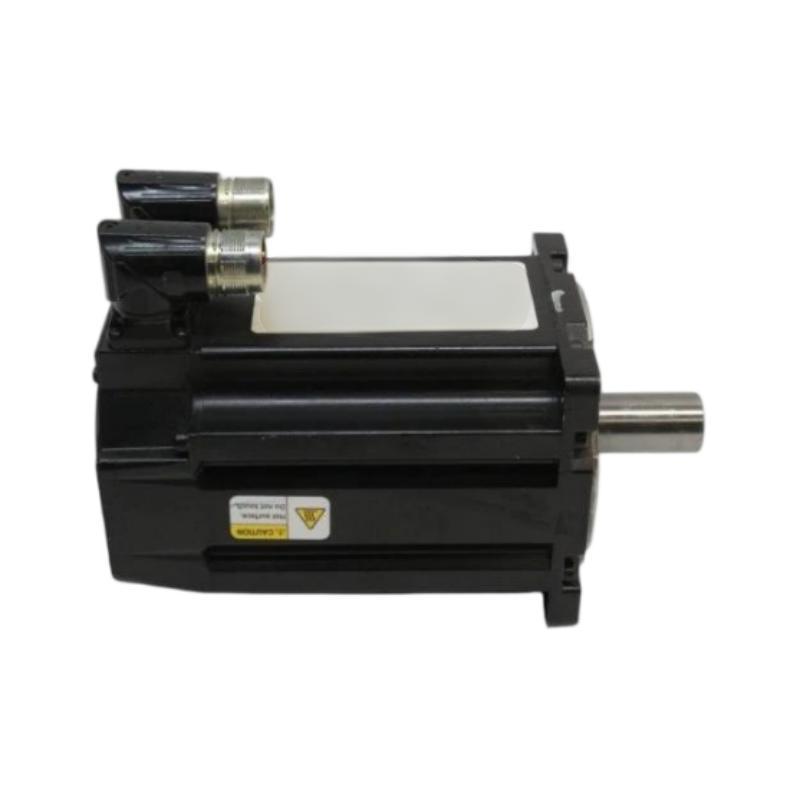
- Allen Bradley
- MPL-B4530K-MK74AA
- Servo Motor
- USA
- 130 mm
- 7.3 kg
- Xiamen, China
- New & In Stock
- T/T, PayPal, Western Union
- 1 Year
- 1-3 Working Days
- DHL, UPS, TNT, FedEx and EMS.
- 24-Hour Service
- COO
- 1
Our advantage

Global Logistics
We have a 10-year logistics and express cooperation agreement, so our products can be shipped to any place in the world.

Brand new and original
Our products are imported in bulk from the place of origin. Because of the cooperative relationship, our products are all original and 100% new.

24-hour service
We provide 7*24 hours service to our customers. We will be there whenever you need us.

Price advantage
All our products are priced very favorably because we have our own warehouse and supply.
| Company Information | |||
| [email protected] | |||
| Mobile | +8615980777398 | ||
| +8615980777398 | |||
| 15980777398 |
1. Product Overview
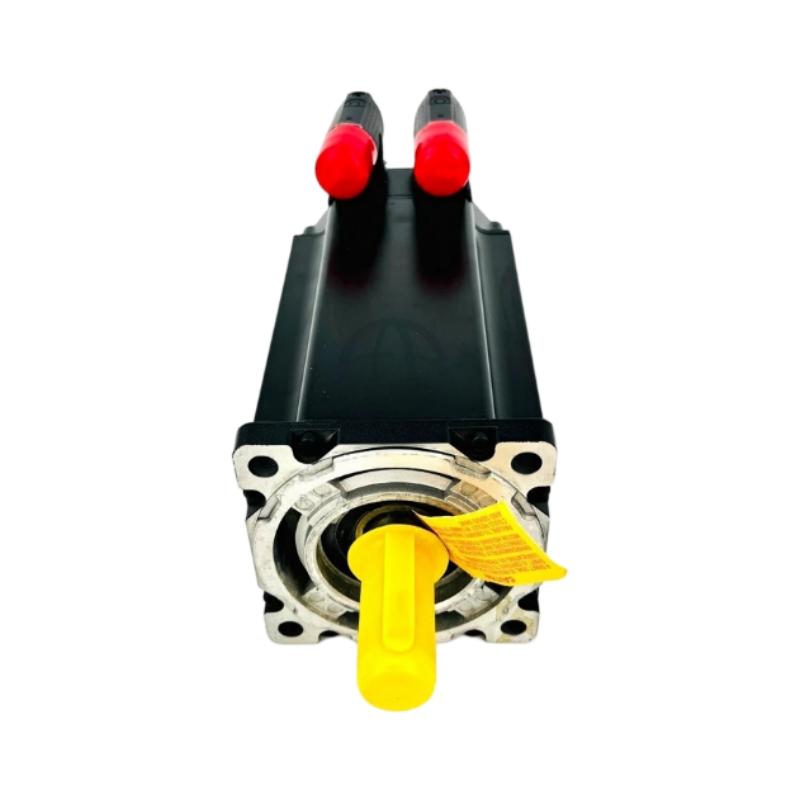
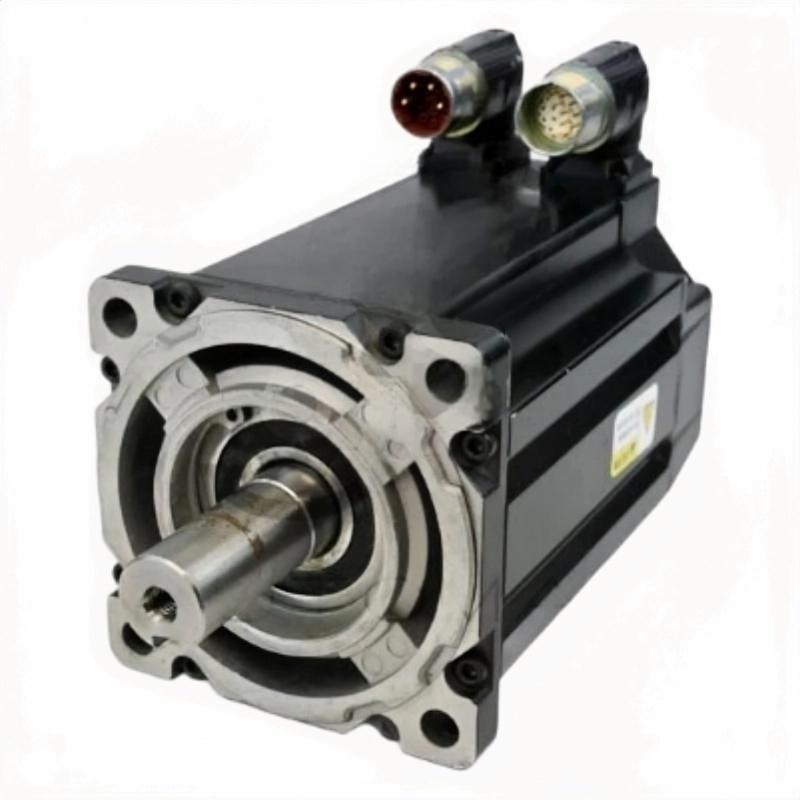
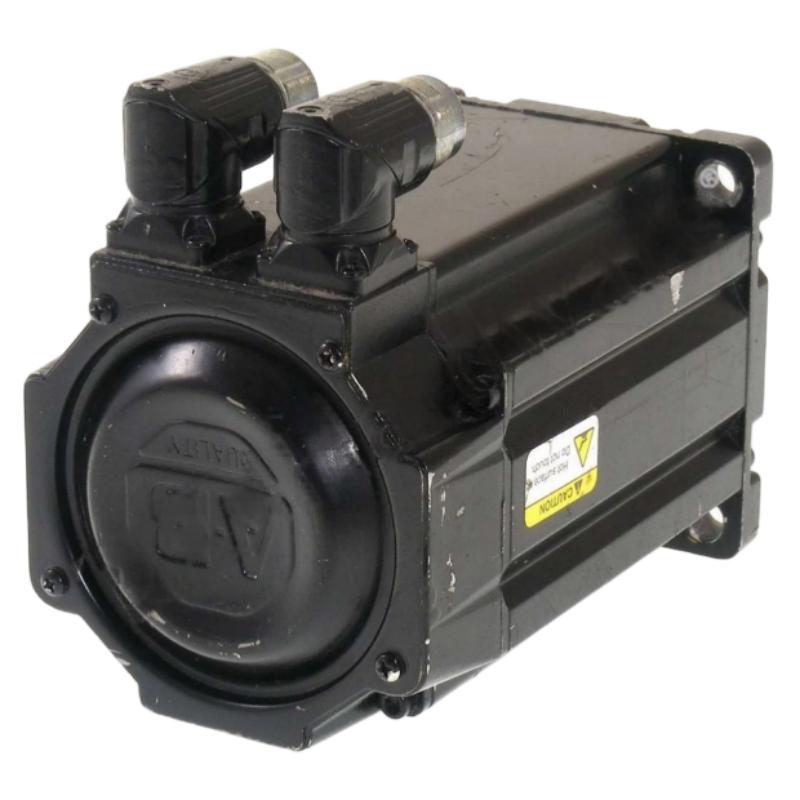
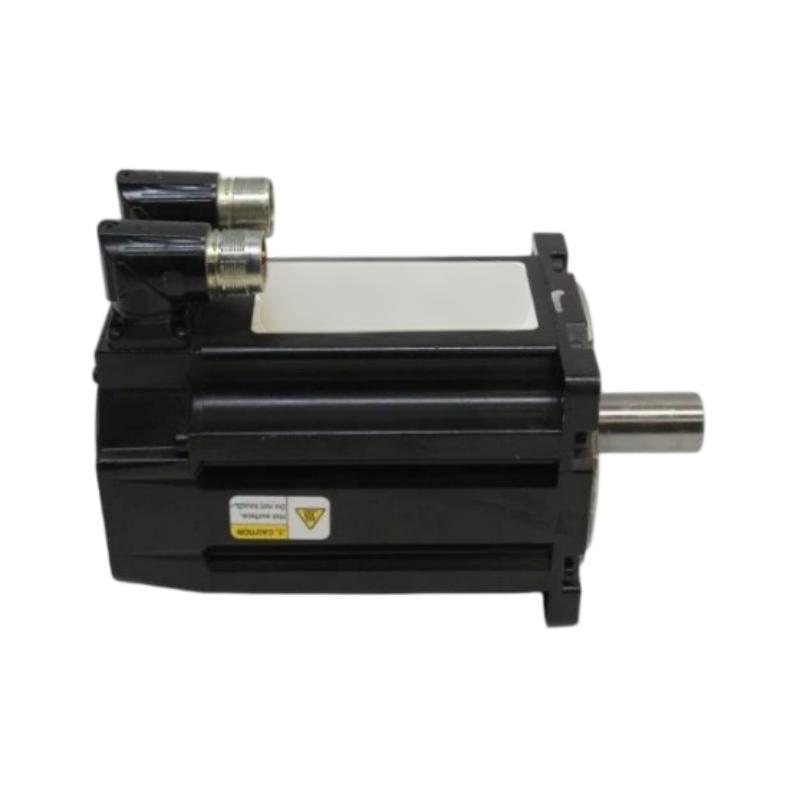
The Allen-Bradley MPL-B4530K-MK74AA Servo Motor is a low-inertia brushless AC rotary servo motor manufactured by Rockwell Automation as part of the Allen-Bradley MP-Series MPL product family. It is designed for industrial motion control applications that require accurate positioning, controlled rotation, responsive acceleration, and reliable integration with compatible servo drive systems.
Featuring a 130 mm frame size, a 76.2 mm magnet stack length, and a rated speed of 4000 rpm, the MPL-B4530K-MK74AA is suitable for evaluating in automated machinery and production systems that require dynamic motion performance. Its multi-turn high-resolution absolute encoder provides position feedback to a compatible servo drive, supporting closed-loop control of the motor.
One important feature of this model is its integrated 24 V DC holding brake. Compared with an otherwise similar no-brake configuration, this option can provide a means of holding a stationary shaft when the brake is properly controlled and the system is designed for that purpose. The brake is particularly relevant when evaluating servo motors for vertical axes or other applications where unintended movement after power removal must be addressed.
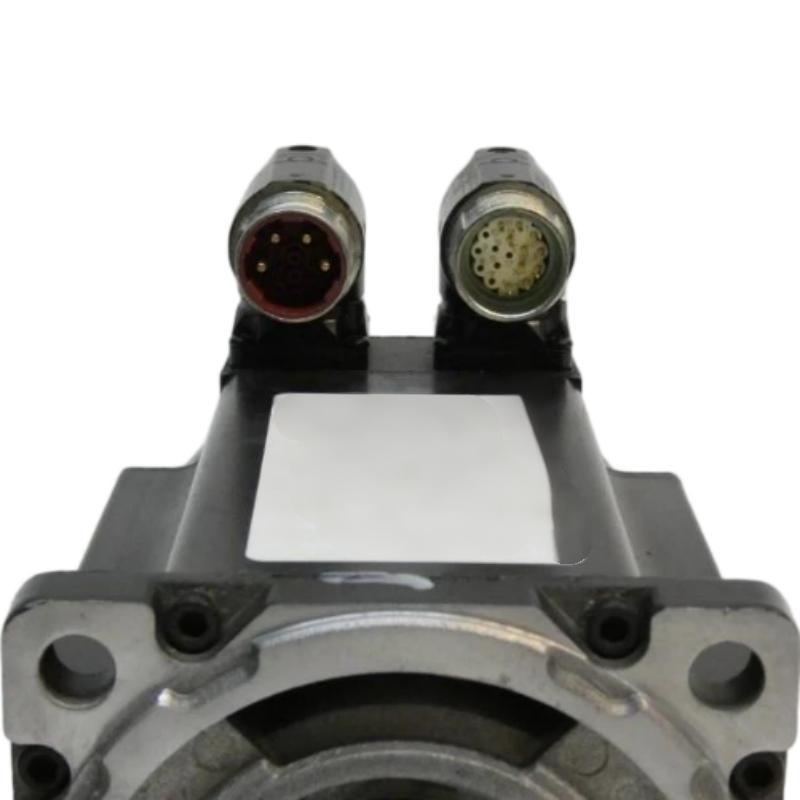
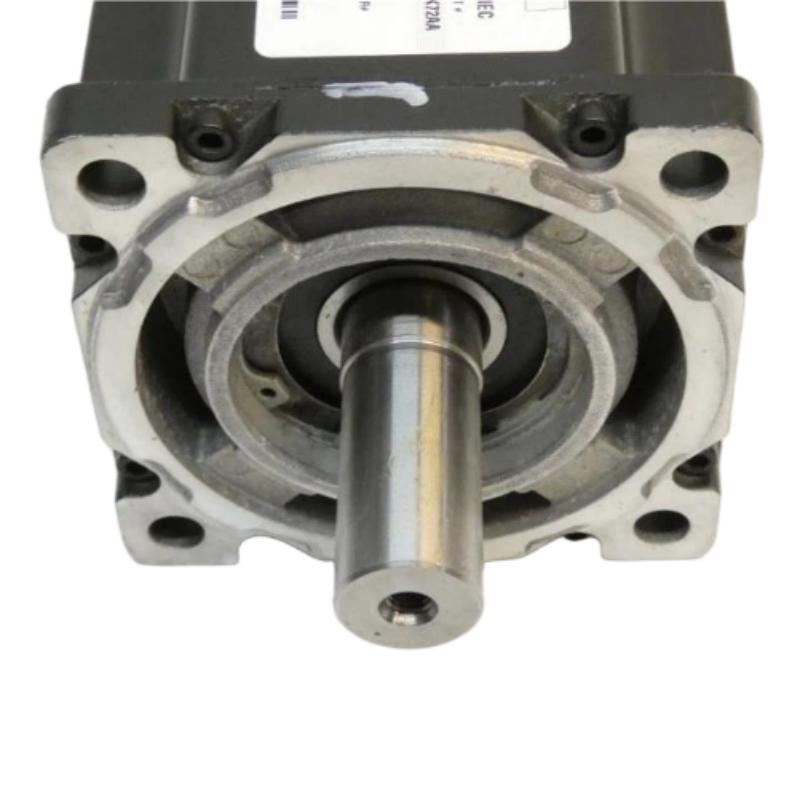
The motor also features a keyless shaft extension, a right-angle SpeedTEC DIN connector that can be rotated through 180 degrees, and an IEC metric mounting arrangement with free mounting holes. These design characteristics should be considered when checking mechanical fit, cable routing, and replacement compatibility.
The MPL-B4530K-MK74AA can be considered for applications such as packaging equipment, automated assembly machinery, material handling systems, and other industrial motion control installations. Before purchasing or installing the motor, confirm the complete catalog number, servo drive compatibility, feedback interface, shaft dimensions, brake requirements, and the actual operating demands of the machine.
2. Technical Specifications
| Parameter | Specification |
|---|---|
| Brand | Allen-Bradley |
| Manufacturer | Rockwell Automation |
| Model Number | MPL-B4530K-MK74AA |
| Product Type | Brushless AC Rotary Servo Motor |
| Product Family | MP-Series MPL Low-Inertia Servo Motors |
| Frame Size | 130 mm (Frame 45) |
| Magnet Stack Length | 76.2 mm (3.0 in.) |
| Rated Speed | 4000 rpm |
| Voltage Class | 460 V AC |
| Feedback Type | Multi-turn high-resolution absolute encoder |
| Shaft Type | Keyless shaft extension |
| Connector Type | SpeedTEC DIN connector |
| Connector Orientation | Right angle, 180° rotatable |
| Brake Configuration | Integrated 24 V DC brake |
| Mounting Type | IEC metric flange |
| Mounting Configuration | Free mounting holes, Type FF |
| Continuous Stall Torque | Approximately 8.25 Nm, subject to applicable product specification |
| Peak Torque | Approximately 20.3 Nm, subject to applicable product specification |
| Stated Weight | 7.3 kg |
| Motor Technology | Permanent-magnet brushless servo motor |
| Typical Applications | Industrial automation and precision motion control |
Specification note: The product configuration above is based on the model identification and available product-family documentation. The 7.3 kg weight is the value supplied for this product listing. Verify the actual motor nameplate and applicable technical documentation before finalizing engineering calculations, installation plans, or shipping information.
3. Function and Working Principle
3.1 Brushless AC Servo Motor Operation
The MPL-B4530K-MK74AA uses brushless servo motor technology to convert electrical energy into controlled rotational motion. Its rotor contains permanent magnets, while the stator contains electrical windings. A compatible servo drive supplies controlled current to the windings to generate the magnetic field required for rotation.
Instead of relying on mechanical brushes, the system uses electronic commutation to control the motor’s operation. This enables the drive to regulate torque and speed according to commands received from a motion controller or automation system.
In industrial machinery, this control method is useful when the motor must repeatedly accelerate, decelerate, stop at a defined position, or synchronize with other machine axes. Actual motion performance depends on the drive, motor configuration, load characteristics, mechanical transmission, and control tuning.
3.2 Low-Inertia Design
Low-inertia servo motors are intended for applications that require responsive changes in speed and position. Reduced motor inertia can help a properly sized motion system accelerate and decelerate efficiently.
Typical examples include indexing machinery, automated packaging equipment, assembly stations, and material handling systems. These applications may require the motor to complete repeated movement cycles while maintaining consistent positioning.
Motor inertia is only one factor in overall performance. Load inertia, coupling design, transmission ratios, friction, machine rigidity, and acceleration requirements must also be evaluated. Correct motor sizing and servo tuning are necessary to achieve stable operation.
3.3 Absolute Encoder Feedback
The MPL-B4530K-MK74AA uses a multi-turn high-resolution absolute encoder. This feedback device provides position information to a compatible servo drive and supports closed-loop control.
An absolute encoder differs from a basic incremental feedback device because it provides an absolute position reference within its supported operating range. A multi-turn design also records position across multiple shaft revolutions according to the encoder’s specifications.
The servo drive compares commanded motion with feedback information and adjusts motor output to reduce position or velocity errors. This process supports controlled movement and repeatable positioning when the complete motion system is correctly configured.
Encoder interface compatibility is essential. The drive must support the specific feedback technology and protocol used by the motor. The required feedback cables, connectors, and configuration parameters should be confirmed before installation.
3.4 Integrated 24 V DC Brake
A major distinguishing feature of the MPL-B4530K-MK74AA is its integrated 24 V DC brake option.
A holding brake is generally intended to maintain the motor shaft in a stationary condition when the motor is not actively producing torque. In many servo motor designs, the brake is spring-applied and electrically released, although the exact operating characteristics must be verified for the particular product.
The brake is not a substitute for the servo drive’s dynamic braking capability, nor should it automatically be treated as an emergency stopping device. It is primarily relevant to holding requirements when the motor is stationary.
The brake’s holding capacity, release timing, electrical requirements, and permitted duty must be checked against the applicable documentation. Correct control sequencing is particularly important in vertical-axis applications.
4. Role in Industrial Automation Systems
4.1 Precision Positioning
Servo motors are widely used in systems where a machine component must move to a defined position with repeatable results. The MPL-B4530K-MK74AA can provide controlled rotary motion when paired with a compatible drive and motion controller.
Positioning tasks may include moving a component between stations, controlling an indexing table, positioning a tool, or coordinating product movement along an automated production line.
The achieved accuracy depends on the encoder, drive configuration, machine mechanics, coupling, backlash, and control parameters. A servo motor alone does not guarantee a particular positioning accuracy.
4.2 Speed and Torque Control
Industrial servo systems may operate in position, velocity, or torque control modes, depending on the application and control architecture.
In position mode, the controller commands a target position or motion profile. In velocity mode, the system regulates rotational speed. In torque mode, the drive controls motor torque within its supported limits.
The specified 4000 rpm rating is useful when assessing high-speed motion requirements. However, speed should not be considered independently of available torque, thermal limits, load inertia, and duty cycle. Engineers should review the complete performance data before choosing the motor for a specific application.
4.3 Integration with PLC and Motion Controllers
In a typical automation architecture, a PLC manages machine sequences and process logic, while a motion controller or compatible PLC motion function coordinates the servo axes.
The servo drive receives motion commands and supplies controlled electrical power to the motor. Feedback information is used to regulate movement and monitor performance.
The motor’s compatibility with a particular controller depends on the selected drive and the supported feedback and communication interfaces. Confirm the complete system configuration rather than assuming that every Allen-Bradley servo drive supports this motor.
4.4 Holding a Stationary Load
The integrated 24 V DC brake is an important consideration for applications in which a shaft or load must remain stationary while the motor is not producing active torque.
This can be relevant to selected vertical axes, lifting mechanisms, and equipment where gravity or an external force could cause movement. The brake must be properly sized for the application and controlled according to the manufacturer’s requirements.
For safety-related applications, the brake should be evaluated as part of the complete machine design and risk assessment. Additional mechanical restraints or safety measures may be required.
5. Industrial Applications
5.1 Packaging Machinery
Packaging systems often require precise coordination between feeding, cutting, sealing, and indexing mechanisms. Servo motors can control these movements while supporting repeatable production cycles.
The MPL-B4530K-MK74AA may be evaluated for a compatible packaging axis where its speed, torque, encoder, mounting arrangement, and brake configuration meet the machine’s requirements.
5.2 Automated Assembly Equipment
Assembly machinery uses controlled movement to position components, operate tooling, and coordinate production steps. Servo feedback supports repeatable positioning, while the drive adjusts motor output in response to motion commands.
The integrated brake may be relevant where a stationary axis needs holding capability. Actual suitability depends on the load, brake requirements, mechanical design, and machine safety strategy.
5.3 Material Handling Systems
Automated material handling equipment may use servo motors in transfer mechanisms, positioning units, lift axes, and other controlled movement assemblies.
Before selecting a motor for a material handling application, engineers should evaluate payload, transmission ratio, acceleration, stopping requirements, duty cycle, and the effects of gravity on the load. The brake must be assessed separately from the motor’s torque-producing performance.
5.4 Machine Tools
Selected machine tools use servo motors for controlled axis movement, positioning, and coordinated motion. The motor must be matched to the mechanical transmission and the motion controller’s performance requirements.
Important selection factors include available torque across the operating speed range, acceleration demands, feedback compatibility, mounting dimensions, and mechanical rigidity.
5.5 Printing and Converting Machinery
Printing and converting equipment may use servo motors to coordinate rollers, feeders, cutters, and registration mechanisms. Accurate feedback and stable motion control can help maintain synchronization between different machine sections.
The actual benefits depend on the machine’s mechanical layout, control architecture, and operating requirements.
5.6 General Industrial Automation
The MPL-B4530K-MK74AA may also be considered for compatible special-purpose machinery, automated inspection equipment, and other production systems requiring controlled rotary motion.
For every application, motor selection should be based on verified electrical and mechanical requirements, including the need for a holding brake.
6. Installation and System Integration
Correct installation is essential for dependable operation. The motor, drive, feedback system, brake circuit, and mechanical assembly should be treated as interconnected parts of one motion control system.
6.1 Confirm the Catalog Number
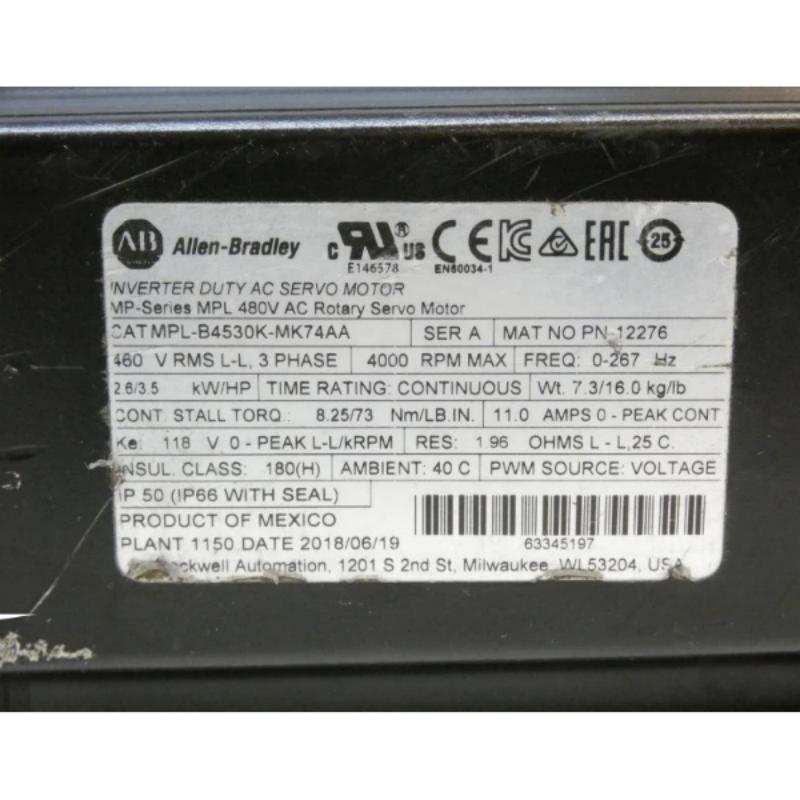
Check that the motor nameplate matches MPL-B4530K-MK74AA. Similar Allen-Bradley catalog numbers can differ in speed rating, shaft configuration, connector type, feedback option, or brake arrangement.
The difference between MK72AA and MK74AA is particularly important for replacement planning because the MK74AA configuration includes a 24 V DC brake. Do not substitute a no-brake motor where holding functionality is required without reviewing the application design.
6.2 Verify Mounting Dimensions
The motor has a 130 mm frame and a metric mounting configuration. Before installation, compare the flange dimensions, bolt pattern, shaft diameter, shaft length, and available clearance with the machine drawings.
Mechanical misalignment can increase bearing loads, cause vibration, and reduce the service life of couplings and connected equipment. Use suitable mounting hardware and follow the manufacturer’s installation instructions.
6.3 Check Shaft and Coupling Compatibility
This model uses a keyless shaft extension. The coupling or driven component must match the shaft dimensions and transmit the required torque without exceeding the permitted mechanical loads.
Check the coupling bore, alignment tolerances, radial and axial loading, and shaft engagement. Avoid impact or excessive force during installation, as this may damage the shaft or internal bearings.
6.4 Verify Servo Drive Compatibility
The selected servo drive must support the motor’s voltage class, speed requirements, feedback interface, and brake configuration. The correct motor configuration or parameter set must be selected in the drive.
Before energizing the system, confirm the power wiring, feedback connections, motor identification, grounding, and any required drive parameters. Incorrect feedback or wiring can prevent correct operation and may cause faults.
6.5 Connect and Control the Brake Correctly
The integrated brake requires the specified 24 V DC electrical supply and appropriate control arrangement. Confirm the brake’s current requirements, wiring diagram, release conditions, and control sequence using the product documentation.
In applications with vertical or gravity-loaded axes, the system should be designed so that the load is supported appropriately when the brake is released. Do not rely on the brake alone without evaluating the mechanical and safety requirements of the machine.
The brake should generally be engaged only when the motor is stationary or when the manufacturer’s instructions explicitly permit the intended operation. Repeatedly using a holding brake to stop a moving load can cause excessive wear or damage if it is not designed for that duty.
6.6 Cable Routing and Connector Protection
The right-angle SpeedTEC DIN connector can be rotated through 180 degrees, providing flexibility for cable routing within the permitted installation arrangement.
Ensure that connectors are secured correctly and that cables are protected against excessive bending, abrasion, heat, vibration, and electrical interference. Use the specified motor power and feedback cables for the installed system.
6.7 Commissioning and Functional Testing
Before production operation, inspect the motor mounting, power and feedback wiring, brake circuit, drive parameters, and safety functions.
Test motor direction, position feedback, speed control, and brake operation according to the approved commissioning procedure. Where appropriate, begin with reduced speed and load, then verify operation under representative conditions.
Abnormal vibration, unexpected movement, brake faults, overheating, or repeated drive errors should be investigated before the machine enters normal service.
7. Compatible System Components
The motor requires suitable supporting components to operate as part of a complete industrial motion system.
| Component | Function | Compatibility Considerations |
|---|---|---|
| Compatible Servo Drive | Controls motor current, speed, torque, and position | Verify voltage class, motor support, and feedback interface |
| PLC or Motion Controller | Coordinates machine sequences and motion commands | Confirm controller and drive communication support |
| Motor Power Cable | Supplies electrical power to the motor | Match connector, rating, and installation requirements |
| Feedback Cable | Transmits encoder signals to the drive | Confirm encoder and connector compatibility |
| Brake Power and Control Circuit | Operates the integrated 24 V DC brake | Follow the motor wiring diagram and brake requirements |
| Mechanical Coupling | Transfers torque to the driven equipment | Match shaft geometry, torque, and alignment |
| Mounting Hardware | Secures the motor to the machine | Verify flange dimensions and fastener requirements |
| Safety Equipment | Helps manage hazardous motion and unexpected movement | Design according to the machine risk assessment |
Do not assume that every drive in the Allen-Bradley or Kinetix product families is compatible with this exact motor. Verify the drive model, feedback protocol, brake control method, and all relevant configuration requirements before purchase and installation.
8. Alternative Models and Replacement Considerations
When replacing an installed servo motor, verify both the motor’s mechanical fit and its electrical compatibility with the existing control system.
| Alternative | When It May Be Considered | Important Checks |
|---|---|---|
| Exact MPL-B4530K-MK74AA | Replacement of the same catalog configuration | Confirm the complete part number and condition |
| MPL-B4530K-MK72AA | Possible comparison where the mechanical configuration is similar | This model is a no-brake configuration; evaluate holding requirements carefully |
| Related MPL Motor with a Different Speed Code | Applications requiring a different rated speed | Compare speed, torque, stack length, and drive configuration |
| Related MPL Motor with a Different Shaft Option | Mechanical redesign or approved replacement | Confirm shaft dimensions and coupling compatibility |
| Alternative Servo Motor Family | System modernization or unavailable original motor | Review electrical, mechanical, feedback, brake, and control requirements |
The MPL-B4530K-MK72AA and MPL-B4530K-MK74AA should not be treated as identical replacement parts. The latter includes a 24 V DC brake, which can affect wiring, machine behavior, and the requirements of the connected control system.
A replacement motor should be checked for frame size, magnet stack length, rated speed, torque, feedback configuration, shaft type, connector orientation, brake option, and compatibility with the installed drive. Any change should be approved through the appropriate engineering process.
9. Key Advantages
Low-Inertia Motion Performance
The MPL low-inertia design supports applications requiring responsive motion when the motor is correctly sized and paired with a compatible drive.
Multi-Turn Absolute Feedback
The high-resolution absolute encoder supports position feedback for compatible servo systems and can simplify position-reference management within its supported operating range.
Integrated 24 V DC Brake
The brake configuration provides a holding function for suitable applications where the stationary shaft must be restrained. Correct sizing, wiring, control, and safety design remain essential.
4000 RPM Rated Speed
The specified rated speed makes this motor relevant to motion applications requiring relatively high rotational speed. Actual torque availability and operating limits should be confirmed from the applicable motor documentation.
Flexible Connector Orientation
The right-angle SpeedTEC DIN connector can be rotated through 180 degrees, helping accommodate different cable-routing arrangements within the installation constraints.
Industrial Motion Control Integration
When used with compatible drive and controller hardware, the motor can support coordinated motion, repeatable positioning, and controlled rotation in automated machinery.
10. Technical FAQs
Q1: What is the Allen-Bradley MPL-B4530K-MK74AA?
It is a low-inertia brushless AC rotary servo motor from the Allen-Bradley MP-Series MPL family, designed for compatible industrial motion control applications.
Q2: What is the frame size?
The specified frame size is 130 mm, corresponding to Frame 45.
Q3: What is the rated speed?
The motor is specified for 4000 rpm rated speed. Actual operating limits and torque performance should be checked against the applicable technical documentation.
Q4: Does this motor include a brake?
Yes. The MPL-B4530K-MK74AA includes a 24 V DC brake configuration.
Q5: What is the difference between MPL-B4530K-MK72AA and MPL-B4530K-MK74AA?
The important configuration difference is the brake option: MK74AA includes a 24 V DC brake, while MK72AA is the no-brake version. Confirm all other relevant specifications before considering either model as a replacement.
Q6: What feedback system does the motor use?
It uses a multi-turn high-resolution absolute encoder. The compatible servo drive and feedback cables must support the specified interface.
Q7: What is the magnet stack length?
The magnet stack length is 76.2 mm, equivalent to 3.0 inches.
Q8: What is the motor’s weight?
The stated weight for this product listing is 7.3 kg. Confirm whether the figure represents the bare motor or includes any accessories when precise shipping information is required.
Q9: Can the integrated brake be used as an emergency stopping device?
Do not assume so. A holding brake is not automatically a substitute for a rated dynamic braking system or a safety-rated stopping function. Follow the manufacturer’s documentation and the machine’s safety design.
Q10: Which applications can use this servo motor?
Potential applications include packaging, assembly, material handling, printing and converting, machine tools, and other compatible industrial automation systems.
11. Procurement and Replacement Considerations
When sourcing the Allen-Bradley MPL-B4530K-MK74AA, begin by confirming the full catalog number and the specific requirements of the intended installation. The brake option is particularly important because a motor with a different brake configuration may not meet the machine’s holding or control requirements.
For replacement orders, compare the existing motor’s nameplate, mounting arrangement, shaft configuration, feedback interface, connector, and brake wiring. Where available, provide the supplier with photographs of the nameplate and connectors to help reduce identification errors.
Clarify whether the quotation covers the motor only or includes cables, connectors, mounting accessories, or other components. These items should not be assumed to be included unless they are explicitly listed.
Purchasing teams should also confirm product condition, warranty terms, inspection requirements, delivery time, packaging, and shipping weight. The actual condition and specifications of the supplied unit should be checked before installation.
For critical production equipment, arrange a compatibility review before replacing the motor. Confirm the drive’s support for the motor and feedback system, the correct brake-control arrangement, and the mechanical suitability of the replacement. Commission the installed motor according to the manufacturer’s instructions and the site’s approved procedures.
12. Conclusion
The Allen-Bradley MPL-B4530K-MK74AA Servo Motor is a 130 mm frame, low-inertia brushless AC servo motor with a 76.2 mm magnet stack length, a rated speed of 4000 rpm, multi-turn high-resolution absolute feedback, and an integrated 24 V DC brake.
Its combination of controlled motion, encoder feedback, and brake functionality makes it a candidate for compatible industrial automation systems requiring repeatable positioning and stationary shaft holding. Successful integration depends on correct motor sizing, drive compatibility, mechanical installation, brake control, and commissioning.
For procurement and maintenance teams, verifying the complete catalog number is essential, especially when comparing this model with the similar no-brake MPL-B4530K-MK72AA. Confirm the exact configuration and application requirements before ordering or installing the motor.