

ProductPRODUCT
Featured products
Contact Us
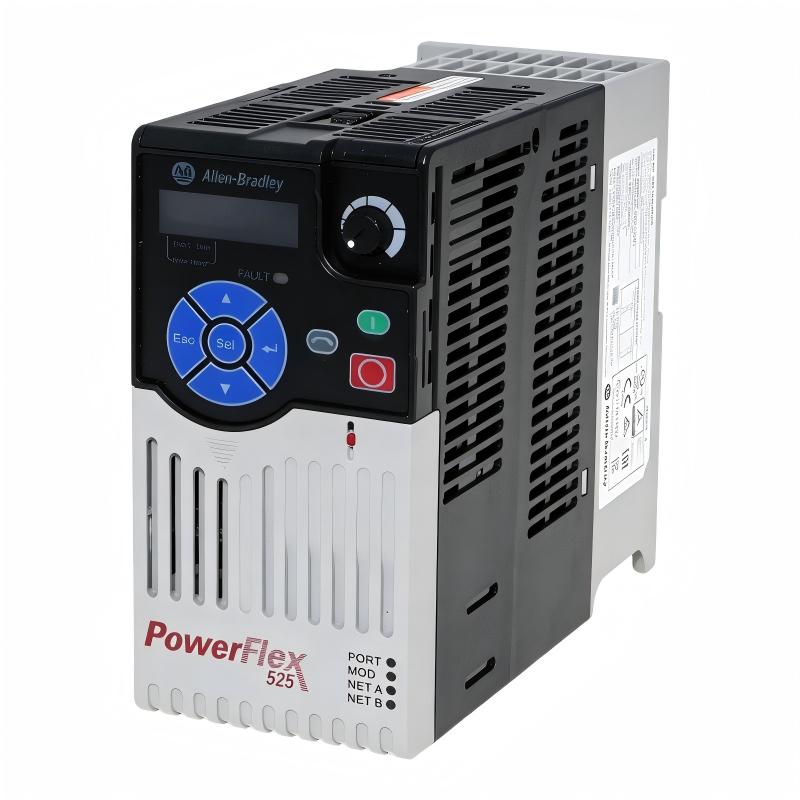
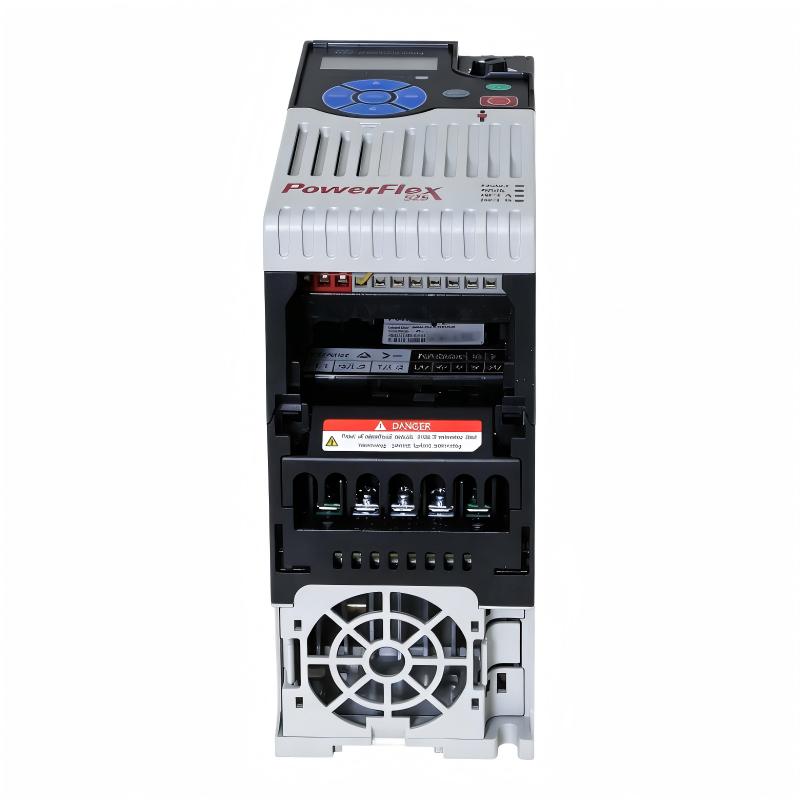
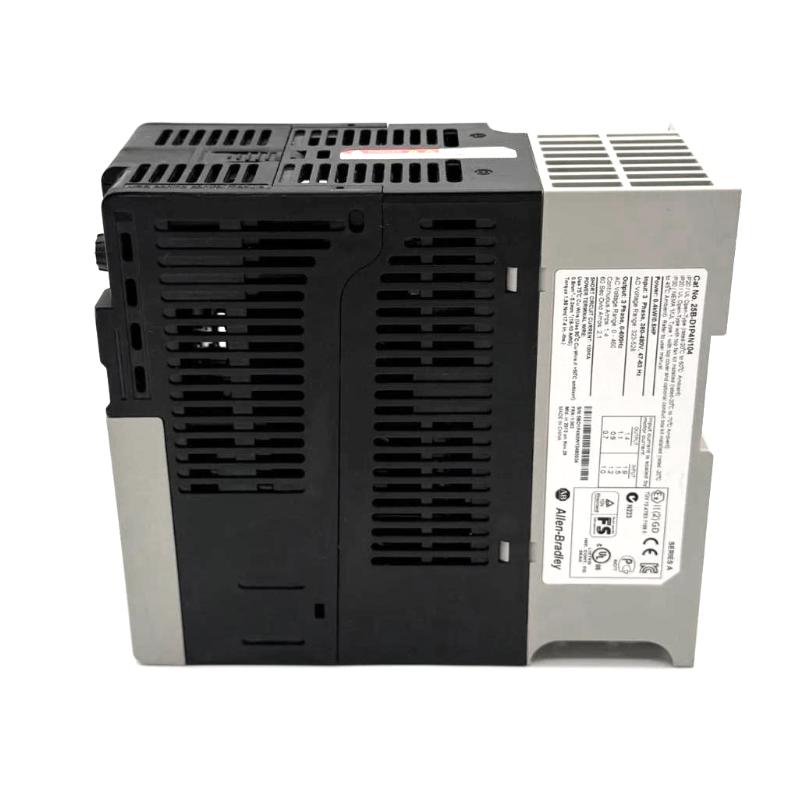
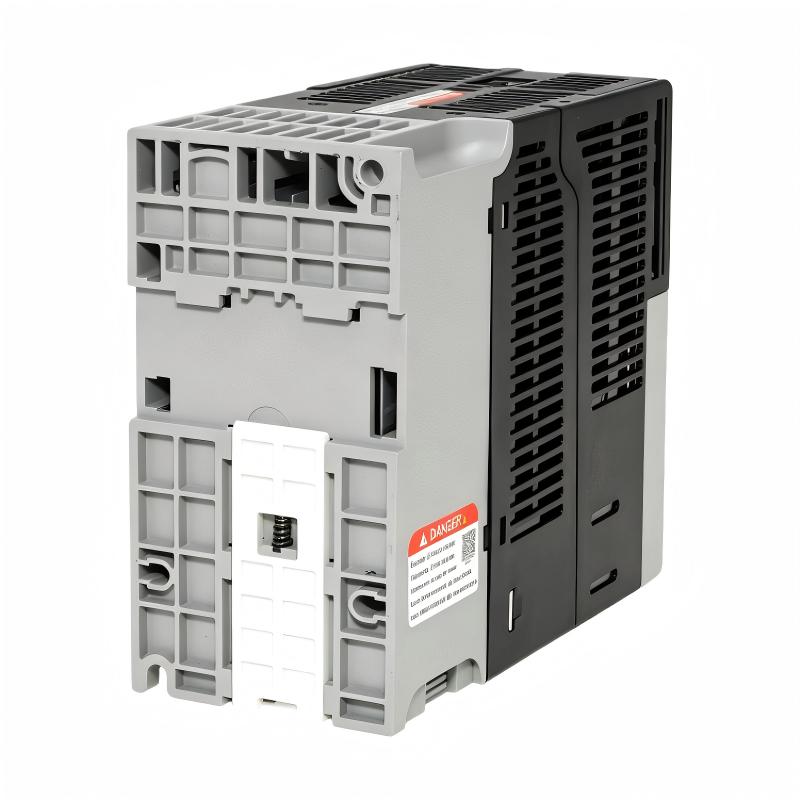
- Allen Bradley
- 25B-D1P4N104
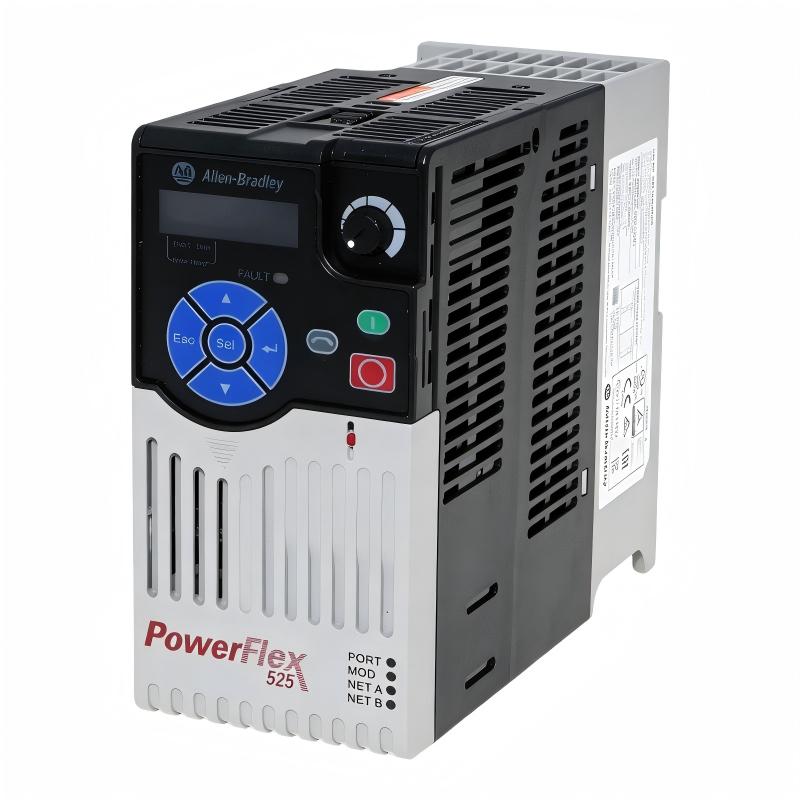
- PowerFlex 525 AC Drive
- USA
- 172 × 72 × 152 mm
- 1.1 kg
- Xiamen, China
- New & In Stock
- T/T, PayPal, Western Union
- 1 Year
- 1-3 Working Days
- DHL, UPS, TNT, FedEx and EMS.
- 24-Hour Service
- COO
- 85
Our advantage

Global Logistics
We have a 10-year logistics and express cooperation agreement, so our products can be shipped to any place in the world.

Brand new and original
Our products are imported in bulk from the place of origin. Because of the cooperative relationship, our products are all original and 100% new.

24-hour service
We provide 7*24 hours service to our customers. We will be there whenever you need us.

Price advantage
All our products are priced very favorably because we have our own warehouse and supply.
| Company Information | |||
| [email protected] | |||
| Mobile | +8615980777398 | ||
| +8615980777398 | |||
| 15980777398 |
Product Overview
The Allen Bradley 25B-D1P4N104 PowerFlex 525 AC Drive is a compact adjustable frequency drive for controlling three-phase AC motors. It belongs to the PowerFlex 525 family and is intended for machine-level motor applications where the motor needs controlled acceleration, adjustable operating speed, and coordinated control from an automation system.
This model is rated for 380–480 V AC three-phase input and has a 1.4 A output current rating. Its 0.4 kW (0.5 Hp) power class makes it suitable for smaller motors used in conveyors, pumps, fans, material-handling equipment, and other compact machinery.
A major advantage of the PowerFlex 525 platform is its integration capability. The drive incorporates EtherNet/IP communication and safety functionality, making it suitable for installations where motor control needs to be incorporated into a larger PLC-based automation network.
For engineers replacing an existing drive, the motor nameplate current should be treated as the starting point for selection. Supply voltage, motor power, duty cycle, overload requirements, braking requirements, network architecture, and enclosure conditions should also be reviewed before installation.
Technical Specifications
| Parameter | Specification |
|---|---|
| Manufacturer | Allen-Bradley / Rockwell Automation |
| Model | 25B-D1P4N104 |
| Product Family | PowerFlex 525 |
| Product Type | Adjustable Frequency AC Drive |
| Input Voltage | 380–480 V AC |
| Input Phase | 3 Phase |
| Output Current | 1.4 A |
| Output Voltage | 0–460 V AC |
| Motor Power | 0.4 kW / 0.5 Hp |
| Normal Duty Rating | 0.4 kW / 0.5 Hp |
| Heavy Duty Rating | 0.4 kW / 0.5 Hp |
| Frame Size | Frame A |
| Enclosure Type | IP20 / NEMA Open Type |
| Communication | Embedded EtherNet/IP |
| Safety | Integrated Safety Functionality |
| Brake IGBT | Included |
| EMC Filter | No Internal EMC Filter |
| User Interface | Integral Keypad with Potentiometer and LED Display |
| Power Factor | 0.98 |
| Dimensions | 172 × 72 × 152 mm |
| Weight | 1.1 kg |
Product Features
The PowerFlex 525 25B-D1P4N104 combines variable-frequency motor control with network connectivity in a compact drive platform.
Key characteristics include:
- 380–480 V AC three-phase input
- 1.4 A output current
- 0.4 kW / 0.5 Hp motor rating
- Frame A construction
- IP20 / NEMA Open Type enclosure
- Embedded EtherNet/IP communication
- Integrated safety functionality
- Built-in brake IGBT
- Integral keypad and potentiometer
- LED display for local operation and status
- 0–460 V AC output range
- No internal EMC filter
- Suitable for compact industrial machinery
- Suitable for PLC-based motor control systems
The embedded EtherNet/IP capability is particularly useful in Rockwell Automation control architectures where the drive needs to exchange commands, status information, speed references, and diagnostic data with a controller.
Working Principle
The 25B-D1P4N104 controls motor operation by converting incoming AC power into a controlled variable-frequency output.
A simplified power path is:
380–480 V AC Supply → PowerFlex 525 → Variable-Frequency Output → Three-Phase AC Motor
During operation, the drive adjusts the output frequency and voltage supplied to the motor. Changing frequency allows the motor’s operating speed to be controlled rather than running continuously at a fixed line frequency.
For example, a conveyor may require different speeds during loading and unloading. Instead of switching the motor directly between full-speed operation and stop, the PowerFlex 525 can receive a speed reference and adjust motor operation accordingly.
The drive can also control acceleration and deceleration ramps. This reduces abrupt changes in motor speed and can help limit mechanical shock in systems with gearboxes, belts, couplings, or other rotating components.
In a networked control system, the drive can exchange operating commands and feedback information through EtherNet/IP. The PLC can therefore coordinate motor speed, start/stop commands, drive status, and fault information as part of the larger machine sequence.
Role in a PLC-Based Motor Control System
The 25B-D1P4N104 typically sits between the incoming motor power circuit and the three-phase motor while communicating with the machine controller.
A typical architecture can be represented as:
PLC → EtherNet/IP Network → PowerFlex 525 → Three-Phase Motor → Mechanical Load
The PLC handles machine-level logic, while the PowerFlex 525 performs the electrical motor-control function.
Through the network connection, the controller can coordinate drive operation with sensors, valves, other drives, and machine sequences. This is particularly useful when motor speed is part of the production process rather than simply an on/off function.
The integral keypad also allows local interaction with the drive. During commissioning or maintenance, technicians can use the local interface for parameter adjustment, status checking, and basic troubleshooting without relying entirely on the PLC program.
Industrial Applications
The 25B-D1P4N104 is best suited to smaller three-phase motor applications where variable-speed control and automation-system integration are required.
| Application | Typical Use |
|---|---|
| Conveyor Systems | Adjustable belt speed and controlled acceleration |
| Small Pumps | Flow-related speed control |
| Fans | Variable airflow and energy management |
| Material Handling | Coordinated motor movement |
| Packaging Machinery | Controlled machine-cycle speed |
| Machine Tools | Variable motor operation |
| Process Equipment | Motor speed adjustment |
| Small Industrial Machines | PLC-controlled motor operation |
The 0.4 kW power class makes this model more appropriate for relatively small motors. For larger motors, a higher-current PowerFlex 525 model should be selected according to the motor nameplate and application duty.
Installation and Maintenance
The 25B-D1P4N104 should be installed in an enclosure that provides appropriate environmental protection and sufficient ventilation for the drive.
The motor and drive ratings should be compared before energizing the system. In particular, the motor’s rated voltage, current, frequency, power, and connection arrangement should correspond with the drive configuration.
Recommended checks include:
- Confirm the complete 25B-D1P4N104 catalog number.
- Verify the incoming 380–480 V AC three-phase supply.
- Check the motor nameplate voltage.
- Confirm motor rated current is compatible with the 1.4 A drive rating.
- Verify motor connections before applying power.
- Check grounding and protective-earth connections.
- Inspect power and motor terminals for proper tightening.
- Verify the EtherNet/IP network connection.
- Confirm the drive node or network configuration.
- Review acceleration and deceleration settings.
- Check motor rotation during initial commissioning.
- Verify the required speed reference source.
- Confirm safety circuitry before placing the machine into service.
- Inspect the cabinet for adequate ventilation.
- Review drive fault and diagnostic information during testing.
Because this model has no internal EMC filter, the system’s electromagnetic compatibility arrangement should be considered during cabinet design. Cable routing, grounding, shielding, and any required external filtering should be evaluated according to the installation requirements.
Related Components
The 25B-D1P4N104 is normally integrated with several electrical, control, and mechanical components.
| Component | Function |
|---|---|
| Three-Phase AC Motor | Converts electrical power into mechanical motion |
| PLC / Controller | Executes machine control logic |
| EtherNet/IP Network | Exchanges commands and status data |
| Motor Circuit Protection | Protects the electrical feeder |
| Disconnect Device | Provides electrical isolation for maintenance |
| Motor Cable | Connects the drive output to the motor |
| Control Cabinet | Houses the drive and associated equipment |
| Safety Circuit | Provides required machine safety functions |
| Braking Components | Assist with controlled stopping where required |
| Encoder / Feedback Device | Provides motor or machine feedback when the application requires it |
| Mechanical Coupling | Transfers motor torque to the driven machine |
The exact combination depends on the machine architecture. A simple conveyor may only require the drive, motor, PLC, protection, and network connection, while a more sophisticated machine may require feedback devices and additional safety hardware.
Recommended Related Models
When selecting another PowerFlex drive, the motor voltage, current, power, enclosure requirements, and application duty should be compared rather than selecting solely by physical size.
| Model / Product Family | Product Type | Typical Application |
|---|---|---|
| Allen-Bradley 25B-D1P4N104 | PowerFlex 525 AC Drive | 0.4 kW / 0.5 Hp, 380–480 V applications |
| Allen-Bradley 25B-D2P3N104 | PowerFlex 525 AC Drive | Higher-current small motor applications |
| Allen-Bradley 25B-D4P0N104 | PowerFlex 525 AC Drive | 0.4–2 kW class applications depending on duty |
| Allen-Bradley 25B-D6P0N104 | PowerFlex 525 AC Drive | Higher-power three-phase motor control |
| Allen-Bradley 25B-A2P5N104 | PowerFlex 525 AC Drive | 200–240 V class applications |
| Allen-Bradley PowerFlex 525 Series | Adjustable Frequency Drive Family | General-purpose networked motor control |
| Allen-Bradley PowerFlex 523 Series | Adjustable Frequency Drive Family | Cost-focused machine-level speed control |
The 25B-D2P3N104 is a logical comparison when more output current is required within the same 380–480 V PowerFlex 525 family. If the incoming supply changes to the 200–240 V range, a different voltage-class model such as the 25B-A2P5N104 should be considered instead.
For replacement work, the existing drive’s catalog number should be compared character by character because PowerFlex catalog-number suffixes can identify important differences such as voltage class, filtering, and other configuration options.
Key Advantages
- PowerFlex 525 adjustable frequency AC drive.
- 380–480 V AC three-phase input.
- 1.4 A output current rating.
- 0.4 kW / 0.5 Hp motor rating.
- Embedded EtherNet/IP communication.
- Integrated safety functionality.
- Built-in brake IGBT.
- Integral keypad with potentiometer and LED display.
- Compact Frame A design.
- Suitable for PLC-based motor control.
- Supports variable-speed operation.
- Suitable for conveyors, pumps, fans, and compact machinery.
- Useful for networked industrial automation systems.
Technical FAQs
What motor size is appropriate for the 25B-D1P4N104?
The 25B-D1P4N104 is rated for 0.4 kW / 0.5 Hp motor applications in its specified 380–480 V three-phase class, with a 1.4 A output rating. Final selection should be based on the motor nameplate current and the actual operating duty rather than horsepower alone.
What is the advantage of using EtherNet/IP with this PowerFlex 525 drive?
EtherNet/IP allows the drive to become part of the machine control network. A compatible PLC can exchange operating commands, speed references, drive status, and diagnostic information without requiring every control function to be hardwired individually.
What does the N104 configuration indicate for this drive?
The N104 configuration identifies a specific PowerFlex 525 variant within the catalog-number system. For this model, it corresponds to the 380–480 V class with no internal EMC filter. When replacing the drive, the complete catalog number should be matched because similar-looking PowerFlex 525 models can have different electrical or filtering configurations.
When would the built-in brake IGBT become important?
The brake IGBT is relevant in applications where controlled deceleration can cause regenerated energy to return to the drive’s DC bus. Where the application requires frequent or rapid stopping, the braking arrangement should be evaluated together with the drive’s configuration, motor inertia, stopping profile, and any external braking resistor requirements.