Product Overview
Industrial Ethernet communication is a key foundation of modern automation systems. With the increasing application of PLC controllers, remote I/O modules, servo systems, robotic equipment, and intelligent industrial devices, reliable network communication solutions are required to ensure stable production operations.
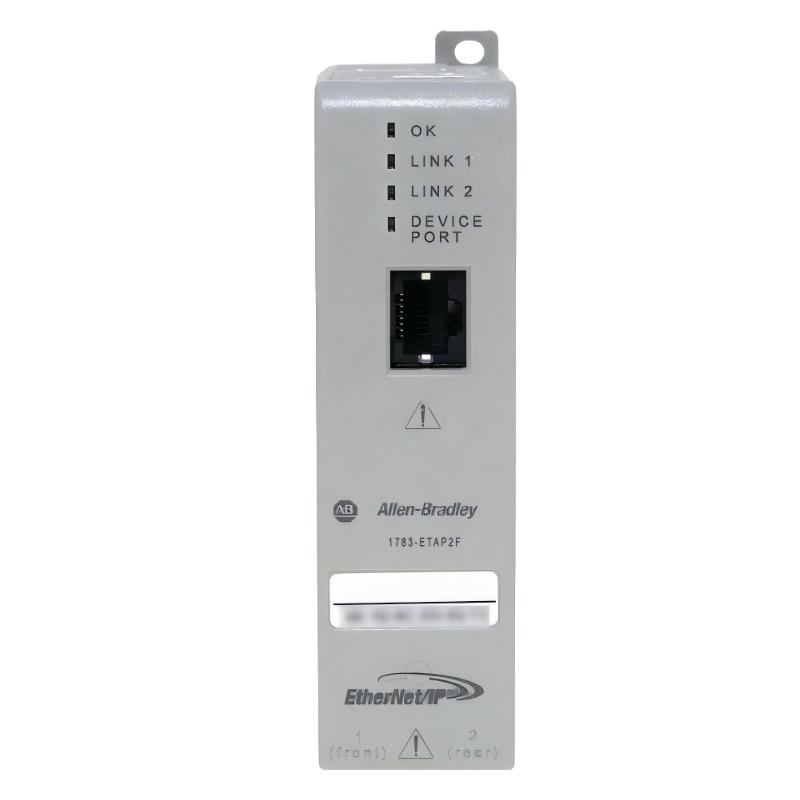
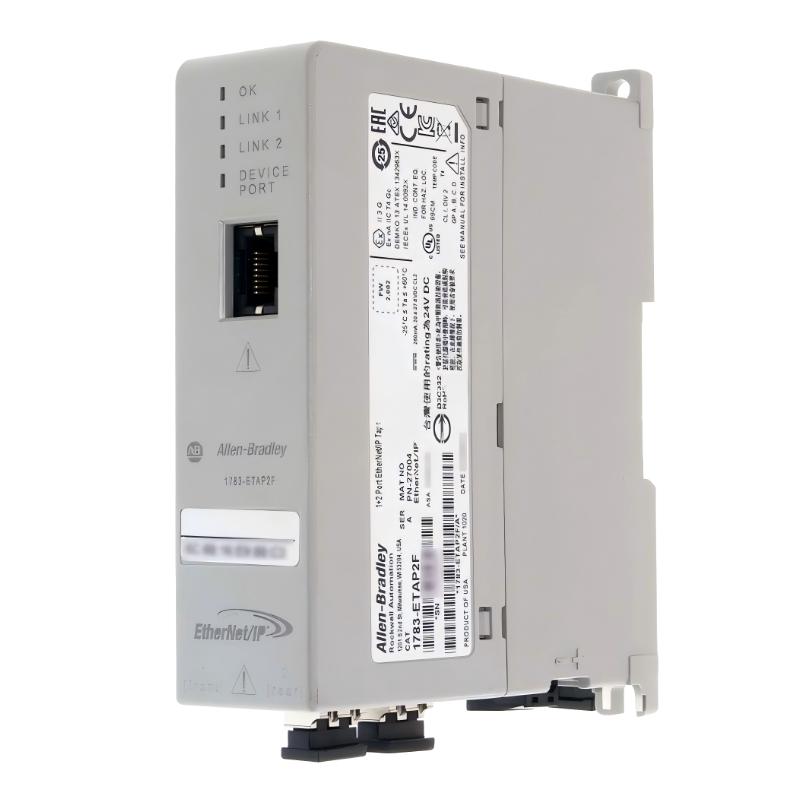
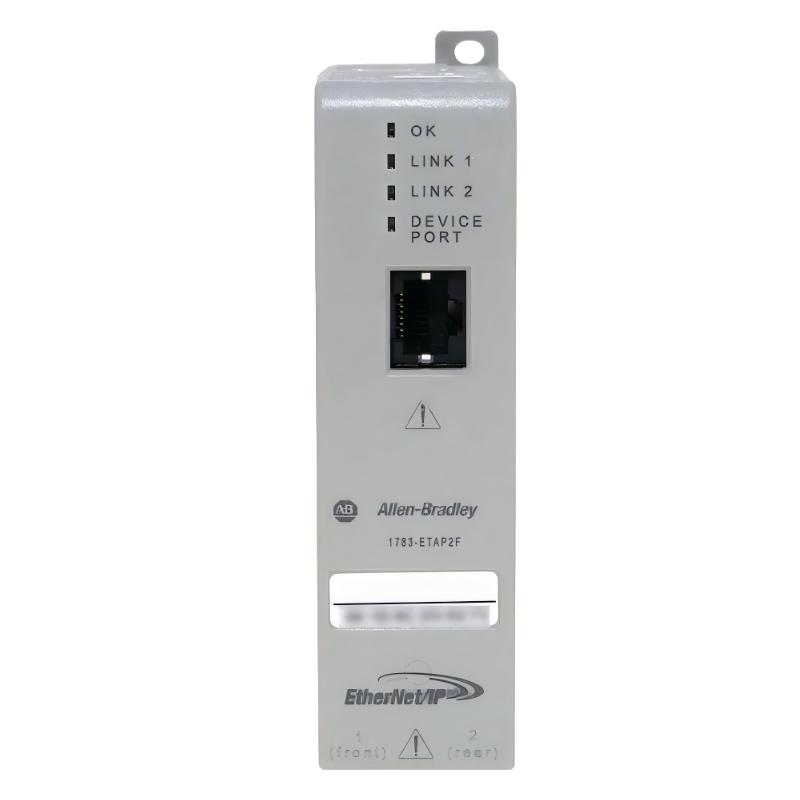
The Allen Bradley 1783-ETAP2F EtherNet/IP Splitter is an industrial communication device designed to provide flexible Ethernet network connection and fiber communication integration for industrial automation systems.
The device allows industrial Ethernet networks to connect different communication media by integrating copper Ethernet and fiber optic communication. This helps automation engineers build more flexible network architectures, extend communication distances, and improve network stability in demanding industrial environments.
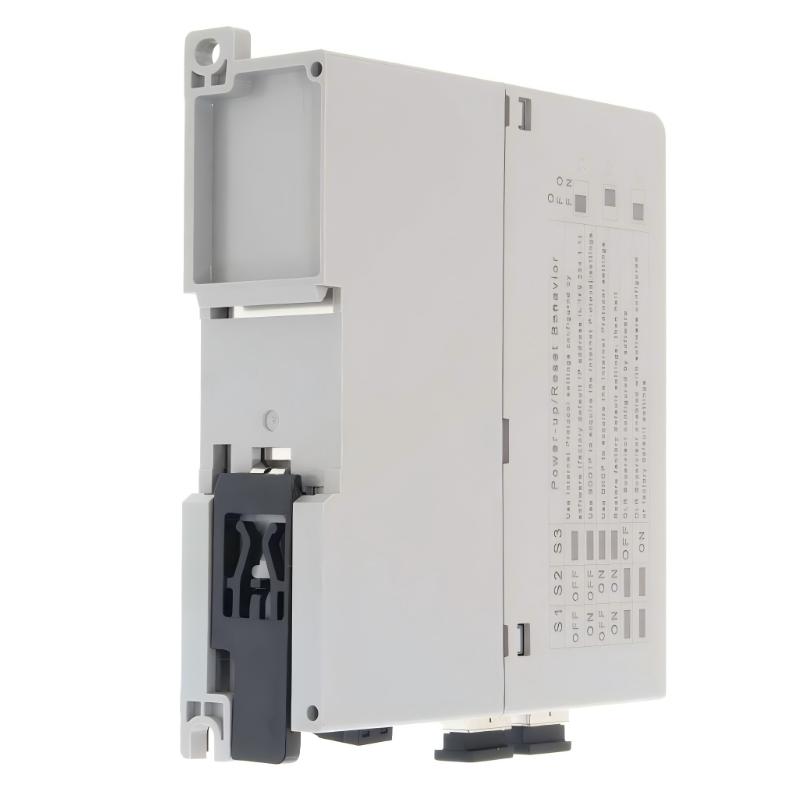
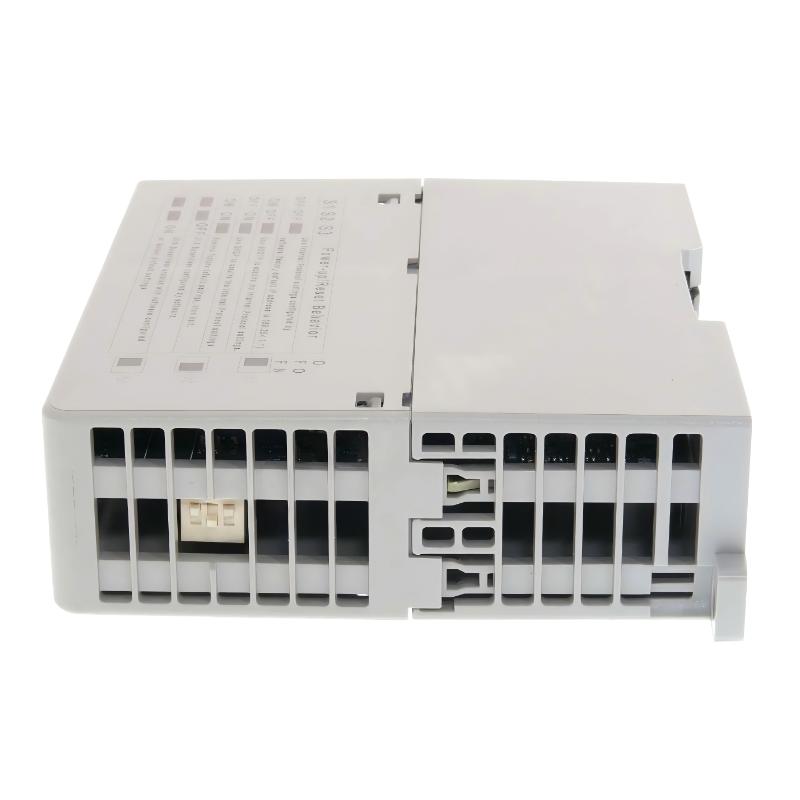
The Allen Bradley 1783-ETAP2F features a compact industrial design and reliable communication performance, making it suitable for factory automation, machine control systems, distributed control applications, and industrial Ethernet infrastructure.
By supporting flexible network configurations, the 1783-ETAP2F helps improve communication reliability and provides a practical solution for industrial network expansion.
Technical Specifications
| Parameter |
Details |
| Manufacturer |
Allen Bradley |
| Model |
1783-ETAP2F |
| Product Type |
EtherNet/IP Splitter |
| Network Type |
Industrial Ethernet |
| Communication Protocol |
EtherNet/IP |
| Interface Type |
Copper Ethernet and Fiber Communication |
| Fiber Ports |
2 Ports |
| Ethernet Port |
1 Port |
| Application |
Industrial automation networking |
| Dimensions |
131.57 × 35.05 × 104.9 mm |
| Weight |
0.18 kg |
| Installation Type |
Industrial mounting |
| Function |
Ethernet network extension and communication integration |
Function and Working Principle
The Allen Bradley 1783-ETAP2F EtherNet/IP Splitter works as an industrial network connection device that integrates different Ethernet communication media.
It receives Ethernet communication signals from automation equipment and transfers data between copper and fiber communication connections. This allows industrial systems to create flexible network structures while maintaining reliable data transmission.
The basic communication structure is:
PLC Controller → EtherNet/IP Network → 1783-ETAP2F → Fiber Network → Remote Devices
The main functions include:
- Connecting Ethernet communication networks
- Integrating fiber optic communication
- Extending industrial network distances
- Supporting flexible network layouts
- Improving communication reliability
The operating process includes:
- Industrial devices send Ethernet communication data
- The 1783-ETAP2F receives network signals
- Data is transferred between Ethernet and fiber interfaces
- Connected devices exchange information
- The automation system continues normal operation
This process provides a stable communication foundation for industrial applications.
Role in Industrial Automation Systems
The Allen Bradley 1783-ETAP2F plays an important role in industrial Ethernet architectures where long-distance communication or fiber integration is required.
In large factories and complex production environments, automation devices may be installed across wide areas. Traditional copper Ethernet communication may face limitations caused by distance and electrical interference.
The 1783-ETAP2F helps solve these challenges by allowing fiber communication to be integrated into industrial Ethernet systems.
It is commonly used with:
- PLC controllers
- Control systems
- Remote I/O modules
- Servo drives
- Motion control equipment
- Industrial computers
- Ethernet-based field devices
A typical application structure includes:
Automation Controller → Ethernet Network → EtherNet/IP Splitter → Fiber Communication → Distributed Equipment
This structure provides:
- Longer communication distance
- Better signal stability
- Reduced electrical interference
- Flexible network expansion
- Improved system reliability
EtherNet/IP Communication Functions
Copper and Fiber Network Integration
The main function of the Allen Bradley 1783-ETAP2F is to connect different types of industrial Ethernet communication media.
By combining copper Ethernet and fiber optic communication, the device allows engineers to design more flexible industrial networks.
Advantages include:
- Extended network coverage
- Improved communication stability
- Better performance in industrial environments
- Easier system expansion
Industrial Network Expansion
The 1783-ETAP2F provides an effective solution for expanding existing automation networks.
It can help connect:
- Remote production areas
- Distributed control stations
- Large machine systems
- Multiple automation cells
This makes it suitable for factories requiring reliable communication across larger distances.
Communication Reliability Improvement
Industrial environments often contain electrical noise from motors, drives, and heavy equipment.
Fiber communication provides better resistance against electromagnetic interference, helping maintain stable communication between automation devices.
The 1783-ETAP2F helps improve:
- Network stability
- Data transmission reliability
- System availability
- Communication performance
Industrial Applications
Factory Automation
The Allen Bradley 1783-ETAP2F is widely used in:
- Automated production lines
- Manufacturing equipment
- Assembly systems
- Industrial control networks
It supports reliable communication between control systems and production devices.
Motion Control Systems
Applications include:
- Servo control systems
- Robotic equipment
- High-speed machine networks
- Coordinated automation systems
Stable network communication is essential for accurate motion operation.
Process Automation
The device can be applied in:
- Energy systems
- Water treatment equipment
- Industrial monitoring systems
- Large processing facilities
Fiber communication helps maintain reliable operation in complex environments.
Industrial Ethernet Infrastructure
The 1783-ETAP2F is suitable for:
- Factory network expansion
- Control cabinet applications
- Distributed automation systems
- Industrial communication upgrades
It provides a flexible solution for modern industrial Ethernet architectures.
Installation and System Integration
Proper installation is important to ensure reliable operation of the Allen Bradley 1783-ETAP2F.
Recommended installation procedures include:
- Mounting the device correctly
- Connecting Ethernet communication cables
- Connecting fiber optic cables properly
- Checking communication status
- Testing network performance
During commissioning, engineers should verify:
- Ethernet connection status
- Fiber communication operation
- Device communication
- Network stability
- Data transmission performance
Correct installation helps prevent:
- Communication interruption
- Network connection failures
- Signal transmission problems
- Unexpected system downtime
Compatible System Components
| Component |
Function |
| PLC Controller |
Executes automation programs |
| Ethernet Module |
Provides network communication |
| Fiber Network Equipment |
Extends communication distance |
| Remote I/O Module |
Collects field signals |
| Servo Drive |
Controls motor movement |
| Industrial Device |
Exchanges automation data |
These components work together to create a complete industrial Ethernet communication system.
Common Failure Symptoms
| Fault Symptom |
Possible Cause |
| Fiber communication failure |
Fiber connection problem |
| Ethernet communication loss |
Cable connection issue |
| Device unavailable |
Network configuration problem |
| Intermittent communication |
Environmental interference |
| Data transmission interruption |
Signal or connection fault |
Maintenance Recommendations
To maintain reliable operation of the Allen Bradley 1783-ETAP2F:
- Check fiber connections regularly
- Inspect Ethernet cables
- Keep connectors clean
- Monitor communication status
- Verify network configuration
Regular maintenance helps improve system reliability and reduce communication-related downtime.
Recommended Alternative Models
| Model |
Type |
Key Feature |
Application |
| Allen Bradley 1783-ETAP2F |
EtherNet/IP Splitter |
Fiber network integration |
Industrial Ethernet systems |
| Allen Bradley 1783-ETAP1F |
EtherNet/IP Splitter |
Fiber communication support |
Automation networks |
| Allen Bradley 1783-ETAP |
EtherNet/IP Tap |
Ethernet network connection |
Machine applications |
| Allen Bradley Stratix Series |
Industrial Ethernet Devices |
Network communication solutions |
Factory automation |
Key Advantages
- Supports fiber Ethernet communication
- Extends industrial network distance
- Improves communication stability
- Compact industrial design
- Reduces electrical interference impact
- Supports flexible network architectures
- Suitable for industrial environments
Technical FAQs
What is Allen Bradley 1783-ETAP2F used for?
The Allen Bradley 1783-ETAP2F is an EtherNet/IP network communication device used to connect Ethernet and fiber communication networks in industrial automation systems.
Is the 1783-ETAP2F a network switch?
No. It is an EtherNet/IP splitter designed for industrial network connection and communication media integration.
What communication interfaces does the 1783-ETAP2F provide?
The device provides Ethernet communication and fiber optic communication interfaces for industrial network applications.
Where is the Allen Bradley 1783-ETAP2F commonly used?
It is commonly used in factory automation, machine control systems, motion applications, and industrial Ethernet network expansion projects.
Conclusion
The Allen Bradley 1783-ETAP2F EtherNet/IP Splitter is a reliable industrial communication solution designed to improve Ethernet network flexibility and support fiber-based automation architectures.
With its compact design, copper and fiber communication integration capability, and industrial application suitability, it helps engineers build stable and scalable industrial networks.
For automation engineers, machine builders, and system integrators, the Allen Bradley 1783-ETAP2F provides an effective solution for industrial Ethernet expansion, communication improvement, and modern automation network development.