

ProductPRODUCT
Featured products
Contact Us
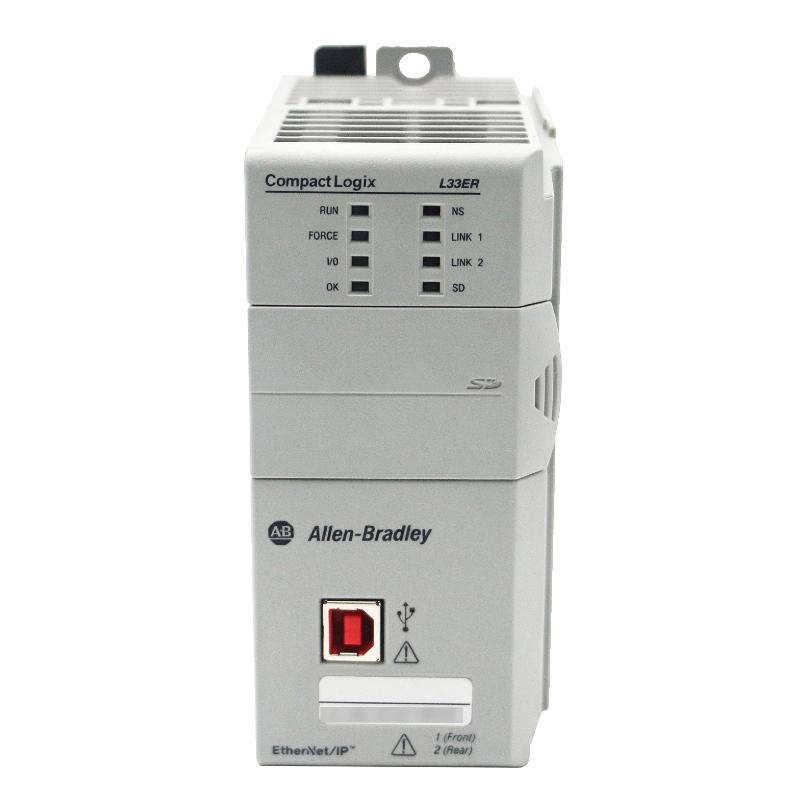
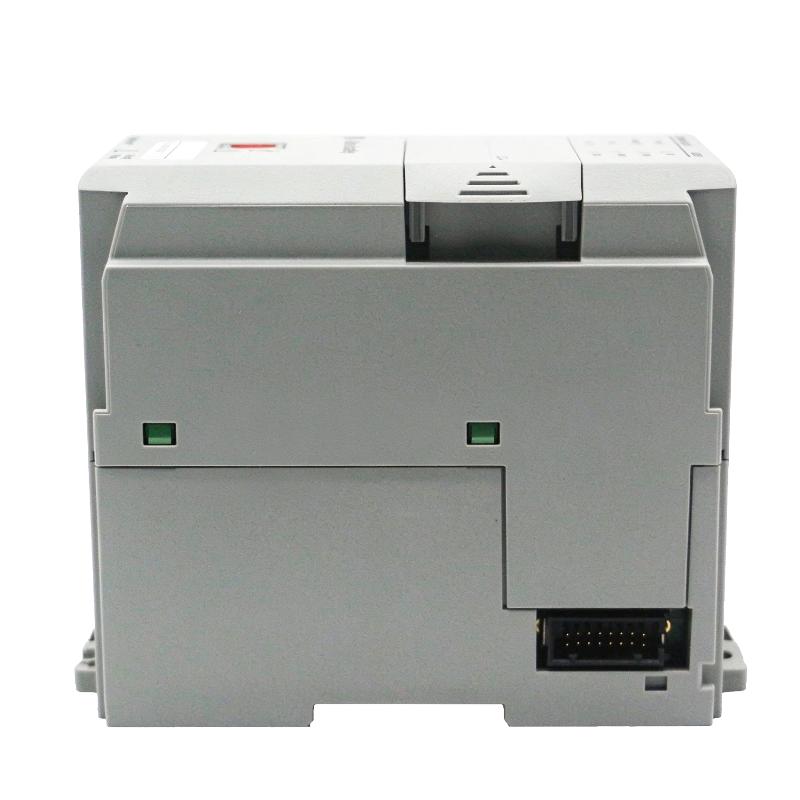
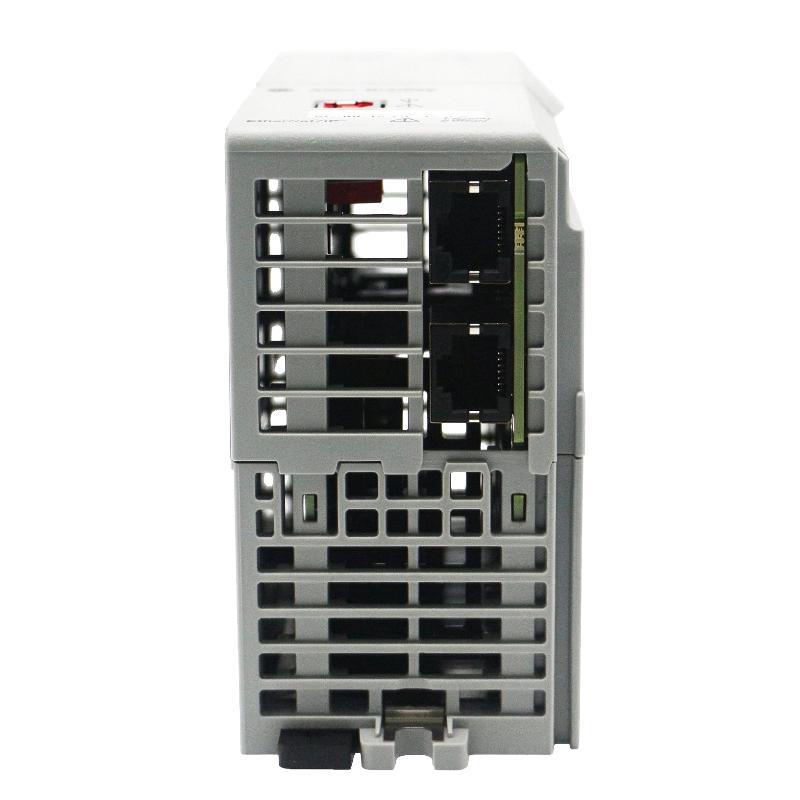
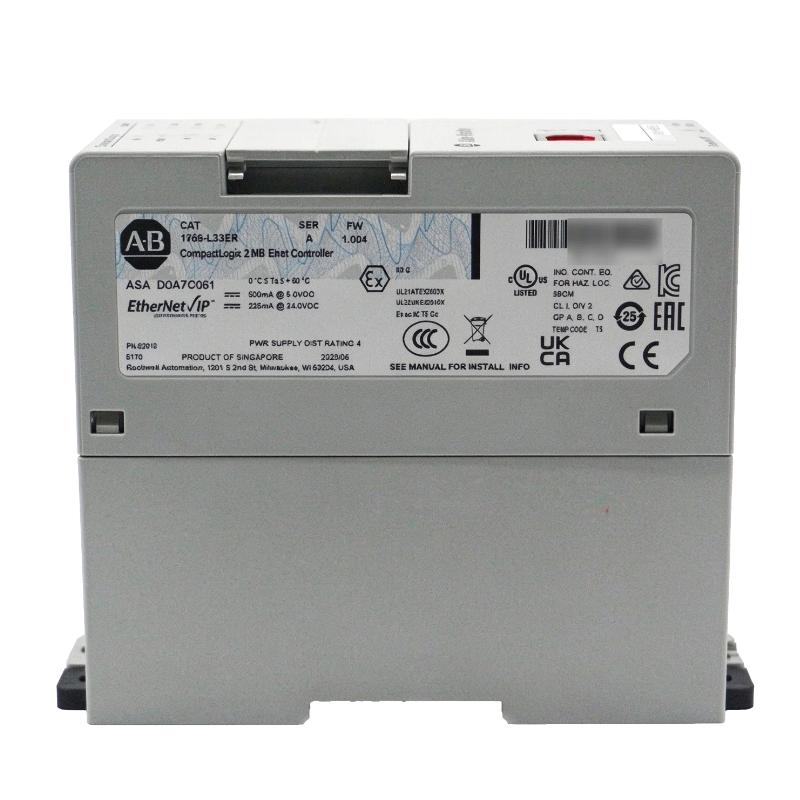
- Allen Bradley
- 1769-L33ERK
- CompactLogix 5370 L3 2MB Controller
- USA
- 132 × 55 × 105 mm
- 0.31 kg
- Xiamen, China
- New & In Stock
- T/T, PayPal, Western Union
- 1 Year
- 1-3 Working Days
- DHL, UPS, TNT, FedEx and EMS.
- 24-Hour Service
- COO
- 4
Our advantage

Global Logistics
We have a 10-year logistics and express cooperation agreement, so our products can be shipped to any place in the world.

Brand new and original
Our products are imported in bulk from the place of origin. Because of the cooperative relationship, our products are all original and 100% new.

24-hour service
We provide 7*24 hours service to our customers. We will be there whenever you need us.

Price advantage
All our products are priced very favorably because we have our own warehouse and supply.
| Company Information | |||
| [email protected] | |||
| Mobile | +8615980777398 | ||
| +8615980777398 | |||
| 15980777398 |
Product Overview
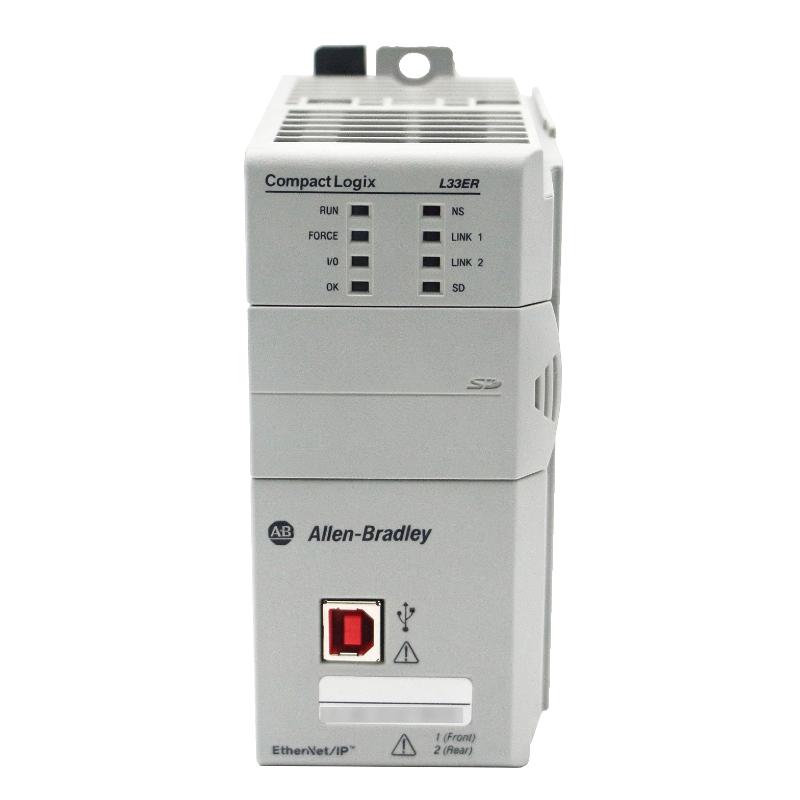
The Allen Bradley 1769-L33ERK CompactLogix 5370 L3 2MB Controller is a programmable automation controller designed for machine control, distributed I/O management, and industrial Ethernet communication. It belongs to the CompactLogix 5370 L3 family and combines 2 MB of user memory with dual Ethernet connectivity, local 1769 I/O expansion, and support for EtherNet/IP networks. The suffix K identifies the conformally coated version, making this controller distinct from the standard 1769-L33ER configuration.
The controller is intended for applications in which machine logic, field signals, and communication with other automation devices must operate within a coordinated control system. It executes programmed instructions, processes input data, updates output states, and exchanges information with connected devices. This allows it to coordinate equipment such as conveyors, packaging mechanisms, assembly stations, and other automated production machinery.
Its 2 MB user memory provides capacity for application logic, program routines, tags, and associated controller data. The available memory must be assessed against the size of the actual application, including data structures, communication requirements, and future expansion plans. The controller supports up to 32 controller tasks and up to 100 programs per task, providing a structured way to organize machine sequences, equipment routines, and recurring control operations.
The 1769-L33ERK supports up to 16 local Compact I/O expansion modules from the 1769 family. This arrangement allows a machine builder to combine the controller with suitable digital, analog, and other compatible I/O modules according to the required field signals. The selected modules determine the available signal types, channel counts, and electrical characteristics of the complete control system.
Dual Ethernet ports support communication with EtherNet/IP devices and allow the controller to participate in network arrangements using Device Level Ring (DLR) capability. DLR can help maintain network connectivity when an appropriately configured ring experiences a single network-link failure. The network topology, participating devices, and switch configuration must support the intended redundancy behavior; the presence of two Ethernet ports alone does not guarantee uninterrupted communication.
The controller supports up to 32 EtherNet/IP nodes and up to 120 TCP connections under the documented platform capabilities. These resources support communication with devices such as remote I/O adapters, operator interfaces, drives, and other industrial network equipment. Network planning should account for the number of connected devices, update requirements, connection usage, and the communication load generated by the application.
An embedded USB port provides a local connection for programming access, firmware operations, and maintenance tasks. This is useful during commissioning and troubleshooting when an engineer needs to connect a workstation directly to the controller. Ethernet remains available for networked programming and communication with other automation devices.
The controller is supplied with a 1 GB SD card and supports an SD card capacity of up to 2 GB. The card can be used for supported controller data-storage and recovery functions, depending on the configured application and firmware. Its role in a maintenance strategy should be established during commissioning, including the procedures for storing, restoring, and validating application data.
Conformal coating distinguishes the 1769-L33ERK from the corresponding uncoated model. The coating provides an additional protective layer for the electronic assemblies against certain environmental contaminants. It does not make the controller suitable for every harsh environment, nor does it remove the need to observe specified temperature, humidity, electrical, and enclosure requirements.
The 1769-L33ERK is a standard CompactLogix 5370 L3 controller rather than the integrated-motion variant represented by models such as the 1769-L33ERMK. Motion-control requirements must therefore be evaluated against the controller’s actual capabilities and the architecture of the proposed system. Applications requiring coordinated servo motion should not assume that the L33ERK provides the same integrated-motion functions as the ERM-series models.
Programming and maintenance are performed using compatible Rockwell Automation software and firmware versions. Project compatibility, controller firmware, communication settings, and I/O configuration should be verified before a replacement or new installation is commissioned.
The Allen Bradley 1769-L33ERK is suited to compact machine-control systems that need a configurable I/O platform, Ethernet-based device communication, and a conformally coated controller. Its practical value depends on correct task organization, network design, I/O selection, and maintenance planning.
Technical Specifications
| Parameter | Specification |
|---|---|
| Manufacturer | Allen Bradley |
| Model | 1769-L33ERK |
| Product Family | CompactLogix 5370 |
| Controller Class | CompactLogix 5370 L3 |
| Product Type | Programmable Automation Controller |
| User Memory | 2 MB |
| Controller Tasks | 32 |
| Programs per Task | Up to 100 per task |
| Local I/O Expansion | Up to 16 Compact I/O modules |
| I/O Platform | Allen Bradley Compact I/O 1769 series |
| Ethernet Ports | 2 |
| Communication Protocol | EtherNet/IP |
| Device Level Ring | DLR capability |
| Maximum EtherNet/IP Nodes | 32 |
| Maximum TCP Connections | 120 |
| Integrated USB Port | Yes |
| SD Card Supplied | 1 GB |
| Supported SD Card Capacity | Up to 2 GB |
| Conformal Coating | Yes |
| Integrated Motion Control | Not the integrated-motion L33ERMK variant |
| Maximum Power Dissipation | 4.5 W |
| Backplane Current at 5 V DC | 500 mA |
| Backplane Current at 24 V DC | 225 mA |
| Operating Temperature | 0 to 60 °C |
| Programming Environment | Compatible Studio 5000 Logix Designer versions |
| Controller Configuration | CompactLogix 5370 L3 |
| Dimensions | 132 × 55 × 105 mm |
| Weight | 0.31 kg |
Product Features
- 2 MB user memory: Accommodates application logic, controller tags, routines, and associated program data within the available memory capacity.
- CompactLogix 5370 L3 architecture: Supports machine-level control and integration with compatible Compact I/O modules.
- Dual Ethernet connectivity: Provides network connections for EtherNet/IP communication and supported DLR arrangements.
- Support for 32 EtherNet/IP nodes: Allows the controller to exchange data with a range of connected industrial devices.
- Local I/O expansion: Supports up to 16 compatible 1769 Compact I/O modules for configurable field-signal handling.
- Conformal coating: Adds a protective coating to the electronic assemblies for applications with appropriate environmental requirements.
- Embedded USB interface: Provides local access for programming, maintenance, and supported firmware operations.
- SD card support: Includes a 1 GB card and supports capacities up to 2 GB for supported storage and recovery functions.
- Structured task execution: Supports up to 32 controller tasks and up to 100 programs per task.
- Industrial network integration: Supports communication with compatible remote I/O, operator interfaces, drives, and other EtherNet/IP devices.
Working Principle
The 1769-L33ERK operates by executing a user-developed control program within the CompactLogix controller environment. It receives input data from local I/O modules and networked devices, evaluates the programmed conditions, and updates output commands according to the application logic.
Field Inputs → Controller Program Execution → Output Updates → EtherNet/IP Communication → Equipment Response
At the beginning of a control operation, field devices provide information such as sensor states, switch positions, measured process values, and equipment status. These signals are acquired through the appropriate local I/O modules or received from compatible networked devices. The controller makes the data available to its application logic for processing.
The application program defines how the controller responds to those signals. For example, a conveyor sequence may require a photoelectric sensor to detect an approaching product before a motor-start command is issued. The program can check permissive conditions, interlocks, timing requirements, and equipment status before changing the relevant output command.
The controller organizes program execution through its task structure. Different tasks can be assigned to specific control responsibilities, while programs and routines divide the application into manageable sections. Appropriate task configuration helps maintain predictable control behavior and makes the application easier to diagnose. Task priorities, execution periods, and program complexity should be considered during engineering rather than relying on memory capacity alone.
Once the application logic has evaluated the relevant conditions, the controller updates the associated output data. Local output modules convert these commands into the electrical signals required by connected actuators, subject to the characteristics of the selected modules. Networked devices receive their commands through the configured EtherNet/IP connections.
The two Ethernet ports provide communication paths for the supported network architecture. In a DLR arrangement, compatible devices can participate in a ring topology that provides a recovery mechanism for a single network-link interruption. The network must be correctly designed and configured, and recovery performance depends on the participating devices and the overall topology.
The controller also exchanges status and process information with supervisory systems, operator interfaces, and other automation equipment. This data exchange allows operators to view machine conditions and enables other devices to coordinate their behavior with the controller’s application.
The USB interface provides a local communication path for supported engineering and maintenance operations. During commissioning, an engineer can use a compatible workstation to access the controller, download the application, inspect faults, and verify the configuration. The exact software and firmware combination must be compatible with the installed controller.
The supplied SD card supports documented storage and recovery functions. Depending on the configuration, supported data can be used as part of a maintenance or restoration procedure. A recovery plan should include the correct application version, controller settings, and verification steps to prevent an outdated or unsuitable project from being restored.
The conformal coating protects electronic assemblies against certain environmental contaminants, but it does not replace correct cabinet design or electrical protection. The controller must operate within its specified environmental limits, with suitable grounding, power distribution, ventilation, and wiring practices.
Through this combination of program execution, I/O processing, and industrial communication, the 1769-L33ERK coordinates machine behavior and exchanges operational data across the automation system.
Role in the Industrial Control Architecture
The 1769-L33ERK acts as the central machine controller in a CompactLogix-based automation system. It executes the control program, processes field information, and coordinates local I/O and networked equipment.
Sensors and Field Devices → Compact I/O / EtherNet/IP → 1769-L33ERK Controller → Output Modules and Networked Actuators
| System Component | Function |
|---|---|
| Allen Bradley 1769-L33ERK | Executes machine-control logic and coordinates connected devices |
| CompactLogix Application Program | Defines sequences, interlocks, operating modes, and control conditions |
| 1769 Compact I/O Modules | Acquire local field signals and operate compatible electrical outputs |
| EtherNet/IP Remote I/O Adapter | Connects distributed I/O assemblies to the controller’s network |
| EtherNet/IP Drives | Receive motion or speed commands supported by their own drive functions |
| Operator Interface | Displays machine status, alarms, and operator commands |
| Ethernet Network | Carries control data and device communication |
| DLR-Capable Network Devices | Participate in a supported ring topology for network resilience |
| Engineering Workstation | Supports programming, configuration, monitoring, and troubleshooting |
| SD Card | Supports documented storage and recovery functions |
| Industrial Power Supply | Supplies the required power to the controller and associated control equipment |
| Electrical Cabinet | Provides the installation environment and organizes power, network, and I/O wiring |
The controller’s exact responsibilities depend on the application program and the connected hardware. Any motion or safety-related functions must be assigned to suitable devices and architectures that explicitly support the required capabilities.
Industrial Applications
| Application | Typical Use |
|---|---|
| Packaging Machinery | Coordinates product detection, conveyor sequences, and packaging-cycle logic |
| Conveyor Systems | Processes sensor signals and controls compatible motor starters or networked drives |
| Automated Assembly | Sequences fixtures, actuators, sensors, and workpiece transfer operations |
| Material Handling | Coordinates machine sections and exchanges status with distributed equipment |
| Production-Line Control | Manages machine interlocks, operating states, and equipment coordination |
| Industrial Inspection Stations | Processes inspection-system status and coordinates reject or transfer mechanisms |
| Process Skids | Controls packaged equipment through configurable I/O and industrial Ethernet |
| Machine Upgrades | Replaces or updates compatible CompactLogix control systems |
| Distributed I/O Applications | Connects local control logic with compatible remote I/O and networked devices |
| Industrial Equipment Monitoring | Exchanges operating data, fault status, and machine-state information with supervisory systems |
Installation and Maintenance
- Verify the controller catalog number: Confirm that the installed unit is the conformally coated 1769-L33ERK and not a different L3 or integrated-motion variant.
- Check the project and firmware: Verify compatibility between the controller firmware, engineering software, and existing application before downloading a program.
- Prepare the installation environment: Install the controller in an appropriate enclosure and maintain the specified temperature, ventilation, grounding, and environmental conditions.
- Plan the local I/O arrangement: Confirm that the selected 1769 Compact I/O modules are compatible and that the complete assembly remains within the platform’s expansion limits.
- Verify the power requirements: Check the backplane current requirements and the capacity of the associated power supply before adding or replacing modules.
- Inspect the Ethernet connections: Confirm correct cabling, connector condition, IP addressing, and network settings for all connected devices.
- Configure DLR where required: Verify that the participating devices and network topology support the intended ring arrangement before relying on network recovery behavior.
- Check the controller task structure: Review task periods, priorities, program organization, and execution behavior to ensure that the application meets its control requirements.
- Validate I/O mapping: Confirm that program tags and I/O configuration correspond to the actual module types, channel assignments, and field wiring.
- Test the USB and SD card procedures: Verify that the supported maintenance, storage, and recovery methods work with the intended software and firmware configuration.
- Monitor controller diagnostics: Review controller status, communication faults, I/O errors, and application diagnostics during commissioning and routine operation.
- Maintain a verified backup: Keep a current project file, configuration records, firmware details, and documented recovery procedure for future service work.
If the controller fails to communicate with a device, check the physical network connection, IP settings, connection configuration, and device status. If the application behaves unexpectedly, review task execution, program logic, I/O mapping, and controller diagnostics before changing the running system.
Related Components
| Component | Function |
|---|---|
| Allen Bradley 1769-L33ERK CompactLogix 5370 L3 2MB Controller | Executes machine-control logic and manages connected I/O and networked devices |
| Allen Bradley 1769 Compact I/O Modules | Provide local digital, analog, and other supported field interfaces |
| Allen Bradley 1769-PA2K Power Supply | Supplies power for compatible CompactLogix L3 system configurations |
| Allen Bradley 1769-PA4K Power Supply | Provides additional power capacity for compatible CompactLogix system arrangements |
| EtherNet/IP Remote I/O Adapter | Connects remote I/O assemblies to the controller’s industrial network |
| EtherNet/IP Industrial Switch | Connects network devices and supports the intended network topology |
| Allen Bradley PanelView Operator Interface | Provides operator commands, machine status, and alarm displays |
| Allen Bradley PowerFlex Drive | Controls a compatible motor according to the drive’s supported functions and configured commands |
| Ethernet Cable | Carries EtherNet/IP communication between compatible devices |
| USB Programming Connection | Provides local access for supported engineering and maintenance operations |
| SD Card | Supports the controller’s documented storage and recovery procedures |
| Industrial Control Cabinet | Houses the controller, power equipment, network components, and associated wiring |
Recommended Related Models
| Model | Product Type | Typical Application |
|---|---|---|
| Allen Bradley 1769-L33ERK | CompactLogix 5370 L3 2MB Controller | Conformally coated machine controller with dual Ethernet connectivity |
| Allen Bradley 1769-L33ER | CompactLogix 5370 L3 2MB Controller | Standard controller configuration without the K conformal-coating designation |
| Allen Bradley 1769-L33ERMK | CompactLogix 5370 L3 2MB Controller | Conformally coated variant with integrated CIP motion capabilities |
| Allen Bradley 1769-L30ERK | CompactLogix 5370 L3 1MB Controller | Lower-memory conformally coated controller for compatible applications |
| Allen Bradley 1769-L36ERM | CompactLogix 5370 L3 3MB Controller | Higher-memory controller with integrated motion capabilities |
Key Advantages
- Provides 2 MB of user memory for machine-control applications.
- Supports up to 16 compatible 1769 Compact I/O expansion modules.
- Offers dual Ethernet connectivity and support for DLR network arrangements.
- Supports up to 32 EtherNet/IP nodes for industrial device communication.
- Includes conformal coating for additional protection against certain contaminants.
- Provides USB access and SD card support for commissioning and maintenance.
- Organizes application execution through configurable controller tasks and programs.
Technical FAQs
How should the 1769-L33ERK be selected for an application requiring coordinated servo motion?
The 1769-L33ERK is not the integrated-motion variant of the L33ER family. Applications requiring integrated CIP motion should be evaluated against a suitable controller such as the 1769-L33ERMK, or another supported motion-control architecture. Drive compatibility and the required axis count must be verified separately.
What does the K suffix mean for the 1769-L33ERK?
The K suffix identifies the conformally coated version. The coating adds protection to the electronic assemblies against certain environmental contaminants, but it does not remove the need to observe the controller’s specified operating conditions and enclosure requirements.
What should be checked when connecting more than one EtherNet/IP device?
Confirm the controller’s node and connection limits, the communication requirements of each device, IP addressing, and the expected data-update rates. If a DLR topology is used, verify that the connected devices and network configuration support the intended ring operation.
What is the purpose of the SD card supplied with the controller?
The controller is supplied with a 1 GB SD card and supports cards up to 2 GB. The card can be used for supported storage and recovery functions, depending on the configuration. The actual backup and restoration procedure should be tested and documented for the installed firmware and application.