

ProductPRODUCT
Featured products
Contact Us
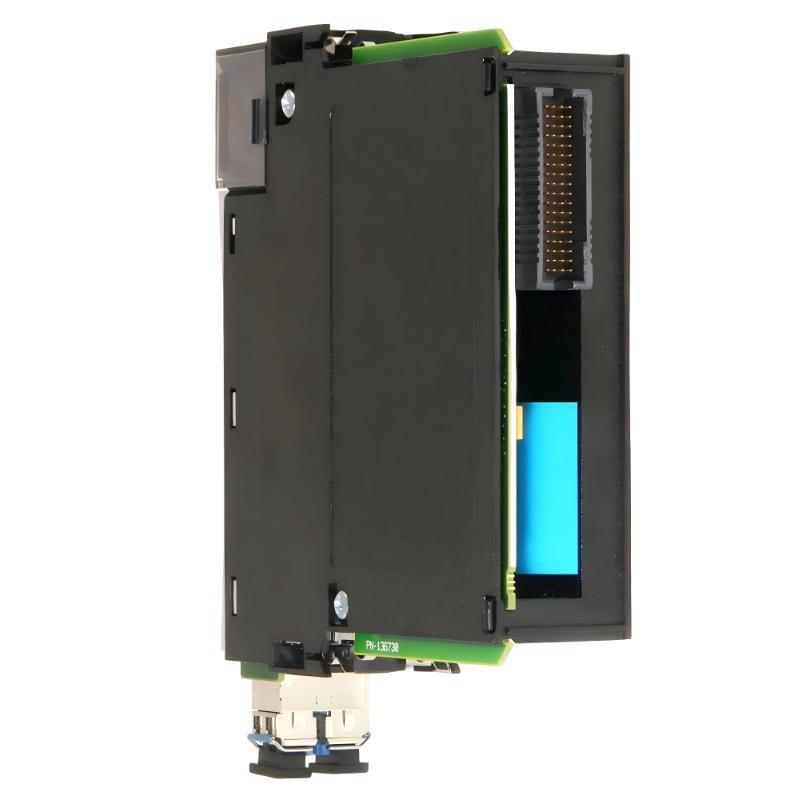
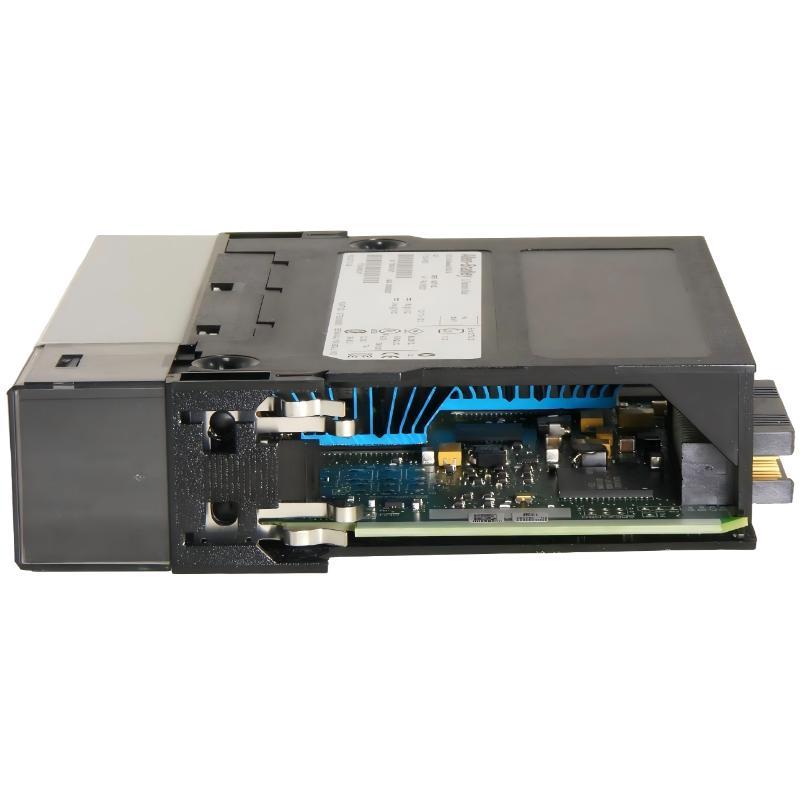
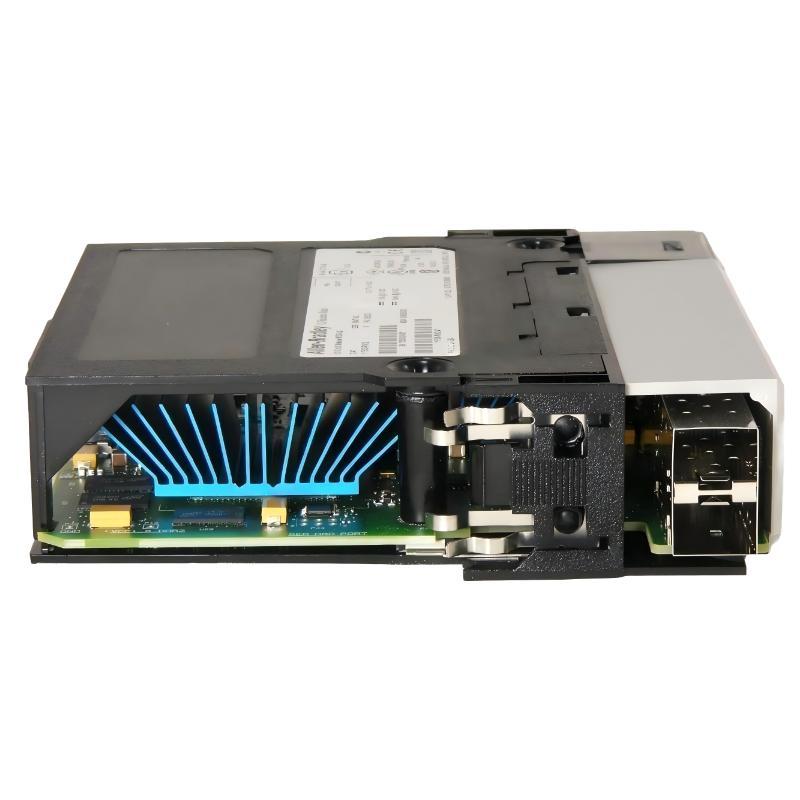
- Allen Bradley
- 1756-RM2K
- Controllogix CLX Redundancy Module
- USA
- 26.3 × 5.8 × 2.8 cm
- 0.29kg
- Xiamen, China
- New & In Stock
- T/T, PayPal, Western Union
- 1 Year
- 1-3 Working Days
- DHL, UPS, TNT, FedEx and EMS.
- 24-Hour Service
- COO
- 3
Our advantage

Global Logistics
We have a 10-year logistics and express cooperation agreement, so our products can be shipped to any place in the world.

Brand new and original
Our products are imported in bulk from the place of origin. Because of the cooperative relationship, our products are all original and 100% new.

24-hour service
We provide 7*24 hours service to our customers. We will be there whenever you need us.

Price advantage
All our products are priced very favorably because we have our own warehouse and supply.
| Company Information | |||
| [email protected] | |||
| Mobile | +8615980777398 | ||
| +8615980777398 | |||
| 15980777398 |
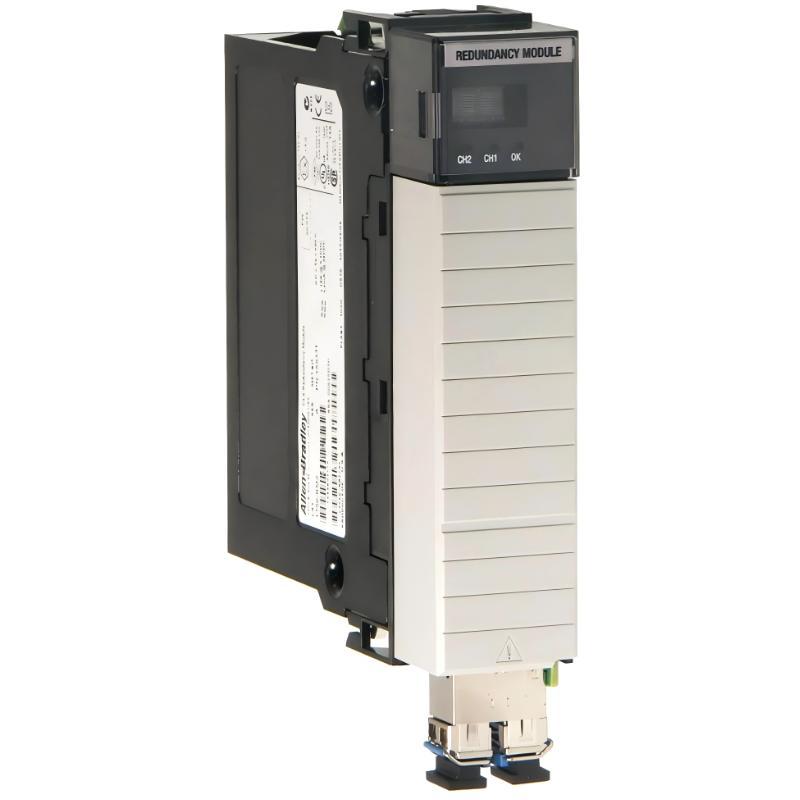
Allen-Bradley 1756-RM2K Redundancy Module — Product Specifications, Features, Applications, Advantages, and Related Models
1. Product Overview
The Allen-Bradley 1756-RM2K is a ControlLogix redundancy module designed for industrial automation systems that require high availability, operational continuity, and reduced downtime. It belongs to the ControlLogix 1756 family and is associated with redundant controller architectures used in demanding industrial environments.
In a redundant control system, two controller chassis work together so that a secondary system can take over control if the primary system experiences a fault or becomes unavailable. The redundancy module supports coordination between the redundant chassis, helping maintain the intended relationship between the primary and secondary controllers.
This type of equipment is particularly useful in industrial facilities where unexpected interruptions can lead to production losses, process instability, equipment damage, or costly recovery procedures.
The 1756-RM2K is intended for integration into compatible ControlLogix systems rather than use as a standalone controller. Its suitability depends on the controller generation, chassis configuration, redundancy firmware, communication architecture, and system design.
2. Product Identification and Basic Information
| Item | Description |
|---|---|
| Product model | 1756-RM2K |
| Brand | Allen-Bradley |
| Product family | ControlLogix |
| Product category | Industrial automation redundancy module |
| Primary function | Coordination of redundant control system components |
| System type | Programmable automation and control |
| Installation method | Compatible ControlLogix chassis installation |
| Typical architecture | Primary and secondary controller chassis |
| Main objective | Improve control system availability |
| Operating environment | Industrial control cabinets and automation installations |
| Typical application level | Process control, manufacturing, and critical automation |
| Standalone operation | Not intended to replace a complete programmable controller |
| Compatibility | Must be verified against the selected chassis, controllers, firmware, and redundancy configuration |
The 1756-RM2K should be evaluated as part of a complete redundancy architecture. Installing the module alone does not create a fully redundant control system; the corresponding chassis, controllers, interconnection components, firmware, and configuration must also be compatible.
3. Detailed Technical Specifications of 1756-RM2K
The 1756-RM2K is a conformally coated redundancy module. Its principal purpose is to support redundant ControlLogix controller systems, and its protective coating makes it a consideration for applications where additional protection of electronic components against environmental contamination is desirable.
The following table summarizes its principal technical characteristics.
| Parameter | Specification |
|---|---|
| Model | 1756-RM2K |
| Brand | Allen-Bradley |
| Product series | ControlLogix 1756 |
| Module type | Redundancy module |
| Special construction | Conformal coating |
| Backplane current at 5.1 V DC | 1.16 A |
| Current draw at 24 V DC | 3.4 mA |
| Maximum power dissipation | 6 W |
| Thermal dissipation | 21 BTU/hr |
| Chassis slot requirement | 1 slot |
| Installation location | Compatible ControlLogix chassis |
| Compatible chassis family | 1756-A4, 1756-A7, 1756-A10, 1756-A13, 1756-A17 |
| Compatible controller families | ControlLogix 5570 and 5580, subject to the applicable system configuration |
| Redundancy communication cables | 1756-RMC1, 1756-RMC3, 1756-RMC10 |
| Standard power supply compatibility | 1756-PA72, 1756-PA75, 1756-PB72, 1756-PB75 |
| Redundant power supply compatibility | 1756-PA75R, 1756-PB75R, 1756-PSCA2 |
| Operating temperature | 0°C to 60°C |
| Storage temperature | -40°C to 85°C |
| Relative humidity | 5% to 95%, non-condensing |
| Enclosure classification | Open-style module |
| Approximate net weight | 0.29 kg |
| Physical dimensions | Exact overall dimensions should be confirmed against the applicable mechanical drawing; the module occupies one chassis slot |
| Installation environment | Industrial control cabinet |
| Typical function | Redundant controller coordination |
| Product status classification | Active Mature |
| Independent standalone control | No; used as part of a compatible control system |
Important dimensional note: A one-slot width specification is not the same as the complete external dimensions of the module. The exact height, depth, and connector clearance should be checked against the physical drawing for the specific product revision. The 0.29 kg figure is an approximate module weight, not the shipping weight of a packaged product.
3.1 Electrical Characteristics
The module draws power from the compatible ControlLogix chassis backplane. Its specified current draw at 5.1 V DC is 1.16 A, while its current draw at 24 V DC is 3.4 mA.
The maximum power dissipation is 6 W, with a thermal dissipation figure of 21 BTU per hour. These values are relevant when checking chassis loading, cabinet ventilation, and the available power budget for a redundant automation system.
When planning an installation, engineers should calculate the combined current requirements of all modules installed in both chassis. The power supply must support the complete configuration rather than the redundancy module alone.
3.2 Mechanical Characteristics
The 1756-RM2K is designed for installation in a compatible ControlLogix chassis. It requires one slot, allowing it to be incorporated into an existing rack layout without requiring a separate external mounting assembly.
The module’s mechanical installation should account for the available rack space, the position of adjacent modules, the redundancy cable connection, and the space needed for maintenance access.
For cabinet design, the module’s approximate weight of 0.29 kg is relatively low. However, the total mechanical load should be calculated using the complete chassis, power supplies, controllers, communication modules, I/O modules, and associated cabling.
3.3 Environmental Characteristics
The standard operating temperature range is 0°C to 60°C. The module is intended for an industrial control environment in which temperature, humidity, vibration, electrical noise, and cabinet ventilation are managed appropriately.
Its conformal coating is an important distinguishing feature. This coating provides an additional protective layer over electronic circuitry against certain forms of environmental contamination. It does not mean that the module is waterproof, suitable for immersion, or appropriate for unrestricted outdoor installation.
For installations involving corrosive vapors, conductive dust, condensation, or severe temperature fluctuations, the overall cabinet and environmental protection strategy must be evaluated separately.
4. Product Introduction
The 1756-RM2K is designed for industrial control systems in which uninterrupted or highly available operation is an important engineering requirement.
Traditional programmable controller systems commonly use one main controller to execute the application program, process input signals, update outputs, and exchange data with other devices. If the main controller or a critical part of the control architecture becomes unavailable, the process may be interrupted until the fault is resolved.
A redundant control architecture addresses this risk by providing a second controller system capable of assuming the primary control role under supported failure conditions. The redundancy module helps coordinate the relationship between the two controller chassis.
The 1756-RM2K is therefore not simply an additional input/output module. It is a specialized component in the overall control architecture, intended to support system availability and continuity.
Its conformally coated construction makes it particularly relevant when selecting equipment for industrial environments where electronic assemblies may be exposed to greater contamination risks than those encountered in a clean, temperature-controlled electrical cabinet.
4.1 Main Product Functions
The main functions associated with the 1756-RM2K include:
– Supporting a compatible ControlLogix redundant controller architecture.
– Coordinating the redundancy-related functions of the primary and secondary systems.
– Providing a dedicated hardware component for redundancy management.
– Supporting system designs intended to reduce the impact of certain controller-related failures.
– Offering conformally coated electronics for additional environmental protection.
– Integrating into a chassis-based industrial automation platform.
– Supporting the engineering objective of maintaining control availability during defined fault and switchover scenarios.
The exact behavior during a switchover depends on the controller models, firmware versions, supported redundancy configuration, application design, and the type of failure that occurs.
4.2 Product Position Within the ControlLogix Family
ControlLogix is a modular automation platform used in industrial control applications. Its architecture allows engineers to combine programmable controllers, communication modules, digital and analog I/O, power supplies, and specialized modules within a chassis-based system.
Within this platform, the 1756-RM2K serves a specialized purpose. It is not a substitute for the main controller, a communication module, or an I/O module.
Instead, it complements the controller and related system components by supporting the redundancy architecture.
A typical installation may include two compatible controller chassis, redundancy modules, redundancy interconnection cables, controller modules, communication interfaces, and appropriate power supplies. Depending on the application, the system may also include remote I/O, industrial Ethernet networks, operator interfaces, drives, and supervisory software.
5. Applications of the 1756-RM2K
The 1756-RM2K is most relevant to applications in which control-system downtime has a meaningful operational or financial impact.
5.1 Continuous Process Manufacturing
In continuous manufacturing, the production process may operate around the clock. An unexpected control-system interruption can affect product quality, operating stability, and production scheduling.
A properly engineered redundant controller system can reduce the likelihood that a single controller-related failure will cause a prolonged interruption.
Typical application areas include chemical processing, industrial material production, and other continuous-process facilities.
5.2 Oil and Gas Facilities
Oil and gas installations may contain multiple control subsystems responsible for monitoring equipment, coordinating operations, and managing process conditions.
Where a compatible ControlLogix redundancy architecture is selected, the 1756-RM2K can form part of a control platform designed to improve availability.
The module itself does not provide emergency shutdown functionality or guarantee process safety. Safety functions require appropriate safety-rated equipment and a separate, validated system design.
5.3 Water and Wastewater Treatment
Water treatment and wastewater facilities often rely on coordinated pumping, filtration, chemical dosing, tank-level monitoring, and other automated operations.
A redundant control architecture can be useful where loss of supervisory control would create operational difficulties or require manual intervention.
The 1756-RM2K may be considered for compatible controller systems that manage these operations, provided the selected hardware and system architecture meet the application’s requirements.
5.4 Power and Utility Systems
Industrial utility systems may use programmable controllers to coordinate auxiliary equipment, monitor operating conditions, and communicate with supervisory systems.
For applications requiring high control availability, redundancy can reduce dependence on a single controller.
The suitability of the 1756-RM2K depends on the particular control function, required response time, applicable electrical standards, and the level of redundancy needed.
5.5 Automotive and General Manufacturing
Automotive production lines, assembly systems, packaging equipment, and automated material-handling installations may rely on coordinated control across multiple machines.
Where a compatible redundant ControlLogix architecture is justified by the production requirements, the 1756-RM2K can support the controller redundancy arrangement.
It is particularly worth evaluating when an interruption in central control would affect multiple production stages rather than a single isolated machine.
5.6 Large-Scale Industrial Automation
Facilities with numerous controllers, remote I/O racks, communication networks, and operator stations may require a carefully designed control architecture.
The 1756-RM2K can be part of that architecture when redundancy is required at the controller level.
However, redundancy must be considered across the complete system. A redundant controller does not eliminate every possible failure involving power, networks, field devices, output hardware, or the process itself.
6. Main Advantages of the 1756-RM2K
6.1 Improved Control-System Availability
The main advantage is its role in a redundant controller architecture. With compatible hardware and correct configuration, the secondary controller system can assume control following supported primary-system failures.
This can reduce the operational consequences of certain hardware failures and lower the risk of extended downtime.
6.2 Conformal Coating
The conformally coated construction is a notable feature of the 1756-RM2K.
The coating adds a protective layer to electronic components, helping reduce the effects of certain environmental contaminants. This may be beneficial in industrial cabinets where contamination is a design consideration.
The coating does not remove the need for appropriate environmental controls, cabinet protection, inspection, and maintenance.
6.3 Compact Chassis Integration
The module occupies one chassis slot. This allows it to be integrated into compatible ControlLogix rack layouts without requiring a separate standalone enclosure for the module itself.
Compact installation can simplify cabinet planning, particularly where multiple automation modules must fit into a limited amount of space.
6.4 Compatibility With a Modular Automation Platform
The ControlLogix architecture allows controllers, communication interfaces, I/O modules, and supporting equipment to be selected according to the application’s requirements.
This modular approach can simplify system expansion and make it easier to organize the control architecture into functional sections.
Compatibility must still be checked for the exact controller generation, firmware, chassis, and redundancy configuration.
6.5 Reduced Exposure to Single-Controller Failures
A properly implemented redundant system can reduce dependence on one controller as the sole source of control execution.
This is particularly valuable in applications where a controller failure could interrupt an entire production line or critical process.
The actual improvement in availability depends on the complete system design, including the reliability of the shared infrastructure and the procedures used to maintain the redundant equipment.
6.6 Potential Reduction in Recovery Time
When the redundant architecture supports automatic switchover, certain failures may be handled without requiring the operator to stop the process and manually replace the primary controller before control can resume.
The extent of continuity depends on the application and the specific fault. Not every fault can be recovered from without interruption, and some conditions still require operator intervention.
7. Five Related Models in the Same Series or Supporting Architecture
The following five models are relevant to the 1756-RM2K because they belong to the same ControlLogix platform or directly support its redundancy architecture.
The table distinguishes redundancy modules, environmental variants, and interconnection cables. These products are not all interchangeable, and they do not all perform the same function.
| Model | Product type | Principal parameters | Dimensions | Weight (kg) | Relationship to 1756-RM2K |
|---|---|---|---|---|---|
| 1756-RM2 | Redundancy module | 5.1 V DC: 1.16 A; 24 V DC: 3.4 mA; maximum dissipation: 6 W | One-slot module; verify mechanical drawing | 0.29 | Closely related redundancy module; verify coating and revision requirements |
| 1756-RM2XT | Extended-temperature redundancy module | Maximum dissipation: 6 W; operating temperature: -25°C to 70°C | One-slot module; verify mechanical drawing | 0.29 | Environmental variant intended for compatible ControlLogix-XT systems |
| 1756-RMC1 | Redundancy interconnection cable | Cable length: 1 m | Length: 1 m; cable diameter and connector envelope depend on assembly | Not confirmed | Short-distance redundancy interconnection |
| 1756-RMC3 | Redundancy interconnection cable | Cable length: 3 m | Length: 3 m; cable diameter and connector envelope depend on assembly | Not confirmed | Medium-distance redundancy interconnection |
| 1756-RMC10 | Redundancy interconnection cable | Cable length: 10 m | Length: 10 m; cable diameter and connector envelope depend on assembly | Not confirmed | Longer-distance redundancy interconnection within the supported configuration |
7.1 1756-RM2
The 1756-RM2 is the closest model to the 1756-RM2K in terms of primary function. Both are redundancy modules intended for compatible ControlLogix systems.
The key selection consideration is the difference in product construction and the exact environmental requirements. If the installation requires conformal coating, the 1756-RM2K should not be replaced with the standard 1756-RM2 without confirming that the alternative meets the project specifications.
7.2 1756-RM2XT
The 1756-RM2XT is designed for compatible ControlLogix-XT installations and has an extended operating temperature range.
Its specified operating temperature range of -25°C to 70°C makes it relevant when the standard 0°C to 60°C operating range is insufficient.
The XT version requires the appropriate XT chassis and associated compatible hardware. It should not be treated as a universal drop-in replacement for the 1756-RM2K.
7.3 1756-RMC1
The 1756-RMC1 is a one-meter redundancy cable used to interconnect compatible redundancy modules.
Its shorter length may be suitable when the two redundant chassis are installed close together and the cable-routing arrangement meets the system requirements.
The connector type, cable routing, bend radius, and permitted separation must be checked during installation.
7.4 1756-RMC3
The 1756-RMC3 provides a three-meter connection option for supported redundancy configurations.
It may be appropriate when the chassis are separated by a greater distance than a one-meter cable can accommodate.
Cable length should be selected based on the actual installation layout rather than choosing the longest available option by default.
7.5 1756-RMC10
The 1756-RMC10 provides a ten-meter cable option for compatible redundancy systems.
It may be useful in installations where the redundant chassis must be positioned farther apart because of cabinet layout or equipment arrangement.
The maximum permitted cable length and supported topology must be verified for the exact redundancy system. A longer cable should not be assumed to be suitable for every configuration.
8. Five Popular Allen-Bradley Models for Broader ControlLogix Applications
The following models are relevant options for engineers who are building, expanding, or maintaining a ControlLogix-based automation system.
They are complementary products rather than direct substitutes for the 1756-RM2K. Their purpose ranges from controller execution to Ethernet communication, power distribution, and digital input/output.
Because physical dimensions and weight can differ between revisions and product variants, unverified mechanical values are marked accordingly rather than presented as exact measurements.
| Model | Product type | Main technical parameters | Dimensions | Weight (kg) | Typical purpose |
|---|---|---|---|---|---|
| 1756-L83E | ControlLogix controller | 5580 controller family; integrated EtherNet/IP connectivity; application-dependent memory and performance | Verify exact mechanical drawing | Not confirmed | Main control program execution |
| 1756-EN2TR | EtherNet/IP communication module | Dual-port EtherNet/IP interface; supports compatible industrial Ethernet architectures | One-slot module; verify mechanical drawing | Not confirmed | Controller and device network communication |
| 1756-PA75 | AC power supply | ControlLogix chassis power supply; 85–265 V AC nominal input range | Chassis-mounted supply; verify mechanical drawing | Not confirmed | Supplies power to a compatible chassis |
| 1756-IB16 | Digital input module | 16-point 10–31.2 V DC input class | One-slot module; verify mechanical drawing | Not confirmed | Receives digital field signals |
| 1756-OB16E | Digital output module | 16-point 10–31.2 V DC output class; electronic protection features | One-slot module; verify mechanical drawing | Not confirmed | Controls compatible DC field loads |
8.1 1756-L83E — ControlLogix Controller
The 1756-L83E is a controller in the ControlLogix 5580 family. It executes the application logic and coordinates control operations according to the programmed application.
Its role differs from that of the 1756-RM2K. The controller executes the control program, whereas the redundancy module supports the architecture used to coordinate redundant controllers.
When selecting a controller, engineers should consider program size, communication requirements, execution performance, firmware compatibility, and whether the intended application supports the required redundancy arrangement.
8.2 1756-EN2TR — EtherNet/IP Communication Module
The 1756-EN2TR is a ControlLogix communication module with a dual-port EtherNet/IP interface.
It is relevant to applications that require communication between controllers, industrial Ethernet devices, remote I/O, drives, and other supported equipment.
Its network function complements the redundancy module, but it does not perform the same task. Redundancy and network availability must be engineered together if the application requires continuity across both controller and communication infrastructure.
8.3 1756-PA75 — AC Power Supply
The 1756-PA75 is a chassis power supply designed for compatible ControlLogix installations.
Its role is to supply the power required by the modules installed in the chassis. Correct selection requires a calculation of total backplane current, environmental conditions, and the intended power supply architecture.
For applications requiring redundant power, the system designer should evaluate the compatible redundant power supply arrangement rather than assuming that one standard power supply is sufficient.
8.4 1756-IB16 — Digital Input Module
The 1756-IB16 is a 16-point digital input module used to receive compatible DC field signals.
Typical input devices include proximity sensors, limit switches, pushbuttons, and auxiliary status contacts when their electrical characteristics are suitable.
The module allows field states to be represented in the controller’s input data. The controller can then use those states in sequencing, interlocking, monitoring, and other application logic.
8.5 1756-OB16E — Digital Output Module
The 1756-OB16E is a 16-point digital output module used to control compatible DC loads.
Depending on the electrical design, output signals may operate interface relays, indicator devices, solenoid valves, and other suitable field equipment.
The module must be selected according to the load voltage, current, inrush characteristics, protection requirements, and wiring arrangement. Loads that exceed the module’s electrical ratings require an appropriate interface or separate power-control arrangement.
9. Product Selection and Compatibility Considerations
Selecting a redundancy module involves more than matching the model number. A complete system review should include the following factors.
| Selection factor | What to check | Why it matters |
|---|---|---|
| Controller family | Exact controller model and generation | Determines supported redundancy architecture |
| Firmware | Compatible revisions across both systems | Prevents configuration and synchronization problems |
| Chassis | Compatible chassis model and slot layout | Ensures mechanical and electrical compatibility |
| Power supply | Standard or redundant supply requirements | Ensures adequate power availability |
| Interconnection cable | Correct cable type and length | Supports the intended redundancy connection |
| Environmental conditions | Temperature, humidity, contamination, vibration | Determines whether the selected module is suitable |
| Coating requirements | Whether conformal coating is mandatory | Helps maintain compliance with project environmental requirements |
| Application continuity | Permitted interruption during faults | Determines whether the redundancy arrangement meets operational needs |
| Network design | Communication paths and network dependencies | Identifies shared failure points |
| Maintenance planning | Spare modules, diagnostics, and replacement procedures | Supports long-term availability |
A key distinction is that a redundant controller architecture does not automatically make the entire plant redundant. If both controller chassis depend on the same vulnerable power source, network segment, field device, or output component, that shared dependency may still cause an interruption.
For this reason, the redundancy module should be selected as part of a complete engineering design rather than treated as an isolated upgrade.
10. Maintenance and Troubleshooting Considerations
The 1756-RM2K should be maintained in accordance with the applicable system documentation and site procedures.
Routine maintenance should include visual inspection, confirmation of correct chassis installation, verification of cable condition, review of controller and redundancy status indicators, and examination of relevant system diagnostics.
If the system reports a redundancy fault, troubleshooting should begin by identifying the fault category and determining whether the primary and secondary systems are operating in the intended states.
Potential areas to examine include controller compatibility, firmware revisions, redundancy interconnection cables, power supply status, chassis configuration, and module health.
A replacement module should not be installed solely because a fault is present. The underlying cause may be a cable problem, incompatible configuration, controller fault, power issue, or another system-level condition.
Where the control system is operating a critical industrial process, changes should be performed under an approved maintenance procedure, with appropriate process safeguards and a clear recovery plan.
11. Summary and Recommendation
The Allen-Bradley 1756-RM2K is a specialized ControlLogix redundancy module intended for compatible redundant controller systems. Its key characteristics include a conformally coated construction, one-slot chassis installation, a maximum power dissipation of 6 W, and an approximate weight of 0.29 kg.
Its principal benefit is its role in supporting controller-system availability. It is particularly relevant when unexpected control interruptions would create substantial operational consequences.
For applications requiring a closely related redundancy module, the 1756-RM2 is the most direct comparison. The 1756-RM2XT is worth evaluating for compatible extended-temperature installations, while the 1756-RMC1, 1756-RMC3, and 1756-RMC10 are relevant accessories for supported redundancy interconnections.
For a broader ControlLogix system, the 1756-L83E, 1756-EN2TR, 1756-PA75, 1756-IB16, and 1756-OB16E serve complementary controller, communication, power, input, and output functions.
Final selection advice: Confirm the exact controller and chassis combination, firmware compatibility, cable requirements, environmental conditions, and mechanical dimensions before purchasing or replacing a module. Where exact physical dimensions and weights are not established, use the mechanical documentation for the specific catalog number and revision rather than relying on estimates.