

ProductPRODUCT
Featured products


Contact Us
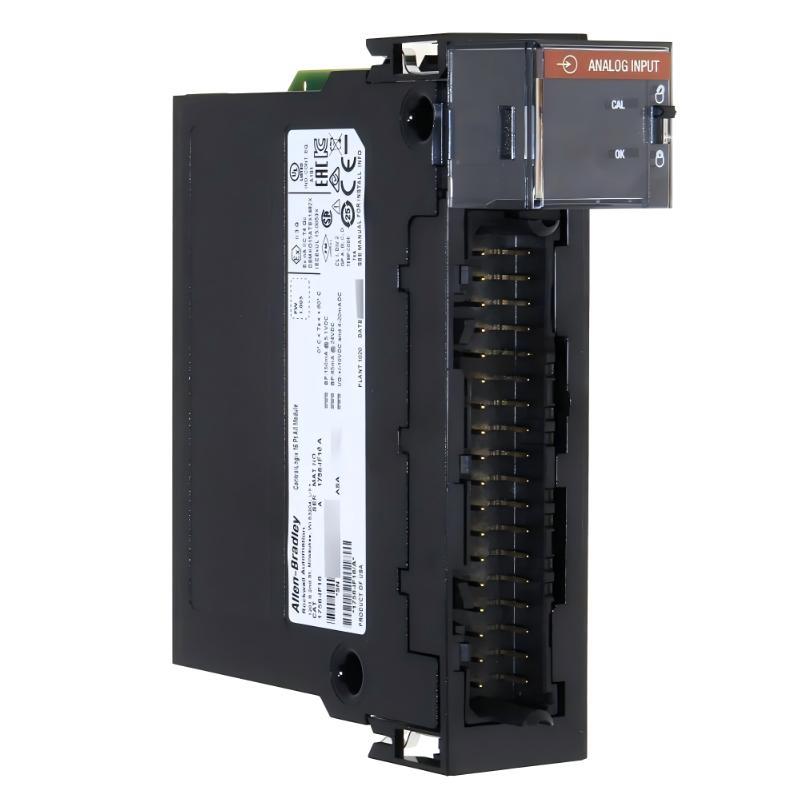
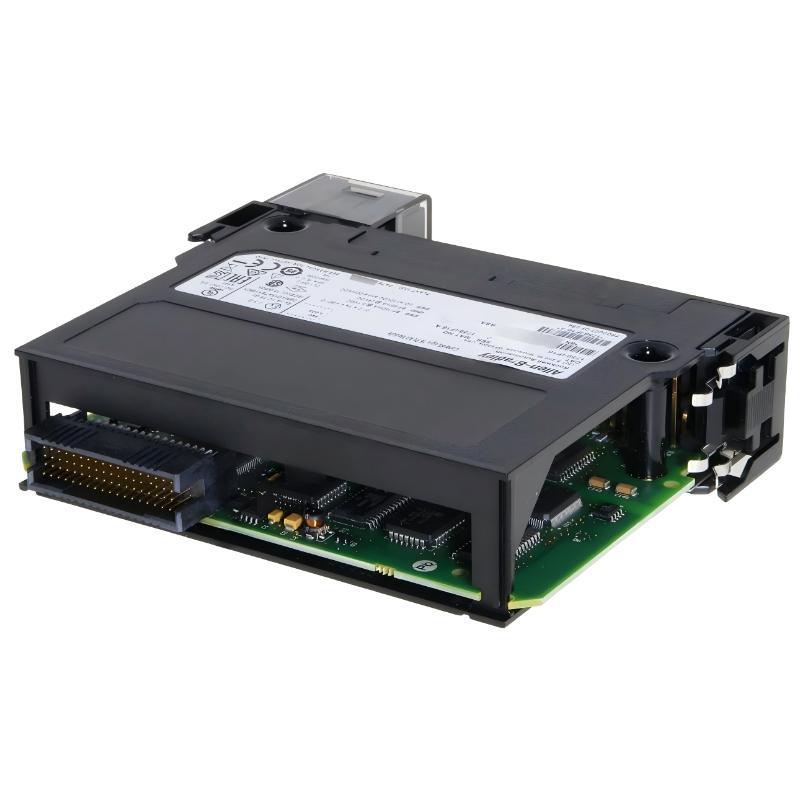
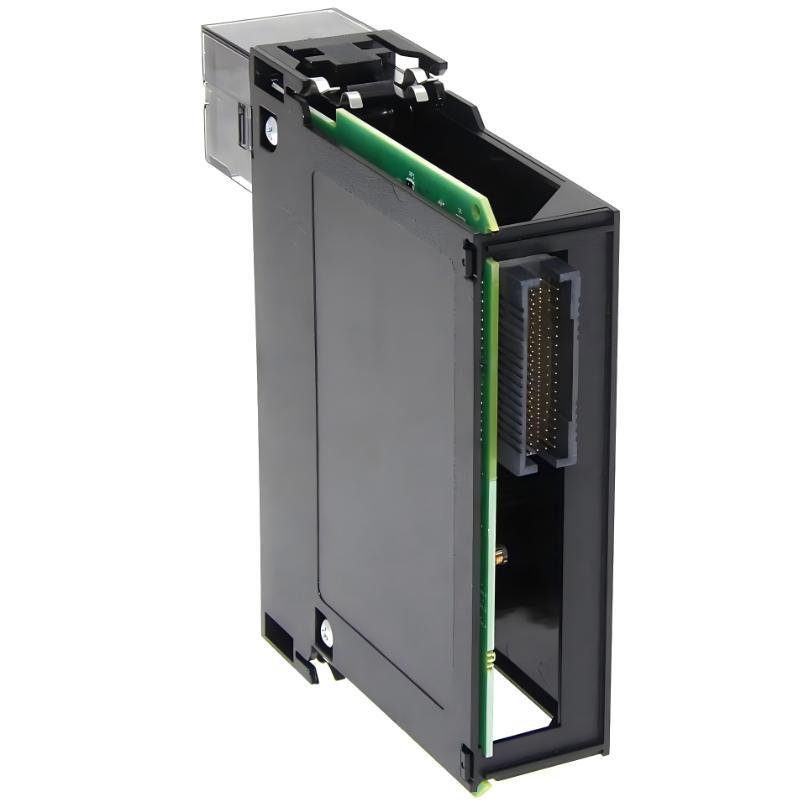
- Allen Bradley
- 1756-IF16K
- Controllogix Analog Input Module
- USA
- 3.5 × 14.5 × 11.2 cm
- 0.5kg
- Xiamen, China
- New & In Stock
- T/T, PayPal, Western Union
- 1 Year
- 1-3 Working Days
- DHL, UPS, TNT, FedEx and EMS.
- 24-Hour Service
- COO
- 3
Our advantage

Global Logistics
We have a 10-year logistics and express cooperation agreement, so our products can be shipped to any place in the world.

Brand new and original
Our products are imported in bulk from the place of origin. Because of the cooperative relationship, our products are all original and 100% new.

24-hour service
We provide 7*24 hours service to our customers. We will be there whenever you need us.

Price advantage
All our products are priced very favorably because we have our own warehouse and supply.
| Company Information | |||
| [email protected] | |||
| Mobile | +8615980777398 | ||
| +8615980777398 | |||
| 15980777398 |
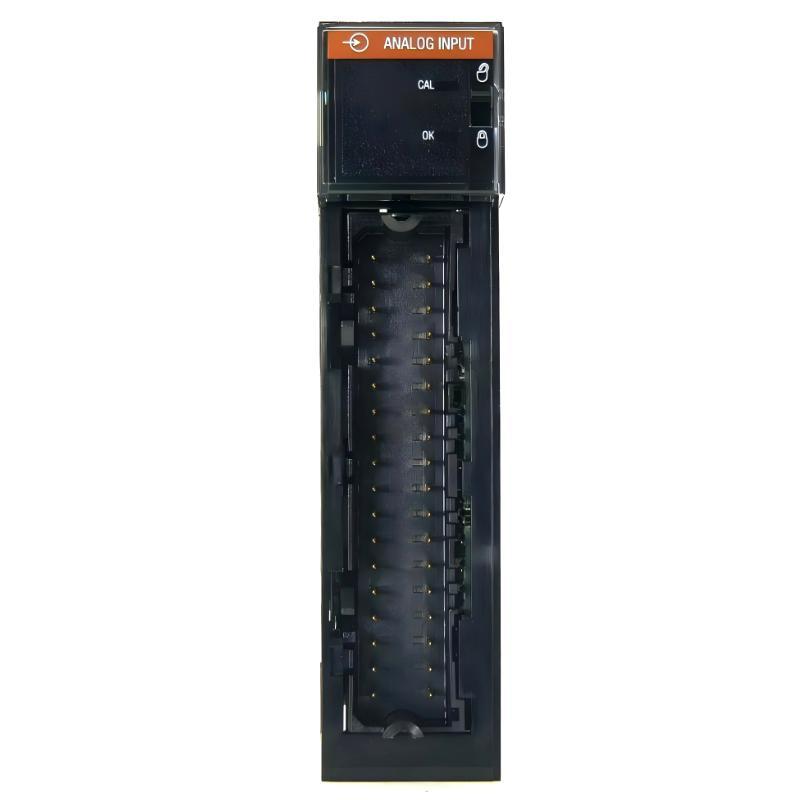
Allen-Bradley 1756-IF16K Analog Input Module
1. Product Overview
The Allen-Bradley 1756-IF16K is a model designation that appears to refer to a conformal-coated analog input module in the ControlLogix family of industrial automation products. The closely related base catalog number 1756-IF16 is a 16-channel analog input module designed to acquire analog signals from industrial instruments and make the measured values available to a compatible controller.
Unlike a digital input module, which reads simple ON/OFF states, an analog input module measures continuously varying electrical signals. These signals can represent pressure, temperature, flow, liquid level, position, speed feedback, and other process variables.
The “K” suffix is commonly associated with conformal-coated versions in this product family. However, the exact catalog number 1756-IF16K should be confirmed from the module’s nameplate before using the specifications for procurement or engineering. Similar-looking catalog numbers can have different hardware configurations, and specifications for the base model should not automatically be treated as verified specifications for a suffix variant.
The module is intended to work as part of a compatible ControlLogix control system. It receives analog signals from field instruments, converts them into digital values, and makes the resulting data available to the controller for monitoring, control, alarms, and process sequencing.
2. Detailed Technical Specifications
The 1756-IF16K is a 16-channel analog input module designed to accept voltage and current signals from compatible field instruments. Its configurable input arrangements allow the channels to be used in single-ended, differential, or high-speed differential modes, subject to the selected configuration.
| Parameter | Specification |
|---|---|
| Brand | Allen-Bradley |
| Model | 1756-IF16K |
| Product series | ControlLogix |
| Product category | Analog input module |
| Input channels | 16 single-ended, 8 differential, or 4 high-speed differential |
| Input signal types | Voltage and current |
| Voltage ranges | ±10.25V, 0–10.25V, 0–5.125V |
| Current range | 0–20.5 mA |
| Common application signal | 4–20 mA industrial instrumentation |
| Resolution at ±10.25V | 320 μV/count, 15 bits plus sign |
| Resolution at 0–10.25V | 160 μV/count, 16 bits |
| Resolution at 0–5.125V | 80 μV/count, 16 bits |
| Resolution at 0–20.5 mA | 0.32 μA/count, 16 bits |
| Conversion method | Sigma-delta |
| Data formats | Integer and IEEE 32-bit floating point |
| Input impedance, voltage | Greater than 10 MΩ |
| Input impedance, current | 249 Ω |
| Maximum input overvoltage protection, voltage mode | 30V DC |
| Maximum input overvoltage protection, current mode | 8V DC |
| Current draw at 5.1V | 150 mA |
| Current draw at 24V | 65 mA |
| Total backplane power | Approximately 2.33 W |
| Maximum power dissipation, voltage mode | Approximately 2.3 W |
| Maximum power dissipation, current mode | Approximately 3.9 W |
| Input-to-backplane isolation | 250V continuous, reinforced insulation |
| Channel-to-channel isolation | No isolation between individual inputs |
| Input filtering | Configurable; settings depend on the application and selected mode |
| Module scan time | Depends on the channel arrangement and filter configuration |
| Open-circuit detection | Supported under specified wiring and operating conditions |
| Removable terminal block | Compatible terminal block required; terminal block may be ordered separately |
| Slot width | One ControlLogix chassis slot |
| Environmental protection | Conformal-coated version |
| Operating temperature | 0–60°C |
| Storage temperature | −40–85°C |
| Relative humidity | 5–95%, non-condensing |
| Dimensions (W × H × D) | Approximately 3.5 × 14.2 × 14.5 cm |
| Weight | Approximately 0.23 kg |
| Enclosure type | Open-style module; requires suitable cabinet installation |
The input ranges and resolution depend on the selected operating mode. The module’s channel count also changes with the wiring arrangement: a configuration using differential channels does not provide 16 independent differential inputs.
Dimensions and weight are approximate. Confirm the exact module series, terminal-block arrangement, and mechanical specification before using these values for a final cabinet layout or shipping calculation.
3. How the Module Works
The 1756-IF16K receives analog electrical signals from compatible field instruments. Each signal represents a measured physical quantity, such as temperature, pressure, flow, or liquid level.
The module converts the incoming electrical signal into a digital value that the controller can process. The controller program can then scale that value into engineering units, compare it against setpoints, generate alarms, or adjust outputs to maintain the required operating conditions.
For example, a pressure transmitter may provide a 4–20 mA signal corresponding to a defined pressure range. The module reads the current, converts it into a digital value, and passes that value to the controller. The controller can use the measurement to display pressure, monitor operating limits, or regulate a pump or valve.
The module supports voltage and current measurements, making it suitable for a broad range of instrumentation. Correct signal selection, channel configuration, wiring, grounding, and scaling are essential to achieving reliable measurements.
4. Product Applications
4.1 Process automation
Process systems frequently need continuous measurement of operating conditions. The module can collect signals from pressure transmitters, flow meters, level transmitters, and other compatible instruments.
The controller can use these measurements to regulate the process, maintain setpoints, monitor trends, and respond to abnormal conditions.
4.2 Temperature monitoring
Temperature transmitters often convert a sensor measurement into a standard analog output, such as 4–20 mA or a voltage signal.
The 1756-IF16K can acquire the output from a compatible transmitter. The controller can then display the temperature, compare it with upper and lower limits, or use it in a process-control calculation.
The module should not be assumed to connect directly to every temperature sensor type. Where a sensor requires a dedicated thermocouple or RTD interface, the appropriate input module or signal conditioner is needed.
4.3 Pressure and flow control
Pressure and flow measurements are common in pumping systems, compressed-air installations, fluid-processing equipment, and production machinery.
The module can receive compatible analog outputs from pressure and flow instruments. The controller can use the readings to regulate pumps, control valves, identify deviations, and support operating alarms.
4.4 Liquid-level monitoring
Storage tanks, mixing vessels, and process containers often use level transmitters to provide continuous measurements.
The module can acquire the transmitter signal so the controller can monitor tank level, manage filling and draining sequences, and generate high- or low-level alarms.
4.5 Manufacturing equipment
Manufacturing systems may need to monitor analog feedback from pressure regulators, force sensors, position transducers, or other measurement devices.
The module provides a way to bring these signals into a ControlLogix system. Its 16-channel capacity can be useful when several measurements must be acquired within a limited chassis space.
4.6 Utilities and facility systems
Industrial utilities may include water-treatment equipment, compressed-air systems, heating and cooling equipment, and other installations with analog instrumentation.
The module can collect compatible process measurements for monitoring and control. Signal conditioning and isolation should be considered where long cable runs, electrical noise, or differences in grounding potential may affect the measurements.
5. Product Advantages
5.1 Flexible voltage and current inputs
The module supports multiple voltage ranges and a current input range. This flexibility allows it to work with many common industrial transmitters and measurement devices without requiring a separate input module for every signal type.
The selected input range must match the transmitter output and the intended measurement span.
5.2 High channel density
With 16 single-ended inputs available in one slot, the module can collect a relatively large number of analog measurements within a compact chassis arrangement.
This is useful in systems with many transmitters, especially when cabinet space and slot availability are limited.
5.3 Configurable input arrangements
The module supports single-ended, differential, and high-speed differential input arrangements. These options allow the designer to balance channel count, wiring requirements, and measurement needs.
Differential wiring can be useful when signal integrity is a concern, but it reduces the number of available channels compared with a single-ended configuration.
5.4 Digital conversion and engineering data
The module converts analog signals into digital values for use by the controller. Depending on the system configuration, data can be represented in integer or IEEE 32-bit floating-point format.
This supports integration with control logic, operator displays, alarm functions, data logging, and process calculations.
5.5 Conformal-coated construction
The “K” version is associated with conformal coating. This coating is intended to provide additional protection for electronic assemblies against certain environmental contaminants.
It can be a useful feature in industrial installations where airborne contaminants are a concern. It does not make the module waterproof, nor does it eliminate the need for a suitable enclosure and environmental control.
5.6 Integration with modular control systems
The module is designed for use in a compatible ControlLogix chassis. It can work alongside controllers, communication modules, digital I/O, analog output modules, and other supported components.
This modular arrangement can simplify system expansion and maintenance, provided the chassis capacity, power budget, and compatibility requirements are considered.
6. Brand and Product Series
| Item | Description |
|---|---|
| Brand | Allen-Bradley |
| Product series | ControlLogix |
| Model | 1756-IF16K |
| Product category | Analog input |
| Number of channels | Up to 16 single-ended channels |
| Signal types | Voltage and current |
| Typical signal | 4–20 mA |
| Mounting method | Chassis-mounted |
| Environmental configuration | Conformal-coated |
| Main function | Analog measurement acquisition |
| Typical system role | Transfers field measurement values to a compatible controller |
The ControlLogix family is based on a modular architecture. A system can combine processing, communication, analog and digital I/O, and power distribution in a compatible chassis.
The 1756-IF16K provides the analog measurement interface. It does not independently execute the complete control program; the controller interprets the acquired data and determines the appropriate system response.
7. Five Related Models
The following models are related to analog measurement or signal output in the ControlLogix family. The best choice depends on the number of channels, signal type, measurement accuracy, and whether the application needs input or output functionality.
| Model | Product type | Main parameters | Dimensions (W × H × D, approx.) | Weight (approx.) |
|---|---|---|---|---|
| 1756-IF16 | Analog input | 16 single-ended, 8 differential, or 4 high-speed differential channels; voltage and current input; standard coating configuration | 3.5 × 14.2 × 14.5 cm | 0.22 kg |
| 1756-IF8 | Analog input | 8-channel analog input; supports compatible voltage/current measurement ranges; confirm exact range and revision | Approx. 3.5 × 14.2 × 14.5 cm | Approx. 0.22–0.30 kg |
| 1756-IF6I | Isolated analog input | 6-channel isolated analog input; suited to applications where channel isolation is a design consideration; verify supported ranges | Approx. 3.5 × 14.2 × 14.5 cm | Approx. 0.22–0.35 kg |
| 1756-OF8 | Analog output | 8-channel analog output; used to send compatible voltage or current reference signals to field devices | Approx. 3.5 × 14.2 × 14.5 cm | Approx. 0.22–0.35 kg |
| 1756-IF4FXOF2F | Analog combination module | Combines analog input and output functions; intended for applications needing both measurement acquisition and analog control outputs | Approx. 3.5 × 14.2 × 14.5 cm | Verify exact revision |
Dimensions and weights for related models are approximate estimates where shown. Exact signal ranges, isolation characteristics, terminal-block requirements, and net weights should be confirmed for the specific catalog number.
Choosing a related model
– 1756-IF16: A useful comparison when 16-channel analog input capability is required but the conformal-coated configuration is not specifically needed.
– 1756-IF8: Worth considering for a smaller system that needs fewer analog measurements. It may help preserve chassis slots when the application requires only a limited number of analog channels.
– 1756-IF6I: Consider when input isolation is an important design requirement. Verify the supported signal ranges and wiring requirements before selecting it.
– 1756-OF8: Appropriate when the controller needs to send analog commands, such as a reference signal to a compatible drive or control valve, rather than acquire measurements.
– 1756-IF4FXOF2F: A potential option when an application needs both analog inputs and outputs in a single module. Check the precise channel mix and performance specifications before using it as an alternative.
8. Five Popular Models from the Same Brand
These models cover the main functions typically found in a modular automation system. They complement the 1756-IF16K but do not all replace it.
| Model | Product type | Main parameters | Dimensions (W × H × D, approx.) | Weight (approx.) |
|---|---|---|---|---|
| 1756-L83E | Controller | ControlLogix controller; executes control logic; embedded Ethernet connectivity; verify memory and firmware requirements | Approx. 3.5 × 14.5 × 11.2 cm | Approx. 0.3–0.6 kg |
| 1756-EN2T | Ethernet communication module | EtherNet/IP communication; copper Ethernet interface; connects compatible control systems to networked devices | Approx. 3.5 × 14.5 × 11.2 cm | Approx. 0.3–0.5 kg |
| 1756-PA75 | AC power supply | Supplies a compatible ControlLogix chassis; AC input; capacity must match the installed module load | Approx. 7.6 × 14.5 × 11.7 cm | Approx. 0.7–1.0 kg |
| 1756-IB16 | Digital input module | 16-point DC digital input; receives discrete ON/OFF signals from compatible field devices | Approx. 3.5 × 14.5 × 11.2 cm | Approx. 0.3–0.5 kg |
| 1756-OB16E | Digital output module | 16-point electronic DC digital output; drives compatible field loads within specified output limits | Approx. 3.5 × 14.5 × 11.2 cm | Approx. 0.3–0.5 kg |
The dimensions and weights in this table are planning estimates, not verified mechanical specifications for every revision. Check the exact product before finalizing a cabinet layout or shipping specification.
How these models work together
1756-L83E controller: Executes the application logic and processes the analog values supplied by the input module. It can use the measured data to calculate setpoints, control sequences, and alarm conditions.
1756-EN2T communication module: Provides network connectivity for compatible industrial devices. It can support data exchange between the control system and other networked equipment.
1756-PA75 power supply: Supplies power to the compatible chassis backplane. The total power requirement must be calculated for all installed modules.
1756-IB16 digital input module: Collects discrete signals such as push-button states, switch positions, and equipment-ready contacts.
1756-OB16E digital output module: Sends discrete control signals to compatible devices, subject to the module’s output ratings and the connected load requirements.
Together, these modules illustrate a typical control-system arrangement. The analog input module collects process measurements, the digital input module reads discrete states, the controller executes the control logic, the output module commands equipment, the communication module connects networked devices, and the power supply supports the chassis.
9. Installation and Configuration Considerations
9.1 Select the correct input range
The input range must match the signal supplied by the field instrument. A 4–20 mA transmitter, for example, should be configured and scaled appropriately for the selected current input range.
Incorrect range selection can cause inaccurate readings or unexpected values in the controller.
9.2 Choose the correct channel arrangement
Single-ended, differential, and high-speed differential modes have different channel capacities and wiring requirements.
The selected arrangement should be documented clearly so that the electrical drawings, terminal wiring, controller configuration, and troubleshooting procedures remain consistent.
9.3 Use suitable wiring practices
Analog signals can be affected by electrical noise, ground-potential differences, and incorrect cable routing. Use suitable shielded wiring, follow the applicable grounding instructions, and keep analog signal cables separated from noisy power wiring where required.
For current loops, verify the transmitter supply, loop wiring, polarity, and load requirements.
9.4 Confirm terminal-block compatibility
The removable terminal block is an important part of the physical installation. Verify that the correct terminal-block type is fitted and that its wiring capacity and terminal torque requirements are followed.
Do not assume that a terminal block supplied for a different module is compatible.
9.5 Check chassis power and slot availability
Before installation, confirm that the chassis has an available slot and that the power supply can support the total installed load.
The module’s backplane current draw and power consumption should be included in the system power calculation.
9.6 Confirm environmental conditions
The conformal coating provides additional protection against certain contaminants, but the module remains subject to its operating-temperature, humidity, and installation limits.
The control cabinet should provide suitable protection from dust, moisture, condensation, and other environmental factors.
10. Summary
The Allen-Bradley 1756-IF16K is a conformal-coated analog input module in the ControlLogix family. It is designed to acquire voltage and current signals from compatible industrial instruments and make the resulting measurement values available to a controller.
Its main features include up to 16 single-ended input channels, configurable voltage and current ranges, multiple channel arrangements, integer and floating-point data formats, and conformal-coated construction. These characteristics make it suitable for process monitoring, pressure and flow measurement, temperature-transmitter acquisition, level monitoring, and other industrial applications requiring analog data.
When choosing this model, the key considerations are the input signal range, number of active channels, wiring arrangement, measurement requirements, environmental conditions, and compatibility with the installed controller and chassis.
The related models listed above provide alternatives for different channel counts, isolation needs, and analog output requirements. They should be evaluated against the actual application rather than selected solely on the basis of model similarity.
For purchasing and engineering purposes, confirm the exact 1756-IF16K catalog number, revision, terminal-block arrangement, dimensions, and weight before finalizing the order or installation design.