

ProductPRODUCT
Featured products


Contact Us
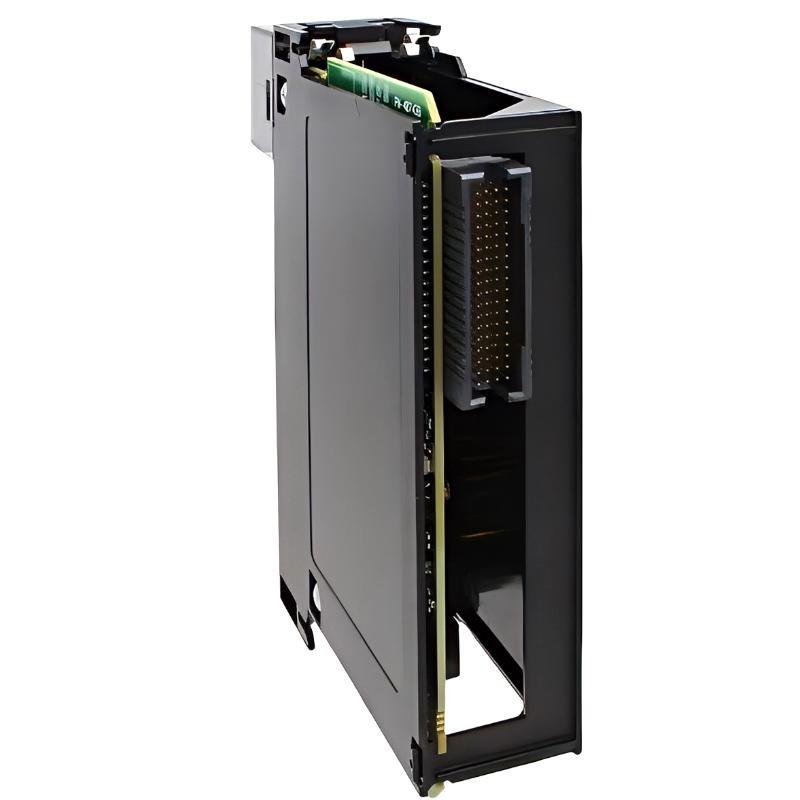
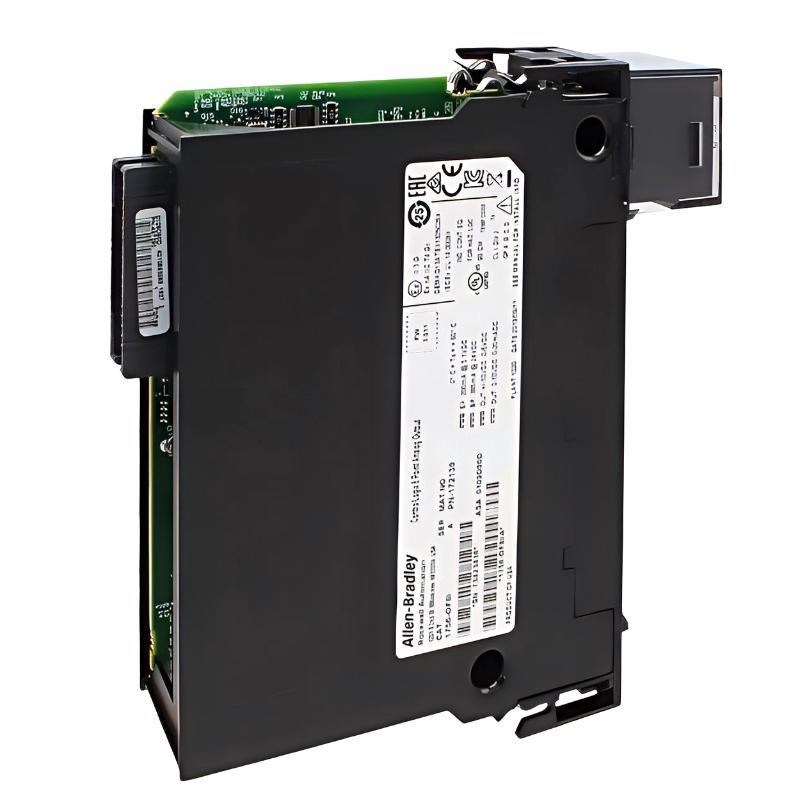
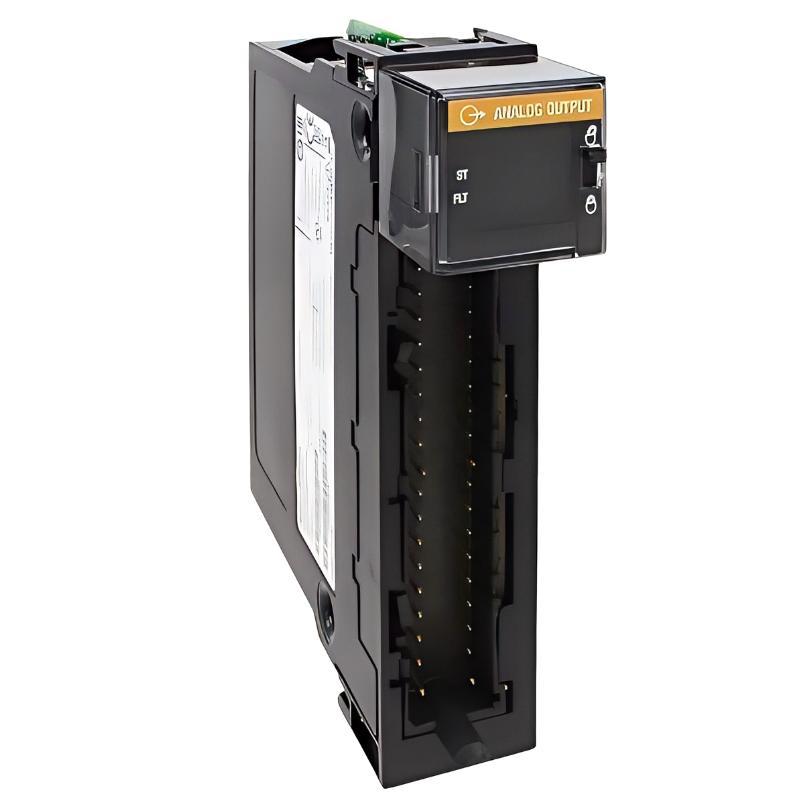
- Allen Bradley
- 1756-OF8IK
- Industrial Analog Output Module
- USA
- 3.5 × 14.5 × 11.2 cm
- 0.5kg
- Xiamen, China
- New & In Stock
- T/T, PayPal, Western Union
- 1 Year
- 1-3 Working Days
- DHL, UPS, TNT, FedEx and EMS.
- 24-Hour Service
- COO
- 4
Our advantage

Global Logistics
We have a 10-year logistics and express cooperation agreement, so our products can be shipped to any place in the world.

Brand new and original
Our products are imported in bulk from the place of origin. Because of the cooperative relationship, our products are all original and 100% new.

24-hour service
We provide 7*24 hours service to our customers. We will be there whenever you need us.

Price advantage
All our products are priced very favorably because we have our own warehouse and supply.
| Company Information | |||
| [email protected] | |||
| Mobile | +8615980777398 | ||
| +8615980777398 | |||
| 15980777398 |
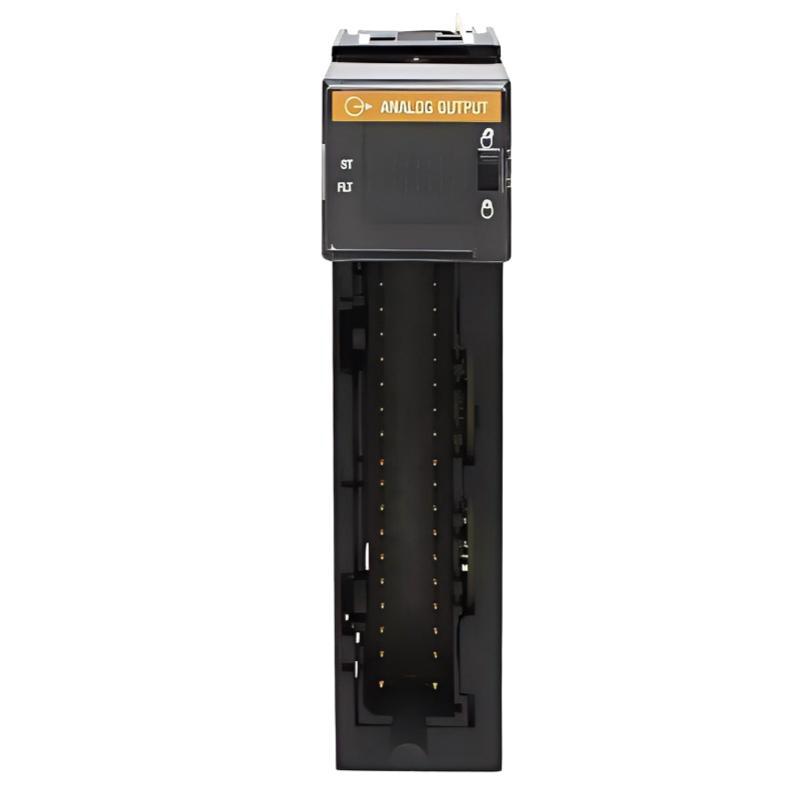
Allen-Bradley 1756-OF8IK Analog Output Module
1. Product Overview
The Allen-Bradley 1756-OF8IK appears to be a catalog designation associated with an analog output module in the ControlLogix family. The closest familiar base model is 1756-OF8I, an eight-channel isolated analog output module used to send control signals from a programmable controller to compatible industrial equipment.
An analog output module converts digital values from a controller into electrical signals that field devices can use. These signals can represent a valve position command, a drive speed reference, a pressure setpoint, or another continuously adjustable control value.
Unlike a digital output module, which generally switches a signal ON or OFF, an analog output module provides a variable voltage or current signal. This allows the control system to regulate equipment across a range of operating conditions rather than simply turning it on or off.
The exact catalog number 1756-OF8IK should be confirmed on the module nameplate before ordering or preparing technical documentation. The suffix may identify a specific configuration, and the base model 1756-OF8I should not automatically be treated as an exact specification for the “K” variant.
2. Technical Specifications
The 1756-OF8IK provides eight individually isolated analog output channels. Each channel can be configured for a compatible voltage or current output, allowing different types of control signals to be used within the same module.
| Parameter | Specification |
|---|---|
| Brand | Allen-Bradley |
| Model | 1756-OF8IK |
| Product series | ControlLogix |
| Product type | Isolated analog output module |
| Number of output channels | 8 |
| Output configuration | Individually isolated channels; voltage and current modes can be combined |
| Voltage output ranges | −10 to +10 V, 0–10 V, 0–5 V |
| Current output range | 0–20 mA |
| Typical application signal | 4–20 mA, configured within the supported current range |
| Resolution | 16-bit |
| Resolution at ±10.5 V | 0.32 mV/count |
| Resolution at 0–10.5 V | 0.16 mV/count |
| Resolution at 0–5.25 V | 0.08 mV/count |
| Resolution at 0–21 mA | 0.32 μA/count |
| Output impedance in current mode | Approximately 46 Ω |
| Current-output load range | 0–1000 Ω |
| Voltage-output load | Greater than 1000 Ω |
| Settling time | Less than 2 ms to 95% of final value with resistive loads |
| Minimum module scan time | Approximately 1 ms |
| Calibrated accuracy at 25°C | Approximately 0.05% |
| Module error over full temperature range | Approximately 0.1% |
| Output open-circuit detection | Supported in current-output mode |
| Output short-circuit detection | Supported in voltage-output mode |
| Output overvoltage protection | ±30 V DC |
| Output-to-backplane isolation | 250 V continuous, reinforced insulation |
| Output-to-output isolation | 250 V continuous, basic insulation |
| Backplane current at 5.1 V | 200 mA |
| Backplane current at 24 V | Depends on output mode and connected load |
| Total backplane power | Approximately 6.3–10.2 W, depending on mode and load |
| Maximum module power dissipation | Approximately 5.4–6.7 W, depending on mode and load |
| Mounting | One slot in a compatible ControlLogix chassis |
| Terminal block | Compatible 36-position removable terminal block; confirm the correct part |
| Environmental configuration | Conformally coated |
| Operating temperature | 0–60°C |
| Storage temperature | −40–85°C |
| Relative humidity | 5–95%, non-condensing |
| Dimensions (W × H × D) | Approximately 3.5 × 14.5 × 14.5 cm; confirm the mechanical drawing |
| Weight | Approximately 0.45 kg |
| Enclosure type | Open-style module; intended for installation in a suitable control cabinet |
The output ranges, resolution, accuracy, and power consumption depend on the selected configuration and load. In particular, current-output loads affect the module’s power requirements, so the chassis power budget should be calculated using the intended application rather than a single nominal figure.
3. Product Introduction
The Allen-Bradley 1756-OF8IK is an eight-channel isolated analog output module in the ControlLogix family. It is designed to convert digital output values from a compatible controller into analog electrical signals that can be used by industrial control devices.
In a typical control application, the controller calculates a desired operating value and sends it to the output module. The module converts that value into a corresponding voltage or current signal. A compatible field device then uses the signal to adjust its operation.
For example, a controller may calculate that a control valve should be 65% open. It can send the corresponding output value to the module, which generates a configured analog signal for the valve positioner. The positioner interprets the signal and adjusts the valve accordingly.
The module supports both voltage and current output modes. Voltage outputs may be used for compatible drive references, electronic control inputs, and other devices designed for voltage signals. Current outputs are commonly used with valve positioners, process controllers, and other industrial instruments that accept current-loop commands.
One of the most important features of the 1756-OF8IK is its individual channel isolation. This can help reduce the effect of electrical potential differences between output circuits and provides greater flexibility when integrating equipment with different electrical characteristics. The specified isolation ratings must still be respected, and isolation should not be interpreted as permission to ignore grounding or wiring requirements.
The K suffix identifies the conformally coated version. This is intended to provide additional protection for electronic assemblies against certain environmental contaminants. It does not make the module waterproof or eliminate the need for a suitable enclosure.
4. Main Product Functions
4.1 Analog voltage output
The module can generate configured voltage signals, including −10 to +10 V, 0–10 V, and 0–5 V ranges.
These signals can be used by compatible equipment that accepts an analog voltage command. Examples include certain drive references, electronic control inputs, and instrumentation interfaces.
The selected output range must match the receiving device’s electrical requirements. Incorrect range selection can lead to inaccurate control or an unexpected equipment response.
4.2 Analog current output
The module supports a 0–20 mA output range, which can be configured for applications using a 4–20 mA control signal.
Current signals are widely used in industrial instrumentation because they are suitable for many transmitter and actuator interfaces. The receiving device’s input impedance and the total loop load must remain within the module’s specified limits.
4.3 Individual channel isolation
Each output channel has an isolation arrangement intended to separate it electrically from other channels and from the backplane, within the stated ratings.
This can be useful where output signals connect to different pieces of equipment or where potential differences between circuits need to be considered in the design.
Isolation does not replace appropriate grounding, shielding, or surge protection. The system designer must follow the module’s electrical and installation requirements.
4.4 Output monitoring and fault detection
The module supports open-circuit detection in current-output mode and short-circuit detection in voltage-output mode.
These features can help maintenance personnel identify certain wiring or load problems. Their usefulness depends on the selected output mode, connected equipment, and controller configuration.
4.5 Integration with controller logic
The module operates as part of a compatible ControlLogix system. The controller determines the output value, while the module generates the corresponding electrical signal.
This separation allows the control program to perform calculations, execute sequences, respond to sensor readings, and coordinate multiple actuators without requiring a separate standalone controller for each analog output.
5. Product Applications
5.1 Control valve positioning
Control valves are commonly used to regulate liquid flow, gas flow, pressure, and other process conditions.
A controller can calculate the required valve position and send an analog output to a compatible positioner. The 1756-OF8IK converts the controller’s value into the configured voltage or current signal, allowing the positioner to adjust the valve.
The module’s output range must match the positioner’s input specification. The valve’s response and control accuracy also depend on the positioner, actuator, mechanical condition, and control strategy.
5.2 Variable-frequency drive speed references
Some variable-frequency drives accept analog reference signals to adjust motor speed.
The module can supply a compatible voltage or current command to such a drive. For example, the controller may increase the reference value when a conveyor needs to run faster or reduce it when the production process requires slower movement.
The output mode, scaling, electrical interface, and drive parameters must be configured together. The module does not directly power the motor; it provides the control reference to compatible equipment.
5.3 Pressure regulation
Pressure-control applications may use a controller to adjust a regulator, valve, or other compatible control device.
The controller receives pressure feedback through a suitable input module and calculates the required adjustment. The 1756-OF8IK then supplies the analog command to the receiving device.
This arrangement can be used in fluid systems, industrial utilities, process skids, and manufacturing equipment.
5.4 Flow regulation
In a flow-control system, the controller may use a flow measurement to determine whether a valve or drive should increase or decrease its output.
The module can generate the analog command required by the compatible actuator or drive. This supports continuous adjustment rather than simple ON/OFF control.
5.5 Temperature-control systems
Certain temperature-control applications use analog commands to adjust compatible control devices, such as power controllers or other equipment with voltage or current reference inputs.
The controller calculates the desired output based on the measured temperature and control strategy. The module converts that command into the configured analog signal.
The module itself is not a thermocouple or RTD input device. Temperature measurement requires an appropriate sensor interface or input module.
5.6 Process machinery
Manufacturing machinery may need several analog commands for drives, valves, regulators, or other adjustable equipment.
Eight isolated output channels can be useful where multiple control signals must be generated from one chassis module. The module can reduce the need for separate output hardware for each analog command, provided its electrical characteristics match all connected devices.
5.7 Industrial utilities
Water treatment, pumping, compressed-air systems, and other utility installations may use analog commands to regulate flow, pressure, or equipment speed.
The module can form part of a ControlLogix control architecture that coordinates these devices. Its suitability depends on the receiving equipment, environmental conditions, control requirements, and system design.
6. Product Advantages
6.1 Eight isolated output channels
The module provides eight analog output channels with individual isolation. This allows the system designer to connect multiple compatible devices while considering the electrical separation required by the application.
For systems with several actuators or control references, this channel count can help simplify the I/O layout and reduce the number of separate modules required.
6.2 Voltage and current flexibility
The ability to select voltage or current output modes makes the module suitable for a range of industrial control interfaces.
A project may use current signals for valve positioners and voltage signals for other compatible devices. The exact channel configuration should be checked against the required signal type and system design.
6.3 16-bit output resolution
The 16-bit resolution allows the module to represent output values in relatively small increments across the supported ranges.
This is useful in applications that require smooth adjustment of an actuator or reference signal. Actual system accuracy depends on the module’s specifications, the configured range, the receiving device, calibration, wiring, and other system factors.
6.4 Fast output settling
The specified settling time is less than 2 ms to 95% of the final value with resistive loads.
This can support applications where output commands need to respond promptly to controller changes. Actual machine response will also depend on the actuator, drive, valve, control-loop tuning, and connected load.
6.5 Electrical isolation
Individual channel isolation can help address potential differences between output circuits. It also provides flexibility when designing systems that connect multiple types of industrial equipment.
The isolation ratings should be considered alongside grounding, shielding, cable routing, and the electrical characteristics of the connected devices.
6.6 Conformal-coated construction
The conformal coating provides additional protection against certain contaminants that may affect electronic assemblies.
This can be beneficial in industrial cabinets where environmental exposure is a concern. The coating does not eliminate the need for temperature control, suitable enclosure protection, or compliance with installation limits.
6.7 Modular ControlLogix integration
The module fits into a compatible ControlLogix chassis and can be used alongside controllers, input modules, communication modules, and other supported components.
This modular architecture allows the control system to be designed around the actual number and type of signals needed. Future expansion is possible when adequate chassis space, backplane capacity, and power supply capacity are available.
7. Brand and Product Series
| Item | Description |
|---|---|
| Brand | Allen-Bradley |
| Product family | ControlLogix |
| Model | 1756-OF8IK |
| Product category | Isolated analog output module |
| Output channel count | 8 |
| Output types | Voltage and current |
| Resolution | 16-bit |
| Isolation | Individual channel isolation within specified ratings |
| Special configuration | Conformal-coated version |
| Mounting | One compatible ControlLogix chassis slot |
| Main function | Converts controller values into analog output signals |
| Typical connected equipment | Compatible valve positioners, drive references, regulators, and process-control devices |
The ControlLogix family uses a modular architecture in which the controller, I/O modules, communication modules, chassis, and power supply perform different functions.
Within this architecture, the 1756-OF8IK provides analog output signals. It does not independently execute the full control program, and it should not be confused with a digital output module or a power supply.
8. Five Related Models
The following models are related to analog output or combined analog I/O applications. Some have different channel counts, signal types, or isolation arrangements, so they should not be assumed to be direct replacements.
| Model | Product type | Main parameters | Dimensions (W × H × D, approx.) | Weight (approx.) |
|---|---|---|---|---|
| 1756-OF8I | Isolated analog output | 8 isolated channels; voltage and current modes; 16-bit resolution; standard, non-K configuration | 3.5 × 14.5 × 14.5 cm | 0.45 kg |
| 1756-OF4 | Analog output | 4-channel analog output; supports compatible voltage/current configurations; verify exact ranges and revision | 3.5 × 14.5 × 14.5 cm | 0.3–0.45 kg |
| 1756-OF6CI | Isolated analog output | 6-channel current output; designed for compatible current-control applications; verify current range and load requirements | 3.5 × 14.5 × 14.5 cm | 0.3–0.45 kg |
| 1756-OF6VI | Isolated analog output | 6-channel voltage output; intended for compatible voltage-control signals; verify voltage ranges for the exact revision | 3.5 × 14.5 × 14.5 cm | 0.3–0.45 kg |
| 1756-IF8I | Isolated analog input | 8-channel analog input; used to acquire compatible voltage/current measurement signals rather than generate outputs | 3.5 × 14.5 × 14.5 cm | 0.3–0.45 kg |
Dimensions and weights for the related models are approximate planning values. Verify the exact mechanical specifications and catalog suffix before procurement or installation.
Model selection guidance
– 1756-OF8I: Consider when eight isolated analog output channels are required but the conformal-coated configuration is not specifically needed.
– 1756-OF4: Consider when the application needs fewer analog output channels. A lower channel count may be sufficient for smaller machines or installations with limited output requirements.
– 1756-OF6CI: Consider for an application that needs isolated current outputs. Verify the supported current range and load limits before selecting it.
– 1756-OF6VI: Consider when voltage outputs are required for compatible devices. Confirm the available voltage ranges and the receiving equipment’s input specifications.
– 1756-IF8I: This is an input module, not an output substitute. It is relevant when a system needs to collect analog measurements as well as generate analog commands.
9. Five Popular Models from the Same Brand
These models cover different functions in a typical ControlLogix automation system. They complement the 1756-OF8IK but do not all perform the same function.
| Model | Product type | Main parameters | Dimensions (W × H × D, approx.) | Weight (approx.) |
|---|---|---|---|---|
| 1756-L83E | Controller | Executes control logic; embedded Ethernet connectivity; confirm memory and firmware requirements for the selected revision | 3.5 × 14.5 × 11.2 cm | 0.3–0.6 kg |
| 1756-EN2T | Ethernet communication module | EtherNet/IP communication; copper Ethernet interface; connects compatible controllers and networked devices | 3.5 × 14.5 × 11.2 cm | 0.3–0.5 kg |
| 1756-PA75 | AC chassis power supply | Supplies power to a compatible ControlLogix chassis; capacity must match the installed module load | 7.6 × 14.5 × 11.7 cm | 0.7–1.0 kg |
| 1756-IB16 | Digital input module | 16-point DC digital input; receives discrete ON/OFF signals from compatible field devices | 3.5 × 14.5 × 11.2 cm | 0.3–0.5 kg |
| 1756-OB16E | Digital output module | 16-point electronic DC digital output; controls compatible field loads within the specified output ratings | 3.5 × 14.5 × 11.2 cm | 0.3–0.5 kg |
Dimensions and weights are approximate estimates and may vary by model revision or accessory configuration. Confirm the relevant mechanical specifications before using these values in a final engineering document.
How these products work together
1756-L83E controller: Executes the control program and determines the required analog output values. It can use feedback from sensors and other modules to calculate the commands needed by the process.
1756-EN2T communication module: Provides Ethernet connectivity for compatible devices. It can support communication between the controller and networked equipment.
1756-PA75 power supply: Supplies the compatible chassis backplane. The power supply must have sufficient capacity for the complete module configuration.
1756-IB16 digital input module: Collects discrete signals such as switch positions, sensor states, and equipment-ready contacts.
1756-OB16E digital output module: Sends discrete control signals to compatible field devices, subject to its output ratings and load requirements.
In a typical system, the controller processes input data and calculates the required control action. The 1756-OF8IK then generates the analog signal for a compatible actuator or control device, while digital output modules handle suitable ON/OFF commands.
10. Installation and Configuration Considerations
10.1 Select the correct output mode
Each output channel should be configured for the signal type required by the connected device. A current-input positioner and a voltage-reference drive may require different channel settings.
Check the output range, scaling, and receiving-device specifications before commissioning.
10.2 Check the load requirements
Current outputs must operate within the permitted load range. Voltage outputs also require a compatible receiving-device impedance.
Cable resistance and the input characteristics of the connected equipment should be considered when calculating the total load.
10.3 Plan the chassis power budget
The module’s power consumption changes with its operating mode and connected loads. Calculate the expected power requirements using the actual channel configuration and load conditions.
Do not rely on a single nominal power figure when determining the required chassis power supply.
10.4 Use suitable wiring and grounding
Analog output signals can be affected by electrical noise, poor shielding, and incorrect grounding. Use suitable signal cable, follow the applicable wiring instructions, and separate analog signal wiring from noisy power conductors where required.
10.5 Verify terminal-block compatibility
The module uses a compatible removable terminal block. Confirm the correct terminal-block model, wiring capacity, and terminal arrangement before installation.
The terminal block may be a separately supplied component, so it should be included in the parts list if it is not already available.
10.6 Confirm environmental conditions
The conformal-coated version provides additional protection against certain environmental contaminants, but it remains subject to specified temperature and humidity limits.
Use a suitable enclosure and ensure that the complete installation meets the module’s environmental requirements.
10.7 Test output behavior during commissioning
Before connecting the output to a process that could be affected by unexpected movement, verify the channel configuration and signal scaling.
Check the commanded value against the actual output and confirm that the receiving device responds as expected. Any commissioning procedure should follow the equipment’s operating and safety requirements.
11. Summary
The Allen-Bradley 1756-OF8IK is an eight-channel isolated analog output module in the ControlLogix family. It generates configurable voltage and current signals for compatible industrial devices, including valve positioners, drive references, regulators, and other process-control equipment.
Its key features include eight individually isolated channels, 16-bit resolution, multiple voltage ranges, a 0–20 mA current range, output fault-detection functions, and conformal-coated construction. These characteristics make it suitable for industrial applications that need multiple analog control signals in a modular control system.
When selecting the module, the main considerations are output signal type, channel isolation, load impedance, accuracy, settling time, chassis power requirements, environmental conditions, and controller compatibility.
The related models listed above offer alternatives for different channel counts and signal requirements. However, a model with fewer channels, a different output type, or a different isolation arrangement should not be treated as a direct replacement without checking the exact specifications.
For purchasing and engineering purposes, confirm the full catalog number 1756-OF8IK, the module revision, terminal-block compatibility, dimensions, and net weight before finalizing the order or installation design.