
NewsNEWCENTER
Featured products
Contact Us
ABB Industrial Automation Solutions: How PLCs, Drives and Control Systems Support Modern Manufacturing
2026-08-24Introduction
Industrial manufacturers are under increasing pressure to improve productivity while maintaining stable and reliable production.

Modern production facilities need automation systems that can provide:
- Reliable machine control
- Accurate process regulation
- Efficient motor operation
- Real-time diagnostics
- Flexible communication
- Better energy management
- Easier maintenance
ABB has a broad portfolio of industrial automation technologies designed to address these requirements.
ABB automation solutions can be found across manufacturing, energy, process industries, infrastructure and material handling applications.
The company’s automation technologies include controllers, distributed control systems, variable speed drives, motors, industrial networks, instrumentation and software.
Together, these technologies can form an integrated industrial control architecture.
ABB and Industrial Automation
ABB has a long history in industrial electrification and automation.
Its automation portfolio covers both discrete and process-oriented applications.
Depending on the application, an ABB-based automation system may include:
- PLC controllers
- Remote I/O
- DCS platforms
- Variable frequency drives
- Servo and motion equipment
- Motors
- HMIs
- Industrial communication systems
- Process instrumentation
This broad product range allows automation engineers to build systems around different production requirements.
ABB PLC Systems
PLCs remain an important part of industrial automation.
An ABB PLC can perform functions such as:
- Machine sequencing
- Digital signal processing
- Analog control
- Motor control
- Communication
- Alarm management
- Interlocking
In a production machine, the controller receives information from sensors and field devices.
The PLC processes this information according to the control program.
It then sends commands to actuators, drives, valves or other equipment.
This creates a continuous control cycle.
ABB Controllers in Machine Automation
Machine builders often require compact control systems that can coordinate multiple functions.
A typical automated machine may include:
- Sensors
- Motors
- Drives
- Pneumatic valves
- Safety devices
- Operator interfaces
The PLC acts as the central coordination point.
For example, a conveyor system may use sensors to detect product position.
The PLC can then control the motor drive and coordinate downstream equipment.
ABB Drives and Motor Control
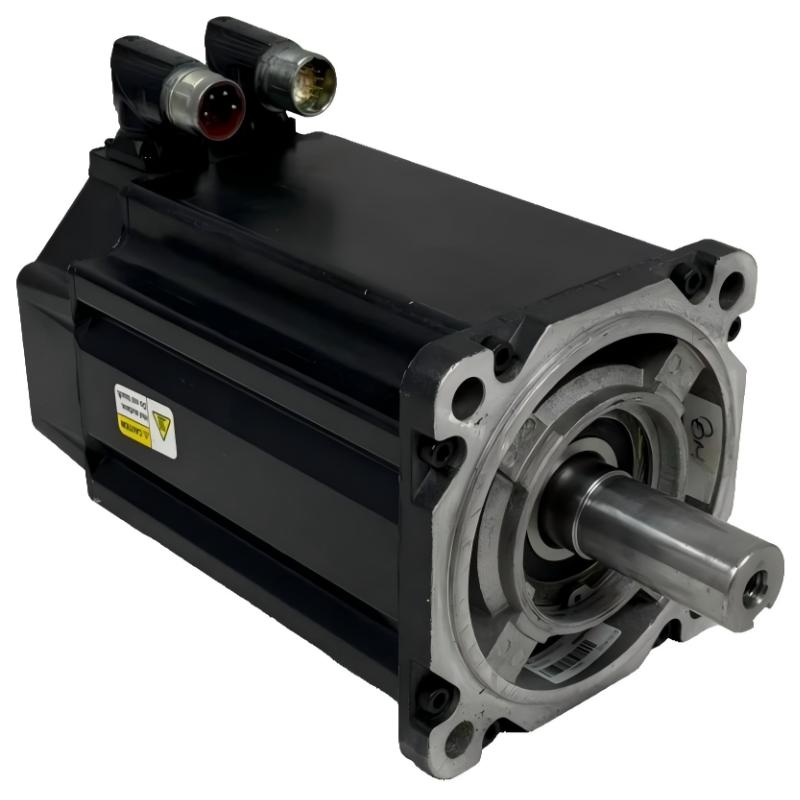
Motor control is one of ABB’s major areas of industrial technology.
Variable speed drives can regulate motor speed according to process requirements.
Applications include:
- Pumps
- Fans
- Conveyors
- Compressors
- Extruders
- Mixers
- Material handling equipment
Instead of operating a motor continuously at a fixed speed, the drive can adjust the operating point according to demand.
This can improve process control and, in appropriate applications, reduce energy consumption.
ABB Drives in Pump Applications
Pumping systems are particularly suitable for variable speed control.
Consider a water circulation system.
If demand decreases, the pump may not need to operate at maximum speed.
A variable speed drive can reduce motor speed.
The PLC or process controller monitors system conditions and adjusts the operating command.
This provides a more flexible approach than simple start-and-stop operation.
ABB Motion Control
High-speed manufacturing equipment often requires precise motion control.
Applications can include:
- Packaging
- Printing
- Material handling
- Converting
- Machine tools
- Assembly
Motion systems must coordinate:
- Position
- Speed
- Torque
- Acceleration
- Deceleration
ABB motion technologies can be integrated with broader machine-control architectures.
ABB DCS and Process Automation
Large process plants often require more than a conventional PLC.
Industries such as:
- Oil and gas
- Power generation
- Chemicals
- Mining
- Metals
- Pulp and paper
may require distributed control architectures.
A DCS can coordinate large numbers of process variables and control loops.
It can also provide centralized operator supervision and process monitoring.
PLC Versus DCS in ABB Automation
PLC and DCS technologies have overlapping capabilities, but their traditional applications are different.
PLC
Commonly used for:
- Machine control
- Discrete automation
- Packaging
- Material handling
- Fast sequencing
DCS
Commonly used for:
- Continuous processes
- Large process plants
- Distributed instrumentation
- Regulatory control
- Centralized process management
Modern industrial systems can also combine both technologies.
ABB Industrial Communication
Communication is essential for modern automation.
An industrial system may contain:
- PLCs
- Drives
- Remote I/O
- HMIs
- SCADA systems
- DCS controllers
- Industrial computers
Reliable communication allows these devices to exchange control and diagnostic information.
ABB automation architectures can therefore be designed around integrated industrial networks.
Diagnostics and Maintenance
Modern automation systems provide much more diagnostic information than older control systems.
Engineers can monitor:
- Controller status
- I/O conditions
- Drive alarms
- Communication errors
- Motor conditions
- Process deviations
This information can help maintenance personnel identify problems faster.
ABB Automation and Energy Efficiency
Energy management is becoming increasingly important.
Industrial facilities consume significant amounts of electricity through:
- Motors
- Pumps
- Fans
- Compressors
- Heating systems
Automation can optimize how these assets operate.
Drives can adjust motor speed.
Controllers can coordinate equipment.
Monitoring systems can measure energy consumption.
Together, these technologies can help identify opportunities for improvement.
ABB Automation in Smart Manufacturing
Smart manufacturing requires more than automatic machine operation.
Factories also need access to operational information.
Modern ABB automation systems can provide information about:
- Production
- Equipment status
- Process conditions
- Energy consumption
- Alarms
- Maintenance requirements
This information can be used by higher-level production and analytics systems.
ABB and Industrial Digitalization
Industrial digitalization is changing the role of automation systems.
A PLC is no longer simply a device that controls outputs.
It can also become a source of operational information.
A modern architecture may look like:
Sensors → PLC → Industrial Network → SCADA/Edge System → Analytics
This creates a connection between physical equipment and digital manufacturing systems.
ABB Automation for Existing Plants
Many factories cannot replace their complete automation infrastructure at once.
Modernization can therefore be performed in stages.
Potential upgrade areas include:
- PLC controllers
- Drives
- HMIs
- Networks
- Remote I/O
- Process instrumentation
A phased approach can help reduce production disruption.
Spare Parts and Lifecycle Management
Industrial automation equipment may remain in operation for many years.
Maintenance teams therefore need to consider:
- Replacement availability
- System compatibility
- Program backups
- Hardware documentation
- Critical spare parts
A good lifecycle strategy can reduce the risk associated with aging equipment.
Why ABB Is Important to Industrial Automation
ABB’s broad automation portfolio allows engineers to address multiple layers of industrial control.
From motors and drives to PLCs, DCS systems and digital technologies, ABB equipment can support a wide range of industrial applications.
This makes ABB an important technology provider for manufacturers seeking to improve automation, energy efficiency and process reliability.
Conclusion
ABB industrial automation technologies cover many of the key requirements of modern manufacturing.
PLCs provide machine control.
Drives provide efficient motor regulation.
Motion systems provide precise movement.
DCS architectures support large process plants.
Industrial networks connect equipment.
Digital technologies provide greater visibility into production.
As factories become more connected and energy efficiency becomes increasingly important, ABB automation technologies will continue to play an important role in industrial control and manufacturing modernization.