
NewsNEWCENTER
Featured products
Contact Us
GE Industrial Automation and Control Systems: How PLCs, Mark Automation and Intelligent Control Support Modern Industry
2026-08-24Introduction
Industrial automation systems must operate reliably under demanding conditions.
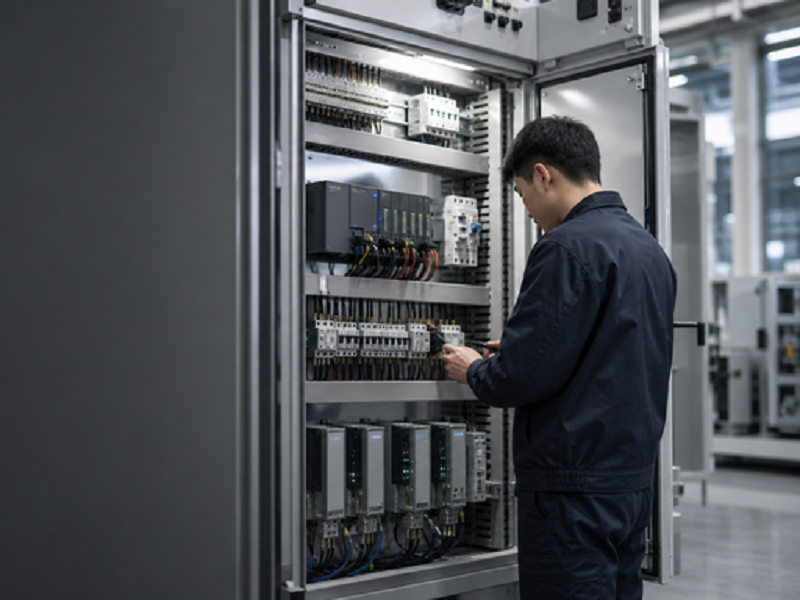
Manufacturing facilities, power plants and process industries depend on control equipment that can operate continuously while managing complex equipment and processes.
GE has a long history in industrial automation, control and electrical technologies.
Its automation technologies have been used across areas such as:
- Manufacturing
- Power generation
- Process industries
- Industrial machinery
- Energy infrastructure
- Transportation
GE automation systems have also been associated with controller platforms, Mark control systems, industrial I/O and power-related control applications.
GE Automation and Industrial Control
Industrial automation requires several levels of control.
A typical system may contain:
- Sensors
- Controllers
- I/O modules
- Communication networks
- Operator interfaces
- Drives
- Process equipment
GE control architectures can be configured to coordinate these different components.
The controller receives process information and executes control logic.
The resulting commands are sent to field equipment.
GE PLC Technology
PLC systems are commonly used where machines require programmable control.
Typical PLC functions include:
- Logic execution
- Sequencing
- I/O management
- Alarm handling
- Communication
- Equipment interlocking
A PLC can control a production sequence based on real-time information.
For example, a packaging system can detect product position, operate conveyors and synchronize multiple machine functions.
GE VersaMax and Distributed I/O
Distributed I/O is important in many industrial control systems.
Instead of installing all I/O modules inside one central cabinet, distributed I/O can be positioned closer to field devices.
This can reduce wiring requirements.
GE VersaMax-related automation systems are associated with modular control and I/O architectures suitable for industrial applications.
A distributed architecture can include:
- Input modules
- Output modules
- Analog modules
- Communication modules
- Power supplies
GE Mark Control Systems
GE Mark control technologies are particularly associated with large-scale industrial and power-generation applications.
These systems are designed to coordinate complex equipment and continuously monitor operating conditions.
A turbine control system, for example, may need to manage:
- Speed
- Temperature
- Pressure
- Valve position
- Load
- Protection functions
The control system must respond quickly to changing operating conditions.
Control and Protection
Industrial control systems often have two important responsibilities:
Control
Maintain the desired operating condition.
Protection
Respond when abnormal conditions occur.
For example, a turbine control system may continuously regulate operating parameters while also responding to conditions that could damage equipment.
This combination is essential for critical industrial assets.
GE Automation in Power Generation
Power-generation equipment requires precise control.
Depending on the plant type, automation systems may monitor:
- Turbine speed
- Generator output
- Steam conditions
- Gas temperature
- Pressure
- Vibration
The control system processes these signals and adjusts equipment accordingly.
Importance of Redundancy
Critical industrial systems often require high availability.
A failure of one controller or communication component should not necessarily result in a complete shutdown.
Redundant architectures can provide backup capability.
Depending on the application, redundancy may involve:
- Controllers
- Power supplies
- Communication networks
- I/O systems
The exact architecture depends on the required reliability.
GE Automation and Industrial Networking
Modern control systems require reliable communication.
A GE automation environment can include communication between:
- Controllers
- Remote I/O
- HMIs
- Drives
- Supervisory systems
- Engineering workstations
Communication provides both control information and diagnostic information.
Diagnostics in Industrial Control
Modern industrial controllers provide diagnostic capabilities that help engineers identify problems.
Possible diagnostic information includes:
- I/O faults
- Communication errors
- Controller status
- Power problems
- Device failures
This information can significantly reduce troubleshooting time.
GE Automation and Legacy System Modernization
Many industrial facilities continue to operate older GE control equipment.
Replacing an entire plant control system can be expensive and disruptive.
A modernization strategy may therefore involve upgrading selected components.
For example:
Legacy Controller → Modern Communication Layer → Edge System → SCADA
The original machine can continue performing its core control function while newer technologies provide additional connectivity.
Why Legacy Modernization Matters
Industrial equipment often has a much longer mechanical life than its electronic control hardware.
A turbine, compressor or production machine may remain valuable for decades.
However, its original controller may become obsolete.
Modernization allows manufacturers to extend the useful life of the physical equipment.
GE Automation and Data Collection
Modern factories need more than basic machine control.
They also need production information.
Useful data may include:
- Operating hours
- Production counts
- Alarm history
- Temperature
- Pressure
- Energy consumption
This information can be collected by supervisory and industrial data systems.
Edge Computing and GE Control Systems
Edge computing can provide an additional layer around an existing automation system.
The edge computer can collect data from the controller.
It can then perform:
- Data processing
- Trend analysis
- Equipment monitoring
- Local analytics
This allows older control systems to participate in modern digital manufacturing architectures without necessarily replacing all control hardware.
Predictive Maintenance
Industrial control systems generate information that can support predictive maintenance.
For rotating equipment, engineers may monitor:
- Vibration
- Temperature
- Speed
- Load
- Operating hours
Changes in these parameters can indicate potential equipment problems.
Maintenance can then be planned before a serious failure occurs.
GE Automation in Manufacturing
Manufacturing systems require coordinated control of many devices.
A production line may include:
- Conveyors
- Motors
- Sensors
- Pneumatic equipment
- Robots
- Inspection systems
PLC-based control can coordinate these devices.
The system can also provide alarms and diagnostics to operators.
Automation and Operator Interfaces
The operator interface is an important part of the control system.
Operators need to understand:
- Current machine state
- Active alarms
- Production information
- Equipment conditions
A well-designed HMI reduces the time required to understand a machine problem.
Cybersecurity Considerations
Connected industrial control systems require appropriate cybersecurity.
Important areas include:
- Network segmentation
- User access
- Engineering workstation protection
- Backup management
- Remote access control
Cybersecurity should be integrated into modernization projects.
GE Automation in the Future
Industrial control is increasingly moving toward architectures that combine:
Controller + Industrial Network + Edge Computing + Data Analytics
The controller remains responsible for reliable real-time control.
Digital technologies provide additional monitoring and optimization capabilities.
This allows existing industrial assets to participate in modern connected manufacturing.
Conclusion
GE industrial automation technologies have played an important role across manufacturing, power generation and other industrial applications.
PLC systems provide programmable machine control.
Distributed I/O provides flexible field connectivity.
Mark control technologies support demanding industrial and power-generation applications.
Modern communication and edge technologies can further extend the capabilities of existing systems.
For manufacturers operating legacy GE equipment, modernization does not necessarily mean replacing everything at once.
A carefully planned combination of controller upgrades, communication improvements, data collection and digital technologies can provide a practical path toward a more modern industrial control environment.