

ProductPRODUCT
Featured products
Contact Us
- ABB
- RLSC 100/RLSC100
- MMC UNIT MODULE UNMP
- Sweden
- 120 mm × 90 mm × 75 mm
- 1.05kg
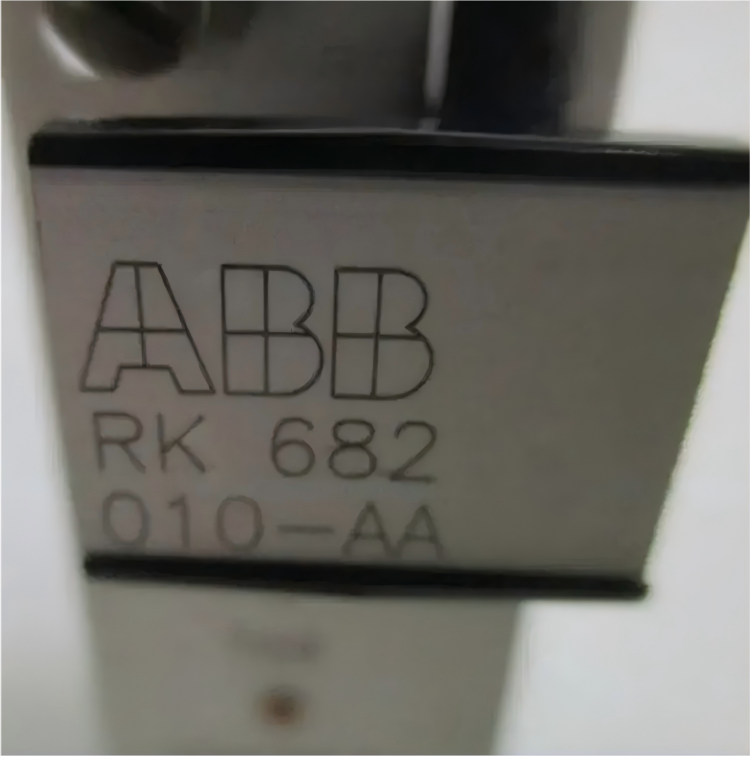
- RK682010-AA
- Xiamen, China
- New & In Stock
- T/T, PayPal, Western Union
- 1 Year
- 1-3 Working Days
- DHL, UPS, TNT, FedEx and EMS.
- 24-Hour Service
- COO
- 94
Our advantage

Global Logistics
We have a 10-year logistics and express cooperation agreement, so our products can be shipped to any place in the world.

Brand new and original
Our products are imported in bulk from the place of origin. Because of the cooperative relationship, our products are all original and 100% new.

24-hour service
We provide 7*24 hours service to our customers. We will be there whenever you need us.

Price advantage
All our products are priced very favorably because we have our own warehouse and supply.
| Company Information | |||
| [email protected] | |||
| Mobile | +8615980777398 | ||
| +8615980777398 | |||
| 15980777398 |
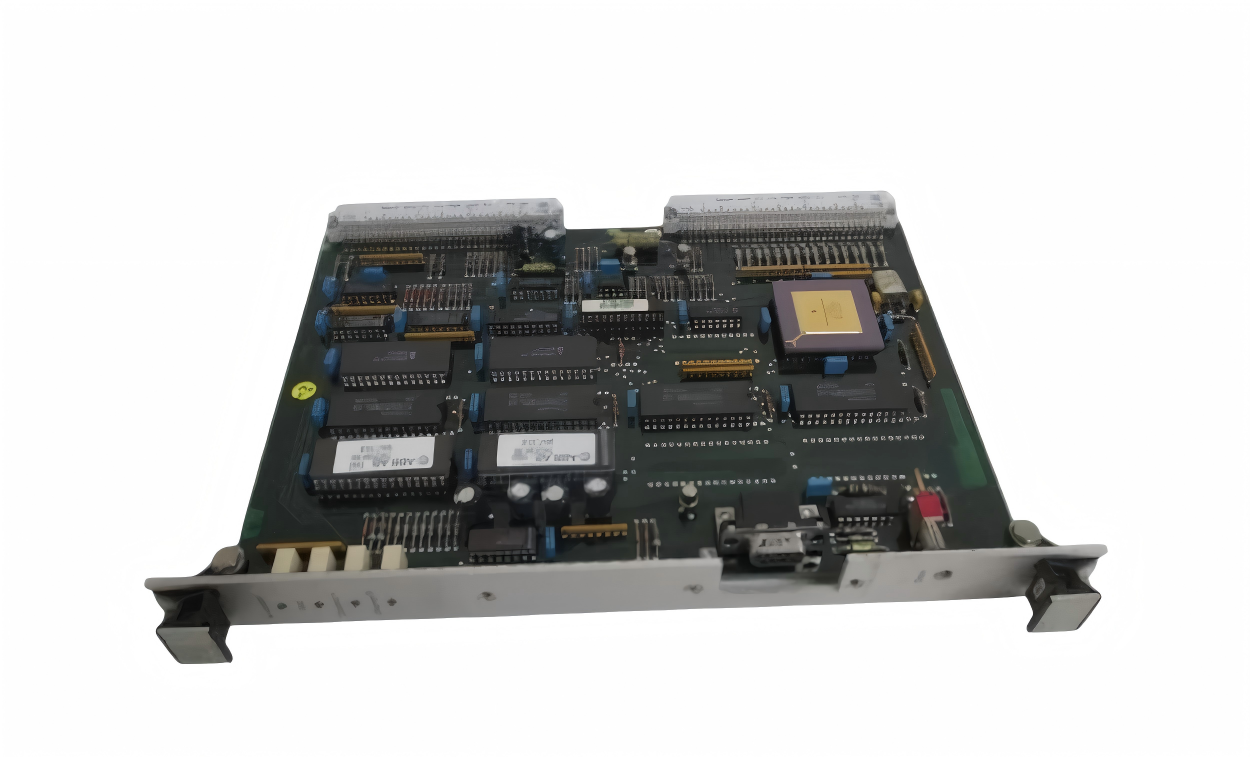
Product: ABB RLSC 100 (RK682010‑AA)
1. Overview
The RLSC 100 with part number RK682010‑AA is an industrial rotary limit switch / position controller designed to monitor and control the rotation of mechanical shafts. It is intended for automation systems, industrial machinery, and material handling equipment where precise angular position feedback and limit detection are critical.
Engineered for harsh industrial environments, the RLSC 100 provides reliable, repeatable feedback, featuring a robust housing, precise internal sensing, and flexible electrical output options. Its design ensures compatibility with a wide range of control systems, from simple limit switches to complex PLC-based motion controls.
2. Product Parameters (Technical Data)
| Parameter | Value |
|---|---|
| Model | RLSC 100 (RK682010‑AA) |
| Product Type | Rotary Limit Switch / Position Controller |
| Sensing Method | Mechanical cam with contact or electronic sensor |
| Output Signal | Electrical switching contacts / digital pulses |
| Power Supply | 24 V DC (standard industrial control) |
| Operating Temperature | –20°C to +70°C |
| Protection Class | IP65 (dust-tight, water spray resistant) |
| Mounting Orientation | Horizontal or vertical |
| Shaft Material | Stainless steel |
| Housing Material | Die-cast aluminum with corrosion-resistant finish |
| Max Switching Speed | Up to 3000 RPM |
| Connection Type | M12 connector or industrial cable gland |
| Dimensions | 120 mm × 90 mm × 75 mm |
| Weight (kg) | 1.05 kg |
| Electrical Rating | 250 V AC / 5 A (for contact version) |
3. Product Introduction
The RLSC 100 is a robust rotary limit switch designed to translate shaft rotation into a measurable electrical signal or switch action. It is commonly used to define end stops, detect angular positions, or provide motion feedback for automation controllers.
Its combination of mechanical precision, electronic sensing (depending on model), and rugged housing makes it suitable for demanding industrial environments. The unit can handle repeated switching cycles without performance degradation and provides reliable feedback even in dusty, wet, or vibration-prone environments.
4. Product Application Areas
The RLSC 100 is widely used in:
-
Conveyor Systems — Detecting end positions and controlling start/stop sequences.
-
Cranes & Hoists — Ensuring safe lifting limits and monitoring rotation.
-
Industrial Machinery — Position feedback for rotating shafts, cams, and rotary tables.
-
Packaging Equipment — Monitoring and controlling rotary motion of packaging arms and rollers.
-
Robotics & Automation — Integrating into robotic joints for angle detection and safety interlocks.
-
Process Industry — Valve positioning, mixers, and rotating process equipment monitoring.
5. Product Advantages
The RLSC 100 offers several competitive advantages:
-
Durable and Reliable: Rugged housing and precision mechanical/electronic sensing extend operational life.
-
Versatile Output Options: Supports both traditional electrical contacts and digital signals.
-
High Environmental Resistance: IP65-rated housing protects against dust, splashing water, and vibration.
-
Easy Integration: Compatible with most industrial control systems via standard connectors or cable glands.
-
High Accuracy and Repeatability: Provides precise limit detection and positional feedback for automated processes.
6. Brand Affiliation
-
Brand: Global industrial automation and control brand
-
Product Series: Rotary limit switches / rotary position controllers
7. Recommended Same Series or Related Models (5)
| Model | Key Parameters | Typical Use Case |
|---|---|---|
| RLSC 50 | Compact, IP65, up to 250 V AC, 5 A | Small machinery with rotary limit detection |
| RLSC 150 | Higher torque rating, IP67, digital output | Heavy-duty industrial machinery |
| RLSC 100‑C | Same form factor, configurable connector options | Flexible field wiring |
| RLSC 100‑H | High-temperature version up to +85°C | Hot industrial environments |
| RLSC 200 | Larger version, higher switching capacity | Large industrial systems requiring robust limit detection |
8. Recommended Other Popular Models from the Same Brand (5)
| Model | Key Parameters | Typical Use Case |
|---|---|---|
| RLKI 100 | Rotary limit/encoder, IP65, 24 V DC | General-purpose rotary feedback |
| RLKJ 100 | Rotary encoder, 1024 pulses/rev, IP65 | Industrial automation with precise position feedback |
| ELSC 100 | Encoder with dual-channel output | General-purpose rotary feedback |
| PLSC 150 | Programmable rotary limit switch | High-precision motion control |
| ADSC 300 | Advanced rotary switch with digital interface | Integrated industrial network applications |
9. FAQ – Common Customer Questions (QA Style)
Q1: What is the main function of the RLSC 100?
A1: It monitors shaft rotation and provides electrical switching or digital output for position feedback.
Q2: Can it be installed vertically?
A2: Yes, it supports both horizontal and vertical mounting.
Q3: What is the operating temperature range?
A3: –20°C to +70°C.
Q4: Is the RLSC 100 waterproof?
A4: Yes, the IP65 rating provides protection against dust and water spray.
Q5: What kind of electrical outputs does it provide?
A5: Depending on the model, it provides switching contacts or digital pulses.
Q6: Does the switch require calibration?
A6: Initial mechanical alignment is recommended to match rotation to switching points.
Q7: What voltage does it operate on?
A7: Typically 24 V DC, suitable for industrial control circuits.
Q8: Can it handle vibrations and shocks?
A8: Yes, the mechanical and housing design ensures reliable operation under vibration.
Q9: How often should it be maintained?
A9: Regular inspection every 6–12 months is recommended for optimal performance.
Q10: Can it be used in safety-critical systems?
A10: It can provide feedback for safety systems, but formal safety certification should be verified per application requirements.