

ProductPRODUCT
Featured products
Contact Us
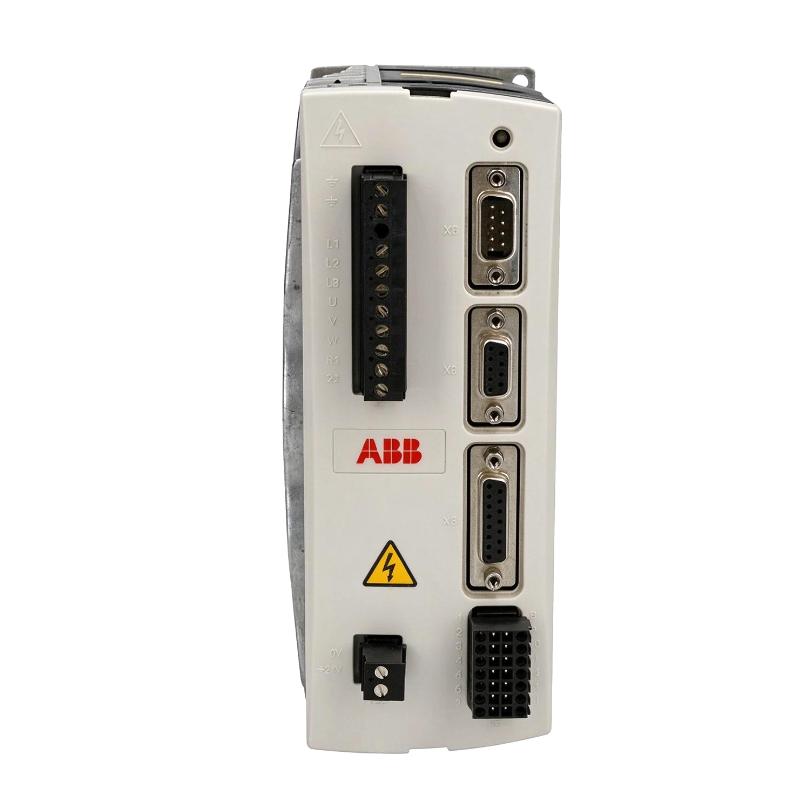
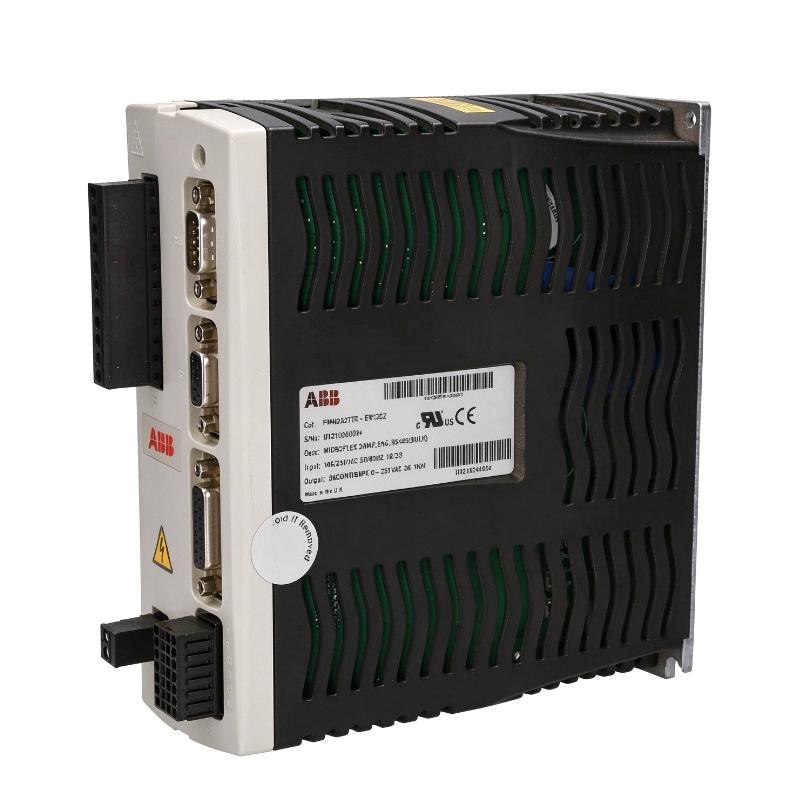
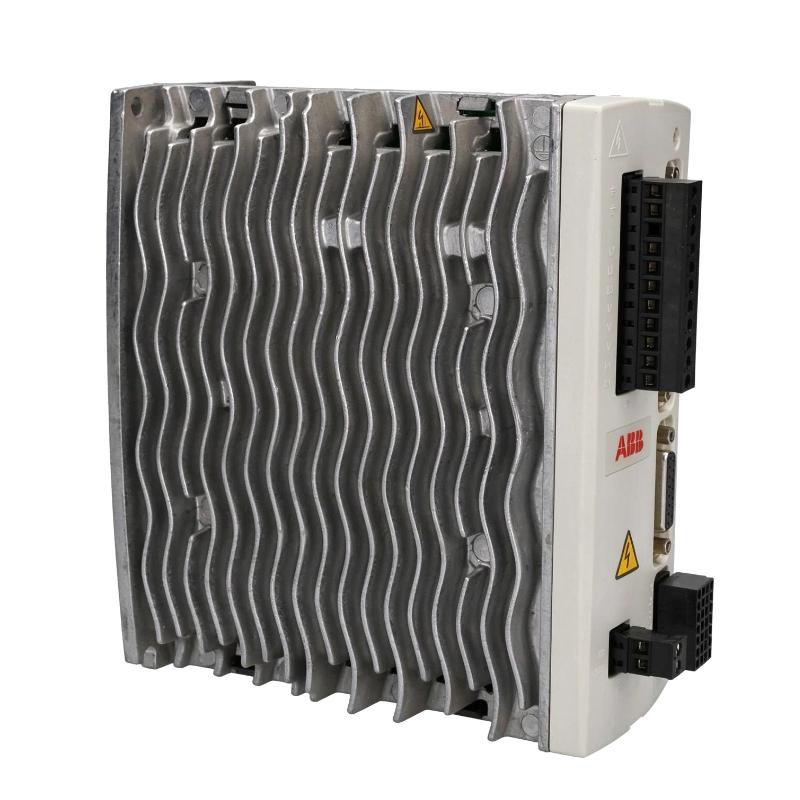
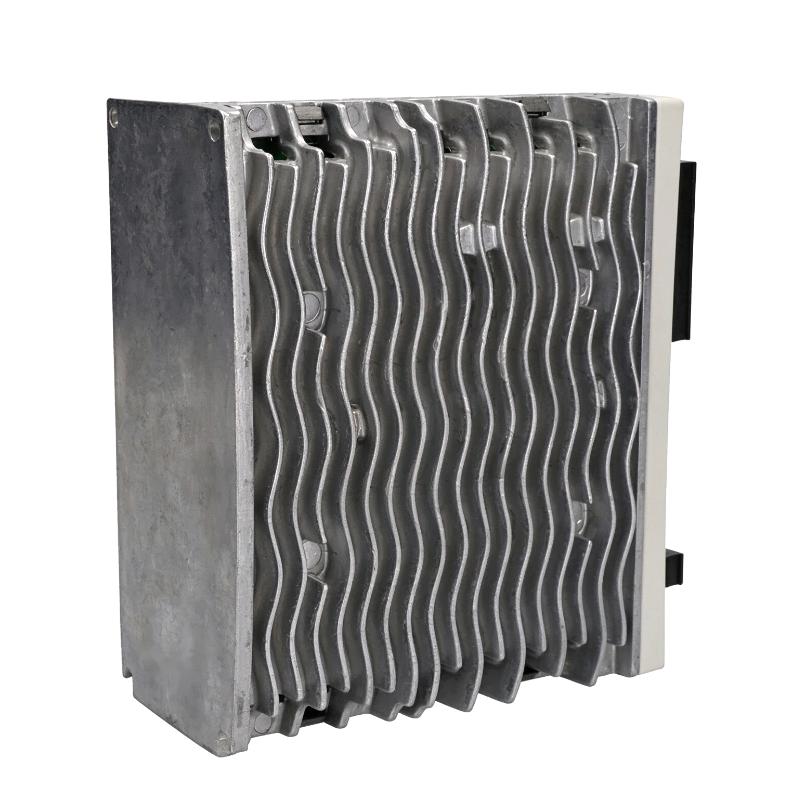
- ABB
- FMH2A03TR-EN43CZ
- MicroFlex Servo Drive
- Sweden (SE)
- 180 × 80 × 157 mm
- 1.45 kg
- Xiamen, China
- New & In Stock
- T/T, PayPal, Western Union
- 1 Year
- 1-3 Working Days
- DHL, UPS, TNT, FedEx and EMS.
- 24-Hour Service
- COO
- 6
Our advantage

Global Logistics
We have a 10-year logistics and express cooperation agreement, so our products can be shipped to any place in the world.

Brand new and original
Our products are imported in bulk from the place of origin. Because of the cooperative relationship, our products are all original and 100% new.

24-hour service
We provide 7*24 hours service to our customers. We will be there whenever you need us.

Price advantage
All our products are priced very favorably because we have our own warehouse and supply.
| Company Information | |||
| [email protected] | |||
| Mobile | +8615980777398 | ||
| +8615980777398 | |||
| 15980777398 |
Product Overview
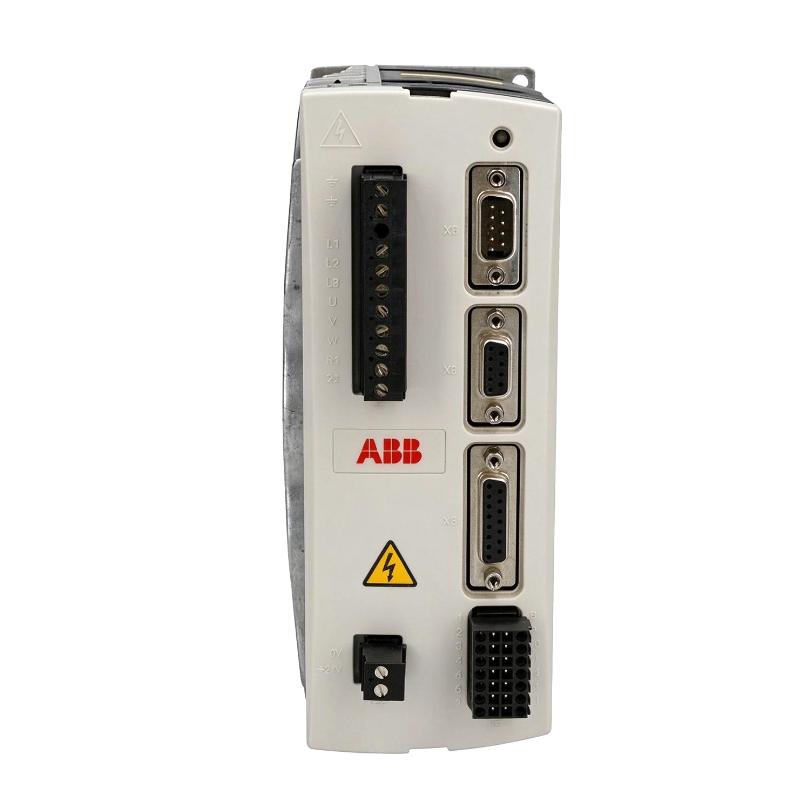
The ABB FMH2A03TR-EN43CZ MicroFlex Servo Drive is a compact analog servo drive used in industrial motion-control systems that require regulated motor speed, torque, and position. As part of the MicroFlex Analog family, it combines an AC power stage, motor feedback processing, and control interfaces in a single drive unit.
This model supports a 105–250 V AC input supply and delivers 3 A RMS continuous output current, with a peak output rating of 6 A for short-duration operation under the specified conditions. Encoder feedback enables closed-loop motor control, allowing the drive to compare the commanded motion with actual motor response and adjust its output accordingly.
The EN43 designation is associated with an RS422 serial interface in the MicroFlex Analog model range. The drive also requires an external 24 V DC supply for I/O operation. These interface and power requirements should be considered when integrating the drive with a motion controller, PLC, operator interface, or machine-level control system.
The FMH2A03TR-EN43CZ is suited to applications involving controlled movement, repeatable positioning, and coordinated machine operation. Before replacement or installation, engineers should verify the complete model number, motor compatibility, feedback type, control interface, braking arrangement, and control-supply requirements.
Technical Specifications
| Parameter | Specification |
|---|---|
| Manufacturer | ABB |
| Product Type | MicroFlex Servo Drive |
| Model | FMH2A03TR-EN43CZ |
| Product Series | MicroFlex Analog |
| Drive Type | Analog Servo Drive |
| Input Voltage | 105–250 V AC |
| Input Phase | Single-phase or three-phase |
| DC Bus Voltage | 160–320 V DC |
| Continuous Output Current | 3 A RMS |
| Peak Output Current | 6 A RMS |
| Peak Current Duration | 3 seconds, subject to specified operating conditions |
| Feedback Type | Encoder Feedback |
| Serial Communication Interface | RS422 |
| External I/O Supply | +24 V DC |
| Regenerative Braking | External regenerative resistor required where specified |
| Cooling | Natural convection; installation ventilation requirements must be observed |
| Dimensions | 180 × 80 × 157 mm |
| Weight | 1.45 kg |
Product Features
- Analog servo control: Accepts supported motion commands for regulating the operation of a compatible servo motor.
- 3 A continuous output: Supports motor applications within the drive’s rated continuous-current capability.
- 6 A peak output: Accommodates short-duration current demands within the specified operating limits.
- Encoder feedback: Uses motor feedback to support closed-loop motion regulation.
- RS422 serial communication: Provides a serial interface for compatible configuration and control arrangements.
- Flexible AC input: Supports single-phase or three-phase input within the specified voltage range.
- External 24 V DC I/O supply: Separates the control I/O supply requirement from the main AC input.
- Regenerative braking provision: Supports an external braking resistor where required by the application.
- Compact drive architecture: Integrates the drive electronics and motor-control functions into one unit.
Working Principle
The FMH2A03TR-EN43CZ regulates servo motor operation by combining command processing, output-current control, and encoder feedback. Its function is to make the motor follow the requested motion while remaining within the drive’s electrical and thermal operating limits.
The drive receives a supported command from the machine controller. Depending on the application and configuration, this may represent a speed, torque, or position-related demand. The drive processes that command and regulates the electrical output delivered to the connected motor.
An encoder provides feedback about the motor’s actual movement. The drive uses this information within its control loops to compare the measured response with the requested operating condition. When a difference occurs, the control system adjusts the motor output to reduce the error and maintain the required motion.
A simplified control sequence is:
PLC or Motion Controller → Motion Command → MicroFlex Servo Drive → Servo Motor → Encoder Feedback → Drive Control Loop
The power stage converts the incoming AC supply into the electrical output needed by the motor. The internal DC bus supplies the energy used by the output stage, while the control electronics manage switching, feedback processing, and protective functions.
During deceleration, the motor may return energy to the drive. Where the application requires dissipation of regenerative energy, an appropriately selected external braking resistor may be necessary. The resistor must be matched to the drive and the machine’s stopping requirements.
The RS422 interface supports communication with compatible equipment, while the external 24 V DC supply powers the required I/O functions. Correct wiring, motor feedback configuration, and controller settings are essential for proper operation.
Role in the Industrial Motion-Control Architecture
The ABB FMH2A03TR-EN43CZ operates between the machine controller and the servo motor. It converts motion commands into controlled electrical output and uses encoder feedback to regulate motor response.
A typical motion-control arrangement is:
PLC or Motion Controller → Servo Drive → Servo Motor → Mechanical Load
Encoder → Servo Drive Feedback Input
| System Component | Function |
|---|---|
| FMH2A03TR-EN43CZ | Regulates motor output according to the configured command and feedback |
| PLC or Motion Controller | Generates motion commands and coordinates machine sequences |
| Servo Motor | Converts electrical energy into controlled mechanical movement |
| Encoder | Reports motor position or movement for feedback control |
| AC Power Supply | Supplies the drive’s main input power |
| External 24 V DC Supply | Powers the required drive I/O functions |
| RS422 Communication Connection | Supports communication with compatible equipment |
| Regenerative Braking Resistor | Dissipates returned energy when required by the application |
| Machine Sensors and Limit Switches | Provide position limits and process-state information |
| Engineering Software | Supports drive configuration, tuning, diagnostics, and commissioning |
The drive’s performance depends on the correct coordination of the controller, motor, encoder, power supply, and machine mechanics. A fault in any of these elements may affect positioning accuracy, motor response, or machine availability.
Industrial Applications
| Application | Typical Use |
|---|---|
| Automated Manufacturing | Regulating servo-driven machine movements |
| Packaging Machinery | Controlling indexing, feeding, and positioning axes |
| Conveyor Systems | Managing controlled movement in compatible servo-driven mechanisms |
| Assembly Equipment | Supporting repeatable positioning during assembly operations |
| Material Handling | Regulating motion in automated handling mechanisms |
| Labeling Machinery | Controlling the movement of servo-driven feeding and positioning components |
| Inspection Equipment | Maintaining controlled motion during automated inspection cycles |
| Small Industrial Machines | Providing servo control for applications within the drive’s current rating |
| Machine Retrofit Projects | Replacing a compatible MicroFlex Analog drive after checking the full configuration |
| Automated Positioning Systems | Supporting encoder-based closed-loop motion control |
The suitability of the FMH2A03TR-EN43CZ depends on the motor’s current requirements, operating voltage, required dynamic response, feedback type, and machine duty cycle. Applications that exceed the drive’s continuous or peak current limits require a different drive configuration.
Installation and Maintenance
- Verify the model number: Confirm FMH2A03TR-EN43CZ against the existing drive and the machine’s electrical documentation.
- Check the power supply: Verify that the available AC supply is within the specified 105–250 V AC input range and matches the intended single-phase or three-phase arrangement.
- Confirm motor compatibility: Check the motor’s rated current, voltage, feedback requirements, and operating characteristics against the drive specifications.
- Verify encoder wiring: Confirm encoder type, connector assignment, signal wiring, and feedback configuration before enabling the drive.
- Check the control interface: Verify that the controller’s serial interface and communication settings are compatible with the drive’s RS422 interface.
- Provide the external I/O supply: Connect the required 24 V DC supply according to the wiring diagram and verify polarity before powering the control I/O.
- Inspect the installation: Check terminals, connectors, grounding, cable condition, and mounting security before commissioning.
- Maintain adequate ventilation: Install the drive in accordance with its cooling requirements and avoid obstructing the airflow needed for heat dissipation.
- Check regenerative braking arrangements: Determine whether the application requires an external braking resistor and verify its suitability before operation.
- Configure the drive parameters: Enter the appropriate motor and feedback settings, control mode, command scaling, and operating limits.
- Perform a controlled commissioning test: Test the drive at a safe operating condition, confirm motor direction, and verify that feedback and protective functions respond correctly.
- Review diagnostics and maintenance records: Investigate drive faults, abnormal temperature, unexpected motor behavior, and recurring alarms; document corrective actions and commissioning results.
Before electrical work, isolate the supply and follow the manufacturer’s discharge and safety procedures. Do not disconnect motor or feedback wiring while the drive is energized. Any replacement must be checked against the installed machine and control-system configuration.
Compatible System Components
The FMH2A03TR-EN43CZ requires compatible motor, feedback, power, and control interfaces. The following component categories are relevant when building or maintaining a MicroFlex Analog motion-control system.
| Component | Function |
|---|---|
| Compatible Servo Motor | Converts the drive’s controlled electrical output into mechanical movement |
| Incremental Encoder | Supplies feedback for closed-loop motor control |
| PLC or Motion Controller | Generates motion commands and sequences machine operations |
| Compatible RS422 Interface | Establishes the required serial communication connection |
| 24 V DC Power Supply | Provides the external supply required for I/O operation |
| AC Input Protection | Provides appropriately selected circuit protection for the drive supply |
| Regenerative Braking Resistor | Dissipates returned motor energy when required |
| Motor Power Cable | Connects the drive output to the servo motor |
| Encoder Feedback Cable | Carries feedback signals from the motor to the drive |
| Engineering and Configuration Tools | Support setup, tuning, diagnostics, and commissioning |
Recommended Related Models
| Model | Product Type | Relevance |
|---|---|---|
| ABB FMH2A01TR-EN43 | MicroFlex Analog Servo Drive | Related low-current configuration |
| ABB FMH2A03TR-EN23 | MicroFlex Analog Servo Drive | Related 3 A configuration with an RS232 interface |
| ABB FMH2A03TR-RN43 | MicroFlex Analog Servo Drive | Related 3 A configuration with resolver feedback and RS422 |
| ABB FMH2A06TR-EN43 | MicroFlex Analog Servo Drive | Higher-current configuration with encoder feedback |
| ABB FMH2A09TR-EN43 | MicroFlex Analog Servo Drive | Higher-current configuration with encoder feedback |
| ABB FMH2A03TR-RN23 | MicroFlex Analog Servo Drive | Related 3 A configuration with resolver feedback and RS232 |
Key Advantages
- Supports closed-loop servo motor control using encoder feedback.
- Provides 3 A RMS continuous output current and 6 A peak output capability.
- Accepts single-phase or three-phase AC input within its specified voltage range.
- Provides an RS422 serial interface for compatible control arrangements.
- Supports external regenerative braking where required by the application.
- Integrates motion control and feedback processing in a compact drive unit.
Technical FAQs
What type of encoder does the FMH2A03TR-EN43CZ use?
This model designation belongs to the encoder-feedback version of the MicroFlex Analog family. The actual encoder wiring, signal format, and supported feedback configuration should be verified against the installed motor and the applicable drive documentation.
What is the difference between the EN43 and EN23 variants?
The EN43 version is associated with an RS422 serial interface, while the EN23 version uses RS232. The communication interface must match the connected controller or configuration equipment; the two versions should not be treated as having identical serial connections.
Does the drive require an external 24 V DC supply?
Yes. The MicroFlex Analog configuration requires an external 24 V DC supply for I/O operation. The supply and its wiring must be connected according to the drive’s electrical diagrams and installation requirements.
When is an external regenerative braking resistor necessary?
A braking resistor may be required when the motor returns energy to the drive during deceleration and the application requires that energy to be dissipated externally. Selection depends on the machine’s inertia, deceleration profile, operating cycle, and the drive’s specified braking requirements.