

ProductPRODUCT
Featured products
Contact Us
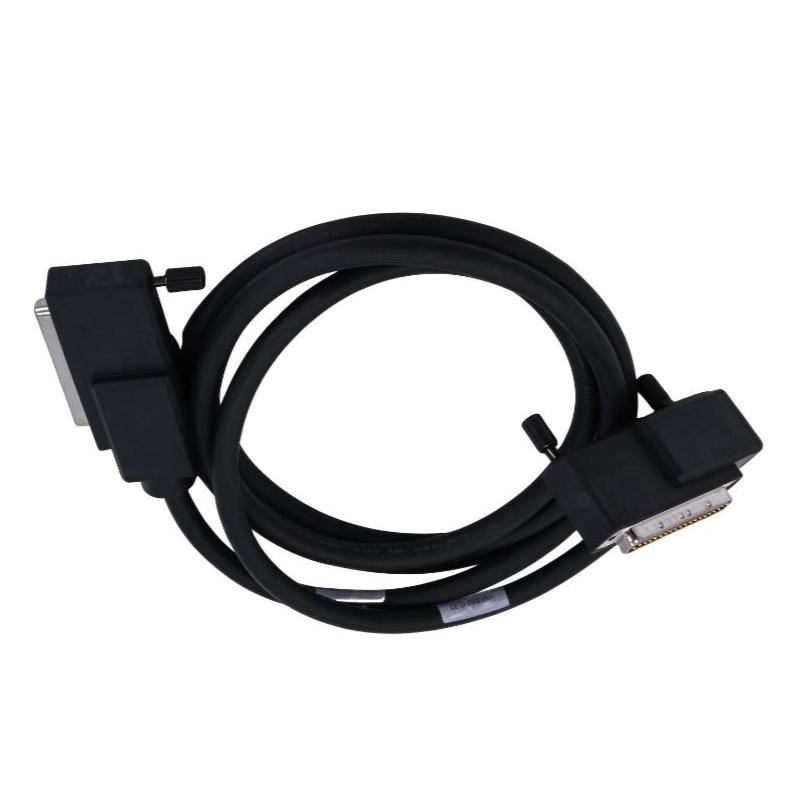
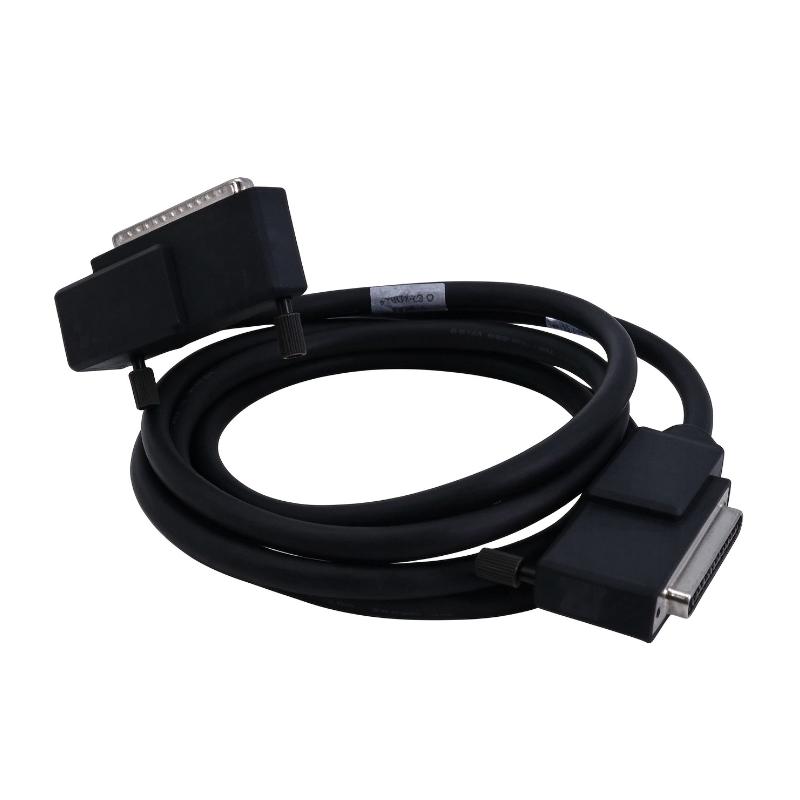
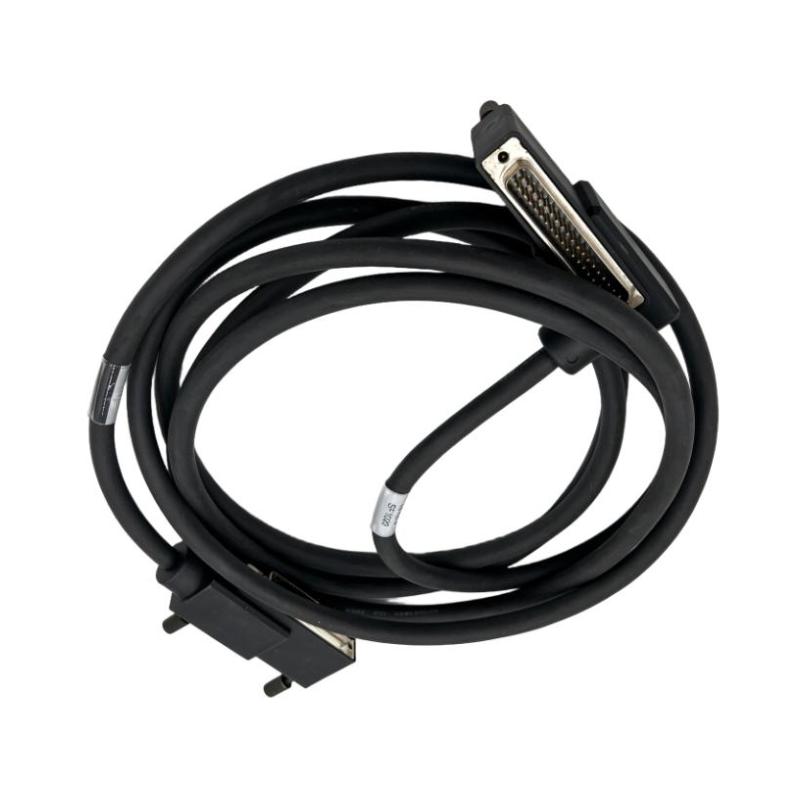
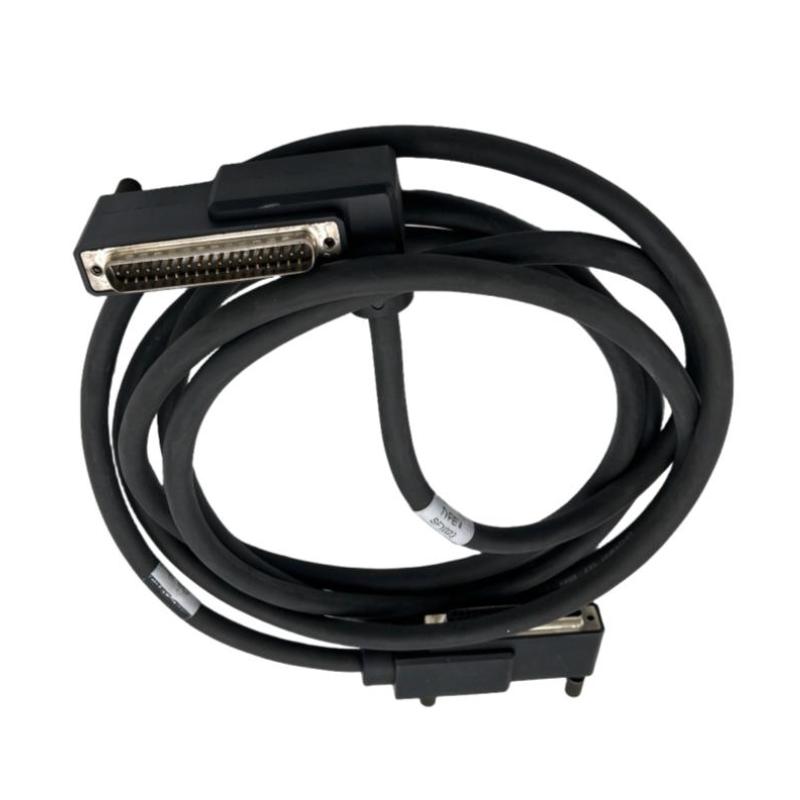
- Schneider
- TSXETY210
- Ethernet TCP/IP Module
- France
- 260 x 180 x 55 mm
- 0.37 kg
- Xiamen, China
- New & In Stock
- T/T, PayPal, Western Union
- 1 Year
- 1-3 Working Days
- DHL, UPS, TNT, FedEx and EMS.
- 24-Hour Service
- COO
- 8
Our advantage

Global Logistics
We have a 10-year logistics and express cooperation agreement, so our products can be shipped to any place in the world.

Brand new and original
Our products are imported in bulk from the place of origin. Because of the cooperative relationship, our products are all original and 100% new.

24-hour service
We provide 7*24 hours service to our customers. We will be there whenever you need us.

Price advantage
All our products are priced very favorably because we have our own warehouse and supply.
| Company Information | |||
| [email protected] | |||
| Mobile | +8615980777398 | ||
| +8615980777398 | |||
| 15980777398 |
Product Overview
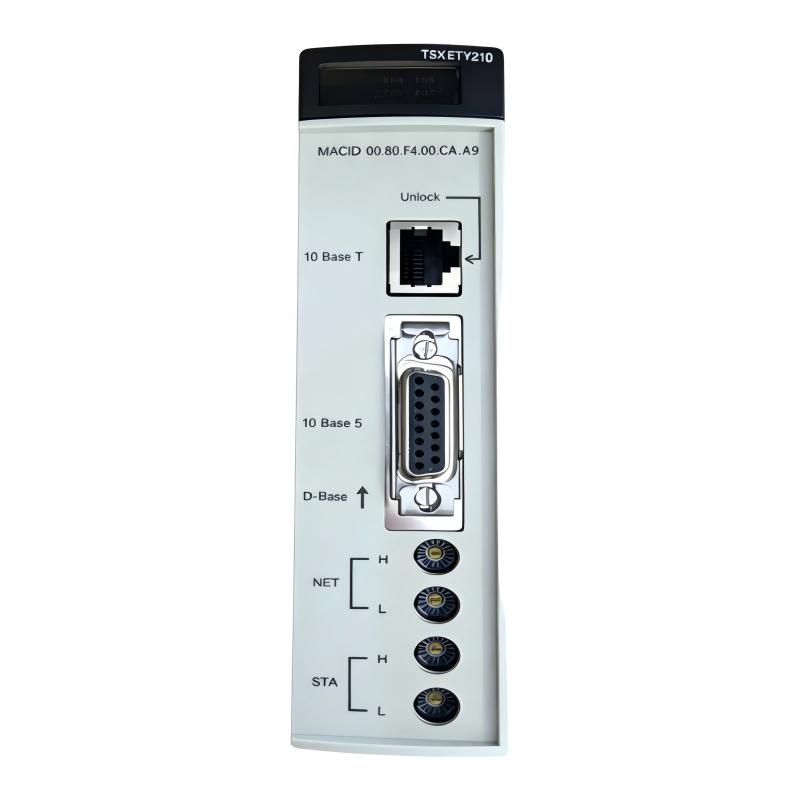
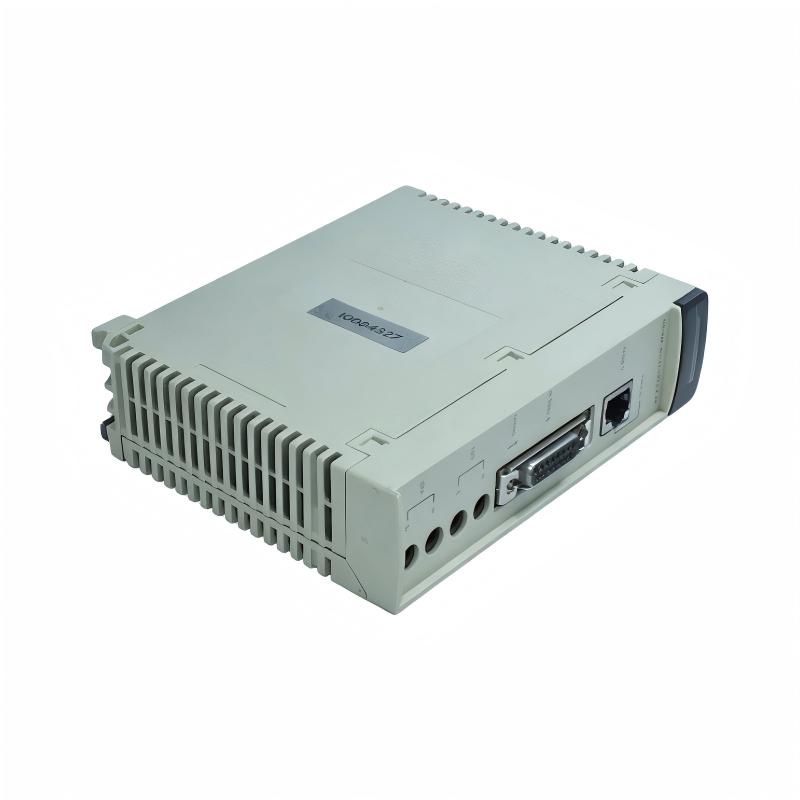
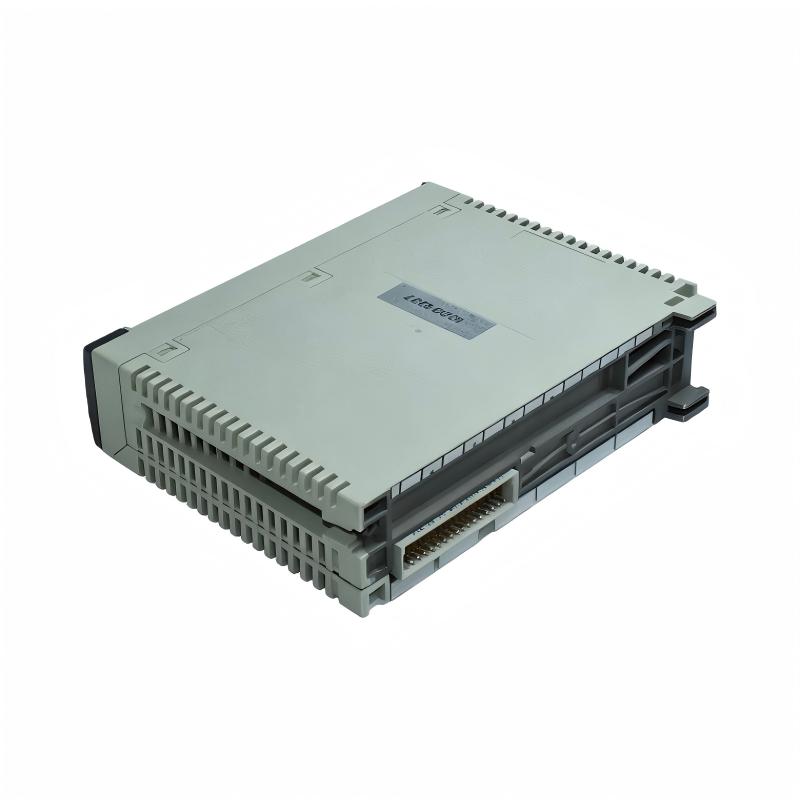
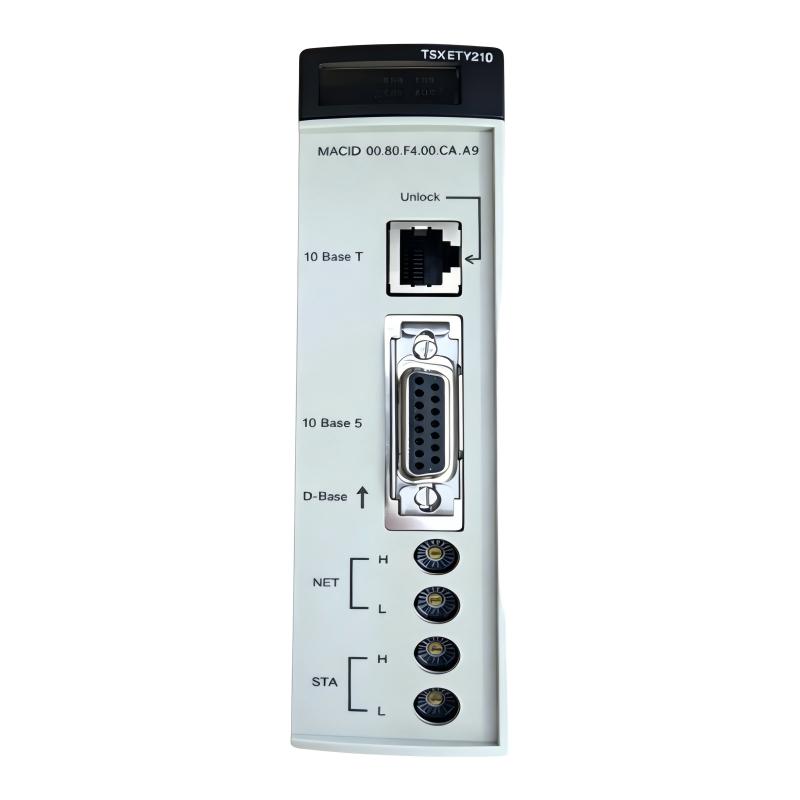
The Schneider Electric TSXETY210 Ethernet TCP/IP Module is an industrial communication module designed for the Modicon Premium automation platform. It provides Ethernet connectivity for compatible programmable logic controller (PLC) systems, enabling data exchange between automation equipment, supervisory systems, engineering workstations, and other network-connected devices.
In industrial automation, reliable communication is essential for coordinating production processes, monitoring equipment status, and exchanging control information. The TSXETY210 supports Ethernet-based communication services and is specifically associated with Premium Warm Standby architectures, where network continuity is important when control transfers between redundant controllers.
The module supports a transmission rate of 10 Mbit/s and provides two physical interface types: an RJ45 10BASE-T twisted-pair connection and an AUI interface for compatible legacy Ethernet arrangements. Its supported communication services include Modbus TCP messaging, SNMP agent functions, Uni-TE messaging, and Ethway/X-Way common-word communication.
The TSXETY210 receives its power from the PLC rack rather than requiring a separate external power supply. Status indicators on the module help maintenance personnel check network activity, Ethernet status, transmission and reception activity, and communication-related faults.
As part of the Modicon Premium platform, the TSXETY210 is intended for use with compatible Premium PLC hardware and supported engineering software. It should not be treated as a universal Ethernet adapter because its functionality depends on the controller architecture, firmware, configuration, and associated network equipment.
The TSXETY210 is now a discontinued product. It remains relevant to maintenance teams supporting legacy automation installations that rely on existing Modicon Premium controllers. When purchasing a replacement, verify the full model number, module condition, PLC compatibility, and required communication functions.
Technical Specifications
| Parameter | Specification |
|---|---|
| Brand | Schneider Electric |
| Model | TSXETY210 |
| Product Type | Ethernet TCP/IP Communication Module |
| Product Platform | Modicon Premium |
| Automation Architecture | Premium Warm Standby |
| Transmission Rate | 10 Mbit/s |
| Ethernet Interface 1 | RJ45, 10BASE-T twisted pair |
| Ethernet Interface 2 | AUI interface for compatible legacy Ethernet |
| Communication Protocols | Modbus TCP, Uni-Telway, Ethway/X-Way |
| Communication Services | Modbus TCP messaging, SNMP agent, Uni-TE messaging, Ethway/X-Way common words |
| Web Server | Transparent Ready Class A10 |
| Maximum Connections | Up to 64, according to published product specifications |
| Power Supply | Supplied through the PLC rack |
| Current Consumption | 800 mA at 5 V DC using RJ45; 1,200 mA at 5 V DC with AUI remote power supply |
| Status Indicators | COL, RUN, ERR, TX/TR |
| Product Compatibility | PL7 Pro and Unity Pro, subject to platform and version requirements |
| Module Format | Standard |
| Dimensions Provided | 260 × 180 × 55 mm |
| Weight Provided | 0.37 kg |
| Product Lifecycle | Discontinued |
| Typical Application | Ethernet communication for compatible Modicon Premium PLC systems |
Note: The dimensions and weight above are supplied listing values. Confirm the physical dimensions, module revision, and applicable installation documentation before ordering or designing a control cabinet.
Function and Working Principle
The TSXETY210 functions as an Ethernet communication interface for a compatible Modicon Premium PLC system. It connects the controller architecture to an Ethernet network and supports the exchange of data with compatible industrial devices and software.
1. Ethernet Network Connectivity
The module provides Ethernet connectivity through its RJ45 10BASE-T port and AUI interface. The RJ45 interface is intended for compatible twisted-pair Ethernet cabling, while the AUI interface supports legacy Ethernet arrangements requiring suitable external interface equipment.
Its 10 Mbit/s transmission rate reflects the network technology of its generation. This is adequate for certain legacy PLC communication tasks, but it should not be confused with the higher bandwidth available from modern 100 Mbit/s or gigabit Ethernet equipment.
When integrating the module into an existing network, engineers should confirm the required cable type, physical interface, network topology, and compatibility with connected equipment.
2. Modbus TCP Communication
Modbus TCP is an Ethernet-based industrial communication protocol used to exchange structured data between compatible control devices.
With suitable configuration, the TSXETY210 can support Modbus TCP messaging between a Modicon Premium controller and other compatible network participants. This can allow process values, equipment status, and control-related data to be exchanged as part of a larger automation system.
The specific data available to external devices depends on the PLC application, addressing, communication settings, and the capabilities of the connected equipment.
3. SNMP Monitoring
The module includes SNMP agent functionality. Simple Network Management Protocol is used in network-management environments to monitor supported network information and device status.
This capability can help network administrators integrate the communication module into suitable monitoring arrangements. However, SNMP availability does not mean the module offers all the diagnostics or cybersecurity functions available on modern managed Ethernet devices.
4. Uni-TE and Ethway/X-Way Services
The TSXETY210 supports Schneider Electric’s legacy communication services, including Uni-TE messaging and Ethway/X-Way common-word communication.
These functions are relevant to existing installations that use compatible Schneider Electric controllers, engineering tools, and communication configurations.
When maintaining a legacy system, preserving these services may be important because replacing the module with a newer network interface can change communication behavior or require changes to the PLC application.
5. Status Indication and Diagnostics
The module provides local LEDs for network status and communication activity. These indicators help technicians perform an initial assessment of the communication interface.
Depending on the observed indicator pattern and the system configuration, troubleshooting may involve checking the network cable, link partner, configuration, controller status, and communication settings.
An indicator alone does not identify every possible fault. Diagnosis should combine the module’s status information with controller diagnostics and network tests.
Role in Industrial Control Systems
The TSXETY210 can serve as the Ethernet communication interface in a compatible Modicon Premium PLC installation. It helps connect controller-based process logic to the industrial network and supports data exchange with other automation components.
PLC Network Integration
A PLC executes the application logic used to control machinery and industrial processes. An Ethernet communication module enables the controller to exchange information with supported network devices.
Typical data exchanges may include operating status, process values, alarms, and commands. The exact communication arrangement depends on the PLC program, supported services, and the devices connected to the network.
Premium Warm Standby Systems
The TSXETY210 is associated with the Premium Warm Standby architecture. In a redundant control arrangement, primary and standby controllers are used to support continued operation when the system transfers control between them.
Network continuity is important in such installations because supervisory systems and connected equipment must communicate with the active control system. The TSXETY210’s intended architecture supports the communication requirements of compatible Warm Standby installations.
The module does not, by itself, provide complete controller redundancy. Redundancy depends on the complete system design, compatible controller hardware, configuration, network arrangement, and application logic.
SCADA and Supervisory Communication
Supervisory control and data acquisition (SCADA) systems gather process information from PLCs and provide operators with an overview of industrial operations.
Where the relevant communication services are configured and supported, the TSXETY210 can participate in a network that exchanges PLC data with compatible supervisory equipment.
Engineers should verify protocol support, addressing, data mapping, and software compatibility before connecting a legacy Premium system to a modern supervisory network.
Engineering and Maintenance Access
Industrial Ethernet can support communication between compatible engineering workstations and PLC systems. The TSXETY210’s supported services and software compatibility are relevant when maintaining or diagnosing a legacy installation.
Before changing the network configuration, back up the PLC application and document existing communication settings. Unplanned changes to addressing or routing may interrupt communication with supervisory systems and other connected devices.
Industrial Applications
The TSXETY210 is most relevant to existing industrial automation installations built around the Modicon Premium platform.
1. Manufacturing Automation
Manufacturing facilities use PLC networks to coordinate machine sequences, exchange production information, and monitor equipment status.
The TSXETY210 can provide Ethernet communication for compatible Premium controllers within such installations. Its suitability depends on the required data rate, connected protocols, and the communication needs of the application.
2. Process Control Systems
Industrial process equipment often relies on PLCs to monitor sensors, operate actuators, and coordinate equipment sequences.
An Ethernet communication module can help transfer relevant information between the PLC and compatible supervisory or networked devices. In legacy installations, maintaining the existing protocol and addressing configuration can be important for minimizing disruption.
3. Redundant PLC Installations
Facilities using Premium Warm Standby architectures may require compatible communication modules to preserve the intended system design.
The TSXETY210 can be relevant when maintaining an existing redundant-control installation. Engineers should verify the module’s compatibility with the exact controller hardware, rack configuration, software version, and redundancy arrangement.
4. Utility and Infrastructure Equipment
Water treatment, energy infrastructure, and other industrial utility installations may use PLCs to control pumps, valves, motors, and monitoring equipment.
Where an existing installation uses compatible Modicon Premium controllers, the TSXETY210 may provide the Ethernet interface needed for communication with other parts of the control system.
5. Legacy Industrial Network Maintenance
A discontinued communication module can become important when a functioning production line depends on a specific PLC configuration.
Maintaining the TSXETY210 may help preserve established communications while a longer-term migration plan is developed. Before replacement, determine which protocols, services, and connected devices rely on the existing module.
Installation and System Integration
Correct installation is essential for reliable communication and for preserving the operation of a legacy PLC system.
1. Verify PLC Platform Compatibility
Before installation, confirm that the TSXETY210 is supported by the target Modicon Premium PLC configuration.
Check the controller model, rack type, module position, engineering software version, and Warm Standby requirements. A module that is physically compatible with a platform is not necessarily compatible with every firmware or application configuration.
2. Confirm Network Interface Requirements
The module provides RJ45 10BASE-T and AUI interfaces. Determine which interface is required by the existing network and confirm that the cable, connector, and connected equipment are appropriate.
The AUI interface may require compatible external transceiver equipment, depending on the network arrangement. Do not assume that the AUI port can be connected directly to a modern RJ45 network without suitable hardware.
3. Install the Module in the Correct Rack Position
The TSXETY210 receives its power from the PLC rack. Installation must follow the controller platform’s hardware instructions, including permitted module positions and any requirements associated with the Warm Standby architecture.
Before inserting or removing the module, follow the applicable power-isolation and electrostatic-discharge precautions. Confirm whether the intended procedure permits replacement while the system is energized.
4. Configure Network Communication
Configure the network parameters and communication services according to the existing application design.
Verify the addressing scheme, connected devices, communication settings, and required services. If the PLC communicates with a SCADA system or other controllers, confirm that the relevant data mappings and protocol settings remain consistent.
5. Verify Rack Power and Current Capacity
The module is powered by the PLC rack. Its published current consumption is 800 mA at 5 V DC when using the RJ45 interface, increasing to 1,200 mA at 5 V DC when the AUI remote-power arrangement is used.
Check the rack power supply capacity and the requirements of all installed modules. Ensure that the complete rack remains within its specified power budget.
6. Test Communication and Diagnostics
After installation, check the module’s status indicators and confirm that the intended network link is established.
Test communication with the configured network participants and verify that expected PLC data can be read or exchanged. In a redundant system, also verify that communication behaves correctly under the system’s approved switchover test procedure.
Document the final configuration and preserve a backup of the PLC program and relevant network settings.
Compatible System Components
The TSXETY210 is designed to operate as part of a compatible Modicon Premium control architecture. Its integration depends on the complete system configuration.
| Component | Role | Compatibility Considerations |
|---|---|---|
| Modicon Premium PLC | Executes automation logic | Confirm the supported CPU, rack, firmware, and architecture |
| Premium Warm Standby hardware | Supports redundant controller operation | Verify the exact redundancy configuration and communication requirements |
| PLC rack power supply | Supplies module power | Confirm available 5 V DC capacity and total rack load |
| Ethernet switch or hub | Connects network devices | Must support the required 10BASE-T physical connection and network arrangement |
| RJ45 Ethernet cable | Provides twisted-pair network connectivity | Use suitable cabling and confirm the connected port configuration |
| AUI transceiver or compatible interface equipment | Supports legacy Ethernet connections | Required only for compatible AUI network arrangements |
| SCADA system | Supervises and monitors industrial processes | Verify supported protocols, data mapping, and addressing |
| Engineering workstation | Supports PLC configuration and maintenance | Confirm supported software and version requirements |
| Other compatible PLCs | Exchange process and control data | Verify protocol, network, and application compatibility |
These components are examples of equipment that may be used with the module. They are not necessarily included with the TSXETY210.
Alternative Models and Replacement Considerations
The TSXETY210 has been discontinued. Schneider Electric identifies the BMXNOE0100 Modicon M340 network module as a replacement direction, but this does not mean that it is a direct, plug-compatible substitute for the TSXETY210.
| Alternative | Considerations |
|---|---|
| Another TSXETY210 module | May be the most straightforward option for maintaining an existing configuration, subject to condition and revision compatibility |
| Schneider Electric BMXNOE0100 | A Modicon M340 Ethernet network module identified as a replacement direction; requires evaluation of the target PLC platform |
| Other Modicon Premium Ethernet modules | May provide different speeds, web services, or communication functions; compare exact capabilities |
| Modern industrial Ethernet communication solution | May be suitable for a broader system upgrade, but can require hardware, software, and network redesign |
Before selecting a replacement, evaluate the following:
- PLC CPU and rack compatibility.
- Premium Warm Standby requirements.
- Supported communication protocols and services.
- Ethernet transmission rate and physical interfaces.
- RJ45 or AUI connectivity requirements.
- Existing network topology and addressing.
- Engineering software and firmware compatibility.
- Rack power consumption.
- SCADA and supervisory system dependencies.
- Required commissioning, testing, and downtime.
A newer module may provide faster networking or additional functionality, but these benefits do not guarantee compatibility with an existing Premium PLC application. A migration plan should account for both the hardware and the software behavior of the complete control system.
Key Advantages
Ethernet Communication for Legacy PLC Systems
The TSXETY210 provides an Ethernet interface for compatible Modicon Premium installations, supporting continued operation of established automation networks.
Support for Multiple Communication Services
Its documented services include Modbus TCP messaging, SNMP agent functions, Uni-TE messaging, and Ethway/X-Way common-word communication.
Premium Warm Standby Application
The module is designed for the Premium Warm Standby architecture, making it relevant to compatible installations that use redundant controller arrangements.
Dual Physical Interface Options
The RJ45 10BASE-T and AUI interfaces provide options for compatible Ethernet network arrangements, including certain legacy installations.
Rack-Based Power Supply
The module obtains power through the PLC rack, avoiding the need for a separate standalone power supply for the communication module itself.
Local Status Indicators
The COL, RUN, ERR, and TX/TR indicators provide useful initial information during installation, operation, and troubleshooting.
Established Platform Compatibility
For facilities already using Modicon Premium hardware, retaining the appropriate communication module may help avoid unnecessary changes to a working control architecture.
Technical FAQs
1. What is the Schneider Electric TSXETY210?
The TSXETY210 is an Ethernet TCP/IP communication module for the Modicon Premium automation platform. It is associated with Premium Warm Standby architectures and supports a 10 Mbit/s Ethernet connection.
2. Which communication protocols does it support?
Its documented communication services include Modbus TCP messaging, SNMP agent functionality, Uni-TE messaging, and Ethway/X-Way common-word communication. The supported functions should be checked against the actual application and configuration.
3. What Ethernet interfaces are available?
The module provides one RJ45 10BASE-T twisted-pair interface and one AUI interface for compatible legacy Ethernet arrangements.
4. Does the module support 100 Mbit/s Ethernet?
The TSXETY210 is specified for 10 Mbit/s operation. It should not be treated as a 100 Mbit/s Ethernet module. If a higher data rate is required, evaluate a suitable alternative and verify system compatibility.
5. How is the TSXETY210 powered?
It receives power through the Modicon Premium PLC rack. Rack power capacity must be checked, especially when the AUI remote-power arrangement is used.
6. Can the TSXETY210 be used with any Schneider Electric PLC?
No. It is intended for the compatible Modicon Premium platform and its supported architectures. Compatibility with other Schneider Electric PLC families should not be assumed.
7. Is the TSXETY210 discontinued?
Yes. Schneider Electric has discontinued the model. It may still be available through industrial spare-parts suppliers, but stock status and service support depend on the supplier and region.
8. What is the recommended replacement?
Schneider Electric identifies the BMXNOE0100 Modicon M340 network module as a replacement direction. Because it belongs to a different PLC platform, engineers must evaluate the CPU, software, communication services, and system architecture before using it as a replacement.
9. What should be checked when buying a used TSXETY210?
Verify the complete model number, physical condition, connectors, status indicators, module revision, and available test results. For critical systems, request a functional communication test and confirm the seller’s warranty and return conditions.
10. Why should the module’s 10 Mbit/s rate be considered during upgrades?
A 10 Mbit/s interface may be sufficient for the existing PLC communication workload, but it can constrain network performance when traffic increases. Upgrading requires evaluating not only bandwidth but also protocol support, redundancy behavior, addressing, and compatibility with the existing PLC application.
Procurement and Maintenance Recommendations
When sourcing the Schneider Electric TSXETY210, begin by checking the module installed in the target PLC rack. Confirm the full catalog number, physical interfaces, rack configuration, and intended Warm Standby architecture.
For new-old-stock, used, or refurbished modules, request clear photographs of the product label and connectors. Ask whether the module has been tested and whether its Ethernet communication functions have been verified. Confirm the included accessories, packaging, warranty, and return policy before placing an order.
For maintenance, document the network configuration and preserve a backup of the PLC application before replacing or reconfiguring the module. Check the RJ45 or AUI connection, cable condition, rack power capacity, and status indicators when investigating communication problems.
Because the TSXETY210 is discontinued, organizations should also consider long-term spare-parts availability. Where the controller platform is approaching the end of its lifecycle, it may be appropriate to plan a controlled migration rather than depend indefinitely on replacement modules from the secondary market.
Any migration should be tested against the actual PLC program, supervisory system, network architecture, and required redundancy behavior before the production system is changed.
Conclusion
The Schneider Electric TSXETY210 Ethernet TCP/IP Module provides 10 Mbit/s Ethernet communication for compatible Modicon Premium PLC systems. Its RJ45 and AUI interfaces, Modbus TCP messaging, SNMP agent functionality, Uni-TE messaging, and Ethway/X-Way services make it relevant to existing industrial networks, particularly installations using Premium Warm Standby architecture.
Since the module is discontinued, accurate identification and compatibility verification are essential when sourcing a replacement. Maintenance teams should confirm the physical interface, network requirements, rack power capacity, and PLC configuration before installation. For longer-term modernization, any proposed replacement should be evaluated against the full control-system architecture rather than selected on Ethernet connectivity alone.