

ProductPRODUCT
Featured products
Contact Us
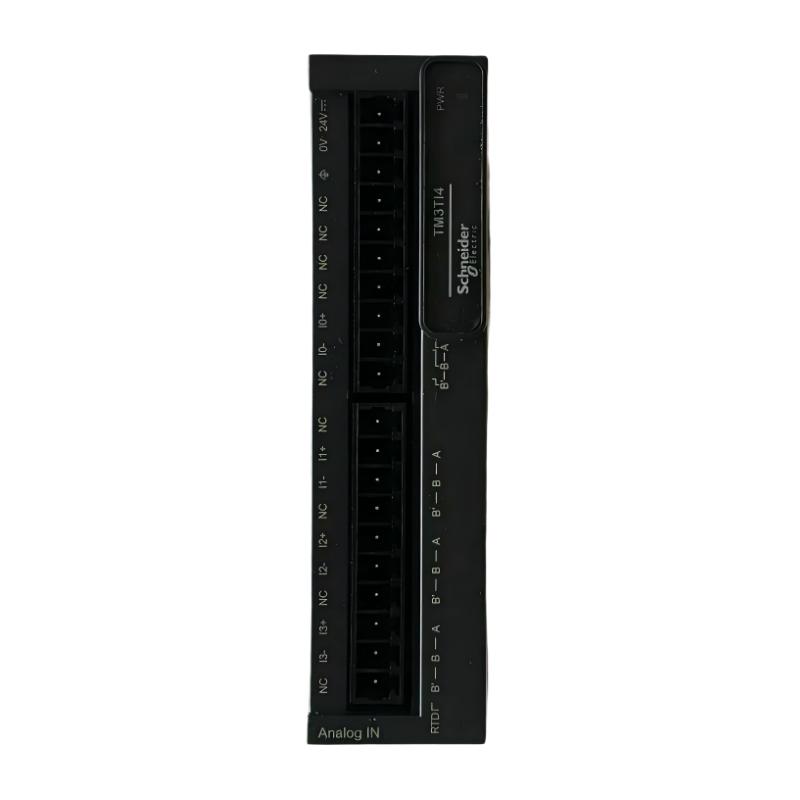
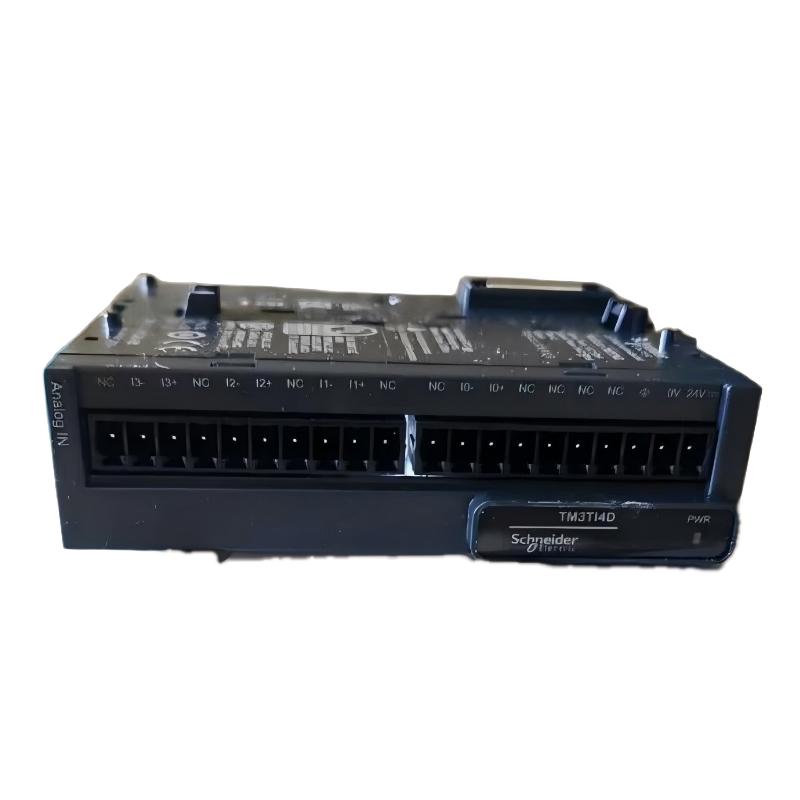
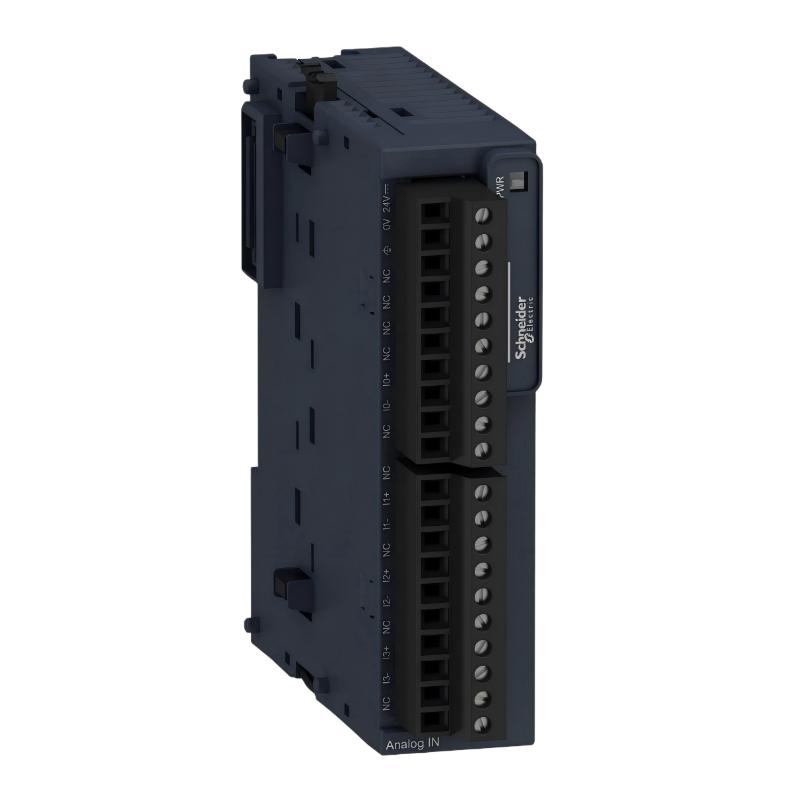
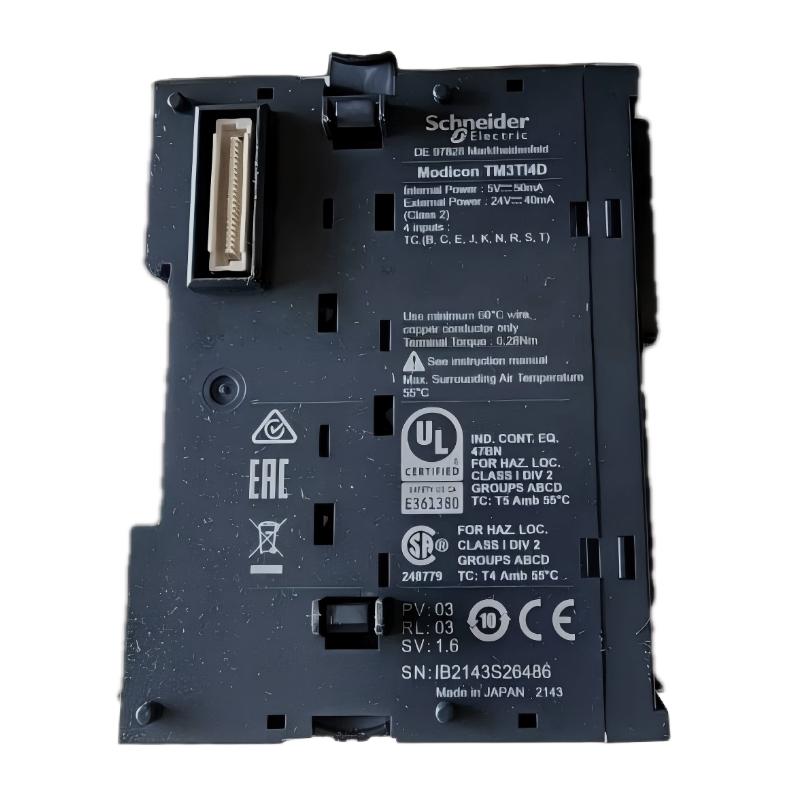
- Schneider
- TM3TI4D
- Analog Input Module
- France
- 90 x 70 x 23.6 mm
- 0.11 kg
- Xiamen, China
- New & In Stock
- T/T, PayPal, Western Union
- 1 Year
- 1-3 Working Days
- DHL, UPS, TNT, FedEx and EMS.
- 24-Hour Service
- COO
- 4
Our advantage

Global Logistics
We have a 10-year logistics and express cooperation agreement, so our products can be shipped to any place in the world.

Brand new and original
Our products are imported in bulk from the place of origin. Because of the cooperative relationship, our products are all original and 100% new.

24-hour service
We provide 7*24 hours service to our customers. We will be there whenever you need us.

Price advantage
All our products are priced very favorably because we have our own warehouse and supply.
| Company Information | |||
| [email protected] | |||
| Mobile | +8615980777398 | ||
| +8615980777398 | |||
| 15980777398 |
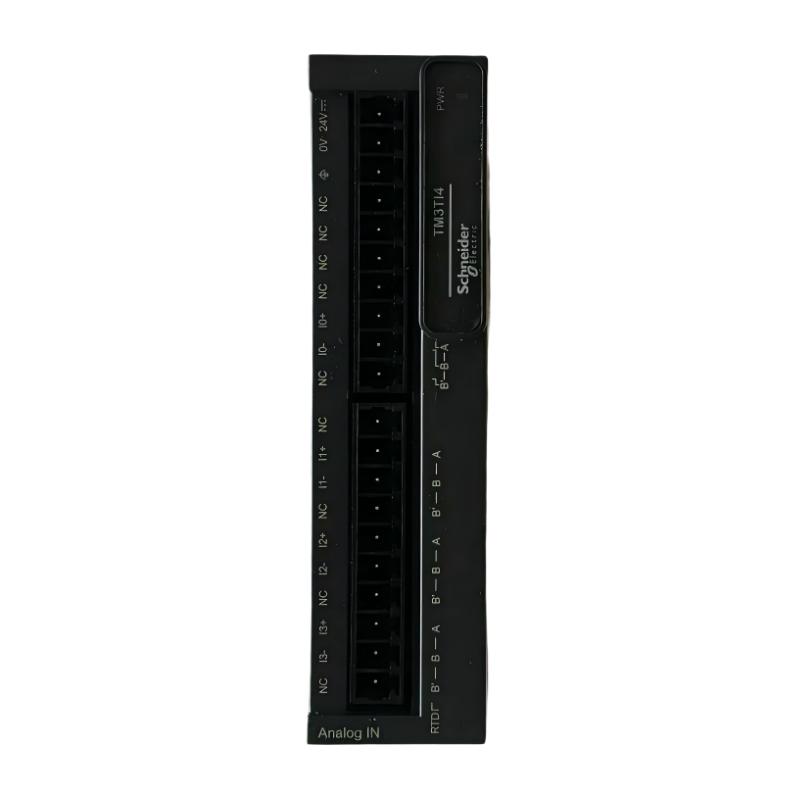
1. Product Overview
The Schneider Electric TM3TI4D is a four-channel analog input module designed for temperature measurement and monitoring in industrial automation systems. As part of the Modicon TM3 expansion I/O family, it extends the input capabilities of compatible Modicon programmable logic controllers (PLCs), enabling them to acquire temperature signals from thermocouples and process the collected data for monitoring, control, and automation tasks.
The TM3TI4D is particularly suitable for applications where accurate temperature acquisition is required across several measurement points. It supports a range of thermocouple types and provides differential temperature input channels, allowing engineers to integrate temperature sensors into machinery, process equipment, production lines, and other industrial installations.
With its compact design, removable screw terminal block, and integration with compatible Modicon controllers, the TM3TI4D helps simplify panel layout and sensor wiring. Its four-channel configuration provides a practical solution for systems that require several temperature measurements without installing a separate input module for each sensor.
The module belongs to the Schneider Electric Modicon TM3 expansion platform, which is designed to increase the flexibility of compatible M221, M241, M251, and M262 controller systems. When configured correctly in the PLC engineering environment, the TM3TI4D can provide temperature measurement data for alarm generation, process supervision, equipment protection strategies, and closed-loop control applications.
For maintenance engineers and system integrators, selecting the correct input module is important for ensuring reliable signal acquisition. The TM3TI4D should be distinguished from general-purpose analog input modules that primarily measure voltage and current. Its principal application is differential temperature measurement using supported thermocouple types.
2. Technical Specifications
| Parameter | Specification |
|---|---|
| Brand | Schneider Electric |
| Product Model | TM3TI4D |
| Product Series | Modicon TM3 |
| Product Type | Analog Input Module |
| Primary Application | Temperature Measurement |
| Number of Inputs | 4 differential temperature inputs |
| Supported Sensor Type | Thermocouples |
| Thermocouple Types | J, K, R, S, B, T, N, E, C |
| Resolution | 16-bit or 15-bit plus sign, depending on configuration |
| Rated Supply Voltage | 24 V DC |
| Electrical Connection | Removable screw terminal block |
| Terminal Pitch | 3.81 mm |
| Controller Compatibility | Compatible Modicon M221, M241, M251, and M262 controllers |
| Protection Rating | IP20 |
| Mounting Options | Compatible DIN rail or panel mounting arrangement |
| Dimensions | 90 × 70 × 23.6 mm |
| Weight | Approximately 0.11 kg |
| Typical Application | Industrial temperature monitoring and process control |
Specification note: The exact input configuration, supported sensor wiring, measurement range, filtering, and diagnostic behavior must be confirmed against the applicable hardware documentation and controller configuration. The TM3TI4D is a thermocouple-oriented differential temperature input module; it should not be treated as interchangeable with every general-purpose voltage/current input module.
3. Function and Working Principle
The Schneider TM3TI4D is designed to acquire temperature-related electrical signals and make the resulting measurement data available to a compatible PLC. Its operation involves sensor connection, signal acquisition, analog-to-digital conversion, and communication with the controller through the Modicon TM3 expansion system.
3.1 Temperature Signal Acquisition
Thermocouples generate a small electrical voltage associated with the temperature difference between their measuring junction and reference junction. The TM3TI4D receives the signals from connected thermocouples through its input terminals.
The module supports multiple thermocouple types, including J, K, R, S, B, T, N, E, and C. This range allows the module to be considered for different industrial temperature requirements, from general machinery monitoring to applications that may require specialized high-temperature sensors.
The correct thermocouple type must be selected in the PLC configuration. The physical sensor type and software settings must match; otherwise, the reported temperature may be incorrect or invalid.
3.2 Differential Input Measurement
Differential measurement uses a pair of input connections to acquire a signal difference. This arrangement is useful for measuring small sensor signals in industrial environments where electrical noise, grounding arrangements, and interference from nearby equipment can affect measurement quality.
Although differential inputs can help with signal acquisition, they do not eliminate the need for proper installation. Sensor cables should be routed away from high-current conductors and switching devices where practical, and the recommended wiring arrangement should be followed.
The module’s channels are intended for the specified temperature measurement configuration. Users should verify the wiring diagram and isolation characteristics rather than assume that every input channel is galvanically isolated from every other channel.
3.3 Analog-to-Digital Conversion
After receiving the thermocouple signal, the module converts the analog input into digital measurement information that can be processed by the PLC. The TM3TI4D supports a 16-bit resolution format, or 15 bits plus sign depending on the selected representation.
Resolution describes the digital representation available for the measurement. It should not be interpreted as a guarantee of absolute measurement accuracy, since the overall result also depends on sensor characteristics, installation, wiring, configured sensor type, and environmental conditions.
The resulting data can be used by the PLC program to monitor temperatures, evaluate process conditions, trigger alarms, and coordinate other control functions.
3.4 PLC Data Processing
Once the module has been installed and configured, the controller can access the temperature values through its expansion I/O system. A PLC program can then compare the measurements with configured limits or use them as inputs to a process-control strategy.
For example, a machine may use one channel to monitor a heating zone, another to monitor a bearing temperature, and the remaining channels to supervise other critical components. The actual number of usable measurement points depends on the installed sensors and the system design.
4. Role in Industrial Control Systems
Temperature information is essential in many industrial processes. Excessive heat can damage equipment, affect product quality, accelerate component wear, or create unsafe operating conditions. Conversely, insufficient temperature may prevent a process from reaching its required operating state.
The TM3TI4D provides an interface between supported thermocouple sensors and a compatible Modicon PLC, helping the controller obtain temperature data from multiple locations.
4.1 Temperature Monitoring
The module can collect temperature signals from several measurement points. The PLC can display these values on a human-machine interface (HMI), record them in a supervisory system, or make them available for operational analysis.
This arrangement allows operators to monitor process conditions without relying exclusively on local indicators.
4.2 Process Control
Temperature readings can be incorporated into PLC logic for heating, cooling, and process sequencing. For example, the controller may permit the next production step only after a monitored zone reaches its configured temperature range.
The TM3TI4D supplies measurement information; the control decisions and output actions are implemented by the PLC program and associated control equipment.
4.3 Alarm and Equipment Protection
A PLC can compare measured temperatures against warning and trip thresholds. If a reading exceeds a configured limit, the control program can initiate an alarm, request a controlled shutdown, or activate another predefined response.
Such protection functions must be engineered and validated at the system level. The input module alone does not provide a complete machine safety function or replace dedicated protective devices where those are required.
4.4 Expansion of Existing PLC Installations
The Modicon TM3 platform allows compatible controller systems to be expanded with additional I/O capabilities. The TM3TI4D is useful when a machine requires temperature inputs but does not have sufficient built-in measurement channels.
Adding an expansion module can reduce the need to replace an existing controller, provided the controller, expansion arrangement, power budget, and engineering configuration support the installation.
5. Industrial Applications
5.1 Manufacturing Machinery
Manufacturing equipment frequently contains motors, bearings, heaters, and process zones that operate within defined temperature limits. The TM3TI4D can acquire thermocouple measurements from selected machine components, allowing the PLC to supervise operating conditions and coordinate alarms.
Typical examples include packaging machinery, material processing equipment, and production machines with several temperature monitoring points.
5.2 Heating and Thermal Processing
Industrial ovens, heating stations, and thermal processing equipment often require temperature measurements at multiple locations. The module’s four thermocouple inputs can support monitoring of selected heating zones or process points.
Engineers should select the thermocouple type and measurement arrangement according to the process temperature range and the relevant sensor specifications.
5.3 HVAC and Environmental Equipment
Some industrial heating, ventilation, and environmental control systems use thermocouples to monitor temperatures around equipment or process areas. When the application and sensor range are appropriate, the TM3TI4D can provide temperature data to a compatible PLC for monitoring and control.
Sensor selection should be based on the actual operating environment rather than assuming that all temperature sensors are interchangeable.
5.4 Pumps, Motors, and Rotating Equipment
Temperature monitoring can help identify abnormal operating conditions in motors, pump assemblies, and other rotating equipment. A PLC can use readings from installed sensors to trigger maintenance alerts or initiate a defined response when a temperature threshold is exceeded.
The suitability of a thermocouple installation depends on the component being monitored and the sensor mounting method.
5.5 Process Equipment
Chemical processing, material handling, and other industrial operations may require temperature feedback for sequencing and process supervision. The TM3TI4D can be considered where four thermocouple measurement channels satisfy the system requirements.
For demanding applications, engineers should also evaluate measurement accuracy, response time, sensor placement, environmental conditions, and any applicable process or safety requirements.
6. Installation and System Integration
Correct installation is essential for reliable temperature measurement. Before fitting the TM3TI4D, verify the controller model, expansion compatibility, wiring diagram, available power, and sensor specifications.
6.1 Mechanical Installation
The TM3TI4D is a compact module with approximate dimensions of 90 × 70 × 23.6 mm and a listed weight of 0.11 kg. Its size supports installation in industrial control cabinets where space is limited.
The module should be mounted using an approved mounting arrangement and installed in an enclosure suitable for the electrical and environmental conditions. Although its protection rating is IP20, the module should not be exposed directly to water, conductive dust, or other conditions outside its specified operating environment.
Allow sufficient clearance for wiring, ventilation, terminal access, and maintenance. Follow the manufacturer’s installation instructions when assembling the module with the controller and other TM3 expansion modules.
6.2 Electrical Wiring
Connect each thermocouple to the designated terminals according to the module wiring diagram. Correct polarity is important because reversed thermocouple connections can result in misleading temperature readings.
Use suitable thermocouple extension or compensation cable where required, and observe the recommendations for sensor type and connection method. Avoid routing low-level sensor wiring alongside power cables, motor leads, or other conductors that may introduce electrical interference.
Do not assume that ordinary copper cable is an appropriate replacement for thermocouple extension cable in every installation. The correct cable type depends on the sensor and measurement requirements.
6.3 PLC Configuration
After installation, configure the module in the supported PLC programming environment. The configuration should match the actual hardware and sensor arrangement.
Typical configuration tasks include:
- Identifying the TM3TI4D in the expansion I/O configuration.
- Selecting the correct thermocouple type for each active channel.
- Setting the appropriate temperature representation and measurement range.
- Configuring filtering where supported and required by the application.
- Defining PLC logic for monitoring, alarms, and process control.
- Verifying that displayed values correspond to the expected sensor readings.
The exact available parameters depend on the controller, engineering software version, and module configuration.
6.4 Commissioning and Testing
Before placing the machine into normal service, check all terminal connections, verify thermocouple polarity, and confirm that the configured sensor type matches the installed sensor.
Compare displayed measurements with a suitable reference instrument or known process condition. Check for implausible values, unstable readings, open-circuit indications, or other diagnostics supported by the configured system.
Where temperature readings are used for equipment protection or process interlocking, test the complete response, including the PLC program and final control devices. Do not rely on the module’s presence alone as proof that a protection strategy is functioning correctly.
7. Compatible System Components
The TM3TI4D is designed for use within the Schneider Electric Modicon TM3 expansion ecosystem. The exact compatibility of an installation should be verified against the controller hardware version and the relevant system documentation.
| Component | Role in the System |
|---|---|
| Modicon M221 PLC | Controller option for compatible TM3 expansion configurations |
| Modicon M241 PLC | Controller option for compatible TM3 expansion configurations |
| Modicon M251 PLC | Controller option for compatible TM3 expansion configurations |
| Modicon M262 PLC | Controller option for compatible TM3 expansion configurations |
| Thermocouple Sensors | Provide temperature-related input signals |
| HMI Panel | Displays temperatures, operating states, and alarms |
| Industrial Control Cabinet | Provides mechanical protection and organized installation |
| PLC Engineering Software | Configures the module and develops control logic |
| Heating or Cooling Equipment | Receives control commands from the wider automation system |
| Industrial Network Components | Support communication between compatible controllers, HMIs, and supervisory systems |
Compatibility should not be determined by product family alone. Confirm the controller’s supported expansion arrangement, firmware or software requirements, module positioning, power consumption, and total system configuration before installation.
8. Recommended Alternative Models
The best alternative depends on whether the application requires the same sensor type, a different number of channels, or a different terminal arrangement.
| Model | General Function | Main Difference |
|---|---|---|
| Schneider TM3TI4DG | Four-channel temperature input module | Spring-clamp terminal version of the related TM3TI4D design |
| Schneider TM3TI4 | Four-channel general analog and temperature input module | Supports configured voltage, current, and temperature inputs |
| Schneider TM3TI4G | Four-channel general analog and temperature input module | Spring-clamp terminal version of TM3TI4 |
| Schneider TM3TI8T | Eight-channel temperature input module | Provides more temperature channels and supports its specified temperature sensor types |
| Schneider TM3AI4 | Four-channel voltage/current analog input module | Intended for general voltage and current signals rather than thermocouple-only differential measurement |
These models are not automatically interchangeable. Confirm the required sensor type, channel count, input wiring, terminal style, resolution, and controller compatibility before choosing a replacement. In particular, a general-purpose voltage/current module should not be used as a direct substitute for thermocouple measurement without verifying the complete measurement requirements.
9. Key Advantages of the Schneider TM3TI4D
Four Temperature Input Channels
Four input channels allow the controller to acquire temperature measurements from several points through a single expansion module. This can help reduce panel space and simplify the I/O architecture of compact machines.
Support for Multiple Thermocouple Types
The supported thermocouple types provide flexibility for industrial temperature monitoring applications. Correct sensor selection and channel configuration remain essential for achieving valid measurements.
Differential Measurement Design
Differential inputs provide a defined measurement arrangement for thermocouple signals. When combined with appropriate wiring and grounding practices, this can support reliable acquisition in industrial environments.
Compact Installation
The module’s compact dimensions make it suitable for many control cabinet layouts. Its removable screw terminal block also provides a practical connection method for maintenance and wiring work.
Integration with Modicon TM3 Systems
The TM3TI4D is designed to extend compatible Modicon PLC systems. It can be incorporated into a broader automation architecture that includes digital I/O, analog I/O, HMI operation, and machine control logic.
Support for Monitoring and Process Logic
The temperature data acquired by the module can be used for alarms, sequencing, trend monitoring, and other PLC-based functions. The final behavior depends on the application program and connected equipment.
Practical Maintenance and Troubleshooting
Clear channel configuration, documented wiring, and systematic commissioning make it easier to investigate abnormal temperature readings. A consistent maintenance procedure can help technicians distinguish sensor faults, wiring problems, configuration errors, and process-related temperature changes.
10. Technical FAQs
Q1: What is the Schneider TM3TI4D used for?
The TM3TI4D is a four-channel temperature input expansion module for compatible Schneider Electric Modicon PLC systems. It is designed primarily to acquire differential temperature signals from supported thermocouples.
Q2: How many input channels does the TM3TI4D provide?
It provides four differential temperature input channels. Each channel must be wired and configured according to the sensor type and the manufacturer’s instructions.
Q3: Which thermocouple types are supported?
The supported types include J, K, R, S, B, T, N, E, and C. Confirm the required temperature range and sensor specifications before selecting a thermocouple for a particular process.
Q4: Can the TM3TI4D directly replace a standard voltage or current analog input module?
Not in every application. The TM3TI4D is designed for differential temperature measurement using thermocouples. A general-purpose analog input module may have different input ranges and signal-conditioning characteristics. Select the module according to the actual sensor signal and measurement requirements.
Q5: Which PLC controllers are compatible with the TM3TI4D?
The Modicon TM3 expansion family supports compatible M221, M241, M251, and M262 controller configurations. Verify the exact controller model and system requirements before installation.
Q6: What is the resolution of the TM3TI4D?
The module supports 16-bit resolution or 15-bit plus sign, depending on the selected representation. Resolution is not the same as absolute measurement accuracy; the complete measurement chain must be considered when evaluating performance.
Q7: What are the dimensions and weight of the module?
The listed dimensions are 90 × 70 × 23.6 mm, and the approximate weight is 0.11 kg. Check the product documentation for the dimensional orientation used in a specific mechanical drawing.
Q8: Does the module require special sensor wiring?
Yes. Thermocouple wiring must follow the correct terminal arrangement and polarity. Suitable thermocouple extension or compensation cable may be required, and sensor wiring should be routed to reduce electrical interference.
Q9: What should be checked if the temperature reading is incorrect?
Check the thermocouple type selected in the software, terminal wiring and polarity, sensor condition, cable type, electrical interference, and channel configuration. Review the module and controller diagnostics where available.
Q10: Can the TM3TI4D be used in a safety-critical temperature protection system?
The module can provide temperature measurement data for a control application, but it should not automatically be considered a safety-rated component. Safety-related temperature protection must be designed and validated using equipment and architectures appropriate to the required safety level.
11. Conclusion
The Schneider Electric TM3TI4D analog input module is a compact four-channel solution for differential temperature acquisition in compatible Modicon TM3 PLC systems. Its thermocouple support, 16-bit resolution format, removable screw terminal block, and integration with compatible Modicon controllers make it suitable for a range of industrial temperature monitoring and process automation tasks.
By collecting temperature data from several measurement points, the TM3TI4D enables a PLC program to support process supervision, alarm handling, equipment monitoring, and temperature-related control logic. Correct sensor selection, wiring, channel configuration, and commissioning are essential to achieving reliable results.
For automation engineers, system integrators, and industrial maintenance teams, the TM3TI4D is a useful option when a compatible Modicon controller requires additional thermocouple temperature inputs. Before purchasing or replacing the module, confirm the exact model, sensor requirements, terminal arrangement, controller compatibility, and system specifications to ensure that it meets the needs of the intended application.