

ProductPRODUCT
Featured products
Contact Us
- Schneider
- TM3DQ8U
- Discrete Output Module
- France
- 90 x 84.6 x 27.4 mm
- 0.76 kg
- Xiamen, China
- New & In Stock
- T/T, PayPal, Western Union
- 1 Year
- 1-3 Working Days
- DHL, UPS, TNT, FedEx and EMS.
- 24-Hour Service
- COO
- 4
Our advantage

Global Logistics
We have a 10-year logistics and express cooperation agreement, so our products can be shipped to any place in the world.

Brand new and original
Our products are imported in bulk from the place of origin. Because of the cooperative relationship, our products are all original and 100% new.

24-hour service
We provide 7*24 hours service to our customers. We will be there whenever you need us.

Price advantage
All our products are priced very favorably because we have our own warehouse and supply.
| Company Information | |||
| [email protected] | |||
| Mobile | +8615980777398 | ||
| +8615980777398 | |||
| 15980777398 |
1. Product Overview
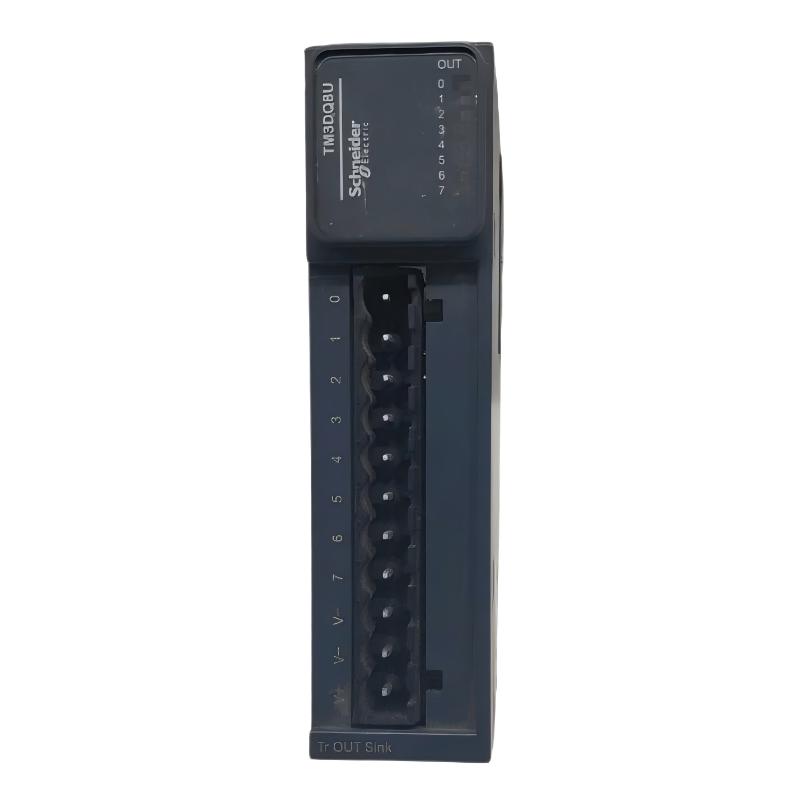
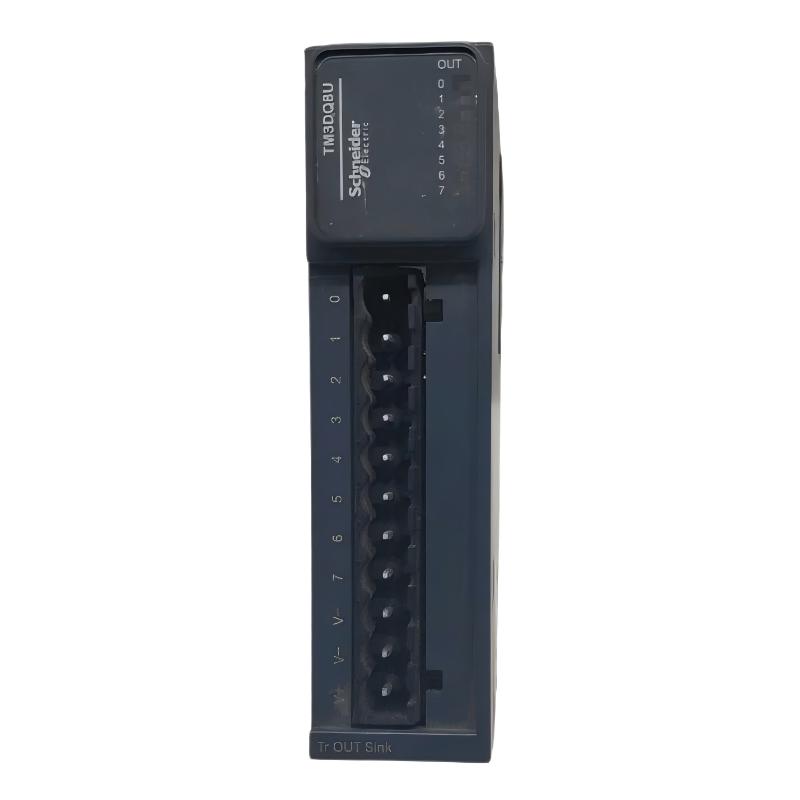
The Schneider Electric TM3DQ8U Discrete Output Module is an industrial automation component in the Modicon TM3 expansion I/O family. It is designed to extend the digital output capacity of compatible Modicon programmable logic controllers (PLCs), enabling controllers to operate a wider range of field devices in automated machinery, production equipment, and industrial control systems.
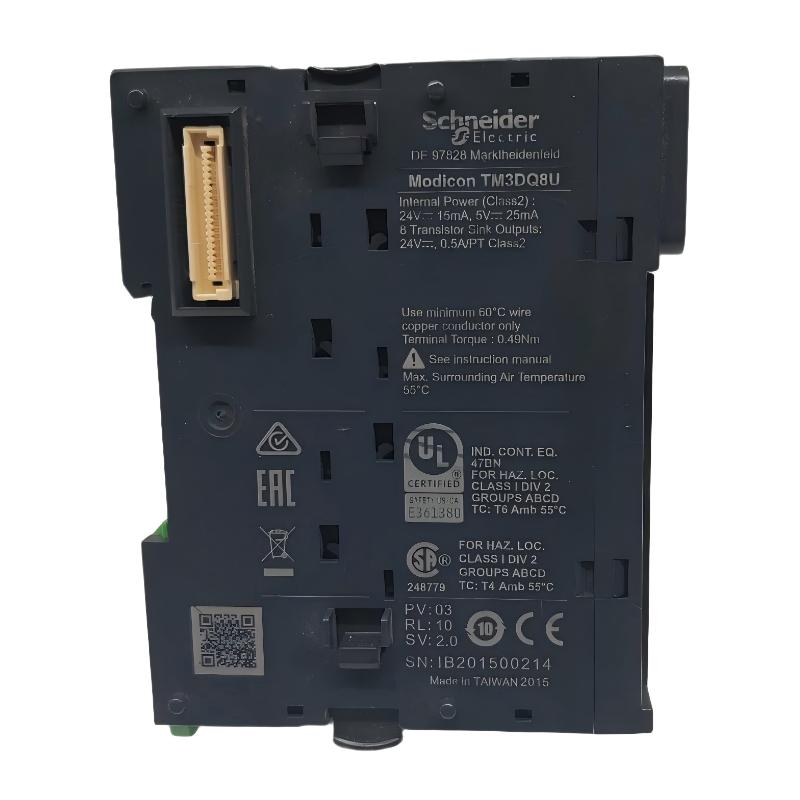
The TM3DQ8U provides eight transistor output channels using NPN sink logic. Operating with a rated output voltage of 24 V DC, it is suitable for controlling compatible DC loads such as indicator lamps, interface relays, solenoid valves, and other low-voltage actuators within the module’s electrical ratings.
As a transistor-based output module, the TM3DQ8U is suited to applications requiring fast switching and repeated control operations. Its semiconductor output design supports rapid changes between output states, making it useful for machine sequencing, equipment interlocking, and automated process control.
The module uses a removable screw terminal block for field wiring. This connection arrangement allows installers and maintenance technicians to connect conductors securely and disconnect the terminal block when necessary for servicing. Individual channel status LEDs also help users identify output states during commissioning and troubleshooting.
The TM3DQ8U is designed for integration with compatible Modicon M221, M241, M251, and M262 controllers. Through the Modicon TM3 expansion architecture, it allows system designers to increase the number of available digital outputs without replacing the main controller.
When selecting this module, users should distinguish between NPN sink outputs and PNP source outputs. The field wiring, load arrangement, and electrical common must match the output logic. The TM3DQ8U should therefore be selected according to the actual requirements of the control system rather than simply by its channel count.
2. Technical Specifications
| Parameter | Specification |
|---|---|
| Brand | Schneider Electric |
| Model | TM3DQ8U |
| Product Family | Modicon TM3 |
| Product Type | Discrete Output Module |
| Output Type | Transistor |
| Number of Outputs | 8 |
| Output Logic | NPN, negative logic, sink |
| Rated Output Voltage | 24 V DC |
| Rated Output Current | 0.5 A maximum per channel |
| Total Output Current | 4 A maximum per output group, subject to specified operating conditions |
| Output Voltage Range | 19.2–28.8 V DC |
| Maximum Voltage Drop | 0.4 V |
| Maximum Off-State Leakage Current | 0.1 mA |
| Response Time | Approximately 450 μs turn-on and 450 μs turn-off |
| Maximum Switching Frequency | 100 Hz under resistive-load conditions |
| Output Common | One common line for all eight channels |
| Electrical Connection | Removable screw terminal block |
| Terminal Pitch | 5.08 mm |
| Cable Type | Unshielded cable |
| Maximum Cable Length | 30 m |
| Output-to-Internal-Logic Isolation | 500 V AC |
| Output Status Indication | One green LED per channel |
| Protection Against Short Circuit | No built-in short-circuit protection |
| Protection Against Reverse Polarity | No |
| Mounting | DIN rail or panel mounting with suitable fixing accessories |
| Protection Rating | IP20 |
| Compatible Controller Families | Modicon M221, M241, M251, and M262 |
| Dimensions | 90 × 84.6 × 27.4 mm |
| Weight | 0.76 kg, as provided; verify against the actual unit and packing information |
| Typical Application | Industrial machine control and 24 V DC actuator switching |
Specifications should be checked against the applicable hardware guide and the exact product revision before installation. Output-current limits, load characteristics, environmental conditions, and wiring requirements must be observed.
3. Function and Working Principle
3.1 Digital Output Control
The main function of the TM3DQ8U is to convert digital control commands from a compatible PLC into electrical switching actions at its output terminals.
A PLC program determines when a particular output should be activated. When the relevant logic condition becomes true, the controller updates the output command through the expansion bus. The TM3DQ8U then switches the corresponding transistor output to control the connected field circuit.
When the program condition becomes false, the output returns to its inactive state. This allows the PLC to coordinate machine movements, indicator signals, valve commands, and other discrete control functions according to the programmed sequence.
3.2 NPN Sink Output Principle
The TM3DQ8U uses NPN transistor outputs with sink logic. In a typical arrangement, the field load is connected between the positive side of the 24 V DC supply and the relevant output terminal. When the output is activated, the transistor provides a current path toward the supply’s 0 V reference.
The current path can be represented conceptually as:
+24 V DC → Field Load → TM3DQ8U Output → 0 V DC
The actual circuit must follow the manufacturer’s wiring diagram, including the internally connected common terminals.
This differs from a PNP source output, which supplies positive voltage to a load when activated. A system designed for PNP sourcing should not be assumed to work correctly with the TM3DQ8U without checking the circuit design and device compatibility.
3.3 Eight Independent Control Channels
The module provides eight digital output channels. Each channel can be assigned to a separate control function in the PLC program, allowing one expansion module to manage multiple devices.
For example, an automated machine may use the outputs to control several status indicators, pneumatic valve interface circuits, and auxiliary control signals. The final allocation depends on the connected devices, current consumption, and required operating sequence.
Although the channels are individually controlled, they share a common electrical arrangement. Their current demand must therefore be evaluated together rather than treating every channel as an entirely independent power circuit.
3.4 Fast Switching Performance
Transistor outputs can change state much faster than conventional electromechanical relay contacts. The TM3DQ8U specifies response times of approximately 450 microseconds for turn-on and turn-off.
This makes the module appropriate for many repetitive machine-control operations and rapid digital switching tasks within its rated operating limits.
However, a fast output response does not automatically make the module suitable for every high-speed application. Users should consider the load type, PLC scan and update behavior, switching frequency, wiring, and the requirements of the overall control sequence.
3.5 Output Status Indication
Each output channel has a green status LED. These indicators provide a convenient way to check whether the module reports an output as active or inactive.
During commissioning, technicians can compare the LED state with the PLC program and the behavior of the connected field device. This can help narrow down problems involving incorrect program logic, field wiring, load compatibility, or external power supplies.
An illuminated LED should not be treated as proof that the field load is operating correctly. The load circuit and supply voltage should still be checked when troubleshooting.
4. Role in Industrial Control Systems
The TM3DQ8U serves as an output interface between a compatible PLC and field devices. It allows the controller to issue discrete commands to equipment that responds to an on/off signal.
In a typical control architecture, the PLC executes the machine logic, the TM3 expansion bus communicates output commands, and the TM3DQ8U switches the connected field circuits. Sensors and input modules provide feedback, while the PLC uses that feedback to determine the next control action.
4.1 PLC Output Expansion
As machinery becomes more complex, the number of required output points can exceed the capacity of the base controller. The TM3DQ8U provides eight additional output points, allowing system designers to expand the control system without necessarily changing the main PLC.
This modular approach is useful when adding actuators, extending a production line, or modifying a machine to support additional functions.
4.2 Field Device Interface
The module connects PLC logic to compatible 24 V DC loads. It can support control signals for equipment such as indicator lamps, interface relays, and suitable solenoid valve circuits, provided their electrical characteristics comply with the module’s specifications.
Loads that exceed the permitted output current or have unsuitable electrical characteristics should be controlled through an appropriately rated interface device.
4.3 Machine Sequence Control
Industrial machines often rely on a sequence of discrete actions. A PLC may need to activate one device, wait for feedback, deactivate that device, and then start the next operation.
The TM3DQ8U can provide the required output signals for these sequences. Typical examples include activating pneumatic functions, switching operating indicators, enabling auxiliary equipment, and coordinating individual machine stages.
4.4 Maintenance and Fault Diagnosis
The channel LEDs and removable terminal block support practical maintenance procedures. Technicians can inspect the channel states and check terminal connections without needing to interpret every part of the control system at once.
Before disconnecting the module or its field wiring, however, the relevant electrical supplies must be isolated and the equipment placed in a safe condition.
5. Industrial Applications
5.1 Automated Manufacturing Equipment
Manufacturing machines commonly use discrete outputs to control small actuators, signal devices, and interface circuits. The TM3DQ8U can provide additional output points for these functions when the connected loads are compatible with NPN sink logic.
Potential applications include assembly equipment, packaging machinery, material-handling systems, and general-purpose automated workstations.
5.2 Packaging and Processing Machinery
Packaging equipment frequently uses sequential control to coordinate product movement, pneumatic operations, and status indications. The module can support suitable 24 V DC control circuits used in these processes.
The output configuration should be checked against the electrical requirements of each actuator and the machine’s safety design.
5.3 Conveyor and Material-Handling Systems
Conveyor systems may require digital commands for auxiliary motors through interface devices, diverter solenoids, stack lights, and other control functions. The TM3DQ8U can provide discrete switching points for compatible devices.
It should not be connected directly to a motor or other load that exceeds its electrical ratings. Motors and high-current devices normally require appropriately rated contactors, drives, or interface equipment.
5.4 Building and Equipment Automation
Certain industrial building systems use 24 V DC discrete control signals for equipment status, small actuators, and auxiliary functions. The TM3DQ8U may be used where the controller platform, wiring arrangement, and load characteristics are suitable.
5.5 Water and Process Equipment
Small process skids and auxiliary treatment equipment may use PLC outputs to command valve interfaces, alarms, and operating indicators. The TM3DQ8U can provide additional digital control points for compatible devices.
For inductive loads such as solenoid coils, appropriate suppression measures must be evaluated to limit voltage transients and protect the output circuitry.
5.6 Customized OEM Machines
Original equipment manufacturers often need a compact and modular I/O architecture that can be adapted to different machine configurations. The TM3DQ8U provides eight additional transistor outputs within the Modicon TM3 ecosystem, helping designers standardize control-panel layouts across compatible equipment platforms.
6. Installation and System Integration
6.1 Verify PLC Compatibility
Before installation, confirm that the host PLC supports the Modicon TM3 expansion system and that the selected hardware configuration permits the required number and arrangement of expansion modules.
The TM3DQ8U is associated with the Modicon M221, M241, M251, and M262 controller families. Compatibility should be checked against the exact controller model, firmware, expansion limits, and engineering-software configuration.
6.2 Mount the Module Securely
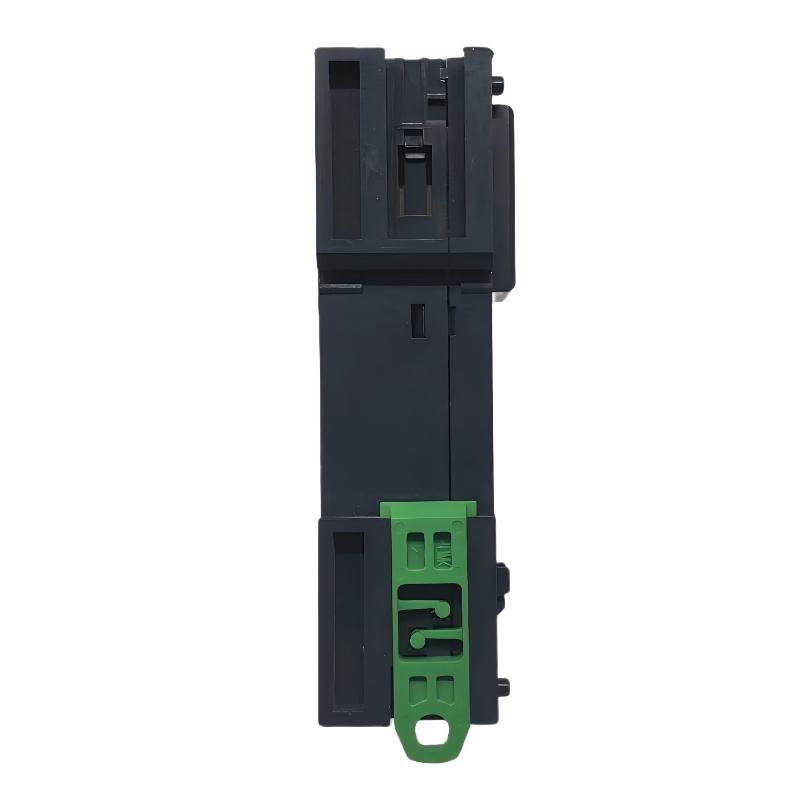
The module is designed for installation on compatible DIN rails or on a panel using appropriate mounting accessories. Select a mounting location that provides adequate clearance for wiring, access to the terminal block, and suitable ventilation.
The enclosure must protect the equipment against environmental conditions beyond the module’s IP20 protection level. The module itself is not intended to provide protection against direct water exposure or conductive contamination.
6.3 Connect the Expansion Bus
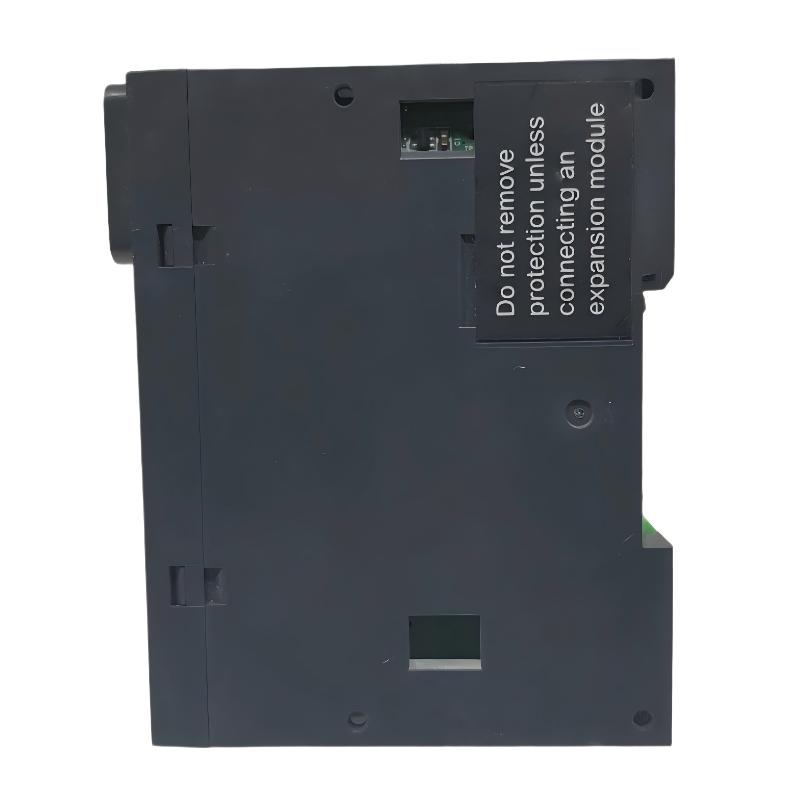
Install the module in accordance with the manufacturer’s expansion-system instructions. Ensure that the bus connection is correctly aligned and fully seated, and observe the specified rules for module positioning and assembly.
Power down the system before installing, removing, or changing the expansion hardware unless the manufacturer’s documentation explicitly permits the operation.
6.4 Wire the NPN Output Circuits Correctly
Because the TM3DQ8U uses sink outputs, field wiring must match the NPN switching principle. The load is typically connected between the positive DC supply and the output channel, with the output providing the return path when active.
Incorrectly treating the channel as a PNP source output can result in non-operation or an improperly configured circuit. Verify the terminal assignments and common-line arrangement against the wiring diagram for the exact module.
6.5 Check Current and Load Characteristics
Each channel is rated for up to 0.5 A, with a specified total current limit for the output group. The total current demand must remain within the manufacturer’s limits under the actual operating conditions.
Check the following before connecting field loads:
- Rated voltage and steady-state current.
- Inrush current at switch-on.
- Inductive characteristics and transient voltage.
- Required switching frequency.
- External fuse selection.
- Compatibility with NPN sink logic.
- The current demand of all channels operating simultaneously.
The TM3DQ8U does not provide built-in short-circuit protection. Appropriate external protection is therefore required in accordance with the manufacturer’s instructions and applicable electrical regulations.
6.6 Configure the PLC Program
Use the supported Schneider Electric engineering environment to configure the controller and its expansion modules. Assign the output channels to the appropriate program variables and verify that the addresses match the physical wiring.
During commissioning, test each channel individually before running the complete machine sequence. Confirm that the intended field device responds correctly and that no unexpected output is activated.
6.7 Perform Functional and Safety Checks
Before returning the equipment to normal service, check terminal tightness, supply polarity, field-device operation, protective devices, and the behavior of all relevant control sequences.
Standard PLC output modules are not substitutes for dedicated safety-rated output equipment. Emergency-stop circuits and other safety functions must be implemented using suitable safety components and an appropriate safety architecture.
7. Compatible System Components
The TM3DQ8U is intended for use in a compatible Modicon TM3 expansion system. The following table lists component categories commonly considered during system design.
| Component | Function in the System |
|---|---|
| Schneider Modicon M221 PLC | Controller option for supported compact automation systems |
| Schneider Modicon M241 PLC | Controller option for machine automation |
| Schneider Modicon M251 PLC | Controller option for supported distributed machine architectures |
| Schneider Modicon M262 PLC | Controller option for supported motion and machine-control configurations |
| Modicon TM3 Digital Input Module | Receives discrete signals from sensors and switches |
| Modicon TM3 Digital Output Module | Adds digital output points to the controller |
| 24 V DC Power Supply | Supplies compatible field circuits and other control equipment |
| Interface Relay | Provides an intermediary switching stage where required |
| Terminal Blocks and DIN Rail | Support panel wiring and equipment mounting |
| Field Sensors and Limit Switches | Provide machine status and process feedback |
| Solenoid Valves and Indicator Devices | Receive compatible discrete control signals |
Compatibility depends on the controller model, expansion configuration, electrical ratings, and the specific device variant. Always verify the complete system design before ordering or installing components.
8. Recommended Alternative Models
The following models may be considered when evaluating a replacement or a different output configuration. They are not automatically interchangeable with the TM3DQ8U.
| Model | Output Type | Main Difference | Selection Consideration |
|---|---|---|---|
| Schneider TM3DQ8UG | 8-channel NPN sink transistor output | Spring-terminal connection variant | Consider when spring-clamp wiring is preferred; verify the exact version |
| Schneider TM3DQ8T | 8-channel transistor source output | PNP/source logic rather than NPN/sink | Requires compatible field wiring and load arrangement |
| Schneider TM3DQ16U | 16-channel NPN sink transistor output | Higher channel count | Consider when more output points are required and the full configuration is supported |
| Schneider TM3DQ16UG | 16-channel NPN sink transistor output | Higher channel count with spring terminals | Evaluate channel requirements and terminal preference |
| Schneider TM3DQ8R | 8-channel relay output | Electromechanical relay switching | Consider when the application requires relay contacts and the switched load is within its ratings |
When choosing an alternative, compare output logic, rated voltage, channel count, current capacity, terminal style, module dimensions, and controller compatibility. A module with the same number of channels may still require a different wiring design or PLC configuration.
9. Key Advantages of the Schneider TM3DQ8U
Eight Digital Output Channels
Eight channels provide a practical way to expand the discrete control capacity of a compatible PLC without introducing a separate controller for each group of field devices.
Fast Transistor Switching
The semiconductor output design supports rapid on/off switching for compatible DC control loads and repetitive machine-control tasks.
NPN Sink Logic
The module offers a defined sink-output arrangement for systems designed around NPN-compatible devices and field wiring.
Removable Screw Terminal Block
The screw-terminal connection allows conductors to be secured mechanically and makes terminal-block removal convenient during maintenance, provided the equipment has been safely isolated.
Individual Channel LEDs
Green status indicators help technicians identify output states and simplify initial checks during commissioning and troubleshooting.
Modicon TM3 Integration
The module belongs to the Modicon TM3 expansion family and can be integrated into supported Modicon PLC configurations according to the manufacturer’s hardware rules.
Compact Module Format
Its specified dimensions of 90 × 84.6 × 27.4 mm support installation in suitably designed control panels where mounting space and wiring access have been considered.
Flexible Machine-Control Applications
The module can support compatible 24 V DC field devices in manufacturing, packaging, conveying, and other industrial automation applications.
10. Technical FAQs
Q1. What is the Schneider TM3DQ8U?
The TM3DQ8U is an eight-channel discrete output expansion module in the Schneider Electric Modicon TM3 family. It uses NPN sink transistor outputs and is designed for compatible industrial PLC applications.
Q2. How many output channels does the TM3DQ8U provide?
It provides eight digital transistor output channels. Each channel can be assigned to a separate control function in the PLC program.
Q3. What is the rated output voltage?
The rated output voltage is 24 V DC. The specified operating voltage range is 19.2–28.8 V DC.
Q4. What is the maximum current per output?
The rated maximum is 0.5 A per channel. The total current of the output group must also remain within the specified limit. Always check the manufacturer’s conditions and the requirements of the connected load.
Q5. Is the TM3DQ8U an NPN or PNP output module?
The TM3DQ8U uses NPN sink logic. It should not be confused with source-type output modules such as the TM3DQ8T.
Q6. What is the difference between TM3DQ8U and TM3DQ8UG?
Both models provide eight NPN sink transistor outputs. The principal distinction is the field-wiring connection: TM3DQ8U uses a removable screw terminal block, while TM3DQ8UG uses a removable spring terminal block. Confirm the exact product revision before replacement.
Q7. Which PLCs are compatible with the TM3DQ8U?
The module is listed for compatible Modicon M221, M241, M251, and M262 controller families. The exact PLC model, firmware, expansion configuration, and software support must be verified before installation.
Q8. Does the module have built-in short-circuit protection?
No. The TM3DQ8U does not have built-in short-circuit protection. The output circuits must be protected using appropriately selected external protection in accordance with the manufacturer’s instructions.
Q9. Can the TM3DQ8U directly control a motor?
It should not be used to switch a motor directly unless the motor circuit has been specifically shown to comply with the module’s output ratings and requirements. In typical industrial installations, motors are controlled through appropriately rated contactors, drives, or interface devices.
Q10. Can the module drive solenoid valves?
It may control compatible 24 V DC solenoid-valve circuits if the steady-state current, inrush current, inductive characteristics, and other electrical requirements remain within the permitted limits. Suitable transient suppression should be evaluated for inductive loads.
Q11. What is the response time of the TM3DQ8U?
The documented response time is approximately 450 microseconds for turn-on and 450 microseconds for turn-off. Actual system behavior also depends on PLC processing, output updating, wiring, and load characteristics.
Q12. How is the output status monitored?
Each output channel has a green status LED. The indicators help technicians check the reported channel state, but they do not replace electrical measurements or verification of the field device.
Q13. What are the module dimensions?
The dimensions provided for this product are 90 × 84.6 × 27.4 mm. Confirm the installation orientation and required clearances against the relevant mechanical drawings.
Q14. What should be checked before replacing a TM3DQ8U?
Confirm the complete model number, output logic, rated voltage, current requirements, terminal arrangement, controller compatibility, physical dimensions, and PLC configuration. Also inspect the existing wiring and protective devices before reconnecting the replacement.
11. Conclusion
The Schneider Electric TM3DQ8U Discrete Output Module is an eight-channel, 24 V DC NPN sink transistor output module designed to expand the digital output capacity of compatible Modicon PLC systems. Its fast switching response, removable screw terminal block, and individual channel status indicators make it suitable for a range of industrial machine-control applications.
Correct integration depends on selecting compatible field devices, respecting the per-channel and total-current limits, wiring the NPN sink outputs properly, and providing appropriate external protection. The module should also be checked against the controller’s expansion requirements and the manufacturer’s installation instructions.
For maintenance teams, OEMs, and industrial automation integrators, verifying the complete model number and technical configuration before purchase helps reduce wiring errors and avoid unsuitable substitutions. The TM3DQ8U is best selected when an application specifically requires eight compatible NPN transistor output channels within a supported Modicon TM3 system.