

ProductPRODUCT
Featured products
Contact Us
- Schneider
- LXM23DU10M3X
- Motion Servo Drive
- France
- 85 × 162 × 180 mm
- 2.2 kg
- Xiamen, China
- New & In Stock
- T/T, PayPal, Western Union
- 1 Year
- 1-3 Working Days
- DHL, UPS, TNT, FedEx and EMS.
- 24-Hour Service
- COO
- 6
Our advantage

Global Logistics
We have a 10-year logistics and express cooperation agreement, so our products can be shipped to any place in the world.

Brand new and original
Our products are imported in bulk from the place of origin. Because of the cooperative relationship, our products are all original and 100% new.

24-hour service
We provide 7*24 hours service to our customers. We will be there whenever you need us.

Price advantage
All our products are priced very favorably because we have our own warehouse and supply.
| Company Information | |||
| [email protected] | |||
| Mobile | +8615980777398 | ||
| +8615980777398 | |||
| 15980777398 |
Product Overview
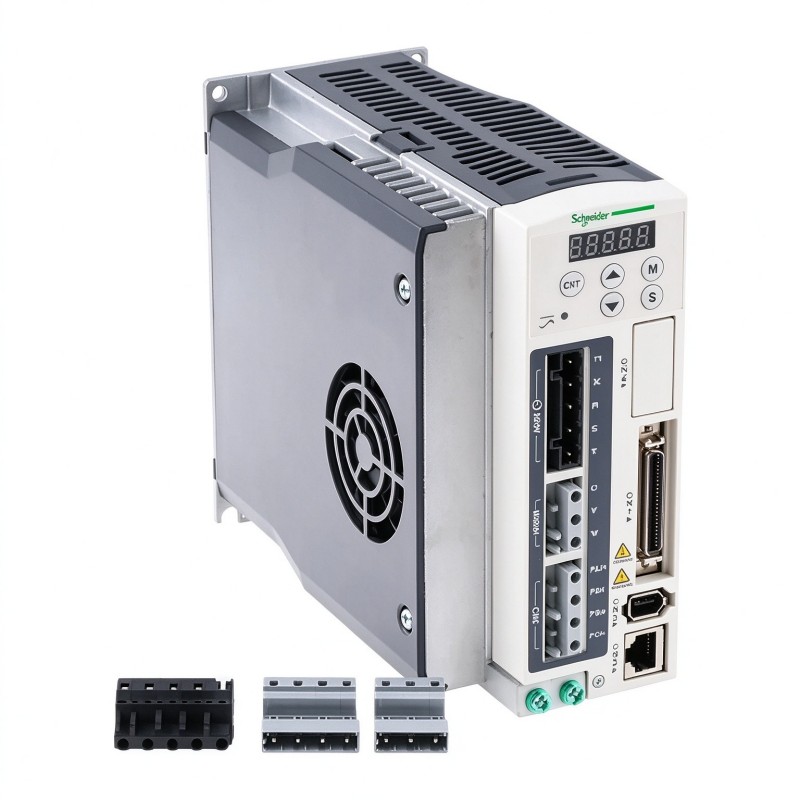
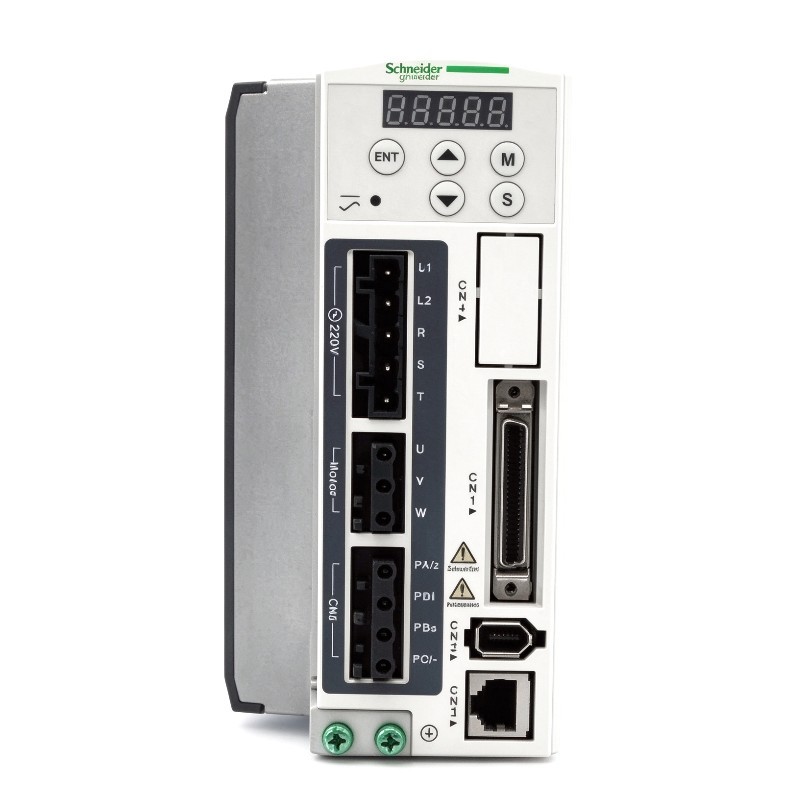
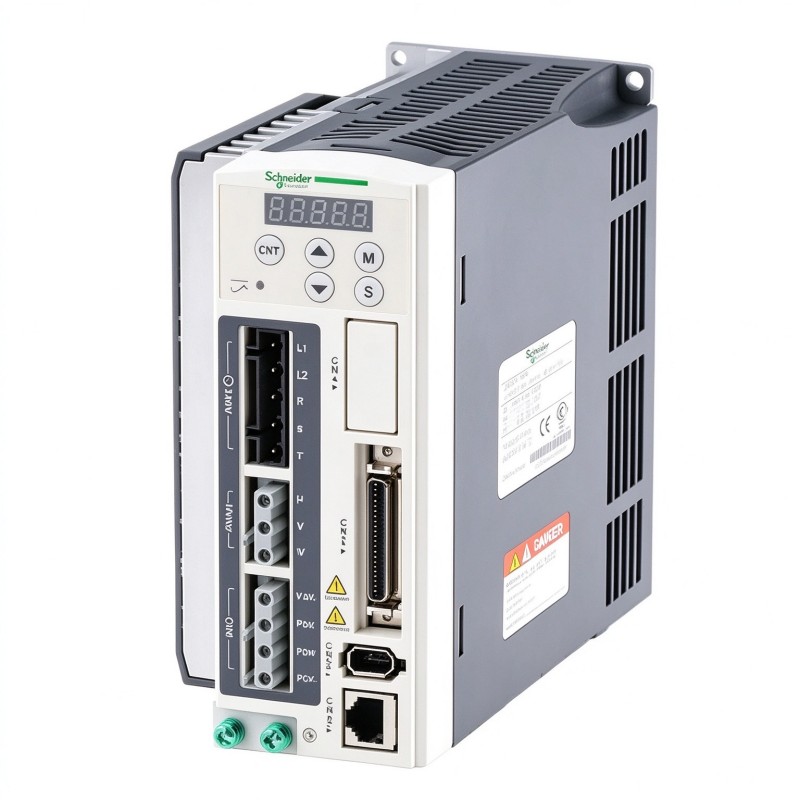
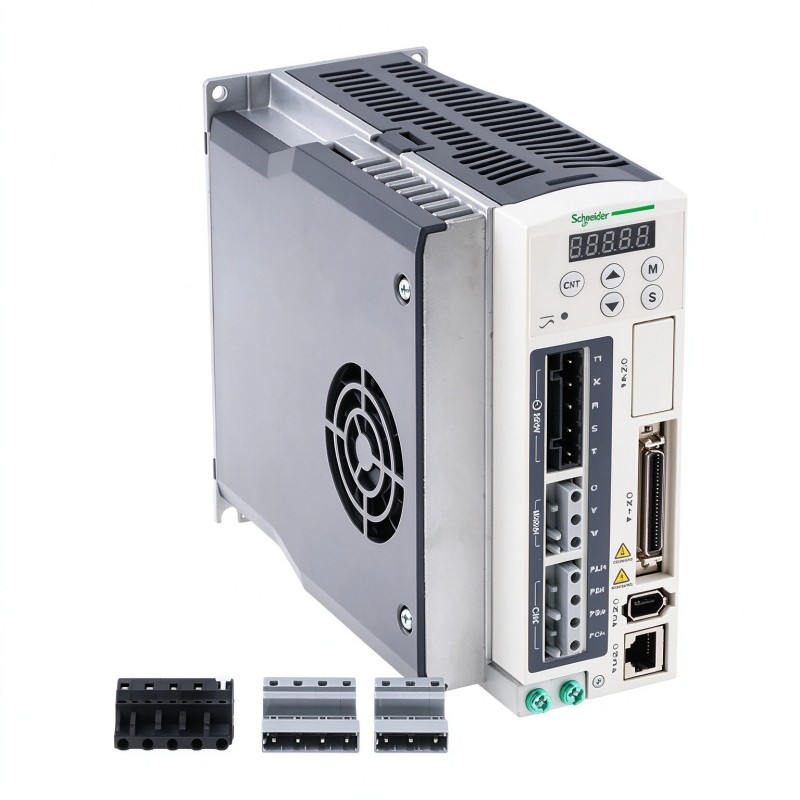
The Schneider Electric LXM23DU10M3X is a 1 kW servo drive from the Lexium 23 Plus family. It controls compatible servo motors in machinery that requires accurate positioning, regulated speed, and controlled acceleration and deceleration. The drive processes motion commands and uses encoder feedback to regulate motor operation, making it suitable for applications where movement must follow a defined sequence rather than simply run continuously.
With a higher power rating than the 400 W and 750 W models in the same family, the LXM23DU10M3X can serve machine axes that operate with heavier mechanical loads or require greater acceleration capability. Typical applications include packaging equipment, automated assembly machinery, indexing tables, material-feeding systems, and dedicated production machines. The actual motor and drive combination must be selected according to load inertia, required torque, operating speed, and duty cycle.
Consider an indexing station that moves a fixture between several processing positions. The controller issues a movement command, and the servo drive regulates the motor as the fixture accelerates, travels, and decelerates. Encoder feedback allows the drive to monitor motor movement, while the configured motion parameters determine how the axis responds during each cycle. The controller can then coordinate the next operation through the machine’s control sequence.
The LXM23DU10M3X supports position, speed, and torque control functions. Its pulse-control arrangement suits controllers that generate positioning commands through dedicated signal outputs. Programmable digital inputs and outputs provide additional ways to coordinate the drive with machine interlocks, operating commands, and status signals. Analog voltage inputs are available for supported reference functions.
The LXM23D configuration should be distinguished from the LXM23A variants. The LXM23DU10M3X is an I/O-oriented servo drive with pulse-based positioning capability; it should not be treated as a CANopen-equipped drive. This difference is relevant when replacing an existing unit or developing a new motion-control cabinet because the controller’s available interface determines how movement commands are delivered.
At the 1 kW level, the drive may be used on axes with more demanding motion profiles than those typically assigned to lower-power units. However, nominal power alone does not determine whether a drive is suitable. Peak torque requirements, motor current, acceleration time, mechanical transmission, and regenerative energy during stopping all affect the selection.
For maintenance engineers, the key is to assess the drive as part of the complete servo system. The motor, encoder, command wiring, supply circuit, and mechanical load must work together. Correct configuration and commissioning help prevent positioning errors, excessive vibration, and unnecessary drive trips during production.
Technical Specifications
| Parameter | Specification |
|---|---|
| Manufacturer | Schneider Electric |
| Model | LXM23DU10M3X |
| Product Type | Motion Servo Drive |
| Product Family | Lexium 23 Plus |
| Device Short Name | LXM23 |
| Nominal Power | 1 kW |
| Continuous Output Power | 1000 W at 220 V |
| Continuous Output Current | 7.3 A |
| Rated Supply Voltage | 220 V AC |
| Single-Phase Supply Range | 200–255 V AC |
| Three-Phase Supply Range | 170–255 V AC |
| Supply Frequency | 50/60 Hz |
| Network Frequency Limits | 47.5–63 Hz |
| Command Interface | Pulse control and programmable I/O |
| Programmable Digital Inputs | 8 |
| Digital Input Voltage | 12–24 V DC |
| Digital Outputs | 5 |
| Digital Output Voltage | 12–24 V DC |
| Analog Inputs | 2 voltage inputs |
| Analog Input Range | -10 to +10 V |
| Feedback Type | Servo motor encoder |
| Control Functions | Position, speed, and torque control |
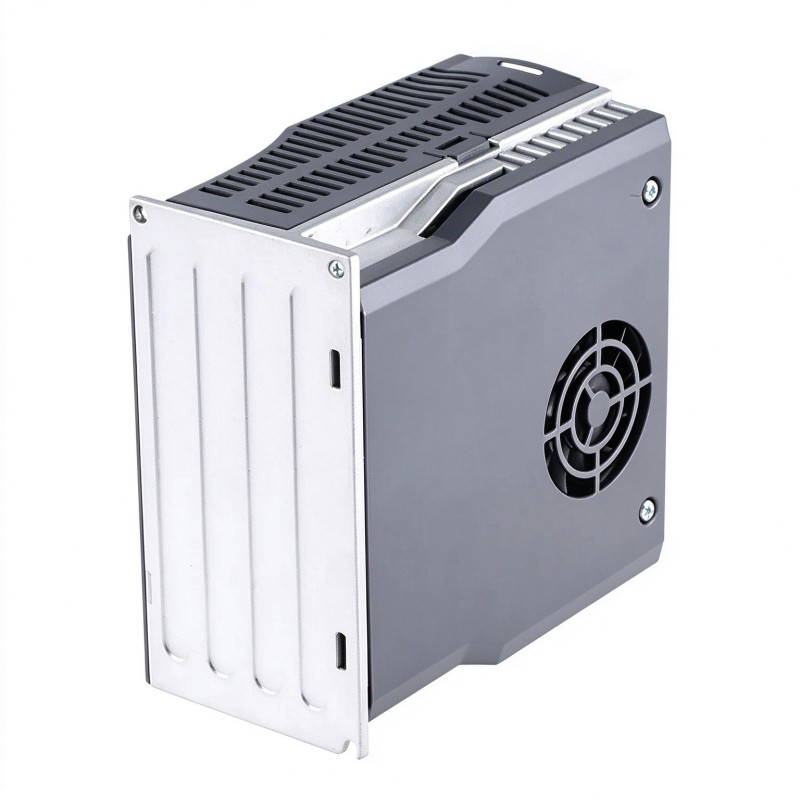
| Cooling Method | Natural convection |
| EMC Filter | Not integrated |
| Protection Rating | IP20; upper-part protection depends on the specified protective cover |
| Operating Temperature | 0–55°C |
| Relative Humidity | 5–85%, non-condensing |
| Mounting Position | Vertical, within the specified installation tolerance |
| Dimensions | 85 × 162 × 180 mm |
| Weight | 2.2 kg |
Product Features
- 1 kW nominal output: Supports servo axes with higher motor power requirements than lower-rated Lexium 23 Plus models.
- Pulse-based positioning: Accepts supported movement commands from a compatible controller.
- Position, speed, and torque control: Accommodates different motion requirements through the applicable operating configuration.
- Programmable digital inputs: Provides eight inputs for supported control functions and machine signals.
- Digital outputs: Offers five outputs for configured status and control signals.
- Analog voltage inputs: Supports applicable analog-reference functions within the specified input range.
- Encoder feedback: Allows closed-loop regulation of the connected servo motor.
- Internal motion sequences: Supports configured positioning sequences for suitable applications.
- Natural-convection cooling: Uses passive cooling, making cabinet ventilation and installation clearances important.
- External braking capability: Supports an appropriate external braking arrangement where required by regenerative-energy demand.
Working Principle
The LXM23DU10M3X receives movement commands from a compatible controller or executes a configured motion sequence. It regulates the power delivered to the servo motor and processes encoder feedback to control the motor’s response.
PLC or Motion Controller → Pulse Commands → LXM23DU10M3X → Servo Motor → Mechanical Axis
In position-control mode, pulse commands represent the requested movement. The drive interprets the signals according to its configured command scaling and regulates the motor through the acceleration, travel, and deceleration phases. The relationship between pulse count and mechanical travel depends on the electronic gearing, motor feedback, and transmission ratio.
For example, an automated packaging machine may need to advance a film-feeding mechanism by a repeatable increment before a sealing operation. The controller issues the movement command, and the drive regulates the motor to complete the feed movement. Once the required sequence condition is met, the machine controller can coordinate the sealing cycle and prepare the next index.
The drive can also operate in speed-control mode. In this arrangement, motor speed follows the configured reference source and operating parameters. This can suit feed rollers, rotating mechanisms, or other axes where maintaining a commanded speed is more important than moving between fixed positions.
Torque control is applicable when motor torque is the principal regulated quantity. The command source and torque limits must be selected to match the machine’s requirements. For mechanisms that handle tension or encounter variable resistance, torque regulation can help manage motor output, but it does not replace mechanical safeguards or load monitoring.
The programmable digital inputs and outputs connect the drive’s operation to the wider control sequence. Depending on their configuration, digital signals can support functions such as enabling operation, resetting faults, responding to limit switches, or indicating status. These functions must be assigned consistently with the controller program and machine safety design.
When the motor decelerates, energy can return to the drive through the motor power stage. Repeated rapid stops or a high-inertia load can increase the amount of regenerative energy. Where the application exceeds the permitted energy-handling capability, an appropriately selected external braking resistor may be necessary.
A stable motion profile depends on correct motor configuration, encoder feedback, command scaling, and mechanical condition. If the axis overshoots, vibrates, or generates following errors, the command signals, motor feedback, load inertia, and mechanical transmission should be checked before changing tuning parameters.
Role in a Lexium 23 Plus Motion Control System
The LXM23DU10M3X serves as the power-regulation and motion-control stage between the machine controller and the servo motor. It processes the selected command signals, controls motor output, and uses encoder feedback to regulate movement.
PLC or Motion Controller → Servo Drive → Servo Motor → Mechanical Transmission → Machine Axis
| System Component | Function |
|---|---|
| Schneider Electric LXM23DU10M3X | Regulates servo motor power and executes configured motion control |
| Compatible Servo Motor | Converts electrical power into controlled mechanical movement |
| Motor Encoder | Supplies feedback for motor-motion regulation |
| PLC or Motion Controller | Generates positioning commands and coordinates machine sequences |
| Pulse Command Wiring | Transfers supported movement commands to the drive |
| Digital I/O | Carries configured enable, reset, limit, and status signals |
| Analog Command Source | Supplies voltage references for supported control functions |
| Servo Motor Power Cable | Carries drive output power to the motor |
| Encoder Feedback Cable | Transfers motor feedback signals to the drive |
| External Braking Resistor | Dissipates regenerative energy where required |
| Mechanical Transmission | Transfers motor movement to the driven mechanism |
Industrial Applications
| Application | Typical Use |
|---|---|
| Packaging Machinery | Controlling feed axes, indexing mechanisms, and repetitive positioning movements |
| Automated Assembly | Moving components into defined positions for insertion, fastening, or pressing |
| Indexing Tables | Moving fixtures between processing stations |
| Material Feeding | Advancing workpieces or materials by controlled increments |
| Printing Equipment | Regulating suitable feed mechanisms and positioning axes |
| Labeling Machines | Coordinating feed movement with product positioning |
| Automated Inspection | Moving products into repeatable measurement or inspection positions |
| Material Handling | Operating servo-driven transfer mechanisms within the rated capacity |
| Winding Applications | Controlling compatible axes where torque, speed, and regenerative demands suit the drive |
| Special-Purpose Machinery | Executing programmed motion sequences for dedicated production equipment |
The LXM23DU10M3X is suited to applications where the required motor output, command interface, feedback arrangement, and operating cycle match the capabilities of the complete servo system.
Installation and Maintenance
- Verify the AC supply: Confirm that the incoming supply matches the selected single-phase or three-phase configuration and remains within the specified voltage limits.
- Check motor compatibility: Confirm the motor’s rated current, voltage, power, encoder type, and feedback connection against the drive’s supported specifications.
- Prepare the cabinet: Provide sufficient ventilation for natural-convection cooling and keep the installation environment within the specified operating conditions.
- Follow mounting requirements: Install the drive in the prescribed vertical orientation and maintain the required clearances around the unit and adjacent equipment.
- Inspect grounding and protection: Check protective grounding, supply-side circuit protection, and isolation arrangements before energizing the system.
- Check motor power wiring: Verify the motor output connections, terminal tightness, cable ratings, and grounding continuity.
- Verify encoder feedback: Inspect the encoder cable, connector, and routing. Confirm that the feedback arrangement matches the connected motor.
- Configure pulse commands: Set the appropriate pulse scaling and electronic gearing, then verify direction logic and signal timing against the controller output.
- Assign digital I/O functions: Configure the required inputs and outputs for the machine’s enable, reset, limit, and status requirements.
- Set the motion profile: Adjust acceleration, deceleration, speed limits, and positioning parameters according to the load inertia and production cycle.
- Test under controlled conditions: Run the axis at reduced speed and verify movement direction, feedback response, stopping behavior, and positioning before normal operation.
- Maintain configuration records: Document motor details, parameter settings, alarms, wiring changes, and maintenance findings to support subsequent troubleshooting.
When a servo axis develops inconsistent positioning or repeated overvoltage and following-error faults, inspect the motion profile, encoder feedback, load inertia, and braking arrangement. Correcting the underlying electrical, mechanical, or configuration issue is preferable to changing multiple parameters without identifying the cause.
Related Components
| Component | Function |
|---|---|
| Schneider Electric LXM23DU10M3X | Controls a compatible servo motor using configured motion commands |
| Compatible Lexium Servo Motor | Produces the mechanical movement required by the machine |
| Motor Encoder | Supplies position and speed feedback |
| PLC or Motion Controller | Generates commands and coordinates machine operations |
| Pulse Command Cable | Transfers supported positioning signals |
| Servo Motor Power Cable | Connects the drive output to the motor |
| Encoder Feedback Cable | Transfers motor feedback signals to the drive |
| Digital I/O Wiring | Carries configured control and status signals |
| External Braking Resistor | Dissipates regenerative energy when required |
| Circuit Protection Devices | Protect the drive supply circuit according to the installation design |
Recommended Related Models
| Model | Product Type | Typical Application |
|---|---|---|
| Schneider LXM23DU04M3X | Lexium 23 Plus Motion Servo Drive, 400 W | Compact positioning and feeding mechanisms |
| Schneider LXM23DU07M3X | Lexium 23 Plus Motion Servo Drive, 750 W | Servo axes with moderate power requirements |
| Schneider LXM23DU10M3X | Lexium 23 Plus Motion Servo Drive, 1 kW | Higher-power positioning and motion applications |
| Schneider LXM23DU15M3X | Lexium 23 Plus Motion Servo Drive, 1.5 kW | Applications requiring a higher nominal output rating |
| Schneider LXM26DU10M3X | Lexium 26 Motion Servo Drive, 1 kW | A different servo-drive family for applications with compatible electrical and control requirements |
Key Advantages
- Supports 1 kW servo motion applications.
- Accepts pulse-based positioning commands from compatible controllers.
- Supports position, speed, and torque control functions.
- Includes programmable digital inputs and outputs.
- Provides analog voltage inputs for supported control arrangements.
- Uses encoder feedback for closed-loop motor regulation.
- Supports specified single-phase and three-phase AC supply arrangements.
- Accommodates external braking provisions where regenerative energy requires dissipation.
Technical FAQs
What should be checked when moving from a 750 W drive to the LXM23DU10M3X?
Check the connected motor’s rated current, voltage, feedback compatibility, and approved drive-motor combination. The controller interface, supply arrangement, and configured motion parameters must also match the installation. A higher drive power rating alone does not establish compatibility with the existing motor.
Does the LXM23DU10M3X use pulse commands or CANopen communication?
The LXM23DU10M3X is an I/O-oriented Lexium 23 Plus model with pulse-based positioning capability. It should not be treated as a CANopen-equipped LXM23A variant. The selected controller must provide compatible command signals and meet the drive’s electrical and timing requirements.
Why can a 1 kW servo drive still struggle with a high-inertia load?
The nominal power rating does not by itself determine acceleration capability. Load inertia, required torque, acceleration time, motor characteristics, and transmission ratio all affect the response. An unsuitable motion profile or motor-load combination can cause excessive current demand, following errors, or prolonged acceleration.
When should the braking arrangement be reviewed?
Review the braking arrangement when the machine performs frequent deceleration, carries a high-inertia load, or experiences overvoltage faults during stopping. Regenerative energy depends on the load and operating cycle, so the braking resistor and associated configuration must follow the drive’s specifications.