

ProductPRODUCT
Featured products
Contact Us
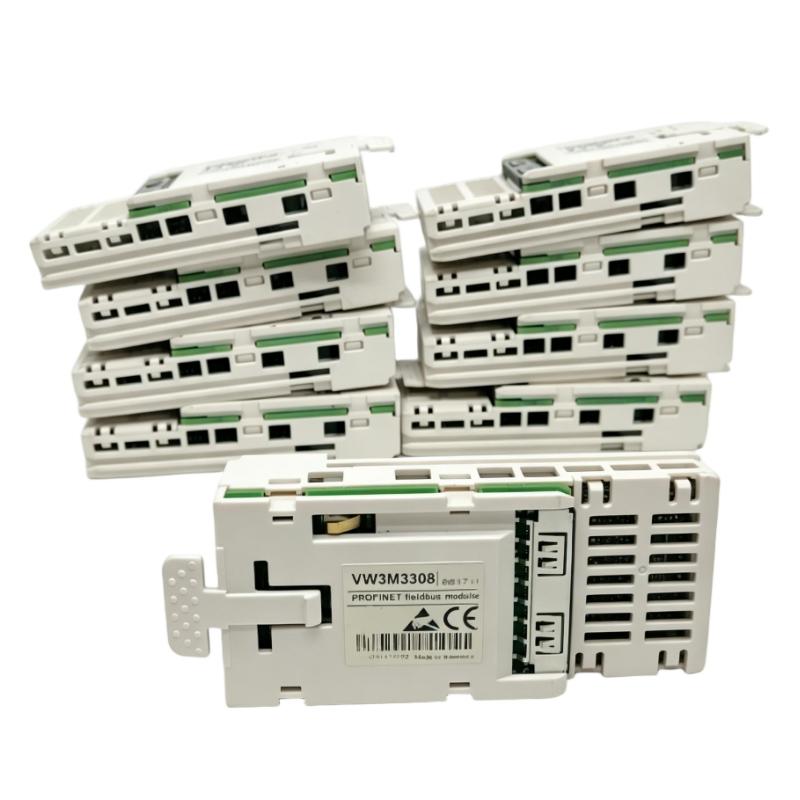
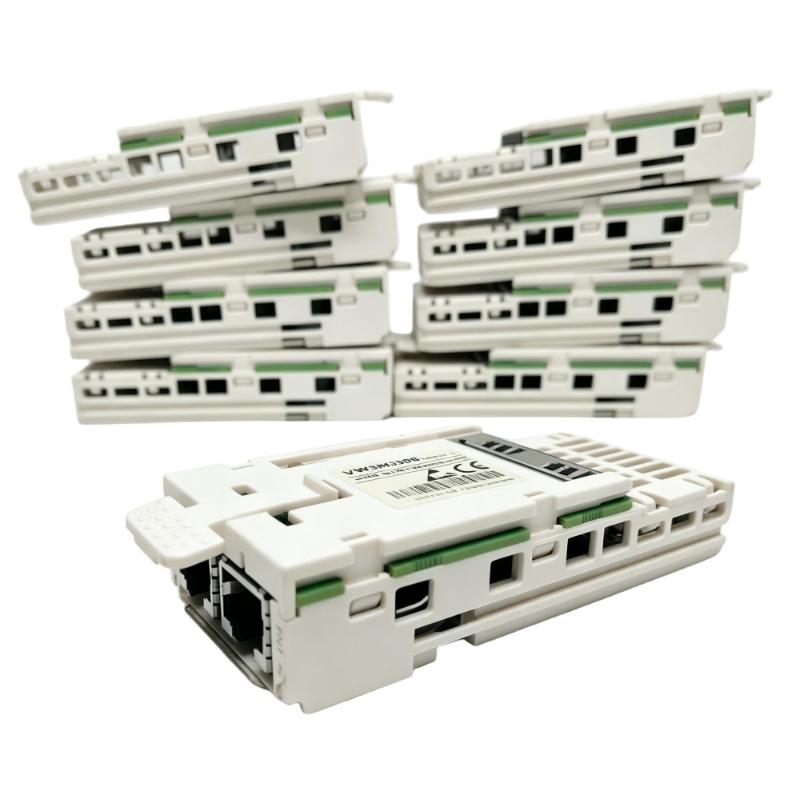
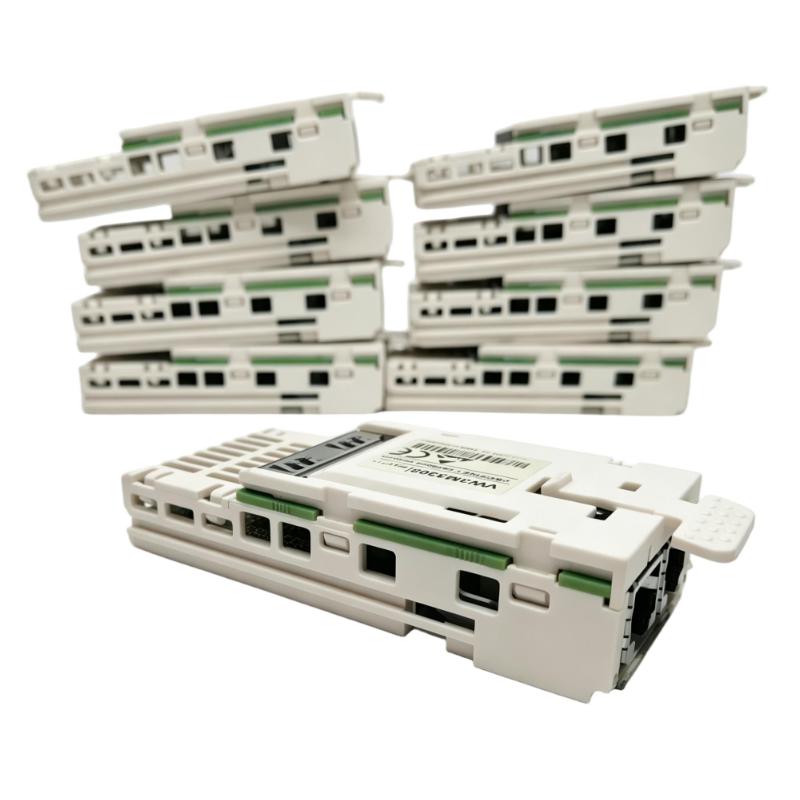
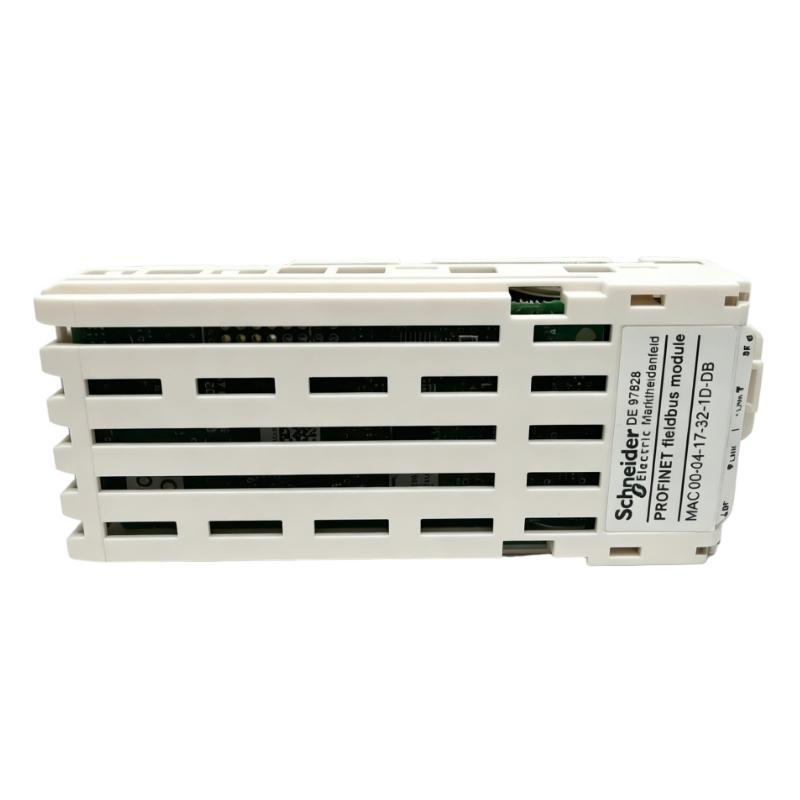
- Schneider
- VW3M3308
- Fieldbus Module
- France
- 89 x 41 x 61 mm
- 0.45 kg
- Xiamen, China
- New & In Stock
- T/T, PayPal, Western Union
- 1 Year
- 1-3 Working Days
- DHL, UPS, TNT, FedEx and EMS.
- 24-Hour Service
- COO
- 4
Our advantage

Global Logistics
We have a 10-year logistics and express cooperation agreement, so our products can be shipped to any place in the world.

Brand new and original
Our products are imported in bulk from the place of origin. Because of the cooperative relationship, our products are all original and 100% new.

24-hour service
We provide 7*24 hours service to our customers. We will be there whenever you need us.

Price advantage
All our products are priced very favorably because we have our own warehouse and supply.
| Company Information | |||
| [email protected] | |||
| Mobile | +8615980777398 | ||
| +8615980777398 | |||
| 15980777398 |
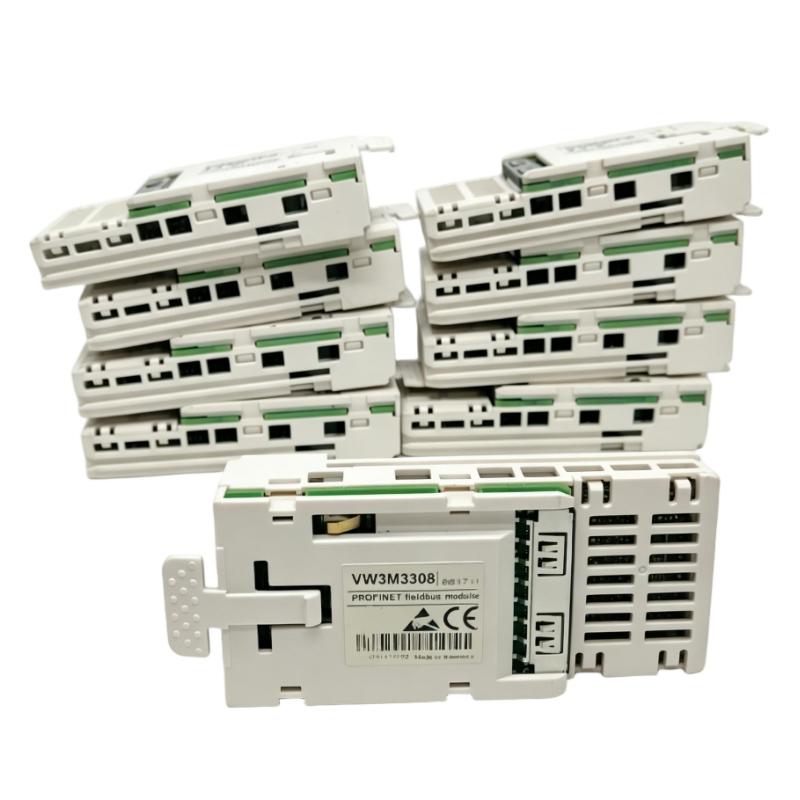
1. Product Overview
The Schneider VW3M3308 Fieldbus Module is an industrial automation component identified for fieldbus-related applications. Fieldbus technology enables compatible industrial devices to exchange information through a defined communication network, helping integrate automation equipment into a coordinated control system.
In industrial environments, fieldbus interfaces can support communication between controllers, drives, and other compatible devices. Selecting the correct module is important for maintaining system compatibility, ensuring the intended communication architecture is supported, and simplifying equipment maintenance.
The Schneider VW3M3308 has supplied dimensions of 89 × 41 × 61 mm and a listed weight of 0.45 kg. These specifications can assist with product identification, equipment layout planning, and spare-parts management.
The exact fieldbus protocol, supported equipment, connector configuration, electrical requirements, and configuration procedure should be verified against the product label and applicable Schneider Electric technical documentation. The model designation alone is not sufficient to establish these details.
For system integrators, maintenance engineers, and industrial spare-parts buyers, confirming the complete model number is essential before installation or replacement. A fieldbus module that appears similar to another model may use a different communication interface or support a different equipment configuration.
2. Technical Specifications
| Parameter | Specification |
|---|---|
| Brand | Schneider Electric |
| Model | VW3M3308 |
| Product Type | Fieldbus Module |
| Dimensions | 89 × 41 × 61 mm |
| Weight | 0.45 kg |
| Application | Industrial automation and fieldbus integration, subject to verification |
| Communication Protocol | Confirm the supported fieldbus protocol from product documentation |
| Interface Type | Verify the designated interface and connector configuration |
| Compatible Equipment | Confirm the supported controller, drive, or automation device |
| Configuration Requirements | Verify the applicable hardware and software procedures |
| Installation Requirements | Follow the product-specific installation instructions |
| System Compatibility | Confirm against the existing automation architecture |
The dimensions and weight above are the supplied product specifications. The communication protocol, supported baud rates, network topology, electrical ratings, terminal assignments, and software requirements should be confirmed before the module is installed or commissioned.
3. Function and Working Principle
A fieldbus module provides a communication interface that allows compatible industrial equipment to exchange data over a supported network. Depending on the product design, it may enable a device to participate in a fieldbus system used for monitoring, control, or coordination.
The precise operating principle of the VW3M3308 depends on its documented function and the equipment with which it is designed to operate. Its fieldbus designation alone does not establish whether it functions as a master, slave, adapter, gateway, or another type of communication interface.
3.1 Communication Interface
A fieldbus module connects compatible automation equipment to a designated communication network. The interface must match the protocol and connection requirements of the system.
Incorrect module selection or an incompatible interface can prevent devices from establishing communication or exchanging the expected information.
3.2 Data Exchange
Industrial fieldbus systems can transmit operational data between connected devices. Depending on the network architecture, this data may include commands, device status, measurements, diagnostic information, or other application-specific values.
The actual data exchanged by the VW3M3308 depends on the supported protocol, connected equipment, and configured application.
3.3 Integration with Automation Equipment
A fieldbus module may allow a compatible controller or drive to participate in a wider automation network. Correct integration requires the supported hardware, network settings, and configuration parameters to match the system design.
3.4 Importance of Correct Configuration
Even when a module is physically installed correctly, communication may fail if the network settings or device configuration are incorrect. Engineers should confirm the protocol, device addressing requirements, communication parameters, and supported software tools before commissioning.
4. Role in Industrial Automation Systems
Fieldbus communication is an important part of many industrial control architectures. It allows compatible devices to exchange information without requiring a separate point-to-point control connection for every signal.
4.1 Controller and Device Communication
Industrial controllers exchange information with compatible equipment to coordinate machine operations and monitor system conditions. A suitable fieldbus module can provide the interface required for the intended network connection.
The supported communication role of the VW3M3308 must be verified for the exact hardware configuration.
4.2 Drive and Motion-System Integration
Some industrial drive systems use fieldbus communication to receive commands and report operating status. Where the module is documented as compatible with the relevant equipment, it may form part of the drive’s communication arrangement.
Protocol support and compatibility should be confirmed before connecting the module to a drive or motion-control system.
4.3 Distributed Automation
Distributed automation systems place control functions and equipment across multiple locations. Fieldbus networks can help connect these devices to a coordinated control architecture.
The module’s suitability depends on the system topology, supported protocol, and approved device configuration.
4.4 Monitoring and Diagnostics
Industrial communication networks may provide device status and diagnostic information to controllers or engineering tools. This information can help maintenance personnel identify communication interruptions and other system problems.
The diagnostic capabilities available through the VW3M3308 depend on its actual supported functions and the connected equipment.
4.5 Maintenance and System Expansion
When maintaining or expanding an automation system, engineers must verify that new or replacement communication modules are compatible with the existing hardware and network. Correct identification helps reduce installation errors and unnecessary downtime.
5. Industrial Applications
The Schneider VW3M3308 may be considered for industrial installations where the exact module is specified and its documented communication functions match the application requirements.
5.1 Manufacturing Equipment
Automated manufacturing systems rely on communication between controllers, drives, and other compatible devices. Fieldbus interfaces can help integrate these components into a coordinated machine-control architecture.
5.2 Industrial Drive Systems
Drive applications may use fieldbus communication to exchange control commands, operating information, and diagnostic data. Before using the VW3M3308 in a drive system, verify that the drive model and communication protocol are supported.
5.3 Packaging Machinery
Packaging machines often coordinate motors, feeding mechanisms, conveyors, and other equipment through an industrial control system. Compatible fieldbus interfaces can support communication between designated devices.
5.4 Material Handling Systems
Conveyors, transfer systems, and automated handling equipment may use fieldbus networks to connect control devices and equipment distributed across a machine. Proper module selection helps maintain the intended network architecture.
5.5 Process Automation
Industrial process systems may use networked devices to exchange operating data and support monitoring. The suitability of a particular fieldbus module depends on the supported protocol, environmental requirements, and system design.
5.6 Equipment Modernization
During control-system upgrades, existing communication modules may need to be replaced or integrated with newer equipment. Before selecting the VW3M3308, confirm its protocol support, hardware compatibility, configuration requirements, and suitability for the revised installation.
These examples describe potential environments for appropriately specified fieldbus equipment. They do not establish compatibility between the VW3M3308 and every application listed.
6. Installation and System Integration
Correct installation is essential for reliable fieldbus communication. The following workflow provides general guidance; the module-specific installation instructions and connected equipment requirements take precedence.
Step 1: Verify the Model Number
Confirm that the module label or packaging identifies the product as Schneider VW3M3308. Compare the part number with the equipment documentation, existing module, and system bill of materials.
Do not substitute a similar-looking module without verifying its function and compatibility.
Step 2: Confirm Protocol Compatibility
Identify the fieldbus protocol required by the application. Verify that the VW3M3308 supports the protocol and that the connected controller, drive, or other device is compatible.
Do not assume that every Schneider fieldbus module supports the same network standards.
Step 3: Isolate the Equipment
Before installing or removing the module, place the machine in a safe state and isolate the relevant power sources according to the site’s approved procedures. Verify that the equipment is safe to handle before proceeding.
Follow applicable lockout/tagout requirements.
Step 4: Inspect the Module and Mounting Area
Inspect the module housing, connectors, contacts, and mounting interface for visible damage or contamination. Confirm that the module’s installation position and mounting arrangement match the applicable hardware instructions.
Step 5: Check Wiring and Network Connections
Review the approved wiring diagram and identify the correct communication connections. Verify the connector type, cable requirements, and any applicable grounding or shielding provisions.
Never infer terminal assignments or connector pinouts from the model number alone.
Step 6: Install the Module
Fit the module according to the specified installation procedure. Ensure that it is correctly positioned and securely connected to the designated interface.
Avoid excessive force, which may damage the housing or connection contacts.
Step 7: Configure the Communication Settings
Where configuration is required, use the supported engineering software and follow the system documentation. Confirm the required device settings, network parameters, and controller configuration.
Record existing settings before making changes to an operating system.
Step 8: Restore Power and Verify Communication
Restore power according to the approved commissioning procedure. Check available module indicators, controller diagnostics, and engineering software for communication status or error messages.
Confirm that the connected devices exchange the intended data before returning the system to normal operation.
7. Common Problems and Troubleshooting
Fieldbus communication problems can originate from the module, network wiring, configuration, connected equipment, or wider system conditions. A systematic troubleshooting process helps identify the cause without replacing components unnecessarily.
| Symptom | Possible Causes | Recommended Checks |
|---|---|---|
| Module is not detected | Incorrect installation, incompatible hardware, or connection problem | Verify the model, mounting, interface, and supported hardware configuration |
| Communication cannot be established | Protocol mismatch, incorrect wiring, or configuration error | Confirm protocol compatibility, network connections, and device settings |
| Intermittent communication | Loose connection, damaged cable, interference, or unstable power | Inspect wiring, connectors, power conditions, and installation routing |
| Communication alarm appears | Network interruption, configuration issue, or device fault | Record diagnostic messages and check the network status |
| Controller does not receive expected data | Incorrect device configuration, incompatible interface, or network fault | Verify the application configuration and connected device status |
| Fault appears after module replacement | Incorrect replacement model or configuration mismatch | Compare part numbers and review hardware and software settings |
| Fault persists after replacement | Problem may originate elsewhere in the network | Check the controller, connected equipment, cables, power supply, and network configuration |
7.1 Check Power and Physical Connections
Verify that the module is installed correctly and that all required connections are secure. Inspect cables and connectors for visible damage, loose fittings, or contamination.
Perform electrical measurements only with appropriate instruments and according to approved safety procedures.
7.2 Confirm the Communication Protocol
Check the protocol supported by the module and compare it with the network requirements. A physical connection cannot establish communication if the connected equipment uses an incompatible protocol or interface.
7.3 Review Network Configuration
Where applicable, verify device addressing, communication parameters, network topology, and controller configuration. Use the diagnostic information provided by the supported engineering tools to narrow down the fault.
Avoid changing multiple parameters simultaneously, as this can make the original problem harder to identify.
7.4 Inspect the Network Cable and Environment
Check for damaged cables, loose connectors, unsuitable routing, or electrical interference. Follow the installation requirements for shielding, grounding, cable separation, and environmental protection.
7.5 Determine Whether Replacement Is Necessary
If wiring, power, configuration, and connected equipment have been checked but the fault remains, further testing may be required to determine whether the module is defective. Replace it only with a verified compatible component and validate system operation afterward.
8. Preventive Maintenance and Reliability
Preventive maintenance can help identify communication issues before they interrupt production.
- Inspect module connections: Check connectors, mounting points, and accessible wiring for damage or looseness.
- Monitor diagnostic information: Record recurring communication alarms and investigate their causes.
- Maintain configuration records: Keep accurate module lists, network settings, and controller project backups.
- Protect communication cables: Prevent crushing, abrasion, excessive bending, and unnecessary mechanical tension.
- Follow installation requirements: Maintain the specified environmental conditions and cable-routing practices.
- Use approved spare parts: Confirm the exact model and compatibility before replacing a module.
- Document hardware changes: Record replacement dates, model numbers, and configuration changes.
- Follow safe maintenance procedures: Isolate equipment where required and use the approved installation and testing instructions.
Maintenance intervals should reflect the operating environment, equipment criticality, network complexity, and site maintenance policy.
9. Compatible System Components
The components compatible with the VW3M3308 should be identified from the applicable product documentation and the requirements of the installed automation system.
| Component Category | Integration Considerations |
|---|---|
| Controller or CPU | Confirm supported communication interfaces and configuration requirements |
| Drive or automation device | Verify that the device supports the module and intended protocol |
| Fieldbus network cable | Confirm the required cable specification, connectors, and routing conditions |
| Network interface or adapter | Check protocol compatibility and the intended system arrangement |
| Power supply | Verify applicable voltage and power requirements |
| Engineering software | Confirm support for the module and connected equipment |
| Network infrastructure | Check topology, device configuration, and any required network accessories |
This table identifies component categories that may need to be checked during integration. It does not confirm compatibility with any specific controller, drive, or accessory model.
10. Replacement and Alternative Selection
When selecting a replacement for the Schneider VW3M3308, verify its communication function and system compatibility rather than relying on physical dimensions alone.
| Selection Factor | What to Verify |
|---|---|
| Exact model | Confirm Schneider VW3M3308 |
| Dimensions | 89 × 41 × 61 mm |
| Weight | 0.45 kg |
| Functional role | Verify the module’s documented communication function |
| Fieldbus protocol | Confirm support for the required network |
| Electrical requirements | Check the specified power and interface characteristics |
| Connector configuration | Match the required physical interfaces |
| Hardware compatibility | Verify support for the controller, drive, or target equipment |
| Software support | Confirm configuration and diagnostic tool requirements |
| Product condition | Inspect the module and verify its service history where available |
10.1 Selecting a Direct Replacement
The original part number is the preferred starting point when sourcing a replacement. Compare the full model number and verify that the replacement is approved for the same equipment and communication function.
10.2 Evaluating Alternative Modules
An alternative fieldbus module must match the required protocol, hardware interface, configuration capabilities, and electrical characteristics. Similar dimensions or a general fieldbus designation do not establish functional equivalence.
If the original model is unavailable, confirm the proposed replacement with the applicable equipment documentation or a qualified technical specialist.
10.3 Commissioning After Replacement
After replacing the module, check the installation, restore the required configuration, and verify network communication. Review diagnostic information and confirm that the equipment operates correctly before returning the system to normal service.
11. Key Benefits of Correct Fieldbus Module Selection
Selecting a suitable fieldbus module can support reliable industrial communication and efficient system maintenance.
Improved communication integration: A compatible module provides the interface required for the intended fieldbus network.
Better system compatibility: Verifying protocol and hardware support helps prevent connection and configuration problems.
Efficient equipment identification: The VW3M3308 model number, supplied dimensions, and weight support spare-parts identification and inventory planning.
Simplified troubleshooting: Correct module identification and configuration records help engineers isolate communication faults more efficiently.
Maintainable automation architecture: Using approved components helps preserve the intended system configuration during repairs and upgrades.
Reduced avoidable downtime: Correct selection, installation, and commissioning can help prevent faults caused by incompatible hardware or incorrect settings.
These benefits depend on confirming the module’s actual technical characteristics and following the requirements of the connected equipment.
12. Technical FAQs
Q1: What is the Schneider VW3M3308?
The Schneider VW3M3308 is identified in the supplied product information as a fieldbus module. Its precise communication function and compatible equipment should be confirmed from the module label and applicable technical documentation.
Q2: What are the dimensions of the VW3M3308?
The supplied dimensions are 89 × 41 × 61 mm.
Q3: How much does the VW3M3308 weigh?
The supplied product weight is 0.45 kg.
Q4: Which fieldbus protocol does the VW3M3308 support?
The supported protocol should be verified using the technical documentation for the exact model. It should not be inferred from the general term “fieldbus module.”
Q5: Can the VW3M3308 be used with any Schneider Electric drive?
No. Compatibility depends on the drive model, supported communication interface, hardware configuration, and software requirements.
Q6: What should be checked before installing the module?
Verify the model number, protocol compatibility, electrical requirements, connector arrangement, mounting procedure, and controller configuration. Follow the approved safety procedure before handling the equipment.
Q7: Why might a fieldbus module fail to communicate?
Possible causes include incompatible protocols, incorrect wiring, configuration errors, power problems, damaged cables, or faults in connected equipment. Review the system diagnostics and check the entire communication path.
Q8: Does replacing the module require configuration changes?
Configuration requirements depend on the module and installed system. Confirm whether parameters, device settings, or controller project changes are necessary before commissioning the replacement.
Q9: Can another fieldbus module be used as an alternative?
Only if its protocol, electrical characteristics, interface, configuration requirements, and system compatibility are confirmed. A similar product description is not sufficient.
Q10: What should be done if communication faults persist after replacement?
Inspect the network wiring, controller configuration, connected equipment, power supply, and diagnostic information. The fault may originate outside the module itself.
13. Conclusion
The Schneider VW3M3308 Fieldbus Module is an industrial automation component identified for fieldbus-related applications, with supplied dimensions of 89 × 41 × 61 mm and a listed weight of 0.45 kg. These specifications provide a starting point for product identification, equipment planning, and spare-parts management.
Reliable operation depends on verifying the module’s precise communication function, supported protocol, electrical requirements, and compatibility with the existing automation system. Correct installation, suitable configuration, diagnostic review, and preventive maintenance can help reduce communication-related interruptions.
For replacement planning and system integration, confirm the complete model number and all relevant technical requirements before installation. Selecting the correct module helps preserve the intended automation architecture and supports dependable industrial control system operation.