

ProductPRODUCT
Featured products
Contact Us
- Allen Bradley
- 20G11RC3P5JA0NNNNN
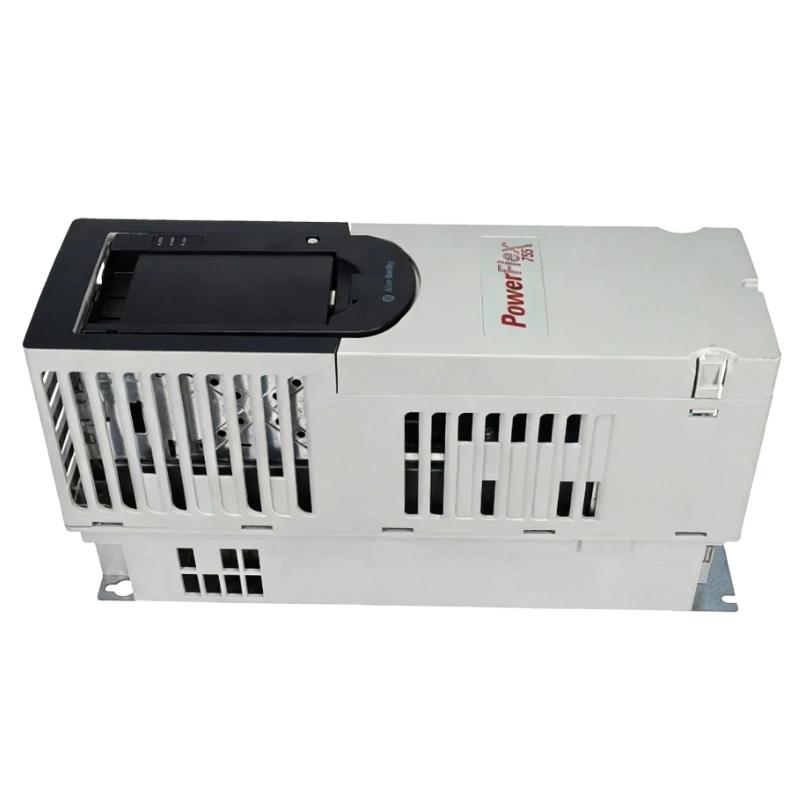
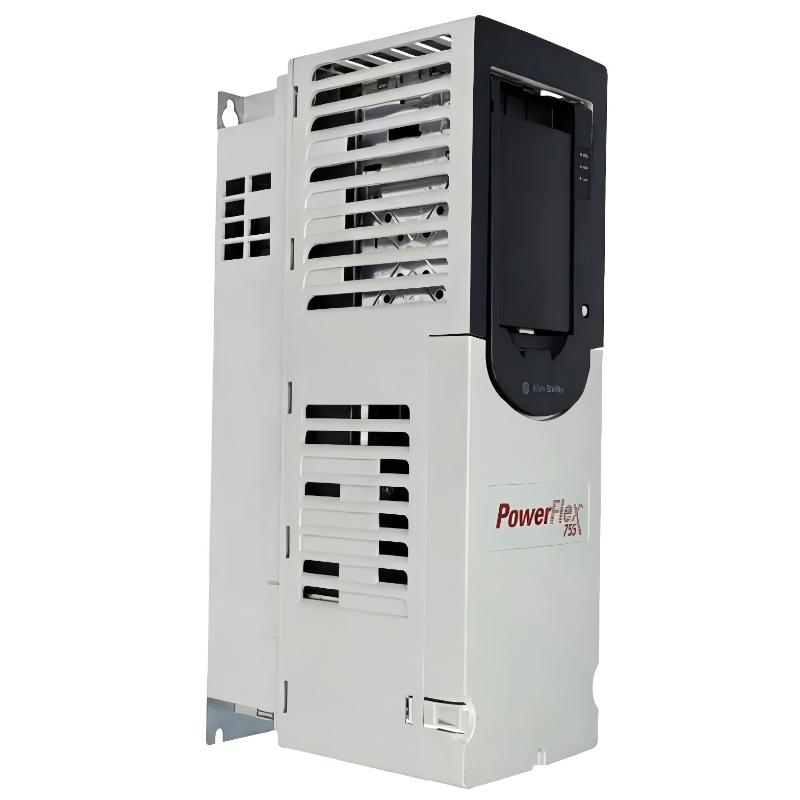
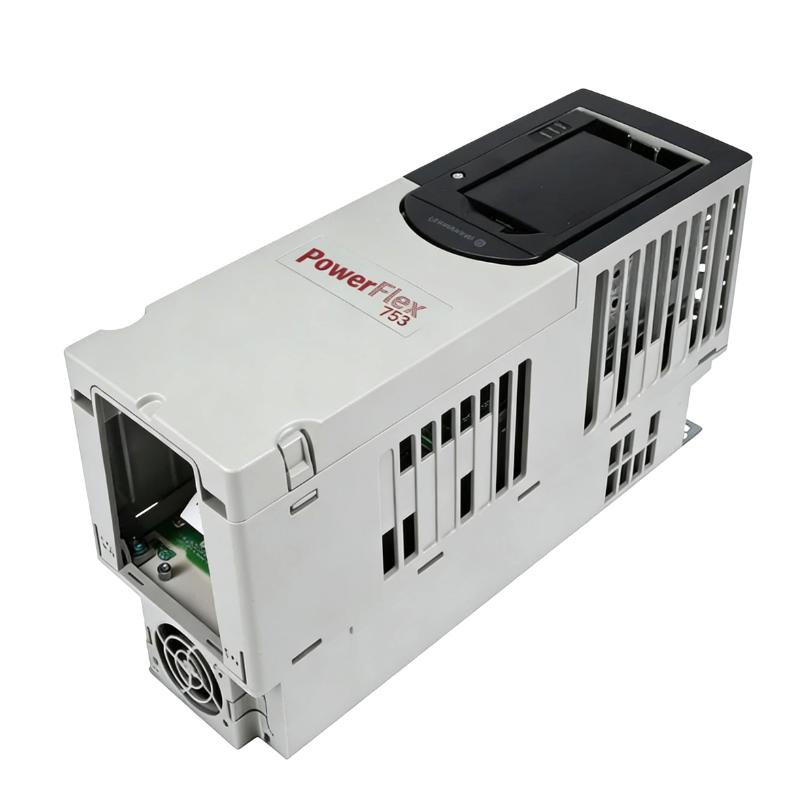
- PowerFlex AC Drive
- USA
- 400.5 × 110 × 211 mm
- 6kg
- Xiamen, China
- New & In Stock
- T/T, PayPal, Western Union
- 1 Year
- 1-3 Working Days
- DHL, UPS, TNT, FedEx and EMS.
- 24-Hour Service
- COO
- 42
Our advantage

Global Logistics
We have a 10-year logistics and express cooperation agreement, so our products can be shipped to any place in the world.

Brand new and original
Our products are imported in bulk from the place of origin. Because of the cooperative relationship, our products are all original and 100% new.

24-hour service
We provide 7*24 hours service to our customers. We will be there whenever you need us.

Price advantage
All our products are priced very favorably because we have our own warehouse and supply.
| Company Information | |||
| [email protected] | |||
| Mobile | +8615980777398 | ||
| +8615980777398 | |||
| 15980777398 |
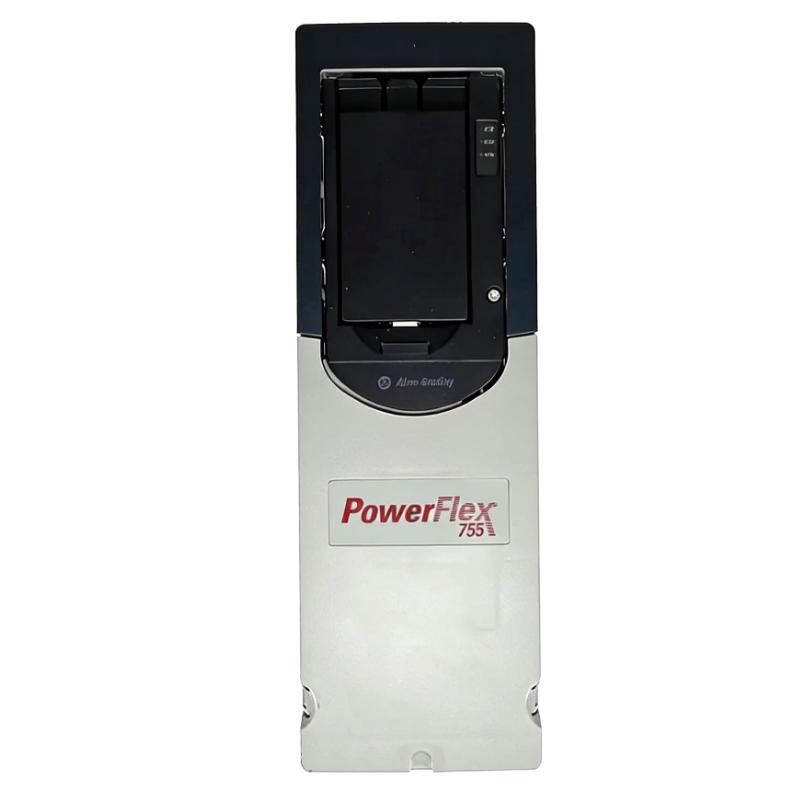
Allen-Bradley 20G11RC3P5JA0NNNNN
PowerFlex 755 AC Drive — Detailed Technical Product Profile
1. Product Overview
The 20G11RC3P5JA0NNNNN is an industrial AC variable frequency drive from the Allen-Bradley PowerFlex 755 series.
It is designed for three-phase AC motor control in industrial automation systems where reliable variable-speed operation, motor protection, controlled acceleration and deceleration, communication capability and flexible motor-control functions are required.
This model is a 400 VAC, three-phase, Frame 1 PowerFlex 755 AC drive with a rated output current of approximately 3.5 A for normal-duty operation and approximately 2.1 A for heavy-duty operation.
Its normal-duty power rating is approximately 1.5 kW, while its heavy-duty rating is approximately 0.75 kW.
The drive uses an IP20 / NEMA/UL Open Type enclosure and forced-air cooling. It is intended to be installed inside an appropriate electrical cabinet or protected industrial enclosure rather than being installed directly outdoors.
One of the most important features of this model is its integrated EtherNet/IP communication capability. This makes it suitable for machines and production systems in which the drive needs to exchange commands, speed references, status information, faults and operating data with a higher-level automation controller.
The model also incorporates a dynamic braking transistor, allowing an appropriate external braking resistor to be used where the application requires more controlled or rapid motor deceleration.
2. Brand and Product Series
| Item | Specification |
|---|---|
| Brand | Allen-Bradley |
| Product family | PowerFlex |
| Product series | PowerFlex 755 |
| Product group | PowerFlex 750-Series |
| Product type | Industrial AC Variable Frequency Drive |
| Drive type | Air-cooled AC drive |
| Frame | Frame 1 |
| Voltage class | 400 VAC |
| Input phase | Three-phase |
| Enclosure | NEMA/UL Open Type |
| Protection rating | IP20 |
| Cooling | Forced air |
| Communication | Embedded EtherNet/IP |
| Dynamic braking | Built-in dynamic braking transistor |
| HIM | Blank configuration / no HIM supplied |
| Typical motor capacity | 1.5 kW normal duty |
| Heavy-duty capacity | 0.75 kW |
| Main applications | Conveyors, pumps, fans, feeders, packaging and industrial machinery |
The 20G11RC3P5JA0NNNNN therefore belongs to the advanced industrial-drive category rather than the basic low-cost inverter category.
The PowerFlex 755 platform is intended to provide a common control architecture for industrial machines where different motor-control functions, communication functions and optional hardware may be required.
3. Basic Product Parameters
| Parameter | Specification |
|---|---|
| Model | 20G11RC3P5JA0NNNNN |
| Brand | Allen-Bradley |
| Series | PowerFlex 755 |
| Product family | PowerFlex 750-Series |
| Product type | AC Variable Frequency Drive |
| Input power | Three-phase AC |
| Nominal voltage | 400 VAC class |
| Typical input voltage | 380–400 VAC class |
| Input frequency | 50/60 Hz |
| Output | Three-phase variable-frequency AC |
| Normal-duty output current | 3.5 A |
| Heavy-duty output current | 2.1 A |
| Normal-duty motor power | 1.5 kW |
| Heavy-duty motor power | 0.75 kW |
| Frame size | Frame 1 |
| Cooling | Forced air |
| Enclosure | NEMA/UL Open Type |
| Protection | IP20 |
| Dynamic braking transistor | Yes |
| Braking resistor | External, application dependent |
| EMC filtering | Filtered configuration |
| CM jumper | Installed |
| DC bus terminals | Yes |
| Input type | AC input with precharge |
| Communication | Embedded EtherNet/IP |
| PID | Supported |
| V/Hz control | Supported |
| Sensorless vector control | Supported |
| Advanced vector control | Supported according to configuration |
| Auto tuning | Supported |
| Flying start | Supported |
| S-curve acceleration | Supported |
| Motor overload protection | Supported |
| Programmable acceleration | Yes |
| Programmable deceleration | Yes |
| HIM/keypad | Not supplied in this configuration |
| Approx. height | 400.5 mm |
| Approx. width | 110 mm |
| Approx. depth | 211 mm |
| Approx. weight (kg) | 6 kg |
4. Detailed Electrical Specifications
| Electrical Parameter | 20G11RC3P5JA0NNNNN |
|---|---|
| Input phase | 3-phase |
| Input voltage class | 400 VAC |
| Typical nominal voltage | 400 VAC |
| Typical industrial supply | 380–400 VAC |
| Input frequency | 50/60 Hz |
| Output phase | 3-phase |
| Normal-duty current | 3.5 A |
| Heavy-duty current | 2.1 A |
| Normal-duty power | 1.5 kW |
| Heavy-duty power | 0.75 kW |
| Output voltage | 0 to rated motor voltage |
| Output frequency | Variable |
| Default carrier frequency | Approximately 4 kHz |
| Selectable carrier frequency | Approximately 2, 4, 8 and 12 kHz |
| Control method | PWM |
| V/Hz control | Yes |
| Sensorless vector | Yes |
| Flux-vector capability | Yes, according to configuration |
| PID | Yes |
| Current limit | Programmable |
| Motor overload protection | Yes |
| Electronic thermal protection | Yes |
| Auto tuning | Yes |
| Flying start | Yes |
| Dynamic braking transistor | Yes |
| DC bus connection | Yes |
| Input precharge | Yes |
| EMC filtering | Yes |
| Power ride-through | Supported |
| Acceleration range | Programmable |
| Deceleration range | Programmable |
The 3.5 A normal-duty current rating is one of the most important parameters when selecting this drive.
The nominal 1.5 kW motor rating provides a convenient reference, but actual drive selection should be based primarily on the motor’s nameplate current, operating duty and load characteristics.
5. Normal-Duty and Heavy-Duty Ratings
The drive has different capacity ratings depending on the application duty.
Normal Duty
Normal-duty operation is approximately:
1.5 kW / 3.5 A
This rating is suitable for applications where the motor does not continuously require the higher overload capability associated with heavy-duty operation.
Typical applications include:
- Fans
- Pumps
- Conveyors
- Feeders
- Packaging equipment
- General machinery
Heavy Duty
The heavy-duty rating is approximately:
0.75 kW / 2.1 A
Heavy-duty applications generally involve greater torque demand, higher overload requirements or more demanding acceleration conditions.
This distinction is important because the same motor power rating does not always correspond to the same drive requirement.
A conveyor carrying a heavy product load can require considerably more starting torque than a fan of the same nominal motor power.
6. Mechanical Dimensions
| Mechanical Parameter | Specification |
|---|---|
| Model | 20G11RC3P5JA0NNNNN |
| Frame size | Frame 1 |
| Mounting orientation | Vertical |
| Mounting method | Cabinet / panel mounting |
| Cooling method | Forced air |
| Enclosure | IP20 / NEMA/UL Open Type |
| Height | 400.5 mm |
| Width | 110 mm |
| Depth | 211 mm |
| Overall approximate dimensions | 400.5 × 110 × 211 mm |
| Front footprint | Approximately 400.5 × 110 mm |
| Installation depth | Approximately 211 mm |
| Weight (kg) | Approximately 6 kg |
| Installation environment | Protected electrical cabinet |
| Cabinet ventilation | Required |
The approximate physical dimensions are:
400.5 mm × 110 mm × 211 mm (H × W × D)
The approximate weight is:
6 kg
The actual cabinet space required should be larger than the basic drive dimensions because additional space is normally required for wiring, cable bending radius, airflow, maintenance access and safe installation.
7. Environmental Parameters
| Environmental Parameter | Typical Specification |
|---|---|
| Operating ambient temperature | Approximately 0 to 50 °C |
| Storage temperature | Approximately -40 to 70 °C |
| Relative humidity | Approximately 5–95%, non-condensing |
| Enclosure | IP20 |
| Cooling | Forced air |
| Installation type | Indoor / protected installation |
| Outdoor installation | Additional enclosure required |
| Water exposure | Not suitable without additional protection |
| Conductive dust | Requires suitable enclosure |
| Corrosive atmosphere | Additional environmental protection required |
| High altitude | Derating may be required |
| Cabinet ventilation | Required |
| Installation position | Vertical |
The IP20 construction means that this drive should be installed in an appropriate control cabinet.
It should not be treated as a waterproof or outdoor standalone drive.
In applications involving dust, moisture, oil mist, corrosive gases or washdown conditions, the enclosure and cabinet design should be selected accordingly.
8. Product Introduction
The 20G11RC3P5JA0NNNNN is designed to regulate the speed and torque of a three-phase AC motor.
A conventional motor starter normally provides basic starting and stopping.
A variable frequency drive provides considerably more control.
The drive can control motor acceleration, operating speed and deceleration while also monitoring motor and drive conditions.
This makes it useful for industrial machines where motor speed needs to follow the production process.
For example, a conveyor may need to run at different speeds depending on the production stage.
A pump may need to adjust speed to maintain a certain process pressure.
A fan may need to operate at reduced speed when the required airflow decreases.
A feeder may need to accelerate gradually to avoid product movement or mechanical shock.
The drive can perform these functions while communicating operating information to the machine control system.
9. Working Principle
The drive converts incoming three-phase AC electrical power into controlled motor power.
The basic operating process can be understood in three stages.
Stage 1 — AC Input
The drive receives three-phase AC power from the industrial electrical supply.
Stage 2 — Power Conversion
The internal power electronics convert the incoming power into a controlled DC-link and then generate a variable-frequency AC output.
Stage 3 — Motor Control
The output frequency and voltage are controlled according to the programmed motor-control method.
This allows the motor to operate at different speeds and torque levels.
The drive can also monitor current, voltage, status and fault conditions.
10. Embedded EtherNet/IP Communication
The integrated EtherNet/IP capability is one of the major features of the product.
The drive can communicate with an industrial automation controller through the network.
Typical information includes:
| Data Type | Typical Function |
|---|---|
| Start command | Starts the motor |
| Stop command | Stops the motor |
| Speed reference | Sets motor speed |
| Direction command | Controls rotation direction |
| Actual speed | Provides motor speed feedback |
| Output current | Monitors motor loading |
| Drive status | Indicates operating condition |
| Fault status | Indicates drive fault |
| Warning status | Indicates warning condition |
| Parameter information | Allows drive configuration |
| Diagnostic data | Supports maintenance |
This communication capability makes the drive particularly suitable for automated production lines.
11. Motor Control Functions
V/Hz Control
V/Hz control is a straightforward method of controlling motor speed.
It is suitable for applications where advanced torque control is not essential.
Typical applications include:
- Fans
- Pumps
- Simple conveyors
- Ventilation equipment
- Basic rotating machinery
Sensorless Vector Control
Sensorless vector control provides improved motor torque and speed control compared with simple V/Hz control.
It can be useful for:
- Conveyors
- Feeders
- Material handling
- Machinery requiring improved low-speed operation
- Applications with changing loads
Flux Vector Control
More advanced vector-control methods can provide improved control of motor torque and speed.
This can be useful when the machine requires more precise motor behavior.
The exact configuration should be selected according to the motor type and application requirements.
12. Dynamic Braking
The 20G11RC3P5JA0NNNNN includes a dynamic braking transistor.
This is particularly useful when a motor needs to decelerate rapidly.
During deceleration, a motor can return energy to the drive’s DC bus.
The braking circuit can direct this energy to an appropriately selected external braking resistor.
The resistor converts the braking energy into heat.
Dynamic braking can therefore improve controlled stopping performance.
Typical applications include:
- High-inertia conveyors
- Material-handling machines
- Feed mechanisms
- Repetitive start-stop machinery
- Rapid deceleration systems
- Small rotating machinery
The braking resistor should always be selected according to the actual braking frequency, motor inertia and deceleration requirements.
13. PID Control
The drive includes process-control capability through PID functions.
This is especially useful in pump and fan applications.
For example, a pump may need to maintain a certain pressure.
A pressure sensor provides feedback to the system.
The drive can then increase or decrease motor speed according to the difference between the desired pressure and actual pressure.
Potential applications include:
- Water pressure control
- Fluid circulation
- Flow control
- Ventilation
- Industrial cooling
- Process equipment
This can allow the drive to perform part of the process-control function without requiring a separate speed-control device.
14. Applications
14.1 Conveyor Systems
The 20G11RC3P5JA0NNNNN is well suited to small and medium-small conveyor systems within its current and power range.
It can provide:
- Adjustable conveyor speed
- Smooth acceleration
- Controlled deceleration
- Direction control
- Motor overload protection
- Network-based operation
- Fault monitoring
This is useful in production lines where conveyor speed must change according to the production process.
14.2 Pumps
The drive is suitable for many small industrial pump applications.
Variable-speed control allows the pump motor to operate according to actual process demand.
Applications may include:
- Water circulation
- Cooling-water systems
- Process pumps
- Pressure systems
- Fluid transfer
- Industrial circulation systems
PID control can be used when pressure or flow feedback is available.
14.3 Fans and Blowers
Fan applications are another suitable area.
Instead of operating continuously at full speed, the motor speed can be adjusted according to airflow requirements.
Potential applications include:
- Industrial ventilation
- Cooling systems
- Exhaust systems
- Equipment cooling
- Process ventilation
- Air circulation
14.4 Packaging Machinery
Packaging machinery often contains multiple small motors.
The drive can be used for:
- Product conveyors
- Feed rollers
- Film handling
- Product feeders
- Small rotating mechanisms
- Auxiliary machinery
The network interface can allow the motor to operate as part of a coordinated machine sequence.
14.5 Material Handling
Material-handling systems often require smooth starts and stops.
The drive can be used for:
- Roller conveyors
- Transfer mechanisms
- Feed systems
- Sorting mechanisms
- Small material-handling machines
- Product positioning equipment
14.6 Feeders
Feeders frequently need controlled motor speed.
The drive can provide gradual acceleration and adjustable operating speed.
This can help control:
- Product flow
- Material quantity
- Feeding speed
- Production synchronization
14.7 Small Process Machinery
Other suitable applications may include:
- Mixers
- Rotary machines
- Auxiliary pumps
- Cooling fans
- Process feeders
- Small production machinery
The actual suitability depends on motor current, torque requirements and duty cycle.
15. Product Advantages
15.1 Advanced Industrial Drive Architecture
The PowerFlex 755 platform provides more functionality than a basic variable-speed drive.
It is designed for applications where motor control and automation integration are both important.
15.2 Integrated EtherNet/IP
The integrated network interface allows the drive to exchange operating data with a controller.
This can reduce hardwired signals and simplify machine integration.
15.3 Flexible Motor Control
The drive can support different motor-control methods.
This makes it possible to configure the drive according to the requirements of different machines.
15.4 Dynamic Braking Capability
The integrated braking transistor provides additional flexibility for applications where rapid or controlled deceleration is required.
15.5 Process Control
PID functionality makes the drive useful for process applications involving pressure, flow or other feedback variables.
15.6 Compact Frame 1 Construction
The Frame 1 configuration provides a relatively compact mechanical package.
The approximate width of 110 mm is useful in cabinets where horizontal space is limited.
15.7 Diagnostic Functions
Drive status and fault information can assist maintenance personnel in troubleshooting.
This can reduce the time required to identify electrical or operational problems.
15.8 Flexible Acceleration and Deceleration
The ability to program acceleration and deceleration allows machine designers to reduce mechanical shock.
This can help protect:
- Belts
- Bearings
- Gearboxes
- Couplings
- Shafts
- Mechanical transmission components
16. Benefits for Machine Builders
The PowerFlex 755 platform is useful for machine builders who need a consistent drive architecture.
When machines contain motors of different sizes, related PowerFlex 755 configurations can be used.
This can simplify:
- Electrical design
- Drive configuration
- Programming
- Commissioning
- Maintenance training
- Spare-parts management
- Troubleshooting
A common drive family can also make machine expansion easier.
17. Benefits for Maintenance
The network and diagnostic capabilities provide maintenance personnel with additional information.
For example, when a machine stops unexpectedly, technicians can examine the drive condition before physically inspecting every component.
Potential information can include:
- Motor current
- Drive status
- Fault condition
- Warning condition
- Communication status
- Temperature-related condition
- Operating speed
- Configuration information
This can make troubleshooting more systematic.
18. Five Recommended Models from the Same Series or Closely Related Models
The following models are useful related selections within the PowerFlex 755 platform.
The exact suitability of each model depends on motor current, voltage, duty cycle and machine requirements.
| Model | Series | Voltage Class | Normal-Duty Power | Normal-Duty Current | Heavy-Duty Power | Frame | Approx. Dimensions H×W×D | Weight (kg) |
|---|---|---|---|---|---|---|---|---|
| 20G11RC2P1JA0NNNNN | PowerFlex 755 | 400 V | 0.75 kW | 2.1 A | 0.37 kW | 1 | Approx. 400.5 × 110 × 211 mm | Approx. 6 kg |
| 20G11RC3P5AA0NNNNN | PowerFlex 755 | 400 V | 1.5 kW | 3.5 A | 0.75 kW | 1 | Approx. 400.5 × 110 × 211 mm | Approx. 6 kg |
| 20G11RC3P5JA0NNNNN | PowerFlex 755 | 400 V | 1.5 kW | 3.5 A | 0.75 kW | 1 | Approx. 400.5 × 110 × 211 mm | Approx. 6 kg |
| 20G11RC5P0JA0NNNNN | PowerFlex 755 | 400 V | 2.2 kW class | 5.0 A | 1.5 kW class | 1 | Approx. 400 × 110 × 211 mm | Approx. 6–7 kg |
| 20G11RC8P7JA0NNNNN | PowerFlex 755 | 400 V | 4.0 kW class | 8.7 A | 2.2 kW class | 1 | Approx. 400 × 110 × 211 mm | Approx. 7 kg |
Among these models, the 20G11RC3P5AA0NNNNN is particularly relevant because it is the closely related earlier configuration of the same 3.5 A drive class.
The 20G11RC3P5JA0NNNNN is also particularly significant because it is the corresponding JA configuration and provides the same basic 3.5 A / 1.5 kW normal-duty electrical class.
19. Comparison of the Main Related Models
| Parameter | 20G11RC2P1JA0NNNNN | 20G11RC3P5AA0NNNNN | 20G11RC3P5JA0NNNNN | 20G11RC5P0JA0NNNNN | 20G11RC8P7JA0NNNNN |
|---|---|---|---|---|---|
| Series | PowerFlex 755 | PowerFlex 755 | PowerFlex 755 | PowerFlex 755 | PowerFlex 755 |
| Voltage class | 400 V | 400 V | 400 V | 400 V | 400 V |
| Normal-duty current | 2.1 A | 3.5 A | 3.5 A | 5.0 A | 8.7 A |
| Normal-duty power | 0.75 kW | 1.5 kW | 1.5 kW | 2.2 kW class | 4.0 kW class |
| Heavy-duty current | Approx. 1.3–2.1 A class | 2.1 A | 2.1 A | Approx. 3.5 A | Approx. 5.0 A |
| Heavy-duty power | 0.37 kW class | 0.75 kW | 0.75 kW | 1.5 kW class | 2.2 kW class |
| Frame | 1 | 1 | 1 | 1 | 1 |
| Cooling | Forced air | Forced air | Forced air | Forced air | Forced air |
| Protection | IP20 | IP20 | IP20 | IP20 | IP20 |
| EtherNet/IP | Yes | Yes | Yes | Yes | Yes |
| Dynamic braking transistor | Yes | Yes | Yes | Yes | Yes |
| Approx. height | 400.5 mm | 400.5 mm | 400.5 mm | Approx. 400 mm | Approx. 400 mm |
| Approx. width | 110 mm | 110 mm | 110 mm | Approx. 110 mm | Approx. 110 mm |
| Approx. depth | 211 mm | 211 mm | 211 mm | Approx. 211 mm | Approx. 211 mm |
| Approx. weight (kg) | 6 kg | 6 kg | 6 kg | 6–7 kg | Approx. 7 kg |
20. Five Popular Models from the Same Brand
For applications where the PowerFlex 755 platform is not mandatory, several other Allen-Bradley drive models can be considered.
These models are from different product families and therefore should not be treated as automatic drop-in replacements.
| Model | Product Family | Voltage Class | Approx. Power Class | Approx. Current | Main Application | Approx. Dimensions | Weight (kg) |
|---|---|---|---|---|---|---|---|
| 25B-D2P3N104 | PowerFlex 525 | 400 V class | 0.75 kW class | 2.3 A class | Compact machinery | Approx. 200 × 90 × 180 mm | Approx. 2 kg |
| 25B-D4P0N104 | PowerFlex 525 | 400 V class | 1.5 kW class | 4.0 A class | Conveyors, pumps, fans | Approx. 200 × 90 × 180 mm | Approx. 2–3 kg |
| 25B-D6P0N104 | PowerFlex 525 | 400 V class | 2.2 kW class | 6.0 A class | General industrial machinery | Approx. 200 × 90 × 180 mm | Approx. 2–3 kg |
| 25C-D2P3N104 | PowerFlex 523 | 400 V class | 0.75 kW class | 2.3 A class | General motor control | Approx. 200 × 90 × 180 mm | Approx. 2 kg |
| 25C-D4P0N104 | PowerFlex 523 | 400 V class | 1.5 kW class | 4.0 A class | Small industrial machinery | Approx. 200 × 90 × 180 mm | Approx. 2–3 kg |
The PowerFlex 525 models are generally more compact and are attractive for machinery where cabinet space is important.
The PowerFlex 523 models are more focused on straightforward general-purpose variable-speed applications.
The PowerFlex 755 remains the stronger choice when advanced control, communication, diagnostics and expansion capability are important.
21. PowerFlex 755 Compared with Compact Drive Families
| Feature | PowerFlex 755 | PowerFlex 525 | PowerFlex 523 |
|---|---|---|---|
| Product positioning | Advanced industrial drive | Compact industrial drive | Compact general-purpose drive |
| Control capability | Very high | High | Moderate |
| Network integration | Advanced | Strong | More basic |
| Physical size | Larger | Smaller | Smaller |
| Application complexity | Medium to high | Low to medium | Low to medium |
| Diagnostics | Advanced | Good | Basic to moderate |
| Expansion | Extensive | Moderate | Limited |
| Motor-control flexibility | Advanced | Advanced for compact class | General purpose |
| Cabinet space | More | Less | Less |
| Best application | Advanced industrial machinery | Compact automated machinery | Simple motor-control applications |
22. Application Selection Table
| Application | Suitability of 20G11RC3P5JA0NNNNN | Main Reason |
|---|---|---|
| Small conveyor | Excellent | Adjustable speed and smooth acceleration |
| Medium-small conveyor | Very good | 3.5 A current class |
| Pump | Excellent | Variable speed and PID |
| Fan | Excellent | Adjustable airflow |
| Blower | Very good | Variable-speed operation |
| Feeder | Excellent | Controlled speed |
| Packaging equipment | Excellent | Network integration |
| Material handling | Very good | Acceleration and braking |
| Small mixer | Good | Requires torque verification |
| High-inertia machine | Good | Dynamic braking capability |
| Frequent start/stop | Very good | Programmable ramps |
| Process machinery | Very good | PID and communication |
| Outdoor application | Not directly suitable | Additional enclosure required |
| Washdown environment | Not directly suitable | Additional environmental protection |
| Larger motor | Depends on current | Higher-rated drive may be needed |
23. Why This Model Is Suitable for Conveyor Applications
Conveyors often require controlled acceleration.
If a motor starts at full torque immediately, the mechanical system can experience unnecessary shock.
A variable frequency drive allows the motor to increase speed gradually.
The drive can also reduce the motor speed smoothly when the conveyor needs to stop.
This can help reduce stress on:
- Belts
- Gearboxes
- Bearings
- Couplings
- Shafts
- Conveyor structures
Network communication also allows the conveyor drive to be synchronized with sensors, controllers and other motors.
24. Why This Model Is Suitable for Pump Applications
Pump applications often benefit from variable-speed control.
A fixed-speed pump may continue operating at maximum speed even when the process demand decreases.
With a variable frequency drive, motor speed can be adjusted according to actual demand.
This can improve process control and may reduce unnecessary mechanical operation.
The integrated PID capability is particularly useful when the pump must maintain a process variable such as:
- Pressure
- Flow
- Level
- Differential pressure
25. Why This Model Is Suitable for Fan Applications
Fan speed has a direct relationship with airflow.
Instead of operating continuously at maximum speed, the drive can adjust motor speed.
This can be useful for:
- Ventilation systems
- Cooling equipment
- Industrial exhaust
- Air circulation
- Process ventilation
The drive can therefore become part of an automated airflow-control system.
26. Why This Model Is Suitable for Packaging Machinery
Packaging machines often require coordinated motor operation.
A conveyor may need to run at one speed while a feeder operates at another.
The drive’s network capability makes it possible for the control system to coordinate these operations.
Possible functions include:
- Speed reference control
- Start/stop control
- Machine-state monitoring
- Fault monitoring
- Production synchronization
- Motor diagnostics
27. Maintenance and Reliability Advantages
The drive provides several functions that can help simplify maintenance.
The control system can monitor the drive and receive status information.
This allows maintenance personnel to identify problems more quickly.
Typical conditions that can be investigated include:
- Overcurrent
- Overvoltage
- Undervoltage
- Motor overload
- Overtemperature
- Communication problems
- Configuration problems
- Mechanical overload
Regular inspection of cooling fans, terminals, cables and cabinet ventilation is recommended.
28. Installation Recommendations
The drive should normally be installed vertically.
Because it is forced-air cooled, sufficient ventilation must be provided.
The cabinet should allow sufficient space around the drive for:
- Air circulation
- Heat dissipation
- Cable installation
- Terminal access
- Maintenance
- Inspection
The physical dimensions are approximately:
400.5 mm high × 110 mm wide × 211 mm deep
The approximate weight is:
6 kg
The cabinet should not be designed using only the exact physical dimensions of the drive.
Additional installation space is needed for wiring and service access.
29. Electrical Cabinet Design Considerations
The drive produces heat during normal operation.
If multiple drives are installed inside one cabinet, the combined thermal load should be considered.
The cabinet design should account for:
- Ambient temperature
- Drive losses
- Air circulation
- Cooling fans
- Cabinet ventilation
- Filter maintenance
- Internal spacing
Poor ventilation can increase operating temperature and may shorten component life.
30. Motor Selection Considerations
The motor should be selected according to the actual drive current rating rather than only the motor horsepower.
Important motor parameters include:
| Motor Parameter | Importance |
|---|---|
| Rated voltage | Must be compatible with drive output |
| Rated current | Critical for drive sizing |
| Rated power | Basic selection parameter |
| Rated frequency | Required for correct motor setup |
| Rated speed | Important for speed control |
| Motor type | Determines control configuration |
| Starting torque | Important for conveyors and feeders |
| Load inertia | Important for deceleration |
| Duty cycle | Important for thermal loading |
| Encoder requirement | Important for advanced applications |
| Motor cable length | Important for installation design |
31. Recommended Selection Logic
A practical selection process can be summarized as follows.
Step 1 — Check Motor Voltage
Confirm that the motor voltage is compatible with the drive’s 400 V-class output.
Step 2 — Check Motor Current
Compare the motor nameplate current with the drive’s rated output current.
For this model, the normal-duty current is approximately:
3.5 A
Step 3 — Check Duty
Determine whether the machine is normal-duty or heavy-duty.
Step 4 — Check Starting Torque
Conveyors, feeders and mixers may require more starting torque than fans or pumps.
Step 5 — Check Braking
If the machine must stop quickly, determine whether dynamic braking is required.
Step 6 — Check Communication
If the drive is part of an automated system, confirm the required communication architecture.
Step 7 — Check Environment
Verify cabinet temperature, humidity, dust and other environmental factors.
32. Main Technical Advantages Summary
| Advantage | Explanation |
|---|---|
| 1.5 kW normal-duty rating | Suitable for small industrial motors |
| 3.5 A output | Appropriate for corresponding motor-current requirements |
| 400 V class | Designed for three-phase industrial power |
| EtherNet/IP | Supports networked automation |
| Dynamic braking transistor | Supports controlled braking |
| PID | Useful for process-control applications |
| Sensorless vector | Improved motor control |
| V/Hz | Suitable for straightforward applications |
| Forced-air cooling | Supports continuous industrial operation |
| IP20 | Suitable for cabinet installation |
| Frame 1 | Compact industrial format |
| Diagnostics | Helps troubleshooting |
| Programmable ramps | Smooth starting and stopping |
| Flexible architecture | Suitable for different machine requirements |
33. Detailed Product Comparison
| Parameter | 20G11RC3P5JA0NNNNN | 20G11RC2P1JA0NNNNN | 20G11RC5P0JA0NNNNN | 20G11RC8P7JA0NNNNN |
|---|---|---|---|---|
| Series | PowerFlex 755 | PowerFlex 755 | PowerFlex 755 | PowerFlex 755 |
| Voltage | 400 V | 400 V | 400 V | 400 V |
| Normal-duty current | 3.5 A | 2.1 A | 5.0 A | 8.7 A |
| Normal-duty power | 1.5 kW | 0.75 kW | 2.2 kW class | 4.0 kW class |
| Heavy-duty current | 2.1 A | Lower class | Approx. 3.5 A | Approx. 5.0 A |
| Heavy-duty power | 0.75 kW | 0.37 kW class | 1.5 kW class | 2.2 kW class |
| Frame | 1 | 1 | 1 | 1 |
| IP rating | IP20 | IP20 | IP20 | IP20 |
| Cooling | Forced air | Forced air | Forced air | Forced air |
| EtherNet/IP | Yes | Yes | Yes | Yes |
| Dynamic braking transistor | Yes | Yes | Yes | Yes |
| Approx. height | 400.5 mm | 400.5 mm | Approx. 400 mm | Approx. 400 mm |
| Approx. width | 110 mm | 110 mm | Approx. 110 mm | Approx. 110 mm |
| Approx. depth | 211 mm | 211 mm | Approx. 211 mm | Approx. 211 mm |
| Approx. weight (kg) | 6 kg | 6 kg | 6–7 kg | Approx. 7 kg |
34. Product Advantages Compared with a Basic Frequency Converter
| Feature | Basic Frequency Converter | 20G11RC3P5JA0NNNNN |
|---|---|---|
| Variable speed | Yes | Yes |
| Programmable acceleration | Usually | Yes |
| Programmable deceleration | Usually | Yes |
| Industrial network | May require option | Integrated EtherNet/IP |
| Advanced diagnostics | Limited | Advanced |
| PID | May be limited | Supported |
| Vector control | Depends on model | Supported |
| Dynamic braking | Depends on model | Integrated transistor |
| Expansion capability | Limited | High |
| Industrial automation integration | Moderate | Strong |
| Complex machine applications | Limited | Suitable |
35. Important Considerations Before Replacement
If the 20G11RC3P5JA0NNNNN is being used as a replacement for another drive, the following information should be checked carefully.
The motor voltage must be compatible.
The motor current must not exceed the selected drive’s applicable rating.
The required duty level must be determined.
The control method must be compatible with the machine.
The communication architecture must be considered.
The braking requirements should be checked.
The cabinet dimensions and ventilation must be verified.
The existing drive parameters should also be reviewed before commissioning a replacement.
A drive with the same nominal horsepower is not necessarily a direct replacement if the voltage, current, enclosure, communication interface or option configuration is different.
36. Final Technical Summary
| Parameter | 20G11RC3P5JA0NNNNN |
|---|---|
| Brand | Allen-Bradley |
| Product series | PowerFlex 755 |
| Product family | PowerFlex 750-Series |
| Product type | Industrial AC Variable Frequency Drive |
| Input | 3-phase AC |
| Voltage class | 400 VAC |
| Normal-duty current | 3.5 A |
| Heavy-duty current | 2.1 A |
| Normal-duty power | 1.5 kW |
| Heavy-duty power | 0.75 kW |
| Frame | Frame 1 |
| Cooling | Forced air |
| Enclosure | NEMA/UL Open Type |
| Protection | IP20 |
| Input with precharge | Yes |
| DC terminals | Yes |
| EMC filtering | Yes |
| CM jumper | Installed |
| Dynamic braking transistor | Yes |
| External braking resistor | Application dependent |
| EtherNet/IP | Integrated |
| PID | Supported |
| V/Hz control | Supported |
| Sensorless vector | Supported |
| Advanced vector control | Supported according to configuration |
| Auto tuning | Supported |
| Flying start | Supported |
| Programmable acceleration | Yes |
| Programmable deceleration | Yes |
| Approx. height | 400.5 mm |
| Approx. width | 110 mm |
| Approx. depth | 211 mm |
| Approx. weight (kg) | 6 kg |
| Main applications | Conveyors, pumps, fans, feeders, packaging and industrial machinery |
37. Overall Product Assessment
The 20G11RC3P5JA0NNNNN is a capable industrial AC variable frequency drive intended for applications requiring more than simple motor start/stop control.
Its 3.5 A normal-duty output rating and 1.5 kW normal-duty power rating make it suitable for a wide range of smaller industrial motors.
At the same time, the PowerFlex 755 platform provides functions normally associated with more sophisticated industrial automation systems.
The integrated EtherNet/IP interface is particularly useful for machines that require network-based control and monitoring.
The drive can receive speed references, start and stop commands and other control information from an automation system while returning operating status and diagnostic information.
The integrated dynamic braking transistor is another important advantage.
When the machine has a high-inertia load or requires relatively rapid stopping, an appropriately selected braking resistor can be used to improve deceleration performance.
The drive’s support for V/Hz, sensorless vector and advanced motor-control functions also gives engineers flexibility when configuring the motor.
For process applications, the PID capability makes the drive suitable for applications such as pressure-controlled pumps, ventilation systems and other feedback-based processes.
The physical dimensions of approximately 400.5 × 110 × 211 mm and approximate weight of 6 kg provide a relatively compact package for an industrial drive with this level of functionality.
The model is particularly well suited to:
- Conveyor systems
- Small material-handling equipment
- Pumps
- Fans
- Blowers
- Feeders
- Packaging machinery
- Small process machines
- Auxiliary production machinery
- Automated industrial equipment
The closest related models can be selected according to motor capacity.
The 20G11RC2P1JA0NNNNN is appropriate for a lower current and lower power requirement.
The 20G11RC5P0JA0NNNNN provides a higher current class when the motor requirement increases.
The 20G11RC8P7JA0NNNNN is suitable for a further increase in motor capacity.
For applications that do not require the broader capabilities of the PowerFlex 755 platform, compact models from the PowerFlex 525 and PowerFlex 523 families can also be considered.
However, these alternatives should be selected only after checking motor current, duty, communication, braking, control and environmental requirements.
In practical terms, the 20G11RC3P5JA0NNNNN can be regarded as a 400 V-class, three-phase, Frame 1 PowerFlex 755 industrial AC drive rated at approximately 3.5 A and 1.5 kW for normal-duty operation, with integrated EtherNet/IP, dynamic braking capability, advanced motor-control functions, process-control capability and cabinet-oriented IP20 construction.
For industrial automation projects requiring a compact drive but also demanding reliable network communication, flexible motor control and detailed machine integration, this model represents a strong choice within the PowerFlex 755 platform.