

ProductPRODUCT
Featured products
Contact Us
- GE
- IC697CMM741
- Ethernet Controller Module
- USA
- 233 × 41 × 175 mm
- 0.56 kg
- Xiamen, China
- New & In Stock
- T/T, PayPal, Western Union
- 1 Year
- 1-3 Working Days
- DHL, UPS, TNT, FedEx and EMS.
- 24-Hour Service
- COO
- 60
Our advantage

Global Logistics
We have a 10-year logistics and express cooperation agreement, so our products can be shipped to any place in the world.

Brand new and original
Our products are imported in bulk from the place of origin. Because of the cooperative relationship, our products are all original and 100% new.

24-hour service
We provide 7*24 hours service to our customers. We will be there whenever you need us.

Price advantage
All our products are priced very favorably because we have our own warehouse and supply.
| Company Information | |||
| [email protected] | |||
| Mobile | +8615980777398 | ||
| +8615980777398 | |||
| 15980777398 |
Product Overview
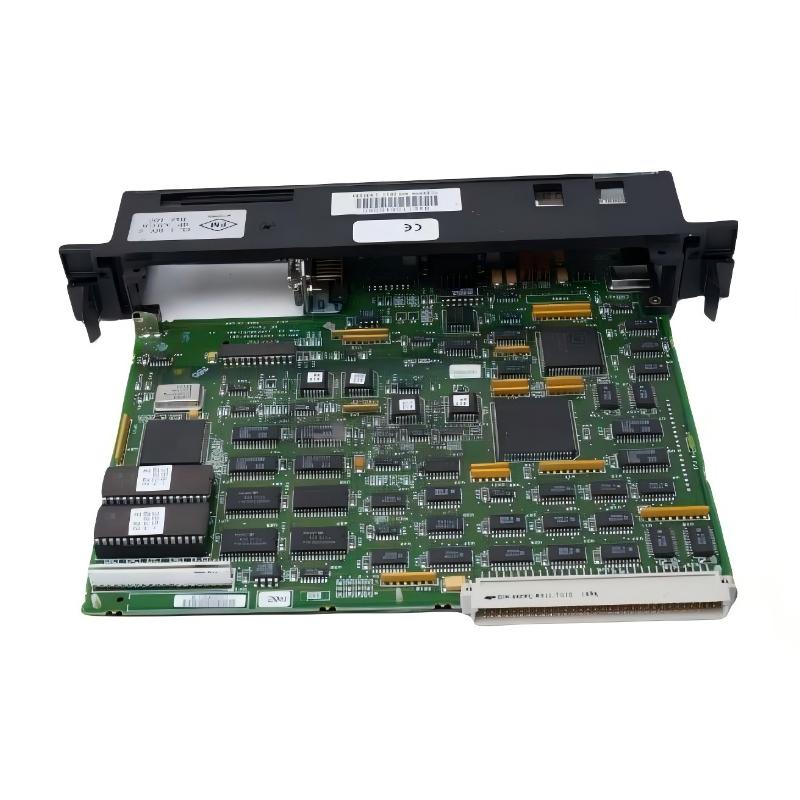
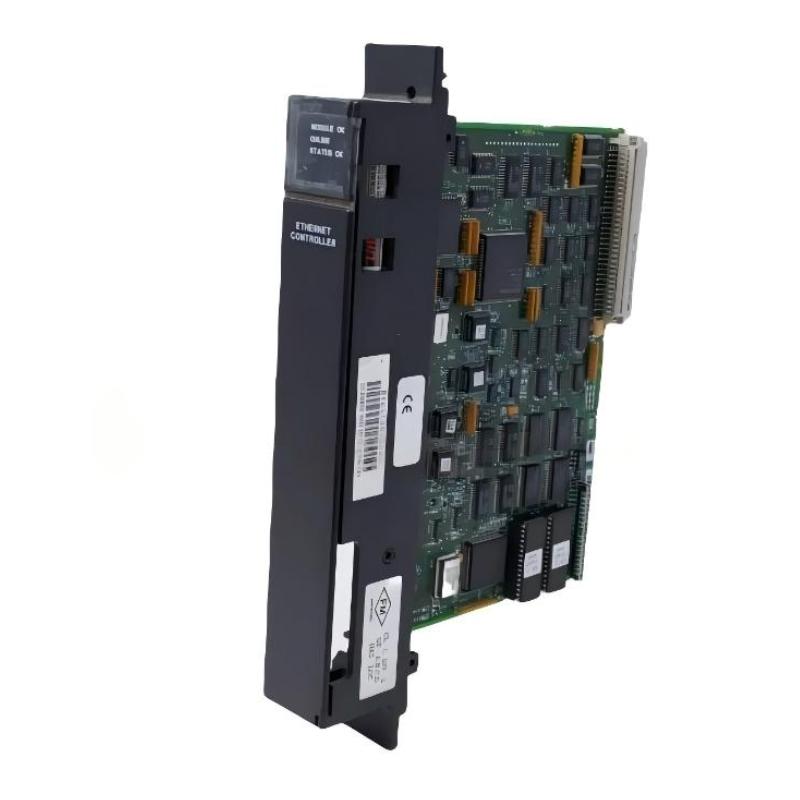
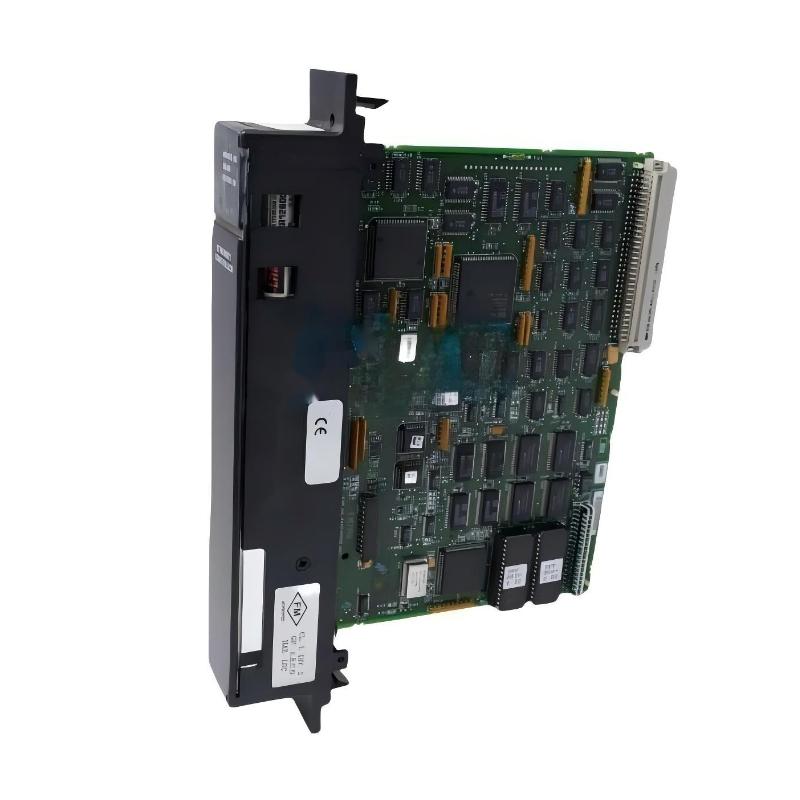
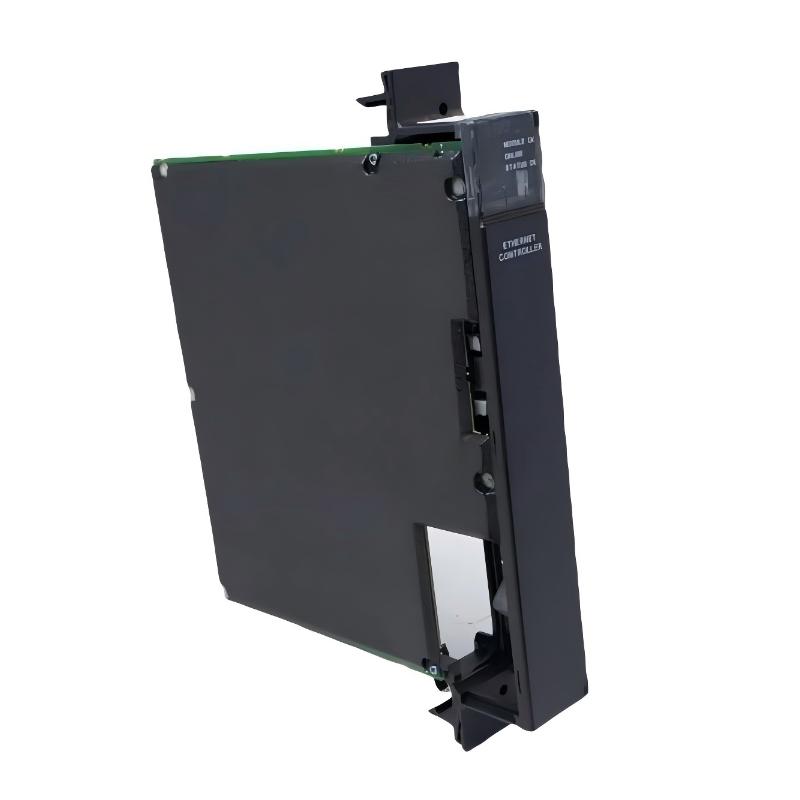
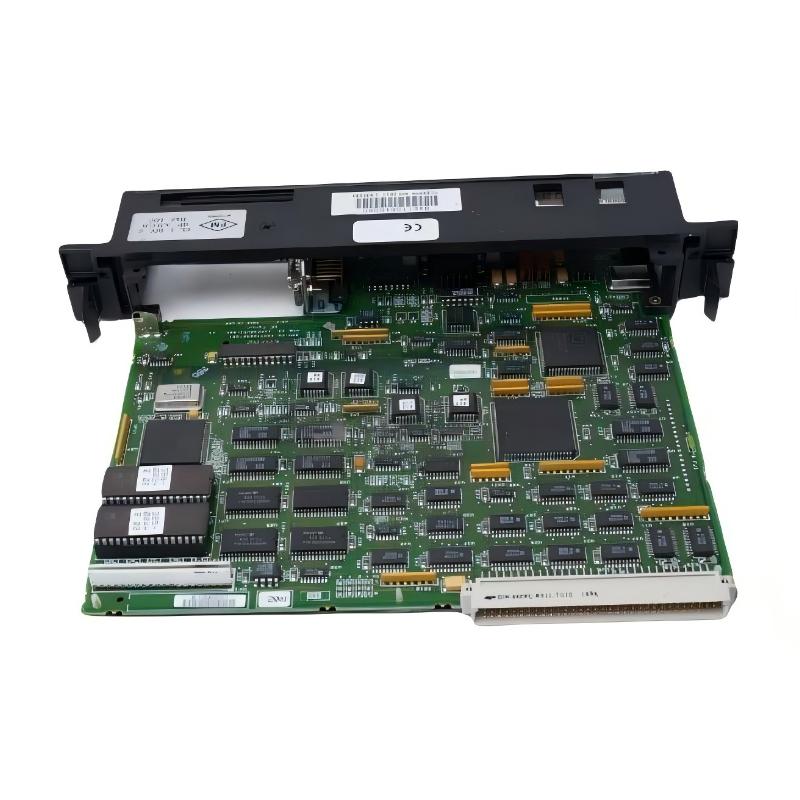
The GE IC697CMM741 Ethernet Controller Module is a communication-oriented component designed for integration into compatible GE Fanuc Series 90-70 programmable logic controller systems. It provides Ethernet communication functionality, allowing the PLC control architecture to exchange information with compatible industrial computers, supervisory systems, controllers, operator interfaces, and networked automation equipment.
Industrial control systems increasingly depend on communication between different levels of automation. A PLC may need to exchange production data with a supervisory computer, communicate with another controller, or provide operating information to an HMI or engineering workstation. An Ethernet controller module provides the communication interface needed to connect the PLC architecture with an Ethernet-based automation environment.
The IC697CMM741 is therefore different from a digital input, digital output, or analog I/O module. Its primary role is communication and network connectivity rather than direct field-device control.
The specified dimensions of the IC697CMM741 are approximately 233 × 41 × 175 mm, while the specified weight is approximately 0.56 kg.
The module can be particularly important when maintaining legacy Series 90-70 installations that rely on established industrial Ethernet communication architectures. In these systems, communication hardware must be considered together with the PLC CPU, rack, network configuration, software, cabling, and connected devices.
Technical Specifications
| Parameter | Details |
|---|---|
| Manufacturer | GE Fanuc / GE |
| Product Family | Series 90-70 |
| Model | IC697CMM741 |
| Product Type | Ethernet Controller Module |
| Primary Function | Ethernet communication |
| Module Role | Network Communication Interface |
| System Architecture | Modular PLC |
| Compatible Platform | GE Fanuc Series 90-70 |
| Installation | Series 90-70 PLC Rack |
| Communication Type | Ethernet |
| Network Function | PLC and industrial system data exchange |
| CPU Interaction | Communication support |
| Field I/O Function | Not primarily a field I/O module |
| Application | Industrial Automation and Control |
| Dimensions | 233 × 41 × 175 mm |
| Weight | 0.56 kg |
| System Integration | Series 90-70 PLC Architecture |
| External Connectivity | Compatible Ethernet-Based Devices |
| Typical Environment | Industrial Control Cabinet |
| Maintenance | Modular Hardware Replacement |
| Typical Use | Industrial Ethernet Communication |
Function and Working Principle
The primary function of the IC697CMM741 is to provide Ethernet-based communication within a compatible Series 90-70 PLC system.
A simplified architecture can be represented as:
PLC CPU → IC697CMM741 → Ethernet Network → External Automation Equipment
The PLC CPU is responsible for executing the application program and processing control logic.
The Ethernet controller provides the communication interface between the PLC architecture and compatible networked equipment.
Through an appropriate Ethernet communication architecture, information can be exchanged between the PLC and external systems.
Typical information can include:
- Machine status
- Production data
- Process values
- Alarm information
- Equipment diagnostics
- Operating commands
- Control parameters
- System status
- Monitoring information
The module therefore provides a communication pathway that allows the PLC to participate in a broader industrial information network.
In a manufacturing environment, for example, the PLC can control a production machine while simultaneously sending selected operating information to a supervisory computer.
Role in Industrial Control Systems
The IC697CMM741 provides a network communication layer within the Series 90-70 control architecture.
A simplified industrial control structure can be represented as:
Sensors → I/O Modules → PLC CPU → Ethernet Controller → Supervisory / Network Systems
The module can allow the PLC system to exchange information with compatible Ethernet-connected equipment.
Typical applications include communication with:
- Industrial computers
- Supervisory systems
- Operator interfaces
- Engineering workstations
- Other PLC systems
- Networked automation equipment
- Data collection systems
This communication capability allows the PLC to become part of a larger automation architecture.
For example, a production line may contain multiple PLC-controlled machines. Ethernet communication can provide a method for exchanging machine status, production information, alarms, and coordination data between the different control systems.
Industrial Applications
Manufacturing Automation
The IC697CMM741 can be used in manufacturing environments where PLC equipment needs Ethernet connectivity.
Potential applications include:
- Assembly lines
- Packaging systems
- Conveyor systems
- Production machinery
- Automated inspection
- Material-handling equipment
Ethernet communication can allow machine-level information to be transferred to supervisory and production-management systems.
Process Control
Process-control systems frequently require communication between local PLC controllers and higher-level monitoring equipment.
The Ethernet controller can form part of a suitable network architecture for exchanging process information with compatible systems.
Machine Automation
Industrial machinery may use Ethernet communication to exchange operating information with HMIs, computers, or other controllers.
The IC697CMM741 provides a network-oriented communication function within the PLC architecture.
Supervisory Control
Supervisory systems can collect operating data from PLCs and provide centralized monitoring.
An Ethernet communication module can provide the network interface required for this type of architecture.
Production Data Collection
Manufacturing systems increasingly require access to production information.
PLC data such as machine status, production counts, alarms, and process values can be transferred through an appropriate Ethernet architecture for centralized monitoring and analysis.
OEM Machinery
OEM equipment using Series 90-70 PLCs may require network connectivity for integration with customer automation systems.
The IC697CMM741 can be relevant to such installations where Ethernet communication is part of the original system design.
Installation and System Integration
Proper installation is important because Ethernet communication depends on the complete hardware and software configuration.
Before installing the IC697CMM741, engineers should verify:
- Module model
- Series 90-70 rack compatibility
- CPU configuration
- Ethernet network architecture
- Network addressing
- Communication parameters
- Ethernet cabling
- Network equipment
- Software configuration
- Power supply
- Grounding
- Shielding
- Cabinet environment
Typical Installation Procedure
- De-energize the PLC system.
- Verify the IC697CMM741 model.
- Confirm rack and backplane compatibility.
- Identify the correct module position.
- Inspect the module and connectors.
- Install the Ethernet controller module.
- Confirm that the module is correctly seated.
- Connect the appropriate Ethernet cable.
- Verify network equipment connections.
- Check cable routing and grounding.
- Verify the PLC power configuration.
- Re-energize the system.
- Check module status indicators.
- Configure the required network parameters.
- Verify network addressing.
- Establish communication with the connected equipment.
- Test data transmission.
- Test data reception.
- Monitor available diagnostics.
- Complete system commissioning.
Network problems should not automatically be attributed to a defective communication module.
Cable damage, incorrect network configuration, addressing conflicts, incompatible equipment, and software problems can all cause communication failures.
Ethernet Communication and Network Integration
The IC697CMM741 should be considered part of a complete Ethernet communication architecture.
A simplified structure can be represented as:
Series 90-70 PLC → IC697CMM741 → Ethernet Network → Industrial Devices
A larger architecture may contain several PLCs and supervisory systems:
PLC 1 ↔ Ethernet Network ↔ PLC 2 ↔ Supervisory Computer
This architecture can allow multiple automation systems to exchange information.
For example, a manufacturing facility may use multiple PLC systems to control different production areas. Ethernet communication can provide a pathway for exchanging information between these areas.
The network can also provide access to selected PLC information for supervisory monitoring.
Potentially exchanged information includes:
- Production status
- Equipment alarms
- Process values
- Machine states
- Production counts
- Diagnostic information
- Control parameters
The exact communication capabilities depend on the hardware, software, network architecture, and connected equipment.
Ethernet Network Troubleshooting
When an IC697CMM741-based network experiences communication problems, troubleshooting should follow a structured approach.
Check Module Installation
Verify that the module is correctly seated in the rack and that the relevant connectors are secure.
Check System Power
Confirm that the rack and module are receiving the appropriate operating power.
Check Ethernet Cables
Inspect cables for:
- Physical damage
- Loose connectors
- Incorrect connections
- Poor routing
- Connector damage
Check Network Addressing
Verify that the configured network addresses are correct and do not conflict with other devices.
Check Network Equipment
Inspect connected network equipment such as switches or other Ethernet infrastructure used by the control system.
Check Software Configuration
Verify that the PLC configuration and connected application use compatible communication parameters.
Check External Devices
Confirm that the connected computer, PLC, HMI, or supervisory system is operating normally.
Check Diagnostics
Review available PLC and communication diagnostics to determine whether the problem is associated with the module, network, cable, configuration, or external equipment.
A systematic approach helps prevent unnecessary replacement of functioning communication hardware.
Compatible System Components
The IC697CMM741 can form part of a larger GE Fanuc Series 90-70 automation architecture.
| Component | Function |
|---|---|
| Series 90-70 Rack | Provides module mounting and backplane connection |
| Series 90-70 Power Supply | Provides system operating power |
| Series 90-70 CPU | Executes PLC application logic |
| Digital Input Module | Receives discrete field signals |
| Digital Output Module | Controls discrete field equipment |
| Analog Input Module | Measures analog process signals |
| Analog Output Module | Provides analog control signals |
| Ethernet Controller Module | Provides Ethernet communication |
| Serial Communication Module | Provides serial communication |
| Communication Coprocessor | Provides dedicated communication processing |
| Bus Controller | Provides compatible industrial network connectivity |
| I/O Interface Module | Provides I/O system interfacing |
| Industrial Ethernet Cable | Provides network data transmission |
| Ethernet Network Equipment | Connects network devices |
| HMI | Operator monitoring and control |
| Supervisory Computer | Higher-level monitoring |
| Programming Workstation | PLC programming and configuration |
The exact combination of components should be selected according to the existing Series 90-70 architecture and communication requirements.
Recommended Alternative Models
The following GE Series 90-70 components may be considered when evaluating communication and controller requirements.
| Model | Type | Key Feature | Typical Application |
|---|---|---|---|
| IC697CMM741 | Ethernet Controller Module | Ethernet network communication | Industrial Ethernet Systems |
| IC697CMM711 | Communication Coprocessor Module | Dedicated communication processing | PLC Communication |
| IC697CMM712 | Serial Communication Module | Serial data communication | Serial Device Integration |
| IC697BEM741 | FIP Bus Controller | FIP network control | Distributed Automation |
| IC697BEM742 | FIP Bus Controller | FIP communication | Industrial Networks |
| IC697BEM761 | I/O Interface Module | I/O system interfacing | Remote I/O Systems |
| IC697BEM763 | Driver Interface Module | Device interface functionality | Specialized Control |
| IC697BEM771 | Bus Controller | Industrial bus communication | PLC Networks |
The IC697CMM711 can be considered when the application requires dedicated communication-coprocessing functionality.
The IC697CMM712 is more appropriate for systems based on compatible serial communication requirements.
The IC697BEM741 and IC697BEM742 are oriented toward FIP-related network control, while the IC697BEM771 provides bus-controller functionality.
The IC697BEM761 is focused on I/O interfacing rather than Ethernet communication.
When selecting an alternative, engineers should compare the network type, communication protocol, connected equipment, rack compatibility, software configuration, addressing requirements, and overall system architecture.
Key Advantages
- Designed for GE Fanuc Series 90-70 PLC systems
- Provides Ethernet communication functionality
- Supports networked industrial automation
- Connects compatible PLC systems with external equipment
- Supports supervisory system integration
- Suitable for PLC-to-PLC communication architectures
- Supports industrial data exchange
- Helps integrate PLCs into Ethernet-based systems
- Modular rack-based installation
- Suitable for legacy automation system maintenance
- Can work with compatible Series 90-70 CPUs
- Can operate alongside digital and analog I/O modules
- Supports production data communication
- Suitable for manufacturing automation
- Suitable for process-control systems
- Suitable for machine automation
- Suitable for supervisory monitoring
- Suitable for OEM equipment
- Specified dimensions of 233 × 41 × 175 mm
- Approximate weight of 0.56 kg
Technical FAQs
What is the GE IC697CMM741?
The GE IC697CMM741 is an Ethernet Controller Module designed for integration into compatible GE Fanuc Series 90-70 PLC systems.
What is the main function of the IC697CMM741?
Its primary function is to provide Ethernet communication capabilities, allowing the PLC system to exchange information with compatible networked automation equipment.
Is the IC697CMM741 a CPU?
No. It is a communication-oriented module. The main PLC application logic is executed by the appropriate Series 90-70 CPU.
What are the dimensions of the IC697CMM741?
The specified dimensions are approximately 233 × 41 × 175 mm.
How much does the IC697CMM741 weigh?
The specified weight is approximately 0.56 kg.
Is the IC697CMM741 an I/O module?
No. Its primary purpose is Ethernet communication rather than direct digital or analog field signal processing.
What can the IC697CMM741 connect to?
Depending on the complete system configuration, it can provide communication between the PLC system and compatible industrial computers, supervisory systems, operator interfaces, other controllers, and Ethernet-connected automation equipment.
Where is the IC697CMM741 typically used?
It can be used in manufacturing automation, process control, machine automation, supervisory monitoring, production data collection, and OEM equipment.
Can the IC697CMM741 connect multiple PLC systems?
A suitable Ethernet architecture can allow multiple compatible PLC systems to exchange information. The exact capability depends on the complete network configuration and communication software.
What causes Ethernet communication failures?
Potential causes include incorrect module installation, network cable problems, connector faults, addressing conflicts, incorrect configuration, network equipment problems, software issues, and problems with external devices.
What should be checked before replacing the IC697CMM741?
Engineers should verify the PLC rack, CPU, network architecture, Ethernet cabling, network addressing, communication configuration, connected equipment, and software requirements.
Is the IC697CMM741 useful for legacy PLC systems?
Yes. It can be particularly relevant when maintaining existing Series 90-70 installations that rely on Ethernet-based communication.
Can the IC697CMM741 replace a serial communication module?
Not automatically. Ethernet and serial communication are different interfaces. The required network type and connected equipment must be evaluated before selecting a replacement.
Conclusion
The GE IC697CMM741 Ethernet Controller Module is a specialized communication component designed for compatible GE Fanuc Series 90-70 PLC systems. Its primary role is to provide Ethernet communication functionality, allowing the PLC architecture to exchange information with compatible networked automation equipment.
With specified dimensions of 233 × 41 × 175 mm and an approximate weight of 0.56 kg, the IC697CMM741 is designed for integration into a modular industrial control architecture.
Ethernet communication can provide an important connection between PLC control systems and higher-level automation equipment, including supervisory computers, operator interfaces, other controllers, and industrial data-collection systems.
The IC697CMM741 can therefore be relevant to manufacturing automation, process control, machine automation, supervisory monitoring, production data collection, and OEM applications where compatible Ethernet communication is required.
For maintenance and replacement projects, the module should be evaluated together with the complete network architecture. Engineers should verify rack compatibility, CPU configuration, network addressing, Ethernet cabling, software configuration, connected devices, grounding, and communication requirements before installation.
When correctly integrated into a compatible Series 90-70 architecture, the GE IC697CMM741 provides an Ethernet-based communication interface that can help connect legacy PLC control systems with broader industrial automation networks.