

ProductPRODUCT
Featured products



Contact Us
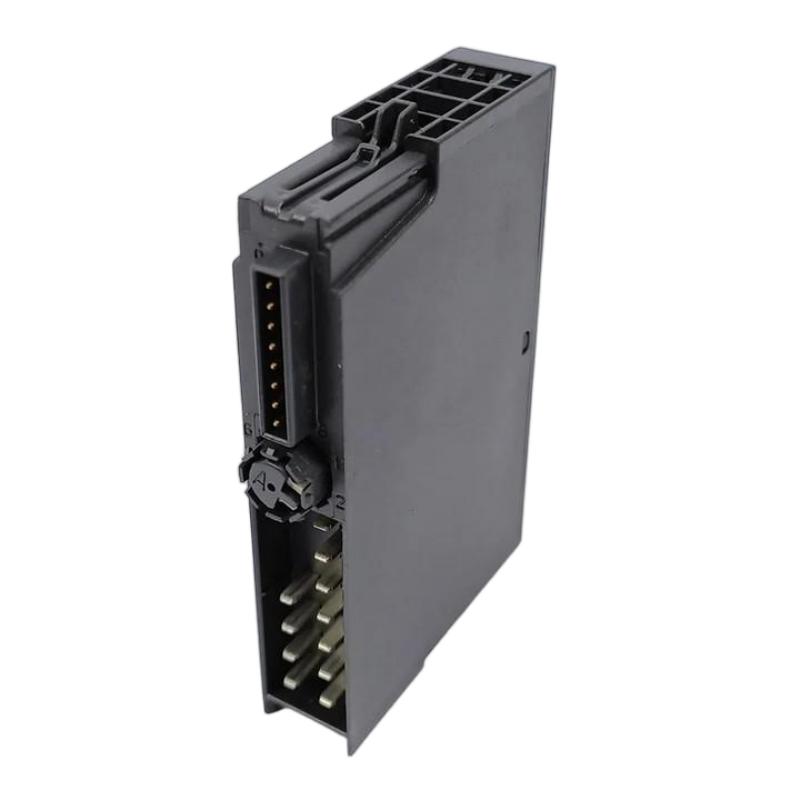
- Siemens
- 6AG1134-4JB51-7AB0
- Analog Input Module
- Germany
- 15 × 81 × 52 mm
- 0.04 kg
- Xiamen, China
- New & In Stock
- T/T, PayPal, Western Union
- 1 Year
- 1-3 Working Days
- DHL, UPS, TNT, FedEx and EMS.
- 24-Hour Service
- COO
- 53
Our advantage

Global Logistics
We have a 10-year logistics and express cooperation agreement, so our products can be shipped to any place in the world.

Brand new and original
Our products are imported in bulk from the place of origin. Because of the cooperative relationship, our products are all original and 100% new.

24-hour service
We provide 7*24 hours service to our customers. We will be there whenever you need us.

Price advantage
All our products are priced very favorably because we have our own warehouse and supply.
| Company Information | |||
| [email protected] | |||
| Mobile | +8615980777398 | ||
| +8615980777398 | |||
| 15980777398 |
Product Overview
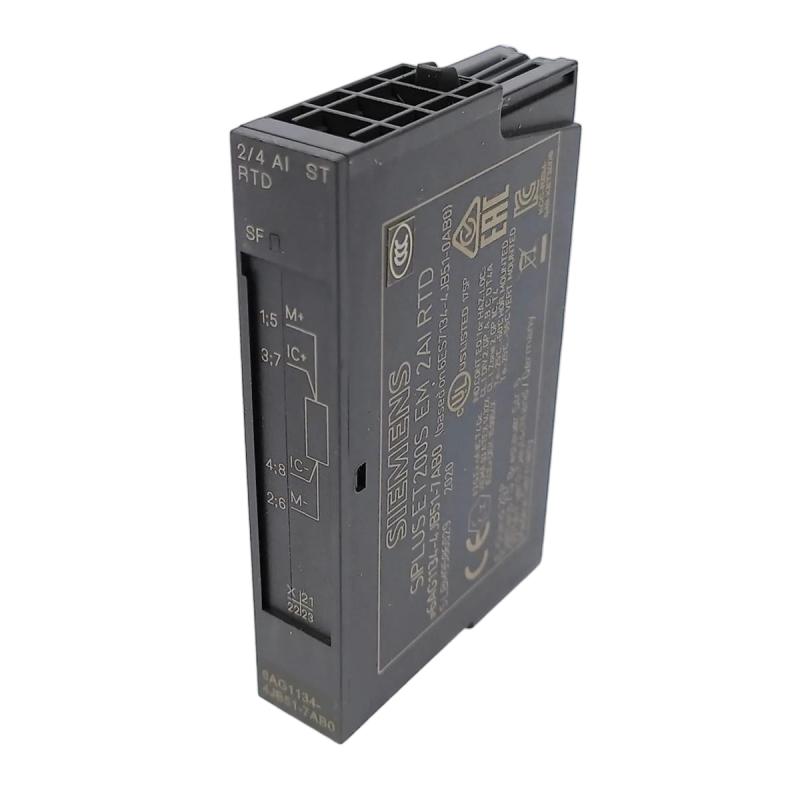
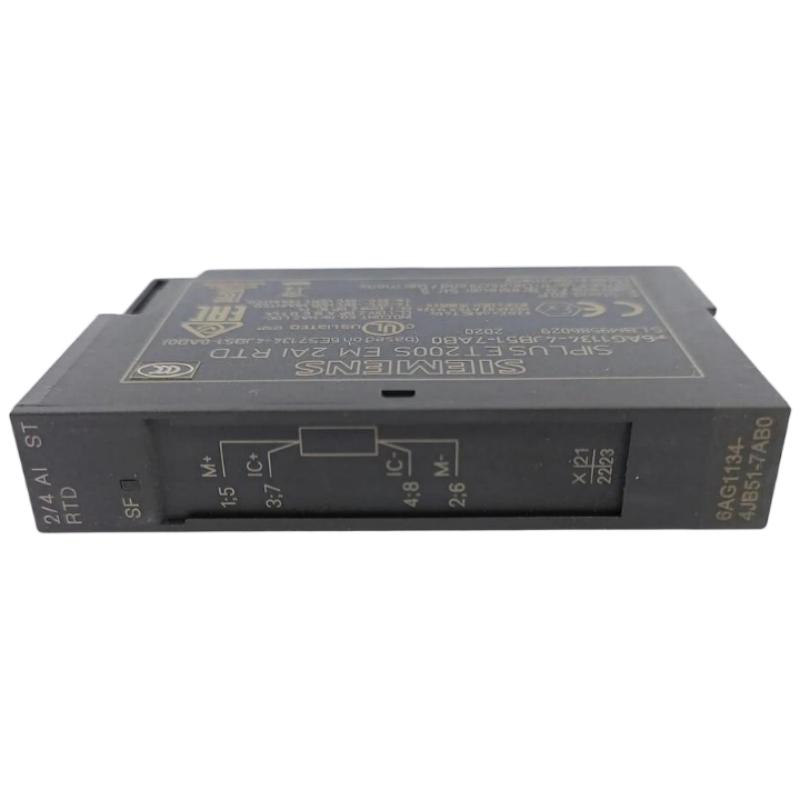
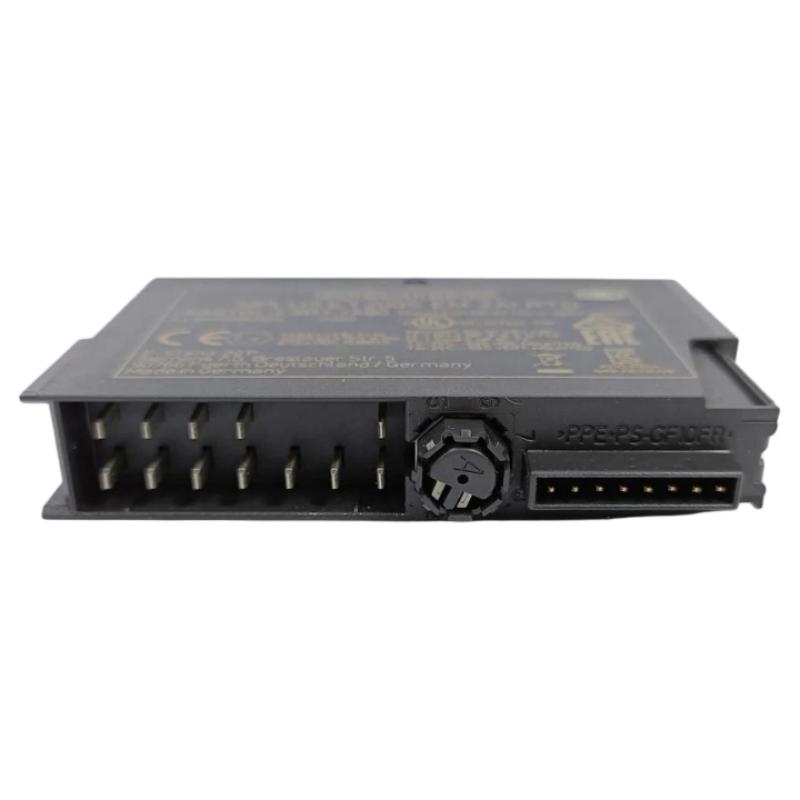
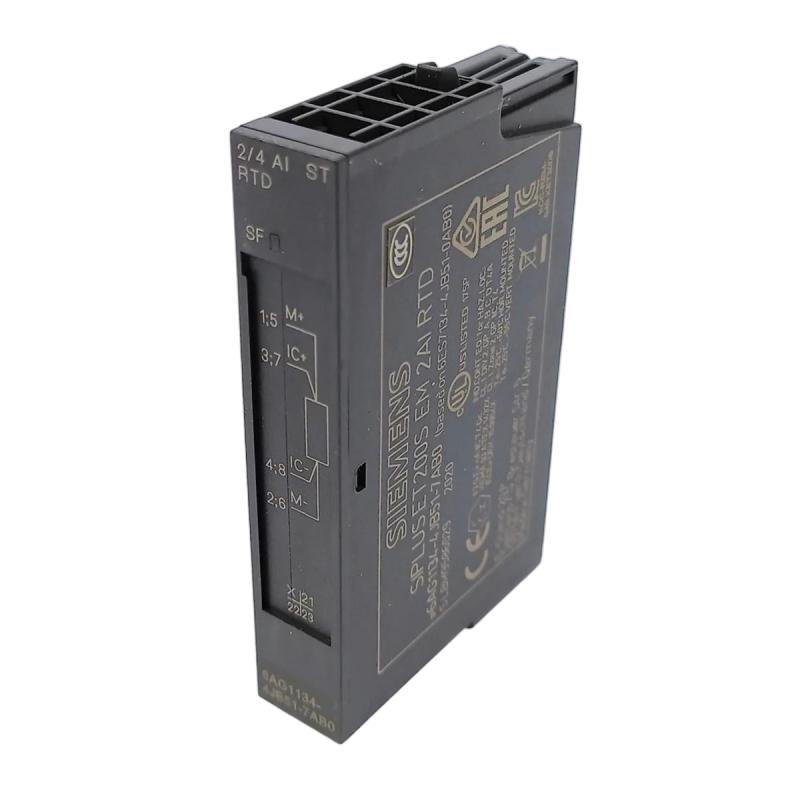
The Siemens 6AG1134-4JB51-7AB0 Analog Input Module is a SIPLUS ET 200S analog input module engineered for industrial distributed I/O systems operating in harsh environments. Based on the ET 200S platform, the module incorporates conformal coating technology to improve resistance against humidity, dust, corrosive gases, and other challenging industrial conditions.
Designed specifically for resistance temperature detectors (RTDs) and resistance measurement applications, the module supports 2 RTD channels with both 3-wire and 4-wire sensor connections, providing high-accuracy temperature measurement for industrial process control. It is suitable for applications requiring reliable temperature monitoring and precise analog signal acquisition.
The supplied product information identifies the Siemens 6AG1134-4JB51-7AB0 as an Analog Input Module, with dimensions of 15 × 81 × 52 mm and a weight of 0.04 kg.
Product Information
- Manufacturer: Siemens
- Model: 6AG1134-4JB51-7AB0
- Product Type: Analog Input Module
- Dimensions: 15 × 81 × 52 mm
- Weight: 0.04 kg
- Application: SIPLUS ET 200S Distributed I/O
- Input Type: RTD / Resistance Measurement
- Primary Function: Temperature Signal Acquisition
Technical Specifications
| Parameter | Specification |
|---|---|
| Manufacturer | Siemens |
| Model Number | 6AG1134-4JB51-7AB0 |
| Product Type | Analog Input Module |
| Dimensions | 15 × 81 × 52 mm |
| Weight | 0.04 kg |
| Installation | ET 200S Distributed I/O |
| Signal Type | RTD / Resistance Input |
| Measurement Channels | 2 RTD Channels |
| Sensor Wiring | 3-wire / 4-wire |
| Primary Function | Temperature Measurement |
Function and Working Principle
The Siemens 6AG1134-4JB51-7AB0 receives resistance signals generated by RTD temperature sensors and converts them into high-resolution digital values for processing by the PLC.
Typical signal flow:
RTD Temperature Sensor
↓
Resistance Signal
↓
6AG1134-4JB51-7AB0
↓
ET 200S Backplane
↓
PLC CPU
↓
Control Program
↓
Industrial Equipment
Typical connected devices include:
- Pt100 temperature sensors
- Ni100 temperature sensors
- Resistance sensors
- Process temperature probes
- Heat exchanger sensors
- Furnace temperature sensors
- Industrial thermal monitoring equipment
Features and Advantages
- Compact 15 mm module width
- High-accuracy RTD measurement
- Supports 3-wire and 4-wire RTD sensors
- Excellent temperature measurement stability
- Conformal coating for harsh environments
- Easy ET 200S integration
- Reliable industrial performance
- Fast signal processing
- Low maintenance requirements
- Long service life
Industrial Applications
Process Automation
Monitors process temperatures throughout continuous production systems.
Chemical Industry
Measures reactor, pipeline, and storage tank temperatures.
Water Treatment
Monitors pump stations, filtration systems, and treatment equipment.
Food and Beverage
Provides accurate temperature monitoring during processing and packaging.
Power Generation
Measures temperatures in auxiliary equipment and cooling systems.
Oil and Gas
Supports temperature monitoring in pipelines, compressors, and processing facilities.
Manufacturing
Supplies accurate temperature data for automated production equipment.
Installation Guide
Step 1 – Verify the Module
Confirm:
- Siemens
- 6AG1134-4JB51-7AB0
- Analog Input Module
Verify the complete model number before installation.
Step 2 – Inspect the Module
Check for:
- Housing damage
- Connector damage
- Bent contacts
- Cracks
- Moisture
- Dust contamination
- Shipping damage
Replace damaged equipment before installation.
Step 3 – Prepare the Installation Environment
Verify:
- Clean control cabinet
- Proper ventilation
- Stable mounting
- Reliable grounding
- Adequate maintenance space
Step 4 – Install the Module
Module dimensions:
15 × 81 × 52 mm
Weight:
0.04 kg
Install securely onto the ET 200S distributed I/O station.
Step 5 – Connect RTD Sensors
Verify:
- Correct RTD wiring
- Proper terminal assignments
- Correct 3-wire or 4-wire configuration
- Shielded cable where required
- Reliable grounding
- Secure terminal connections
Avoid routing sensor cables alongside high-voltage power cables.
Step 6 – Configure the PLC
Verify:
- Hardware configuration
- Module address
- RTD type selection
- Channel parameters
- Temperature range
- Diagnostic settings
Ensure configuration matches the installed sensors.
Step 7 – Power Up
Before energizing verify:
- Wiring integrity
- Ground continuity
- Module installation
- PLC configuration
Confirm normal startup without diagnostic alarms.
Commissioning Procedure
- Verify module installation.
- Inspect sensor wiring.
- Apply system power.
- Check module status LEDs.
- Confirm PLC recognition.
- Verify temperature values.
- Compare readings with calibrated instruments.
- Test normal operating conditions.
- Record commissioning results.
Troubleshooting Guide
Problem 1 – Module Not Detected
Possible causes:
- Incorrect installation
- Poor connector contact
- PLC configuration error
- Power supply problem
- Hardware failure
Recommended actions:
- Reseat the module.
- Verify hardware configuration.
- Inspect connectors.
- Check power supply.
- Replace the module if necessary.
Problem 2 – No Temperature Reading
Possible causes:
- Sensor failure
- Broken wiring
- Incorrect terminal assignment
- RTD configuration error
- Damaged cable
Verify the complete sensor circuit.
Problem 3 – Unstable Temperature Values
Possible causes:
- Electrical interference
- Loose wiring
- Poor grounding
- Faulty RTD sensor
- Improper cable routing
Inspect cable shielding and grounding.
Problem 4 – Incorrect Temperature Measurement
Possible causes:
- Wrong RTD type selected
- Incorrect PLC configuration
- Sensor calibration error
- Wiring mistakes
- Damaged sensor
Compare readings with calibrated reference equipment.
Problem 5 – Diagnostic Alarm
Possible causes:
- Hardware fault
- Configuration mismatch
- Communication issue
- Internal electronics failure
Review PLC diagnostics before replacing hardware.
Problem 6 – Intermittent Operation
Possible causes:
- Loose connector
- Power fluctuations
- Vibration
- Damaged wiring
Inspect all electrical connections carefully.
Problem 7 – Electrical Noise
Possible causes:
- Poor grounding
- Improper cable routing
- Nearby electrical equipment
- Shield termination problems
Maintain adequate separation between sensor and power wiring.
Problem 8 – Channel Failure
Possible causes:
- Wiring damage
- Internal circuit fault
- Incorrect sensor connection
- Sensor failure
Test each RTD channel independently.
Problem 9 – Module Overheating
Possible causes:
- Poor cabinet ventilation
- High ambient temperature
- Heat accumulation
- Environmental contamination
Maintain sufficient airflow inside the control cabinet.
Problem 10 – Communication Error
Possible causes:
- ET 200S communication fault
- PLC configuration mismatch
- Connector problems
- Module failure
Verify communication between the PLC and distributed I/O station.
Fault Diagnosis Flow
Recommended troubleshooting sequence:
Power Supply
↓
PLC Hardware Configuration
↓
Module Status
↓
Sensor Wiring
↓
RTD Sensor
↓
Temperature Verification
↓
Normal Operation
Module Replacement Procedure
Preparation
- Save PLC configuration.
- Record sensor wiring.
- Label field cables.
- Disconnect system power.
Removal
- Disconnect power.
- Remove field wiring.
- Remove the module.
- Inspect connectors.
Installation
- Verify replacement model.
- Install the replacement module.
- Reconnect wiring.
- Verify terminal security.
Commissioning
- Restore power.
- Confirm PLC recognition.
- Verify temperature measurements.
- Test normal operation.
- Record maintenance results.
Preventive Maintenance
| Maintenance Item | Recommended Action |
|---|---|
| Module Housing | Inspect regularly |
| Connectors | Verify secure installation |
| RTD Wiring | Inspect periodically |
| Grounding | Check continuity |
| PLC Diagnostics | Review regularly |
| Cabinet | Keep clean and dry |
| Ventilation | Maintain airflow |
| Temperature Accuracy | Verify periodically |
| Mounting | Check mechanical security |
| Maintenance Records | Update after servicing |
Environmental Considerations
Temperature
Maintain proper cabinet temperatures for stable operation.
Dust
Remove accumulated dust during scheduled maintenance.
Moisture
Prevent condensation and water ingress.
Vibration
Inspect module mounting and connectors regularly.
Electromagnetic Interference
Use shielded RTD cables and proper grounding techniques.
Common Installation Mistakes
- Installing the wrong module model
- Incorrect RTD wiring
- Wrong RTD type selection
- Poor grounding
- Loose terminal connections
- Mixing sensor and power cables
- Ignoring PLC diagnostics
- Skipping commissioning verification
- Poor cabinet ventilation
- Failure to document configuration changes
Key Advantages
- Compact dimensions of 15 × 81 × 52 mm
- Lightweight construction (0.04 kg)
- High-accuracy RTD measurement
- Supports 3-wire and 4-wire RTD sensors
- Reliable ET 200S integration
- Conformal coating for harsh environments
- Excellent measurement stability
- Low maintenance requirements
- Long operational life
- Designed for demanding industrial automation
Technical FAQs
What is the Siemens 6AG1134-4JB51-7AB0?
It is a SIPLUS ET 200S RTD analog input module designed for resistance temperature measurement in distributed PLC systems.
What is its primary function?
It converts RTD resistance signals into digital temperature values for PLC processing.
Which sensors are supported?
The module supports RTD sensors using 3-wire and 4-wire connections, including common industrial RTD types.
What are its dimensions?
The supplied dimensions are 15 × 81 × 52 mm.
What is its weight?
The supplied weight is 0.04 kg.
Why is the PLC not detecting the module?
Possible causes include installation errors, configuration problems, connector faults, power supply issues, or hardware failure.
Why are temperature readings unstable?
Electrical interference, poor grounding, loose wiring, sensor faults, or incorrect cable routing are common causes.
Where is this module commonly used?
It is widely used in process automation, chemical plants, food processing, water treatment, oil and gas, manufacturing, and power generation.
How should the module be maintained?
Regularly inspect connectors, RTD wiring, grounding, cabinet cleanliness, ventilation, and PLC diagnostics.
When should the module be replaced?
Replace the module if persistent hardware faults remain after troubleshooting or if accurate temperature measurement cannot be restored.
Conclusion
The Siemens 6AG1134-4JB51-7AB0 Analog Input Module is a robust SIPLUS ET 200S solution for precise RTD temperature measurement in industrial automation systems. Featuring support for 3-wire and 4-wire RTD sensors, compact 15 × 81 × 52 mm dimensions, and a lightweight 0.04 kg design, it is well suited for distributed I/O installations operating in demanding environments. Proper installation, PLC configuration, routine maintenance, and systematic troubleshooting help ensure reliable long-term performance and minimize system downtime.