

ProductPRODUCT
Featured products
Contact Us
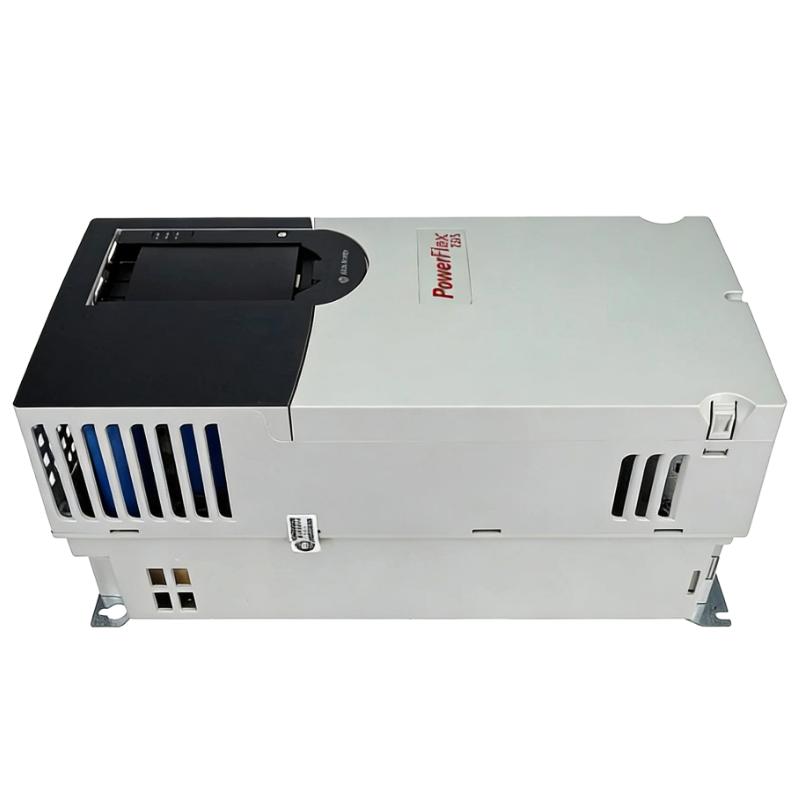
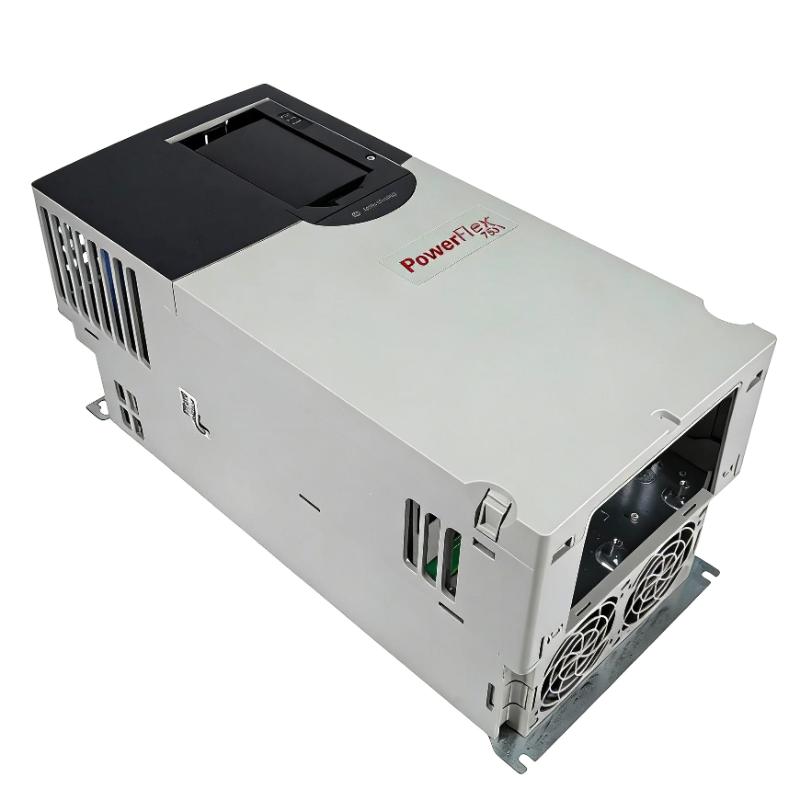
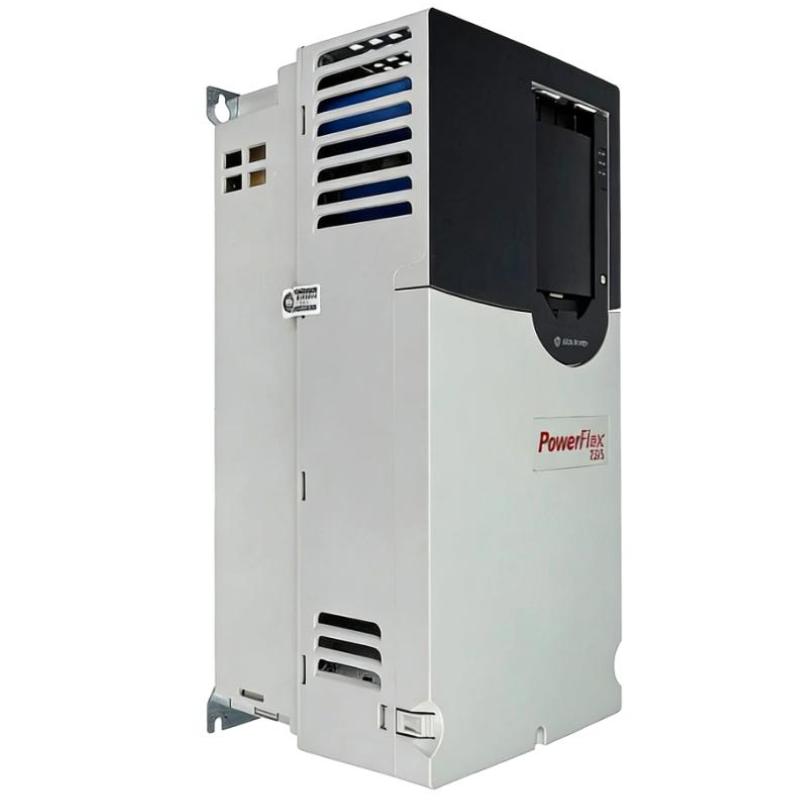
- Allen Bradley
- 20F11ND052JA0NNNNN
- PowerFlex AC Drive
- USA
- 470 mm x 380 mm x 300 mm
- 7.8kg
- Xiamen, China
- New & In Stock
- T/T, PayPal, Western Union
- 1 Year
- 1-3 Working Days
- DHL, UPS, TNT, FedEx and EMS.
- 24-Hour Service
- COO
- 66
Our advantage

Global Logistics
We have a 10-year logistics and express cooperation agreement, so our products can be shipped to any place in the world.

Brand new and original
Our products are imported in bulk from the place of origin. Because of the cooperative relationship, our products are all original and 100% new.

24-hour service
We provide 7*24 hours service to our customers. We will be there whenever you need us.

Price advantage
All our products are priced very favorably because we have our own warehouse and supply.
| Company Information | |||
| [email protected] | |||
| Mobile | +8615980777398 | ||
| +8615980777398 | |||
| 15980777398 |
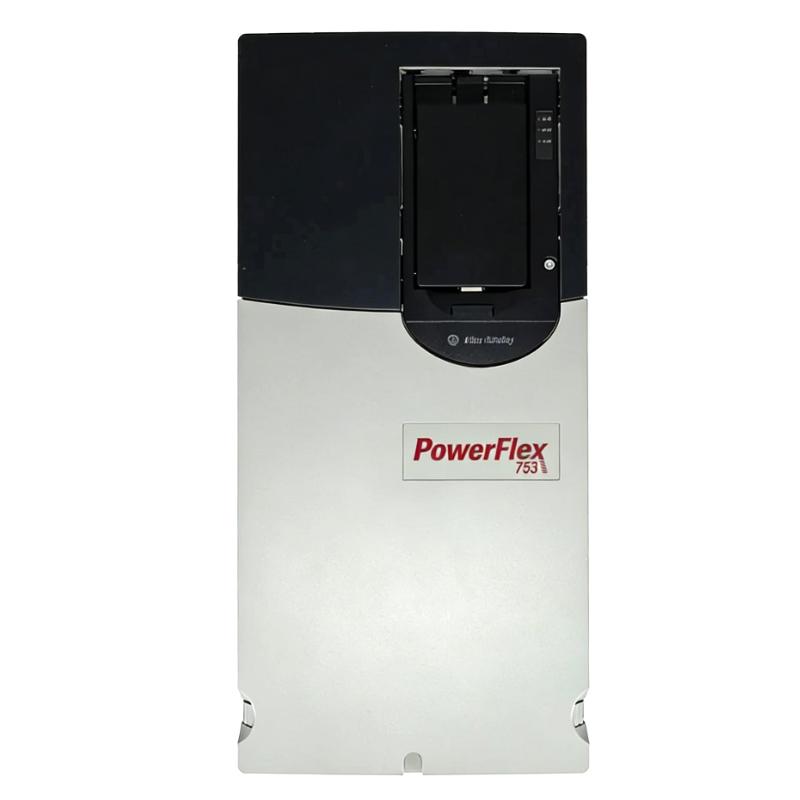
Allen-Bradley 20F11ND052JA0NNNNN — Detailed Product Specifications, Introduction, Applications, Advantages and Related Models
1. Product Overview
The 20F11ND052JA0NNNNN is an Allen-Bradley PowerFlex 753 AC drive designed for industrial three-phase motor control applications.
This model belongs to the higher-current range of the PowerFlex 753 family and is intended for medium-to-large industrial machinery where reliable variable-speed control, controlled acceleration and deceleration, and flexible motor-control functionality are required.
The model is designed for a 480 VAC class, three-phase power system and provides an output-current capacity of approximately 52 A. Its commonly associated power ratings are approximately 40 HP for Normal Duty and 30 HP for Heavy Duty.
The drive uses a larger frame than the lower-current PowerFlex 753 configurations, providing additional electrical capacity while maintaining the same general product-family architecture.
For equipment designers, the 20F11ND052JA0NNNNN is particularly attractive when a 40 A-class drive is no longer sufficient but moving immediately to a substantially larger drive would create unnecessary cost, cabinet-space requirements or electrical oversizing.
2. Brand and Product Series
| Item | Specification |
|---|---|
| Model | 20F11ND052JA0NNNNN |
| Brand | Allen-Bradley |
| Product Family | PowerFlex 750-Series |
| Product Series | PowerFlex 753 |
| Product Type | Adjustable-Frequency AC Drive |
| Drive Category | Industrial Variable-Frequency Drive |
| Voltage Class | 480 VAC |
| Input Voltage Range | 380–480 VAC class |
| Input Phase | 3-phase |
| Output Phase | 3-phase |
| Output Current | 52 A class |
| Normal Duty Rating | 40 HP class |
| Heavy Duty Rating | 30 HP class |
| Cooling | Forced air |
| Frame | Frame 4 class |
| Installation | Electrical cabinet / panel |
| Typical Application | Industrial AC motor speed and torque control |
The 20F11ND052JA0NNNNN is therefore positioned above the 34 A and 40 A configurations while remaining within the same PowerFlex 753 family.
This makes it a useful choice for applications where motor current, acceleration demand or load characteristics require more capacity than the smaller PowerFlex 753 configurations can provide.
3. Detailed Technical Parameters
| Parameter | Specification |
|---|---|
| Model | 20F11ND052JA0NNNNN |
| Brand | Allen-Bradley |
| Series | PowerFlex 753 |
| Product Type | AC Variable-Frequency Drive |
| Input Voltage | 380–480 VAC |
| Nominal Voltage Class | 480 VAC |
| Input Phase | 3-phase |
| Output Phase | 3-phase |
| Output Current | 52 A class |
| Normal Duty Power | 40 HP class / approximately 30 kW |
| Heavy Duty Power | 30 HP class / approximately 22 kW |
| Input Frequency | 50/60 Hz class |
| Cooling | Forced air |
| Frame Size | Frame 4 class |
| Enclosure | IP20/IP00 open type |
| Installation Type | Panel / cabinet mounted |
| Embedded I/O | Yes |
| DC Bus Access | Available |
| Dynamic Braking Capability | Internal braking-transistor configuration |
| EMC Configuration | Filtered configuration |
| HIM Configuration | Blank / No HIM |
| Approx. Height | 474 mm |
| Approx. Width | 222 mm |
| Approx. Depth | 212 mm |
| Approx. Weight | 13.6 kg |
| Typical Motor Type | Three-phase AC induction motor |
| Typical Applications | Conveyors, pumps, fans, blowers, mixers, feeders, material handling |
The 20F11ND052JA0NNNNN is best understood as a medium/high-capacity industrial drive rather than a compact machine drive.
Its approximately 52 A current class gives it substantially more electrical capacity than small PowerFlex drives, while its Frame 4 construction keeps it within a manageable cabinet footprint for many industrial installations.
4. Dimensions and Weight
The physical size of a variable-frequency drive becomes increasingly important as the motor rating increases.
For the 20F11ND052JA0NNNNN, the commonly associated Frame 4 mechanical envelope is approximately:
| Mechanical Parameter | Specification |
|---|---|
| Model | 20F11ND052JA0NNNNN |
| Frame | Frame 4 |
| Height | 474 mm |
| Width | 222 mm |
| Depth | 212 mm |
| Approx. Weight | 13.6 kg |
| Approx. Height | 18.66 in |
| Approx. Width | 8.74 in |
| Approx. Depth | 8.35 in |
| Approx. Weight | 30.0 lb |
| Enclosure | IP20/IP00 |
| Cooling | Forced air |
| Mounting | Vertical panel/cabinet mounting |
The approximately 474 × 222 × 212 mm dimensions should be regarded as the drive’s physical envelope.
The final control cabinet normally needs additional room around the drive for power wiring, motor cables, ventilation, grounding, maintenance access and any optional components.
The approximate 13.6 kg weight should also be considered when designing the mounting plate and cabinet structure.
5. Product Introduction
The PowerFlex 753 is an industrial AC drive family designed for applications where motor speed and torque need to be controlled electronically.
The 20F11ND052JA0NNNNN uses this architecture for applications requiring approximately 52 A of output current.
Instead of operating an AC motor at one fixed speed, the drive can control motor operation according to the requirements of the machine.
This is useful when production speed changes during a process.
For example, a conveyor may require a slow speed during loading and a faster speed during normal production.
A pump may need to operate at different speeds depending on flow requirements.
A fan may need full speed during peak ventilation demand but much lower speed during normal operation.
A mixer may need controlled acceleration and different operating speeds during different stages of a process.
The drive therefore becomes an important part of the overall machine-control system rather than simply serving as an electrical starter.
6. Why the 52 A Model Is Important
The 52 A class is one of the key characteristics of this model.
Output current is often more useful for drive selection than horsepower alone.
Motor horsepower is affected by voltage, efficiency and power factor, while the drive ultimately has to deliver the required electrical current to the motor.
For this reason, a proper selection normally starts with the motor nameplate.
Important information includes:
- Motor voltage
- Full-load current
- Motor horsepower
- Frequency
- Speed
- Power factor
- Service factor
- Load type
- Required acceleration
- Required deceleration
- Overload requirements
A 40 HP motor may be suitable under one operating condition but require a different drive rating under another.
The actual motor current and application duty should therefore be checked before final selection.
7. Normal Duty and Heavy Duty Ratings
| Rating | Approximate Capacity |
|---|---|
| Model | 20F11ND052JA0NNNNN |
| Output Current | 52 A class |
| Normal Duty | 40 HP class |
| Heavy Duty | 30 HP class |
| Typical Normal-Duty Loads | Pumps, fans, blowers, conveyors |
| Typical Heavy-Duty Loads | Mixers, feeders, material handling |
Normal Duty and Heavy Duty ratings should not be treated as interchangeable labels.
A variable-torque application such as a centrifugal fan or pump may have a different current and overload profile from a constant-torque conveyor or mixer.
A machine with frequent acceleration, high starting torque or high inertia may need the Heavy Duty rating to be used for selection.
The 40 HP Normal Duty figure should therefore not automatically be interpreted as meaning that every 40 HP motor is suitable.
The motor nameplate current remains one of the most important selection criteria.
8. Product Configuration
The 20F11ND052JA0NNNNN belongs to a configuration family designed for industrial installations.
| Configuration Item | Description |
|---|---|
| AC Input | Yes |
| Three-Phase Operation | Yes |
| DC Bus Terminals | Available |
| Embedded I/O | Yes |
| Cooling | Forced air |
| Enclosure | IP20/IP00 |
| Installation | Cabinet / panel |
| Filtering | Filtered configuration |
| Braking | Dynamic braking capability |
| HIM | Blank / No HIM |
| Frame | Frame 4 class |
The absence of a factory-installed HIM can be advantageous in a machine where the drive is operated through a PLC, HMI or external control system.
In such installations, the drive can remain inside the electrical cabinet while the operator interacts with the machine through the normal control interface.
9. Product Applications
9.1 Conveyor Systems
The 20F11ND052JA0NNNNN is well suited to medium and larger conveyor systems.
Conveyors often have considerable mechanical inertia, particularly when carrying heavy products.
Starting a conveyor motor directly can produce a sudden mechanical load on belts, chains, couplings and gearboxes.
A variable-frequency drive allows acceleration to be controlled.
The motor can gradually increase speed rather than immediately reaching operating speed.
This can reduce mechanical shock and provide a smoother production process.
9.2 Heavy-Duty Belt Conveyors
Large belt conveyors are particularly suitable for higher-current drives.
The load can change depending on the amount of material on the belt.
The drive can control the motor according to the production requirement while providing controlled acceleration and deceleration.
Typical uses include:
- Bulk-material handling
- Packaging lines
- Manufacturing conveyors
- Warehouse systems
- Processing equipment
- Transfer conveyors
9.3 Pumps
Pumps are one of the most common applications for variable-frequency drives.
A pump does not necessarily need to operate at full speed continuously.
By adjusting motor speed, the system can respond to changing process requirements.
Applications include:
- Water transfer
- Cooling water
- Process circulation
- Industrial fluid handling
- Pressure-control systems
- General process pumping
For variable-torque pump applications, reducing motor speed can also provide substantial energy benefits when the hydraulic system is suitable for variable-speed operation.
9.4 Fans
Industrial fans often experience changing airflow requirements.
A fan running continuously at maximum speed may provide more airflow than the process requires.
A variable-frequency drive allows the fan speed to be reduced.
Typical applications include:
- Factory ventilation
- Process ventilation
- Cooling fans
- Exhaust systems
- Air-handling systems
- Industrial blower systems
9.5 Blowers
Blowers frequently operate under changing process conditions.
The drive can adjust blower speed to match the process.
This provides a more flexible solution than using mechanical throttling alone.
The 52 A capacity also makes this model suitable for larger blower motors than compact drive configurations.
9.6 Mixers
Mixers can place significant demands on a motor during startup.
The material inside the mixing vessel may be stationary and heavy.
Starting torque can therefore be much higher than the torque required after the mixer reaches operating speed.
The drive can provide controlled acceleration and allow different operating speeds.
This makes it suitable for:
- Industrial mixers
- Agitators
- Processing equipment
- Batch systems
- Material blending equipment
9.7 Feeders
Industrial feeders often require controlled speed.
The amount of material being fed can affect production quality.
A variable-frequency drive allows the feeder speed to be adjusted according to the process.
Applications can include:
- Material feeders
- Hopper feeders
- Packaging feeders
- Processing feeders
- Production-line feeding systems
9.8 Material Handling
Material-handling machinery often requires reliable acceleration and stopping.
The 20F11ND052JA0NNNNN can be used in systems such as:
- Conveyors
- Transfer equipment
- Rollers
- Feeders
- Sorting systems
- Production-line handling equipment
The ability to control speed electronically provides greater flexibility than fixed-speed motor operation.
10. Advantages of the 20F11ND052JA0NNNNN
10.1 Higher Current Capacity
The biggest advantage over smaller PowerFlex 753 models is the approximately 52 A output-current class.
This makes the drive appropriate for larger motors and heavier industrial machinery.
It also gives engineers a useful intermediate selection before moving to much larger drive configurations.
10.2 40 HP Normal Duty Capability
The approximately 40 HP Normal Duty capacity covers a broad range of industrial equipment.
This includes many:
- Pumps
- Fans
- Blowers
- Conveyors
- General process machines
For a suitable variable-torque load, this rating can provide a good balance between motor capacity and drive size.
10.3 30 HP Heavy Duty Capability
The approximately 30 HP Heavy Duty rating is useful when the machine requires more demanding operating conditions.
This can include:
- High starting torque
- Frequent starts and stops
- High inertia
- Constant-torque loads
- Repeated acceleration
- Material-handling equipment
10.4 Dynamic Braking Capability
Dynamic braking is particularly valuable when a machine has substantial rotating inertia.
During deceleration, the motor can return energy toward the drive’s DC bus.
A braking system can dissipate this energy and help the machine decelerate in a controlled manner.
This is useful for conveyors, high-inertia machines and material-handling systems.
The braking resistor and its duty cycle must be selected separately according to the actual application.
10.5 Embedded I/O
Embedded I/O helps simplify the control architecture.
For many standard machine applications, it can reduce the need for additional interface hardware.
This can be useful when designing a control cabinet with a PLC and conventional digital or analog control signals.
10.6 Flexible Industrial Architecture
The PowerFlex 753 family is designed for applications that may require more functionality than a basic compact VFD.
The architecture can accommodate additional functionality through appropriate options.
This gives machine builders more flexibility when designing equipment that may later require additional control or feedback capabilities.
10.7 Industrial Standardization
Using one drive family across different machine sizes can simplify maintenance.
A plant may have several drives with different current ratings but similar operating concepts.
Maintenance personnel can become familiar with the same general drive family.
This can reduce the learning curve during troubleshooting and commissioning.
11. Advantages for Machine Builders
For an OEM machine builder, the 20F11ND052JA0NNNNN offers several practical benefits.
The drive can provide controlled motor acceleration, adjustable speed and controlled stopping without requiring mechanical speed-control mechanisms.
The embedded I/O can simplify the cabinet design.
The modular drive architecture can also make future machine variations easier to design.
For example, a basic machine may initially require only standard motor control.
A later version may require additional feedback or communication functionality.
Using a scalable drive family can make such changes easier to manage.
12. Advantages for Maintenance Departments
A standardized industrial drive family can make maintenance easier.
Technicians can develop familiarity with:
- Drive parameters
- Fault conditions
- Motor-control settings
- Acceleration and deceleration
- I/O configuration
- Braking functions
- Installation practices
This is particularly valuable in factories where multiple variable-frequency drives are installed.
13. Advantages for Process Control
Variable-speed motor control can improve process consistency.
Instead of operating a motor at only one speed, the machine can adjust speed according to process conditions.
This can improve:
- Material flow
- Conveyor synchronization
- Pump control
- Fan control
- Mixing processes
- Production speed
- Machine coordination
The exact benefit depends on the process and the way the drive is integrated with the control system.
14. Cooling and Thermal Management
The 20F11ND052JA0NNNNN uses forced-air cooling.
The drive produces heat during operation, and this heat must be removed from the electrical cabinet.
Important factors include:
| Thermal Factor | Design Consideration |
|---|---|
| Drive Heat | Must be dissipated |
| Cabinet Temperature | Keep within permitted limits |
| Airflow | Avoid obstruction |
| Cooling Fan | Inspect periodically |
| Dust | Prevent accumulation |
| Cabinet Ventilation | Size appropriately |
| Nearby Drives | Account for additional heat |
| Braking Equipment | Consider additional heat |
| Ambient Temperature | Verify application conditions |
A larger drive does not automatically require a larger cabinet, but the cabinet’s thermal design must be appropriate for the complete installation.
15. Installation Environment
The drive is intended for installation inside a suitable electrical enclosure.
The IP20/IP00 open-type construction means that the drive itself should not be treated as a sealed outdoor enclosure.
The cabinet should protect the drive from:
- Excessive dust
- Water
- Condensation
- Corrosive substances
- Mechanical contamination
- Excessive heat
- Foreign objects
The surrounding environment is therefore an important part of drive selection.
16. EMC Considerations
Electrical noise can be an important issue in variable-frequency-drive installations.
The motor cable carries high-frequency switching components, and poor cable routing can allow interference to enter sensitive control circuits.
A well-designed installation should consider:
- Grounding
- Shielding
- Cable separation
- Motor cable routing
- Control cable routing
- Cabinet bonding
- Proper termination
- Motor cable length
The drive’s filtering configuration can contribute to EMC performance, but correct cabinet installation remains essential.
17. Dynamic Braking Applications
The 20F11ND052JA0NNNNN is especially interesting for applications where controlled stopping is important.
| Application | Braking Importance | Reason |
|---|---|---|
| Conveyor | High | Moving material creates inertia |
| Material Handling | High | Controlled stopping required |
| Mixer | Medium–High | Rotating mass can be significant |
| Feeder | Medium | Depends on load and stop time |
| Fan | Low–Medium | Usually gradual stopping |
| Pump | Low–Medium | Depends on hydraulic system |
| High-Inertia Machinery | Very High | Significant stored energy |
| Production Machinery | Application dependent | Depends on cycle time |
Dynamic braking should always be evaluated based on actual deceleration energy and duty cycle.
18. Control and Operator Interface
The catalog configuration uses a blank / no-HIM arrangement.
This can be useful in automated machinery where the drive is not intended to be the primary operator interface.
A typical machine might have:
PLC → Drive → Motor
with the operator controlling the process through an HMI.
In such a configuration, the drive can remain inside the electrical cabinet while operators use the main machine interface.
For maintenance personnel, a suitable interface can be provided when local commissioning or diagnostics are required.
19. Cabinet Design
The approximate physical dimensions are:
474 mm × 222 mm × 212 mm
The approximate weight is:
13.6 kg
These figures are useful when calculating panel space.
However, cabinet dimensions should not be based on the drive dimensions alone.
Additional room may be needed for:
- Input cables
- Output cables
- Grounding
- Control wiring
- Ventilation
- Maintenance
- Braking equipment
- Optional modules
- Adjacent contactors
- Circuit protection
- PLC equipment
- Terminal blocks
The final cabinet layout should therefore provide a practical service envelope around the drive.
20. Five Recommended Models from the Same Series
The following models are useful for comparison within the PowerFlex 753 family.
| Model | Series | Input | Output Current | Normal Duty | Heavy Duty | Frame | Approx. Dimensions | Approx. Weight |
|---|---|---|---|---|---|---|---|---|
| 20F11ND034JA0NNNNN | PowerFlex 753 | 380–480 VAC, 3-phase | 34 A | 25 HP | 20 HP | Frame 3 | 454 × 190 × 212 mm | 11.8 kg |
| 20F11ND040JA0NNNNN | PowerFlex 753 | 380–480 VAC, 3-phase | 40 A | 30 HP | 25 HP | Frame 3 | 454 × 190 × 212 mm | 11.8 kg |
| 20F11ND052JA0NNNNN | PowerFlex 753 | 380–480 VAC, 3-phase | 52 A | 40 HP | 30 HP | Frame 4 | 474 × 222 × 212 mm | 13.6 kg |
| 20F11ND065JA0NNNNN | PowerFlex 753 | 380–480 VAC, 3-phase | 65 A | 50 HP | 40 HP | Frame 4 | 474 × 222 × 212 mm | 13.6 kg |
| 20F11ND077JA0NNNNN | PowerFlex 753 | 380–480 VAC, 3-phase | 77 A | 60 HP | 50 HP | Frame 5 | 550 × 270 × 212 mm | 20.4 kg |
These models form a practical progression around the 52 A model.
The 34 A model is a lower-capacity option for smaller motors.
The 40 A model is a useful middle step.
The 52 A model is suitable for approximately 40 HP Normal Duty applications.
The 65 A and 77 A models provide additional capacity for larger machinery.
21. Same-Series Comparison
| Model | Current | ND Rating | HD Rating | Frame | Approx. Weight | Recommended Use |
|---|---|---|---|---|---|---|
| 20F11ND034JA0NNNNN | 34 A | 25 HP | 20 HP | 3 | 11.8 kg | Smaller medium-power equipment |
| 20F11ND040JA0NNNNN | 40 A | 30 HP | 25 HP | 3 | 11.8 kg | Medium industrial equipment |
| 20F11ND052JA0NNNNN | 52 A | 40 HP | 30 HP | 4 | 13.6 kg | Larger medium-power equipment |
| 20F11ND065JA0NNNNN | 65 A | 50 HP | 40 HP | 4 | 13.6 kg | Larger industrial motors |
| 20F11ND077JA0NNNNN | 77 A | 60 HP | 50 HP | 5 | 20.4 kg | High-capacity machinery |
The 52 A model is a useful balance between electrical capacity and physical size.
For a machine that requires approximately 40 HP under Normal Duty conditions, it provides substantially more capacity than the 34 A configuration.
For applications requiring approximately 50 HP or more, the 65 A configuration becomes a more natural candidate.
22. Five Popular Models from the Same Brand
The following models provide useful comparisons with other widely used Allen-Bradley variable-frequency-drive configurations.
| Model | Series | Input Voltage | Output Current | Power Class | Frame | Approx. Dimensions H × W × D | Approx. Weight |
|---|---|---|---|---|---|---|---|
| 25B-D010N114 | PowerFlex 525 | 380–480 VAC, 3-phase | 10.5 A | 5 HP / 4.0 kW | B | 152 × 87 × 172 mm | 1.6 kg |
| 25B-D017N114 | PowerFlex 525 | 380–480 VAC, 3-phase | 17 A | 10 HP / 7.5 kW | C | 220 × 109 × 184 mm | 2.3 kg |
| 25B-D024N114 | PowerFlex 525 | 380–480 VAC, 3-phase | 24 A | 15 HP / 11 kW | D | 260 × 130 × 212 mm | 3.9 kg |
| 25B-D030N114 | PowerFlex 525 | 380–480 VAC, 3-phase | 30 A | 20 HP / 15 kW class | D | 260 × 130 × 212 mm | 3.9 kg |
| 25B-E012N104 | PowerFlex 525 | 525–600 VAC, 3-phase | 12 A | 10 HP / 7.5 kW | C | 220 × 109 × 184 mm | 2.3 kg |
These models are considerably smaller than the PowerFlex 753 52 A configuration.
They are more appropriate for compact machines and lower-power motor applications.
The 20F11ND052JA0NNNNN, by comparison, is intended for substantially higher motor power and more demanding industrial equipment.
23. PowerFlex 753 vs. PowerFlex 525
| Feature | 20F11ND052JA0NNNNN | PowerFlex 525 Models |
|---|---|---|
| Product Family | PowerFlex 750-Series | PowerFlex 520-Series |
| Product Series | PowerFlex 753 | PowerFlex 525 |
| Typical Capacity | Medium/high power | Small/medium power |
| 20F11ND052 Output | 52 A class | Lower-current configurations |
| Frame | Frame 4 class | Smaller frames |
| Approx. Weight | 13.6 kg | Approximately 1.6–3.9 kg |
| Approx. Dimensions | 474 × 222 × 212 mm | 152–260 mm H range |
| Embedded I/O | Yes | Yes |
| Expansion | Broad industrial architecture | Compact architecture |
| Typical Equipment | Larger industrial machinery | Compact machinery |
| Cabinet Space | Larger | Smaller |
| Main Strength | Higher power and flexibility | Compact installation |
24. Application Selection Guide
| Application | Suitability | Reason |
|---|---|---|
| Large Conveyor | Excellent | High current and controlled acceleration |
| Belt Conveyor | Excellent | Suitable for high-inertia loads |
| Pump | Excellent | Variable-speed control |
| Industrial Fan | Excellent | Adjustable airflow |
| Blower | Excellent | Variable process demand |
| Mixer | Very Good | Controlled acceleration |
| Feeder | Very Good | Adjustable material flow |
| Material Handling | Excellent | Speed and stopping control |
| Packaging Machinery | Very Good | Controlled production speed |
| General Machinery | Excellent | Flexible AC motor control |
25. Comparison with the 40 A Model
The 20F11ND040JA0NNNNN and 20F11ND052JA0NNNNN are close neighbors in the PowerFlex 753 family.
| Parameter | 20F11ND040JA0NNNNN | 20F11ND052JA0NNNNN |
|---|---|---|
| Model | 20F11ND040JA0NNNNN | 20F11ND052JA0NNNNN |
| Output Current | 40 A | 52 A class |
| Normal Duty | 30 HP | 40 HP class |
| Heavy Duty | 25 HP | 30 HP class |
| Frame | 3 | 4 |
| Height | 454 mm | 474 mm |
| Width | 190 mm | 222 mm |
| Depth | 212 mm | 212 mm |
| Approx. Weight | 11.8 kg | 13.6 kg |
| Relative Capacity | Medium | Higher |
The move from 40 A to approximately 52 A provides a meaningful increase in motor capacity.
The trade-off is a larger frame and somewhat higher weight.
For a new machine, this is usually a straightforward engineering decision.
For a retrofit, however, the larger dimensions need to be checked against the existing cabinet.
26. Comparison with the 34 A Model
| Parameter | 20F11ND034JA0NNNNN | 20F11ND052JA0NNNNN |
|---|---|---|
| Model | 20F11ND034JA0NNNNN | 20F11ND052JA0NNNNN |
| Output Current | 34 A | 52 A |
| Normal Duty | 25 HP | 40 HP |
| Heavy Duty | 20 HP | 30 HP |
| Frame | 3 | 4 |
| Approx. Weight | 11.8 kg | 13.6 kg |
| Main Difference | Lower power | Higher power |
| Typical Use | Medium loads | Larger medium-duty loads |
The 52 A configuration is appropriate when the 34 A model does not provide enough current capacity.
This can happen when the motor is larger or when the application has a demanding torque profile.
27. Maintenance Recommendations
Regular maintenance should focus on the complete installation rather than only the drive itself.
The cooling system should be kept clean.
Air passages should remain unobstructed.
The cabinet should be inspected for excessive dust.
Electrical connections should be checked according to the applicable maintenance schedule.
Motor cables and grounding connections should also be inspected.
If dynamic braking is used, the braking resistor and associated wiring deserve particular attention because they can operate at elevated temperatures.
28. Practical Installation Checklist
Before commissioning a 20F11ND052JA0NNNNN, verify the following:
| Check Item | Verification |
|---|---|
| Supply Voltage | Confirm 380–480 VAC system |
| Phase | Confirm 3-phase input |
| Motor Voltage | Confirm motor compatibility |
| Motor Current | Compare with drive rating |
| Motor Power | Confirm ND/HD selection |
| Load Type | Variable torque or constant torque |
| Acceleration | Confirm required ramp |
| Deceleration | Confirm required ramp |
| Braking | Evaluate braking energy |
| Cabinet | Confirm sufficient space |
| Cooling | Confirm adequate airflow |
| Dimensions | 474 × 222 × 212 mm |
| Weight | Approximately 13.6 kg |
| I/O | Confirm control requirements |
| HIM | No factory HIM in this configuration |
| Grounding | Verify proper installation |
| Motor Cable | Confirm appropriate cable arrangement |
| EMC | Verify routing and shielding requirements |
29. Main Advantages Summary
| Advantage | Description |
|---|---|
| High Current Capacity | Approximately 52 A |
| High Motor Capacity | Approximately 40 HP ND |
| Heavy-Duty Capability | Approximately 30 HP HD |
| Industrial Construction | Designed for cabinet installation |
| Embedded I/O | Simplifies basic control architecture |
| Dynamic Braking | Useful for high-inertia applications |
| Variable Speed | Allows process speed adjustment |
| Controlled Acceleration | Reduces mechanical shock |
| Controlled Deceleration | Improves stopping behavior |
| Expandable Architecture | Suitable for evolving machine requirements |
| Standardized Platform | Easier maintenance across installations |
| Medium Footprint | Reasonable size for its power class |
30. Technical Data at a Glance
| Parameter | Value |
|---|---|
| Model | 20F11ND052JA0NNNNN |
| Brand | Allen-Bradley |
| Series | PowerFlex 753 |
| Product Type | Industrial AC Variable-Frequency Drive |
| Voltage Class | 480 VAC |
| Input Voltage | 380–480 VAC |
| Input Phase | 3-phase |
| Output Current | 52 A class |
| Normal Duty | 40 HP class |
| Heavy Duty | 30 HP class |
| Frame | 4 |
| Cooling | Forced air |
| Enclosure | IP20/IP00 |
| Embedded I/O | Yes |
| Dynamic Braking | Internal braking-transistor configuration |
| Filtering | Filtered configuration |
| HIM | Blank / No HIM |
| Height | 474 mm |
| Width | 222 mm |
| Depth | 212 mm |
| Weight | 13.6 kg |
| Mounting | Cabinet / panel |
| Typical Applications | Conveyors, pumps, fans, blowers, mixers, feeders and material handling |
31. Final Evaluation
The 20F11ND052JA0NNNNN is a strong choice for industrial motor-control applications that have outgrown smaller PowerFlex 753 configurations but do not yet require the physical size and electrical capacity of much larger drive models.
Its approximately 52 A output-current capacity, 40 HP Normal Duty rating and 30 HP Heavy Duty rating make it suitable for a broad range of medium-to-large industrial machinery.
The model is particularly attractive for conveyors, pumps, fans, blowers, mixers, feeders and material-handling equipment.
Its Frame 4 construction provides a useful balance between electrical capacity and physical size.
The approximate dimensions of 474 mm high × 222 mm wide × 212 mm deep, together with an approximate weight of 13.6 kg, should be considered when designing the electrical cabinet.
For applications involving high-inertia loads, the dynamic-braking capability can be an important advantage.
For automated machines, embedded I/O and the broader PowerFlex 753 architecture can simplify the drive’s integration into the overall control system.
The most important specifications to retain are:
Model: 20F11ND052JA0NNNNN
Brand: Allen-Bradley
Series: PowerFlex 753
Voltage: 380–480 VAC, three-phase
Output Current: 52 A class
Normal Duty: 40 HP class
Heavy Duty: 30 HP class
Frame: 4
Dimensions: 474 × 222 × 212 mm
Weight: 13.6 kg
Cooling: Forced air
Enclosure: IP20/IP00 open type
Embedded I/O: Yes
Dynamic Braking: Internal braking-transistor configuration
HIM: Blank / No HIM
For final engineering selection, the motor nameplate current, motor voltage, actual load profile, overload requirement, acceleration and deceleration requirements, braking energy, cabinet temperature, ventilation and available installation space should all be checked together.
The 20F11ND052JA0NNNNN is best viewed as a medium/high-capacity PowerFlex 753 solution where current capacity, industrial flexibility and controlled motor operation are more important than having the smallest possible drive enclosure.