

ProductPRODUCT
Featured products
Contact Us
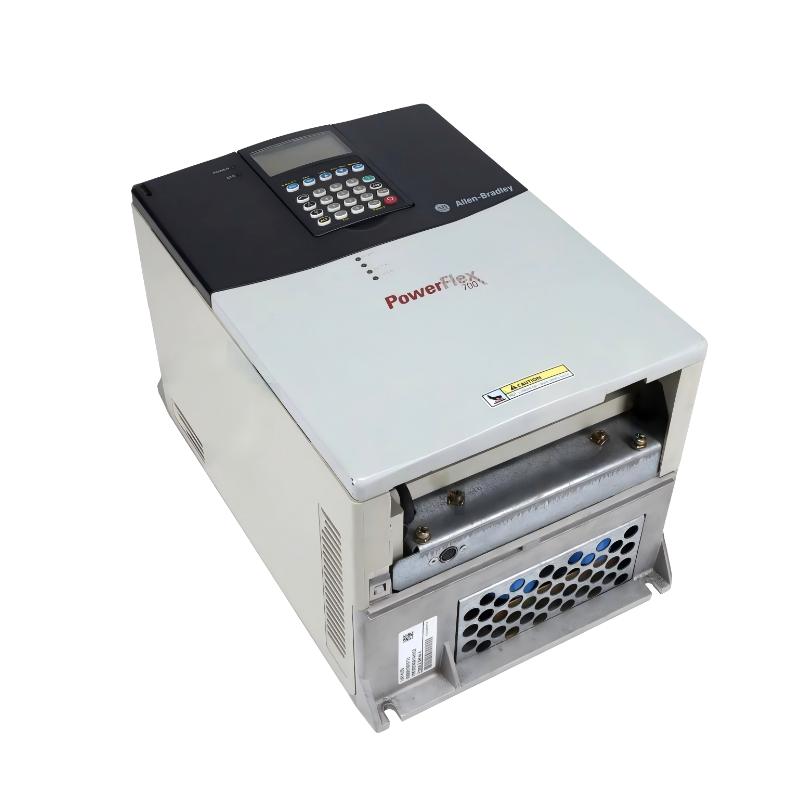
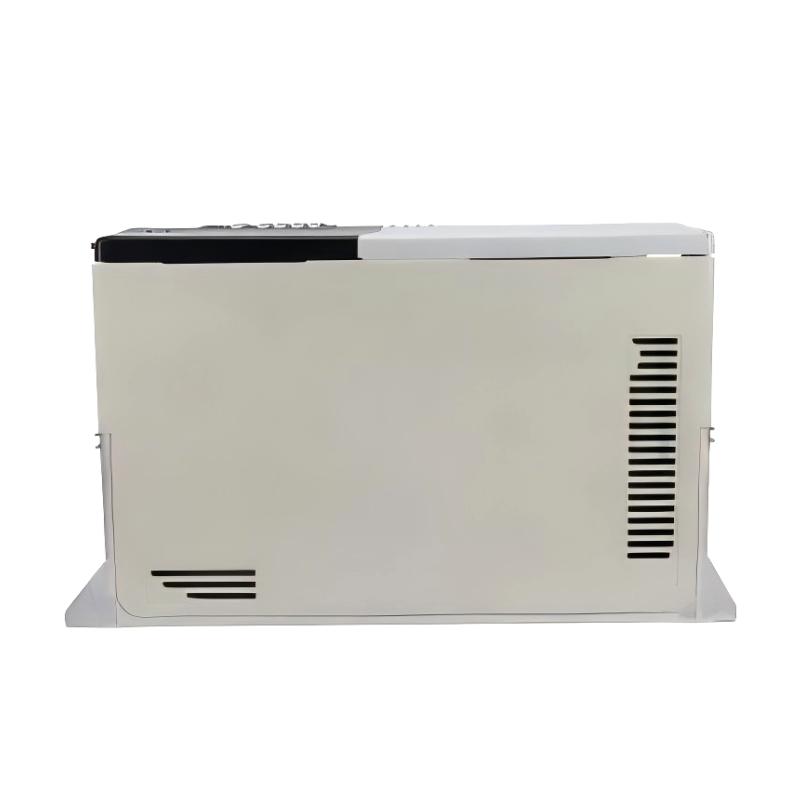
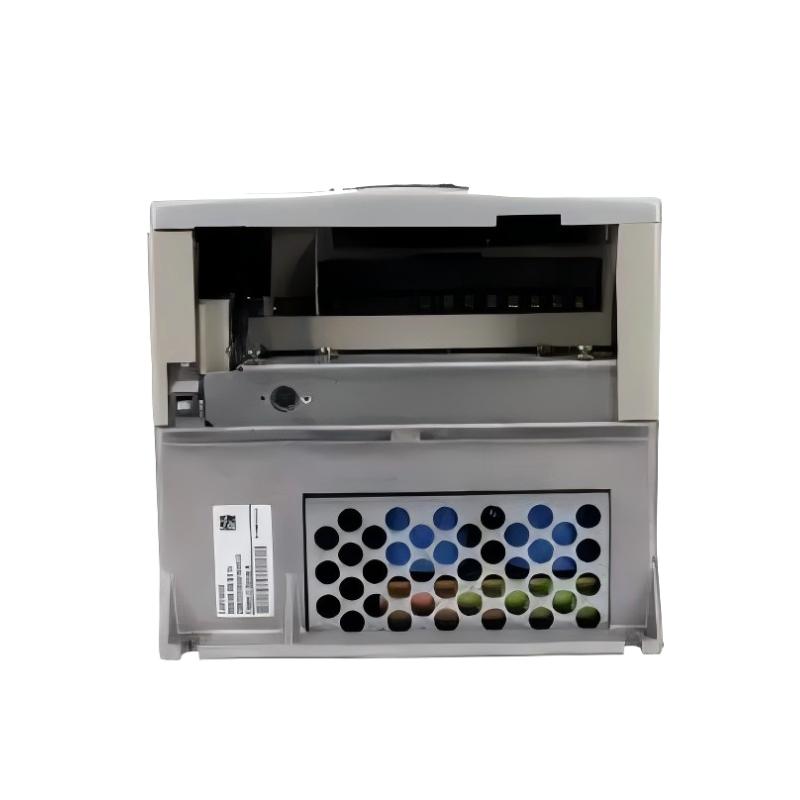
- Allen Bradley
- 20CC300A3ANNNNA0
- PowerFlex AC Drive
- USA
- 757.7 × 889.0 × 381.7 mm
- 384 kg
- Xiamen, China
- New & In Stock
- T/T, PayPal, Western Union
- 1 Year
- 1-3 Working Days
- DHL, UPS, TNT, FedEx and EMS.
- 24-Hour Service
- COO
- 58
Our advantage

Global Logistics
We have a 10-year logistics and express cooperation agreement, so our products can be shipped to any place in the world.

Brand new and original
Our products are imported in bulk from the place of origin. Because of the cooperative relationship, our products are all original and 100% new.

24-hour service
We provide 7*24 hours service to our customers. We will be there whenever you need us.

Price advantage
All our products are priced very favorably because we have our own warehouse and supply.
| Company Information | |||
| [email protected] | |||
| Mobile | +8615980777398 | ||
| +8615980777398 | |||
| 15980777398 |
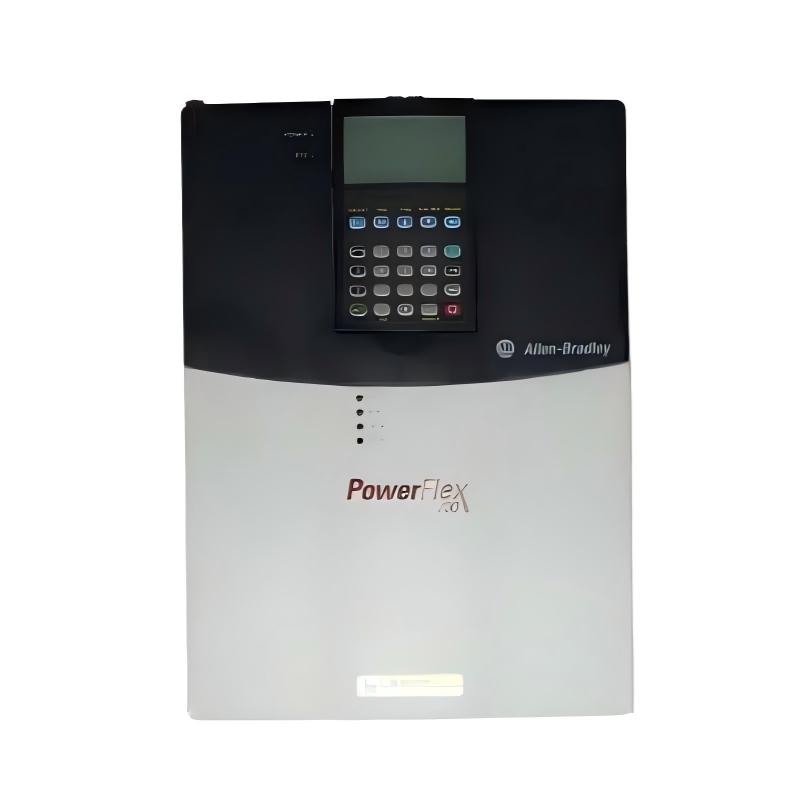
20CC300A3ANNNNA0 — Detailed Product Introduction and Technical Guide
1. Product Overview
The 20CC300A3ANNNNA0 is a high-power AC variable frequency drive from the PowerFlex 700H, 20C series.
It is designed for large industrial motor applications where stable speed regulation, adjustable motor speed, controlled acceleration and high-power operation are required.
The model belongs to the 300 A class and is associated with a three-phase 400 V AC input system, with an application rating around 160 kW. For this particular voltage class, the commonly listed continuous output current is around 276 A, so the catalog’s 300 A designation should not be confused with the actual continuous-current figure used for motor selection.
The PowerFlex 700H platform is intended for demanding industrial installations. It is particularly well suited to applications where a conventional small variable-frequency drive would not provide enough current capacity, overload capability or control flexibility.
The 20CC300A3ANNNNA0 is therefore more appropriate for large pumps, fans, compressors, conveyors, process machinery, material-handling equipment and other heavy industrial motor systems.
The model is part of a product family that supports several control approaches, including V/Hz, sensorless vector, PID and other configurable motor-control functions. The overall platform was designed with industrial integration in mind rather than simple standalone machine control.
2. Product Identification
| Parameter | Specification |
|---|---|
| Model | 20CC300A3ANNNNA0 |
| Brand | Allen-Bradley |
| Product family | PowerFlex 700H |
| Series | 20C |
| Product type | High-power AC variable frequency drive |
| Drive class | Industrial high-power AC drive |
| Input phase | Three-phase |
| Input voltage class | 400 V AC |
| Input voltage range | Approximately 380–480 V AC class |
| Catalog current class | 300 A |
| Continuous output current | Approximately 276 A |
| Motor power class | Approximately 160 kW |
| Motor power | Approximately 160 kW / 215 HP class |
| Control methods | V/Hz, sensorless vector and configurable control |
| PID control | Supported |
| Typical enclosure concept | Industrial cabinet / packaged drive system |
| Cooling | Forced-air industrial cooling |
| Application | Large industrial motors |
| Installation | Industrial electrical cabinet |
| Product family class | High-power drive |
3. Product Series and Brand
| Category | Information |
|---|---|
| Brand | Allen-Bradley |
| Product family | PowerFlex |
| Product series | PowerFlex 700H |
| Catalog series | 20C |
| Model | 20CC300A3ANNNNA0 |
| Product category | AC drive / VFD |
| Power range | High-power industrial |
| Primary purpose | Variable-speed AC motor control |
The PowerFlex 700H series is intended for higher-power industrial motor applications.
Compared with compact drive families, the 700H platform places greater emphasis on high-power motor control, industrial system integration, flexible control methods and cabinet-based installation.
The 20C catalog group covers a broad range of current ratings and power levels, allowing users to select different drive capacities while retaining a similar overall control architecture.
4. Model Number Explanation
The catalog number 20CC300A3ANNNNA0 contains several configuration elements.
The 20C designation identifies the 20C series within the PowerFlex 700H family.
The 300 section identifies the approximately 300 A catalog-current class.
The A3 configuration corresponds to the three-phase, 400 V-class arrangement used by this group of drives.
The remaining catalog characters define configuration and option selections.
This is important when comparing similar drives because two units can have the same current rating but different input arrangements, filtering, enclosure configuration, braking options, control options or other factory configurations.
For this reason, the complete catalog number should be used when purchasing or replacing the drive.
5. Main Technical Parameters
| Technical Parameter | Specification |
|---|---|
| Model | 20CC300A3ANNNNA0 |
| Brand | Allen-Bradley |
| Series | PowerFlex 700H |
| Catalog series | 20C |
| Input | Three-phase AC |
| Nominal voltage | 400 V AC class |
| Input voltage range | Approximately 380–480 V AC |
| Catalog current class | 300 A |
| Continuous output current | Approximately 276 A |
| Normal-duty power | Approximately 160 kW |
| Approximate horsepower | 215 HP |
| Control | V/Hz / Sensorless Vector / configurable control |
| PID | Available |
| Motor type | Three-phase AC motor |
| Installation | Industrial cabinet |
| Cooling | Forced air |
| Application class | High-power industrial |
| Typical load | Pump, fan, conveyor, compressor, process machine |
| Product construction | High-power industrial drive |
6. Electrical Characteristics
The most important electrical characteristic of the 20CC300A3ANNNNA0 is its high current capacity.
The model is positioned around the 300 A catalog class, while commonly listed electrical data for the 400 V-class configuration gives a continuous current of approximately 276 A.
This distinction is useful when selecting a drive for a motor.
The motor should not be selected based only on the number appearing in the catalog number. Motor full-load current, duty cycle, overload requirement and operating environment should also be considered.
For a motor around the 160 kW class, the drive provides a suitable high-power platform for applications where variable-speed operation is required.
The three-phase AC configuration is intended for industrial power systems rather than small single-phase equipment.
7. Power Rating
The 20CC300A3ANNNNA0 is associated with approximately 160 kW, equivalent to roughly 215 HP.
This places it in a high-power industrial category.
At this power level, motor-control equipment needs to be selected with greater attention to installation conditions than smaller VFDs.
The motor’s rated current, starting requirements, operating speed range, cooling method and load characteristics should all be evaluated.
For example, a 160 kW motor driving a centrifugal pump has very different operating requirements from a 160 kW motor driving a high-inertia conveyor or crusher.
The same drive can potentially be used for different applications, but the drive parameters and system design must be adjusted to suit the actual load.
8. Control Methods
One of the major strengths of the PowerFlex 700H family is its configurable motor-control capability.
The platform can support several control strategies depending on the application.
V/Hz Control
V/Hz control is straightforward and is often suitable for pumps, fans and other applications where extremely precise torque regulation is not required.
It provides a relatively simple approach to controlling motor speed.
Sensorless Vector Control
Sensorless vector control provides more advanced control of motor torque and speed without requiring a physical encoder in many applications.
It is useful for loads where better low-speed performance and torque response are required.
PID Control
PID functions can be useful in process applications.
For example, a pump can be controlled according to pressure, flow or another process variable.
Instead of manually changing the motor speed, the control system can adjust the drive output according to the process feedback signal.
9. Product Introduction
The 20CC300A3ANNNNA0 can be regarded as a high-power industrial motor controller rather than simply a speed-changing device.
Its main function is to convert fixed-frequency AC electrical power into controlled output power suitable for variable-speed operation of a three-phase AC motor.
This allows industrial machinery to operate at different speeds according to production requirements.
For example, a pump may operate at reduced speed when the process requires less flow.
A fan may operate at reduced speed when less airflow is required.
A conveyor may accelerate gradually rather than starting abruptly.
A compressor may adjust its operating speed according to process requirements.
A large process machine may use different operating speeds for different production stages.
These capabilities make a high-power VFD useful in many industrial environments.
10. Main Product Advantages
10.1 High-Power Motor Capability
The approximately 276 A continuous-current class and 160 kW power class make this drive suitable for large industrial motors.
It is much more appropriate for heavy industrial machinery than compact VFDs intended for small motors.
10.2 Flexible Motor Control
The PowerFlex 700H platform provides multiple control strategies.
This gives engineers greater flexibility when adapting the drive to different motor loads.
A simple pump may use V/Hz control, while a more demanding machine may use sensorless vector control.
10.3 Good Low-Speed Torque Capability
High-power industrial machinery sometimes needs useful torque at reduced motor speed.
The control architecture of this family is designed for applications requiring strong low-speed motor-control performance.
This is useful for conveyors, process machines and other equipment where the load remains significant even when the motor is running slowly.
10.4 Controlled Acceleration
Large motors can create significant mechanical shock during startup.
The drive can use an acceleration ramp to gradually increase motor speed.
This can reduce stress on mechanical components such as:
- Gearboxes.
- Couplings.
- Conveyor belts.
- Shafts.
- Bearings.
- Pumps.
- Fans.
- Compressors.
10.5 Controlled Deceleration
The drive can also control the motor during stopping.
This can provide a smoother transition from operating speed to zero speed.
However, the actual braking method must be selected according to the load inertia and regeneration characteristics of the application.
10.6 Process Control Capability
PID functionality makes the drive useful in process-oriented applications.
A pump, fan or blower can be controlled based on an external process variable.
This can reduce the need for separate speed-control equipment.
10.7 Industrial Communications
The PowerFlex 700H platform was designed to operate as part of a larger industrial control system.
Depending on the installed configuration and communication options, the drive can be integrated into industrial automation networks.
This allows drive status, speed references, alarms and other operating information to be exchanged with the supervisory control system.
10.8 Large-System Integration
The 700H architecture is appropriate for large industrial control panels and motor-control systems.
It can be integrated with protection equipment, control systems, contactors, disconnects, cooling equipment and other electrical components.
This is particularly useful for large production lines where several high-power motors are controlled from a centralized electrical area.
11. Main Applications
11.1 Large Pump Systems
Large pumps are one of the most natural applications for this drive.
A pump does not always need to operate at full speed.
By adjusting motor speed, the system can respond to changing flow or pressure requirements.
For centrifugal pumps, variable-speed operation can also provide energy-saving potential because pump power can decrease significantly as speed is reduced.
Typical applications include:
- Water treatment.
- Industrial water circulation.
- Cooling-water systems.
- Process-water systems.
- Industrial pumping stations.
- Chemical-process equipment.
- Manufacturing utilities.
12. Large Fan Applications
Industrial fans and blowers can consume substantial electrical power.
A variable frequency drive allows airflow to be controlled by changing motor speed.
This can be more flexible than operating the motor continuously at full speed and regulating airflow only through mechanical dampers.
Typical applications include:
- Industrial ventilation.
- Exhaust systems.
- Process-air systems.
- Combustion-air systems.
- Large cooling systems.
- Dust-removal equipment.
13. Conveyor Applications
Large conveyors require controlled acceleration because the motor must accelerate not only the conveyor itself but also the transported material.
Abrupt starting can produce high mechanical stress.
The drive can provide a controlled acceleration ramp, helping reduce sudden torque transmission through the gearbox and belt system.
Variable-speed operation can also allow conveyor speed to be matched to production requirements.
For this reason, high-power drives are widely used in:
- Mining.
- Ports.
- Bulk material handling.
- Cement plants.
- Steel production.
- Manufacturing.
- Warehousing.
14. Compressor Applications
Large compressors can require substantial motor power.
A variable-speed drive can be useful where the compressor design supports variable-speed operation.
The drive can provide controlled acceleration and allow operating speed to be adjusted according to process demand.
Compressor applications should be evaluated carefully because the compressor may have specific minimum-speed, maximum-speed, lubrication and cooling requirements.
15. Industrial Process Machinery
The drive can be applied to many types of large process equipment.
Examples include:
- Mixers.
- Agitators.
- Material-processing equipment.
- Large production machines.
- Extrusion-related machinery.
- Industrial ventilation equipment.
- Rotating process equipment.
The exact suitability depends on the torque-speed curve of the driven equipment.
16. Mining and Heavy Industry
The 160 kW class is suitable for many medium-to-large industrial motors used in mining and heavy industry.
Applications can include conveyors, pumps, fans, material-handling equipment and certain processing machines.
In harsh industrial environments, cabinet design becomes particularly important.
Dust, humidity, ambient temperature and cooling requirements should all be considered when installing the drive.
17. Dimensions and Weight
The 20CC300A3ANNNNA0 is a high-power PowerFlex 700H configuration and should not be treated like a small compact wall-mounted VFD.
The final mechanical arrangement depends on the selected enclosure and packaged-drive configuration.
Because the 700H family can be supplied in different cabinet and enclosure arrangements, an exact overall dimension cannot responsibly be assigned to the bare catalog number without identifying the specific mechanical package.
For engineering purposes, the dimensional information should therefore be treated as configuration-dependent.
| Mechanical Parameter | Specification |
|---|---|
| Model | 20CC300A3ANNNNA0 |
| Product family | PowerFlex 700H |
| Series | 20C |
| Mechanical class | High-power |
| Installation | Cabinet / industrial enclosure |
| Width | Configuration-dependent; verify mechanical drawing |
| Height | Configuration-dependent; verify mechanical drawing |
| Depth | Configuration-dependent; verify mechanical drawing |
| Cooling | Forced-air |
| Cabinet clearance | Required |
| Cable clearance | Required |
| Service clearance | Required |
| Ventilation clearance | Required |
| Weight (kg) | Configuration-dependent; exact packaged-drive weight should be confirmed from the applicable mechanical configuration |
| Shipping weight | Must be confirmed for the actual package |
| Cabinet weight | Not included in drive-only weight |
| Lifting requirements | Determine from actual assembled configuration |
It is important not to confuse the drive-only weight with the weight of a complete packaged cabinet.
A complete high-power installation may include disconnect equipment, fuses, contactors, busbars, bypass components, cooling equipment and control equipment, so the final cabinet weight can be substantially greater.
18. Detailed Parameter Table
| Parameter | 20CC300A3ANNNNA0 |
|---|---|
| Model | 20CC300A3ANNNNA0 |
| Brand | Allen-Bradley |
| Family | PowerFlex 700H |
| Series | 20C |
| Product type | AC variable frequency drive |
| Input phase | 3-phase |
| Input voltage | 400 V AC class |
| Input range | Approx. 380–480 V AC |
| Catalog current | 300 A class |
| Continuous current | Approx. 276 A |
| Power | Approx. 160 kW |
| Horsepower class | Approx. 215 HP |
| Control modes | V/Hz, sensorless vector, configurable control |
| PID | Supported |
| Motor type | Three-phase AC |
| Cooling | Forced air |
| Installation | Industrial cabinet |
| Enclosure | Depends on packaged configuration |
| Dimensions | Configuration-dependent |
| Weight (kg) | Configuration-dependent |
| Application | High-power industrial motor control |
19. Five Same-Series or Closely Related Models
The following models are useful for comparison within the same 20C PowerFlex 700H family.
| Model | Series | Current Class | Approx. Power Class | Voltage Class | Typical Application | Dimensions | Weight (kg) |
|---|---|---|---|---|---|---|---|
| 20CC261A3ANNNNA0 | PowerFlex 700H / 20C | 261 A | Approx. 132–140 kW | 400 V class | Large pumps, fans, conveyors | Configuration-dependent | Configuration-dependent |
| 20CC300A3ANNNNA0 | PowerFlex 700H / 20C | 300 A | Approx. 160 kW | 400 V class | Large industrial motors | Configuration-dependent | Configuration-dependent |
| 20CC385A3ANNNNA0 | PowerFlex 700H / 20C | 385 A | Approx. 200 kW class | 400 V class | Heavy industrial machinery | Configuration-dependent | Configuration-dependent |
| 20CC460A3ANNNNA0 | PowerFlex 700H / 20C | 460 A | Approx. 220–250 kW class | 400 V class | Large pumps, compressors, conveyors | Configuration-dependent | Configuration-dependent |
| 20CC590A3ANNNNA0 | PowerFlex 700H / 20C | 590 A | Approx. 300 kW class | 400 V class | Heavy-duty industrial systems | Configuration-dependent | Configuration-dependent |
The five models above are closely related because they use the same general 20C high-power platform while offering different current capacities.
The 20CC300A3ANNNNA0 sits in the middle of this group.
The 261 A version is useful when the motor current is lower.
The 385 A and 460 A versions provide additional current capacity for larger motors.
The 590 A configuration is appropriate for substantially larger motor loads.
20. Comparison of Same-Series Models
| Model | Current Class | Relative Capacity | Recommended Load Type | Selection Position |
|---|---|---|---|---|
| 20CC261A3ANNNNA0 | 261 A | Lower | Medium-large motor | Choose when 300 A class is unnecessary |
| 20CC300A3ANNNNA0 | 300 A | Reference | Around 160 kW motor | Main model |
| 20CC385A3ANNNNA0 | 385 A | Higher | Larger motor / heavier load | Choose when additional current is required |
| 20CC460A3ANNNNA0 | 460 A | Much higher | Large heavy-duty motor | Choose for higher-current applications |
| 20CC590A3ANNNNA0 | 590 A | Very high | Large industrial motor | Choose for substantially higher power |
21. Five Related Models from the Same Brand
For a broader comparison, the following are useful related high-power drive models from the same brand.
| Model | Product Family | Approx. Current | Approx. Power Class | Typical Application | Control | Dimensions | Weight (kg) |
|---|---|---|---|---|---|---|---|
| 20CC261A3ANNNNA0 | PowerFlex 700H | 261 A | Approx. 132 kW class | Pumps, fans, conveyors | V/Hz / Vector | Configuration-dependent | Configuration-dependent |
| 20CC385A3ANNNNA0 | PowerFlex 700H | 385 A | Approx. 200 kW class | Heavy industrial machinery | V/Hz / Vector | Configuration-dependent | Configuration-dependent |
| 20CC460A3ANNNNA0 | PowerFlex 700H | 460 A | Approx. 220–250 kW class | Large process equipment | V/Hz / Vector | Configuration-dependent | Configuration-dependent |
| 20CD300A0ANNNNA0 | PowerFlex 700H | 300 A class | Approx. 160 kW class | Large industrial motor control | Configurable | Configuration-dependent | Configuration-dependent |
| 20DC300A0ENNBNANE | PowerFlex 700S | 300 A class | High-power industrial | Advanced motor/process control | Advanced control | Configuration-dependent | Configuration-dependent |
These models should not be treated as automatic replacements.
A replacement decision must take into account voltage, motor current, duty cycle, control method, braking requirements, communications, feedback and cabinet arrangement.
22. Why the 20CC300A3ANNNNA0 Is Useful
The main reason to choose this model is its balance between power capacity and control flexibility.
It is considerably larger than compact industrial drives but does not reach the extreme current range of the largest 700H configurations.
This makes the approximately 160 kW class useful for many medium-to-large industrial motors.
The drive can handle applications where a motor must operate at different speeds rather than simply running continuously at line frequency.
It can also provide controlled acceleration and deceleration, which is valuable for large mechanical systems.
23. Energy-Saving Potential
Energy savings are one of the most important reasons to use a VFD in pumps and fans.
When a centrifugal pump or fan operates at reduced speed, the power requirement can fall significantly.
Instead of running a 160 kW motor continuously at full output and controlling the process mechanically, a suitable variable-speed system can reduce motor speed when the process demand is lower.
The actual energy savings depend on:
- Motor efficiency.
- Pump or fan design.
- System resistance.
- Operating schedule.
- Average process demand.
- Required flow.
- Required pressure.
- Motor loading.
- Drive efficiency.
Therefore, energy savings should be calculated from the actual operating profile rather than assumed simply because a VFD is installed.
24. Mechanical Benefits
The drive also provides mechanical benefits.
A large motor connected directly to the power line can accelerate very quickly, creating a sudden torque load.
With a variable frequency drive, acceleration can be programmed over a longer period.
This can reduce stress on mechanical components.
For a conveyor, it can reduce belt shock.
For a pump, it can reduce sudden hydraulic transients.
For a fan, it can provide smoother acceleration of the rotating assembly.
For a gearbox-driven machine, it can reduce sudden torque transmission through the drivetrain.
25. Process-Control Benefits
The ability to adjust motor speed can make the production process more flexible.
A machine can run slowly during setup and increase speed during normal production.
A pump can respond to pressure changes.
A fan can respond to airflow requirements.
A conveyor can synchronize its speed with another conveyor.
A process machine can use different speed settings for different production stages.
This makes the drive not only a motor-control device but also an important part of the overall process-control strategy.
26. Installation Considerations
A drive in the 160 kW class requires careful engineering.
| Installation Area | Requirement |
|---|---|
| Incoming power | Correct voltage and short-circuit protection |
| Motor current | Must remain within drive rating |
| Motor cable | Correct conductor size and insulation |
| Grounding | Proper protective and functional grounding |
| Cooling | Adequate forced-air ventilation |
| Cabinet | Suitable enclosure and thermal design |
| Ambient temperature | Must remain within permitted limits |
| Humidity | Appropriate environmental protection |
| Dust | Cabinet protection required in dusty environments |
| EMC | Cable routing and filtering should be considered |
| Motor insulation | Suitable for inverter operation |
| Braking | Evaluate regeneration and stopping requirements |
| Communication | Verify required network hardware |
| Service access | Adequate clearance required |
| Maintenance | Cooling fans and power components require service planning |
27. Selection of the Correct Motor
The drive should be matched to the motor by current, not only by horsepower.
For example, two motors may both be rated at approximately 160 kW but have different full-load currents because of differences in voltage, efficiency and power factor.
The motor nameplate should therefore be checked for:
- Rated voltage.
- Rated current.
- Rated frequency.
- Rated speed.
- Rated power.
- Power factor.
- Efficiency.
- Service factor.
- Insulation class.
- Connection configuration.
The drive should then be selected based on the actual motor and application requirements.
28. Application Matching
| Application | Suitability | Reason |
|---|---|---|
| Large centrifugal pump | Excellent | Variable-speed control |
| Large fan | Excellent | Airflow regulation |
| Large blower | Excellent | Adjustable speed |
| Conveyor | Excellent | Controlled acceleration |
| Material handling | Excellent | High-power motor control |
| Compressor | Suitable | Requires load-specific evaluation |
| Mixer | Suitable | Variable-speed process control |
| Crusher | Suitable with detailed review | High starting torque |
| Hoist | Requires detailed engineering | Braking and load control are critical |
| Small pump | Oversized | Smaller drive is more economical |
| Small fan | Oversized | Excessive capacity |
| Servo positioning | Not the primary choice | Servo drive is normally more suitable |
29. Product Advantages Compared with a Fixed-Speed Starter
| Feature | Fixed-Speed Starter | 20CC300A3ANNNNA0 |
|---|---|---|
| Variable speed | Limited | Yes |
| Controlled acceleration | Limited | Yes |
| Controlled deceleration | Limited | Yes |
| Process PID | Usually external | Available |
| Motor speed adjustment | Limited | Yes |
| Low-speed operation | Limited | Supported |
| Energy optimization | Limited | Possible |
| Large motor control | Yes | Yes |
| Mechanical shock reduction | Limited | Better |
| Process flexibility | Limited | High |
30. Important Limitations
The 20CC300A3ANNNNA0 is not automatically the correct solution for every 160 kW motor.
The load profile must be evaluated.
A constant-torque conveyor has different requirements from a variable-torque fan.
A compressor may require a specific speed range.
A hoist may require specialized braking and load-control functions.
A crusher may require very high starting torque.
The drive’s actual configuration should therefore be matched to the machine rather than selected solely from the nominal motor power.
The physical dimensions and weight are also configuration-dependent because the PowerFlex 700H family can be incorporated into different industrial cabinet arrangements.
31. Recommended Selection Strategy
For a new installation, the following selection sequence is practical:
| Step | Selection Item |
|---|---|
| 1 | Determine motor voltage |
| 2 | Determine motor full-load current |
| 3 | Determine motor power |
| 4 | Identify load type |
| 5 | Determine normal-duty requirement |
| 6 | Determine overload requirement |
| 7 | Check acceleration requirement |
| 8 | Check deceleration requirement |
| 9 | Evaluate braking |
| 10 | Determine feedback requirement |
| 11 | Determine communication requirement |
| 12 | Select enclosure |
| 13 | Check cabinet dimensions |
| 14 | Check cooling |
| 15 | Confirm final catalog number |
32. Final Summary
The 20CC300A3ANNNNA0 is a high-power PowerFlex 700H, 20C-series AC variable frequency drive designed for industrial three-phase motor control.
Its principal characteristics include a 300 A catalog-current class, approximately 276 A continuous output current, a 400 V-class three-phase supply, and an approximately 160 kW / 215 HP motor-power class.
The drive is particularly suitable for large pumps, fans, blowers, conveyors, compressors, material-handling equipment and industrial process machinery.
One of its main strengths is flexibility.
The platform supports multiple control approaches, including V/Hz and sensorless vector control, while process-oriented functions such as PID control make it suitable for applications where motor speed must respond to changing process conditions.
The high-power architecture also makes it suitable for centralized industrial electrical installations.
Controlled acceleration can reduce mechanical shock during motor starting.
Controlled deceleration can provide smoother stopping.
Variable-speed operation can improve process flexibility and, in suitable pump and fan applications, provide meaningful energy-saving opportunities.
The 20CC300A3ANNNNA0 is therefore a strong choice when the application requires a large industrial AC motor to operate under adjustable-speed control rather than fixed-speed operation.
For same-series alternatives, the 20CC261A3ANNNNA0 is a lower-current option, while the 20CC385A3ANNNNA0, 20CC460A3ANNNNA0 and 20CC590A3ANNNNA0 provide progressively greater current capacity.
For broader alternatives, related 700H and 700S configurations can be considered when the application requires different control capabilities or power levels.
The most important point when selecting a replacement is that the drive should be matched to the motor’s actual full-load current, voltage, duty cycle, load characteristics, braking requirements, feedback requirements and installation environment.
For the mechanical portion, the exact width, height, depth and weight (kg) should be taken from the specific packaged-drive or cabinet configuration. The 20C PowerFlex 700H family is a high-power industrial platform, and the final physical arrangement can differ depending on enclosure and system options.
Overall, the 20CC300A3ANNNNA0 can be considered a high-power, flexible industrial VFD for approximately 160 kW three-phase AC motor applications, particularly where adjustable speed, controlled starting, process regulation and reliable industrial motor control are important.