

ProductPRODUCT
Featured products
Contact Us
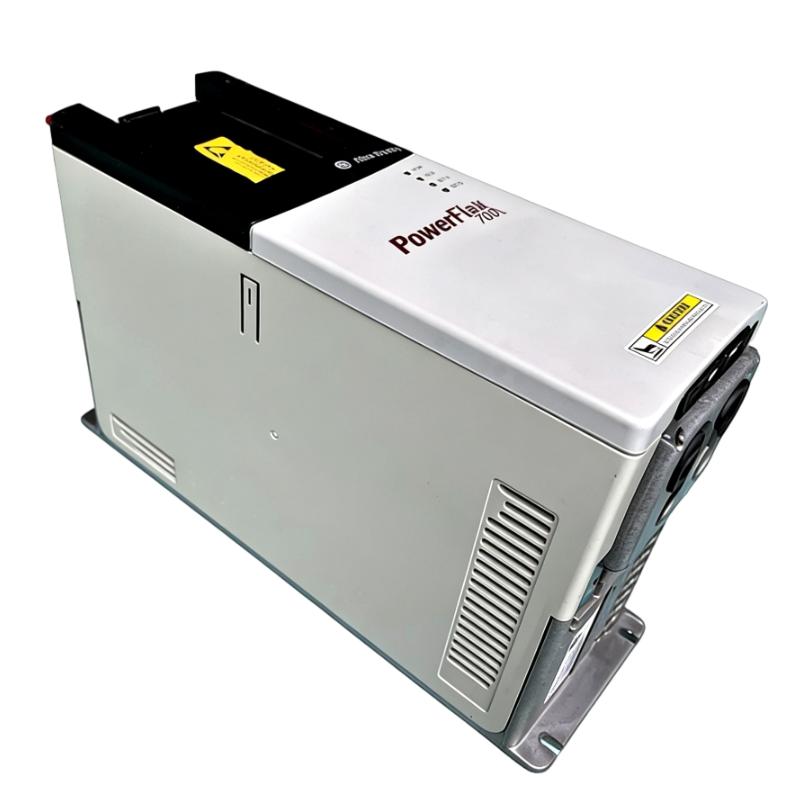
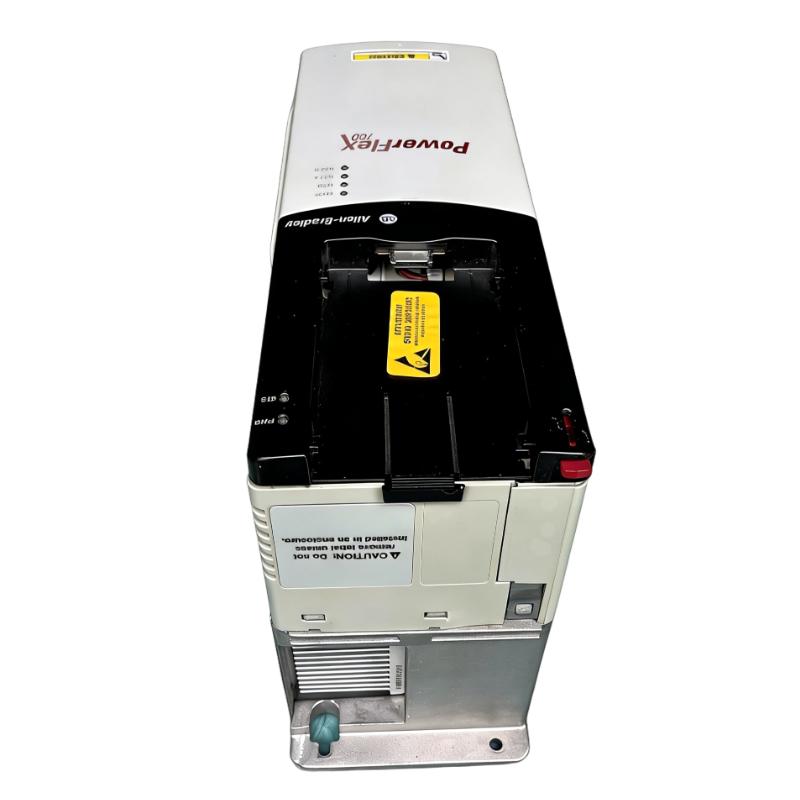
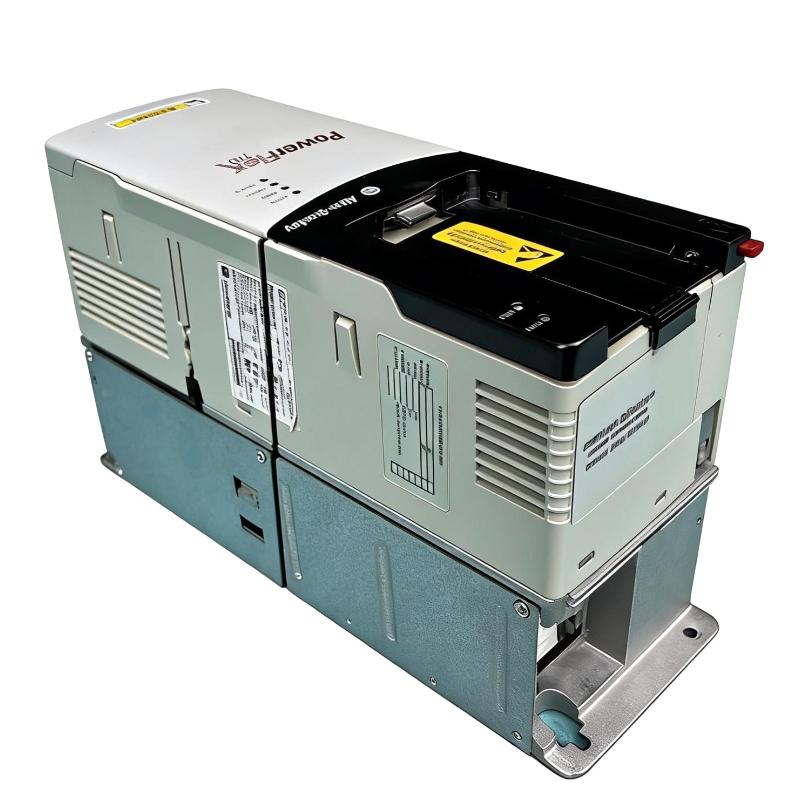
- Allen Bradley
- 20BP600U0NNNNNC0
- PowerFlex AC Drive
- USA
- 757.7 × 889.0 × 381.7 mm
- 384 kg
- Xiamen, China
- New & In Stock
- T/T, PayPal, Western Union
- 1 Year
- 1-3 Working Days
- DHL, UPS, TNT, FedEx and EMS.
- 24-Hour Service
- COO
- 57
Our advantage

Global Logistics
We have a 10-year logistics and express cooperation agreement, so our products can be shipped to any place in the world.

Brand new and original
Our products are imported in bulk from the place of origin. Because of the cooperative relationship, our products are all original and 100% new.

24-hour service
We provide 7*24 hours service to our customers. We will be there whenever you need us.

Price advantage
All our products are priced very favorably because we have our own warehouse and supply.
| Company Information | |||
| [email protected] | |||
| Mobile | +8615980777398 | ||
| +8615980777398 | |||
| 15980777398 |
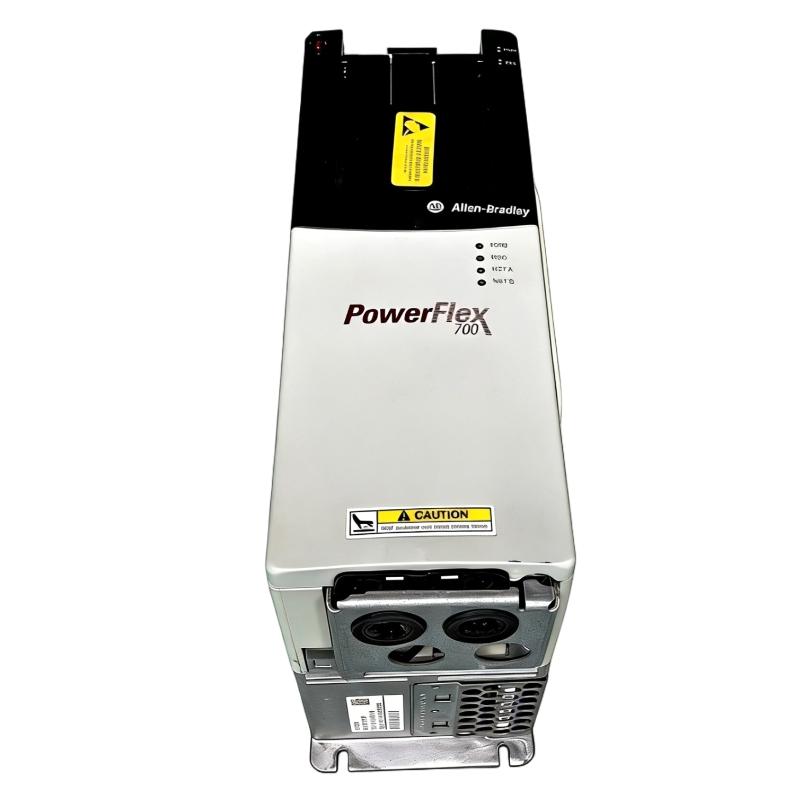
20BP600U0NNNNNC0 — Detailed Product Overview, Technical Parameters, Applications and Model Selection Guide
1. Product Overview
The 20BP600U0NNNNNC0 is a high-power industrial AC drive belonging to the PowerFlex 700 Series and the 20B product family.
It is designed for large motor applications where high output current, stable speed regulation, controlled acceleration and deceleration, and reliable operation under demanding industrial conditions are required.
The defining electrical characteristic of this model is its 600 A output-current class. This places the drive in the high-power segment of the PowerFlex 700 range and makes it suitable for large industrial motors, heavy conveyors, pumps, fans, blowers, mixers, material-handling equipment and other substantial motor-driven machinery.
The model is particularly suitable for applications in which the motor cannot simply be treated as an ON/OFF device. Instead, the motor needs to start smoothly, accelerate according to a defined ramp, operate at an adjustable speed and stop in a controlled manner.
The 20BP600U0NNNNNC0 is therefore best understood as a large industrial variable-speed motor-control unit intended to form part of a larger electrical and automation system.
2. Brand and Product Series
| Item | Specification |
|---|---|
| Model | 20BP600U0NNNNNC0 |
| Brand | Allen-Bradley |
| Product Series | PowerFlex 700 |
| Product Family | 20B |
| Product Category | Industrial AC Drive |
| Drive Type | High-Power Variable Frequency Drive |
| Current Class | 600 A |
| Voltage Code | P |
| Main Function | AC motor speed and torque control |
| Typical Application Level | Large industrial equipment |
| Installation | Industrial cabinet / electrical system |
The PowerFlex 700 Series is intended for industrial applications where motor speed and torque need to be controlled more precisely than with conventional motor starters.
The 20BP600U0NNNNNC0 sits toward the high-current end of this family.
Its 600 A capacity makes it substantially larger than the small and medium drives normally used for compact machinery.
3. Basic Product Parameters
| Parameter | Specification |
|---|---|
| Model | 20BP600U0NNNNNC0 |
| Brand | Allen-Bradley |
| Series | PowerFlex 700 |
| Family | 20B |
| Voltage Code | P |
| Rated Output Current | 600 A |
| Drive Type | High-Power AC Variable Frequency Drive |
| Motor Application | Large industrial AC motors |
| Control | Variable-speed motor control |
| Speed Regulation | Supported |
| Acceleration Control | Supported |
| Deceleration Control | Supported |
| Torque Control | Application/configuration dependent |
| Installation | Industrial electrical cabinet/system |
| Enclosure | Configuration-dependent |
| Cooling | High-power industrial cooling arrangement |
| Communication | Configuration-dependent |
| Feedback | Configuration-dependent |
| Operator Interface | Configuration-dependent |
| Braking | Configuration-dependent |
| Dimensions | Configuration/frame dependent |
| Weight (kg) | Exact physical weight depends on the specific configuration and should be verified before installation |
The 600 A rating is the primary electrical parameter for selecting this model.
However, current rating alone should never be used as the only replacement criterion.
The motor’s rated voltage, full-load current, overload requirements, duty cycle, acceleration requirements, load inertia, braking requirements and control-system architecture should all be checked before selecting or replacing the drive.
4. Product Series
The 20BP600U0NNNNNC0 belongs to the PowerFlex 700 Series.
The PowerFlex 700 family covers a broad range of industrial AC drive applications.
The family is intended for applications where motor speed, torque and acceleration need to be controlled as part of the machine’s overall operation.
Within this family, different catalog configurations are available for different voltage classes, current ratings, enclosure arrangements and functional options.
The 20BP600U0NNNNNC0 represents a high-current configuration intended for large motor systems.
5. Understanding the Model Number
The catalog number 20BP600U0NNNNNC0 contains several configuration sections.
The 20B portion identifies the product family.
The P portion identifies the voltage-related configuration.
The 600 section identifies the 600 A current class.
The remaining characters identify the configuration and selected options.
This is important when comparing related models.
Two drives can have the same current rating but different configuration characters.
They may therefore have different operator-interface arrangements, feedback capabilities, communications, braking options, enclosure characteristics or other functions.
For replacement applications, the complete catalog number should always be compared rather than selecting a model solely because its current rating is similar.
6. Product Introduction
The 20BP600U0NNNNNC0 is designed to control large AC motors in industrial environments.
A conventional starter generally provides basic motor starting and stopping.
A variable frequency drive provides considerably more control.
The drive can regulate the electrical power supplied to the motor and establish an appropriate operating speed.
This is particularly useful for large machinery.
A large conveyor, pump, fan, mixer or processing machine may not need to operate at maximum speed all the time.
The drive allows the machine to operate at different speeds according to the production requirement.
Controlled acceleration is another major benefit.
Instead of applying full motor torque immediately, the drive can accelerate the motor progressively.
This can reduce sudden mechanical loading on the motor shaft, gearbox, coupling, belt, chain or other connected equipment.
Controlled deceleration provides a similar benefit during stopping.
7. Key Electrical Parameters
| Electrical Parameter | 20BP600U0NNNNNC0 |
|---|---|
| Catalog Number | 20BP600U0NNNNNC0 |
| Product Series | PowerFlex 700 |
| Product Family | 20B |
| Current Rating | 600 A |
| Voltage Code | P |
| Drive Class | High-Power Industrial AC Drive |
| Motor Type | Large industrial AC motor |
| Speed Control | Variable speed |
| Acceleration | Controlled |
| Deceleration | Controlled |
| Torque Management | Configuration/application dependent |
| Duty Capability | Application dependent |
| Input Configuration | Configuration dependent |
| Output | Three-phase motor drive application |
| Feedback | Configuration dependent |
| Communication | Configuration dependent |
| Braking | Configuration dependent |
| Installation | Industrial cabinet/system |
The 600 A output class makes this model appropriate for large motor applications.
When calculating motor suitability, the motor nameplate current should be checked carefully.
The drive should also be evaluated against the motor’s required overload performance and operating duty.
8. Power Application Range
The exact motor power that can be connected depends on the voltage and duty configuration.
For a 480 VAC-class configuration in the same 600 A PowerFlex 700 family, the drive is associated with approximately 500 HP Normal Duty and 450 HP Heavy Duty ratings.
The current rating remains the more useful parameter for final engineering selection because motor power can vary depending on voltage, efficiency, power factor and motor characteristics.
| Rating Item | Approximate Value / Description |
|---|---|
| Current | 600 A |
| Normal-Duty Power Class | Approximately 500 HP |
| Heavy-Duty Power Class | Approximately 450 HP |
| Typical Application | Large industrial motor |
| Application Level | High power |
| Final Motor Selection | Based on motor nameplate and duty |
The distinction between Normal Duty and Heavy Duty should not be ignored.
A motor running a relatively steady load may have different requirements from a machine that repeatedly accelerates heavy loads or operates under high torque.
The actual application duty should therefore be evaluated before final selection.
9. Product Applications
9.1 Large Conveyor Systems
Large conveyors are a strong application for a 600 A industrial drive.
A conveyor carrying heavy material can require substantial torque during startup.
If the motor starts too aggressively, the mechanical system can experience a sudden torque increase.
A variable-speed drive allows acceleration to be controlled.
This can help the conveyor move from standstill to normal operating speed more smoothly.
Speed adjustment is also useful when the material flow changes.
9.2 Mining and Bulk Material Handling
Heavy material-handling systems often use large motors.
Typical equipment includes:
- Large conveyors
- Transfer systems
- Feeders
- Crushers
- Processing machinery
- Bulk-material transport systems
- Heavy mechanical handling equipment
The 600 A class provides the electrical capacity required by large motors while allowing the motor speed to be controlled according to process conditions.
9.3 Large Pumps
Large pumps frequently have variable process requirements.
A pump may need maximum flow during one part of a production cycle and substantially lower flow during another.
A variable-speed drive can change the motor speed to match the process requirement.
This can provide better process control and, in suitable centrifugal-pump systems, can reduce unnecessary energy consumption.
9.4 Large Fans
Large industrial fans can also benefit from variable-speed operation.
Ventilation and process-air systems frequently experience changing demand.
Instead of operating the motor continuously at full speed, the drive can allow the fan speed to be adjusted according to airflow requirements.
9.5 Large Blowers
Blowers used in industrial processing, ventilation and air-handling systems can require large motors.
Variable-speed operation allows the blower to respond to process requirements.
This is particularly useful where airflow needs to change during different production stages.
9.6 Mixers and Agitators
Large mixers can have high inertia and significant starting torque requirements.
A controlled acceleration profile can make starting smoother.
Speed adjustment can also allow the mixing process to operate at different speeds during loading, mixing and discharge stages.
9.7 Process Machinery
Large process machines often need continuous operation under changing load conditions.
The drive can make motor speed part of the process-control strategy.
This allows the motor to respond to production requirements rather than operating continuously at one fixed speed.
9.8 Material Processing Equipment
Large material-processing machines may have substantial rotating masses.
Controlled acceleration and deceleration can help manage mechanical stress.
Adjustable speed can also improve coordination with other machines in the production line.
10. Product Advantages
10.1 600 A High-Current Capacity
The primary advantage of the 20BP600U0NNNNNC0 is its 600 A output-current capability.
This places it firmly in the large industrial drive category.
It is intended for motor systems where smaller drives would not provide sufficient current capacity.
10.2 Large Motor Compatibility
The 600 A class is suitable for large industrial motor systems.
This makes the product useful for equipment where the motor itself represents a major portion of the machine’s power system.
10.3 Controlled Acceleration
A large motor can create substantial mechanical forces when starting.
Controlled acceleration allows the motor to increase speed progressively.
This can reduce sudden loading on connected mechanical components.
10.4 Controlled Deceleration
Controlled stopping is equally important.
A large rotating machine can store considerable mechanical energy.
A controlled deceleration profile allows the machine to slow down in a more predictable manner.
10.5 Adjustable Operating Speed
The drive can allow the motor to operate at different speeds.
This is particularly valuable for:
- Conveyors
- Pumps
- Fans
- Blowers
- Mixers
- Process equipment
10.6 Better Process Coordination
Motor speed can become part of the overall production-control strategy.
The drive can be integrated into a system where motor operation responds to process conditions.
10.7 Reduced Mechanical Shock
Smooth starting and stopping can reduce sudden changes in torque.
This can be beneficial for:
- Gearboxes
- Couplings
- Shafts
- Belts
- Chains
- Conveyor systems
- Pumps
- Fans
10.8 Suitable for Heavy Industrial Equipment
The 600 A rating makes the product particularly appropriate for large machines.
It is not intended as a compact machine drive.
Its natural application environment is large-scale industrial equipment.
11. Installation Characteristics
The 20BP600U0NNNNNC0 is a high-power industrial drive and should be installed as part of an appropriately designed electrical system.
Important installation considerations include:
- Cabinet dimensions
- Ventilation
- Cooling
- Heat dissipation
- Electrical clearances
- Cable routing
- Grounding
- Environmental protection
- Maintenance access
- Service clearance
- Lifting and transportation
The drive’s physical installation should be designed together with the rest of the power-control equipment.
A high-current drive produces substantially more heat and requires more installation planning than a small machine-level drive.
12. Enclosure and Mechanical Construction
The exact mechanical construction should be checked against the complete catalog configuration.
High-current PowerFlex 700 configurations can use large industrial cabinet arrangements.
For a related 600 A configuration, the drive is associated with an IP00 roll-in enclosure arrangement, Frame Size 8, and conformal-coating construction.
The exact mechanical characteristics of the specific 20BP600U0NNNNNC0 should nevertheless be confirmed against the actual unit or applicable mechanical documentation before a replacement cabinet is designed.
13. Dimensions and Weight
Dimensions and weight are especially important for this model because it is a large high-power drive.
The following table provides the correct engineering treatment of these parameters.
| Mechanical Parameter | Specification |
|---|---|
| Model | 20BP600U0NNNNNC0 |
| Installation Type | Industrial cabinet/system |
| Enclosure | Configuration-dependent |
| Frame | High-power frame configuration |
| Height | Configuration-dependent |
| Width | Configuration-dependent |
| Depth | Configuration-dependent |
| Overall Dimensions | Exact H × W × D should be confirmed from the applicable mechanical drawing |
| Weight (kg) | Exact unit weight should be confirmed from the specific physical configuration |
| Shipping Weight (kg) | Confirm separately when transportation is required |
| Mounting Arrangement | Configuration-dependent |
| Cable Entry | Installation-dependent |
| Cooling Clearance | Required |
| Service Clearance | Required |
It is not advisable to invent a dimension or weight simply to produce a numerical value.
For a drive of this capacity, the physical package is substantial enough that an incorrect value could affect cabinet fabrication, transportation, lifting and installation.
For procurement and engineering documentation, the actual mechanical drawing or physical nameplate should be used to establish the final H × W × D and weight in kg.
14. Thermal Management
High-power drives generate heat during operation.
The cabinet therefore needs an appropriate thermal-management strategy.
Factors that should be considered include:
- Ambient temperature
- Cabinet temperature
- Airflow
- Cooling method
- Installation clearance
- Heat generated by adjacent equipment
- Dust accumulation
- Maintenance access
Poor thermal management can shorten component life and increase the possibility of drive faults.
For this reason, cooling should be considered during the original cabinet design rather than treated as an installation detail.
15. Control Characteristics
The PowerFlex 700 platform is designed for more than simple motor ON/OFF operation.
Depending on the exact configuration, the drive can provide sophisticated speed and torque management.
Typical control functions associated with this type of industrial drive include:
- Adjustable speed
- Acceleration ramps
- Deceleration ramps
- Motor protection
- Speed references
- Torque-related control
- Fault monitoring
- Status monitoring
- Industrial I/O integration
The exact available functions depend on the specific configuration and installed options.
16. Communication and Automation
The drive can be incorporated into an industrial automation system.
A typical system may contain:
| Component | Function |
|---|---|
| PLC | Main machine control |
| HMI | Operator interface |
| AC Drive | Motor speed and torque control |
| Motor | Mechanical power source |
| Sensors | Process measurement |
| Control Panel | Electrical operation and protection |
| Industrial Network | Data and control communication |
For the specific 20BP600U0NNNNNC0 configuration, communication and interface options should be checked from the complete catalog number.
If the existing machine communicates with the drive through a network, the replacement must provide compatible communication functionality.
17. Feedback Considerations
Feedback requirements should also be evaluated.
Some applications can operate effectively without encoder feedback.
Other applications may require tighter speed regulation or closed-loop operation.
Typical examples of applications that may require closer evaluation include:
- High-precision speed control
- Specialized torque applications
- Large inertia systems
- Synchronization-related applications
- Certain process-control systems
If feedback is required, the selected configuration must support the required feedback arrangement.
18. Braking Considerations
Braking requirements are another important selection factor.
A large motor and high-inertia machine can require more careful deceleration planning than a small motor.
The application should be evaluated for:
- Required stopping time
- Load inertia
- Regenerative energy
- Braking duty
- Frequency of stopping
- Mechanical holding requirements
The catalog configuration should be checked to determine whether the required braking arrangement is included or whether an external solution is required.
19. Main Technical Parameter Table
| Category | Parameter | 20BP600U0NNNNNC0 |
|---|---|---|
| Identification | Model | 20BP600U0NNNNNC0 |
| Identification | Brand | Allen-Bradley |
| Identification | Series | PowerFlex 700 |
| Identification | Family | 20B |
| Electrical | Current | 600 A |
| Electrical | Voltage Code | P |
| Electrical | Drive Type | High-Power AC Drive |
| Application | Motor Type | Large industrial AC motor |
| Application | Typical Duty | Heavy industrial |
| Control | Speed Control | Variable speed |
| Control | Acceleration | Controlled |
| Control | Deceleration | Controlled |
| Control | Torque Control | Configuration/application dependent |
| Mechanical | Enclosure | Configuration-dependent |
| Mechanical | Frame | High-power frame |
| Mechanical | Dimensions | Configuration-dependent |
| Mechanical | Weight (kg) | Configuration-dependent |
| Cooling | Thermal Management | High-power cabinet cooling required |
| Communication | Network | Configuration-dependent |
| Feedback | Encoder/Feedback | Configuration-dependent |
| Braking | Brake Function | Configuration-dependent |
| Installation | Mounting | Industrial cabinet/system |
20. Five Same-Series or Closely Related Models
The following models are suitable for comparison because they belong to the same high-power PowerFlex 700 family or are closely related to the 600 A configuration.
| No. | Related Model | Series | Current | Voltage Class | Application |
|---|---|---|---|---|---|
| 1 | 20BP535U0NNNNNC0 | PowerFlex 700 | 535 A | P | Large industrial motors |
| 2 | 20BP535N0NNNNNC0 | PowerFlex 700 | 535 A | P | Large industrial motors |
| 3 | 20BP535U0ANNNNC0 | PowerFlex 700 | 535 A | P | Heavy industrial equipment |
| 4 | 20BP600N0ANNNNC0 | PowerFlex 700 | 600 A | P | Large industrial motor systems |
| 5 | 20BP730N0NNNNNC0 | PowerFlex 700 | 730 A | P | Very-large motor systems |
The 535 A models are the closest lower-current comparison group.
The 600 A models are the closest current-class alternatives.
The 730 A model is suitable when the application requires a significant increase in current capacity.
21. Related Model Comparison
| Model | Current | Relative Capacity | Typical Application | Relationship |
|---|---|---|---|---|
| 20BP535U0NNNNNC0 | 535 A | Lower | Large industrial motor | Closely related |
| 20BP535N0NNNNNC0 | 535 A | Lower | Large industrial motor | Closely related |
| 20BP535U0ANNNNC0 | 535 A | Lower | Heavy industrial equipment | Closely related |
| 20BP600N0ANNNNC0 | 600 A | Same | Large industrial motor | Very close comparison |
| 20BP600U0NNNNNC0 | 600 A | Same | Large industrial motor | Reference model |
| 20BP730N0NNNNNC0 | 730 A | Higher | Very large industrial motor | Higher-capacity alternative |
These models should be compared by complete catalog number.
The current rating is only one part of the product configuration.
22. Five Same-Brand Popular Models
For a broader comparison, the following models represent commonly used smaller and medium-capacity products from the same brand family.
They are not direct replacements for the 600 A drive.
| No. | Model | Product Family | Approx. Current | Application Level | Typical Application |
|---|---|---|---|---|---|
| 1 | 25B-D2P3N114 | PowerFlex 525 | 2.3 A | Small | Small pumps, fans, conveyors |
| 2 | 25B-D6P0N114 | PowerFlex 525 | 6.0 A | Small | General machine control |
| 3 | 25B-D011N114 | PowerFlex 525 | 11 A | Small/Medium | Industrial machinery |
| 4 | 25B-D017N114 | PowerFlex 525 | 17 A | Medium | Conveyors, pumps, packaging |
| 5 | 25B-D024N114 | PowerFlex 525 | 24 A | Medium | General industrial equipment |
These products are useful for comparison because they show how much the drive size can vary according to motor capacity.
A 2.3 A, 6 A, 11 A, 17 A or 24 A drive belongs to a completely different application class from a 600 A high-power drive.
23. Same-Brand Product Comparison
| Model | Current Class | Size Level | Typical Machine | Suitable as 600 A Replacement? |
|---|---|---|---|---|
| 25B-D2P3N114 | 2.3 A | Small | Small machine | No |
| 25B-D6P0N114 | 6 A | Small | Pump/fan/conveyor | No |
| 25B-D011N114 | 11 A | Small/Medium | Industrial machinery | No |
| 25B-D017N114 | 17 A | Medium | Conveyor/pump | No |
| 25B-D024N114 | 24 A | Medium | Industrial machinery | No |
| 20BP600U0NNNNNC0 | 600 A | Very Large | Large industrial equipment | Reference |
The smaller products are more appropriate when the motor itself is much smaller.
They should not be used as substitutes for the 600 A model simply because they belong to the same general drive category.
24. Application Selection Table
| Application | Recommended Drive Class | Main Requirement |
|---|---|---|
| Small conveyor | Small drive | Low motor current |
| Small pump | Small drive | Variable speed |
| Small fan | Small drive | Speed regulation |
| Medium conveyor | Medium drive | Current and overload |
| Medium pump | Medium drive | Flow control |
| Large conveyor | High-power drive | Starting torque |
| Large pump | High-power drive | Large motor current |
| Large fan | High-power drive | Airflow control |
| Large blower | High-power drive | Variable speed |
| Large mixer | High-power drive | High starting torque |
| Heavy material handling | High-power drive | Large motor and inertia |
| Very large motor | Higher-current drive | Current capacity |
25. Large Conveyor Application Example
A large conveyor can experience a high mechanical load at startup.
The motor must overcome static friction, material weight and mechanical inertia.
A direct-start arrangement can produce a rapid torque increase.
A high-power variable-speed drive allows the motor to accelerate more progressively.
For the operator, the result can be a smoother machine startup.
For the mechanical system, the controlled acceleration can reduce sudden loading on the transmission.
During normal production, the conveyor speed can also be changed.
This makes the drive useful not only for motor starting but also for overall process control.
26. Large Pump Application Example
A large pump often does not need to operate at one fixed speed.
Demand can change according to the production process.
With variable-speed control, motor speed can be adjusted to the required operating condition.
For suitable centrifugal pump systems, reducing speed can also significantly reduce the mechanical power required.
The actual energy savings depend on the pump characteristics, piping system, operating point and process requirements.
27. Large Fan Application Example
Industrial fans are often required to provide different airflow levels.
A fixed-speed fan operating continuously at maximum speed may not always be necessary.
A variable-speed drive can allow the fan motor to operate at a speed corresponding to actual airflow demand.
This provides greater flexibility and can improve the overall control of the ventilation or process-air system.
28. Heavy Mixer Application Example
Large mixers can have substantial inertia.
When the motor starts, it must accelerate both the mixer and the material being processed.
A controlled acceleration profile can provide a smoother startup.
Different mixing stages may also require different operating speeds.
The drive therefore becomes part of the process rather than simply serving as a motor starter.
29. Advantages Compared with Fixed-Speed Operation
| Feature | Fixed-Speed Motor System | 20BP600U0NNNNNC0 |
|---|---|---|
| Start/Stop | Basic | Controlled |
| Motor Speed | Mostly fixed | Adjustable |
| Acceleration | Limited | Controlled |
| Deceleration | Limited | Controlled |
| Process-Speed Matching | Limited | Flexible |
| Large Motor Management | Basic | Advanced |
| Mechanical Shock Control | Limited | Improved through ramp control |
| Process Flexibility | Lower | Higher |
| Automation Integration | Basic | Suitable for industrial automation |
| High Current Capability | Dependent on starter | 600 A drive class |
30. Energy Efficiency Considerations
A variable-speed drive can provide significant energy benefits in suitable applications.
The most obvious examples are centrifugal pumps and fans.
When the process does not require maximum speed, the motor can operate at a lower speed.
This can reduce the power required by the mechanical system.
However, energy savings should not be assumed for every machine.
The actual result depends on:
- Load characteristics
- Motor efficiency
- Operating speed
- Pump or fan characteristics
- Process requirements
- Mechanical transmission
- Operating hours
The main benefit of the drive is flexibility and controllability, with energy savings being an additional potential benefit in suitable applications.
31. Mechanical Stress Reduction
Large motors can impose considerable mechanical stress on connected machinery during startup.
A controlled acceleration ramp can reduce sudden torque transmission.
This can be particularly useful for:
- Gearboxes
- Couplings
- Shafts
- Belts
- Chains
- Pulleys
- Conveyor belts
- Pump assemblies
- Fan assemblies
Controlled stopping can provide similar benefits during deceleration.
The actual improvement depends on the mechanical design and drive settings.
32. Maintenance Considerations
A high-power drive should be included in a structured maintenance program.
Typical maintenance activities can include:
| Maintenance Item | Purpose |
|---|---|
| Cooling inspection | Maintain proper thermal performance |
| Cabinet inspection | Detect contamination or overheating |
| Electrical connection inspection | Prevent loose or overheated connections |
| Fault-history review | Identify recurring problems |
| Motor inspection | Separate motor faults from drive faults |
| Cable inspection | Check insulation and connection condition |
| Ventilation inspection | Maintain airflow |
| Parameter review | Confirm correct operating settings |
| Mechanical inspection | Check motor/load condition |
| Environmental inspection | Detect dust, moisture or contamination |
Maintenance should consider the complete drive-motor-machine system rather than the drive alone.
33. Replacement Selection Checklist
| Item | What Must Be Checked |
|---|---|
| Original Model | 20BP600U0NNNNNC0 |
| Current Rating | 600 A |
| Voltage | Match the installed electrical system |
| Motor Current | Confirm motor nameplate current |
| Motor Power | Confirm application rating |
| Duty | Normal / Heavy Duty |
| Load Type | Conveyor, pump, fan, mixer, etc. |
| Acceleration | Confirm required ramp |
| Deceleration | Confirm stopping requirement |
| Braking | Confirm braking requirements |
| Feedback | Check encoder/feedback needs |
| Communication | Check PLC/network requirements |
| Operator Interface | Check local control requirements |
| Enclosure | Match installation environment |
| Dimensions | Confirm exact H × W × D |
| Weight (kg) | Confirm exact physical weight |
| Mounting | Confirm cabinet arrangement |
| Cooling | Confirm thermal requirements |
| Cable Entry | Confirm before replacement |
34. Important Note About Replacement Models
A related model should not be considered a direct replacement simply because it has a similar current rating.
For example, a 535 A model and a 600 A model are electrically close in capacity, but they may have different configurations.
Likewise, two 600 A catalog numbers can differ in feedback, communications, braking, enclosure or other options.
For an existing machine, the complete catalog number should therefore be compared character by character.
35. Recommended Same-Series Models
| Priority | Model | Current | Relationship | Recommended Use |
|---|---|---|---|---|
| 1 | 20BP600U0NNNNNC0 | 600 A | Original model | Large industrial motors |
| 2 | 20BP600N0ANNNNC0 | 600 A | Same current family | Large industrial motors |
| 3 | 20BP535U0NNNNNC0 | 535 A | Lower-current related model | Large motor applications |
| 4 | 20BP535N0NNNNNC0 | 535 A | Lower-current related model | Large industrial machinery |
| 5 | 20BP535U0ANNNNC0 | 535 A | Lower-current related configuration | Heavy industrial applications |
| 6 | 20BP730N0NNNNNC0 | 730 A | Higher-current model | Very large motor systems |
For applications that are already close to the 600 A requirement, the 600 A configurations should be examined first.
For a lower-current application, the 535 A group may be more appropriate.
For a substantially larger motor, the 730 A class may be considered.
36. Technical Selection by Current
| Motor/Application Requirement | Suggested Current Class |
|---|---|
| Small machine | 2–25 A range |
| Medium industrial machine | Tens of amps |
| Large industrial machine | Hundreds of amps |
| Large motor near 535 A | 535 A class |
| Large motor near 600 A | 600 A class |
| Very large motor | 730 A class or higher |
The actual drive should always be selected from the motor nameplate and application duty rather than using these values as automatic motor-sizing rules.
37. Final Technical Summary
| Category | Specification |
|---|---|
| Model | 20BP600U0NNNNNC0 |
| Brand | Allen-Bradley |
| Series | PowerFlex 700 |
| Family | 20B |
| Voltage Code | P |
| Rated Current | 600 A |
| Drive Type | High-Power Industrial AC Drive |
| Typical Motor | Large industrial AC motor |
| Normal-Duty Power Class | Approximately 500 HP for the related 480 VAC configuration |
| Heavy-Duty Power Class | Approximately 450 HP for the related 480 VAC configuration |
| Control | Variable-speed motor control |
| Typical Applications | Conveyors, pumps, fans, blowers, mixers, process machinery |
| Installation | Industrial cabinet/system |
| Enclosure | Configuration-dependent |
| Frame | High-power frame |
| Dimensions | Configuration-dependent |
| Weight (kg) | Configuration-dependent |
| Cooling | High-power thermal management |
| Communication | Configuration-dependent |
| Feedback | Configuration-dependent |
| Braking | Configuration-dependent |
| Main Advantage | 600 A high-current motor control |
| Application Level | Heavy industrial |
38. Overall Product Assessment
The 20BP600U0NNNNNC0 is a large-capacity industrial variable-speed drive intended for demanding motor applications.
Its 600 A current rating places it in the high-power class and makes it appropriate for large industrial equipment.
The product’s main advantages are its high current capacity, adjustable motor speed, controlled acceleration and deceleration, and suitability for integration into larger industrial automation systems.
Its most natural applications include:
- Large conveyors
- Mining and bulk material handling
- Large pumps
- Large fans
- Large blowers
- Mixers
- Process machinery
- Material-processing equipment
- Heavy rotating machinery
The drive is particularly valuable when the machine needs more than simple motor starting and stopping.
It allows the motor to respond to the process, which can improve operating flexibility and provide better control of large mechanical systems.
39. Final Recommendation
If the goal is to identify the closest related models, the most useful comparison group is:
| Rank | Model | Current | Position |
|---|---|---|---|
| 1 | 20BP600U0NNNNNC0 | 600 A | Original reference model |
| 2 | 20BP600N0ANNNNC0 | 600 A | Closely related 600 A configuration |
| 3 | 20BP535U0NNNNNC0 | 535 A | Closely related lower-current model |
| 4 | 20BP535N0NNNNNC0 | 535 A | Closely related lower-current model |
| 5 | 20BP535U0ANNNNC0 | 535 A | Related 535 A configuration |
| 6 | 20BP730N0NNNNNC0 | 730 A | Higher-capacity alternative |
For a replacement application, the 600 A models should normally be examined first.
If the motor current is below the 600 A range, the 535 A models may be more appropriate.
If the application requires substantially more current, the 730 A class becomes a logical direction for further evaluation.
40. Conclusion
The 20BP600U0NNNNNC0 is a PowerFlex 700 Series, 20B-family, 600 A high-power industrial AC drive designed for large motor applications.
Its high current capacity makes it suitable for substantial industrial machinery where motor speed, acceleration, deceleration and process operation need to be controlled.
The product is especially well suited to large conveyors, pumps, fans, blowers, mixers, material-handling systems and process machinery.
Its principal advantages are the combination of 600 A output capability, variable-speed control, controlled acceleration, controlled deceleration and suitability for large industrial motor systems.
For selection and replacement, the complete catalog number should always be considered together with the motor nameplate, voltage, duty, load characteristics, feedback requirements, communication requirements, braking requirements and physical installation.
The mechanical dimensions and weight (kg) should be confirmed from the exact physical configuration before purchase, cabinet fabrication, transportation or lifting.
For an existing installation, the closest models to examine are the other 600 A PowerFlex 700 configurations first, followed by the 535 A and 730 A high-power models when the actual motor current allows or requires a different capacity.
Overall, the 20BP600U0NNNNNC0 is best suited to large-scale industrial motor control, particularly where high current capacity and controlled variable-speed operation are important to the performance of the machine.