
NewsNEWCENTER
Featured products




Contact Us
ABB Introduces a New Approach to Modernizing Industrial Control Systems
2026-08-12Industrial companies around the world are facing a difficult automation challenge.
Many plants still depend on mature distributed control systems that have operated reliably for years. At the same time, manufacturers and process industries increasingly want access to:
- Artificial intelligence
- Advanced analytics
- Industrial IoT
- Edge computing
- Digital services
- Modern visualization
Completely replacing an existing DCS can be expensive and disruptive.
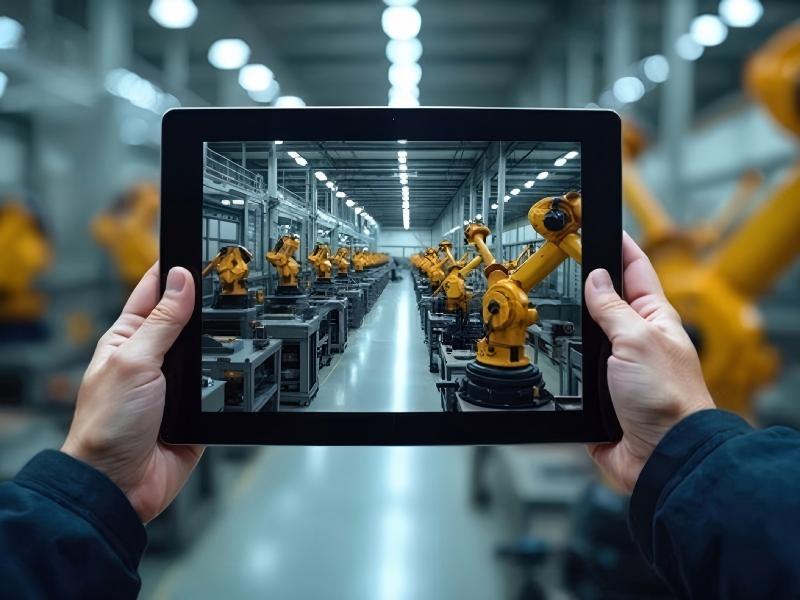
ABB has responded to this challenge with ABB Automation Extended, introduced in 2026 as an approach for modernizing existing distributed control environments while continuing plant operations.
The concept focuses on creating an evolutionary bridge between established automation infrastructure and next-generation digital technologies.
This development is significant because many industrial facilities cannot simply shut down production and replace their entire automation architecture.
Instead, they need modernization strategies that protect existing investments while adding new capabilities.
Why DCS Modernization Has Become a Major Industrial Issue
Distributed Control Systems have traditionally provided the core control infrastructure for process industries.
They manage:
- Process variables
- Equipment operation
- Alarms
- Control loops
- Operator interfaces
- Industrial communications
Many DCS systems have long operational lifecycles.
A facility may continue using an existing control architecture for many years because replacing it can involve:
- Extensive engineering
- Production downtime
- Hardware replacement
- Software migration
- Operator retraining
However, digital transformation is introducing new requirements.
Modern industrial companies want their control systems to work with:
- AI applications
- Advanced analytics
- Industrial data platforms
- Digital twins
- Edge computing
This creates pressure to modernize traditional DCS architectures.
ABB Automation Extended Focuses on Evolution Rather Than Complete Replacement
ABB’s Automation Extended approach is designed around incremental modernization.
Instead of replacing an entire automation system at once, industrial organizations can add new digital capabilities to existing infrastructure.
This approach can help plants:
- Reduce modernization risk
- Protect previous investments
- Minimize disruption
- Introduce new digital functions gradually
For large process facilities, this can be particularly valuable.
Industrial modernization is rarely just a hardware problem.
It also involves:
- Control logic
- Engineering databases
- Operator experience
- Maintenance procedures
- Production processes
A gradual approach can make digital transformation easier to manage.
Artificial Intelligence Becomes More Accessible to Existing Plants
One of the most important aspects of modern automation is the ability to use artificial intelligence with existing industrial data.
A process plant generates large quantities of information from:
- Sensors
- Controllers
- Motors
- Pumps
- Valves
- Process instruments
Historically, much of this information was primarily used for control and monitoring.
Today, the same information can also support:
- Predictive maintenance
- Process optimization
- Equipment diagnostics
- Energy analysis
AI can analyze historical and real-time information to identify patterns that may not be obvious to operators.
This creates opportunities for plants to improve operational efficiency without replacing all existing equipment.
Advanced Analytics Improve Industrial Decision-Making
Industrial analytics provides another important pathway toward digital transformation.
Advanced analytics can help engineers understand:
- Production trends
- Equipment behavior
- Energy consumption
- Process deviations
For example, an analytics system may identify gradual changes in equipment performance before the change becomes a serious failure.
This supports a shift from reactive maintenance toward predictive maintenance.
Instead of waiting for equipment to fail, maintenance teams can use operational data to determine when inspection or intervention may be required.
Brownfield Plants Represent a Major Automation Opportunity
A large percentage of global industrial infrastructure consists of brownfield facilities.
These plants may contain:
- Older PLCs
- Legacy DCS platforms
- Different communication technologies
- Equipment from multiple suppliers
Replacing everything is often impractical.
Brownfield modernization therefore requires flexible architectures capable of connecting new digital technologies with existing systems.
This is one of the most important challenges facing the industrial automation industry.
Companies need to balance:
- Reliability
- Cost
- Production continuity
- Digital transformation
ABB’s modernization strategy addresses this challenge by emphasizing the ability to extend existing automation environments.
Web-Based Operations Improve Industrial Accessibility
Modern industrial automation is also moving toward more accessible operator environments.
Web-based technologies can provide new ways for authorized users to interact with industrial systems.
Potential benefits include:
- Easier access to operational information
- More flexible monitoring
- Improved collaboration
- Simplified visualization
However, web-based industrial systems must be designed with strong cybersecurity controls.
Industrial operations cannot compromise safety or reliability for convenience.
Industrial AI Requires High-Quality Data
Adding AI to an industrial environment does not automatically produce better results.
AI systems require reliable data.
Industrial organizations must therefore pay attention to:
- Data quality
- Data consistency
- Data availability
- Equipment identification
- Process context
A poorly organized data environment can limit the value of AI.
For this reason, DCS modernization is closely connected to industrial data management.
Before AI can optimize production, companies need to ensure that their operational information is accurate and accessible.
Predictive Maintenance Becomes a Key Application
Predictive maintenance is one of the most practical applications of industrial analytics.
Equipment such as:
- Pumps
- Motors
- Compressors
- Fans
- Valves
can generate operational information that indicates changing conditions.
Analytics technologies can help identify:
- Abnormal vibration
- Temperature changes
- Performance degradation
- Unusual operating patterns
Maintenance teams can then investigate potential issues before a major failure occurs.
This can reduce:
- Unplanned downtime
- Emergency maintenance
- Production losses
Energy Optimization Supports Industrial Sustainability
Modern automation modernization is also closely connected to energy efficiency.
Industrial facilities consume large amounts of energy.
Process optimization can help reduce unnecessary consumption by improving:
- Equipment loading
- Process parameters
- Operating schedules
- Production efficiency
Industrial data platforms can provide a more detailed view of energy performance.
This allows companies to identify inefficient equipment and production processes.
The combination of automation and analytics can therefore support both economic and sustainability objectives.
Cybersecurity Is Essential During DCS Modernization
Connecting legacy automation systems with modern digital technologies creates cybersecurity challenges.
Modernization projects need to consider:
- Network architecture
- User authentication
- Access controls
- Secure communications
- System monitoring
Industrial control systems require a different cybersecurity approach from ordinary IT systems because availability and safety are critical.
A successful modernization strategy must therefore combine:
- Digital capabilities
- Operational reliability
- Cybersecurity
The Future of DCS Is More Open and Intelligent
The evolution of DCS technology is moving toward more flexible architectures.
Future industrial control systems are expected to provide stronger integration with:
- AI
- Industrial IoT
- Cloud technologies
- Edge computing
- Advanced analytics
This does not mean that traditional control functions will disappear.
Core process control will remain essential.
Instead, new digital capabilities will be built around existing control infrastructure.
This creates a more gradual path toward intelligent industrial operations.
Why ABB’s Approach Matters to Industrial Automation
ABB’s 2026 automation modernization initiative reflects a broader industry trend.
Industrial companies increasingly want to modernize without abandoning reliable systems that have supported production for many years.
The ability to extend an existing DCS with new digital capabilities can help organizations achieve:
- Lower modernization risk
- Better use of existing assets
- Faster digital adoption
- Improved operational intelligence
This is particularly important for large process plants where complete control system replacement can require substantial engineering and downtime.
Conclusion
Industrial automation is entering a period in which modernization must combine reliability with digital innovation.
ABB’s Automation Extended approach demonstrates how existing DCS environments can be connected with newer technologies such as artificial intelligence and advanced analytics.
For industrial companies operating brownfield facilities, gradual modernization can provide a practical path toward smarter operations while protecting existing automation investments.
The future of DCS technology will increasingly involve intelligent analytics, industrial AI, connected equipment, and flexible digital architectures.
Rather than replacing every existing system, the next generation of industrial automation will increasingly focus on extending, connecting, and intelligently upgrading the systems already operating in industrial plants.