

ProductPRODUCT
Featured products
Contact Us
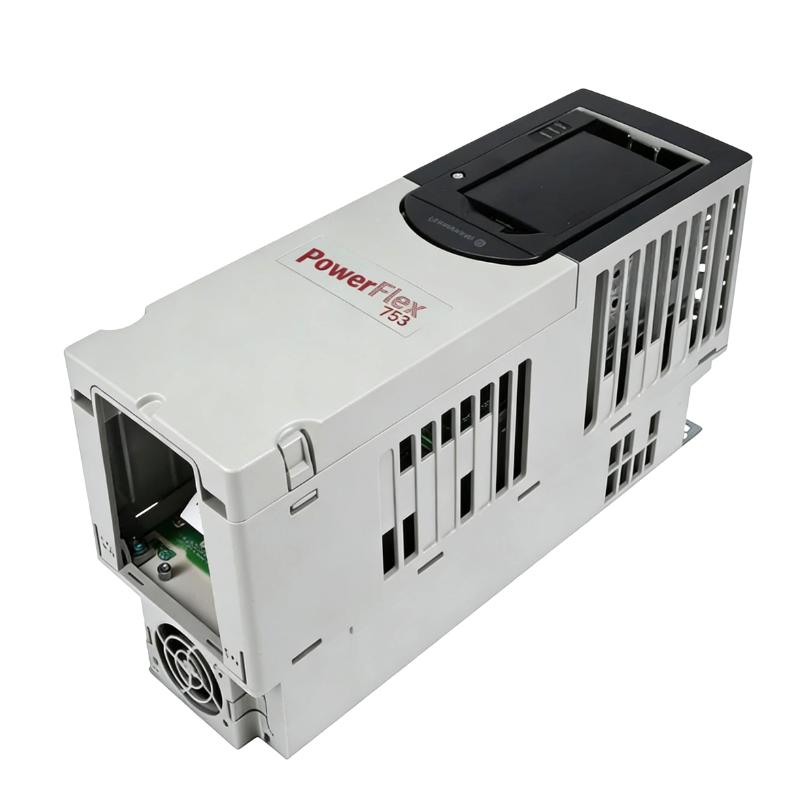
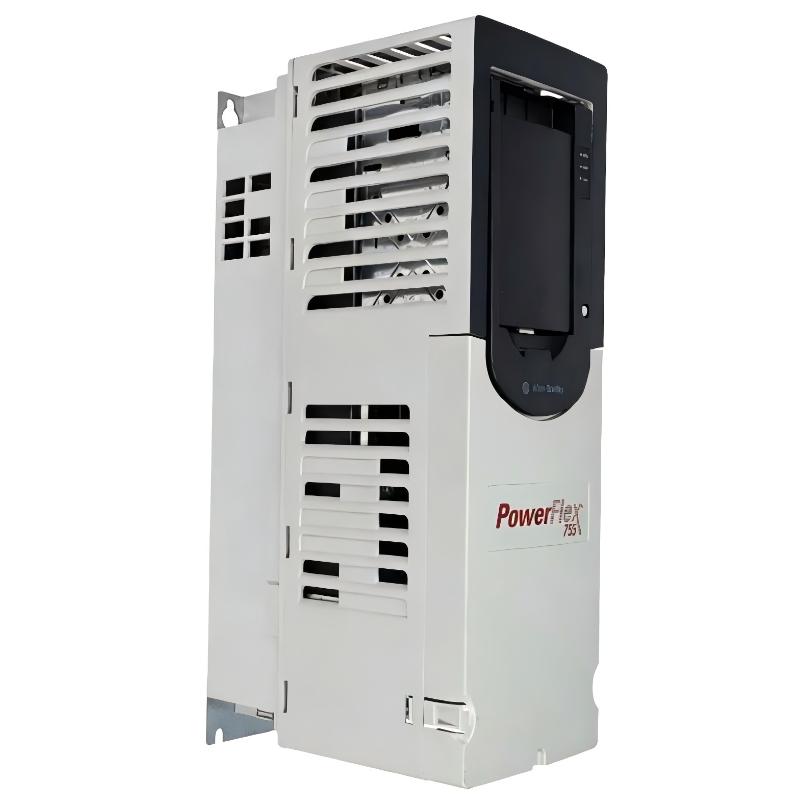
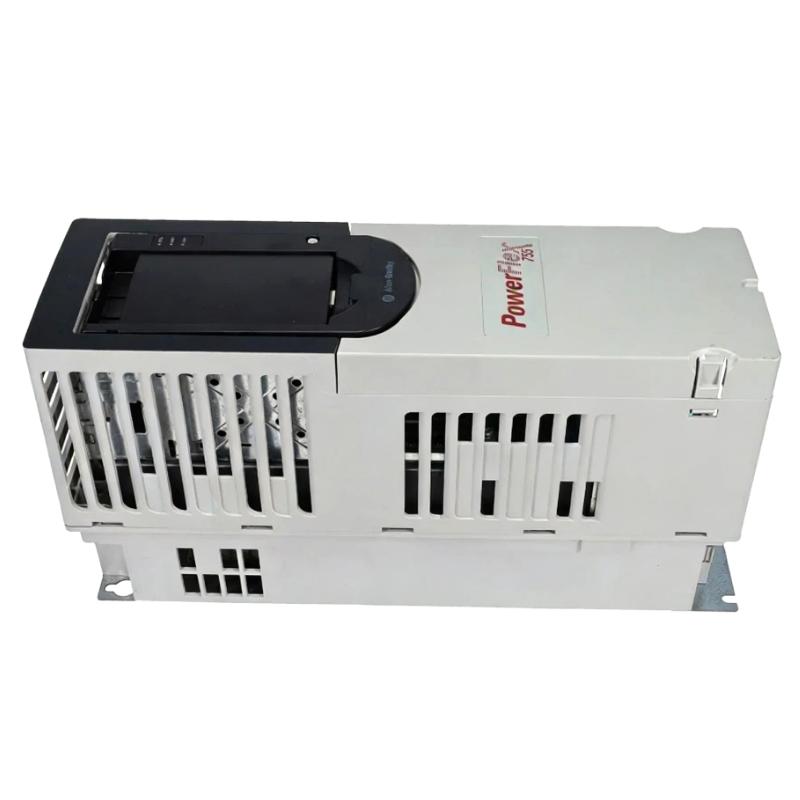
- Allen Bradley
- 20G1AND361JN0NNNNN
- PowerFlex AC Drive
- USA
- 400–500 × 700–900 × 350–450 mm
- 100kg
- Xiamen, China
- New & In Stock
- T/T, PayPal, Western Union
- 1 Year
- 1-3 Working Days
- DHL, UPS, TNT, FedEx and EMS.
- 24-Hour Service
- COO
- 79
Our advantage

Global Logistics
We have a 10-year logistics and express cooperation agreement, so our products can be shipped to any place in the world.

Brand new and original
Our products are imported in bulk from the place of origin. Because of the cooperative relationship, our products are all original and 100% new.

24-hour service
We provide 7*24 hours service to our customers. We will be there whenever you need us.

Price advantage
All our products are priced very favorably because we have our own warehouse and supply.
| Company Information | |||
| [email protected] | |||
| Mobile | +8615980777398 | ||
| +8615980777398 | |||
| 15980777398 |
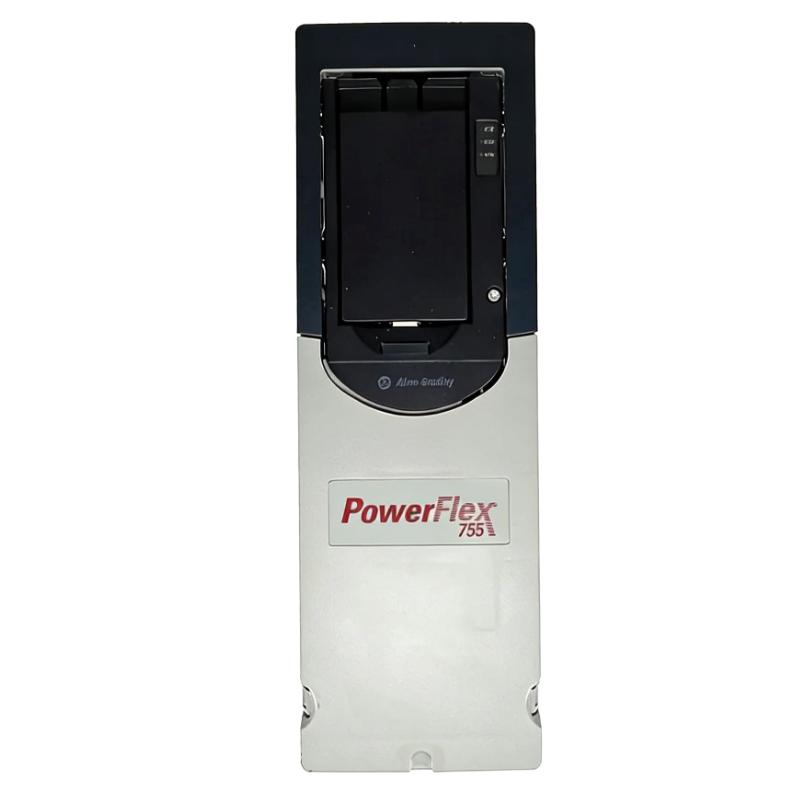
20G1AND361JN0NNNNN Industrial AC Drive – Technical Specifications, Product Introduction, Applications, Advantages and Related Models
1. Product Overview
The 20G1AND361JN0NNNNN is an industrial adjustable-frequency AC drive designed for variable-speed control of three-phase AC motors.
The product belongs to the PowerFlex 755 series and is intended for industrial machinery where controlled motor speed, acceleration, deceleration, torque management, motor protection and integration with an automation system are required.
Compared with a basic motor starter, an adjustable-frequency drive provides substantially greater control over the motor and the mechanical process connected to it.
The drive can change the motor operating frequency and provide controlled output power according to the programmed operating conditions.
This makes it suitable for equipment such as conveyors, pumps, fans, blowers, mixers, rollers, material-handling systems and production machinery.
The complete catalog number 20G1AND361JN0NNNNN represents a specific configuration. The complete catalog number should always be retained when identifying, purchasing or replacing the product.
2. Basic Product Information
| Item | Specification |
|---|---|
| Model | 20G1AND361JN0NNNNN |
| Brand | Allen-Bradley |
| Product Family | PowerFlex |
| Product Series | PowerFlex 755 |
| Product Type | Industrial AC Variable Frequency Drive |
| Drive Category | Adjustable-Frequency AC Drive |
| Main Function | Three-phase AC motor control |
| Application Level | Industrial |
| Input System | Three-phase AC |
| Voltage Class | 480 V class |
| Input Frequency | 50/60 Hz |
| Output | Variable-frequency three-phase AC |
| Motor Type | Three-phase AC motor |
| Speed Control | Supported |
| Torque Control | Supported |
| Acceleration Control | Programmable |
| Deceleration Control | Programmable |
| Motor Protection | Integrated |
| Diagnostic Functions | Integrated |
| Communication | Configuration dependent |
| Feedback | Configuration dependent |
| Cooling | Forced air |
| Installation | Electrical cabinet/panel |
| Mounting | Normally vertical |
| Construction | Industrial open-type configuration |
| Typical Application | Medium and large industrial machinery |
3. Brand and Product Series
| Category | Information |
|---|---|
| Brand | Allen-Bradley |
| Product Family | PowerFlex |
| Product Series | PowerFlex 755 |
| Product Type | Industrial AC Drive |
| Main Function | Variable-speed motor control |
| Typical Voltage Class | 480 V |
| Motor Type | Three-phase AC motor |
| Installation | Industrial control cabinet |
| Application | Industrial machinery and process equipment |
The PowerFlex 755 series is intended for applications where a motor must be controlled as part of a larger industrial machine.
The series is particularly appropriate when the application requires more than simple start/stop control.
Typical requirements include adjustable speed, controlled acceleration, controlled deceleration, torque control, feedback, diagnostics and communication with an automation system.
4. Product Identification
The complete catalog number is:
20G1AND361JN0NNNNN
For general identification, the catalog number can be regarded as a combination of product-family, rating and configuration positions.
| Catalog Number Section | General Identification |
|---|---|
| 20G | PowerFlex 755 product family |
| 1 | Product configuration |
| A | Configuration position |
| ND | Drive configuration/rating designation |
| 361 | Rating/configuration designation |
| J | Hardware/configuration option |
| N | Configuration position |
| 0 | Configuration position |
| NNNNN | Additional standard configuration positions |
The complete catalog number should be used when identifying the actual unit.
The individual catalog-number positions should not be used as the only method for determining motor compatibility.
Actual motor voltage, full-load current, duty, overload requirement, braking requirement and installed options should be checked before final selection.
5. Main Technical Specifications
| Parameter | Specification |
|---|---|
| Model | 20G1AND361JN0NNNNN |
| Brand | Allen-Bradley |
| Series | PowerFlex 755 |
| Product Type | Industrial AC Drive |
| Input Voltage Class | 480 V |
| Typical Input System | Three-phase AC |
| Input Frequency | 50/60 Hz |
| Output System | Three-phase variable-frequency AC |
| Drive Rating | 361-class configuration |
| Motor Control | Adjustable-frequency / vector-oriented control |
| Speed Control | Programmable |
| Torque Control | Supported |
| Acceleration | Programmable |
| Deceleration | Programmable |
| Motor Overload Protection | Supported |
| Overcurrent Protection | Supported |
| Overvoltage Protection | Supported |
| Undervoltage Protection | Supported |
| Thermal Monitoring | Supported |
| Stall Protection | Supported |
| Fault Detection | Supported |
| Diagnostic Functions | Supported |
| PID Control | Available for appropriate applications |
| Jog Function | Supported |
| Preset Speed Functions | Supported |
| Auto-Tuning | Available through applicable control functions |
| Communication | Configuration dependent |
| Feedback | Configuration dependent |
| Cooling | Forced air |
| Mounting | Cabinet/panel |
| Orientation | Normally vertical |
| Construction | Open type |
| Industrial Application | Yes |
6. Electrical Characteristics
The 20G1AND361JN0NNNNN is intended for a 480 V-class three-phase industrial electrical system.
A 480 V-class drive is commonly used in larger industrial machinery and production equipment.
The drive receives three-phase AC input power and produces controlled three-phase output power for the motor.
The output frequency can be varied to regulate motor speed.
This makes it possible to match motor operation with the requirements of the mechanical process.
The exact continuous output-current capability associated with the 361 configuration should be confirmed against the actual product rating information before selecting the motor.
For engineering purposes, the motor’s full-load current should be treated as a primary sizing parameter.
| Electrical Parameter | Engineering Consideration |
|---|---|
| Motor Voltage | Must be compatible with drive output |
| Motor Full-Load Current | Primary drive sizing parameter |
| Motor Power | Used for preliminary selection |
| Motor Frequency | Normally 50 or 60 Hz |
| Motor Speed | Important for operating-range selection |
| Load Type | Constant torque or variable torque |
| Overload Requirement | Must match machine requirements |
| Starting Requirement | Determines acceleration requirements |
| Stopping Requirement | Determines deceleration requirements |
| Braking | May require additional equipment |
| Feedback | Required for certain closed-loop applications |
| Communication | Must match automation architecture |
| Motor Cable | Cable length and installation should be evaluated |
7. Approximate Dimensions and Weight
The exact physical size of the 20G1AND361JN0NNNNN depends on the configured frame and associated hardware.
Because this is a larger industrial drive configuration, cabinet installation should allow sufficient space for cooling, cable routing and maintenance.
For preliminary engineering purposes, the following values may be used as approximate reference values.
| Mechanical Parameter | Approximate Value |
|---|---|
| Model | 20G1AND361JN0NNNNN |
| Installation | Panel/cabinet mounted |
| Construction | Open type |
| Approximate Width | 400–500 mm |
| Approximate Height | 700–900 mm |
| Approximate Depth | 350–450 mm |
| Approximate Overall Size | 400–500 × 700–900 × 350–450 mm |
| Approximate Weight | 70–100 kg |
| Weight Unit | kg |
| Cooling | Forced air |
| Mounting Orientation | Vertical |
| Cabinet Installation | Yes |
| Ventilation | Required |
| Maintenance Clearance | Required |
| Cable Entry Space | Required |
| Heat Dissipation | High |
These dimensions and weight should be considered preliminary reference figures rather than guaranteed final values.
For cabinet fabrication, shipping calculations and mechanical installation, the exact dimensional information associated with the purchased configuration should be used.
8. Product Introduction
The 20G1AND361JN0NNNNN is designed for industrial motor applications where the machine requires controlled and adjustable motor operation.
A fixed-speed motor normally operates according to the electrical frequency supplied to it.
An adjustable-frequency drive introduces another level of control by changing the electrical output characteristics supplied to the motor.
This allows the motor to operate at different speeds.
The machine can therefore operate at different production rates without requiring constant mechanical speed changes.
The drive can also provide controlled acceleration and deceleration.
This is particularly useful for machinery with high inertia or equipment where sudden changes in speed could create mechanical stress.
9. Variable-Speed Operation
Variable-speed operation is one of the main functions of the product.
The motor speed can be adjusted according to a programmed speed reference.
The reference may come from local control, an external control signal or an automation system, depending on the configured application.
Variable-speed operation is particularly useful for:
- Conveyors.
- Pumps.
- Fans.
- Blowers.
- Rollers.
- Mixers.
- Feeders.
- Material-handling equipment.
- Processing machines.
- Production lines.
The ability to operate at different speeds can improve process flexibility.
10. Controlled Acceleration
Large industrial motors can create significant mechanical forces during startup.
A drive can gradually increase motor speed instead of applying a sudden full-speed command.
This controlled acceleration can reduce mechanical shock on:
- Gearboxes.
- Shafts.
- Couplings.
- Belts.
- Chains.
- Conveyor structures.
- Rollers.
- Mechanical transmission systems.
For machines with substantial rotating inertia, a properly configured acceleration profile can be particularly important.
11. Controlled Deceleration
The drive can also control the rate at which the motor slows down.
Controlled deceleration can help produce a smoother stopping process.
This is useful for:
- Conveyor systems.
- Material-handling equipment.
- Rollers.
- Process machinery.
- Large rotating equipment.
- Production machinery.
Where a machine must stop very quickly, the braking arrangement should be evaluated separately.
High-inertia loads can return energy to the drive during deceleration, so the complete braking design must match the application.
12. Torque Control
The PowerFlex 755 platform supports advanced motor-control functions suitable for applications where torque performance is important.
Torque control can be particularly useful when the mechanical load changes during operation.
Examples include:
- Conveyors.
- Mixers.
- Rollers.
- Material-handling systems.
- Processing equipment.
- Feed systems.
- Heavy rotating machinery.
The actual torque performance depends on the selected control mode, motor characteristics, application settings and commissioning parameters.
13. Motor Protection
The drive can monitor electrical and operating conditions and respond to abnormal conditions through programmed protective functions.
Potential protection functions include:
- Overcurrent protection.
- Overvoltage protection.
- Undervoltage protection.
- Motor overload protection.
- Thermal monitoring.
- Stall-related protection.
- Fault detection.
These functions can help protect the drive and connected motor.
Correct motor nameplate data and protection settings should be entered during commissioning.
14. Diagnostic Functions
Industrial machinery requires reliable troubleshooting information.
The drive can provide operating and diagnostic information that helps maintenance personnel investigate machine problems.
Typical information may include:
- Drive status.
- Motor current.
- Speed reference.
- Actual speed.
- Alarm condition.
- Fault condition.
- Operating parameters.
- Drive operating state.
This information can reduce troubleshooting time and help maintenance personnel determine whether a problem is associated with the electrical supply, motor, mechanical load, control command or drive.
15. Communication and Automation Integration
The drive can be incorporated into a larger automation architecture when the appropriate communication and control configuration is installed.
A typical system can be represented as:
Industrial Controller → Communication / Control Interface → AC Drive → Motor → Mechanical Load
The controller can provide speed and operating commands.
The drive then converts these commands into controlled motor operation.
The automation system can also receive operating information.
| Data | Typical Purpose |
|---|---|
| Speed Reference | Sets desired operating speed |
| Actual Speed | Monitors motor operation |
| Motor Current | Indicates electrical loading |
| Drive Status | Indicates operating state |
| Alarm Status | Provides warning information |
| Fault Status | Identifies abnormal operation |
| Start/Stop Command | Controls motor operation |
| Operating Parameters | Supports diagnostics and commissioning |
16. Main Product Advantages
16.1 Flexible Motor-Speed Control
The motor can operate at different speeds according to process requirements.
This is useful when the production process changes speed throughout the day.
16.2 Smooth Motor Starting
Controlled acceleration can reduce sudden mechanical loading.
This is especially useful for large conveyors, heavy rotating equipment and machines with high inertia.
16.3 Controlled Stopping
Controlled deceleration can provide smoother machine stopping.
This can reduce unnecessary mechanical shock and improve process consistency.
16.4 Advanced Motor Control
The PowerFlex 755 platform is designed for demanding industrial applications where simple fixed-speed operation is insufficient.
It can provide advanced control capabilities for speed and torque-related applications.
16.5 Motor Protection
Integrated protective functions can help monitor abnormal electrical and operating conditions.
This can contribute to more reliable equipment operation.
16.6 Diagnostic Capability
Drive-level information can help maintenance personnel identify operating problems more efficiently.
This can reduce unnecessary troubleshooting and component replacement.
16.7 Automation Integration
The drive can be integrated into a larger machine-control system.
This makes it suitable for automated production lines and process equipment.
16.8 Flexible Configuration
Different industrial applications can require different communication, feedback and control arrangements.
The PowerFlex 755 platform provides configuration flexibility for these requirements.
17. Main Applications
17.1 Conveyor Systems
Conveyors frequently require adjustable speed.
A drive can provide controlled acceleration, normal operating speed and controlled deceleration.
Typical conveyor applications include:
- Belt conveyors.
- Roller conveyors.
- Chain conveyors.
- Production conveyors.
- Material-transfer systems.
- Warehouse conveyors.
17.2 Industrial Pumps
Pump applications can benefit from variable-speed operation.
Instead of operating continuously at one speed, the pump motor can be adjusted according to process requirements.
Typical applications include:
- Water circulation.
- Cooling systems.
- Process pumps.
- Fluid transfer.
- Industrial water systems.
17.3 Fans and Blowers
Fans and blowers often have changing airflow requirements.
The drive can adjust motor speed according to the required airflow.
Typical applications include:
- Industrial ventilation.
- Exhaust systems.
- Cooling systems.
- Dust collection.
- Process-air systems.
17.4 Material Handling
Material-handling equipment often requires controlled acceleration and stopping.
Applications can include:
- Conveyors.
- Rollers.
- Feeders.
- Transfer systems.
- Industrial transport equipment.
17.5 Mixers
Mixing equipment may require different speeds during different stages of production.
A variable-frequency drive can provide programmable speed operation.
This can make the machine more flexible without requiring mechanical speed changes.
17.6 Rollers
Roller equipment often requires stable and adjustable speed.
A drive can help maintain the required operating speed while allowing production rates to change.
17.7 Processing Machinery
The product can be used in processing equipment where motor speed directly affects the production process.
Examples include:
- Processing lines.
- Feed systems.
- Rollers.
- Industrial mixers.
- Material-processing machinery.
18. Application Suitability
| Application | Suitability | Main Benefit |
|---|---|---|
| Large conveyor | ★★★★★ | Speed and torque control |
| Material handling | ★★★★★ | Controlled acceleration/deceleration |
| Industrial pump | ★★★★★ | Variable-speed process control |
| Large fan | ★★★★★ | Adjustable airflow |
| Industrial blower | ★★★★★ | Flexible speed regulation |
| Mixer | ★★★★★ | Variable-speed processing |
| Roller | ★★★★★ | Controlled motor speed |
| Processing machinery | ★★★★★ | Process flexibility |
| Automated production line | ★★★★★ | Automation integration |
| Simple fixed-speed motor | ★★★☆☆ | May offer more capability than necessary |
19. Five Same-Series or Closely Related Models
The following models are suitable for comparison with the 20G1AND361JN0NNNNN.
| Model | Series | Voltage Class | Rating / Current Class | Approx. Dimensions | Weight (kg) | Typical Application |
|---|---|---|---|---|---|---|
| 20G1AND361JN0NNNNN | PowerFlex 755 | 480 V class | 361-class configuration | 400–500 × 700–900 × 350–450 mm | 70–100 | Large industrial machinery |
| 20G1AND302JN0NNNNN | PowerFlex 755 | 480 V class | 302-class configuration | Approx. 400–500 × 700–900 × 350–450 mm | 70–100 | Large process machinery |
| 20G1AND248JN0NNNNN | PowerFlex 755 | 480 V class | 248-class configuration | Approx. 350–450 × 600–800 × 300–400 mm | 55–80 | Medium/large industrial equipment |
| 20G11ND156AA0NNNNN | PowerFlex 755 | 480 V class | 156 A class | Approx. 350 × 500 × 350 mm | 40–50 | Large industrial machinery |
| 20G11ND125AA0NNNNN | PowerFlex 755 | 480 V class | 125 A class | Approx. 300 × 450 × 300 mm | 30–40 | Process and material handling |
These models represent different capacity positions.
They should be treated as related models rather than automatic replacements.
A replacement decision should always be based on actual motor current, motor power, load characteristics, duty requirements and the installed control architecture.
20. Related Model Comparison
| Model | Rating / Current Class | Voltage | Approx. Motor Class | Dimensions | Weight (kg) |
|---|---|---|---|---|---|
| 20G11ND125AA0NNNNN | 125 A class | 480 V | 100 HP / 75 kW class | 300 × 450 × 300 mm | 30–40 |
| 20G11ND156AA0NNNNN | 156 A class | 480 V | 125 HP class | 350 × 500 × 350 mm | 40–50 |
| 20G1AND248JN0NNNNN | 248-class configuration | 480 V class | Large motor class | 350–450 × 600–800 × 300–400 mm | 55–80 |
| 20G1AND302JN0NNNNN | 302-class configuration | 480 V class | Larger industrial motor class | 400–500 × 700–900 × 350–450 mm | 70–100 |
| 20G1AND361JN0NNNNN | 361-class configuration | 480 V class | High-capacity industrial motor class | 400–500 × 700–900 × 350–450 mm | 70–100 |
The 20G1AND361JN0NNNNN represents a high-capacity configuration in this comparison.
The actual continuous current and motor-power rating should be confirmed from the final drive configuration and motor nameplate.
21. Five Popular Models from the Same Brand
The following models provide a broader comparison across industrial drive sizes and product families.
| Model | Series | Voltage Class | Approx. Rating | Approx. Dimensions | Weight (kg) | Typical Application |
|---|---|---|---|---|---|---|
| 20G1AND361JN0NNNNN | PowerFlex 755 | 480 V class | 361-class configuration | 400–500 × 700–900 × 350–450 mm | 70–100 | Large industrial machinery |
| 20G1AND248JN0NNNNN | PowerFlex 755 | 480 V class | 248-class configuration | 350–450 × 600–800 × 300–400 mm | 55–80 | Large process equipment |
| 20G11ND156AA0NNNNN | PowerFlex 755 | 480 V class | 156 A class | 350 × 500 × 350 mm | 40–50 | Large industrial equipment |
| 20F11NC030JA0NNNNN | PowerFlex 753 | 480 V class | 30 A class | Approx. 300 × 300 × 500 mm | 12–20 | Industrial machinery |
| 25B-D024N114 | PowerFlex 525 | 480 V class | 24 A class | Approx. 250 × 150 × 220 mm | 5–8 | Compact industrial equipment |
These models cover substantially different drive sizes.
The compact models are intended for smaller machinery, while the PowerFlex 755 models are more appropriate for larger and more demanding applications.
22. Product Family Comparison
| Feature | PowerFlex 525 | PowerFlex 527 | PowerFlex 753 | PowerFlex 755 |
|---|---|---|---|---|
| Product Position | Compact industrial | Compact automation-oriented | Industrial | High-performance industrial |
| Typical Motor Size | Small/medium | Small/medium | Medium/large | Medium/large/large |
| Cabinet Footprint | Small | Small | Medium/large | Medium/large |
| Speed Control | Good | Good | Advanced | Advanced |
| Torque Control | Supported | Supported | Advanced | Advanced |
| Communication | Available | Network-oriented | Available | Extensive configuration options |
| Feedback | Configuration dependent | Application dependent | Available | Available |
| Expansion Capability | Good | Good | Strong | Strong |
| Large Motor Applications | Limited | Limited | Good | Excellent |
| Complex Machinery | Good | Very good | Very good | Excellent |
| Typical Use | Compact machines | Networked machinery | Industrial equipment | High-performance machinery |
23. Motor Selection
Selecting a drive should begin with the actual motor nameplate.
The motor’s full-load current is one of the most important parameters.
Horsepower or kilowatt rating is useful for preliminary selection, but it should not be used as the only selection criterion.
| Motor Parameter | Importance |
|---|---|
| Rated Voltage | Must match drive output |
| Full-Load Current | Primary sizing parameter |
| Rated Power | Used for preliminary capacity selection |
| Rated Frequency | Important for operating range |
| Rated Speed | Important for speed control |
| Power Factor | Relevant to electrical loading |
| Efficiency | Useful for system calculations |
| Motor Type | Influences control configuration |
| Overload Requirement | Important for demanding loads |
| Encoder | Required for certain closed-loop applications |
24. Preliminary Drive Capacity Comparison
| Approx. Motor Size | Related Drive Class | Example |
|---|---|---|
| 37 kW / 50 HP | 65 A class | 20G11ND065AA0NNNNN |
| 45 kW / 60 HP | 77 A class | 20G11ND077AA0NNNNN |
| 55 kW / 75 HP | 96 A class | 20G11ND096AA0NNNNN |
| 75 kW / 100 HP | 125 A class | 20G11ND125AA0NNNNN |
| 90 kW / 125 HP class | 156 A class | 20G11ND156AA0NNNNN |
| High-capacity industrial motor | 361-class configuration | 20G1AND361JN0NNNNN |
These values are useful for product comparison but should not replace actual nameplate-based drive selection.
25. Cabinet Installation
The 20G1AND361JN0NNNNN represents a large industrial drive configuration and should be installed in a properly designed electrical cabinet or suitable industrial enclosure.
Cabinet design should consider:
- Drive dimensions.
- Drive weight.
- Cooling airflow.
- Heat dissipation.
- Power-cable routing.
- Motor-cable routing.
- Control wiring.
- Communication wiring.
- Grounding.
- Maintenance access.
- Cable bending radius.
- Environmental conditions.
The cabinet must be structurally capable of supporting the drive.
Ventilation should be designed to remove the heat generated during normal operation.
26. Cabinet Design Reference
| Cabinet Parameter | Preliminary Reference |
|---|---|
| Drive Model | 20G1AND361JN0NNNNN |
| Width | 400–500 mm |
| Height | 700–900 mm |
| Depth | 350–450 mm |
| Weight | 70–100 kg |
| Mounting Orientation | Vertical |
| Cooling | Forced air |
| Ventilation | Required |
| Heat Dissipation | High |
| Maintenance Clearance | Required |
| Cable Entry Space | Required |
| Grounding | Proper industrial grounding |
| Cabinet Structure | Must support drive weight |
| Environmental Protection | Enclosure must suit installation environment |
27. Cooling and Heat Management
Large industrial drives generate heat during operation.
Proper thermal management is therefore important.
The cabinet should provide adequate airflow around the drive.
Air intake and exhaust paths should not be obstructed.
Dust accumulation should also be considered in environments with significant airborne particles.
If the drive is installed in a sealed enclosure, the cabinet may require a suitable heat-exchange or cooling arrangement.
The final cooling method should be selected according to:
- Drive losses.
- Ambient temperature.
- Cabinet dimensions.
- Installation altitude.
- Environmental conditions.
- Other equipment installed in the cabinet.
28. Energy Management
Variable-speed operation can provide energy-saving opportunities when the motor load changes with speed.
This is especially relevant to centrifugal pumps and fans.
When full output is not required, reducing motor speed can reduce the amount of power consumed by the motor system.
The actual energy result depends on:
- Motor characteristics.
- Load characteristics.
- Operating hours.
- Speed profile.
- Process requirements.
- Mechanical system design.
Therefore, the drive should be regarded as an important energy-management component rather than a guarantee of a fixed energy-saving percentage.
29. Maintenance Advantages
The drive can provide operating information that supports preventive maintenance and troubleshooting.
Useful information may include:
- Drive status.
- Motor current.
- Operating speed.
- Speed reference.
- Alarm condition.
- Fault condition.
- Thermal information.
- Operating parameters.
This can help maintenance personnel identify abnormal conditions before replacing components unnecessarily.
A structured troubleshooting process can compare drive status, motor behavior and mechanical load conditions.
30. Industrial Applications by Equipment Type
| Equipment | Typical Drive Function | Main Benefit |
|---|---|---|
| Conveyor | Speed control | Smooth material movement |
| Pump | Variable-speed operation | Flow regulation |
| Fan | Speed control | Airflow adjustment |
| Blower | Variable-speed control | Process-air regulation |
| Mixer | Multiple speed settings | Process flexibility |
| Roller | Speed regulation | Stable production speed |
| Feeder | Controlled speed | Material-flow control |
| Production Line | Coordinated motor control | Process synchronization |
| Material Handling | Acceleration/deceleration | Reduced mechanical shock |
| Processing Equipment | Speed and torque control | Better process control |
31. Recommended Applications
The 20G1AND361JN0NNNNN is particularly suitable when the machine has one or more of the following requirements:
- Large three-phase motor.
- Adjustable operating speed.
- Controlled acceleration.
- Controlled deceleration.
- Variable mechanical load.
- Torque-related control.
- Integration with an automation system.
- Motor protection.
- Drive-level diagnostics.
- Industrial production operation.
It is less appropriate for a very small motor where a compact drive would provide the required function at a lower installation cost and with a smaller cabinet footprint.
32. Five Same-Series / Related Recommendations
| Model | Series | Voltage | Rating Class | Approx. Dimensions | Weight (kg) | Recommendation |
|---|---|---|---|---|---|---|
| 20G1AND248JN0NNNNN | PowerFlex 755 | 480 V | 248-class | 350–450 × 600–800 × 300–400 mm | 55–80 | Lower-capacity related option |
| 20G1AND302JN0NNNNN | PowerFlex 755 | 480 V | 302-class | 400–500 × 700–900 × 350–450 mm | 70–100 | Closely related high-capacity option |
| 20G11ND156AA0NNNNN | PowerFlex 755 | 480 V | 156 A class | 350 × 500 × 350 mm | 40–50 | Medium-large industrial option |
| 20G11ND125AA0NNNNN | PowerFlex 755 | 480 V | 125 A class | 300 × 450 × 300 mm | 30–40 | Lower-capacity process option |
| 20G11ND096AA0NNNNN | PowerFlex 755 | 480 V | 96 A class | 300 × 400 × 250 mm | 25–35 | Medium-capacity option |
33. Five Popular Models for Broader Comparison
| Model | Series | Voltage Class | Approx. Rating | Approx. Dimensions | Weight (kg) | Typical Application |
|---|---|---|---|---|---|---|
| 20G1AND361JN0NNNNN | PowerFlex 755 | 480 V | 361-class | 400–500 × 700–900 × 350–450 mm | 70–100 | Large industrial machinery |
| 20G1AND248JN0NNNNN | PowerFlex 755 | 480 V | 248-class | 350–450 × 600–800 × 300–400 mm | 55–80 | Large process equipment |
| 20G11ND156AA0NNNNN | PowerFlex 755 | 480 V | 156 A class | 350 × 500 × 350 mm | 40–50 | Industrial machinery |
| 20F11NC030JA0NNNNN | PowerFlex 753 | 480 V | 30 A class | 300 × 300 × 500 mm | 12–20 | General industrial equipment |
| 25B-D024N114 | PowerFlex 525 | 480 V | 24 A class | 250 × 150 × 220 mm | 5–8 | Compact industrial machinery |
34. Practical Conveyor Application
A conveyor driven by a large AC motor can experience considerable mechanical stress if started at full speed immediately.
The drive allows the conveyor motor to accelerate gradually.
The conveyor can then operate at the required production speed.
If the production rate changes, the speed reference can be adjusted.
During stopping, controlled deceleration can reduce sudden mechanical forces.
This is especially valuable for long conveyors, heavy conveyors and systems transporting sensitive materials.
35. Practical Pump Application
A pump system may have different flow requirements during different production periods.
Running the motor continuously at full speed may not always be necessary.
With variable-speed control, the motor speed can be adjusted according to the required process flow.
This can improve process flexibility.
For suitable centrifugal pump systems, reduced-speed operation can also create opportunities for lower energy consumption.
36. Practical Fan and Blower Application
Fans and blowers often operate according to changing airflow requirements.
The drive can adjust the motor speed to match the required airflow.
When the process requires less air, the motor can operate at a lower speed.
When greater airflow is needed, the motor speed can be increased.
This provides a flexible operating method for industrial ventilation and process-air systems.
37. Practical Mixer Application
Mixing equipment can require several different operating speeds.
For example, a production process may use:
- Low-speed loading.
- Medium-speed mixing.
- Higher-speed processing.
- Controlled deceleration.
The drive can provide these different operating conditions through programmable speed control.
This can eliminate the need for frequent mechanical speed changes.
38. Practical Material-Handling Application
Material-handling systems often require controlled movement.
A sudden start can cause material to shift.
A sudden stop can create unnecessary mechanical forces.
The drive can provide controlled acceleration and deceleration.
This can improve the smoothness of material movement and reduce mechanical stress.
39. Product Advantages Summary
| Advantage | Practical Value |
|---|---|
| Variable-speed control | Flexible machine operation |
| Controlled acceleration | Reduced startup shock |
| Controlled deceleration | Smoother stopping |
| Torque management | Better response to changing loads |
| Motor protection | Helps protect connected equipment |
| Diagnostics | Easier troubleshooting |
| Communication | Supports automation integration |
| Flexible configuration | Suitable for different machine architectures |
| Industrial construction | Appropriate for demanding applications |
| Energy-management potential | Useful in variable-load applications |
| High-capacity configuration | Suitable for larger industrial motors |
40. Important Purchasing and Replacement Checks
Before purchasing or replacing the 20G1AND361JN0NNNNN, the following information should be checked.
| Parameter | Verification Requirement |
|---|---|
| Catalog Number | 20G1AND361JN0NNNNN |
| Input Voltage | Confirm 480 V-class supply |
| Input Phase | Confirm three-phase |
| Motor Voltage | Check motor nameplate |
| Motor Current | Check full-load current |
| Motor Power | Check kW / HP |
| Motor Frequency | Check 50/60 Hz |
| Load Type | Constant torque / variable torque |
| Duty | Confirm application duty |
| Overload | Confirm required overload |
| Acceleration | Confirm required acceleration |
| Deceleration | Confirm required deceleration |
| Braking | Determine braking requirement |
| Feedback | Check encoder or feedback requirement |
| Communication | Confirm required network |
| I/O | Confirm control requirements |
| Dimensions | Verify actual mechanical dimensions |
| Weight | Verify actual weight in kg |
| Cooling | Confirm cabinet ventilation |
| Ambient Temperature | Confirm site conditions |
| Altitude | Confirm installation altitude |
| Motor Cable | Check length and installation |
| Grounding | Confirm grounding method |
41. Overall Technical Evaluation
The 20G1AND361JN0NNNNN is a high-capacity industrial AC drive configuration within the PowerFlex 755 series.
Its primary purpose is to provide controlled operation of a three-phase AC motor in industrial machinery.
The drive is particularly useful when the machine requires adjustable speed rather than fixed-speed operation.
It can also provide controlled acceleration and deceleration, which can reduce mechanical shock and improve machine behavior.
Its motor-control capabilities make it suitable for applications where torque behavior is important.
Protection and diagnostic functions can assist with equipment reliability and maintenance.
When integrated with an automation system, the drive can also exchange operating information and receive commands from a higher-level machine controller.
This makes the product suitable for production systems in which motor operation is directly related to process performance.
42. Final Product Summary
The 20G1AND361JN0NNNNN belongs to the PowerFlex 755 industrial AC drive series under the Allen-Bradley brand.
It is designed for three-phase AC motor applications requiring variable-speed operation and advanced industrial motor control.
The product is particularly appropriate for large conveyors, material-handling systems, pumps, fans, blowers, mixers, rollers, processing equipment and automated production machinery.
Its major advantages include adjustable speed, controlled acceleration, controlled deceleration, torque-related control, motor protection, diagnostic capability and integration with industrial automation systems.
The product is intended for applications where the motor is an important part of the machine-control architecture.
For preliminary mechanical planning, the product can be treated as a large cabinet-mounted drive with an approximate envelope of 400–500 mm width, 700–900 mm height and 350–450 mm depth.
A preliminary weight range of approximately 70–100 kg can be used for general layout planning.
These mechanical figures are approximate reference values and should not be used as the final cabinet or shipping specification.
The final installation should use the exact mechanical dimensions and weight corresponding to the actual configured unit.
From a product-selection perspective, the most important information is the motor’s rated voltage, full-load current, power, frequency, load characteristics, overload requirement, acceleration and deceleration requirements, braking requirements, feedback requirements and communication requirements.
A correct match between these parameters and the drive configuration is essential for reliable operation.
Overall, the 20G1AND361JN0NNNNN is best regarded as a high-capacity industrial variable-frequency drive intended for demanding motor-control applications where reliable speed regulation, controlled motor operation, process flexibility and automation integration are important.