
NewsNEWCENTER
Featured products
Contact Us
Siemens Reaches Record Industrial Profit as Artificial Intelligence Accelerates Automation Investment
2026-08-14Artificial intelligence has rapidly evolved from a software technology into a major driver of industrial investment.
The expansion of AI infrastructure is now affecting data centers, semiconductor manufacturing, electronics production, power systems and industrial automation.
Siemens is one of the major industrial technology companies benefiting from this trend.
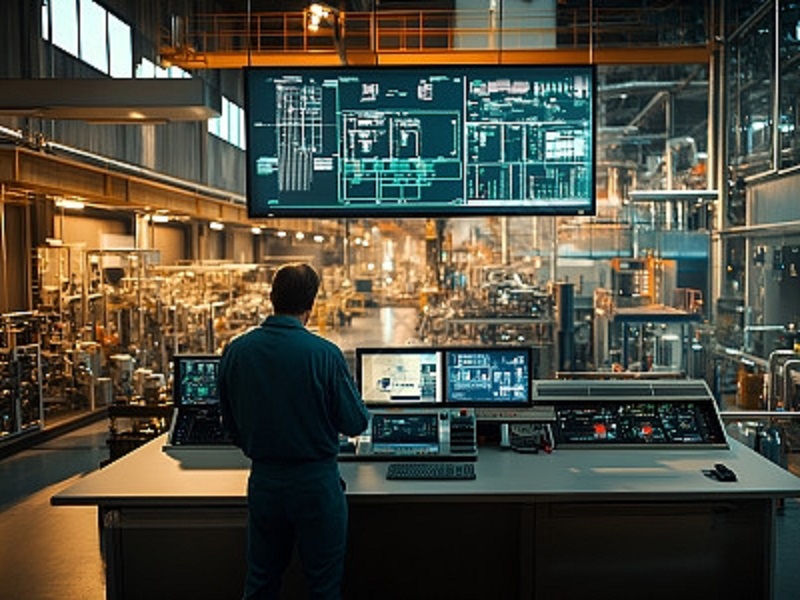
During the third quarter of its 2026 fiscal year, Siemens reported record industrial profit of approximately €3.52 billion, representing a significant year-on-year increase. Revenue also increased, while orders reached another quarterly record.
The strong performance demonstrates how artificial intelligence is creating demand throughout the industrial technology ecosystem.
AI requires enormous physical infrastructure.
Data centers require:
- Electrical distribution
- Cooling systems
- Monitoring
- Automation
- Energy management
- Industrial software
Semiconductor factories require highly precise automation.
Electronics manufacturers require increasingly sophisticated production equipment.
Smart factories need advanced control systems capable of handling larger quantities of production data.
These developments are creating strong opportunities for industrial automation suppliers.
AI Is Becoming an Industrial Investment Driver
Artificial intelligence was initially associated primarily with software companies and computing platforms.
That situation has changed dramatically.
AI systems require physical infrastructure.
Large-scale AI data centers require enormous amounts of:
- Electricity
- Cooling
- Computing equipment
- Building infrastructure
- Monitoring systems
Industrial automation technologies play an important role in managing these facilities.
Automation systems can monitor equipment conditions and coordinate complex infrastructure.
At the same time, manufacturers are using AI inside their own factories.
This creates two simultaneous sources of demand.
AI infrastructure needs industrial automation.
Industrial manufacturers are also using AI to improve automation.
Siemens Benefits From the AI Infrastructure Expansion
Siemens has increasingly positioned itself around the combination of electrification, automation and industrial software.
These technologies are highly relevant to the AI economy.
Data center infrastructure needs reliable electrical systems.
Factories producing advanced electronics require sophisticated automation.
Industrial companies adopting AI require software capable of connecting physical equipment with digital systems.
This gives industrial automation companies an important role in the AI value chain.
The opportunity is therefore broader than traditional factory automation.
Industrial AI Is Changing the Factory
AI is also changing how factories operate.
Traditional automation systems execute predefined control logic.
For example, a PLC may:
- Read sensors
- Control motors
- Operate valves
- Manage sequences
- Trigger alarms
AI introduces an additional layer.
AI systems can analyze large amounts of historical and real-time data to identify patterns.
Potential applications include:
- Predictive maintenance
- Quality inspection
- Production optimization
- Energy management
- Process analysis
The combination of deterministic automation and AI analytics creates a more intelligent manufacturing architecture.
PLC Systems Remain the Foundation
Despite the rapid growth of AI, PLC technology remains fundamental.
Industrial facilities still require reliable deterministic control.
AI cannot replace the basic need for:
- Sensors
- Controllers
- I/O systems
- Drives
- Safety systems
- Industrial networks
Instead, AI increasingly operates above or alongside the automation layer.
A typical architecture may include:
Sensors → PLC → Industrial Network → Edge Computing → AI Analytics → Operator Decision
This structure allows manufacturers to maintain reliable real-time control while adding intelligent analytics.
Digital Engineering Is Becoming More Important
Another important part of industrial transformation is digital engineering.
Modern factories are increasingly designed and tested using digital models.
Engineers can simulate:
- Machines
- Production lines
- Control sequences
- Material flows
- Equipment performance
before physical systems are commissioned.
This reduces the risk of discovering engineering problems after equipment has already been installed.
Digital engineering also creates structured data that can later be used by AI systems.
AI-Assisted Engineering Could Increase Productivity
Industrial automation engineers spend significant amounts of time performing repetitive engineering tasks.
These may include:
- PLC programming
- Documentation
- Configuration
- Testing
- Troubleshooting
AI-assisted engineering tools can potentially reduce the amount of repetitive work.
Instead of manually creating every element, engineers can use AI to generate suggestions and initial engineering structures.
The engineer then reviews and validates the result.
This approach could increase productivity without eliminating engineering responsibility.
Predictive Maintenance Is One of the Most Valuable AI Applications
Industrial equipment rarely fails completely without warning.
Many failures are preceded by changes in operating conditions.
For example:
- Motor current may increase
- Temperature may rise
- Vibration may change
- Cycle time may increase
- Energy consumption may become abnormal
AI can analyze these changes and identify patterns associated with equipment degradation.
Maintenance teams can then investigate the equipment before a major failure occurs.
This can reduce unexpected downtime and improve maintenance planning.
AI Also Creates New Energy Challenges
AI requires large amounts of electricity.
Data centers are particularly energy-intensive.
Manufacturers are also under pressure to reduce energy consumption.
This makes industrial energy management increasingly important.
Automation systems can monitor:
- Electrical loads
- Motor efficiency
- Equipment utilization
- Production energy consumption
Advanced analytics can then identify opportunities to reduce waste.
The future of industrial automation will therefore increasingly connect productivity with energy efficiency.
Cybersecurity Becomes More Important
AI and digitalization require more connectivity.
Factories are increasingly connecting:
- PLCs
- HMIs
- Industrial PCs
- Engineering systems
- Cloud platforms
- Remote monitoring systems
More connectivity can create more cybersecurity risks.
Industrial organizations must protect:
- Control programs
- Production data
- Engineering systems
- Industrial networks
Cybersecurity must therefore be integrated into automation architecture rather than treated as an afterthought.
The Industrial Automation Market Is Entering a New Phase
Siemens’ strong financial performance demonstrates a broader trend.
Industrial automation is becoming increasingly connected to global technology investment.
The traditional automation market was driven primarily by:
- Factory expansion
- Machine upgrades
- Process modernization
The new market is additionally driven by:
- AI infrastructure
- Digital transformation
- Data centers
- Semiconductor production
- Smart manufacturing
This significantly expands the potential role of automation companies.
What This Means for Automation Engineers
Automation engineers will increasingly work across multiple technical areas.
Traditional knowledge remains essential:
- PLC programming
- Industrial networking
- Motion control
- Instrumentation
- Machine safety
However, engineers will increasingly need to understand:
- Industrial AI
- Data analytics
- Edge computing
- Digital twins
- Cybersecurity
The industrial engineer of the future will therefore operate at the intersection of physical machines and digital intelligence.
Future Outlook
The relationship between AI and industrial automation will continue to strengthen.
Factories will increasingly use AI to analyze operational data.
Data centers will require advanced industrial infrastructure.
Semiconductor production will require highly automated processes.
Machine builders will integrate more intelligent functions into equipment.
Industrial software will connect physical assets with digital platforms.
The result will be a new generation of manufacturing environments in which automation and AI operate together.
Conclusion
Siemens’ record industrial profit in 2026 highlights the growing economic impact of artificial intelligence on the industrial automation sector.
AI is not simply creating demand for computing hardware.
It is creating demand for electrical infrastructure, industrial automation, digital engineering and intelligent manufacturing technologies.
For manufacturers, the opportunity is equally significant.
AI can improve maintenance, quality, productivity and energy management when combined with reliable automation systems.
The next stage of industrial transformation will therefore not be about replacing automation with AI.
It will be about combining deterministic automation with artificial intelligence to create more productive, flexible and intelligent industrial operations.