
NewsNEWCENTER
Featured products
Contact Us
Siemens Pushes Industrial AI Beyond Production Into Automation Engineering
2026-08-13Artificial intelligence is rapidly changing industrial manufacturing, but one of the most important developments is happening before a machine even starts production.
Instead of using AI only for production monitoring, predictive maintenance, or data analysis, automation companies are increasingly bringing artificial intelligence directly into the engineering process.
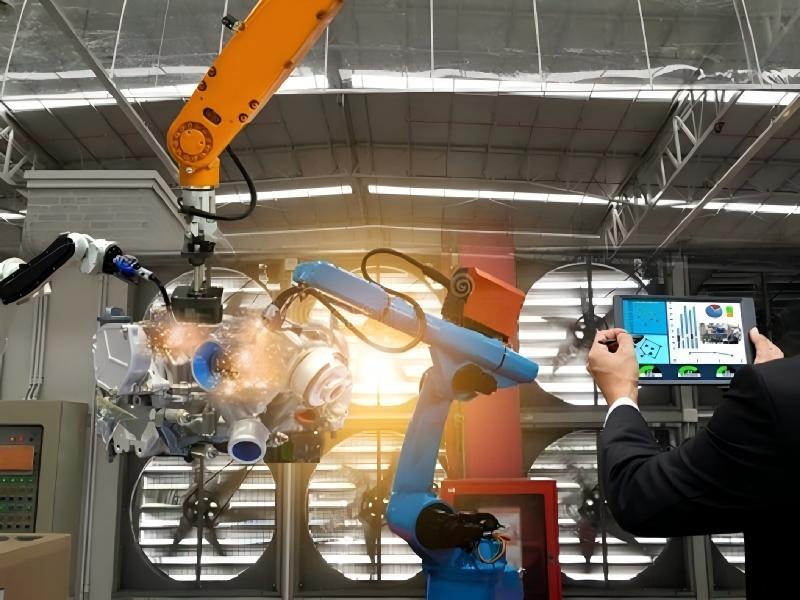
Siemens has continued expanding its industrial AI strategy with new capabilities for the Eigen Engineering Agent, designed specifically for industrial automation engineering.
The development represents an important change in how PLC and automation systems may be designed in the future.
For decades, automation engineers have manually created:
- PLC programs
- Control logic
- Engineering documentation
- Hardware configurations
- Automation sequences
- Testing procedures
These tasks require significant technical knowledge and engineering time.
AI-assisted engineering introduces a different approach.
Instead of creating every engineering element manually, engineers can increasingly interact with intelligent software systems that help transform technical requirements into automation engineering outputs.
This does not remove the need for experienced engineers.
Instead, it allows engineers to spend more time on system architecture, process knowledge, safety, validation, and optimization while AI tools assist with repetitive engineering work.
AI Is Moving Into the Automation Engineering Lifecycle
The traditional automation lifecycle includes several stages.
First, engineers understand the machine or process requirements.
Next, they create:
- Hardware configurations
- PLC programs
- HMI screens
- Communication structures
- Control sequences
After programming, the system must be tested and commissioned.
This process can be extremely time-consuming for large industrial projects.
AI-based engineering tools are designed to support multiple stages of this workflow.
Siemens has been developing the Eigen Engineering Agent as a purpose-built AI technology for industrial automation.
The company expanded its capabilities in 2026 to cover earlier stages of the automation engineering lifecycle.
This is significant because industrial AI is moving from an operational technology into an engineering productivity technology.
AI-Assisted PLC Programming Could Change Automation Development
Programmable Logic Controllers remain the foundation of machine and factory automation.
PLC engineers traditionally develop logic using programming environments and engineering tools.
Depending on the application, control logic may include:
- Digital inputs and outputs
- Analog signals
- Timers
- Counters
- Motion functions
- Interlocks
- Sequencing
- Alarms
- Communication blocks
Large systems may contain thousands of individual control elements.
AI-assisted engineering could help engineers organize and develop these elements more efficiently.
For example, an engineer could describe a required machine sequence in natural language.
The AI system could then assist in translating that requirement into engineering structures.
The engineer would still need to review, validate, and test the generated result.
This human-in-the-loop approach is particularly important in industrial automation because control systems directly influence physical equipment.
Industrial AI Requires Engineering Validation
AI-generated automation logic cannot simply be accepted without engineering review.
Industrial systems have strict requirements related to:
- Safety
- Reliability
- Performance
- Deterministic behavior
- Equipment protection
A software error in an ordinary business application may cause inconvenience.
A software error in a PLC program could stop a production line or damage equipment.
Therefore, AI-assisted automation requires strong validation procedures.
Engineers must verify:
- Control logic
- I/O mapping
- Safety conditions
- Interlocks
- Communication
- Timing
- Failure behavior
AI can accelerate engineering, but industrial expertise remains essential.
Digital Engineering and AI Work Together
One of the most important trends in modern automation is the integration of AI with digital engineering.
Digital engineering provides structured information about:
- Machines
- Processes
- Equipment
- Control systems
- Production requirements
AI can use this information to assist engineers.
The combination creates a more intelligent engineering environment.
Instead of starting every automation project from scratch, engineers can reuse structured information and allow AI tools to assist with repetitive tasks.
This could reduce engineering effort for:
- Standard machine functions
- Repeated control sequences
- Documentation
- Testing
- Configuration
AI Could Help Address the Industrial Skills Gap
The industrial automation sector is facing a shortage of experienced technical professionals in many markets.
Experienced PLC engineers possess knowledge accumulated through years of:
- Commissioning
- Troubleshooting
- Machine design
- Process control
- Industrial networking
However, this knowledge is not always easy to transfer to new employees.
AI-assisted engineering could potentially help organizations capture and reuse engineering knowledge.
Standardized engineering practices can be incorporated into digital workflows.
This may help younger engineers understand complex automation projects more quickly.
AI therefore has potential not only as a productivity tool but also as a knowledge-support technology.
Smart Factories Need Smarter Engineering Systems
Smart manufacturing is often discussed in terms of intelligent machines.
However, the intelligence of a factory begins before production.
The engineering process determines:
- How machines communicate
- How control systems operate
- How alarms are configured
- How equipment responds to failures
If engineering remains completely manual, digital transformation may be limited by engineering capacity.
AI-assisted engineering provides a way to accelerate this process.
A future smart factory may therefore include intelligence at multiple levels:
- AI-assisted engineering
- Intelligent PLC control
- AI-based machine monitoring
- Predictive maintenance
- Digital production optimization
Cybersecurity and AI Engineering Will Become Important
As AI becomes integrated into automation engineering, cybersecurity requirements will also increase.
Industrial companies need to protect:
- Engineering projects
- PLC programs
- Control logic
- Industrial networks
- Production data
AI systems must also be controlled carefully.
Organizations will need clear rules covering:
- Who can use AI engineering tools
- Which data can be processed
- How generated logic is validated
- How changes are documented
Industrial AI cannot be treated like an ordinary office productivity tool.
It must be integrated into controlled engineering workflows.
What This Means for PLC Engineers
The growth of AI-assisted engineering does not mean PLC engineers will disappear.
Instead, their role is likely to evolve.
Future automation engineers may spend less time writing repetitive code and more time working on:
- System architecture
- Process optimization
- Safety
- Testing
- Commissioning
- Digital integration
Understanding AI tools may become another valuable engineering skill.
PLC programming knowledge will remain important because engineers must understand whether an AI-generated solution is technically correct.
The Future of Industrial Automation Engineering
The development of industrial AI is creating a new relationship between humans and automation software.
The future engineering environment could combine:
- Natural-language requirements
- AI engineering assistants
- PLC development tools
- Digital twins
- Automated testing
- Virtual commissioning
This could shorten project development cycles while improving engineering consistency.
However, industrial automation will continue requiring human responsibility.
AI can provide suggestions and accelerate tasks.
Engineers remain responsible for validating whether the system is safe and suitable for real-world operation.
Conclusion
Siemens’ continued development of AI-assisted automation engineering demonstrates that artificial intelligence is moving deeper into the industrial technology lifecycle.
The next generation of PLC engineering will not simply involve writing control programs faster.
It will involve creating intelligent engineering environments in which AI assists engineers with design, configuration, programming, testing, and documentation.
For manufacturers and system integrators, this could reduce engineering effort and accelerate automation projects.
For PLC engineers, it creates a new opportunity to focus on higher-value technical work.
As industrial AI continues developing, the combination of human engineering expertise and intelligent automation software is likely to become one of the most important trends shaping the future of industrial control.