
NewsNEWCENTER
Featured products




Contact Us
ABB Targets One of the Biggest Challenges in Industrial Digital Transformation
2026-08-13Industrial companies have spent decades building reliable control systems.
Many process plants continue operating DCS platforms that were installed many years ago.
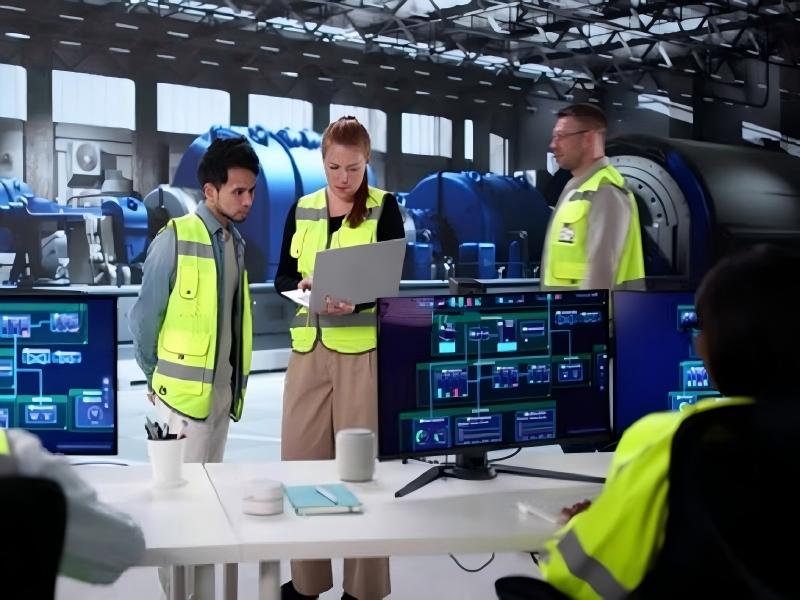
These systems may still perform critical functions reliably, but modern industrial organizations now want additional capabilities such as:
- Artificial intelligence
- Advanced analytics
- Industrial IoT
- Digital services
- Predictive maintenance
- Energy optimization
The problem is that completely replacing a mature DCS can be extremely expensive and disruptive.
ABB introduced Automation Extended in 2026 as an approach designed to modernize existing distributed control systems while maintaining ongoing operations.
The concept addresses an important problem in industrial automation:
How can a factory become more intelligent without replacing everything that already works?
Legacy Automation Systems Remain Valuable
Industrial automation systems are designed for long operating lifecycles.
A DCS can control critical processes for many years.
During that period, the plant may accumulate:
- Engineering knowledge
- Control strategies
- Operator experience
- Maintenance procedures
- Historical process data
Replacing the entire system can therefore create significant technical and operational risks.
A modernization project may require:
- Control logic migration
- Hardware replacement
- Network redesign
- Operator retraining
- System testing
- Production shutdowns
For large process facilities, these requirements can make full replacement difficult.
Incremental modernization provides another path.
ABB Automation Extended Focuses on Continuity
The idea behind Automation Extended is to extend existing automation environments with modern digital capabilities.
This allows industrial companies to introduce technologies such as:
- AI
- Advanced analytics
- Digital applications
without immediately replacing the entire control architecture.
This approach is particularly relevant to brownfield facilities.
Brownfield plants contain existing equipment and automation infrastructure that must continue operating while new technologies are introduced.
The ability to modernize gradually can reduce:
- Operational risk
- Downtime
- Engineering disruption
- Replacement costs
DCS Systems Are Becoming Digital Platforms
Traditional DCS systems primarily focused on process control.
Modern DCS platforms increasingly serve as sources of industrial information.
A process plant can generate large amounts of data from:
- Pressure sensors
- Temperature sensors
- Flow meters
- Motors
- Pumps
- Valves
- Controllers
This information can support applications beyond basic control.
Advanced analytics can use the data to understand:
- Equipment health
- Process efficiency
- Production trends
- Energy consumption
AI can then help identify patterns that may not be obvious through traditional monitoring.
AI Creates New Value From Existing Industrial Data
One of the biggest advantages of DCS modernization is the ability to extract more value from existing data.
A plant may already have years of operational information.
Previously, this information might have been used primarily for:
- Historical analysis
- Trend monitoring
- Troubleshooting
Modern AI technologies can analyze larger datasets to identify:
- Abnormal behavior
- Equipment degradation
- Process inefficiencies
- Potential failures
This allows existing automation infrastructure to become a foundation for new digital applications.
Predictive Maintenance Is a Major Application
Predictive maintenance is one of the most practical uses of industrial AI.
Equipment such as:
- Pumps
- Motors
- Compressors
- Fans
- Valves
can show early signs of degradation.
AI and advanced analytics can identify changes in:
- Temperature
- Pressure
- Vibration
- Energy consumption
- Operating patterns
Maintenance engineers can then investigate potential problems before they become major failures.
This can help reduce:
- Unplanned downtime
- Emergency repairs
- Production losses
Industrial Analytics Supports Process Optimization
DCS modernization is not only about maintenance.
Analytics can also help optimize production.
Engineers can analyze:
- Process parameters
- Production rates
- Energy consumption
- Equipment loading
The objective is to identify operating conditions that improve efficiency.
Advanced process control can adjust operations based on changing conditions.
When combined with AI-based recommendations, this can create a more responsive production environment.
Energy Management Becomes More Important
Energy costs remain a major concern for process industries.
Industrial plants often operate:
- Pumps
- Compressors
- Motors
- Heating systems
- Cooling systems
These assets consume significant amounts of energy.
Digital automation systems can provide better visibility into energy consumption.
Companies can identify:
- Inefficient equipment
- Energy-intensive processes
- Unnecessary operating periods
AI and analytics can then help determine how energy use could be reduced without compromising production.
DCS Modernization Can Support Workforce Challenges
Industrial companies also face a shortage of experienced operators and engineers.
Many experienced professionals have extensive knowledge about:
- Process behavior
- Equipment performance
- Troubleshooting
- Control strategies
As these professionals retire or move into other roles, organizations risk losing valuable knowledge.
Digital systems can help capture operational information.
AI-based decision-support tools can provide operators with additional information when abnormal conditions occur.
This does not replace experienced personnel.
Instead, it can help less-experienced employees make better decisions.
Cybersecurity Must Be Considered
Connecting older DCS systems to modern digital applications creates cybersecurity challenges.
Industrial facilities need to carefully manage:
- Network connections
- User permissions
- Remote access
- Data transfers
- Software updates
Control systems must remain protected while allowing necessary information to reach digital applications.
A successful modernization project therefore needs to balance:
- Connectivity
- Security
- Reliability
The Importance of Brownfield Automation
The global installed base of industrial control systems represents a huge modernization opportunity.
Factories do not need to become completely new facilities to become smarter.
Existing infrastructure can become the foundation for:
- AI
- Analytics
- Industrial IoT
- Digital monitoring
This makes brownfield modernization an important market for automation companies.
Instead of selling only new controllers, automation suppliers can increasingly provide technologies that extend the capabilities of existing systems.
The Future of DCS Technology
The DCS of the future will likely be more open and digitally connected.
Traditional control functions will remain essential.
However, DCS platforms will increasingly interact with:
- AI systems
- Industrial analytics
- Edge computing
- Cloud applications
- Digital twins
The result will be a layered industrial architecture in which real-time control remains at the plant level while advanced intelligence operates above the control layer.
Conclusion
ABB Automation Extended reflects a major direction in industrial automation: modernizing existing DCS systems without unnecessarily disrupting production.
For industrial companies with large installed automation bases, this approach offers a practical path toward AI, advanced analytics, and digital transformation.
The future of industrial automation will not always require replacing existing systems.
In many cases, the smarter strategy will be to extend reliable control platforms with new digital capabilities.
As industrial AI continues to develop, the ability to connect legacy automation with intelligent software will become increasingly important for manufacturers seeking higher efficiency, better reliability, and more sustainable operations.