

ProductPRODUCT
Featured products
Contact Us
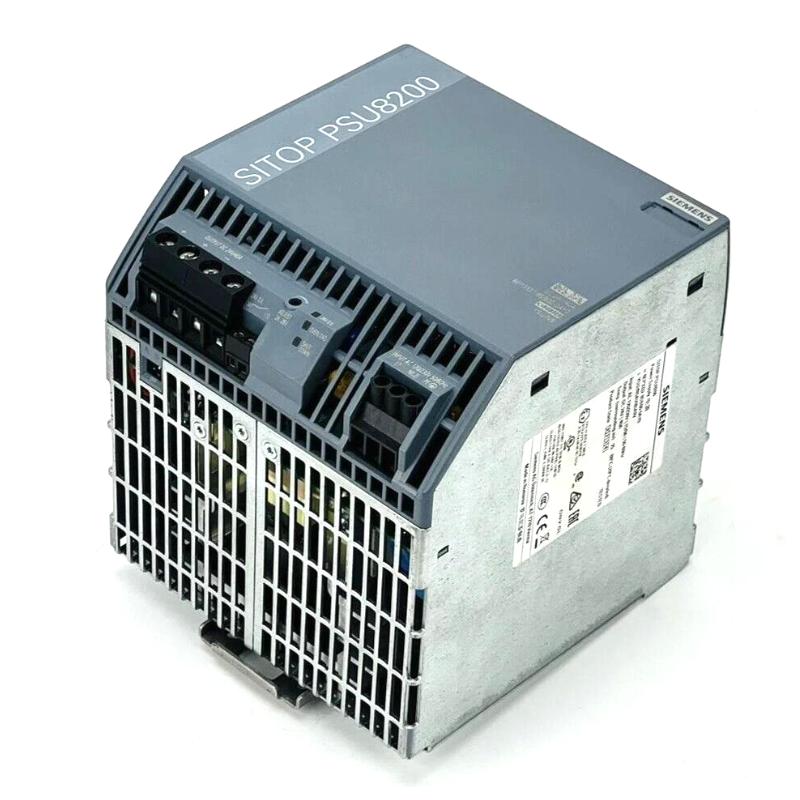
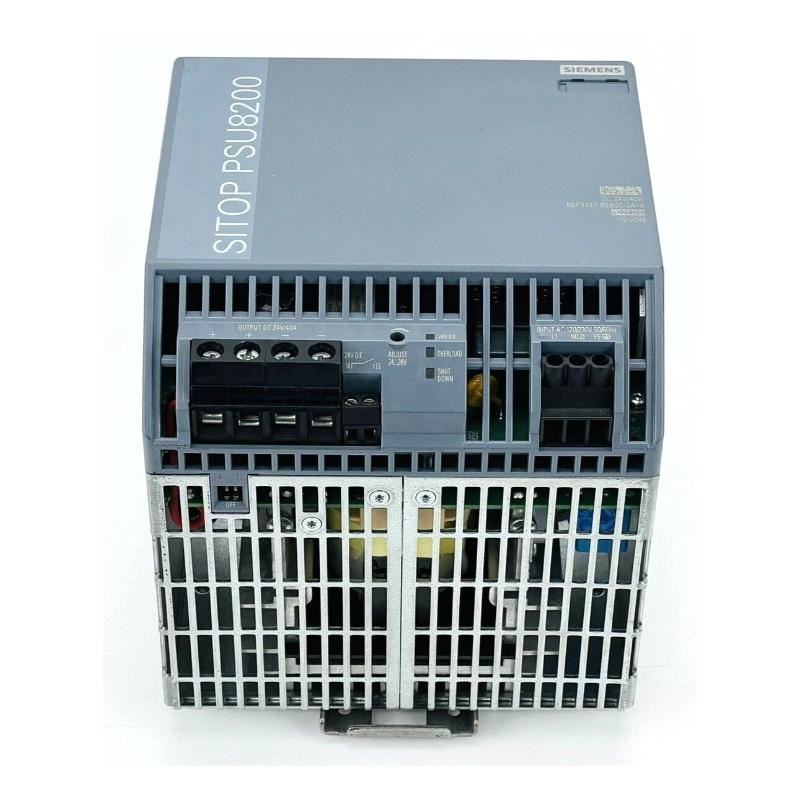
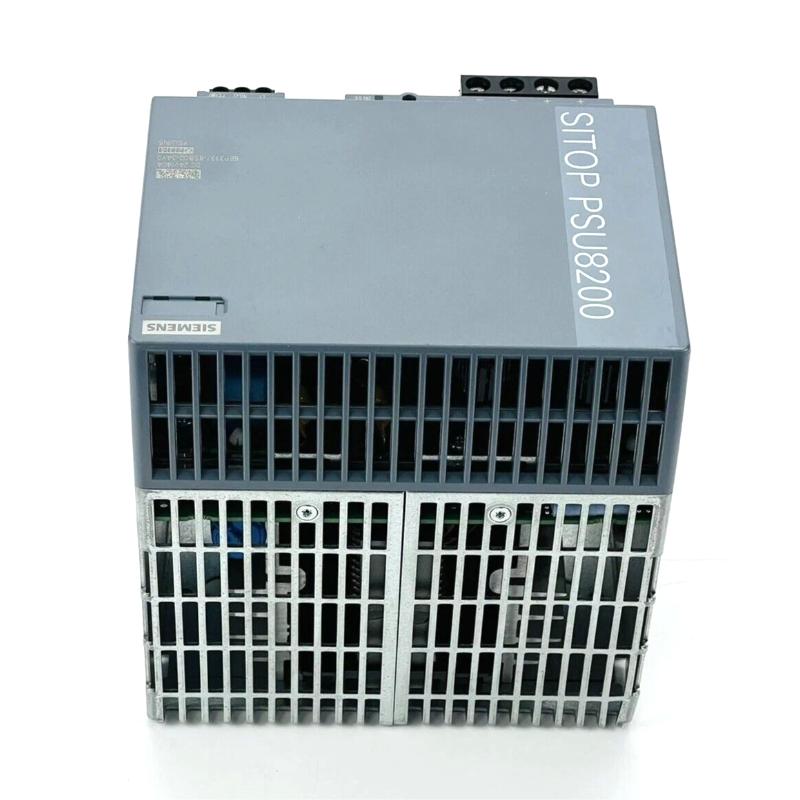
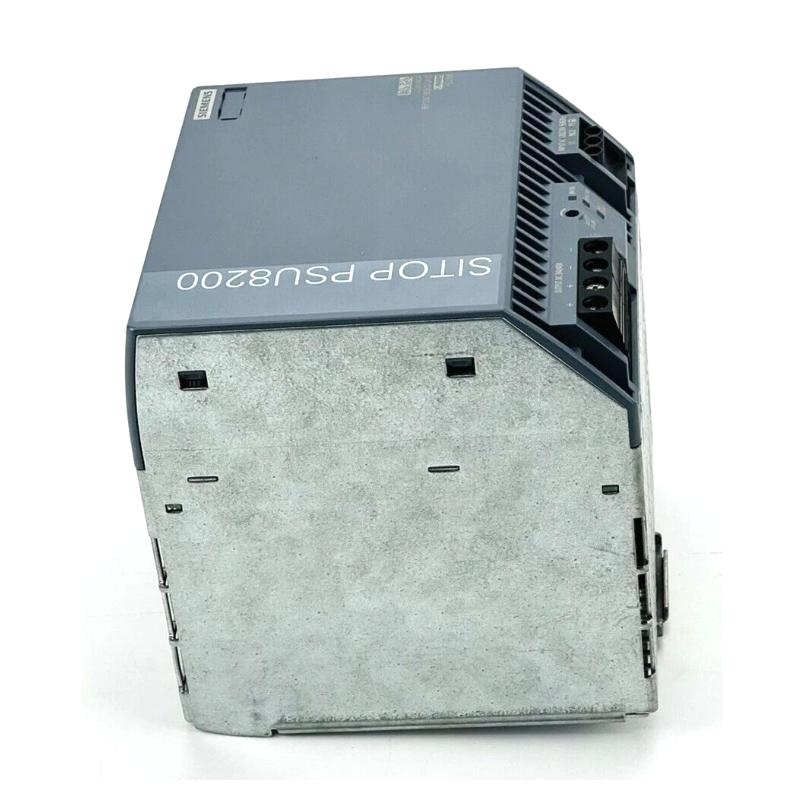
- Siemens
- 6AG1337-8SB00-7AY0
- Power Supply Module
- Germany
- 145 × 145 × 150 mm
- 3.417 kg
- Xiamen, China
- New & In Stock
- T/T, PayPal, Western Union
- 1 Year
- 1-3 Working Days
- DHL, UPS, TNT, FedEx and EMS.
- 24-Hour Service
- COO
- 58
Our advantage

Global Logistics
We have a 10-year logistics and express cooperation agreement, so our products can be shipped to any place in the world.

Brand new and original
Our products are imported in bulk from the place of origin. Because of the cooperative relationship, our products are all original and 100% new.

24-hour service
We provide 7*24 hours service to our customers. We will be there whenever you need us.

Price advantage
All our products are priced very favorably because we have our own warehouse and supply.
| Company Information | |||
| [email protected] | |||
| Mobile | +8615980777398 | ||
| +8615980777398 | |||
| 15980777398 |
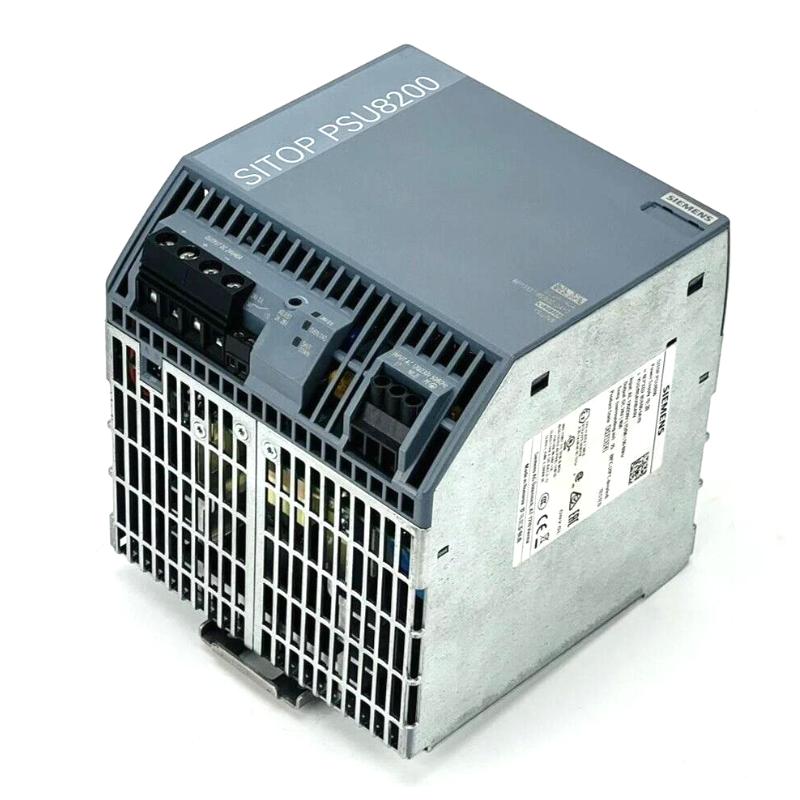
Product Overview
The Siemens 6AG1337-8SB00-7AY0 SIPLUS PS Power Supply Module is a SIPLUS power supply component used with Siemens industrial automation systems. It belongs to the SIPLUS range, which is intended for automation installations where environmental conditions can be more demanding than those encountered in a conventional control cabinet.
In an automation cabinet, the power supply module sits at the front end of the control-system power architecture. Before the CPU, I/O modules, and other electronics can perform their intended functions, they need a suitable and continuously available power source. The PS module handles this basic but essential part of the station.
The 6AG1337-8SB00-7AY0 is particularly relevant when an automation station is installed in locations exposed to temperature variations, humidity, condensation, or other environmental stresses. Rather than treating the power supply as an independent device, engineers should consider it together with the PLC rack, connected modules, cabinet ventilation, incoming power, and total system load.
During maintenance, a PLC that fails to start does not automatically indicate a defective PS module. Incoming voltage, terminal connections, downstream loading, short circuits, and other rack components can produce similar symptoms. Checking the complete power path before replacement can prevent unnecessary component changes.
Technical Specifications
| Parameter | Specification |
|---|---|
| Manufacturer | Siemens |
| Model | 6AG1337-8SB00-7AY0 |
| Product Family | SIPLUS |
| Product Series | S7-300 |
| Product Type | SIPLUS PS Power Supply Module |
| System Role | PLC System Power Supply |
| Application | Industrial Automation |
| Platform | Siemens SIMATIC S7-300 |
| Installation | S7-300 Automation Station |
| Dimensions | 145 × 145 × 150 mm |
| Weight | 3.417 kg |
Product Features
The 6AG1337-8SB00-7AY0 belongs to the SIPLUS power-supply range and is intended for use in industrial automation environments requiring an appropriately selected power architecture.
- Siemens SIPLUS PS Power Supply Module
- Model 6AG1337-8SB00-7AY0
- Associated with the SIMATIC S7-300 automation platform
- Serves as a power-supply component within the PLC station
- Intended for industrial automation installations
- SIPLUS variant for demanding environmental conditions
- Suitable for control cabinets and industrial equipment
- Relevant to PLC maintenance and replacement work
- Requires consideration of system load and incoming supply
- Can be integrated into an S7-300-based control architecture
For replacement work, engineers should verify the complete order number rather than selecting a module only because it has a similar physical form or nominal product category.
Working Principle
The 6AG1337-8SB00-7AY0 can be viewed as the electrical starting point of the PLC station.
A simplified power path is:
Incoming Electrical Supply → SIPLUS PS Module → PLC Rack / System Electronics → CPU and I/O Modules
The module accepts the available input power and converts it into the operating supply required by the associated automation hardware.
Once energized, the power supply supports the electronics in the PLC station. The CPU can then initialize, system modules can communicate through the rack architecture, and I/O modules can perform their assigned signal-processing functions.
From a troubleshooting perspective, the sequence is useful:
Input Power → PS Module → Rack Power → CPU Startup → I/O Operation
If the CPU does not start, engineers can work through these stages instead of immediately replacing the power supply. A missing input supply and an overloaded downstream circuit can produce symptoms that resemble PS-module failure.
The module’s role becomes especially noticeable during cabinet maintenance. A single power-supply problem can affect multiple PLC functions at once because the PS stage sits upstream of the control electronics.
Role in a SIPLUS / S7-300 Control Architecture
The PS module establishes the power foundation for the automation station.
A typical system relationship can be represented as:
Power Source → 6AG1337-8SB00-7AY0 → S7-300 Rack → CPU → Signal Modules → Field Equipment
| System Element | Function |
|---|---|
| 6AG1337-8SB00-7AY0 | Supplies the automation station |
| S7-300 Rack | Integrates the PLC modules |
| S7-300 CPU | Executes the control program |
| Digital Input Modules | Acquire binary field signals |
| Digital Output Modules | Control discrete devices |
| Analog Input Modules | Acquire process measurements |
| Analog Output Modules | Generate analog control signals |
| Communication Modules | Connect the PLC to external systems |
| Field Devices | Provide measurements and receive commands |
| Control Cabinet | Houses the automation equipment |
The power supply is therefore upstream of the CPU and signal modules. When diagnosing a complete station failure, this location in the architecture makes the PS module one of the first areas to verify.
SIPLUS Environmental Application
One of the main reasons to consider a SIPLUS version is the installation environment.
Standard automation hardware is commonly installed inside controlled electrical cabinets, while some industrial installations experience considerably more variable conditions. Examples include equipment installed in production areas with temperature fluctuations, transportation infrastructure, outdoor machinery, and locations where condensation or elevated humidity can become a concern.
The 6AG1337-8SB00-7AY0 can therefore be considered when the automation station requires SIPLUS-class hardware for its environmental conditions.
However, the environmental suitability of the entire installation still needs to be evaluated. Installing a SIPLUS module does not eliminate the need for appropriate cabinet design, electrical protection, ventilation, condensation management, and correct wiring.
Industrial Applications
| Application | Typical Use |
|---|---|
| Factory Automation | Powering PLC-based control stations |
| Production Machinery | Supporting S7-300 automation electronics |
| Transportation Systems | Automation equipment exposed to changing environments |
| Industrial Infrastructure | PLC control stations in demanding locations |
| Outdoor Equipment | Control cabinets requiring enhanced environmental suitability |
| Process Machinery | Supplying PLC CPU and I/O hardware |
| Utility Systems | Supporting monitoring and control equipment |
| Manufacturing Lines | Maintaining PLC system power architecture |
The actual suitability depends on the environmental conditions, system configuration, and applicable installation requirements.
Installation and Maintenance
Power-supply maintenance should begin with electrical and load checks rather than simply exchanging the module.
A practical inspection sequence includes:
- Confirm the complete 6AG1337-8SB00-7AY0 order number.
- Verify the installed PLC platform.
- Check the incoming electrical supply.
- Inspect terminal connections.
- Check for loose, damaged, or overheated conductors.
- Review the connected PLC hardware.
- Consider the total system power demand.
- Inspect the cabinet for excessive heat or poor ventilation.
- Check for visible signs of moisture or condensation.
- Isolate the electrical supply before removing the module.
- Follow the applicable electrical safety procedure.
- Install the replacement module correctly.
- Recheck all power connections before energizing.
- Monitor the PLC during startup.
- Check CPU diagnostic information.
- Confirm the connected I/O modules initialize correctly.
- Verify communication with relevant external devices.
- Observe the station after returning it to normal operation.
If a replacement PS module repeatedly shuts down or the PLC continues to reset, the next step should be to investigate downstream loading, wiring, and connected modules rather than assuming that the replacement unit has the same fault.
Compatible System Components
The 6AG1337-8SB00-7AY0 works as part of a complete PLC station. Its practical compatibility therefore depends on the rack and automation hardware surrounding it.
| Component | Function |
|---|---|
| SIMATIC S7-300 Rack | Mechanical and electrical module integration |
| S7-300 CPU | PLC program execution |
| Digital Input Module | Acquisition of discrete signals |
| Digital Output Module | Control of discrete actuators |
| Analog Input Module | Acquisition of analog process values |
| Analog Output Module | Analog signal output |
| Communication Processor | External system communication |
| Signal Modules | Interface with field instrumentation |
| PLC Backplane / Rack Architecture | Connects installed modules |
| Control Cabinet | Provides physical installation and environmental protection |
For replacement planning, the PS module should be evaluated together with the complete rack configuration rather than in isolation.
Recommended Related Models
For SEO and product catalog purposes, the following recommendations focus on SIPLUS and S7-300 power and control hardware that may be relevant to the same type of automation architecture.
| Model / Product Family | Product Type | Typical Application |
|---|---|---|
| Siemens 6AG1337-8SB00-7AY0 | SIPLUS PS Power Supply Module | S7-300 automation station power supply |
| Siemens 6AG1337-3BA00-7AA0 | SIPLUS PS Power Supply Module | S7-300 PLC system power supply |
| Siemens 6AG1315-2EH14-2AB0 | SIPLUS S7-300 CPU | PLC control applications |
| Siemens 6AG3317-2AK14-2AB0 | SIPLUS S7-300 CPU | Higher-performance PLC control |
| Siemens 6AG1321-1BL00-2AA0 | SIPLUS S7-300 Digital Input Module | Discrete signal acquisition |
| Siemens 6AG1322-1BL00-2AA0 | SIPLUS S7-300 Digital Output Module | Discrete output control |
| Siemens 6AG1331-7KF02-2AB0 | SIPLUS S7-300 Analog Input Module | Process signal acquisition |
| Siemens 6AG1332-5HF00-2AB0 | SIPLUS S7-300 Analog Output Module | Analog control applications |
Key Advantages
- Siemens SIPLUS PS Power Supply Module.
- Model 6AG1337-8SB00-7AY0.
- Associated with the S7-300 automation platform.
- Used as the power stage of the PLC station.
- Suitable for demanding industrial environments.
- Relevant to SIPLUS-based automation installations.
- Supports S7-300 CPU and I/O system operation.
- Suitable for PLC maintenance and replacement applications.
Technical FAQs
What role does 6AG1337-8SB00-7AY0 have in an S7-300 station?
It serves as the power-supply component for the automation station. Its position upstream of the CPU and I/O hardware means that a power-supply problem can affect multiple PLC functions simultaneously.
Why should the total PLC load be checked before replacing this PS module?
A power supply can behave abnormally when the downstream load exceeds what the station’s power architecture can support. If the load condition is not corrected, installing another PS module may simply reproduce the same problem.
What environmental factors should be considered when using a SIPLUS power supply?
Temperature variation, humidity, condensation, installation location, cabinet conditions, and other environmental stresses should be considered. The complete control cabinet and automation station need to meet the requirements of the application, not just the power-supply module.
What symptoms can indicate a problem in the PLC power path?
Typical symptoms can include failure of the CPU to start, unexpected PLC resets, loss of several modules at once, or abnormal diagnostic indications. Engineers should check the incoming supply, connections, PS module, downstream load, and rack configuration systematically.