

ProductPRODUCT
Featured products
Contact Us
- Siemens
- 6AG1242-6TM10-2BB1
- Charging Controller
- Germany
- 20 x 73 x 58 mm
- 0.045 kg
- Xiamen, China
- New & In Stock
- T/T, PayPal, Western Union
- 1 Year
- 1-3 Working Days
- DHL, UPS, TNT, FedEx and EMS.
- 24-Hour Service
- COO
- 5
Our advantage

Global Logistics
We have a 10-year logistics and express cooperation agreement, so our products can be shipped to any place in the world.

Brand new and original
Our products are imported in bulk from the place of origin. Because of the cooperative relationship, our products are all original and 100% new.

24-hour service
We provide 7*24 hours service to our customers. We will be there whenever you need us.

Price advantage
All our products are priced very favorably because we have our own warehouse and supply.
| Company Information | |||
| [email protected] | |||
| Mobile | +8615980777398 | ||
| +8615980777398 | |||
| 15980777398 |
Product Overview
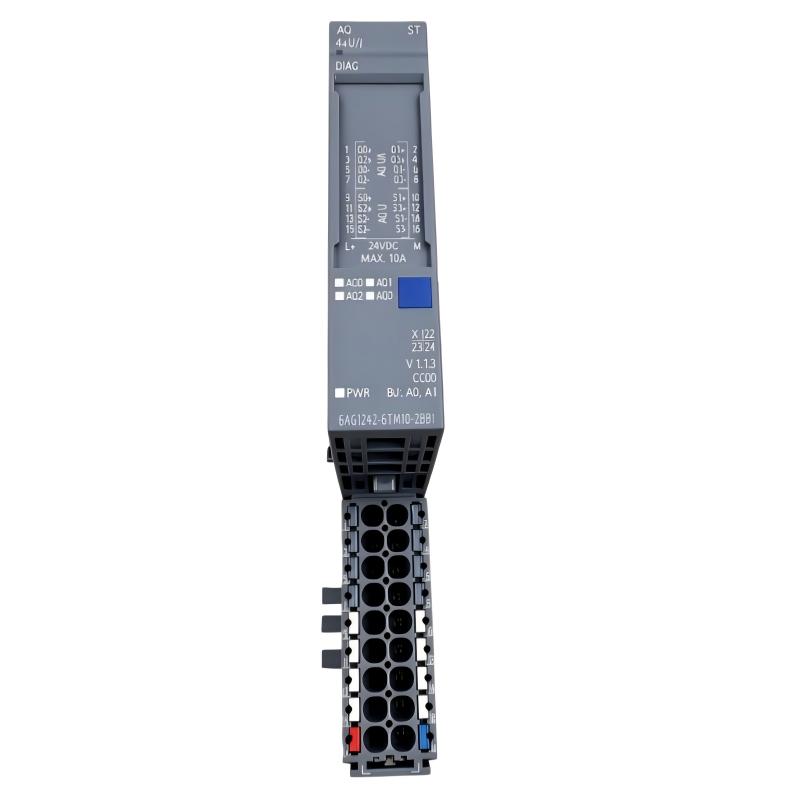
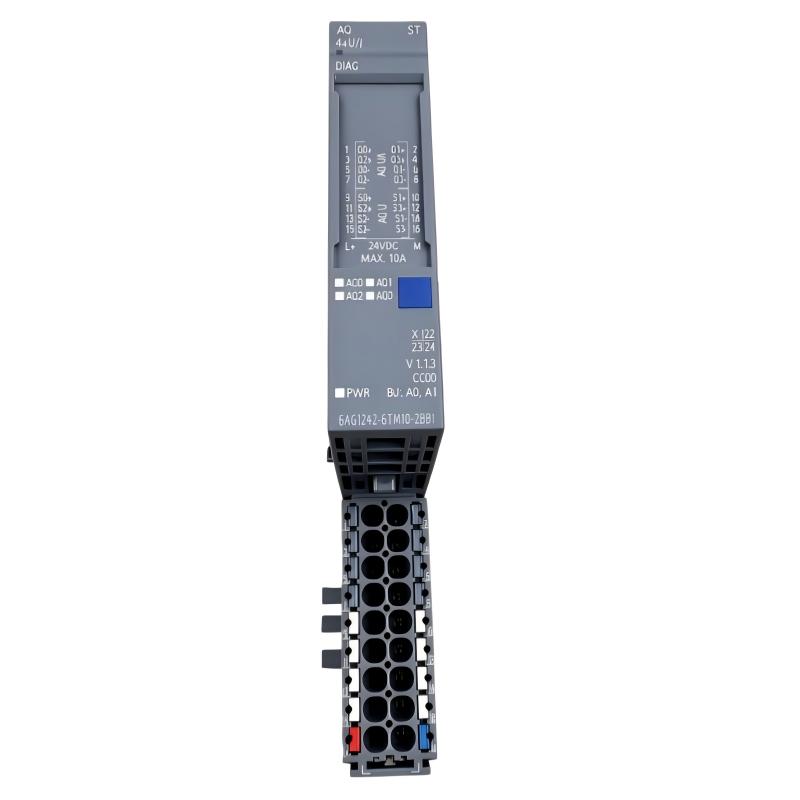
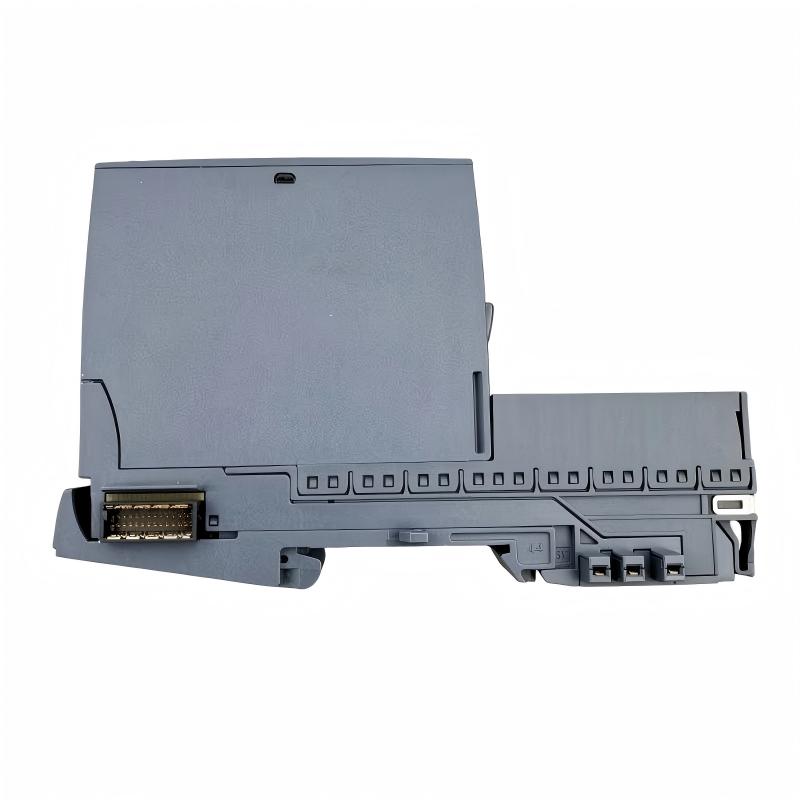
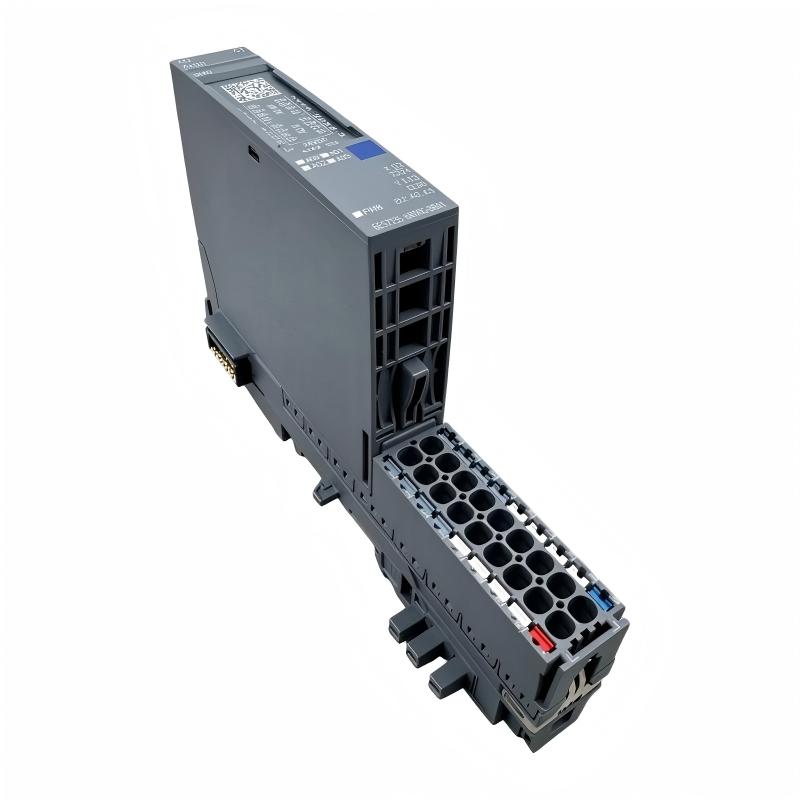
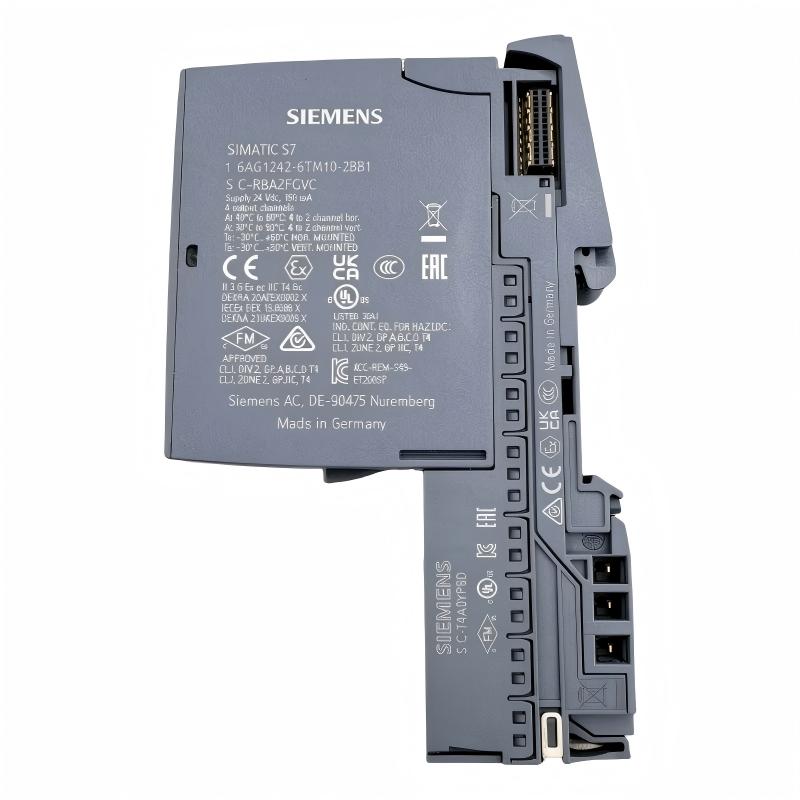
The Siemens 6AG1242-6TM10-2BB1 is a SIPLUS ET 200SP TM ECC 2xPWM ST charging controller designed for managing conductive AC charging of electric vehicles. It is a specialized technology module within the Siemens ET 200SP automation platform, providing control and monitoring functions for charging outlets in industrial and commercial charging infrastructure.
Unlike a conventional battery charger, this module does not directly convert grid power into battery-charging power. Instead, it manages the control signals and operating conditions required for a compatible AC charging system. It communicates with the electric vehicle through the Control Pilot interface and coordinates charging-related signals with the charging station’s electrical control equipment.
The module supports two independent charging outlets according to IEC 61851 and SAE J1772-related control requirements. Its functions include Control Pilot signal generation and evaluation, plug-presence detection, load-contactor control, and feedback monitoring. These functions help the charging station determine whether a vehicle is connected and whether charging can proceed under the required conditions.
The 6AG1242-6TM10-2BB1 is based on the Siemens 6FE1242-6TM10-0BB1 ET 200SP TM ECC 2xPWM ST technology module. As a SIPLUS product, it includes conformal coating and is designed for operation in more demanding environmental conditions than the corresponding standard module.
With its compact ET 200SP design, the module can be integrated into distributed automation architectures where charging equipment is coordinated by a PLC or other industrial controller. It is suitable for applications such as electric vehicle charging stations, fleet charging facilities, industrial charging infrastructure, and automated energy-management systems.
Technical Specifications
| Parameter | Specification |
|---|---|
| Brand | Siemens |
| Product Series | SIPLUS ET 200SP |
| Model | 6AG1242-6TM10-2BB1 |
| Product Type | Charging Controller / Technology Module |
| Product Designation | TM ECC 2xPWM ST |
| Base Module | 6FE1242-6TM10-0BB1 |
| Main Function | Conductive AC charging control |
| Charging Standard | IEC 61851 |
| Supported Charging Interfaces | 2 charging outlets |
| Control Pilot Channels | 2 |
| Plug-Presence Inputs | 2 |
| Digital Outputs | 2 |
| Output Type | Open-collector switching outputs |
| Digital Inputs | 2 |
| Control Pilot Output | PWM |
| Rated Supply Voltage | 24 V DC |
| Permissible Supply Range | 19.2–28.8 V DC |
| Vehicle Charging Mode | Mode 3 |
| Conformal Coating | Included |
| Operating Temperature | -30°C to +60°C, depending on mounting orientation |
| Protection Rating | IP20 |
| Mounting System | SIMATIC ET 200SP |
| Dimensions Provided | 20 × 73 × 58 mm |
| Weight Provided | 0.045 kg |
| Typical Application | Electric vehicle AC charging infrastructure |
Note: Dimensions and weight are the supplied listing values. Verify the physical module dimensions and packaging measurements before using them for cabinet layout or shipping calculations.
Function and Working Principle
The Siemens 6AG1242-6TM10-2BB1 manages the control communication between an electric vehicle and the charging station. Its operation is based on the control signals defined for conductive AC charging.
1. Control Pilot Signal Generation
The Control Pilot function is central to the communication between an AC charging station and a connected electric vehicle.
The module generates PWM-based Control Pilot signals that allow the vehicle to identify the charging station’s operating conditions and available charging-current information. The vehicle responds through the Control Pilot circuit, allowing the charging system to evaluate whether the connection is ready for charging.
The module provides two Control Pilot channels for two charging outlets. This allows a charging installation to manage two separate vehicle connections through a suitable control architecture.
2. Plug-Presence Detection
The module supports two plug-presence detection inputs, one for each charging channel.
These signals help the charging system identify whether a charging connector is connected to a vehicle. The controller can use this information as part of its charging sequence and safety interlocking logic.
Plug detection is important because the charging station must distinguish between an unused outlet, a connected vehicle, and a charging session that is ready to proceed.
3. Load Contactor Control
The charging controller provides two digital switching outputs for controlling load contactors. These outputs use an open-collector configuration.
The load contactor is an important part of the charging station’s power circuit. It connects or disconnects the electrical supply to the charging outlet according to the charging system’s control logic.
The controller coordinates its output signals with the vehicle’s charging status and the wider safety arrangement. The contactor itself must be correctly rated for the electrical system and installed with suitable protection.
4. Contactor Feedback and Connector Lock Monitoring
The module provides digital inputs that can be used to monitor load-contactor feedback or connector-lock status, depending on the application configuration.
Feedback signals allow the charging controller to evaluate whether the commanded switching or locking operation has occurred. This helps identify abnormal conditions, such as a contactor that does not respond as expected or a connector-locking sequence that has not completed.
The exact assignment of inputs and outputs must be established during engineering and commissioning.
5. Two-Channel Charging Management
The 6AG1242-6TM10-2BB1 supports two charging outlets. Each channel has its own relevant Control Pilot and connection-status functions.
This arrangement can simplify the control architecture of charging stations that need to coordinate two vehicle connections. It also allows charging operations to be integrated into a centralized monitoring and automation system.
The module manages control signals rather than supplying charging power directly. Power conversion, electrical protection, contactor selection, and distribution remain responsibilities of the overall charging-station design.
Role in Industrial Automation Systems
The 6AG1242-6TM10-2BB1 is designed to work as part of a Siemens SIMATIC ET 200SP automation system. Its role is to provide specialized charging-control functions within a broader PLC-based architecture.
PLC-Based Charging Management
A PLC can coordinate charging operations, monitor system conditions, and manage the overall operating sequence.
The charging controller provides the dedicated signals needed for vehicle connection detection and Control Pilot communication. The PLC can use the resulting status information to coordinate charging authorization, equipment interlocks, and supervisory functions.
The exact PLC interface and data exchange arrangement depend on the ET 200SP station configuration and the selected controller.
Distributed I/O Architecture
The ET 200SP platform supports distributed automation installations in which I/O and technology modules are positioned close to the equipment they control.
This is useful in charging facilities where several charging outlets are distributed across a parking area, production site, or vehicle depot. A distributed architecture can reduce the need for extensive centralized signal wiring.
The 6AG1242-6TM10-2BB1 is installed as part of a compatible ET 200SP station. The required interface modules, BaseUnits, and system components must be selected according to Siemens configuration rules.
Charging Station Coordination
The module can be integrated into a larger charging-station control system that includes power contactors, connector locks, protection devices, meters, communication equipment, and supervisory software.
Its signals help coordinate the vehicle connection and charging-control process. Higher-level control systems can use operating information to manage multiple charging points and coordinate charging activity with facility power-management requirements.
Industrial Energy Management
In industrial facilities, charging equipment may operate alongside manufacturing loads, building systems, and other electrical consumers.
A PLC-based control architecture can coordinate charging permissions and operating schedules with the facility’s energy-management strategy. The charging controller supplies the dedicated charging-interface functions needed for this arrangement.
Industrial Applications
The Siemens 6AG1242-6TM10-2BB1 is intended for conductive AC charging control. Its two-channel design makes it suitable for charging installations that need to manage two vehicle outlets through a compatible ET 200SP system.
1. Electric Vehicle Charging Stations
The module can be used in AC charging stations where vehicle connection status, Control Pilot communication, and load-contactor control must be coordinated.
It helps manage the control sequence between the charging outlet and the connected vehicle according to the applicable charging standard.
2. Commercial Fleet Charging Facilities
Companies operating electric delivery vehicles, service vehicles, or commercial fleets may install multiple charging outlets at a central depot.
The two-channel functionality can support charging-control arrangements where two vehicle connections are managed by one technology module. A higher-level PLC can coordinate charging permissions and facility operating schedules.
3. Industrial Vehicle Depots
Factories, logistics centers, and distribution facilities increasingly use electric vehicles and material-handling equipment.
Charging infrastructure in these environments may need to be integrated with industrial automation systems. The SIPLUS charging controller provides dedicated interface functions for this purpose.
4. Automated Parking and Charging Systems
Automated parking facilities may combine vehicle positioning, connector handling, charging authorization, and monitoring functions.
The module’s plug-presence detection and connector-related control signals can form part of a coordinated charging sequence. Additional mechanical, electrical, and safety components are required to complete the installation.
5. Energy-Managed Charging Infrastructure
In installations where charging demand must be coordinated with other electrical loads, a PLC or supervisory system can manage charging schedules and permissions.
The 6AG1242-6TM10-2BB1 can provide the charging-interface signals required by the control architecture. Energy metering, load calculation, and power allocation must be handled by suitable additional equipment and software.
Installation and System Integration
The 6AG1242-6TM10-2BB1 must be installed as part of a compatible SIMATIC ET 200SP station. Correct hardware selection, wiring, and configuration are essential for reliable charging control.
1. Verify the Complete Order Number
Before installation, confirm the complete part number: 6AG1242-6TM10-2BB1.
The SIPLUS version is based on the 6FE1242-6TM10-0BB1 technology module and includes conformal coating. Do not assume that a standard ET 200SP module with a similar description has identical environmental specifications.
2. Select Compatible ET 200SP Components
The module must be installed in a compatible ET 200SP station with the appropriate BaseUnit and interface arrangement.
Check the Siemens hardware configuration information for the correct mounting and station requirements. Confirm that the selected controller and system configuration support the technology module.
3. Provide the Correct 24 V DC Supply
The module uses a 24 V DC supply with a permissible range of 19.2–28.8 V DC.
The power supply should provide adequate capacity for the complete control system. Verify grounding, common references, and wiring arrangements according to the system design.
4. Connect Control Pilot Circuits
The two Control Pilot channels must be wired according to the charging-station design and the applicable IEC 61851 requirements.
Use suitable conductors and follow the specified wiring practices. Keep signal wiring properly organized and protected from interference generated by power circuits.
5. Connect Plug Detection and Contactor Feedback
The two digital inputs can be assigned to plug-presence, contactor-feedback, or connector-lock monitoring functions according to the selected application.
The wiring and signal assignment should be documented clearly so that commissioning engineers can verify each channel independently.
6. Configure Digital Outputs
The module provides two open-collector digital outputs for load-contactor control.
The contactor interface must be designed with suitable electrical ratings and any required interface or protection components. Confirm the output characteristics before connecting external loads.
7. Configure and Test the Charging Sequence
After installation, configure the technology module and integrate its signals into the PLC application.
Test both charging channels independently. Verify plug detection, Control Pilot operation, connector-lock feedback where used, contactor commands, and fault-handling behavior.
Testing should be performed under controlled conditions before the charging station is released for normal operation.
Compatible System Components
The 6AG1242-6TM10-2BB1 is part of a wider charging-control and automation system. The following components may be used in a compatible installation, depending on the station architecture.
| Component | Function | Integration Considerations |
|---|---|---|
| SIMATIC ET 200SP interface module | Connects the distributed I/O station to the automation controller | Confirm compatibility with the selected ET 200SP configuration |
| Compatible ET 200SP BaseUnit | Provides module mounting and electrical connection | Select the BaseUnit specified for the technology module |
| SIMATIC S7 PLC | Executes charging-control and supervisory logic | Verify hardware and engineering-software compatibility |
| 24 V DC power supply | Supplies control power | Maintain the specified 19.2–28.8 V DC range |
| AC charging connector | Connects the vehicle to the charging station | Select according to regional standards and charging design |
| Load contactor | Switches the charging power circuit | Match voltage, current, utilization category, and protection requirements |
| Connector locking mechanism | Secures the charging connector where required | Coordinate locking and feedback signals with the control logic |
| Circuit protection devices | Protect the electrical power circuit | Select according to the installation’s electrical design and applicable standards |
| Energy meter | Measures charging energy consumption | Integrate with the charging-management system as required |
| Supervisory control system | Monitors charging stations and facility energy use | Confirm communication and data-integration requirements |
These are system-level components and are not necessarily included with the charging controller.
Alternative Models and Replacement Considerations
When replacing the 6AG1242-6TM10-2BB1, it is important to distinguish between the SIPLUS version and its underlying standard technology module.
| Model or Product | Description | Replacement Considerations |
|---|---|---|
| Siemens 6FE1242-6TM10-0BB1 | SIMATIC ET 200SP TM ECC 2xPWM ST charging controller | Related base technology module; verify environmental requirements and configuration |
| Siemens 6AG1242-6TM10-2BB1 | SIPLUS ET 200SP TM ECC 2xPWM ST | SIPLUS version with conformal coating and extended environmental suitability |
| Siemens 6FE1242-6TM20-0BB1 | ET 200SP charging technology module for a different charging-control application | Not a direct substitute; compare charging mode and communication functions |
| Other ET 200SP technology modules | Provide different specialized automation functions | Must be evaluated against the required charging-interface functionality |
Before selecting an alternative, compare:
- Number of supported charging outlets.
- Control Pilot channel configuration.
- IEC 61851 and SAE J1772-related functions.
- Plug-presence detection.
- Digital input and output assignments.
- Load-contactor control requirements.
- Connector-lock monitoring.
- 24 V DC supply requirements.
- Environmental operating range.
- Conformal-coating requirements.
- ET 200SP station and BaseUnit compatibility.
- PLC hardware and engineering configuration.
A module with a similar physical size or product-family name may not provide the same charging-control functions.
Key Advantages
Two Charging Channels
The module supports two charging outlets, allowing a compatible charging station to manage two vehicle connections through one technology module.
IEC 61851 Charging Control
Its Control Pilot functions support conductive AC charging control according to IEC 61851, providing the interface needed for vehicle-to-charging-station status coordination.
Integrated Contactor Control
Two digital outputs support load-contactor control, allowing the charging sequence to be coordinated with the station’s electrical power circuit.
Plug and Feedback Monitoring
Digital inputs support plug-presence detection and feedback functions, helping the control system monitor connection and switching conditions.
SIPLUS Environmental Design
The conformal coating and extended temperature capability make the SIPLUS version suitable for applications with more demanding environmental conditions than standard indoor automation installations.
ET 200SP System Integration
The module is designed for the Siemens ET 200SP platform, supporting integration into distributed automation architectures.
Compact Technology Module
Its compact design allows charging-control functions to be incorporated into an ET 200SP station without requiring a separate standalone controller for every individual signal function.
Technical FAQs
1. What is the Siemens 6AG1242-6TM10-2BB1?
It is a SIPLUS ET 200SP TM ECC 2xPWM ST charging controller designed for controlling conductive AC charging of electric vehicles. It provides Control Pilot, plug-detection, and load-contactor control functions.
2. Is this module a battery charger?
No. It is a charging-control module, not a power-conversion charger. It manages communication and control signals between the electric vehicle and the charging station. The charging power circuit requires separate electrical equipment.
3. How many charging outlets does it support?
It supports two charging outlets. Each channel has dedicated charging-control functions for coordinating vehicle connection and charging status.
4. Which charging standard does it support?
The module is designed for conductive AC charging according to IEC 61851 and supports the relevant Control Pilot functions associated with Mode 3 charging.
5. What is the required supply voltage?
The module uses 24 V DC. Its permissible supply range is 19.2–28.8 V DC.
6. What is the function of the Control Pilot interface?
The Control Pilot interface provides the communication signals used to coordinate the charging station and the connected electric vehicle. It helps identify charging states and communicate available charging-current information.
7. Does the module support load-contactor control?
Yes. It provides two digital switching outputs with an open-collector configuration for load-contactor control.
8. What is the difference between the 6AG1242-6TM10-2BB1 and 6FE1242-6TM10-0BB1?
The 6AG1242-6TM10-2BB1 is the SIPLUS version based on the 6FE1242-6TM10-0BB1 technology module. The SIPLUS version includes conformal coating and an extended environmental operating range.
9. What is the operating temperature range?
The documented operating range is -30°C to +60°C for horizontal mounting. The permitted upper temperature is lower for vertical mounting, so the mounting orientation must be considered during installation.
10. Can the module work with a Siemens S7 PLC?
It is designed for integration into a SIMATIC ET 200SP automation architecture. The appropriate interface module, controller, BaseUnit, and engineering configuration must be selected to ensure system compatibility.
Procurement and Maintenance Recommendations
When purchasing the Siemens 6AG1242-6TM10-2BB1, verify the complete order number and confirm that the required product is the SIPLUS ET 200SP TM ECC 2xPWM ST charging controller.
Check the product label, physical condition, connector condition, and any available functional-test information. For replacement projects, confirm whether the original installation uses the SIPLUS version or the standard 6FE1242-6TM10-0BB1 module. Environmental requirements may make this distinction important.
Before ordering, verify the required BaseUnit, ET 200SP interface module, PLC compatibility, and control-system configuration. Confirm that the replacement supports two charging outlets and the same Control Pilot, plug-detection, and load-contactor functions.
During maintenance, inspect the module and surrounding cabinet for dust, moisture, contamination, and signs of mechanical damage. Check the 24 V DC supply and wiring connections, and verify that the charging-control signals operate correctly on both channels.
Keep the PLC configuration, module parameters, and wiring documentation up to date. When replacing the module, perform a controlled test of both charging outlets, including connector detection, Control Pilot communication, contactor operation, and feedback monitoring.
Conclusion
The Siemens 6AG1242-6TM10-2BB1 SIPLUS ET 200SP TM ECC 2xPWM ST is a specialized charging controller for conductive AC charging of electric vehicles. It supports two charging outlets and provides Control Pilot communication, plug-presence detection, digital load-contactor control, and feedback functions according to the relevant IEC 61851 charging requirements.
With its conformal coating, extended environmental capability, and integration into the SIMATIC ET 200SP platform, the module is suitable for industrial and commercial charging-control installations. Accurate product identification and system compatibility checks are essential when purchasing, installing, or replacing this module.