

ProductPRODUCT
Featured products
Contact Us
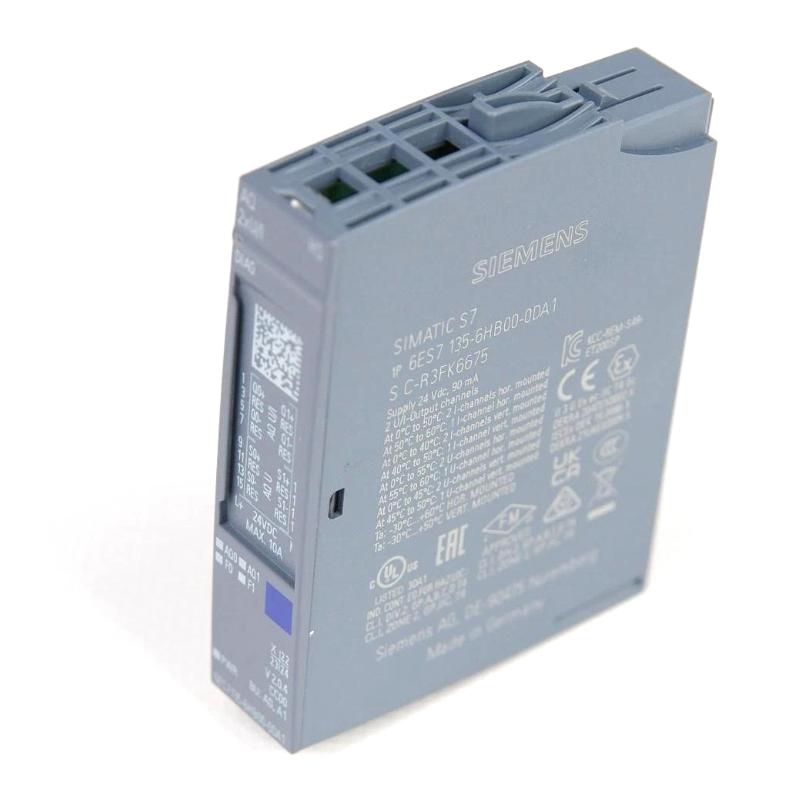
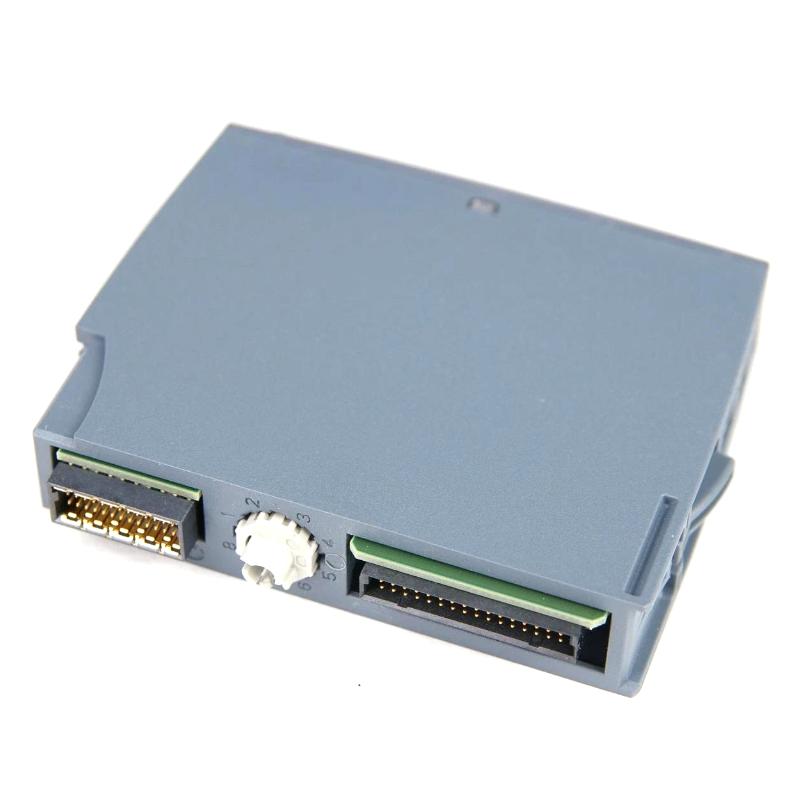
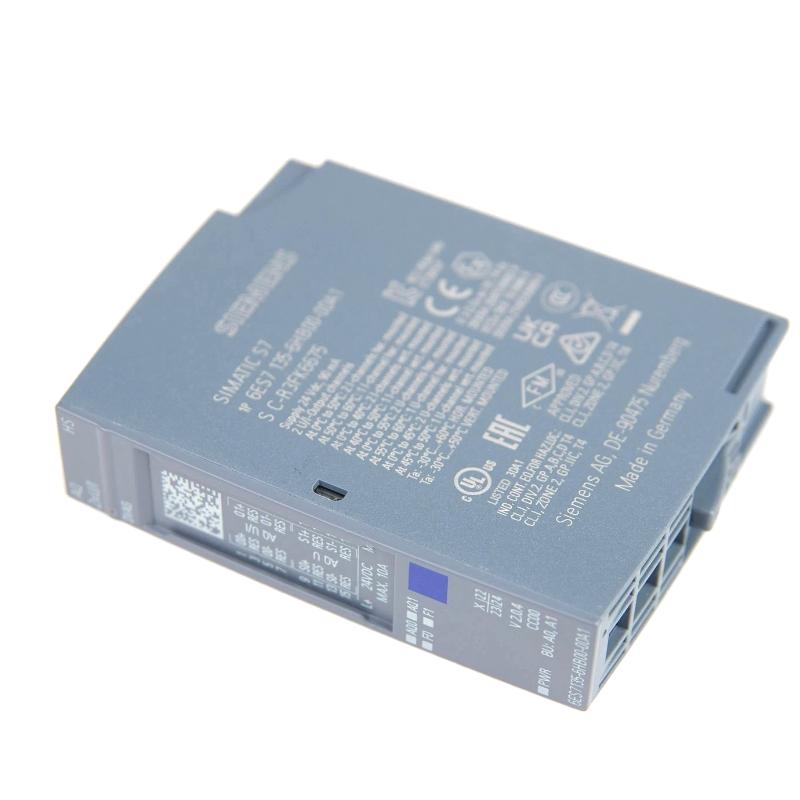
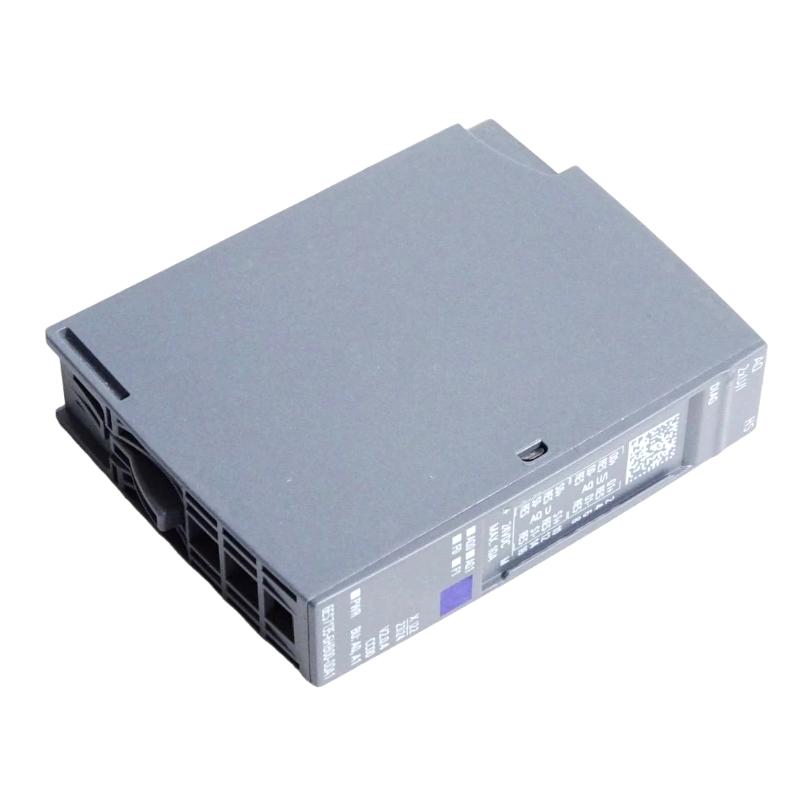
- Siemens
- 6AG1135-6HB00-2DA1
- Analog Output Module
- Germany
- 15 × 73 × 58 mm
- 0.042 kg
- Xiamen, China
- New & In Stock
- T/T, PayPal, Western Union
- 1 Year
- 1-3 Working Days
- DHL, UPS, TNT, FedEx and EMS.
- 24-Hour Service
- COO
- 51
Our advantage

Global Logistics
We have a 10-year logistics and express cooperation agreement, so our products can be shipped to any place in the world.

Brand new and original
Our products are imported in bulk from the place of origin. Because of the cooperative relationship, our products are all original and 100% new.

24-hour service
We provide 7*24 hours service to our customers. We will be there whenever you need us.

Price advantage
All our products are priced very favorably because we have our own warehouse and supply.
| Company Information | |||
| [email protected] | |||
| Mobile | +8615980777398 | ||
| +8615980777398 | |||
| 15980777398 |
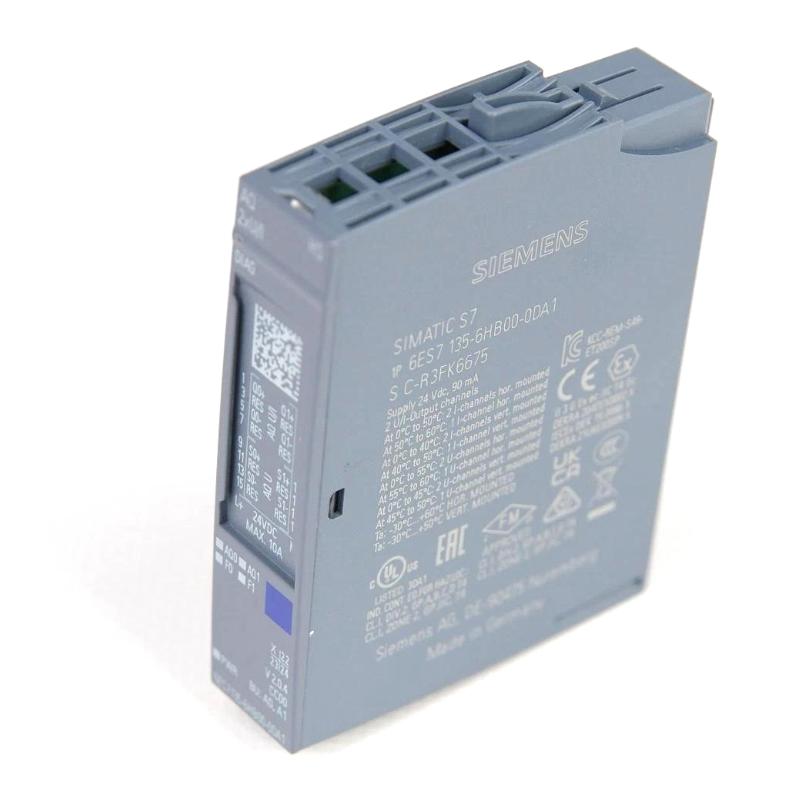
Product Overview
The Siemens 6AG1135-6HB00-2DA1 SIPLUS ET 200S Analog Output Module is an analog output module used in Siemens distributed I/O systems to provide proportional control signals to field-level devices. It is intended for automation applications where the controller needs more than a simple digital switching output.
In a typical industrial installation, the PLC determines the required process value and transfers the corresponding output data to the distributed I/O station. The 6AG1135-6HB00-2DA1 then handles the analog output interface, allowing the connected field device to respond to the commanded value.
Typical applications include control valves, proportional actuators, regulators, process equipment, and other devices that accept analog control signals. The module is particularly useful when field I/O needs to be installed close to the machine or process rather than concentrated entirely inside the main PLC cabinet.
As a SIPLUS component, it is intended for industrial automation environments where enhanced environmental robustness is an important consideration. For replacement work, the complete ET 200 system configuration should be checked rather than selecting a module based only on channel count or physical dimensions.
Technical Specifications
| Parameter | Specification |
|---|---|
| Manufacturer | Siemens |
| Model | 6AG1135-6HB00-2DA1 |
| Product Family | SIPLUS ET 200S |
| Product Type | Analog Output Module |
| Main Function | Analog Signal Output |
| Application | Distributed Analog Control |
| Module Architecture | ET 200S Distributed I/O |
| Module Width | 15 mm |
| Dimensions | 15 × 73 × 58 mm |
| Weight | 0.042 kg |
Product Features
The 6AG1135-6HB00-2DA1 is suited to distributed analog-control applications where the PLC needs to communicate variable control values to field equipment.
Key characteristics include:
- SIPLUS ET 200S analog output module
- Designed for distributed I/O applications
- Analog output functionality
- Suitable for proportional actuator control
- Compact 15 mm module format
- Suitable for process-control applications
- Integrates with Siemens PLC-based automation systems
- Supports field-level analog signal distribution
- Suitable for industrial machinery and process equipment
- SIPLUS construction for demanding industrial environments
- Dimensions of 15 × 73 × 58 mm
- Weight of 0.042 kg
The actual signal configuration must be matched to the receiving device. Before commissioning, engineers should verify the field device’s input range, wiring, scaling, and electrical requirements.
Working Principle
The module forms the physical link between the controller’s numerical output value and the analog signal required by a field device.
A typical signal path is:
PLC → ET 200S Communication Interface → 6AG1135-6HB00-2DA1 → Analog Output → Field Device
The PLC program determines the required process value. This could be based on pressure, temperature, flow, level, speed, or another controlled variable.
The output value is transferred to the distributed I/O station, where the analog output module generates the corresponding electrical signal. A receiving actuator or controller interprets that signal and adjusts its operating condition.
For example, a PLC controlling a process valve may calculate a valve-position command based on the difference between the measured process value and its setpoint. The analog output module then delivers the corresponding control signal to the valve positioner.
The module therefore does not replace the PLC’s control logic. It provides the field interface through which the PLC’s calculated command reaches the physical process.
Role in a Distributed I/O System
The 6AG1135-6HB00-2DA1 acts as the analog command interface between the distributed I/O station and connected field equipment.
A typical architecture is:
SIMATIC PLC → Distributed I/O Network → ET 200S Station → Analog Output Module → Actuator
One advantage of this arrangement is that the I/O station can be installed near the machinery or process area. Field wiring can consequently be organized locally, while the PLC and main control hardware remain in the central control cabinet.
The module may be used for:
- Proportional valve control
- Analog actuator references
- Process regulator commands
- Equipment setpoints
- Speed-reference signals
- Industrial positioning applications
- Analog control-loop outputs
When integrating the module into an existing system, the interface module, terminal arrangement, PLC hardware configuration, I/O addressing, and field device must all be considered together.
Industrial Applications
The module is appropriate for industrial systems that require distributed analog output control.
| Application | Typical Use |
|---|---|
| Process Automation | Analog control-loop output |
| Valve Control | Proportional valve positioning |
| Water Treatment | Distributed actuator control |
| Chemical Processing | Process regulation |
| Pump Systems | Analog reference commands |
| HVAC Equipment | Proportional actuator control |
| Manufacturing Machinery | Variable machine-control signals |
| Industrial Utilities | Equipment regulation |
| Packaging Equipment | Analog actuator commands |
| Process Skids | Local field-level control |
The actual application should be checked against the receiving device’s electrical input requirements and the control system’s configured signal range.
Installation and Maintenance
The 6AG1135-6HB00-2DA1 should be installed within a compatible distributed I/O configuration. Before replacing an existing module, technicians should verify the system architecture, terminal components, and PLC configuration.
Recommended checks include:
- Confirm the complete 6AG1135-6HB00-2DA1 order number.
- Verify the applicable ET 200 system configuration.
- Check the interface module and terminal arrangement.
- Confirm the required power supply.
- Verify the field device’s analog input requirements.
- Check PLC hardware configuration.
- Confirm I/O addressing.
- Verify engineering scaling.
- Inspect analog signal wiring.
- Check terminal tightness.
- Inspect shielding and grounding arrangements.
- Test the output channels individually.
- Measure the actual electrical output when troubleshooting.
- Compare measured output with the PLC command.
- Review available diagnostic information.
- Check the receiving actuator after commissioning.
For troubleshooting, it is useful to divide the signal chain into three sections: PLC value, module output, and field device. If the PLC is generating the correct value but the module output is incorrect, configuration or module-related issues should be investigated. If the module output is correct but the actuator responds incorrectly, the field circuit should be examined.
Related Components
The module normally operates together with other components of the distributed automation system.
| Component | Function |
|---|---|
| Siemens SIMATIC PLC | Executes control logic and calculates output values |
| ET 200S Interface Module | Connects the distributed I/O station to the controller |
| ET 200S Terminal Module | Provides field wiring connections |
| Power Module | Supplies required electrical power |
| Industrial Network | Transfers process data between PLC and I/O station |
| 24 V DC Power Supply | Supplies system and field-side power |
| Analog Signal Cable | Carries the output signal |
| Control Valve Positioner | Converts the analog command into valve movement |
| Analog Actuator | Responds proportionally to the control signal |
| Control Cabinet | Houses PLC, power, and associated automation hardware |
The analog output module should be considered part of this complete control chain. A correctly functioning module cannot compensate for incorrect PLC scaling, poor wiring, unsuitable field devices, or an incorrectly configured I/O station.
Recommended Related Models
For analog output applications, related Siemens modules can be compared according to I/O system, signal type, channel density, and application requirements.
| Model | Product Type | Main Function | Typical Application |
|---|---|---|---|
| Siemens 6AG1135-6HB00-2DA1 | SIPLUS Analog Output Module | Analog field output | Distributed analog actuator control |
| Siemens 6AG1135-6GB00-7BA1 | SIPLUS Analog Output Module | Analog output | Distributed field control |
| Siemens 6AG1135-4GB01-2AB0 | SIPLUS ET 200S Analog Output Module | Current output | 4–20 mA control applications |
| Siemens 6AG1135-4LB02-7AB0 | SIPLUS ET 200S Analog Output Module | Analog output | Distributed process control |
| Siemens 6AG1135-4FB01-2AB0 | SIPLUS ET 200S Analog Output Module | Voltage output | Voltage-based actuator control |
| Siemens 6AG1135-6HD00-7BA1 | SIPLUS Analog Output Module | Multi-channel analog output | Higher-density distributed I/O |
For a replacement project, the module’s electrical function is only one part of the selection process. The existing ET 200 system generation, interface module, terminal technology, PLC configuration, and field wiring should be checked before substituting another model.
Key Advantages
- Siemens SIPLUS analog output module
- Designed for distributed I/O applications
- Suitable for proportional control
- Supports PLC-controlled analog field signals
- Compact 15 mm module width
- Suitable for process and machine automation
- Supports distributed field-level installation
- Suitable for valve and actuator applications
- Integrates into Siemens PLC control architectures
- SIPLUS construction for demanding industrial environments
- Dimensions of 15 × 73 × 58 mm
- Weight of 0.042 kg
Technical FAQs
What type of control task is the 6AG1135-6HB00-2DA1 best suited to?
It is suited to applications where a PLC needs to transmit a variable analog command to a field device. Typical examples include proportional actuator control, valve positioning, regulator references, and process-control outputs.
What is the importance of PLC scaling when using this module?
The PLC’s engineering value must correspond correctly to the module’s configured output range and the receiving device’s expected input. Incorrect scaling can cause the physical actuator to operate at the wrong level even when the communication between the PLC and I/O station is functioning normally.
Why should the terminal and interface components be checked during replacement?
The electronic module is part of a larger ET 200S station. The interface module determines how the station communicates with the controller, while terminal components establish the physical field connections. A replacement that fits mechanically may still be unsuitable if the station architecture or configuration is different.
What is the recommended troubleshooting sequence for an incorrect analog output?
Start by checking the PLC’s commanded value, then measure the actual signal at the module output. If these agree, inspect the field wiring and receiving device. If they do not agree, review the module configuration, I/O addressing, scaling, power conditions, and module diagnostics before replacing hardware.