

ProductPRODUCT
Featured products
Contact Us
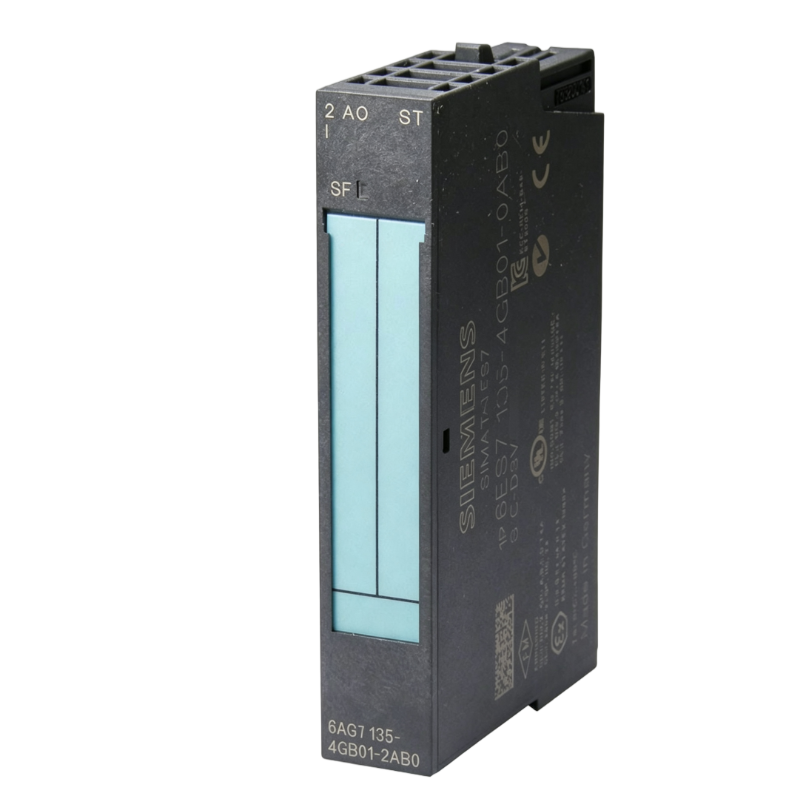
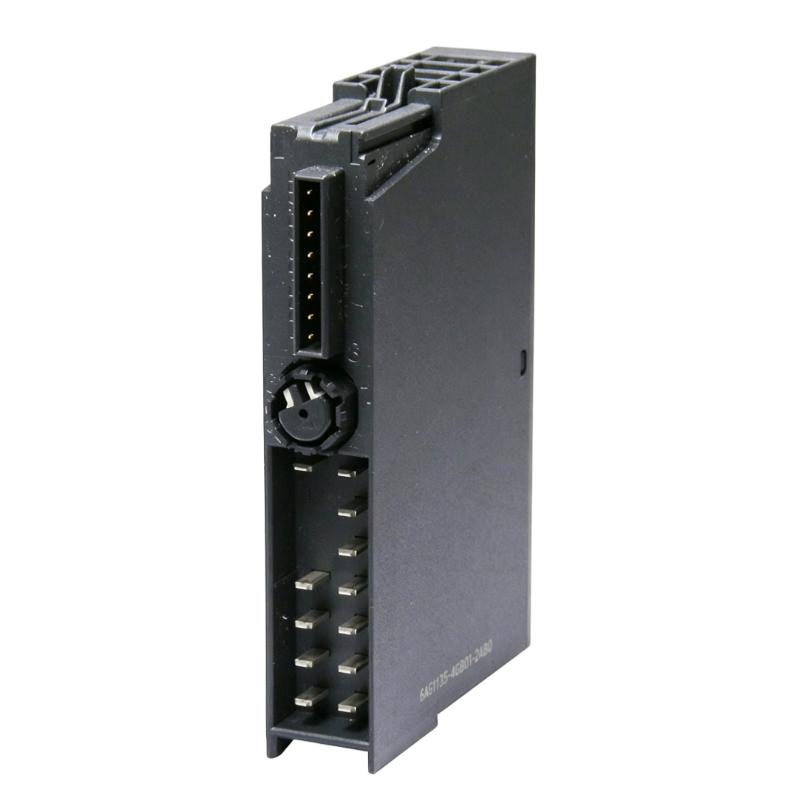
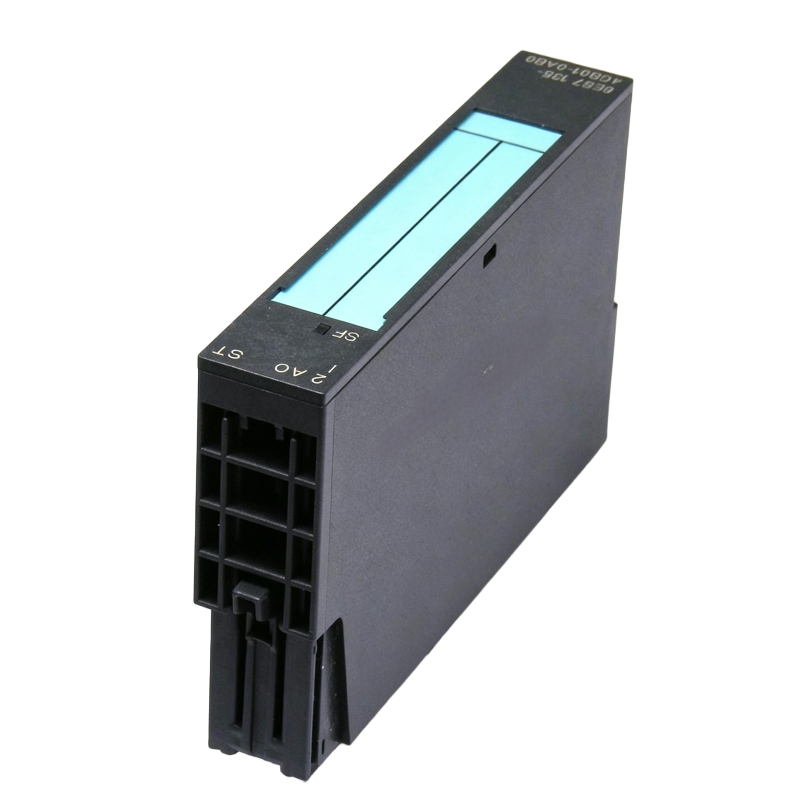
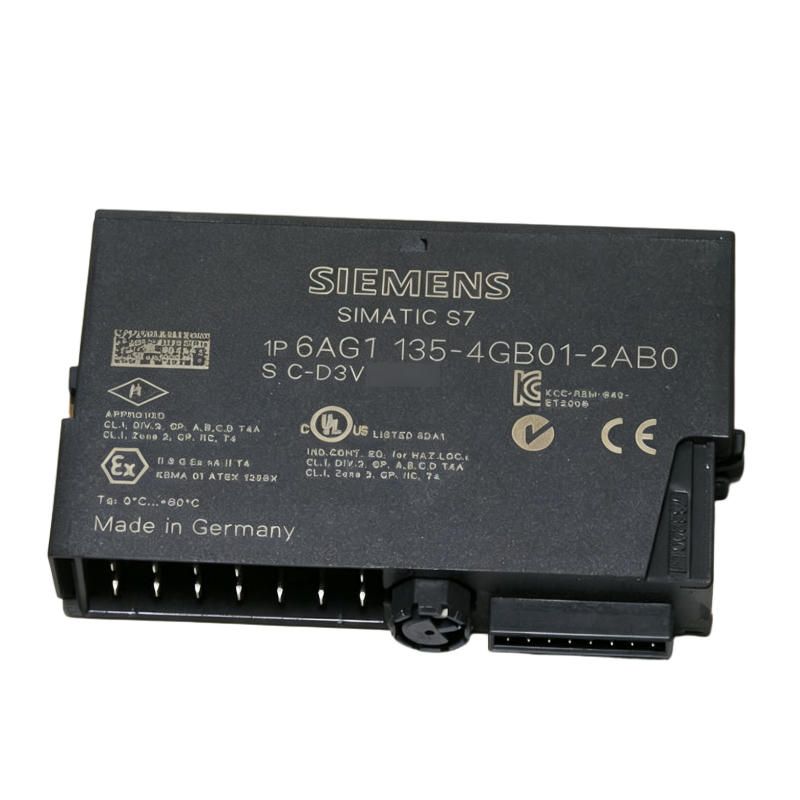
- Siemens
- 6AG1135-4GB01-2AB0
- Analog Output Module
- Germany
- 15 × 81 × 52 mm
- 0.045 kg
- Xiamen, China
- New & In Stock
- T/T, PayPal, Western Union
- 1 Year
- 1-3 Working Days
- DHL, UPS, TNT, FedEx and EMS.
- 24-Hour Service
- COO
- 79
Our advantage

Global Logistics
We have a 10-year logistics and express cooperation agreement, so our products can be shipped to any place in the world.

Brand new and original
Our products are imported in bulk from the place of origin. Because of the cooperative relationship, our products are all original and 100% new.

24-hour service
We provide 7*24 hours service to our customers. We will be there whenever you need us.

Price advantage
All our products are priced very favorably because we have our own warehouse and supply.
| Company Information | |||
| [email protected] | |||
| Mobile | +8615980777398 | ||
| +8615980777398 | |||
| 15980777398 |
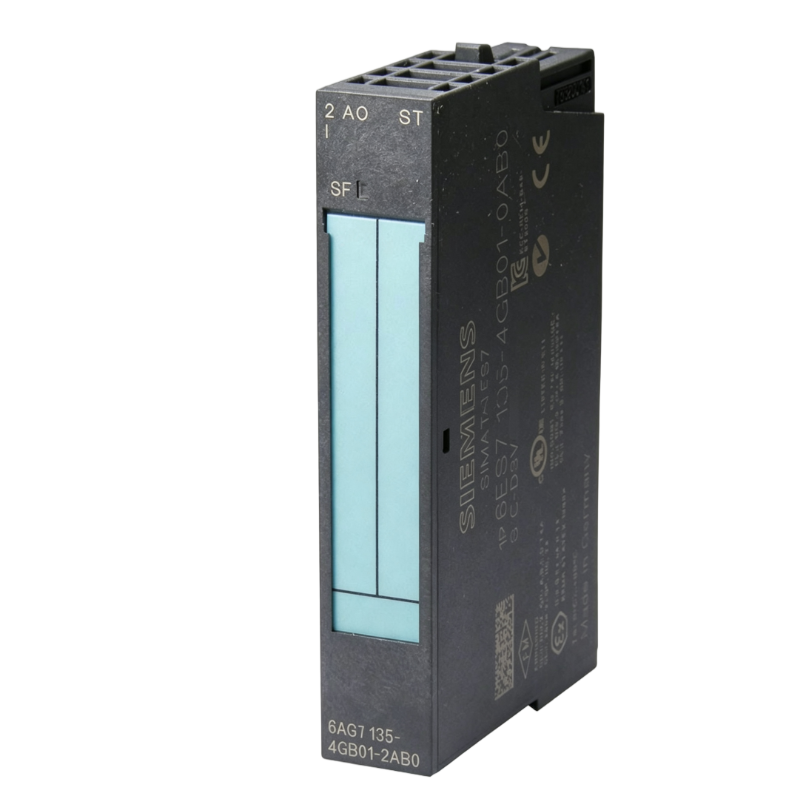
Product Overview
The Siemens 6AG1135-4GB01-2AB0 SIPLUS ET 200S Analog Output Module is a two-channel analog current output module for the SIPLUS ET 200S distributed I/O system. It is used when a PLC or higher-level controller needs to send continuously variable current signals to field devices such as control valves, actuators, current-driven regulators, or other analog instruments.
This module belongs to the SIPLUS ET 200S EM 2AO I Standard product group. The module is based on the corresponding ET 200S analog output architecture and is intended for industrial applications where analog current signals need to be generated from controller output values.
Instead of switching a field device simply ON or OFF, an analog output allows the control system to transmit a continuously adjustable signal. Typical examples include sending a 4–20 mA setpoint to a valve positioner or providing a current reference to another regulating device.
The module is particularly useful in distributed automation cabinets where field I/O is located close to the process equipment. It works as part of the ET 200S station rather than functioning as a standalone PLC module.
Technical Specifications
| Parameter | Specification |
|---|---|
| Manufacturer | Siemens |
| Model | 6AG1135-4GB01-2AB0 |
| Product Family | SIPLUS ET 200S |
| Product Type | Analog Output Module |
| Module Description | SIPLUS ET 200S EM 2AO I Standard |
| Number of Analog Outputs | 2 |
| Output Type | Current Output |
| Output Range | ±20 mA / 4–20 mA |
| Resolution | 13-bit + sign for ±20 mA; 13-bit for 4–20 mA |
| Rated Load Resistance | Up to 500 Ω |
| Actuator Connection | 2-wire |
| Load Voltage | 24 V DC |
| Backplane Bus | ET 200S distributed I/O bus |
| Diagnostics | Group fault and configurable channel diagnostics |
| Module Width | 15 mm |
| Dimensions | 15 × 81 × 52 mm |
| Weight | 0.045 kg |
Product Features
The 6AG1135-4GB01-2AB0 combines two current-output channels with the compact architecture of the ET 200S distributed I/O platform.
Important characteristics include:
- Two analog current outputs
- 4–20 mA output capability
- ±20 mA output capability
- 13-bit resolution for 4–20 mA
- 13-bit plus sign resolution for ±20 mA
- Maximum load resistance of 500 Ω
- Two-wire actuator connection
- 24 V DC load supply
- 15 mm module width
- Galvanic separation between the analog outputs and the backplane bus
- Configurable response when the CPU or DP master enters STOP
- Group fault indication
- Wire-break diagnostics capability
- Designed for distributed ET 200S I/O installations
- SIPLUS version for industrial applications requiring enhanced environmental robustness
The current-output architecture makes this module suitable for analog actuators rather than discrete switching loads. The actual signal range should be selected according to the connected field device and the configured PLC program.
Working Principle
The module converts digital output values from the automation controller into corresponding analog current signals.
A typical signal path is:
PLC / Controller → ET 200S Bus → 6AG1135-4GB01-2AB0 → 4–20 mA Signal → Field Actuator
For example, a controller may calculate a valve position command of 65%. The analog output module converts the corresponding digital value into the configured current signal, allowing the connected actuator or positioner to interpret the command as a proportional control value.
With a 4–20 mA configuration, 4 mA generally represents the lower end of the configured operating range and 20 mA represents the upper end. The controller therefore does not need to switch the actuator directly; it sends a numerical setpoint and the analog output module handles the electrical signal conversion.
The module also supports ±20 mA, which can be useful in applications requiring bipolar current output.
Because the analog outputs are part of the distributed ET 200S architecture, the module relies on the associated interface and power components for communication and field-side operation.
Role in a Distributed I/O System
The 6AG1135-4GB01-2AB0 serves as the analog command interface between the ET 200S station and current-controlled field devices.
A typical control architecture can be represented as:
SIMATIC S7 / DP Master → ET 200S Interface Module → 6AG1135-4GB01-2AB0 → Field Actuator
The PLC determines what output value is required. The ET 200S communication structure transfers that value to the analog output module, which then generates the corresponding current signal.
This arrangement allows analog field devices to be installed close to the process while the main controller remains elsewhere in the control architecture.
Typical controlled devices include:
- Control valve positioners
- Current-operated actuators
- Speed controllers
- Process regulators
- Analog setpoint inputs
- Industrial measuring and control equipment
The module is therefore not responsible for executing the control algorithm itself. The controller determines the desired value, while the analog output module provides the physical current signal required by the field device.
Industrial Applications
The module is suitable for distributed analog control applications in industrial automation systems.
| Application | Typical Use |
|---|---|
| Process Control | Sending analog setpoints to field devices |
| Valve Control | 4–20 mA valve-position commands |
| Pump Systems | Providing analog references to controllers |
| Fan Systems | Current-based speed reference |
| HVAC Automation | Analog control of actuators and regulators |
| Chemical Processing | Distributed analog actuator control |
| Water Treatment | Valve and process-control applications |
| Manufacturing Equipment | Analog machine control |
| Industrial Utilities | Current-based control signals |
| Distributed Control Panels | Local analog output near field equipment |
The connected actuator should be checked carefully for its required current range, input impedance, wiring arrangement, and signal interpretation before commissioning.
Installation and Maintenance
The module is installed as part of an ET 200S distributed I/O station and should be combined with the appropriate interface, terminal, power, and bus components.
During installation, particular attention should be paid to analog signal wiring because electrical noise can directly affect the accuracy of a current output.
Recommended checks include:
- Verify the complete 6AG1135-4GB01-2AB0 order number.
- Confirm the module is intended for the existing ET 200S station.
- Check the associated interface module.
- Verify the required 24 V DC supply.
- Confirm the configured output range.
- Check the field actuator’s input specification.
- Verify the maximum permissible load resistance.
- Use appropriate shielded analog signal wiring.
- Check terminal assignments before energizing the system.
- Confirm the actuator’s two-wire connection.
- Verify PLC hardware configuration and output addressing.
- Check diagnostic information after startup.
- Test each output channel independently.
- Compare the commanded value with the measured current.
- Inspect wiring for loose terminals or shield problems.
If a 4–20 mA signal is incorrect, troubleshooting should begin by separating the problem into three areas: controller configuration, module output, and field wiring/device. Measuring the actual current at the module and at the receiving device can quickly determine whether the problem originates in the control program or the field circuit.
Related Components
The analog output module normally works with several ET 200S and SIMATIC system components.
| Component | Function |
|---|---|
| ET 200S Interface Module | Connects the distributed station to the PLC / fieldbus |
| ET 200S Terminal Module | Provides the physical connection for the electronic module |
| Power Module | Provides the required load voltage to the station |
| SIMATIC S7 PLC | Executes the control program and generates output values |
| PROFIBUS-DP Network | Provides distributed I/O communication in applicable ET 200S systems |
| 24 V DC Power Supply | Supplies field-side and control power |
| Analog Field Cable | Carries the current output signal |
| Control Valve Positioner | Receives analog current commands |
| Current-Input Controller | Uses the analog signal as a control reference |
| Cabinet Terminal System | Provides field wiring and distribution |
The electronic module itself is only one part of the ET 200S station. Correct operation depends on the interface module, terminal arrangement, power supply, configuration, and field device being matched correctly.
Recommended Related Models
For applications requiring different analog output functions, the following Siemens modules are useful comparison points within the SIPLUS / ET 200S and newer ET 200SP families.
| Model | Product Type | Main Function | Typical Application |
|---|---|---|---|
| Siemens 6AG1135-4GB01-2AB0 | SIPLUS ET 200S Analog Output | 2-channel current output | 4–20 mA / ±20 mA actuator control |
| Siemens 6AG1135-4FB01-2AB0 | SIPLUS ET 200S Analog Output | 2-channel voltage output | Voltage-controlled actuators |
| Siemens 6AG1135-4LB02-7AB0 | SIPLUS ET 200S Analog Output | 2-channel voltage output, high feature | More demanding voltage-output applications |
| Siemens 6AG1135-6GB00-7BA1 | SIPLUS ET 200SP Analog Output | 2-channel current output | ET 200SP distributed I/O |
| Siemens 6AG1135-6HB00-2DA1 | SIPLUS ET 200SP Analog Output | 2-channel voltage/current output | Flexible analog output applications |
| Siemens 6AG1135-6HD00-7BA1 | SIPLUS ET 200SP Analog Output | 4-channel voltage/current output | Higher channel-density installations |
For an existing ET 200S installation, replacing the module with another product family should not be treated as a direct plug-in substitution. The interface architecture, terminal modules, engineering configuration, I/O addressing, and system generation must all be checked.
Key Advantages
- Two-channel analog current output
- Supports 4–20 mA signals
- Supports ±20 mA signals
- Suitable for proportional actuator control
- 13-bit resolution for 4–20 mA operation
- Up to 500 Ω load resistance
- Two-wire actuator connection
- Compact 15 mm module width
- Suitable for distributed ET 200S I/O stations
- Supports diagnostic functions
- Suitable for process and machine automation
- SIPLUS version for demanding industrial environments
Technical FAQs
What type of field devices can be connected to the 6AG1135-4GB01-2AB0?
The module is intended for devices that accept analog current signals. Common examples include valve positioners, current-operated actuators, speed-reference inputs, and other industrial controllers with compatible 4–20 mA or ±20 mA inputs.
Why would an engineer choose 4–20 mA instead of a voltage output?
Current transmission is widely used in industrial environments because the signal is less sensitive to voltage drop along the cable than a simple voltage signal. The 4–20 mA range also provides a useful live-zero characteristic, making it possible to distinguish a low operating value from certain wiring or signal faults.
What should be checked when a 4–20 mA output measures correctly at the module but incorrectly at the actuator?
The field circuit should be inspected for incorrect wiring, excessive loop resistance, poor terminal connections, shielding problems, or an input configuration mismatch at the receiving device. The actuator’s current-input specification should also be compared with the output range configured in the ET 200S module.
Is the 6AG1135-4GB01-2AB0 a standalone analog output device?
No. It is an ET 200S electronic module and is intended to operate as part of a distributed I/O station. The associated interface, terminal, power, communication, and controller components are required to form the complete automation system.