

ProductPRODUCT
Featured products
Contact Us
- Schneider
- TWDLCAA40DRF
- Compact Base Station Controller
- France
- 70 x 95 x 90 mm
- 0.525 kg
- Xiamen, China
- New & In Stock
- T/T, PayPal, Western Union
- 1 Year
- 1-3 Working Days
- DHL, UPS, TNT, FedEx and EMS.
- 24-Hour Service
- COO
- 50
Our advantage

Global Logistics
We have a 10-year logistics and express cooperation agreement, so our products can be shipped to any place in the world.

Brand new and original
Our products are imported in bulk from the place of origin. Because of the cooperative relationship, our products are all original and 100% new.

24-hour service
We provide 7*24 hours service to our customers. We will be there whenever you need us.

Price advantage
All our products are priced very favorably because we have our own warehouse and supply.
| Company Information | |||
| [email protected] | |||
| Mobile | +8615980777398 | ||
| +8615980777398 | |||
| 15980777398 |
Product Overview
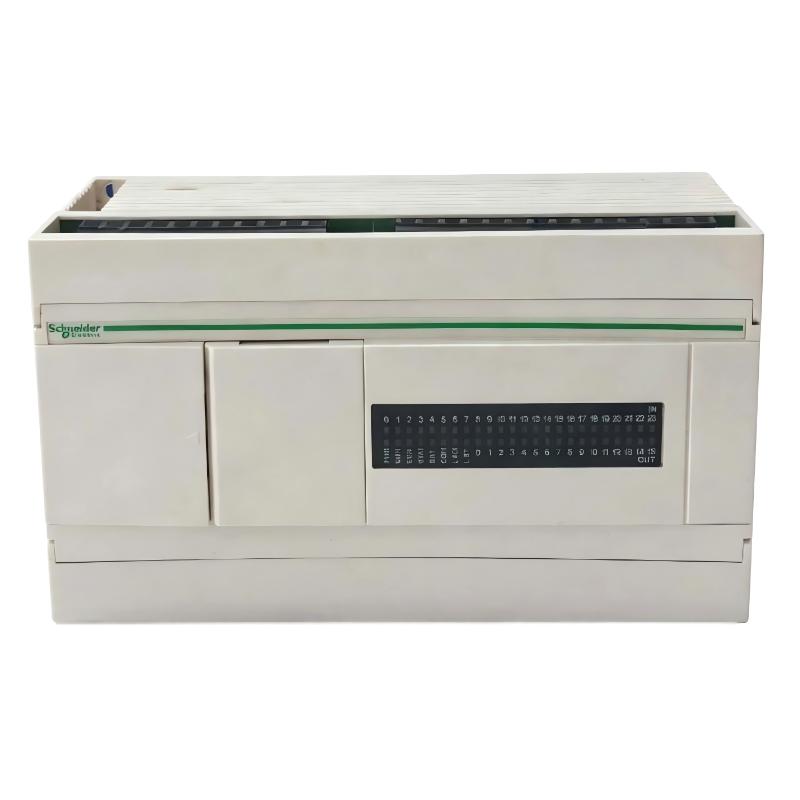
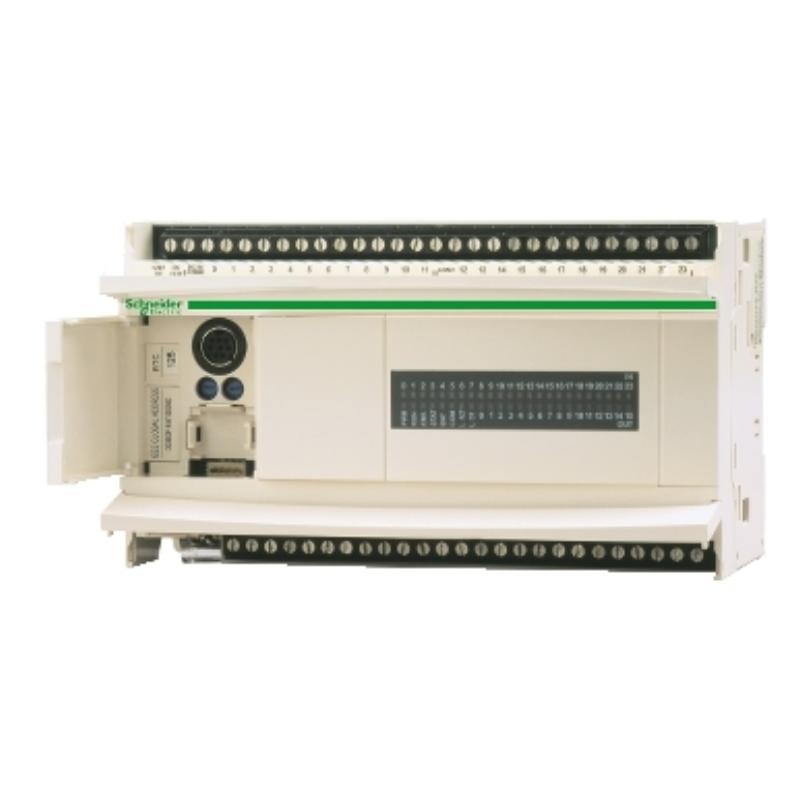
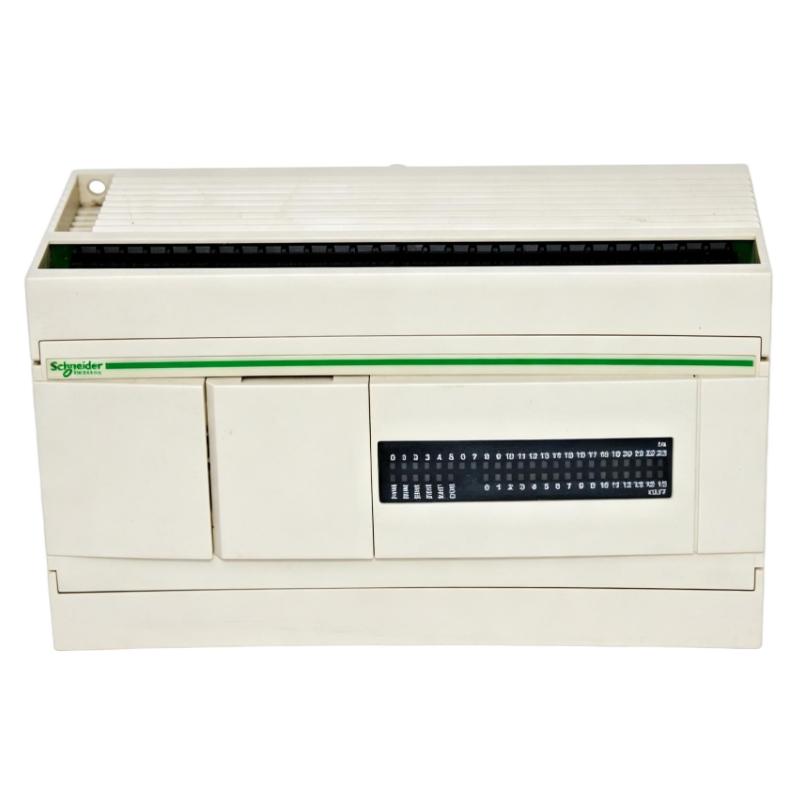
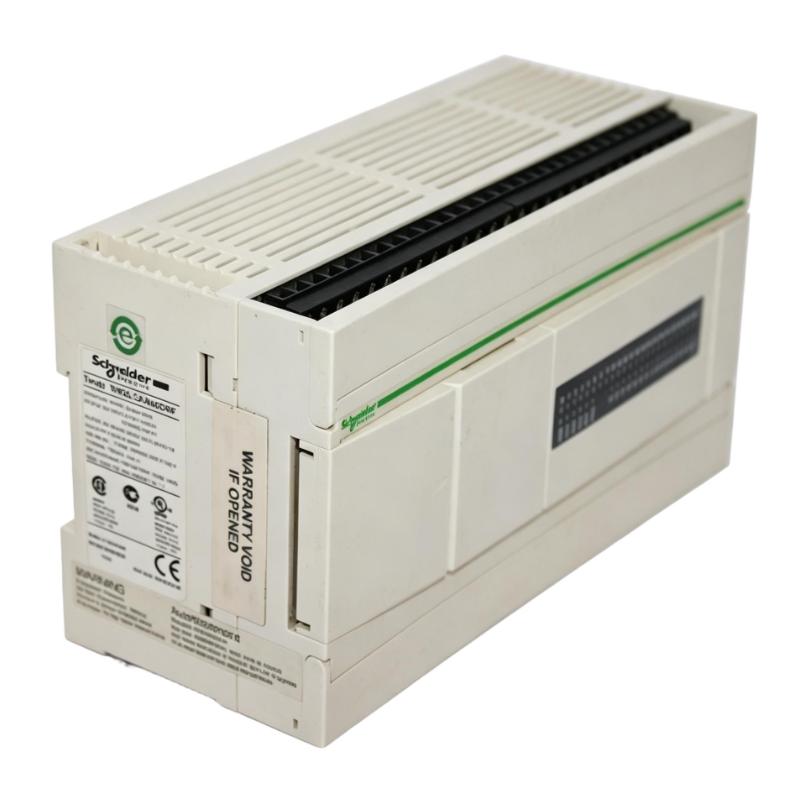
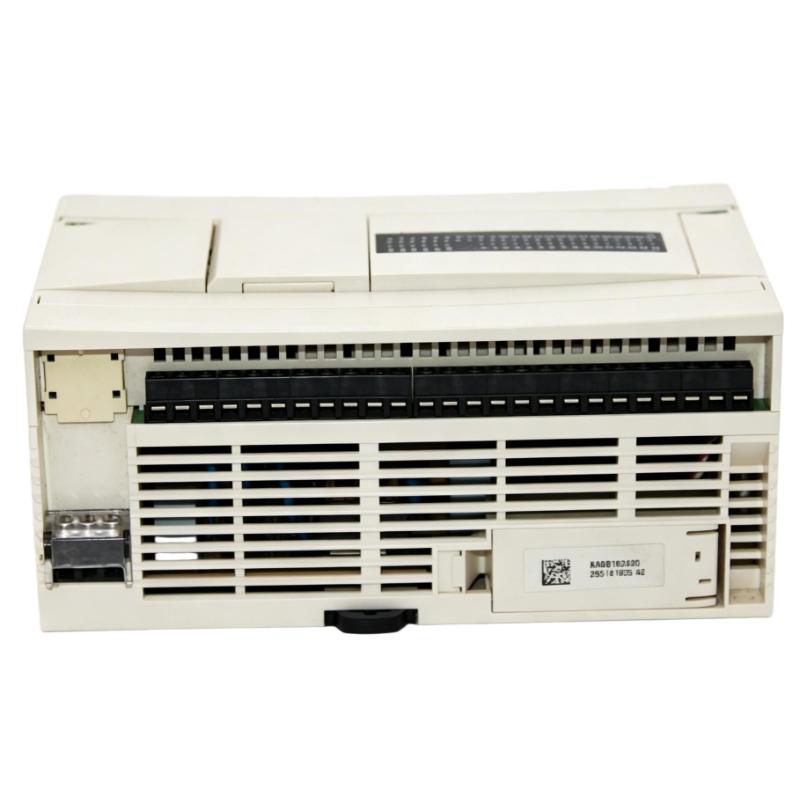
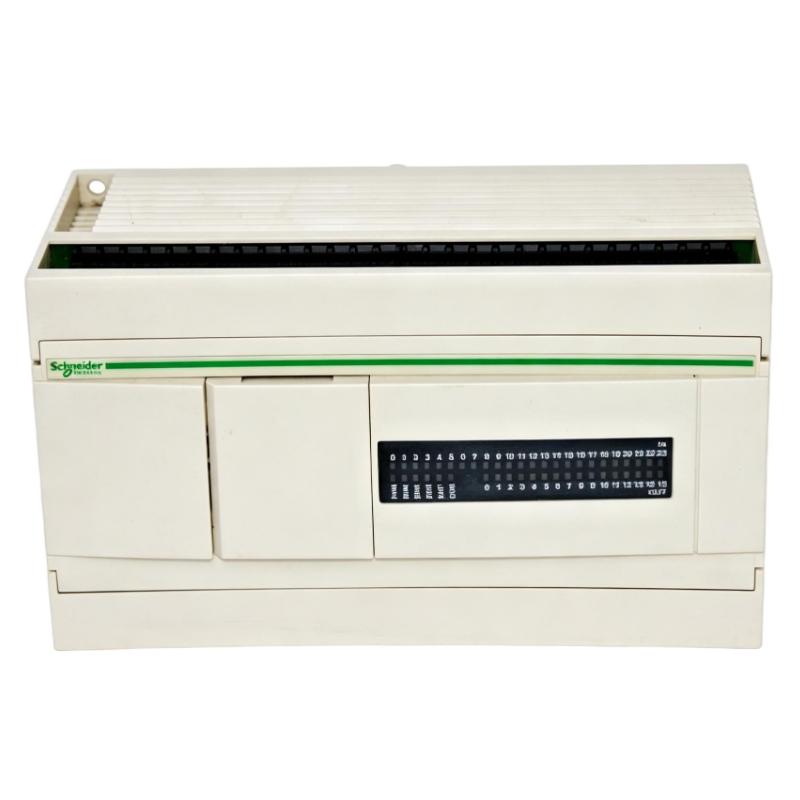
The Schneider Electric TWDLCAA40DRF Compact Base Controller is a programmable logic controller (PLC) from the Modicon Twido automation family. It is designed for industrial applications that require integrated logic processing, digital signal monitoring, and relay-based output control in a compact controller.
The TWDLCAA40DRF combines a central processing unit, digital inputs, digital outputs, and an AC power supply interface in a single base unit. This integrated architecture allows the controller to monitor field devices, execute a programmed control sequence, and operate external equipment according to predefined conditions.
The controller provides 40 built-in digital I/O points, comprising 24 digital inputs and 16 outputs. The output arrangement consists of 14 relay outputs and two transistor outputs. This combination supports different switching requirements within one controller, allowing engineers to use relay contacts for suitable general-purpose loads and transistor outputs for compatible DC switching applications.
The 24 digital inputs are designed for compatible 24 V DC field signals. They can receive signals from push buttons, limit switches, proximity sensors, auxiliary contacts, and other discrete devices. The PLC program processes these signals and determines the appropriate output states according to machine logic, operating conditions, and interlocks.
The relay outputs can switch suitable external electrical circuits within their specified ratings. They are commonly used for control signals to contactors, indicator lamps, alarms, and auxiliary devices. The two transistor outputs provide a different switching method for compatible DC loads and should be wired according to the specified output polarity and electrical limitations.
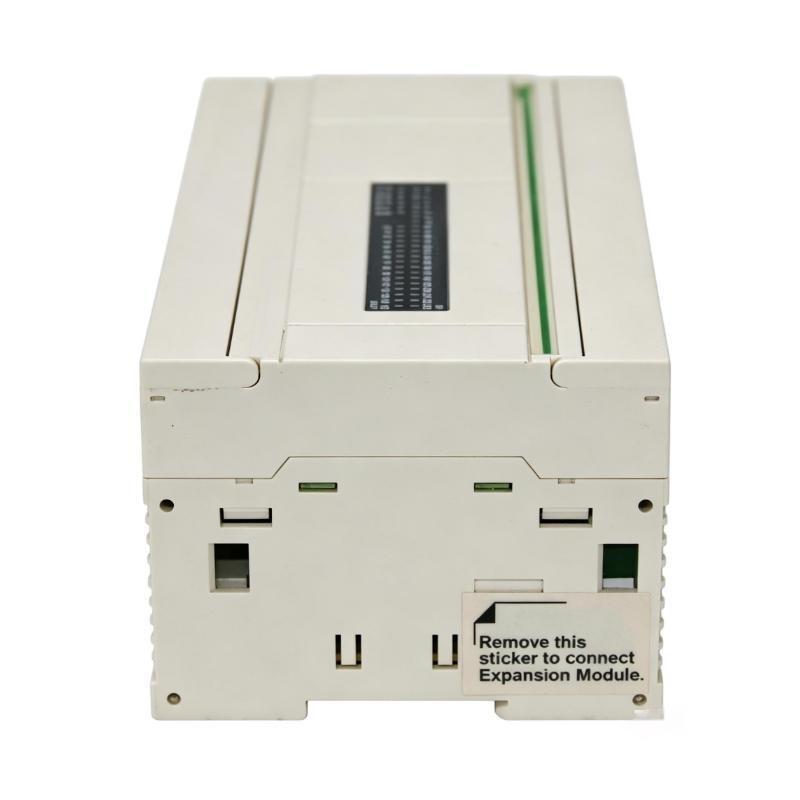
The TWDLCAA40DRF uses a 100–240 V AC power supply input and supports expansion through compatible Modicon Twido I/O modules. The controller can therefore serve as the core of a compact machine-control system or as part of a larger legacy automation installation.
The model is discontinued, making it primarily relevant to maintenance, repair, and spare-parts procurement for existing Twido installations. Schneider Electric lists newer Modicon M221 controllers and compatible TM3 expansion modules among the replacement options. Because the newer products belong to a different controller platform, replacing the TWDLCAA40DRF may require program conversion, wiring changes, configuration work, and commissioning.
For industrial maintenance teams, system integrators, and spare-parts distributors, accurate model identification is essential. The TWDLCAA40DRF should not be confused with the TWDLCAA24DRF, which has a different built-in I/O configuration.
Technical Specifications
| Parameter | Specification |
|---|---|
| Brand | Schneider Electric |
| Model | TWDLCAA40DRF |
| Product Family | Modicon Twido |
| Product Type | Compact Base Controller |
| Controller Type | Compact PLC |
| Total Built-In Digital I/O | 40 points |
| Digital Inputs | 24 |
| Input Signal Type | 24 V DC |
| Relay Outputs | 14 |
| Transistor Outputs | 2 |
| Total Digital Outputs | 16 |
| Power Supply Input | 100–240 V AC |
| Expansion Capability | Supports up to 7 compatible I/O expansion modules, subject to system limits |
| Communication | Integrated serial communication; confirm interface and protocol requirements |
| Optional Communication | Additional serial-port and communication accessories, subject to configuration |
| Analog Potentiometers | 2 |
| Protection Rating | IP20 |
| Operating Temperature | 0°C to 55°C |
| Storage Temperature | -25°C to +70°C |
| Dimensions | 70 × 95 × 90 mm, as supplied |
| Weight | 0.525 kg, as supplied |
| Product Status | Discontinued |
| Replacement Options | TM221C40R or a suitable M221 controller and TM3 I/O arrangement, subject to engineering review |
The dimensions and weight above follow the supplied product information. Confirm the dimensional orientation and mounting clearances against the manufacturer’s drawing before installation. The exact replacement configuration depends on the original application’s I/O requirements, output types, communication interfaces, and expansion arrangement.
Function and Working Principle
1. Processing Control Logic
The central processing unit executes the application program and coordinates the controller’s inputs and outputs. The program may contain logic conditions, timers, counters, interlocks, arithmetic operations, and sequence-control instructions.
For example, a machine may be programmed to start a conveyor only after a start command is received, the required guard or process interlocks are satisfied, and no fault condition is active. The controller reads the input states, evaluates the logic, and changes the relevant output state when the programmed conditions are met.
This process allows the controller to coordinate multiple machine functions without requiring separate hardwired logic relays for every control decision.
2. Receiving Digital Input Signals
The TWDLCAA40DRF provides 24 digital input points designed for compatible 24 V DC signals. These inputs allow the PLC to monitor machine conditions and operator commands.
Typical input devices include:
- Push buttons and selector switches.
- Proximity sensors and limit switches.
- Machine-position detection devices.
- Auxiliary contacts from contactors and relays.
- Level switches and other discrete process sensors.
- Equipment fault and status contacts.
The controller reads these signals during its operating cycle and makes them available to the program. The program then determines whether the machine should continue running, change operating state, activate an output, or respond to a fault.
The input wiring must follow the documented sink/source configuration and electrical specifications. An incompatible voltage, incorrect common connection, or wiring error may cause the controller to interpret a signal incorrectly.
3. Switching Through Relay Outputs
Fourteen of the controller’s output points are relay outputs. Each relay output operates a contact that switches an external electrical circuit.
Relay outputs are useful when controlling suitable AC or DC circuits within the manufacturer’s specified limits. Common applications include switching contactor coils, operating indicator lamps, activating alarms, and commanding auxiliary equipment.
Relay contacts are electromechanical devices with finite mechanical and electrical life. Switching frequency, inrush current, inductive loads, and the electrical environment can affect service life. Loads must be selected according to the manufacturer’s specifications, and appropriate fuses or protective devices should be installed.
For higher-power equipment, a relay output should generally command an appropriately rated contactor or interface device rather than directly switch the main power circuit.
4. Using the Transistor Outputs
In addition to the relay contacts, the TWDLCAA40DRF includes two transistor outputs. These provide electronic switching for compatible DC loads.
Transistor outputs can be useful in applications that require more frequent switching than is appropriate for an electromechanical relay. However, they have different electrical characteristics and wiring requirements.
The transistor outputs must be connected according to the documented polarity, voltage, current, and load limitations. Reverse polarity can damage the output circuitry. They should not be treated as interchangeable with the relay outputs.
5. Integrating the I/O Channels
The controller’s 24 inputs and 16 outputs provide a combined interface for machine-level control. Inputs monitor conditions, while outputs activate the devices required by the control sequence.
For example, a packaging machine might use input points to detect product presence, monitor a position switch, and receive an operator command. The program could then activate relay outputs for auxiliary actuators and use a transistor output for a compatible DC switching function.
The exact I/O assignment depends on the application program, wiring diagram, and required machine functions.
6. Supporting Expansion
The TWDLCAA40DRF supports compatible I/O expansion modules, allowing a system to accommodate additional field devices when the built-in points are insufficient.
Expansion planning should account for the number and type of required signals, the controller’s documented module limits, available cabinet space, power requirements, and communication architecture.
Because the Twido family is discontinued, expansion projects should also consider the availability of compatible legacy modules and the long-term maintenance strategy.
Role in Industrial Automation Systems
The TWDLCAA40DRF can serve as the central controller in a compact industrial automation system. It gathers field signals, executes programmed logic, and sends commands to the connected devices.
Its 40-point I/O arrangement provides more built-in signal capacity than smaller compact controllers, while the combination of relay and transistor outputs supports different types of control circuits.
Machine Sequence Control
Automated machinery often requires a series of operations to occur in a defined order. The PLC can monitor position switches and other field inputs, evaluate operating conditions, and issue commands to the relevant outputs.
Applications include indexing mechanisms, packaging stations, material-handling equipment, and assembly machines. The program determines the sequence and the response to normal operating conditions.
Equipment Status Monitoring
The controller can monitor the states of sensors, switches, contactors, and fault contacts. This information can be used to determine whether equipment is ready, running, stopped, or in a fault condition.
A programmed response may include stopping a sequence, activating an alarm, or preventing a restart until the required conditions are restored. Safety-related functions must use appropriate safety-rated equipment and validated designs rather than relying solely on a standard PLC.
Relay-Based Control
The 14 relay outputs can control suitable external circuits. They are useful for general-purpose switching applications where the load voltage and current fall within the specified limits.
For loads that require more frequent switching, or for applications with specific DC switching requirements, the two transistor outputs may provide a suitable alternative when correctly configured.
Integration with Existing Equipment
The TWDLCAA40DRF is relevant to older machines built around the Twido platform. Retaining the original controller model can reduce the scope of a repair when the existing program, wiring, and system configuration remain suitable.
For a long-term upgrade, however, the control system should be assessed for software support, spare-part availability, communication requirements, and future expansion needs.
Industrial Applications
1. Packaging Machinery
Packaging equipment uses digital inputs to monitor product position, machine status, and operator commands. PLC outputs coordinate actuators, contactors, indicators, and auxiliary devices.
The TWDLCAA40DRF may be used in compatible legacy packaging systems where 40 built-in I/O points provide sufficient capacity for the required control sequence.
2. Conveyor Systems
Conveyor installations use switches and sensors to detect product movement, monitor transfer points, and control machine sequences. The controller can coordinate start and stop commands, diversion mechanisms, and warning indicators.
Motor power circuits should use properly rated contactors, overload protection, and other required protective devices. PLC outputs generally operate the control interface rather than directly switch the motor’s main power.
3. Pump and Fan Control
The controller can coordinate pump and fan commands using inputs from pressure switches, level switches, status contacts, and operator controls.
Relay outputs may operate suitable contactors or interface relays, while transistor outputs may be used for compatible DC switching functions. The application must account for starting current, load characteristics, and output ratings.
4. Material Handling Equipment
Material handling systems often use multiple sensors and actuators to control gates, stops, lifting mechanisms, and transfer operations. The controller’s integrated I/O can support these functions when the application fits within its capacity.
5. Industrial Utility Systems
Utility equipment may require discrete control of ventilation, auxiliary pumps, alarms, and equipment status indicators. The TWDLCAA40DRF can be considered for compatible installations that already use the Twido platform.
6. Legacy Machine Repairs
The controller may be sourced as a replacement for a failed unit in an existing Twido control panel. Using the same model can reduce immediate engineering changes, although the original program, expansion configuration, and external wiring should still be verified.
Installation and System Integration
Installation and commissioning should follow the manufacturer’s hardware documentation and the site’s electrical safety procedures.
Step 1: Confirm the Model Number
Check the full model number on the installed controller. Confirm that the required unit is TWDLCAA40DRF and not a smaller Twido compact base such as TWDLCAA24DRF.
The 40-point model has 24 inputs and 16 outputs, including 14 relay outputs and two transistor outputs. This difference is important when reviewing the wiring and application program.
Step 2: Back Up the Application Program
Before replacing a controller as part of a planned maintenance or migration project, obtain a verified backup of the PLC program and relevant configuration information.
Record the I/O assignment, expansion modules, communication settings, and any special application functions. Legacy systems may depend on older programming software or communication accessories, so confirm that the necessary tools are available before beginning the work.
Step 3: Isolate Electrical Power
Shut down the machine and isolate all relevant power sources according to the approved safety procedure. Verify the absence of hazardous voltage before removing the controller or handling the terminal connections.
The TWDLCAA40DRF uses a 100–240 V AC supply input. External field circuits may have separate supplies, so isolate them as required.
Step 4: Label and Inspect the Wiring
Label conductors before disconnecting the original controller. Record input and output terminal assignments, common connections, and any external interface devices.
Inspect the wiring and terminals for loose connections, damaged insulation, corrosion, or signs of overheating. Verify that the external loads are compatible with the relevant relay or transistor output type.
Step 5: Mount the Controller
Install the controller in the intended mounting position according to the manufacturer’s instructions. Confirm the dimensions, mounting holes, terminal access, ventilation clearance, and compatibility with the existing enclosure.
The supplied dimensions are 70 × 95 × 90 mm, but the required mounting envelope should be checked against the official drawing rather than relying on a product listing alone.
Step 6: Reconnect the Supply and I/O
Reconnect the power supply and field wiring according to the correct terminal diagram. Check the 24 V DC input circuits and verify the separate wiring requirements for relay and transistor outputs.
Pay particular attention to transistor output polarity and the current limits of each output group. Incorrect wiring can damage the module or create unexpected machine behavior.
Step 7: Test Inputs and Outputs
After confirming the wiring, restore power according to the commissioning procedure. Check the controller’s status indicators and verify that the PLC is operating normally.
Test each input point using the corresponding field device or an approved test method. Test relay outputs and transistor outputs separately, confirming that each point controls the intended device.
Step 8: Validate the Machine Sequence
Test the complete operating sequence, including start, stop, fault, and recovery conditions. Verify communication with connected devices and ensure that the program’s logical output assignments match the physical terminal wiring.
Safety functions should be checked separately using the applicable safety procedures and safety-rated components.
Compatible System Components
The following components may be used in compatible Twido installations. Compatibility must be checked against the exact controller configuration and the applicable hardware documentation.
| Component | Function | Integration Considerations |
|---|---|---|
| Twido Digital Input Module | Adds discrete input channels | Verify supported module types and I/O addressing |
| Twido Relay Output Module | Adds relay switching points | Check load ratings and common-line limitations |
| Twido Transistor Output Module | Provides electronic switching for compatible DC loads | Verify output polarity and electrical ratings |
| Twido Analog I/O Module | Interfaces with supported analog signals | Confirm the required signal type and module compatibility |
| Serial Communication Adapter | Provides additional communication interfaces | Check protocol, connector, and application requirements |
| Interposing Relay | Provides an additional switching interface | Select according to the load and control circuit |
| Contactor | Switches higher-power loads such as motors | Use appropriate ratings and protective devices |
| Sensors and Limit Switches | Provide machine and process input signals | Confirm 24 V DC compatibility and wiring configuration |
| Power Supply and Circuit Protection | Supplies and protects electrical circuits | Follow the controller and external load specifications |
The table describes functional component categories and does not guarantee that every component is compatible with every installation. Verify exact part numbers and system limits before purchasing or installing additional modules.
Recommended Replacement Models and Migration Considerations
Schneider Electric lists newer Modicon M221 controllers and TM3 expansion modules among the replacement options for TWDLCAA40DRF. The correct replacement arrangement depends on whether the existing installation requires all 40 I/O points, a similar mix of relay and transistor outputs, and the same communication functions.
| Model | Product Description | Considerations |
|---|---|---|
| TWDLCAA40DRF | Original Twido 40-point compact controller | Appropriate reference for maintaining the existing legacy installation |
| TM221C40R | Modicon M221 controller with 40 I/O and relay outputs | Modernization option; verify the required output mix and communication functions |
| TM221C24R | Modicon M221 controller with 24 I/O and relay outputs | May require additional I/O expansion to satisfy the original application’s requirements |
| TM3DM24R | Modicon TM3 discrete I/O module with 24 I/O, including 16 inputs and 8 relay outputs | May form part of a replacement arrangement; confirm controller and expansion compatibility |
These products should not be assumed to be direct plug-in replacements. The original controller has 24 inputs, 14 relay outputs, and two transistor outputs. A migration design must account for the different output technologies, I/O allocation, terminal arrangements, and required control functions.
The engineering review should include the original I/O list, program logic, serial communication requirements, expansion modules, physical mounting, and commissioning procedure. If the original application uses the transistor outputs for a specific switching function, ensure that the replacement arrangement preserves that capability.
For short-term repairs, a verified original unit may minimize system changes. For long-term modernization, an M221-based solution may provide a route to a newer platform, provided that the complete system is assessed and validated.
Key Advantages
Integrated 40-Point I/O
The controller combines 24 digital inputs and 16 digital outputs in one compact base, supporting applications that need a moderate number of field connections without a fully modular PLC arrangement.
Mixed Output Technology
The combination of 14 relay outputs and two transistor outputs offers flexibility for different switching requirements, provided that each load is connected to the appropriate output type.
Expansion Capability
Compatible Twido expansion modules can increase the available I/O capacity, subject to the controller’s documented limits and the selected module configuration.
Compact Control Architecture
Integrated processing, I/O, and power supply functions help reduce the number of separate components required in a compact control panel.
Useful for Legacy Maintenance
The model remains relevant to existing Twido installations where preserving the established control architecture can reduce immediate repair work.
Clear Model Identification
The full part number helps maintenance teams distinguish the 40-point controller from smaller Twido bases with different I/O configurations.
Technical FAQs
1. What is the Schneider Electric TWDLCAA40DRF?
It is a compact PLC base controller from the Modicon Twido family, designed for industrial automation applications requiring integrated digital inputs and outputs.
2. How many I/O points does it provide?
It provides 40 built-in digital I/O points: 24 inputs and 16 outputs.
3. What types of outputs are included?
The controller has 14 relay outputs and two transistor outputs. The two types have different electrical characteristics and must be wired according to their respective specifications.
4. What is the power supply requirement?
The TWDLCAA40DRF uses a 100–240 V AC supply input. Follow the manufacturer’s wiring instructions and site electrical safety procedures.
5. What input signal does it support?
The 24 digital inputs are designed for compatible 24 V DC signals. Check the documented sink/source configuration before connecting field devices.
6. Can the controller be expanded?
Yes. The TWDLCAA40DRF supports compatible Twido expansion modules, subject to the controller’s documented module and I/O limits.
7. Is the TWDLCAA40DRF discontinued?
Yes. Schneider Electric lists this model as discontinued. Buyers maintaining existing equipment should verify the availability and condition of any original spare.
8. What are the recommended replacement options?
Schneider Electric lists Modicon M221 controllers such as TM221C40R and TM221C24R, together with compatible TM3 expansion options depending on the replacement arrangement.
9. Is TM221C40R a direct replacement?
It should not be assumed to be a direct plug-in replacement. The original model includes two transistor outputs as well as relay outputs, so the replacement design must preserve the required output functions and address any differences in software, wiring, and communication.
10. What are the dimensions and weight?
The supplied dimensions are 70 × 95 × 90 mm, and the stated weight is 0.525 kg. Verify the mounting dimensions against the applicable technical drawing before installation.
11. What should buyers verify before ordering?
Confirm the full model number, 40-point I/O configuration, power supply requirement, output types, controller condition, and expansion arrangement. For a replacement project, also review the PLC program and communication requirements.
Procurement and Maintenance Recommendations
When purchasing the Schneider Electric TWDLCAA40DRF Compact Base Controller, accurate model identification is essential. This is particularly important because the 40-point model has a different I/O arrangement from smaller Twido compact bases.
Before ordering, maintenance teams and distributors should:
- Confirm the full TWDLCAA40DRF model reference.
- Verify the 24-input and 16-output configuration.
- Check that the application requires 14 relay outputs and two transistor outputs.
- Confirm the 100–240 V AC supply requirement.
- Record all expansion modules and communication accessories.
- Verify the stated dimensions and mounting requirements.
- Check product condition and identification when sourcing discontinued stock.
- Preserve the existing PLC program, wiring diagram, and configuration information.
- Evaluate newer M221-based replacement options for long-term support.
During routine maintenance, inspect the controller terminals, wiring insulation, mounting arrangement, and surrounding cabinet conditions. Check for loose conductors, overheating, contamination, or abnormal status indicators.
If a controller appears to have failed, first verify the power supply, input signals, output circuits, field devices, and expansion connections. Faults in a sensor, contactor, fuse, or external power supply can produce symptoms similar to controller failure.
For legacy Twido installations, maintaining a record of controller models, I/O assignments, and verified spare parts can reduce downtime and improve procurement accuracy.
Conclusion
The Schneider Electric TWDLCAA40DRF Compact Base Controller is a 40-point Modicon Twido PLC with 24 digital inputs, 14 relay outputs, and two transistor outputs. Its integrated architecture supports a range of industrial automation applications, including packaging machinery, conveyor systems, utility equipment, and general-purpose machine control.
The supplied dimensions are 70 × 95 × 90 mm, and the stated weight is 0.525 kg. The controller is discontinued, so accurate identification and compatibility checks are important when sourcing a replacement.
Newer Modicon M221 controllers and TM3 expansion modules may provide a migration path, but the original controller’s mixed relay and transistor output configuration must be considered during the engineering review. A replacement should preserve the required I/O functions, wiring arrangements, communication capability, and machine behavior.
For industrial maintenance teams, system integrators, and spare-parts buyers, confirming the exact model, electrical ratings, and application requirements helps reduce procurement errors and supports reliable equipment maintenance.