

ProductPRODUCT
Featured products
Contact Us
- Schneider
- TWDLCAE40DRF
- Compact Basic Controller
- France
- 157 x 70 x 90 mm
- 0.525 kg
- Xiamen, China
- New & In Stock
- T/T, PayPal, Western Union
- 1 Year
- 1-3 Working Days
- DHL, UPS, TNT, FedEx and EMS.
- 24-Hour Service
- COO
- 8
Our advantage

Global Logistics
We have a 10-year logistics and express cooperation agreement, so our products can be shipped to any place in the world.

Brand new and original
Our products are imported in bulk from the place of origin. Because of the cooperative relationship, our products are all original and 100% new.

24-hour service
We provide 7*24 hours service to our customers. We will be there whenever you need us.

Price advantage
All our products are priced very favorably because we have our own warehouse and supply.
| Company Information | |||
| [email protected] | |||
| Mobile | +8615980777398 | ||
| +8615980777398 | |||
| 15980777398 |
Product Overview
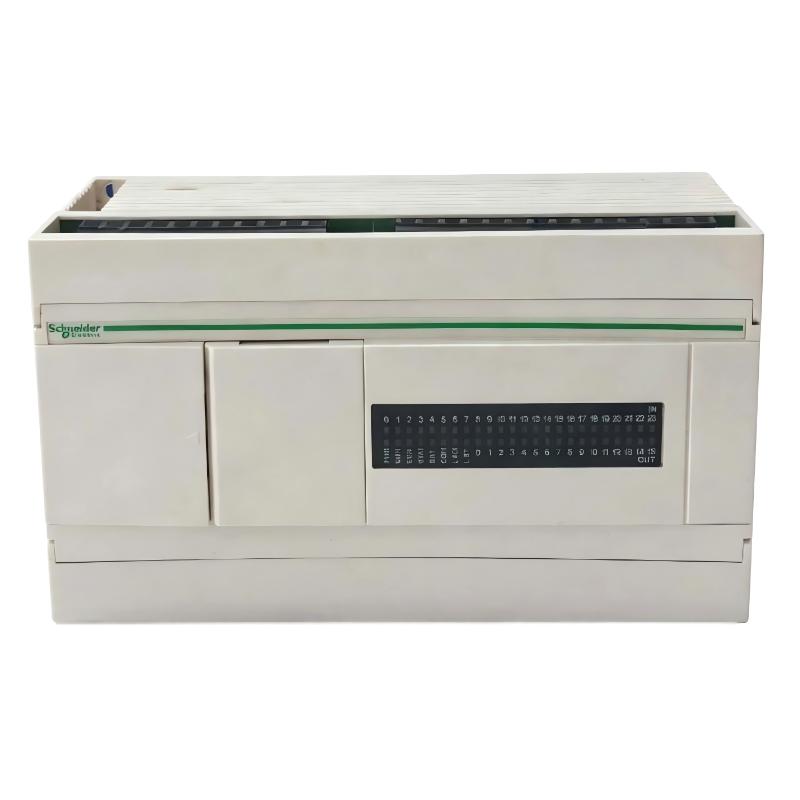
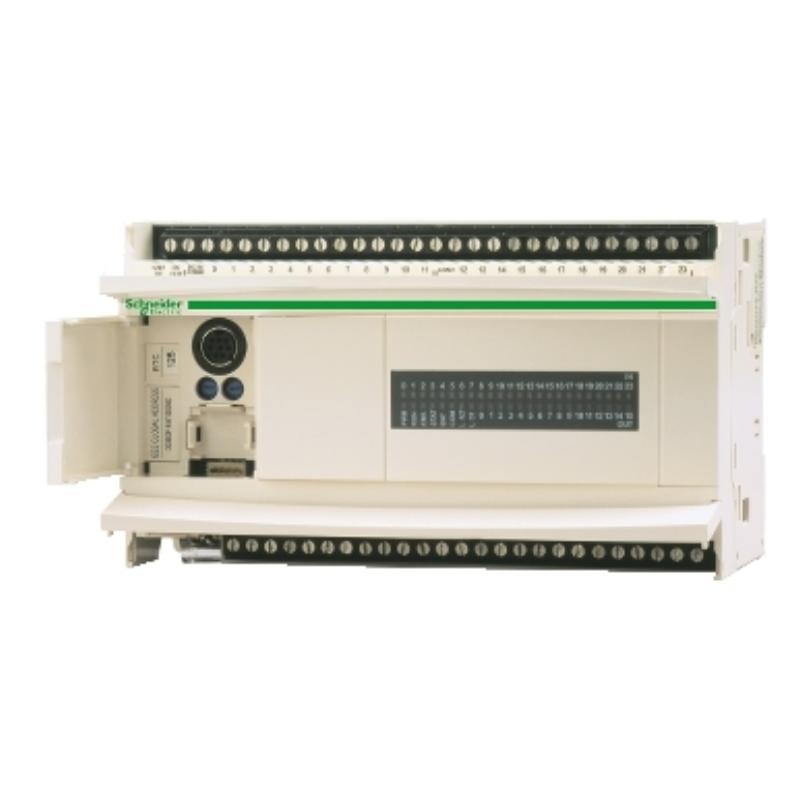
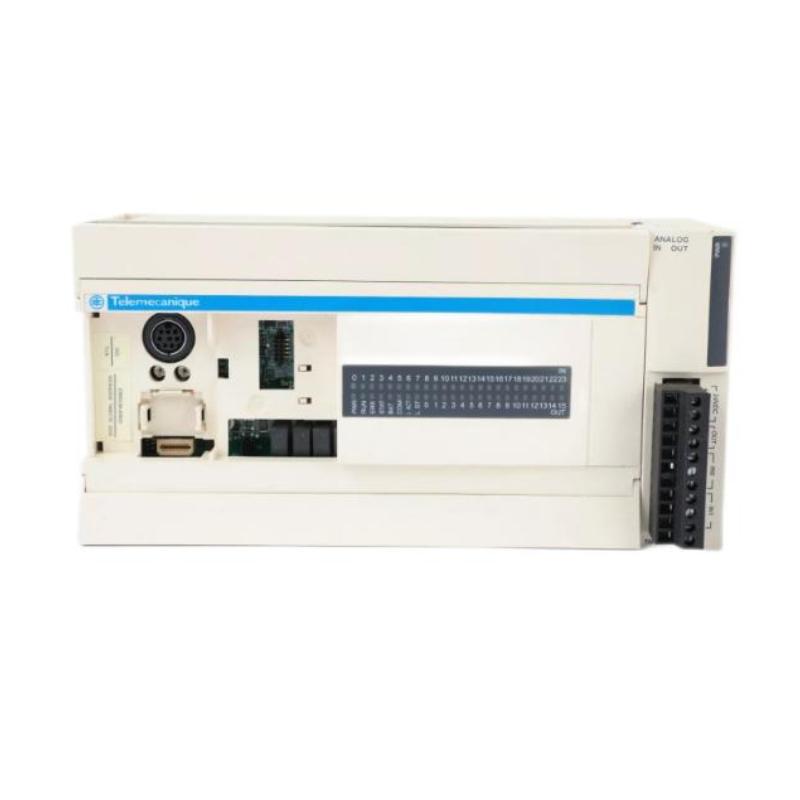
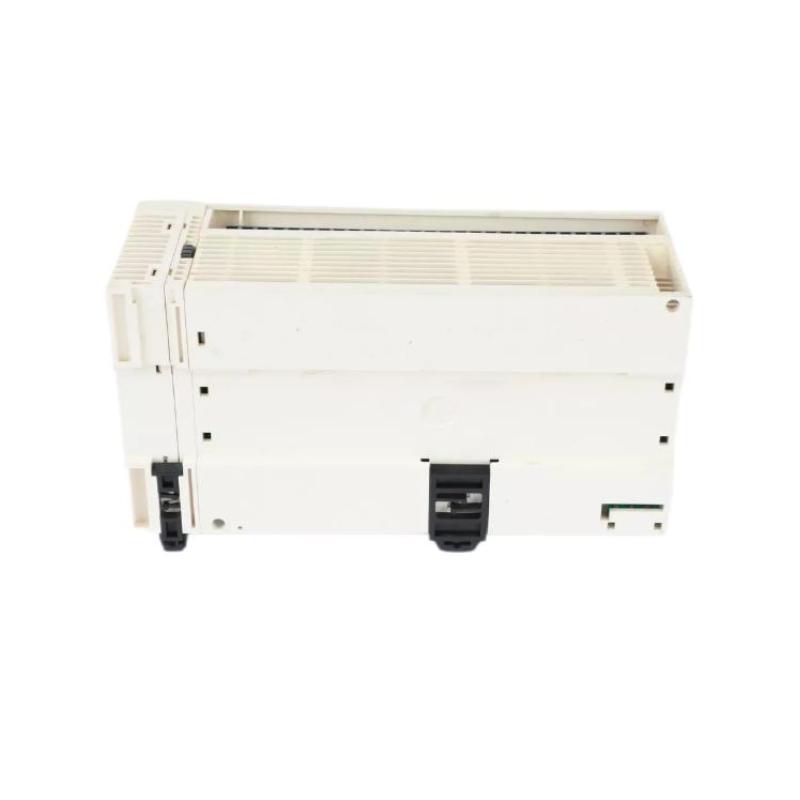
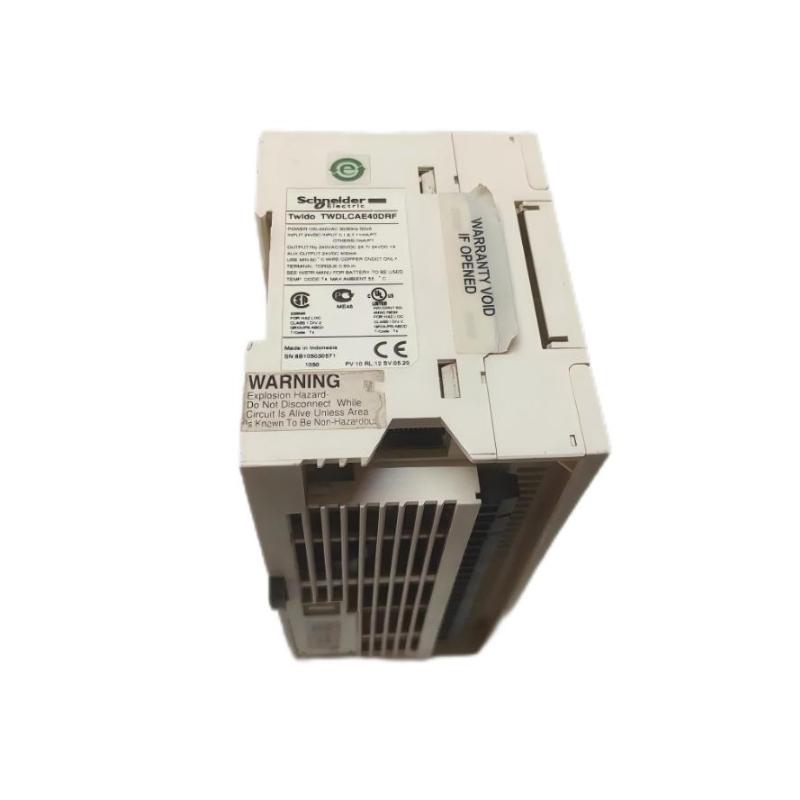
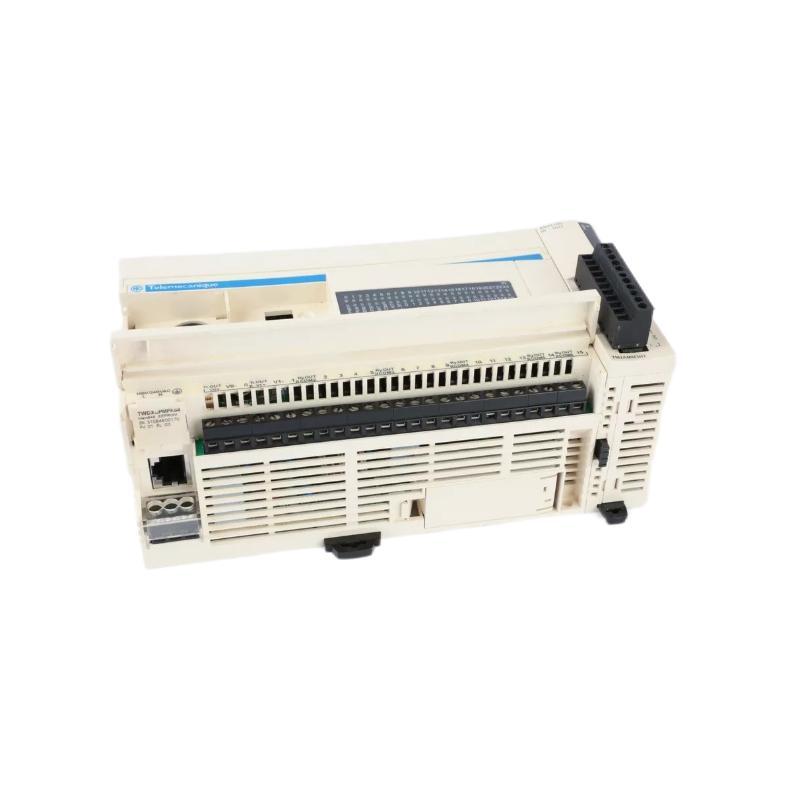
The Schneider Electric TWDLCAE40DRF Compact Basic Controller is a programmable logic controller (PLC) from the Modicon Twido series. Designed for compact industrial automation systems, it combines processing functions, digital input and output interfaces, and communication capabilities in a single controller.
The TWDLCAE40DRF operates with a 100–240 V AC power supply and provides 40 integrated digital I/O points. Its input section includes 24 digital inputs operating at 24 V DC, while the output section consists of 14 relay outputs and 2 transistor outputs. This combination allows the controller to monitor field signals and operate a variety of industrial devices.
The controller also provides Ethernet TCP/IP connectivity and a serial communication interface supporting Modbus communication. These interfaces allow it to exchange data with compatible operator interfaces, industrial devices, and supervisory systems. The unit supports up to seven I/O expansion modules, providing additional flexibility when the application requires more field connections.
The Twido platform was developed for machine control, equipment automation, and smaller process-control applications. Its compact design integrates essential PLC functions without requiring a large modular rack. This makes the TWDLCAE40DRF suitable for installations where panel space and straightforward control architecture are important considerations.
For maintenance and replacement projects, the complete model number should be checked before ordering. Although the TWDLCAE40DRF shares its general product family with other Twido controllers, different models may have different supply voltages, I/O configurations, and communication features.
Technical Specifications
| Parameter | Specification |
|---|---|
| Brand | Schneider Electric |
| Product Series | Modicon Twido |
| Model | TWDLCAE40DRF |
| Product Type | Compact Basic Controller |
| Controller Type | Programmable Logic Controller |
| Rated Supply Voltage | 100–240 V AC |
| Supply Voltage Limits | 85–264 V AC |
| Network Frequency | 50/60 Hz |
| Digital I/O Points | 40 |
| Digital Inputs | 24 |
| Input Voltage | 24 V DC |
| Input Logic | Sink or source |
| Digital Outputs | 16 |
| Relay Outputs | 14 |
| Transistor Outputs | 2 |
| Ethernet Interface | RJ45, 10/100 Mbps |
| Serial Communication | Non-isolated Mini-DIN serial interface |
| Serial Protocol | Modbus RTU/ASCII |
| Maximum I/O Expansion Modules | 7 |
| Built-in Functions | PID and event processing |
| Memory Backup | External battery TSXPLP01 |
| Data Backup Autonomy | Approximately 3 years with specified backup arrangement |
| Dimensions Provided | 157 × 70 × 90 mm |
| Weight Provided | 0.525 kg |
| Product Status | Discontinued |
Note: Dimensions and weight are the supplied listing values. Confirm the physical unit and applicable manufacturer dimensional drawing before finalizing panel layouts or shipping information.
Function and Working Principle
The TWDLCAE40DRF operates as the central processing unit of a compact automation system. It receives signals from connected field devices, executes a stored control program, and updates its outputs according to programmed logic.
1. Digital Signal Acquisition
The controller has 24 digital inputs designed for 24 V DC signals. These inputs can receive information from sensors, limit switches, push buttons, proximity switches, and other field devices.
When an input changes state, the PLC reads the signal and makes the corresponding information available to the control program. The program can then determine whether a machine should start, stop, change operating mode, or activate another device.
The input logic supports sink or source configurations, subject to the applicable wiring requirements.
2. Program Execution
The controller processes input information using its stored PLC program. Logic instructions, timers, counters, comparisons, and other supported functions determine the next control actions.
For example, a packaging machine may use sensor signals to detect product position, count items, and control a conveyor sequence. The PLC repeatedly evaluates these conditions and updates the outputs as the process changes.
The controller also supports PID and event-processing functions, which can be used in suitable applications requiring more than simple on/off logic.
3. Relay Output Control
Fourteen of the controller’s 16 outputs are relay outputs. Relay outputs can switch compatible AC or DC loads within their specified electrical ratings.
Typical applications include controlling contactor coils, indicator devices, solenoid valves, and other electrically operated equipment. Interposing relays may be appropriate when the load characteristics or switching requirements exceed the direct output capability.
Relay outputs are electromechanical contacts. Their switching frequency and service life depend on the load current, voltage, power factor, and operating conditions.
4. Transistor Output Control
The controller also includes two transistor outputs. These outputs provide electronic switching for compatible DC loads and can support applications requiring faster switching than relay contacts.
Engineers should verify the output type, polarity, current capacity, and wiring requirements before connecting a field device. The transistor outputs should not be treated as interchangeable with the relay outputs.
5. Communication and Data Exchange
The TWDLCAE40DRF includes an Ethernet RJ45 interface supporting 10/100 Mbps communication and a serial interface supporting Modbus communication.
Ethernet connectivity can be used to exchange data with compatible supervisory systems, HMIs, and other networked equipment. The serial interface supports communication with compatible Modbus devices.
The communication architecture should be designed around the actual protocol requirements, network configuration, addressing, and security practices of the installation.
Role in Industrial Control Systems
The TWDLCAE40DRF can serve as the main controller in a compact machine or equipment-control system. It combines local I/O, program execution, and communication functions in one unit.
PLC-Based Machine Control
The controller receives signals from field sensors and executes the machine’s control sequence. It can coordinate motors, contactors, valves, alarms, and other devices through its available outputs and suitable external control components.
For example, a production machine may use input signals to confirm that a protective door is closed, a product is positioned correctly, and a conveyor is ready. The PLC evaluates these conditions before enabling the next operating step.
HMI Integration
An HMI can communicate with the controller to display operating conditions, alarms, production counts, and process values. Operators can use the interface to select operating modes or enter permitted setpoints.
The Ethernet and serial communication interfaces provide options for connecting compatible devices. The exact connection method depends on the HMI model and the communication protocol selected.
Ethernet-Based Monitoring
The integrated Ethernet interface allows the controller to exchange information with compatible networked systems. This can support production monitoring, machine diagnostics, and data collection.
Network configuration should include appropriate IP addressing, communication settings, and access controls. Ethernet connectivity alone does not guarantee compatibility with every industrial protocol or supervisory platform.
I/O Expansion
The controller supports up to seven I/O expansion modules. This allows additional digital or other supported I/O capacity to be added when the original 40 points are insufficient.
Expansion selection must follow the Twido hardware compatibility requirements. The available module types, power consumption, installation order, and maximum system configuration should be checked before adding hardware.
Industrial Applications
The TWDLCAE40DRF is designed for compact automation tasks that require integrated digital I/O and communication capabilities.
1. Packaging Machinery
Packaging machines use sensors, switches, and actuators to coordinate product feeding, positioning, sealing, and discharge.
The controller can process product-detection signals and operate compatible output devices according to the programmed sequence. Its combination of relay and transistor outputs provides options for different types of control loads.
2. Conveyor and Material Handling Systems
Conveyor equipment often requires coordinated control of motors, contactors, sensors, and warning devices.
The PLC can monitor product movement and machine status, then activate outputs according to the material-handling sequence. Ethernet communication can also support data exchange with other compatible controllers or operator interfaces.
3. Pump and Auxiliary Equipment Control
Small pumping systems may use PLC logic to manage start and stop conditions, pressure-related signals, alarms, and operating sequences.
The TWDLCAE40DRF can process digital field signals and control suitable external devices. Applications requiring analog measurement should use compatible expansion hardware or a suitable external signal interface.
4. Building and Facility Equipment
The controller may be used in selected equipment-control applications involving fans, pumps, ventilation units, and auxiliary machinery.
Its digital inputs can monitor operating states, while its outputs can operate compatible relays and contactors. Electrical ratings and environmental requirements must be considered before using it in a particular installation.
5. Small Manufacturing Machines
Compact manufacturing equipment often requires a controller that can manage multiple sensors and actuators without a large PLC rack.
The TWDLCAE40DRF’s integrated I/O and expansion capability make it suitable for certain machine-control architectures. The actual application must remain within its processing, I/O, and communication capabilities.
Installation and System Integration
Correct installation helps maintain stable operation and reduces the possibility of electrical faults or communication problems.
1. Power Supply Requirements
The controller is designed for a 100–240 V AC rated supply, with a documented supply voltage range of 85–264 V AC.
Before connecting power, verify the incoming supply voltage, frequency, protective devices, and grounding arrangement. Do not apply 24 V DC directly to the controller’s AC supply terminals.
2. Mounting and Panel Layout
The supplied dimensions are 157 × 70 × 90 mm. Confirm the exact mounting dimensions and required clearances against the hardware drawing before preparing the control cabinet.
Install the controller in an environment that meets its specified temperature, humidity, vibration, and pollution requirements. Provide enough space for wiring access and heat dissipation.
The controller’s IP20 protection rating means it should be installed inside a suitable enclosure when protection from dust, moisture, or accidental contact is required.
3. Digital Input Wiring
The 24 digital inputs are designed for 24 V DC signals. Typical connected devices include proximity sensors, photoelectric sensors, push buttons, and limit switches.
Check the input wiring configuration and common-terminal arrangement before energizing the system. The controller supports sink or source input logic, but field-device polarity and wiring must be compatible with the selected arrangement.
4. Relay and Transistor Output Wiring
The controller has 14 relay outputs and 2 transistor outputs. These output types have different electrical characteristics and should be wired according to their respective requirements.
Relay contacts can switch compatible loads within their rated limits. Transistor outputs are intended for suitable DC switching applications. Use external relays or contactors where required by the load current, voltage, or isolation requirements.
5. Communication Configuration
For Ethernet communication, configure the appropriate network address and communication parameters. Confirm that the connected HMI, computer, or supervisory device uses a compatible protocol.
For serial communication, verify the cable, interface, communication mode, baud rate, parity, and device address. Modbus RTU and ASCII configurations must match between communicating devices.
6. Program Transfer and Backup
The controller uses a memory arrangement that supports program retention with the specified external backup battery arrangement. The TSXPLP01 battery is identified for data backup.
Maintenance teams should document the PLC program, communication settings, and relevant configuration data. Check the backup battery condition according to the applicable maintenance procedure and replace it as required.
7. Commissioning and Testing
Before commissioning, inspect the power wiring, input connections, output circuits, grounding, and communication cables.
Test each digital input individually and verify the corresponding PLC status. Check relay and transistor outputs with suitable test equipment and confirm that connected devices operate correctly.
Finally, test the complete control sequence, including alarms, interlocks, communication, and recovery after a power interruption.
Compatible System Components
The TWDLCAE40DRF can be integrated with compatible field devices and automation components. The exact selection depends on the electrical and communication requirements of the application.
| Component | Function | Integration Considerations |
|---|---|---|
| 24 V DC sensors | Provide machine status and detection signals | Confirm input voltage, polarity, and sink/source wiring |
| Push buttons and selector switches | Provide operator commands | Verify contact arrangement and input wiring |
| Relay contactors | Switch motors and larger electrical loads | Use suitable external protection and coil suppression |
| Solenoid valves | Control pneumatic or fluid circuits | Check voltage, current, and output switching requirements |
| HMI panels | Provide operator control and process visualization | Confirm Ethernet or serial protocol compatibility |
| Ethernet switches | Connect networked automation devices | Configure network addressing and segmentation |
| Modbus devices | Exchange serial or network data | Match protocol, addressing, and communication parameters |
| Twido I/O expansion modules | Increase available I/O capacity | Confirm module compatibility and expansion limits |
| TSXPLP01 battery | Supports specified memory backup arrangement | Follow the manufacturer’s battery maintenance procedure |
| Control cabinet | Protects and houses automation hardware | Provide suitable environmental protection and wiring space |
Components listed above are examples of equipment that may be used in a complete system. They are not necessarily supplied with the controller.
Alternative Models and Replacement Considerations
The TWDLCAE40DRF has been discontinued. Schneider Electric identifies the Modicon M221 TM221CE40R as a recommended replacement option, with an additional TM3 I/O module used in the proposed replacement arrangement where required.
| Alternative Model | Description | Replacement Considerations |
|---|---|---|
| Schneider Electric TM221CE40R | Modicon M221 logic controller with 40 I/O and relay outputs | Officially recommended replacement option; verify output differences and program conversion |
| Schneider Electric TM221CE24R | Modicon M221 controller with 24 I/O | May require an additional TM3 I/O module to meet the original I/O count |
| Schneider Electric TM3DM24R | 24-point digital I/O expansion module | Used with an appropriate M221 configuration to provide additional I/O |
| Existing Twido controller | Same-family replacement | Match the complete model number, supply voltage, I/O arrangement, and firmware |
The TM221CE40R is not an automatic plug-in replacement. The original controller has 14 relay outputs and 2 transistor outputs, while the M221 replacement has a different output arrangement. The application program and wiring must be reviewed before migration.
Other Twido accessories and expansion modules should not be assumed to be compatible with the M221 platform. Verify the hardware list and software conversion requirements before planning a system upgrade.
Key Advantages
Integrated 40-Point I/O
The controller provides 24 digital inputs and 16 digital outputs in one compact unit, reducing the need for separate base I/O modules in suitable applications.
Mixed Output Configuration
The combination of 14 relay outputs and 2 transistor outputs supports different types of field-device switching, provided each load is within the applicable electrical ratings.
Ethernet Connectivity
The integrated RJ45 Ethernet interface supports network communication with compatible automation and supervisory equipment.
Serial Modbus Communication
The serial interface supports Modbus RTU/ASCII communication, allowing the controller to exchange data with compatible devices.
Expandable I/O Architecture
Support for up to seven I/O expansion modules provides additional flexibility when the application grows beyond the built-in I/O capacity.
Integrated Control Functions
PID and event-processing functions support selected control applications that require more than basic relay logic.
Compact Controller Design
The Twido compact architecture combines processing, power, communication, and I/O functions in a single controller, making it suitable for space-conscious control panels.
Technical FAQs
1. What is the Schneider Electric TWDLCAE40DRF?
It is a Modicon Twido compact basic PLC controller designed for industrial machine automation and equipment control. It integrates a controller with 40 digital I/O points and Ethernet and serial communication interfaces.
2. What power supply does the TWDLCAE40DRF require?
It uses a 100–240 V AC rated power supply, with a documented operating supply range of 85–264 V AC. It should not be connected directly to a 24 V DC supply.
3. How many digital inputs and outputs does it have?
The controller provides 24 digital inputs and 16 digital outputs. The outputs consist of 14 relay outputs and 2 transistor outputs.
4. Does this controller support Ethernet communication?
Yes. It has an integrated RJ45 Ethernet interface supporting 10/100 Mbps communication. The communication protocol and network configuration must be compatible with the connected device.
5. Does the TWDLCAE40DRF support Modbus?
Yes. Its serial communication interface supports Modbus RTU and ASCII communication. The communication parameters must be configured consistently across connected devices.
6. Can additional I/O modules be connected?
Yes. The controller supports up to seven I/O expansion modules, subject to the Twido system’s hardware and configuration limits.
7. Does the controller support analog inputs?
The base TWDLCAE40DRF provides 40 digital I/O points and does not include integrated analog input channels. Suitable expansion hardware is required for applications involving analog signals.
8. Is the TWDLCAE40DRF discontinued?
Yes. Schneider Electric lists the model as discontinued. Availability may depend on remaining stock, spare-parts suppliers, and refurbished equipment markets.
9. What is the recommended replacement for this controller?
Schneider Electric identifies the TM221CE40R as a recommended replacement option. Depending on the required I/O arrangement, an additional TM3DM24R module may be part of the proposed migration configuration.
10. Can the original Twido program be used directly in an M221 controller?
Not necessarily. Schneider Electric provides a software conversion path for suitable Twido applications, but unsupported functions and hardware differences must be reviewed. The program should be validated and tested before the upgraded system is placed into operation.
Procurement and Maintenance Recommendations
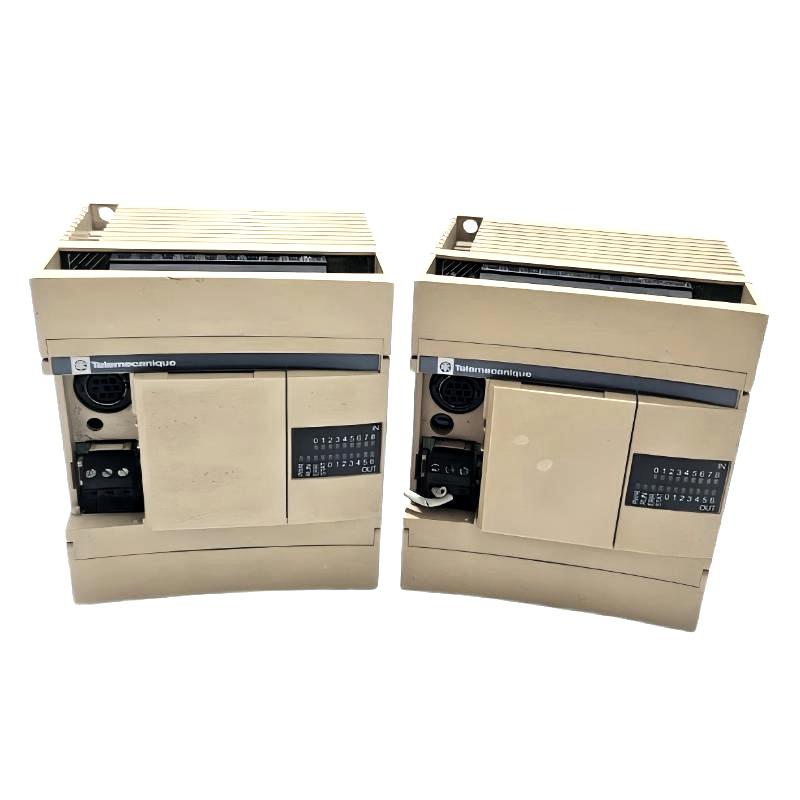
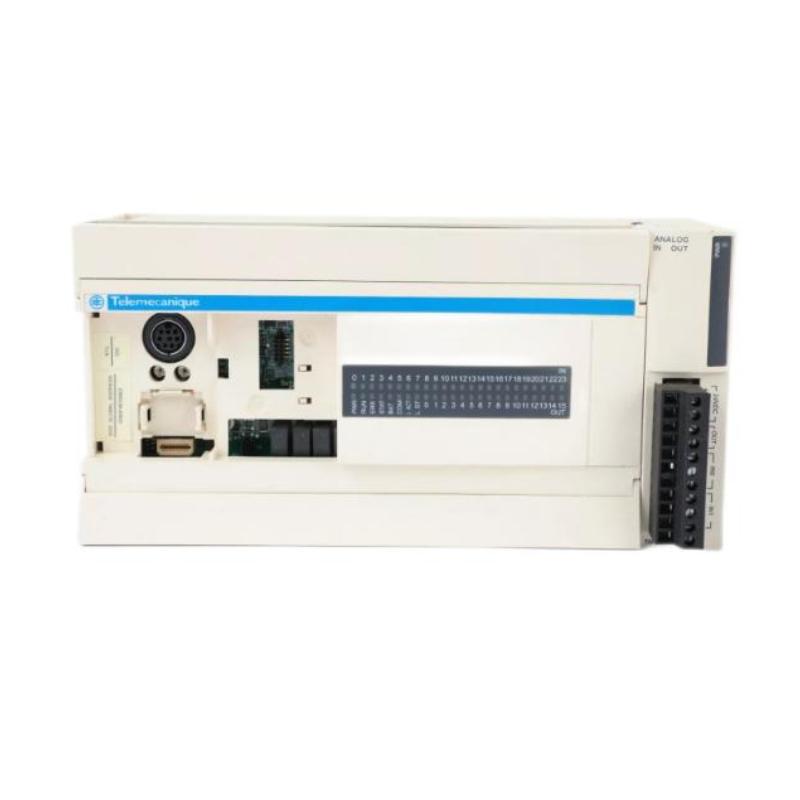
When purchasing the TWDLCAE40DRF, verify the complete model number on the product label. Controllers from the Twido series may have similar housings but different power-supply arrangements, I/O counts, output types, and communication features.
For used or surplus units, request clear photographs of the front label, terminal blocks, communication ports, and overall housing condition. Confirm whether the controller has been tested and whether the memory backup battery is included or requires replacement.
Because the model is discontinued, buyers should also consider the long-term availability of compatible expansion modules and accessories. For critical production equipment, maintaining a tested spare controller and a verified program backup can reduce recovery time after a hardware failure.
During routine maintenance, inspect terminal connections, wiring insulation, ventilation, and cabinet conditions. Check the external memory backup battery according to the manufacturer’s maintenance guidance. Keep a current copy of the PLC program and document changes to communication settings and control logic.
If the controller is being replaced by an M221 system, perform a complete I/O mapping review. Pay particular attention to the original mix of relay and transistor outputs, expansion modules, communication accessories, and program functions. The migration should include wiring verification, software validation, and functional testing.
Conclusion
The Schneider Electric TWDLCAE40DRF Modicon Twido Compact Basic Controller is a compact PLC designed for industrial machine and equipment automation. It combines 24 digital inputs, 14 relay outputs, 2 transistor outputs, Ethernet connectivity, and serial Modbus communication in one controller.
Its support for up to seven I/O expansion modules and integrated PID and event-processing functions provides flexibility for suitable compact automation systems. Although the model has been discontinued, it remains relevant to existing Twido installations that require maintenance, spare-part sourcing, or controlled migration.
For replacement projects, the TM221CE40R is an officially recommended option, but output configuration, expansion hardware, and software compatibility must be reviewed before substitution.