

ProductPRODUCT
Featured products
Contact Us
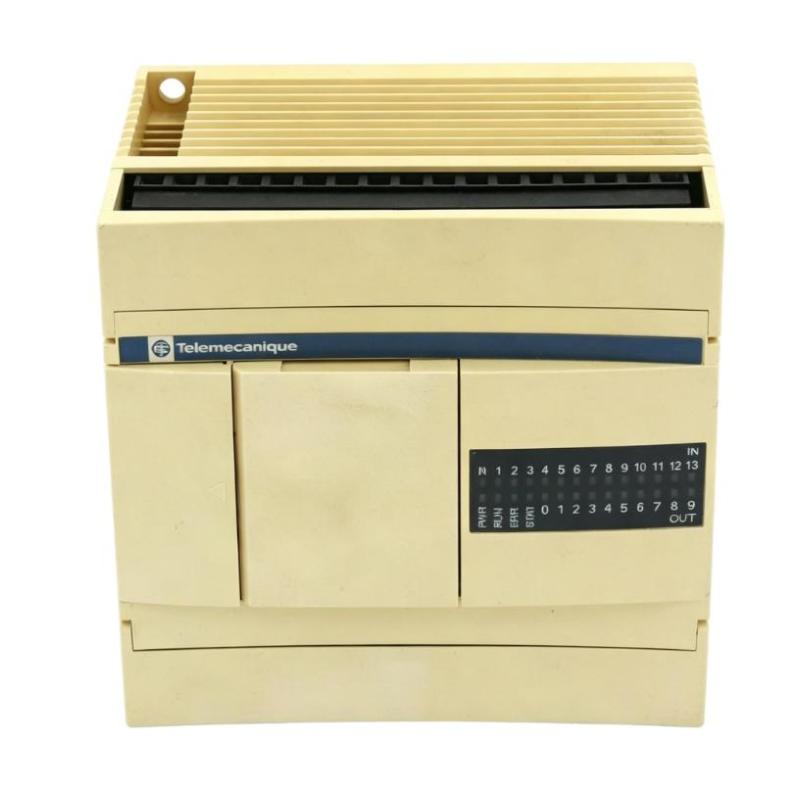
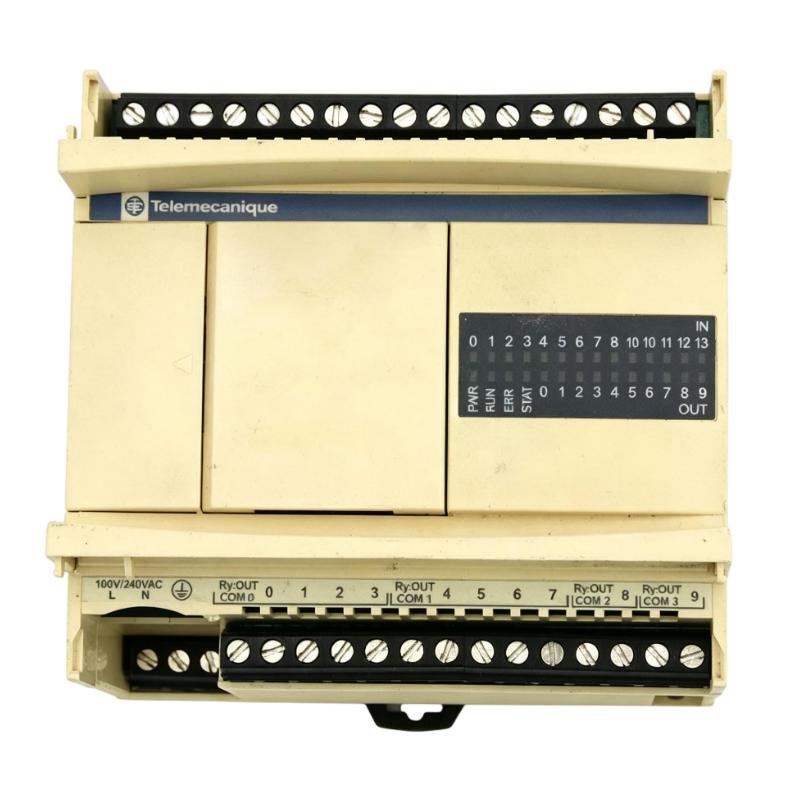
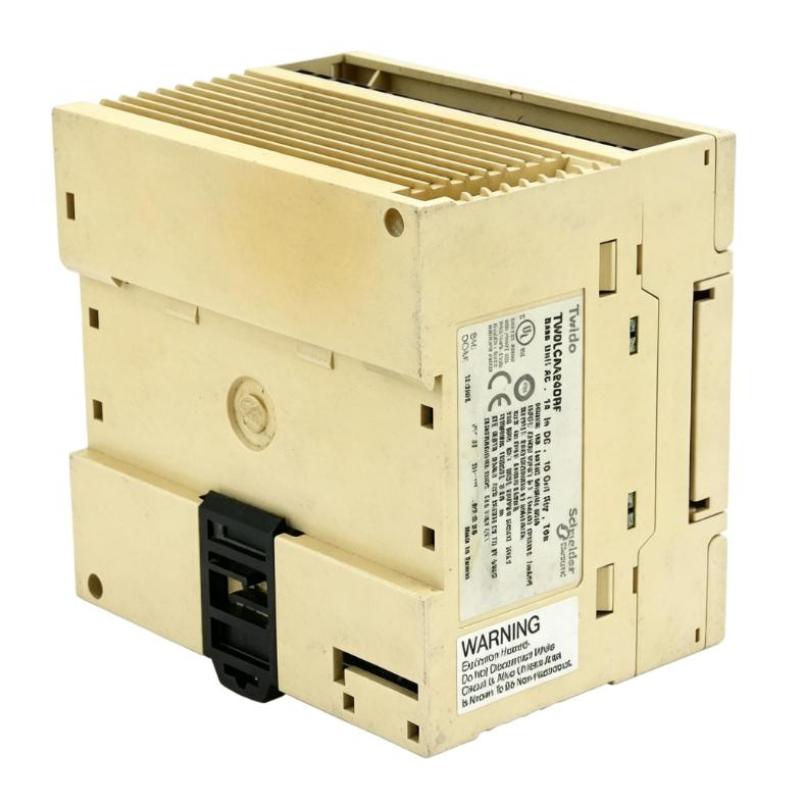
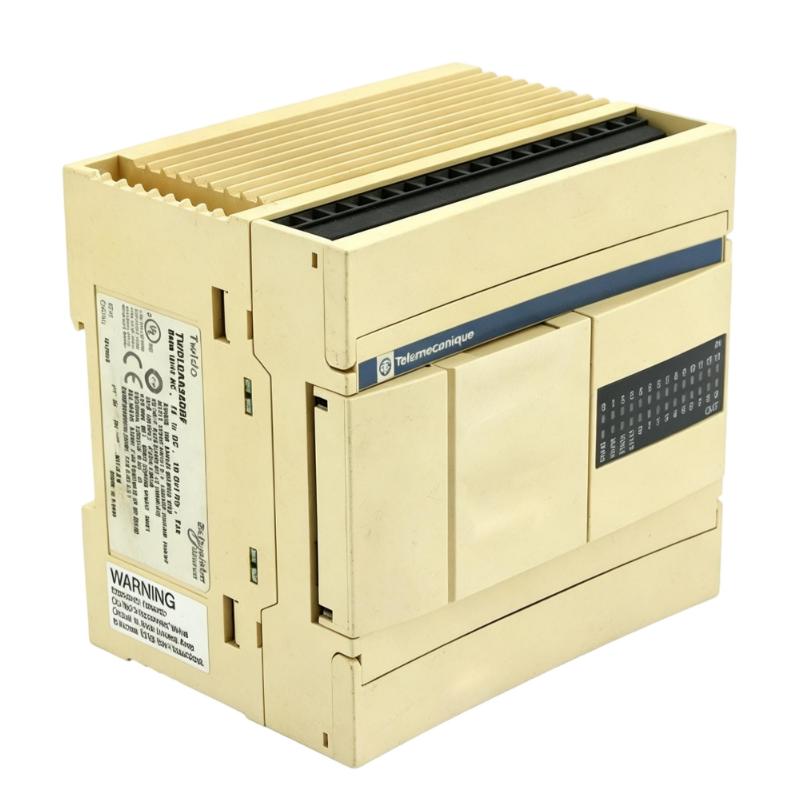
- Schneider
- TWDLCAA24DRF
- Compact Base Station Controller
- France
- 70 x 95 x 90 mm
- 0.305 kg
- Xiamen, China
- New & In Stock
- T/T, PayPal, Western Union
- 1 Year
- 1-3 Working Days
- DHL, UPS, TNT, FedEx and EMS.
- 24-Hour Service
- COO
- 37
Our advantage

Global Logistics
We have a 10-year logistics and express cooperation agreement, so our products can be shipped to any place in the world.

Brand new and original
Our products are imported in bulk from the place of origin. Because of the cooperative relationship, our products are all original and 100% new.

24-hour service
We provide 7*24 hours service to our customers. We will be there whenever you need us.

Price advantage
All our products are priced very favorably because we have our own warehouse and supply.
| Company Information | |||
| [email protected] | |||
| Mobile | +8615980777398 | ||
| +8615980777398 | |||
| 15980777398 |
Product Overview
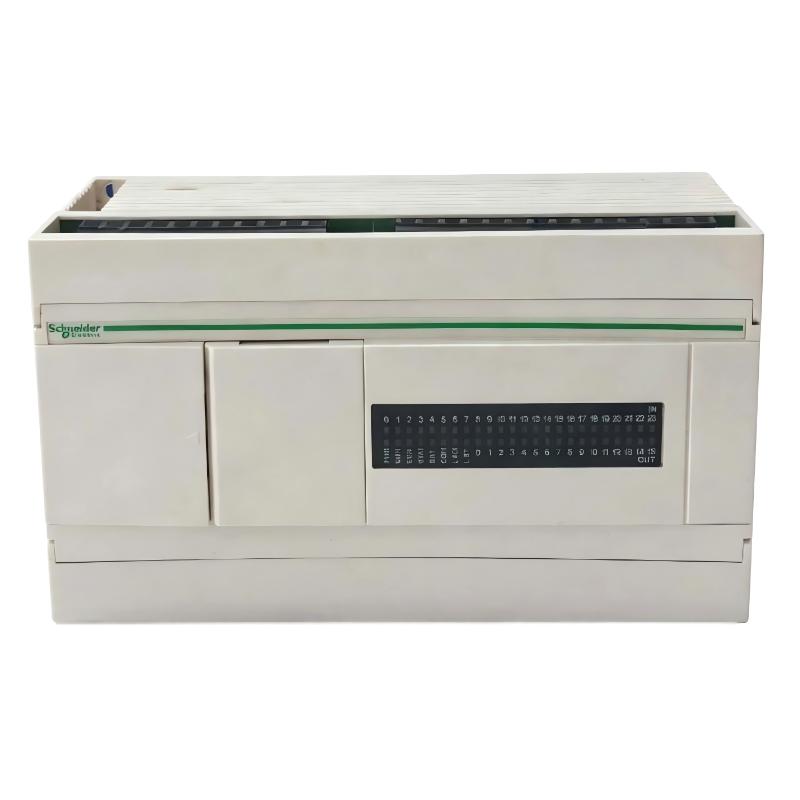
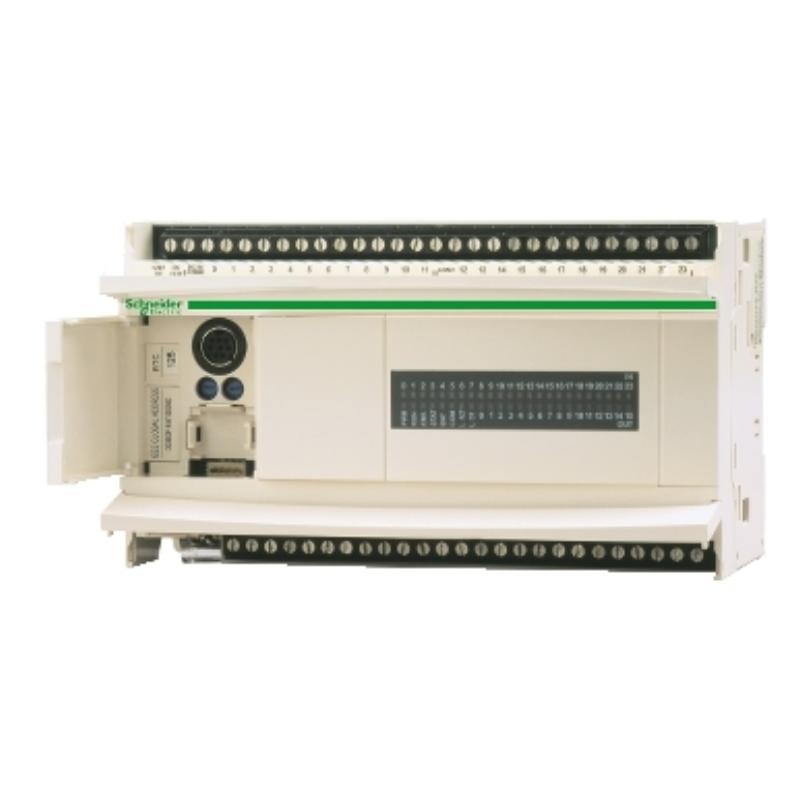
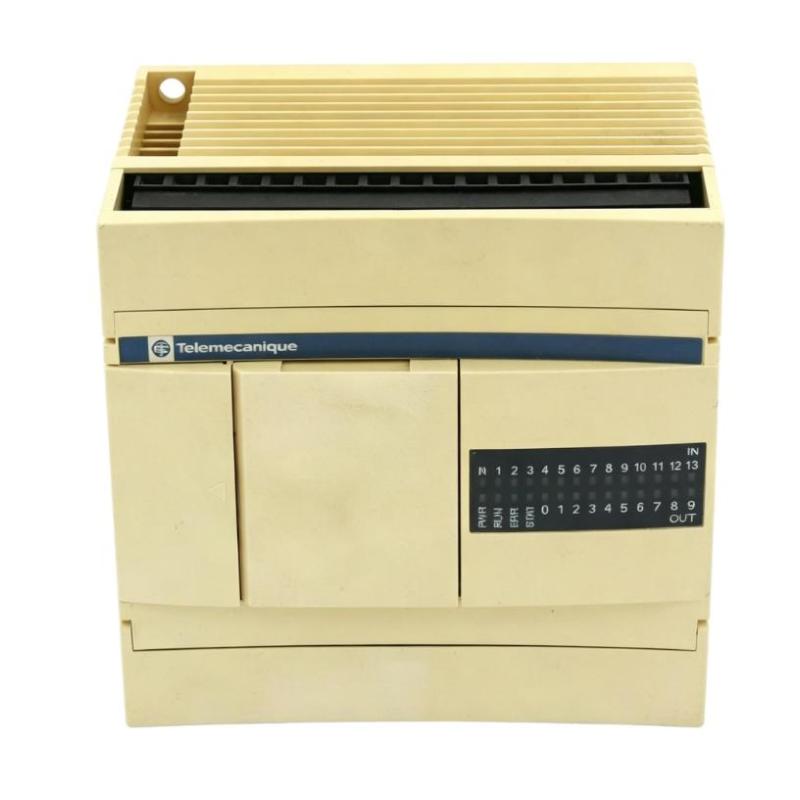
The Schneider Electric TWDLCAA24DRF Compact Base Controller is a programmable logic controller (PLC) from the Modicon Twido automation family. Designed for compact industrial control applications, it combines a central processing unit, digital input channels, relay output channels, and an integrated power supply interface in a single controller base.
The TWDLCAA24DRF is designed to process input signals, execute a user-defined control program, and operate connected industrial equipment according to programmed logic. It can be used to coordinate machinery, monitor operating conditions, and control auxiliary devices in automated production systems.
This compact controller provides 14 digital inputs and 10 relay outputs, giving the system 24 built-in digital I/O points. The digital inputs accept compatible 24 V DC signals from field devices such as push buttons, limit switches, proximity sensors, and other discrete signal sources. The relay outputs allow the controller to switch suitable external circuits, including contactor coils, indicator lamps, alarms, and other loads within the specified electrical ratings.
The controller uses a 100–240 V AC power supply input and belongs to the extendable Twido compact controller range. Depending on the system configuration, additional expansion I/O modules can be connected to increase the number of available input and output points. The platform also supports serial communication and optional accessories for applications that require additional functionality.
By combining processing, I/O, and power supply functions in one base unit, the TWDLCAA24DRF helps reduce the number of separate components required in a compact control cabinet. This design is particularly useful for small machines, auxiliary equipment, packaging systems, conveyor applications, and other automation installations that do not require a large modular PLC architecture.
The TWDLCAA24DRF is now a discontinued product. It remains relevant to industrial facilities that maintain existing Modicon Twido installations and need to replace a failed controller without immediately redesigning the entire control system.
For new installations or long-term modernization projects, buyers should evaluate the current Modicon M221 or M241 controller families. Schneider Electric identifies TM221C24R and TM241C24R among the replacement options for the TWDLCAA24DRF. However, a replacement requires an engineering review because the newer platforms may differ in programming software, communications, expansion architecture, wiring, and application configuration.
For maintenance engineers and industrial spare-parts buyers, the TWDLCAA24DRF is a practical reference when maintaining compatible legacy machinery. Confirming the exact model number and controller configuration is essential before ordering or installing a replacement.
Technical Specifications
| Parameter | Specification |
|---|---|
| Brand | Schneider Electric |
| Model | TWDLCAA24DRF |
| Product Family | Modicon Twido |
| Product Type | Compact Base Controller |
| Controller Type | Extendable compact PLC |
| Integrated Digital Inputs | 14 |
| Digital Input Signal | 24 V DC |
| Integrated Digital Outputs | 10 |
| Digital Output Type | Relay |
| Total Built-In Digital I/O | 24 points |
| Power Supply Input | 100–240 V AC |
| Expansion Capability | Supports compatible Twido expansion modules |
| Communication | Serial communication; verify interface and protocol requirements |
| Integrated Analog Potentiometers | 2 |
| Protection Rating | IP20 |
| Operating Temperature | 0°C to 55°C |
| Storage Temperature | -25°C to +70°C |
| Dimensions | 70 × 95 × 90 mm, as supplied |
| Weight | 0.305 kg |
| Product Status | Discontinued |
| Recommended Replacement Options | TM221C24R or TM241C24R, subject to system review |
The dimensions and weight above follow the supplied product information. Manufacturer drawings may present the dimensions in a different order depending on orientation. Verify mounting dimensions and required clearances against the installation manual before replacing or redesigning a control panel.
Function and Working Principle
1. Processing Industrial Control Logic
The central processing unit is the core of the TWDLCAA24DRF. It executes the user program and determines the required output states based on the available input signals, internal variables, timers, counters, and programmed conditions.
For example, a machine may require a conveyor to start only when a start command is received, the access interlock is satisfied, and no fault condition is active. The controller evaluates these conditions and changes the relevant output when the programmed requirements are met.
This logic-based approach allows the controller to coordinate several machine functions without requiring an independent control relay for every decision.
2. Receiving Digital Input Signals
The TWDLCAA24DRF has 14 digital input points designed for compatible 24 V DC signals. These inputs allow the PLC to receive information from field devices and operator controls.
Common input devices include:
- Push buttons and selector switches.
- Limit switches and position switches.
- Proximity sensors with compatible electrical interfaces.
- Float switches and other discrete process sensors.
- Machine status contacts.
- Auxiliary contacts from contactors and relays.
When an input changes state, the controller reads the signal and evaluates it as part of the program execution cycle. The PLC can then update internal logic and determine whether one or more outputs should change.
The input circuit must be wired according to the controller’s documented sink/source configuration and electrical requirements. Incorrect wiring or an incompatible signal voltage may prevent the controller from recognizing the field signal correctly.
3. Switching Loads Through Relay Outputs
The controller provides 10 relay output points. Each output is controlled by the PLC program and operates an internal relay contact to switch a suitable external circuit.
Relay outputs can be useful when an application includes conventional AC or DC control loads within the specified ratings. Typical uses include operating contactors, activating alarm devices, switching indicator lamps, and controlling auxiliary equipment.
The relay contacts should not be treated as universal power outputs. The permitted load depends on switching voltage, current, load characteristics, and the manufacturer’s specifications. Motor power circuits generally require appropriately rated contactors and protective devices rather than direct connection to a PLC relay output.
Inductive loads can produce voltage transients when switched. Suitable suppression, fusing, and circuit protection should be selected for the application.
4. Coordinating Inputs and Outputs
The controller combines its input and output functions in one base unit. This makes it possible to receive field signals and issue control commands without adding separate input and output modules for every basic machine function.
For example, a pump control application may use input points to monitor a start switch, a stop switch, and a fault contact. The PLC program evaluates those signals and activates a relay output to command a contactor. Additional outputs may operate status indicators or alarms.
The actual sequence depends on the machine’s design, operating requirements, and safety provisions.
5. Supporting Expansion
The TWDLCAA24DRF is an extendable compact controller rather than a completely fixed I/O unit. Compatible expansion modules can be added when the built-in 14 inputs and 10 outputs are insufficient.
Expansion may provide additional digital I/O or other functions supported by the Twido platform. The permitted module types, number of modules, addressing limits, and power requirements must be checked against the applicable hardware documentation.
Expansion planning should account for cabinet space, field wiring, controller capacity, and the availability of replacement parts for the legacy platform.
Role in Industrial Automation Systems
The TWDLCAA24DRF can act as the central control device in a compact automation installation. It receives discrete signals from field devices, executes the programmed sequence, and sends switching commands to connected equipment.
Its integrated design helps simplify control panels for applications that need a moderate number of digital I/O points.
Machine Sequence Control
Many industrial machines perform operations in a defined order. The controller can monitor sensors and operator commands, verify programmed conditions, and activate outputs to move the machine through each stage.
Examples include indexing mechanisms, simple assembly stations, material handling equipment, and packaging machines. The PLC program defines the sequence and the response to normal operating conditions.
Equipment Monitoring
The digital inputs can be used to monitor machine states, such as whether a limit switch is activated, a contactor is energized, or a process device has reached a particular position.
When the program detects an unexpected state, it can activate an alarm output or place the machine in a defined operating condition. The reliability of this response depends on correct field wiring, suitable program logic, and proper validation.
Relay-Based Control
The 10 relay outputs provide switching points for suitable external control circuits. They can be used to operate contactors, indicator lamps, audible alarms, and other compatible loads.
Where the connected device requires more current or a different switching arrangement, an appropriately rated interposing relay or contactor should be used.
Legacy System Maintenance
A major reason to source the TWDLCAA24DRF today is to maintain existing Twido-based machines. Replacing a failed controller with the same model may preserve the existing hardware arrangement and reduce the immediate scope of engineering changes.
However, the controller’s discontinued status means that maintenance teams should also consider long-term spare-part availability, backup copies of the PLC program, and a possible migration plan.
Industrial Applications
1. Packaging Machinery
Packaging equipment uses digital signals to detect product position, monitor machine conditions, and coordinate operating sequences. The TWDLCAA24DRF can control suitable actuators and auxiliary devices through its relay outputs while monitoring sensors through its digital inputs.
Applications may include basic filling, labeling, sealing, and product-handling equipment, depending on the required I/O count and control complexity.
2. Conveyor Systems
Conveyors use discrete control signals for start and stop commands, position detection, transfer gates, and warning indicators. The controller can evaluate these signals and issue commands to suitable motor-control equipment.
Motor circuits should use correctly rated contactors, overload protection, and other required electrical protection. The PLC output is generally used as a control signal rather than as the main motor power switch.
3. Pump and Fan Control
The controller can coordinate pump or fan operation using start commands, status contacts, pressure switches, level switches, and fault signals.
For example, a level switch may provide an input signal indicating that a tank requires pumping. The PLC program can then issue a relay output command to a suitable contactor or control interface.
The exact application must be designed around the controller’s I/O capacity, electrical ratings, and required process protections.
4. Building and Utility Equipment
Small utility systems may require discrete control of fans, auxiliary pumps, alarms, and status indicators. The TWDLCAA24DRF can be used in compatible legacy installations where a compact PLC is sufficient.
The application should be checked for communication requirements, environmental conditions, and any applicable safety or building-system standards.
5. General Manufacturing Equipment
Manufacturing machinery often needs a compact controller to manage switches, sensors, indicator lamps, and relay-operated devices. The integrated I/O arrangement of the TWDLCAA24DRF can reduce the number of separate modules required for basic control tasks.
6. Legacy Control Panel Repairs
The controller may be required when repairing an existing control panel that was designed around the Twido platform. Retaining the original model can reduce the need to redesign the enclosure, modify field wiring, or rewrite the control program immediately.
Before replacing the controller, technicians should confirm that the original unit has failed and check whether the problem could instead be caused by the power supply, field wiring, external devices, or the PLC program.
Installation and System Integration
Correct installation is essential for safe operation and reliable control. The following guidance is general and must be used together with the manufacturer’s hardware documentation and the site’s electrical safety procedures.
Step 1: Verify the Controller Model
Check the complete model number on the controller label. Confirm that the existing equipment specifies TWDLCAA24DRF rather than another Twido compact base with a different power supply, I/O arrangement, or communication capability.
Record the machine identification, controller version, and relevant expansion module references before removing the original unit.
Step 2: Back Up the PLC Program
Before replacing a functioning controller as part of a planned upgrade, obtain a verified copy of the application program and any available configuration information.
Confirm the programming software and communication interface used by the existing installation. For legacy systems, access to the original project file can be particularly important because a replacement or migration may require program conversion or reconstruction.
A backup should be checked for completeness and stored according to the site’s maintenance and cybersecurity procedures.
Step 3: Isolate Electrical Power
Shut down the machine and isolate all relevant electrical supplies in accordance with the approved safety procedure. Verify that hazardous voltages are absent before disconnecting wiring.
The controller uses a 100–240 V AC supply input, so power wiring must be handled by qualified personnel. External field circuits may also have independent power sources and must be isolated as required.
Step 4: Label and Inspect Field Wiring
Label the conductors before removing the existing controller. Record the input and output terminal assignments and inspect the terminal blocks for loose connections, damaged insulation, corrosion, or signs of overheating.
Confirm that the external devices and their electrical characteristics match the intended I/O circuits.
Step 5: Mount the Controller
Install the controller according to the mounting instructions for the Twido compact base. Check the required clearances, mounting orientation, and access to terminals.
The supplied dimensions are 70 × 95 × 90 mm. Because technical drawings may use a different dimension order, the actual panel cutout, mounting points, and clearance requirements should be confirmed from the installation documentation.
Step 6: Reconnect Power and I/O
Reconnect the AC supply and field wiring according to the manufacturer’s terminal diagrams. Confirm that input wiring follows the documented 24 V DC configuration and that relay outputs are connected to loads within their permitted ratings.
Check fuses, protective devices, grounding, and any external suppression components before restoring power.
Step 7: Test the Controller
After verifying the installation, power the system according to the commissioning procedure. Check the controller’s status indicators and confirm that it operates normally.
Test each input point using the corresponding field device or an approved test method. Then verify the output points individually under controlled conditions, ensuring that each output operates the intended load.
Step 8: Validate Machine Operation
Test the complete programmed sequence, including normal operation, stop commands, fault responses, and recovery behavior. Confirm that the controller communicates correctly with any connected devices and that all expected I/O states are displayed.
Safety-related functions must be validated separately using the appropriate safety-rated components and procedures. A standard compact PLC should not be assumed to provide safety-rated control.
Compatible System Components
The TWDLCAA24DRF is part of the Modicon Twido family. The following table lists related component categories that may be used in compatible configurations. Exact compatibility depends on the controller model, system architecture, and hardware documentation.
| Component | Function | Integration Considerations |
|---|---|---|
| Twido Digital Input Module | Adds digital input channels | Confirm supported module type and I/O configuration |
| Twido Digital Output Module | Adds output switching points | Verify output technology and load ratings |
| Twido Analog I/O Module | Interfaces with supported analog signals | Confirm analog requirements and controller support |
| Serial Communication Adapter | Provides supported serial interface functions | Verify communication port and protocol requirements |
| Power Supply and Protection Devices | Supplies and protects electrical circuits | Follow voltage, current, grounding, and protection requirements |
| Interposing Relay | Provides an additional switching interface | Useful for loads outside the direct output rating |
| Contactor | Switches motor or other higher-power circuits | Select according to the load and protection design |
| Sensors and Limit Switches | Provide machine status and process inputs | Check voltage, wiring type, and signal compatibility |
| HMI or Supervisory Interface | Allows operator interaction and monitoring | Confirm communication compatibility and software support |
The table describes functional relationships, not a guarantee that every listed component is compatible with every TWDLCAA24DRF installation. Always confirm exact part numbers before adding or replacing hardware.
Recommended Replacement Models and Migration Considerations
Schneider Electric identifies the Modicon M221 and M241 controller families as replacement options for the discontinued TWDLCAA24DRF. The recommended replacement arrangement can also include a TM3DM8R discrete I/O module, depending on the selected migration configuration.
| Model | Product Description | Considerations |
|---|---|---|
| TWDLCAA24DRF | Original Twido compact base controller | Suitable for maintaining the existing platform when a verified replacement is available |
| TM221C24R | Modicon M221 logic controller with 24 I/O and relay outputs | Potential modernization option; review program, wiring, and expansion requirements |
| TM241C24R | Modicon M241 logic controller with 24 I/O and relay outputs | Alternative migration path where application and communication requirements justify it |
| TM3DM8R | Modicon TM3 discrete I/O module with 4 inputs and 4 relay outputs | May be included in a replacement arrangement to help address I/O requirements |
These models should not be treated as direct plug-in replacements. The Twido and newer Modicon platforms differ in hardware architecture and engineering tools. A migration may require changes to controller mounting, field wiring, communication settings, software, program logic, and expansion modules.
Before selecting a replacement, engineers should document the existing I/O list, output load characteristics, communication interfaces, cycle-time requirements, and required machine functions. A point-by-point migration review can identify any I/O gaps and reduce the risk of commissioning problems.
For older equipment, retaining the original controller may be the least disruptive short-term option, while a planned migration can provide a longer-term path to supported automation hardware.
Key Advantages
Integrated PLC and I/O Design
The TWDLCAA24DRF combines processing capability with 14 digital inputs and 10 relay outputs. This reduces the number of separate modules required for many compact control applications.
Relay-Based Output Switching
Its 10 relay output points can operate suitable external control circuits, allowing the controller to coordinate a range of discrete devices within the specified electrical ratings.
Support for Expansion
The extendable compact architecture allows compatible expansion modules to be added when additional I/O is required, subject to system limits.
Compact Control Cabinet Integration
The integrated design is suitable for applications where cabinet space and component count are important considerations.
Established Twido Platform
For existing Twido installations, the original controller can support maintenance and repair without immediately requiring a full control system redesign.
Practical Legacy Spare-Part Identification
The exact model reference helps maintenance teams distinguish this controller from other Twido bases that may have different I/O counts or power supply arrangements.
Technical FAQs
1. What is the Schneider Electric TWDLCAA24DRF?
It is a compact programmable logic controller from the Modicon Twido product family. It integrates the PLC processing function with 14 digital inputs and 10 relay outputs.
2. How many I/O points does it have?
The controller has 24 built-in digital I/O points in total: 14 inputs and 10 relay outputs.
3. What is its power supply requirement?
The TWDLCAA24DRF uses a 100–240 V AC supply input. Follow the manufacturer’s wiring instructions and electrical safety requirements when connecting the controller.
4. What type of digital inputs does it support?
Its 14 digital input points are designed for compatible 24 V DC signals. Verify the input wiring arrangement and electrical specifications before connecting field devices.
5. What type of outputs does it provide?
The controller has 10 relay output points. These can switch suitable external circuits within the manufacturer’s voltage, current, and load restrictions.
6. Can expansion modules be added?
Yes. The TWDLCAA24DRF is an extendable compact controller that supports compatible Twido expansion modules. The exact number and types of modules depend on the system configuration and documented hardware limits.
7. Is the TWDLCAA24DRF discontinued?
Yes. Schneider Electric lists the model as discontinued. Buyers maintaining older installations should verify availability and plan for eventual modernization where appropriate.
8. What is the recommended replacement?
The manufacturer identifies TM221C24R and TM241C24R among the replacement options. TM3DM8R may also be included in a recommended replacement arrangement, depending on the selected configuration.
9. Can a newer Modicon controller replace it without program changes?
Not necessarily. Different controller families may use different programming environments, hardware configurations, communication options, and I/O arrangements. A migration should include program review, wiring verification, and commissioning tests.
10. What are the dimensions and weight?
The supplied dimensions are 70 × 95 × 90 mm, and the stated weight is 0.305 kg. Verify the dimension order and mounting clearances against the official drawing before installation.
11. What should be checked before ordering a replacement?
Confirm the complete model number, original controller configuration, supply voltage, I/O arrangement, expansion modules, communication requirements, and physical mounting details. For a modernization project, also review the PLC program and the availability of compatible engineering tools.
Procurement and Maintenance Recommendations
When purchasing the Schneider Electric TWDLCAA24DRF Compact Base Controller, correct model identification is essential. The product is discontinued, so buyers should distinguish between an original replacement for an existing Twido system and a newer controller intended for a broader modernization project.
Before ordering, consider the following points:
- Verify the full model number on the original controller.
- Confirm that the required supply voltage is 100–240 V AC.
- Check the 14-input and 10-relay-output configuration against the machine’s I/O list.
- Record the existing expansion modules and communication connections.
- Confirm the controller’s physical dimensions and mounting requirements.
- Request clear product identification and condition information when sourcing legacy stock.
- Back up the existing application program and retain the wiring documentation.
- Evaluate TM221C24R or TM241C24R for long-term migration planning rather than assuming direct interchangeability.
During routine maintenance, inspect the controller terminals, wiring insulation, mounting arrangement, and surrounding environmental conditions. Check for signs of overheating, contamination, loose conductors, or abnormal status indicators.
If the machine stops unexpectedly, verify the supply voltage, controller status, input signals, output circuits, and connected field devices before replacing the PLC. A fault in a sensor, contactor, fuse, or external power supply can produce symptoms that resemble a controller failure.
For facilities that depend on legacy Twido equipment, maintaining an accurate inventory of installed models and verified spare parts can help reduce downtime and improve maintenance planning.
Conclusion
The Schneider Electric TWDLCAA24DRF Compact Base Controller is a 24-point PLC from the Modicon Twido family, combining 14 digital inputs, 10 relay outputs, and a 100–240 V AC supply interface in one compact unit. Its integrated design makes it suitable for a range of small industrial machines, packaging systems, conveyor controls, utility equipment, and other discrete automation applications.
The supplied product data lists dimensions of 70 × 95 × 90 mm and a weight of 0.305 kg. As the controller is discontinued, it is especially important to confirm the exact model and system configuration when sourcing a replacement.
Schneider Electric identifies TM221C24R and TM241C24R among the recommended replacement options, with TM3DM8R potentially included in a migration arrangement. These alternatives require compatibility assessment and should not be assumed to be direct plug-in substitutes.
For industrial maintenance teams and spare-parts buyers, accurate part-number verification, a complete PLC program backup, and careful I/O and wiring checks are essential to reliable replacement. Whether maintaining an existing Twido installation or planning a controller upgrade, a structured assessment helps protect production continuity and supports a more dependable automation system.