

ProductPRODUCT
Featured products
Contact Us
- Schneider
- BCH0601O12F1C
- Servo Motor
- France
- 141.6 mm
- 1.5 kg
- Xiamen, China
- New & In Stock
- T/T, PayPal, Western Union
- 1 Year
- 1-3 Working Days
- DHL, UPS, TNT, FedEx and EMS.
- 24-Hour Service
- COO
- 6
Our advantage

Global Logistics
We have a 10-year logistics and express cooperation agreement, so our products can be shipped to any place in the world.

Brand new and original
Our products are imported in bulk from the place of origin. Because of the cooperative relationship, our products are all original and 100% new.

24-hour service
We provide 7*24 hours service to our customers. We will be there whenever you need us.

Price advantage
All our products are priced very favorably because we have our own warehouse and supply.
| Company Information | |||
| [email protected] | |||
| Mobile | +8615980777398 | ||
| +8615980777398 | |||
| 15980777398 |
Product Overview
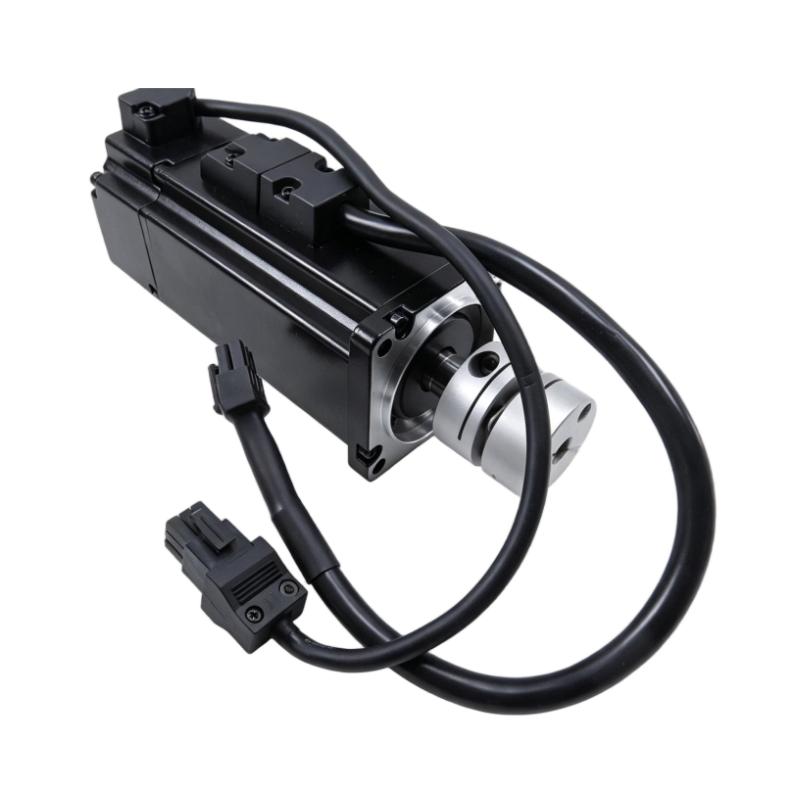
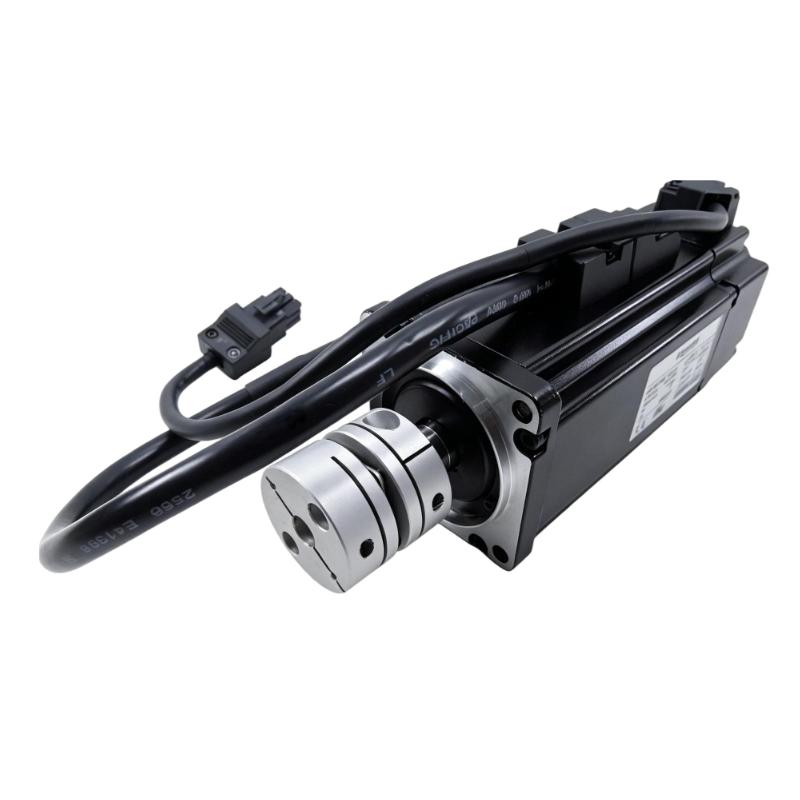
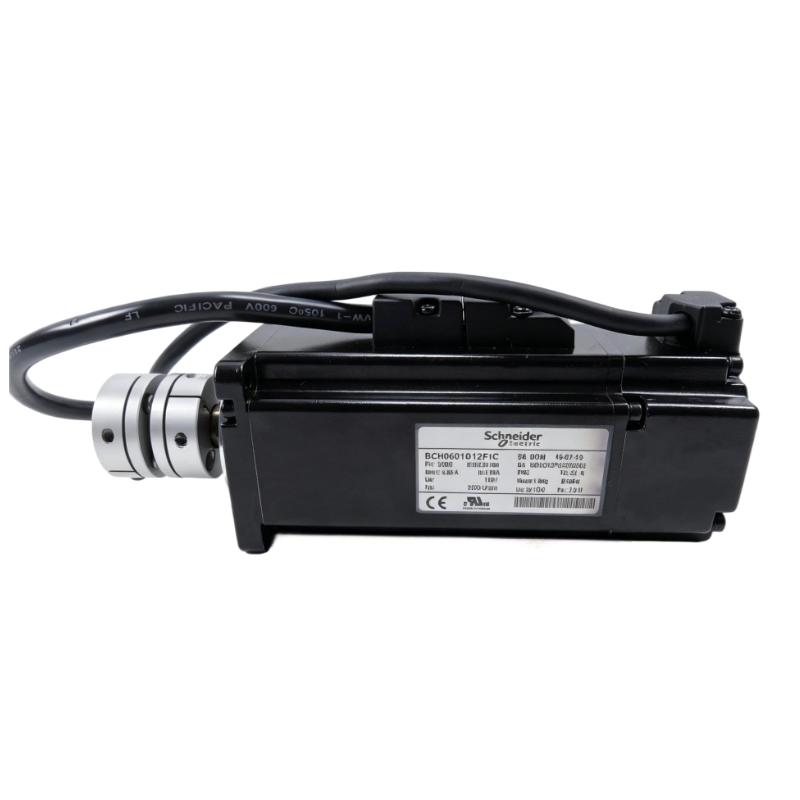
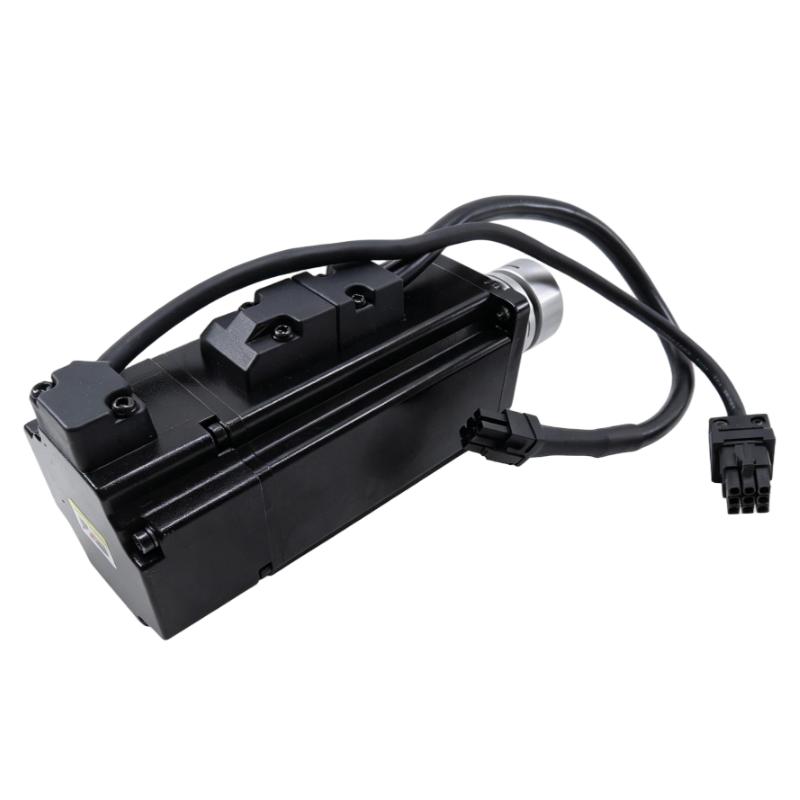
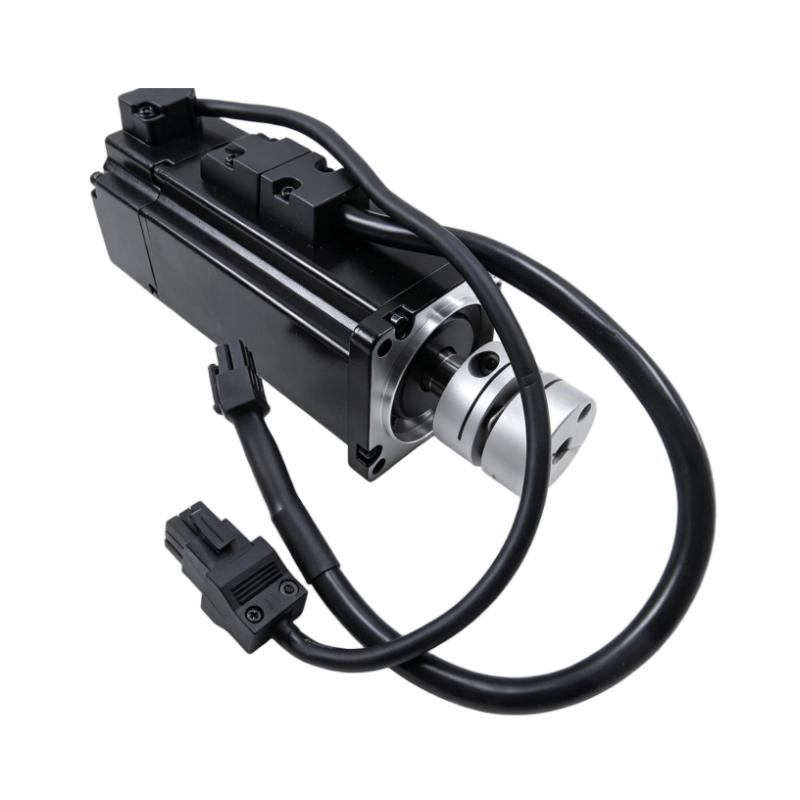
The Schneider Electric BCH0601O12F1C is a BCH-series servo motor used in Lexium 23 Plus motion-control applications. It combines a keyed shaft, 20-bit encoder, and integrated holding brake in a compact servo assembly. These features make it suitable for automated machinery that needs controlled rotary movement as well as a means of holding the motor shaft when the drive is not actively moving the axis.
In a packaging machine, the motor can operate a positioning mechanism that moves a component into place before the next production step. In a small assembly station, it can drive a belt, pulley, or gearbox to position a fixture according to commands from a PLC. The encoder supplies movement feedback to the servo drive, while the holding brake is useful when the mechanism must resist movement after the motor stops.
The keyed shaft provides a positive mechanical interface for compatible couplings and transmission components. The motor has a straight connection arrangement and an IP40 protection rating, so cable access, shaft alignment, and the surrounding machine enclosure should be considered during installation. The integrated brake is particularly relevant to axes that need a holding function, although its suitability depends on the load and the application’s stopping and safety requirements.
Technical Specifications
| Parameter | Specification |
|---|---|
| Brand | Schneider Electric |
| Model | BCH0601O12F1C |
| Product Type | Servo Motor |
| Product Series | BCH |
| Compatible Product Range | Lexium 23 Plus |
| Motor Type | Synchronous Servo Motor |
| Rated Output Power | 0.2 kW (200 W) |
| Rated Speed | 3000 rpm |
| Maximum Mechanical Speed | 5000 rpm |
| Rated Torque | 0.64 N·m |
| Peak Stall Torque | 1.92 N·m |
| Motor Flange Size | 60 mm |
| Shaft Configuration | Keyed shaft |
| Encoder Type | 20-bit encoder |
| Holding Brake | With holding brake |
| Oil Seal | Without oil seal |
| Protection Rating | IP40 |
| Electrical Connection | Straight connection |
| Cooling Method | Natural convection |
| Length | 141.6 mm |
| Weight | 1.5 kg |
Product Features
Integrated holding brake: The brake provides a holding function when the motor is stopped and the brake is engaged. It can be useful for positioning mechanisms that must resist movement while stationary. The brake’s holding capacity and operating sequence must match the application.
20-bit encoder feedback: The encoder supplies motor-position information to the servo drive. This feedback supports closed-loop regulation, helping the drive track commanded movement and respond to deviations between the requested and actual motion.
Keyed shaft interface: The shaft key provides a mechanical connection for compatible couplings, pulleys, and other transmission components. Correct key engagement and alignment are important for transferring torque without introducing excessive vibration or shaft loading.
60 mm flange format: The mounting interface suits compact industrial servo axes. The motor’s mounting arrangement should be matched to the machine frame and the clearance needed for its brake and electrical connection.
Straight connection arrangement: The connection orientation affects cable routing and access within the machine. It should be considered when laying out the motor mounting position and surrounding components.
IP40 protection: The motor is intended for installations where the surrounding equipment provides suitable environmental protection. IP40 does not protect the motor against water ingress, so exposed or wet installation locations require additional consideration.
Working Principle
The BCH0601O12F1C operates with a compatible servo drive, which controls the electrical current supplied to the motor windings. The motor converts that electrical energy into rotary movement, while the encoder returns position feedback to the drive for closed-loop motion regulation.
For example, a packaging machine may need to rotate a feed roller through a specified angle, stop accurately, and hold the mechanism while a sealing or cutting operation takes place. The controller issues the motion command, and the servo drive regulates acceleration, speed, and deceleration. Encoder feedback helps the drive track the commanded movement, while the holding brake can secure the shaft when the axis is stopped and the brake is engaged.
The brake and servo-control functions serve different purposes. The servo drive controls movement during operation; the brake provides a holding function when applied. It should not automatically be treated as a dynamic stopping device unless the application and brake specifications permit that use. The brake sequence must also be coordinated with the drive so that the motor is not expected to move against an engaged brake.
The keyed shaft transfers motor torque to the connected mechanism. Overall positioning performance depends on the motor and drive combination, mechanical transmission, load inertia, coupling alignment, and motion settings.
Role in a Lexium 23 Plus Motion Control Architecture
The BCH0601O12F1C serves as the rotary actuator in a servo axis. A PLC or motion controller defines the required movement, the Lexium 23 Plus servo drive regulates motor output using encoder feedback, and the motor drives the mechanical load. The integrated brake adds a holding function to the axis when used according to the configured brake-control sequence.
| System Component | Function | Relationship to BCH0601O12F1C |
|---|---|---|
| PLC or Motion Controller | Generates movement commands and machine sequences | Specifies position, speed, and timing requirements |
| Lexium 23 Plus Servo Drive | Regulates motor current and movement | Supplies controlled power and processes encoder feedback |
| BCH0601O12F1C Servo Motor | Converts electrical energy into rotary movement | Drives the connected mechanical axis |
| 20-bit Encoder | Measures motor movement | Supplies position feedback to the servo drive |
| Integrated Holding Brake | Holds the shaft when engaged | Helps resist movement while the motor is stationary |
| Keyed Shaft Coupling | Transfers torque to the driven mechanism | Connects the motor shaft to a compatible transmission |
| Gearbox or Belt Drive | Adapts speed and torque | Transfers motor rotation to the machine mechanism |
| Home and Limit Sensors | Identify reference positions and travel limits | Provide additional machine-position signals where required |
| HMI or Operator Panel | Displays machine status and operator commands | Communicates with the controller to support operation and troubleshooting |
Industrial Applications
| Application | Motion Requirement | Use of BCH0601O12F1C |
|---|---|---|
| Packaging Machinery | Repeated positioning with pauses between production steps | Drives a feed or positioning mechanism and provides a holding function during stops |
| Compact Assembly Stations | Controlled movement between assembly positions | Operates a servo axis coordinated with the assembly sequence |
| Indexing Mechanisms | Repeatable rotation between work stations | Drives an indexing assembly and helps hold the axis when stopped |
| Labeling Equipment | Coordinated feed and positioning | Operates a suitable roller, feeder, or positioning mechanism |
| Inspection Equipment | Accurate fixture positioning during measurement | Moves the fixture and holds its position when required |
| Small Material-Handling Systems | Controlled movement of a mechanical axis | Drives a suitable belt, pulley, or gearbox arrangement |
| Automated Production Machines | Movement synchronized with sensors and machine logic | Functions as a servo axis with encoder feedback and a holding brake |
Installation and Maintenance
- Verify the complete model reference: Confirm that the motor is BCH0601O12F1C and that its keyed shaft, encoder, holding brake, and straight connection arrangement match the machine requirements.
- Match the servo drive: Verify motor compatibility, rated power, current, supply conditions, encoder interface, and brake-control requirements before installation.
- Confirm the electrical arrangement: Connect the motor through a compatible servo drive. Do not connect the motor directly to the AC mains supply.
- Check the mounting interface: Verify the 60 mm flange format, mounting-hole alignment, and clearance for the motor body, brake, and cables.
- Align the shaft coupling: Select a coupling compatible with the keyed shaft. Check key engagement, alignment, and allowable axial and radial loads before tightening the assembly.
- Evaluate the mechanical load: Compare the required torque, acceleration, speed, and load inertia with the capabilities of the motor and drive.
- Protect the motor environment: The IP40 rating does not provide water-ingress protection. Install the motor in a suitable environment and protect it from moisture and contamination.
- Route power and feedback cables correctly: Follow the drive’s requirements for cable separation, grounding, shielding, and electrical noise control.
- Configure encoder feedback: Enter the correct motor parameters and verify that the encoder feedback direction matches the required machine movement.
- Configure brake control: Set the brake sequence according to the compatible drive and application requirements. Verify that the brake releases before commanded movement and engages at the intended point in the stopping sequence.
- Test the axis under controlled conditions: Begin at low speed and verify rotation direction, positioning response, brake operation, mechanical clearance, and stopping behavior before normal production.
- Inspect the motor periodically: Check mounting fasteners, shaft coupling, cable condition, brake operation, vibration, and operating temperature. Isolate the equipment and follow the required electrical safety procedures before maintenance.
Related Components
| Component | Function | Selection Considerations |
|---|---|---|
| Lexium 23 Plus Servo Drive | Controls motor current, speed, and movement | Motor compatibility, rated power, current, encoder interface, and brake-control support |
| PLC or Motion Controller | Generates motion commands | Required motion functions, I/O, and communication interface |
| Servo Power Cable | Connects the motor to the drive | Current capacity, cable length, routing, and connection compatibility |
| Encoder Feedback Cable | Carries encoder signals | Feedback interface, shielding, and cable routing |
| Brake Connection Wiring | Connects the motor brake to the control arrangement | Brake voltage, wiring requirements, and compatible drive or control circuitry |
| Keyed Shaft Coupling | Transfers torque to the driven mechanism | Shaft dimensions, key engagement, alignment, and allowable torque |
| Gearbox | Adapts speed and torque | Gear ratio, backlash, rated torque, and positioning requirements |
| Home or Limit Sensors | Detect reference positions and travel limits | Sensor type, switching logic, and controller compatibility |
Recommended Related Models
| Model | Product Description | Application Context |
|---|---|---|
| BCH0601O12A1C | Lexium 23 Plus BCH Servo Motor, 200 W class | A related configuration to consider when a holding brake is not required |
| BCH0601O11F1C | Lexium 23 Plus BCH Servo Motor variant with holding brake | Compare the shaft and connection configuration against the requirements of the machine |
| BCH0602O12F1C | Lexium 23 Plus BCH Servo Motor, higher-power class | A possible option when the application requires greater motor capacity; verify the complete specification |
| BCH0401O12F1C | Lexium 23 Plus BCH Servo Motor, lower-power class | A smaller motor-power class for applications with lower torque and power requirements |
These models are comparison candidates within the BCH motor family, not automatic replacements. Confirm the full order code, shaft configuration, brake arrangement, encoder interface, motor ratings, and drive compatibility before selecting an alternative.
Key Advantages
- Integrated holding brake: Helps hold the shaft when the motor is stopped and the brake is engaged.
- Encoder-based control: Supports closed-loop regulation of motor movement.
- Keyed shaft: Provides a positive mechanical interface for compatible couplings and transmission components.
- Compact servo format: Suits machinery requiring controlled rotary motion within a limited installation space.
- Lexium 23 Plus integration: Fits servo-control architectures built around compatible BCH motors and drives.
Technical FAQs
What is the purpose of the integrated brake on the BCH0601O12F1C?
The brake provides a holding function when engaged, helping resist shaft movement while the motor is stationary. Its suitability depends on the load and required holding torque. It should not be assumed to replace a safety-rated mechanical restraint or to support dynamic stopping unless specifically rated for that duty.
How does the keyed shaft affect mechanical installation?
The key transfers torque between the motor shaft and a compatible coupling or transmission component. The keyway and coupling must match, and the shaft must be aligned correctly to limit vibration, coupling wear, and excessive bearing loads.
What role does the 20-bit encoder play in the servo system?
The encoder supplies motor-position feedback to the servo drive. The drive uses that feedback to regulate commanded movement and monitor the motor’s response during positioning and speed changes.
What should be checked before using this motor on a vertical axis?
Check the load’s holding torque, the brake’s rated holding capability, the drive’s brake-control sequence, and the consequences of power loss. A holding brake must be selected and applied according to the machine’s load and safety requirements; it should not be treated as the only protective measure where a falling load could create a hazard.