

ProductPRODUCT
Featured products
Contact Us
- Emerson
- VE5056
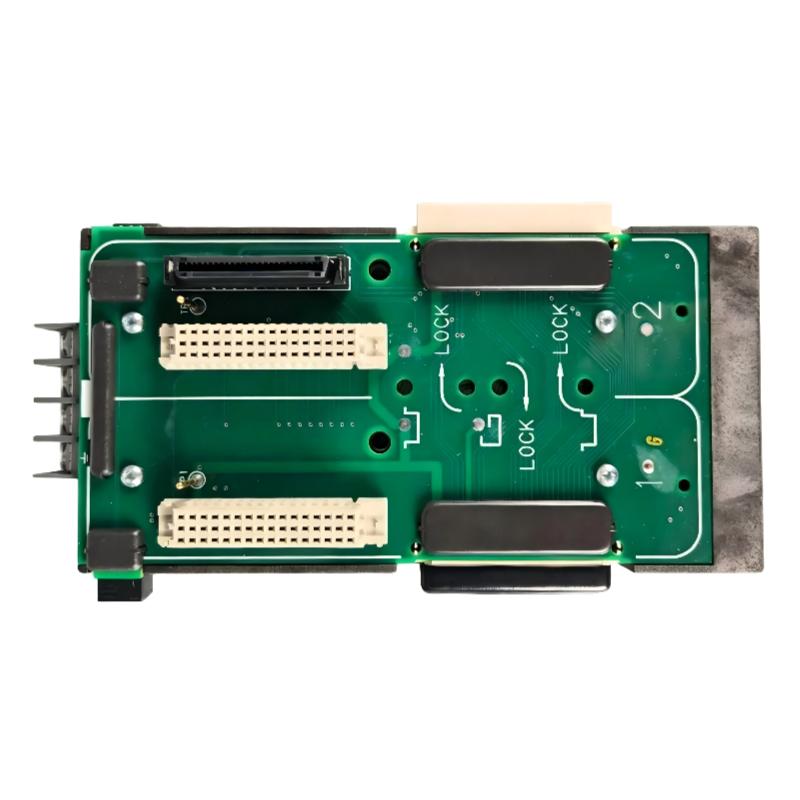
- 2-Wide Power Carrier
- USA
- 165 × 31 × 84 mm
- 0.3 kg
- Xiamen, China
- New & In Stock
- T/T, PayPal, Western Union
- 1 Year
- 1-3 Working Days
- DHL, UPS, TNT, FedEx and EMS.
- 24-Hour Service
- COO
- 6
Our advantage

Global Logistics
We have a 10-year logistics and express cooperation agreement, so our products can be shipped to any place in the world.

Brand new and original
Our products are imported in bulk from the place of origin. Because of the cooperative relationship, our products are all original and 100% new.

24-hour service
We provide 7*24 hours service to our customers. We will be there whenever you need us.

Price advantage
All our products are priced very favorably because we have our own warehouse and supply.
| Company Information | |||
| [email protected] | |||
| Mobile | +8615980777398 | ||
| +8615980777398 | |||
| 15980777398 |
Product Overview
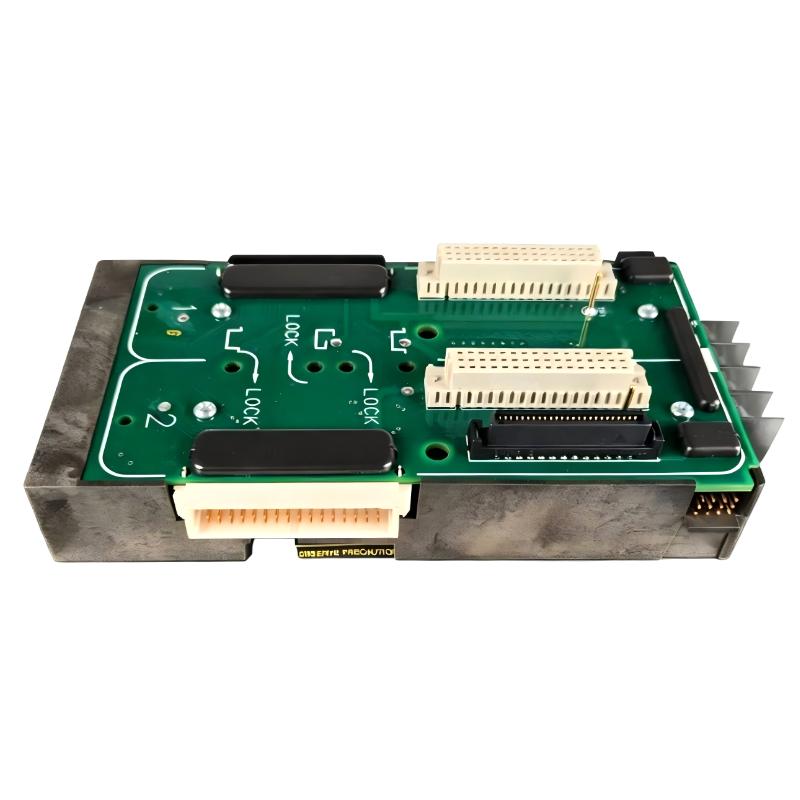
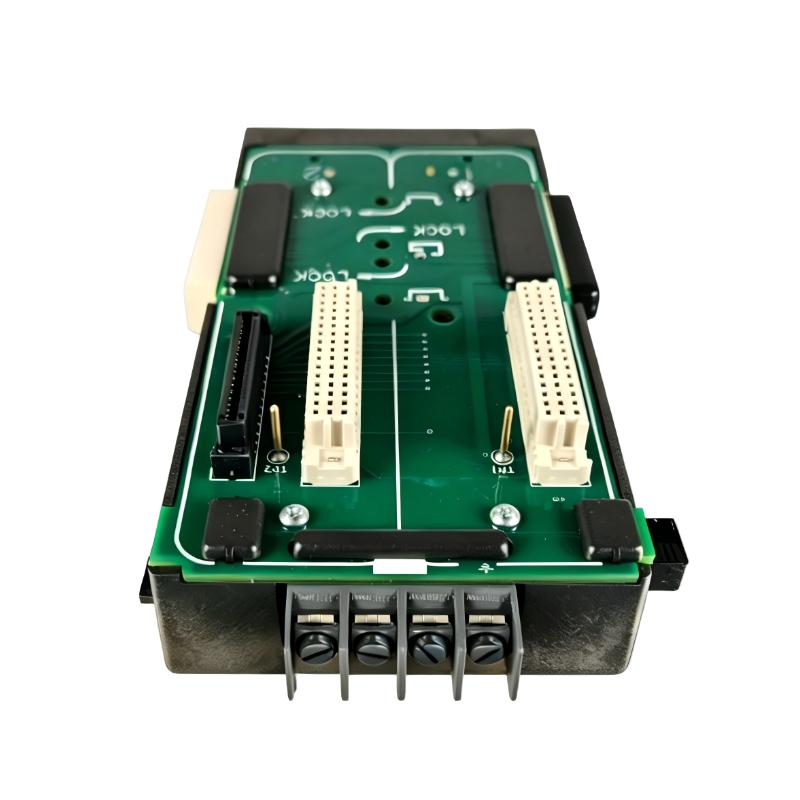
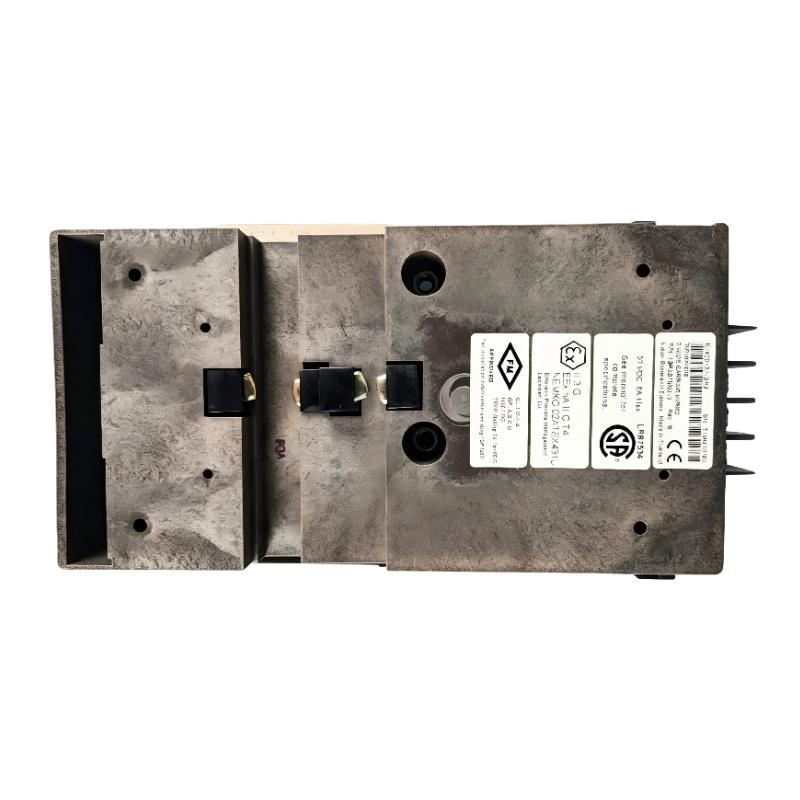
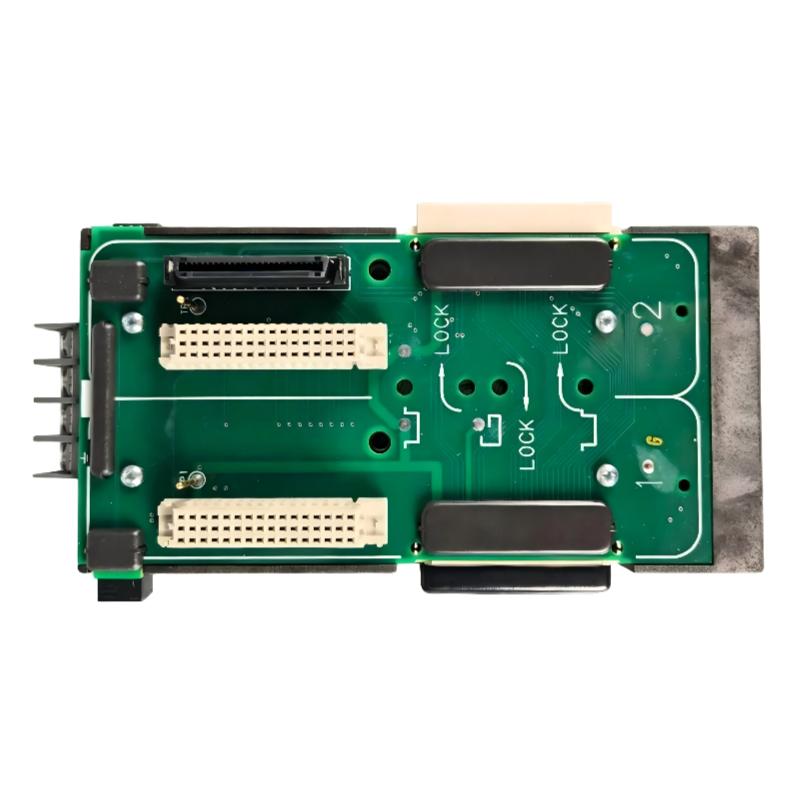
The Emerson VE5056 is a horizontal-mount 2-wide power carrier for the DeltaV M-series I/O subsystem. Its specified configuration provides 12 V DC local bus power through the carrier arrangement, making it a supporting component in the system’s power-distribution architecture rather than an individual controller or field-signal I/O card.
In a DeltaV cabinet, the VE5056 can be used where local bus power must be injected into the I/O subsystem through the appropriate carrier arrangement. The carrier works with one or two compatible system power supplies, and its two 12 V DC output connections can be powered by either supply. This arrangement allows the required local bus power to be introduced without treating the carrier as a standalone AC-to-DC power converter.
The distinction between the VE5056 and a conventional power/controller carrier is important when planning an installation. A power/controller carrier provides the mounting and interconnection arrangement for the controller and system power supply, while the VE5056 is specifically identified as a 2-wide power carrier with 12 V DC output. Its role is associated with local bus power injection through carrier extenders, so the intended system layout and the power demand of the connected hardware must be evaluated together.
For maintenance teams, the VE5056 is relevant when extending or restoring an existing M-series carrier arrangement. The required supply configuration, carrier connections, output demand, and physical installation space should be confirmed before replacing or adding the component. If redundant power is used, the total demand must remain within the output capability of a single system power supply, rather than relying on the combined ratings of both supplies.
Technical Specifications
| Parameter | Specification |
|---|---|
| Brand | Emerson |
| Model | VE5056 |
| Product Type | 2-Wide Power Carrier |
| Product Series | DeltaV M-Series |
| Carrier Configuration | Horizontal-mount |
| Power Output Configuration | 12 V DC |
| Primary Function | Local bus power injection |
| Carrier Width | 2-wide |
| Compatible Hardware Family | DeltaV M-series I/O subsystem |
| System Power Supply Arrangement | One or two compatible system power supplies |
| Local Bus Power Distribution | Two 12 V DC output connections |
| Output Connection Powering | Either installed supply can power the two output connections |
| Redundant Power Consideration | Power demand must remain within the output range of one system power supply |
| Installation Role | Power distribution through the carrier arrangement and carrier extenders |
| Dimensions | 165 × 31 × 84 mm |
| Weight | 0.3 kg |
Product Features
12 V DC local bus power injection: The VE5056 introduces 12 V DC power into the local bus arrangement through its designated connections. This function supports the power architecture of compatible M-series hardware rather than replacing the system power supply itself.
Two-wide carrier configuration: Its 2-wide format provides a compact carrier arrangement for the specified power-injection function. Installation planning should account for the carrier’s mounting position, connected hardware, and clearance for wiring.
Support for one or two system power supplies: The carrier can be used with one or two compatible system power supplies. The intended arrangement must be established from the system design, especially when the installation requires redundancy.
Two 12 V DC output connections: Both output connections are powered by either installed supply. When redundant supplies are used, the load must be sized so that one supply can support the required demand on its own.
Integration with carrier extenders: The VE5056 is used in conjunction with the appropriate carrier-extender arrangement to deliver local bus power where required. Extender type, connection layout, and the target carrier arrangement should be checked before installation.
Dedicated carrier function: The VE5056 is not an analog input, analog output, or discrete I/O module. It does not process field measurements or execute control logic; its purpose is to support the power-distribution structure of the I/O subsystem.
Compact cabinet footprint: The supplied dimensions are useful when checking mounting space and access around existing hardware. Physical fit alone, however, does not establish electrical or architectural compatibility with another carrier.
Working Principle
The VE5056 works as a power-injection carrier within the DeltaV M-series I/O architecture. Compatible system power supplies provide the required power, and the carrier routes the 12 V DC local bus supply through its designated output connections and associated carrier-extender arrangement. The downstream I/O subsystem continues to perform its normal signal-interface and control-system functions.
For example, an installation may require local bus power to be introduced at a particular point in the carrier layout. The VE5056 provides the specific carrier hardware for that purpose. Rather than routing power through improvised external connections, the intended arrangement uses the carrier and compatible extenders to connect the power path into the local bus structure.
When two system power supplies are installed, the VE5056’s two output connections can be powered by either supply. This arrangement supports a redundant power configuration, but redundancy depends on the capacity of each individual supply. The connected power demand must remain within the output range of one supply so that the required load can still be supported if the other supply is unavailable.
The VE5056 should therefore be assessed as part of the complete power path. The upstream supplies, output connections, carrier extenders, connected local bus loads, and any redundancy requirements all affect whether the installation will operate as intended. If a power-related fault occurs, checking the source supplies and the connections through the carrier arrangement can help isolate the affected section without assuming that an I/O card has failed.
Role in a DeltaV M-Series I/O Power Architecture
The VE5056 occupies the local bus power-injection part of a DeltaV M-series I/O installation. It complements the system power supply and carrier arrangement, while the controller and I/O interfaces handle their own control and signal-processing functions. Its correct placement depends on the intended carrier layout and the power requirements of the connected hardware.
| System Component | Function | Relationship to VE5056 |
|---|---|---|
| DeltaV System Power Supply | Supplies electrical power for the relevant system-power arrangement | Provides the power source used by the carrier arrangement |
| VE5056 Power Carrier | Introduces 12 V DC local bus power | Provides two output connections for the specified power-injection function |
| Carrier Extender | Connects the carrier power path to the intended local bus arrangement | Provides the associated interconnection path for local bus power |
| DeltaV Power/Controller Carrier | Supports the controller and system power supply mounting and interconnection arrangement | Forms part of the wider M-series carrier architecture |
| DeltaV Controller | Executes control strategies and coordinates system operation | Processes control logic independently of the VE5056’s power-injection function |
| I/O Interface Carrier | Supports I/O cards and terminal-block connections | Forms the carrier infrastructure for the field-signal interface hardware |
| DeltaV I/O Cards | Acquire input signals or generate output signals | Perform signal processing rather than carrier-level power injection |
| DC Power Wiring | Carries power between the supply and designated connections | Must match the approved wiring arrangement and load requirements |
| Cabinet Grounding and Bonding | Establishes the required electrical grounding arrangement | Supports the installation in accordance with the system design |
Industrial Applications
| Application | System Requirement | Use of VE5056 |
|---|---|---|
| DeltaV M-Series Cabinet Expansion | Extend an existing I/O power-distribution arrangement | Adds the specified 12 V DC power-injection carrier where required by the system layout |
| Local Bus Power Injection | Introduce local bus power at a designated carrier location | Provides the 2-wide carrier and output connections for the intended power path |
| Redundant System Power Arrangements | Maintain the required power path when one supply is unavailable | Supports a configuration using one or two compatible system power supplies, subject to the single-supply load limit |
| Process-Control Cabinets | Organize power and I/O hardware in a structured carrier layout | Forms part of the cabinet’s M-series power-distribution infrastructure |
| Chemical Processing Control Systems | Maintain the established DeltaV I/O architecture | Supports local bus power distribution for compatible installed hardware |
| Oil and Gas Instrumentation Cabinets | Maintain the power path for process-control I/O hardware | Can be used where the existing M-series configuration requires this 12 V DC power carrier |
| Refinery Automation Systems | Add or replace carrier-level power hardware | Supports the specified power-injection arrangement without replacing the signal-processing I/O cards |
| Control-System Maintenance | Troubleshoot or restore local bus power connections | Provides a defined carrier component to inspect as part of the power path |
Installation and Maintenance
- Verify the complete model reference: Confirm that the required carrier is VE5056 and that the installation specifically calls for the horizontal-mount 2-wide power carrier with 12 V DC output.
- Confirm the carrier architecture: Check the existing DeltaV M-series layout and establish where the VE5056 belongs in the local bus power arrangement before mounting the unit.
- Identify the system power supplies: Verify that the selected power supplies are compatible with the intended carrier arrangement and provide the required power for the local bus.
- Calculate the power demand: Determine the expected load on the VE5056 output connections. For a redundant arrangement, confirm that one system power supply can support the full required load on its own.
- Inspect the mounting location: Check the available space, mounting position, and access around the carrier. Use the supplied dimensions of 165 × 31 × 84 mm when planning the physical layout.
- Check the carrier-extender arrangement: Confirm that the appropriate extenders and connections are present and that their configuration matches the intended local bus power path.
- Verify connection identification: Check the output and carrier connection designations against the installation documentation before making or changing connections.
- Inspect power wiring: Confirm that the conductors, terminations, and routing match the intended supply arrangement. Check for loose terminals, damaged insulation, and mechanical strain.
- Maintain grounding and bonding: Follow the DeltaV cabinet’s grounding arrangement and applicable installation requirements. Do not make improvised changes to the grounding or power-distribution layout.
- Check the redundant supply configuration: Where two supplies are used, confirm the intended source arrangement and ensure the load remains within the output range of one supply. Do not assume the combined capacity of both supplies is available to the load during a supply fault.
- Verify local bus power during commissioning: Check the designated output connections and downstream power path according to the approved commissioning procedure. Confirm that the connected subsystem receives the expected power before returning the system to normal operation.
- Perform periodic inspections: Check mounting security, connector condition, wiring, and signs of overheating or physical damage. Isolate the relevant power sources as required before servicing the carrier or associated connections.
Related Components
| Component | Function | Relationship to VE5056 |
|---|---|---|
| DeltaV M-Series System Power Supply | Supplies power to the associated system-power arrangement | Acts as the power source for the carrier’s 12 V DC local bus output arrangement |
| VE3051C0 2-Wide Power/Controller Carrier | Supports one system power supply and one controller, or two system power supplies | Related M-series carrier hardware with a different power/controller mounting role |
| VE3051C2 2-Wide Power/Controller Carrier | Power/controller carrier supplied with dual enhanced extender cables | Relevant when the system layout requires this specified extender configuration |
| VE3051C3 2-Wide Power/Controller Carrier | Power/controller carrier supplied with a single enhanced extender cable | Alternative carrier configuration for an installation requiring the specified single extender |
| VE3051C5 2-Wide Power/Controller Carrier | Power/controller carrier with a single enhanced extender cable and redundant SISNet coax cables | Related carrier configuration for systems requiring the specified cable arrangement |
| KJ4002X1-BF2 Carrier Extender Cable | 1.2 m, 44-pin extender cable for horizontal carriers | Related interconnection component where this cable length and configuration are specified |
| KJ4002X1-BF3 Carrier Extender Cable | 0.8 m, 44-pin extender cable for horizontal carriers | Alternative cable length for compatible horizontal carrier arrangements |
| KJ4002X1-BF4 Carrier Extender Cable | 1.5 m, 44-pin extender cable for horizontal carriers | Alternative cable length where the installation requires additional reach |
| VE6101 Carrier Blank Cap | Covers an unused carrier position as applicable | Related carrier accessory for the appropriate M-series installation |
Recommended Related Models
| Model | Product Description | Key Difference and Selection Notes |
|---|---|---|
| VE5056 | DeltaV M-Series Horizontal-Mount 2-Wide Power Carrier, 12 V DC Output | Reference model for local bus power injection through the specified carrier arrangement |
| VE3051C0 | DeltaV M-Series 2-Wide Power/Controller Carrier | Supports one system power supply and one controller, or two system power supplies; it serves a different carrier function from VE5056 |
| VE3051C2 | DeltaV M-Series 2-Wide Power/Controller Carrier with Dual Enhanced Extender Cables | Consider when the installation requires the specified dual enhanced extender cable configuration |
| VE3051C3 | DeltaV M-Series 2-Wide Power/Controller Carrier with Single Enhanced Extender Cable | Alternative power/controller carrier configuration with a single enhanced extender cable |
| VE3051C5 | DeltaV M-Series 2-Wide Power/Controller Carrier with Single Enhanced Extender Cable and Redundant SISNet Coax Cables | Relevant when the specified carrier layout requires both the enhanced extender and redundant SISNet coax cable arrangement |
| VE6101 | DeltaV M-Series Carrier Blank Cap | Accessory for the applicable carrier layout where an unused position requires a blank cap |
The VE3051 models are not direct replacements for the VE5056: they provide power/controller carrier functions and have different connection configurations. The VE5056 should be selected when the installation specifically requires the horizontal-mount 2-wide power carrier with 12 V DC output. Extender cables and carrier accessories should be chosen according to the installed layout rather than by model-family similarity alone.
Key Advantages
- Dedicated 12 V DC power injection: Provides a defined carrier-level path for introducing local bus power into a compatible M-series arrangement.
- Two output connections: Supports the specified local bus power distribution arrangement through the carrier.
- One- or two-supply configuration: Can be used with one or two compatible system power supplies, subject to the required load limits.
- Carrier-based integration: Works within the M-series carrier architecture rather than relying on improvised external connections.
- Compact 2-wide format: Supports power-injection requirements where the installation calls for this carrier size and function.
Technical FAQs
What is the main function of the Emerson VE5056?
The VE5056 is a horizontal-mount 2-wide power carrier with a 12 V DC output configuration. Its main role is to provide local bus power injection through the compatible DeltaV M-series carrier arrangement. It is not an individual field-signal I/O module.
Can the VE5056 be used with two system power supplies?
Yes, the specified carrier arrangement can use one or two system power supplies. When two supplies are used for redundancy, the power demand must remain within the output range of one supply so that the load can be supported if the other supply is unavailable.
How is the VE5056 different from the VE3051C0?
The VE5056 is a 2-wide power carrier intended for 12 V DC local bus power injection. The VE3051C0 is a 2-wide power/controller carrier that supports one system power supply and one controller, or two system power supplies. Their carrier functions differ, so the models should not be treated as interchangeable.
What should be checked when replacing or adding a VE5056?
Confirm the M-series carrier layout, the required 12 V DC local bus power path, compatible system power supplies, extender connections, and total load demand. If the installation uses redundant power, verify that one supply can support the full required load and that the connections follow the intended system arrangement.