
NewsNEWCENTER
Featured products
Contact Us
Rockwell Automation Advances Industrial Automation Through Intelligent PLC Control and Digital Manufacturing
2026-07-24The global industrial automation market is experiencing rapid transformation as manufacturers continue adopting intelligent control systems, connected production technologies, and digital manufacturing solutions.
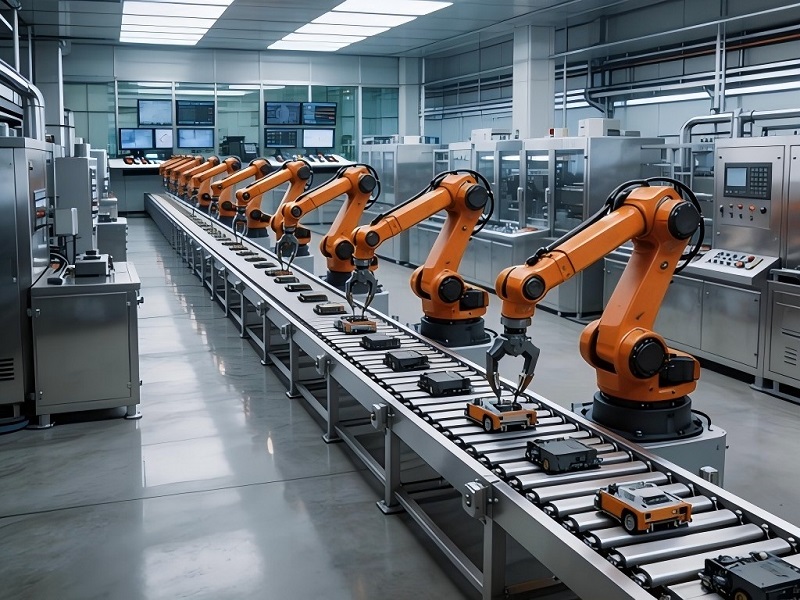
Industrial companies across sectors such as automotive, food and beverage, pharmaceuticals, energy, packaging, mining, and infrastructure are facing increasing demands for:
- Higher production efficiency
- Improved product quality
- Reduced operational costs
- Better equipment reliability
- More flexible manufacturing processes
Traditional automation systems mainly focused on controlling machines and production equipment. However, modern industrial environments require more advanced solutions that can connect equipment, analyze operational data, and support smarter decision-making.
The development of industrial automation is moving toward integrated ecosystems where PLC controllers, industrial software, communication networks, and data analytics technologies work together.
Rockwell Automation continues to support this transformation through Allen-Bradley PLC systems, ControlLogix automation platforms, FactoryTalk software solutions, industrial networking technologies, and smart manufacturing concepts.
The evolution of Allen-Bradley automation technology represents an important industry trend: PLC systems are becoming intelligent industrial platforms that not only control machines but also provide connectivity, diagnostics, and digital capabilities for modern factories.
For global manufacturers, automation engineers, and system integrators, intelligent PLC-based automation has become a key foundation for building efficient, flexible, and competitive industrial operations.
PLC Systems Remain the Foundation of Industrial Control
Programmable Logic Controllers are essential components in modern industrial automation.
A PLC system performs critical control functions by:
- Receiving signals from field devices
- Processing industrial data
- Executing programmed logic
- Controlling machines and equipment
PLC technology is widely used in:
- Manufacturing production lines
- Assembly systems
- Packaging equipment
- Material handling applications
- Process automation
- Infrastructure projects
Modern PLC systems provide advanced capabilities including:
- High-speed processing
- Industrial communication
- Remote diagnostics
- Motion control integration
- System scalability
These capabilities allow manufacturers to create automation solutions that can adapt to changing production requirements.
In today’s industrial environment, PLC controllers are no longer isolated control devices.
They have become important connection points between:
- Sensors
- Drives
- Robots
- Human-machine interfaces
- Industrial software platforms
This evolution allows factories to become more connected and intelligent.
Allen-Bradley ControlLogix Supports Advanced Industrial Applications
Large-scale industrial operations require powerful and flexible control platforms.
Modern manufacturing systems often include hundreds or thousands of connected devices that must operate together efficiently.
Advanced PLC platforms support applications requiring:
- Complex control logic
- High-speed processing
- Large-scale communication
- System integration
Allen-Bradley ControlLogix technology represents the development direction of modern industrial controllers by supporting flexible automation architectures.
Industrial applications using advanced PLC control include:
Manufacturing Automation
Manufacturing plants require precise control of:
- Production equipment
- Assembly operations
- Automated machinery
- Material transportation systems
PLC systems coordinate different production processes to maintain stable operation.
Process Industry Applications
Many industries require continuous monitoring and control of production conditions.
Automation systems help manage:
- Equipment operation
- Production sequences
- Process parameters
Reliable control technology helps improve operational stability.
Infrastructure Automation
Industrial automation is also widely used in:
- Water treatment
- Energy systems
- Transportation infrastructure
- Building automation
These applications require long-term reliability and efficient system management.
FactoryTalk Digital Platforms Support Smart Manufacturing Development
Digital transformation has become one of the most important trends in industrial automation.
Modern manufacturers need more than basic machine control.
They require better visibility into:
- Production performance
- Equipment conditions
- Energy usage
- Quality information
Industrial software platforms help companies collect and analyze operational data.
Digital manufacturing solutions allow organizations to understand:
- How machines perform
- Where production improvements can be made
- When maintenance is required
Factory-level digital platforms support the connection between automation systems and production management.
This enables manufacturers to move from traditional operation toward intelligent manufacturing.
Industrial IoT Connects Machines, Data and Automation Systems
Industrial Internet of Things technology is changing the structure of modern factories.
Traditional automation systems often operated independently.
Modern smart factories connect:
- PLC controllers
- Sensors
- Industrial robots
- Production equipment
- Software platforms
through industrial communication networks.
Industrial IoT provides several benefits:
- Real-time equipment monitoring
- Improved production visibility
- Faster troubleshooting
- Better operational analysis
A connected manufacturing environment works through multiple layers:
Sensors collect equipment information.
PLC systems process control signals.
Industrial networks transfer data.
Digital platforms analyze performance.
Engineers use information to optimize production.
This integrated structure creates more efficient and responsive industrial operations.
Predictive Maintenance Improves Equipment Performance
Equipment reliability is critical for industrial companies.
Unexpected failures can result in:
- Production downtime
- Higher maintenance expenses
- Reduced productivity
- Delayed customer deliveries
Modern automation systems support predictive maintenance by collecting equipment information.
Data from:
- PLC controllers
- Sensors
- Motors
- Drives
- Machines
can reveal early signs of abnormal conditions.
Predictive maintenance helps companies:
- Detect problems before failures occur
- Schedule maintenance more effectively
- Reduce equipment downtime
- Extend asset service life
As factories become more connected, predictive maintenance will continue becoming a major automation application.
PLC and Robotics Integration Improves Manufacturing Flexibility
Industrial robotics has become an important part of modern production.
Robots are widely used in:
- Assembly
- Packaging
- Welding
- Inspection
- Material handling
However, robots require coordination with automation control systems.
PLC controllers provide important functions including:
- Sequence control
- Equipment communication
- Safety coordination
- Production synchronization
The combination of PLC systems and robotics allows manufacturers to achieve:
- Higher productivity
- Better accuracy
- More flexible production
This integration is especially important for industries that require rapid product changes.
Industrial Networks Improve Automation Communication
Modern factories depend on reliable industrial communication.
Automation environments include many connected devices:
- Controllers
- Sensors
- Drives
- Robots
- Operator stations
Industrial networks allow these systems to exchange information efficiently.
Benefits include:
- Faster communication
- Improved system coordination
- Easier troubleshooting
- Better operational monitoring
As industrial systems become more complex, communication technology will remain a critical part of automation development.
Energy Management Becomes a Major Industrial Priority
Industrial companies are increasingly focused on energy efficiency.
Manufacturing facilities consume energy through:
- Motors
- Production equipment
- Heating systems
- Cooling systems
Automation technologies help organizations monitor energy usage.
Smart industrial systems can analyze:
- Equipment operation
- Energy consumption trends
- Production efficiency
This helps companies:
- Reduce energy waste
- Lower operating costs
- Improve sustainability
Energy-efficient automation will continue influencing future industrial development.
Industrial Cybersecurity Becomes Essential
Connected automation systems create new opportunities but also introduce security requirements.
Modern industrial environments include:
- PLC systems
- Industrial networks
- Digital platforms
- Remote monitoring solutions
Companies must protect:
- Control infrastructure
- Production data
- Communication systems
Future automation development must combine:
- Intelligent operation
- Reliable performance
- Secure industrial communication
Cybersecurity will remain a key factor in smart manufacturing.
Challenges During Industrial Automation Modernization
Although automation modernization provides significant benefits, companies must address several challenges.
Legacy Equipment Integration
Many factories continue operating older equipment.
Connecting existing systems with modern automation platforms requires careful engineering.
Technical Expertise
Modern automation projects require professionals with knowledge of:
- PLC programming
- Industrial networking
- Digital technologies
- System integration
Investment Planning
Smart factory development requires investment in:
- Automation hardware
- Software platforms
- Engineering resources
- Employee training
However, improved productivity and efficiency provide long-term value.
Future Outlook: Intelligent PLC Automation Will Drive Smart Industry Growth
The future of industrial automation will depend on intelligent, connected, and flexible technologies.
Manufacturers will continue adopting:
- Advanced PLC systems
- Industrial software platforms
- Industrial IoT solutions
- Predictive maintenance technologies
- Smart manufacturing strategies
Allen-Bradley PLC technology and Rockwell Automation solutions represent the continued evolution of industrial control toward intelligent manufacturing environments.
As industries worldwide continue upgrading their production systems, intelligent automation will play an increasingly important role in improving:
- Productivity
- Reliability
- Safety
- Manufacturing flexibility
The factories of the future will not only automate production processes but also collect information, analyze performance, and continuously optimize operations.
Conclusion
Industrial automation is moving beyond traditional machine control toward connected and intelligent manufacturing ecosystems.
Allen-Bradley PLC systems, ControlLogix automation platforms, and FactoryTalk digital solutions demonstrate how modern technologies can improve industrial efficiency, visibility, and flexibility.
For manufacturers around the world, intelligent PLC automation provides the foundation for building smarter factories and more competitive production systems.
As global industries continue digital transformation, advanced industrial automation technologies will remain essential drivers of manufacturing innovation.