

ProductPRODUCT
Featured products



Contact Us
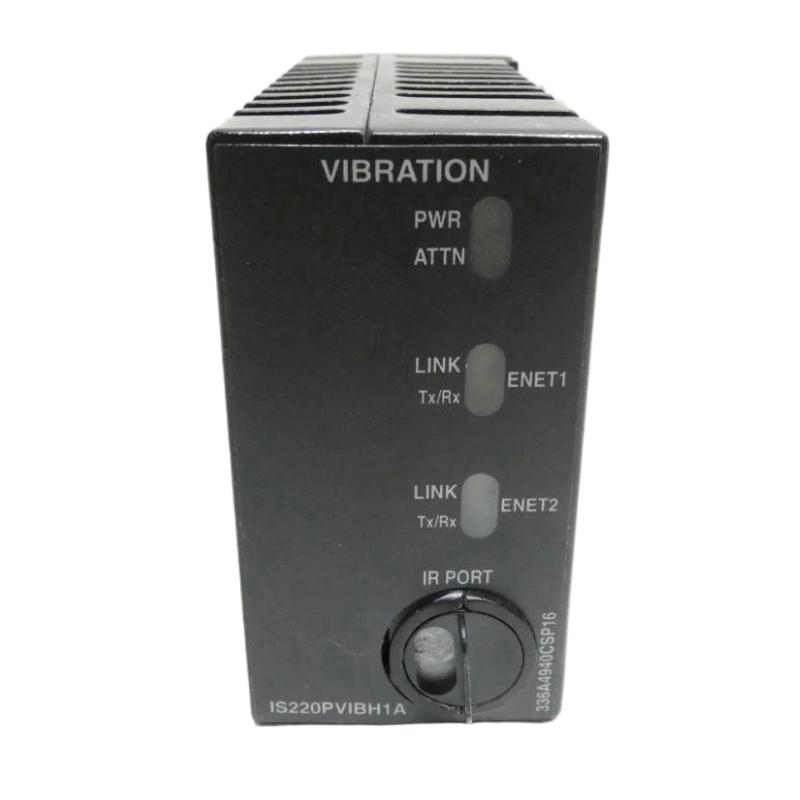
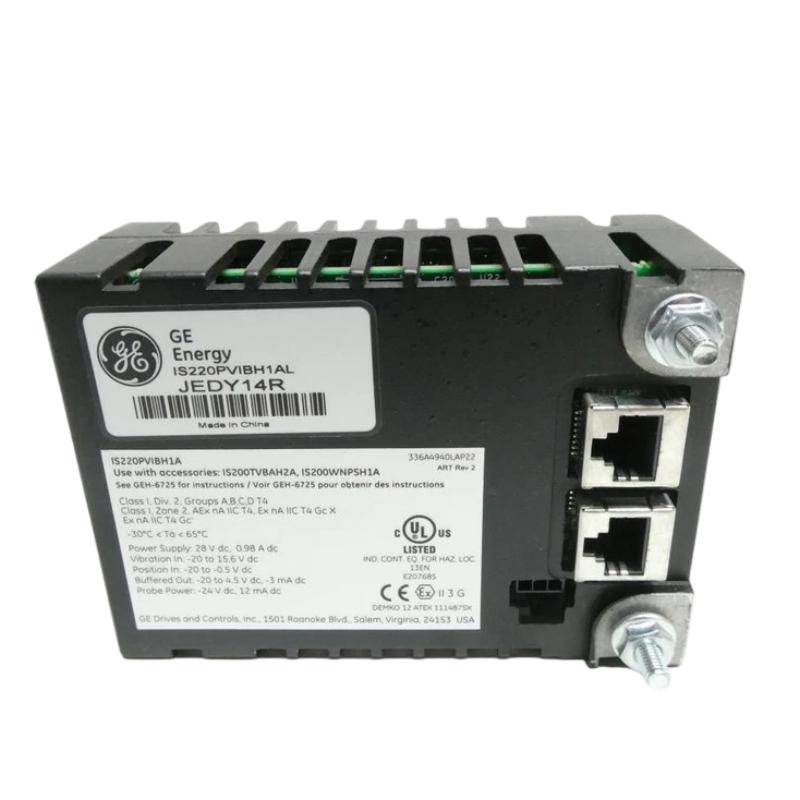
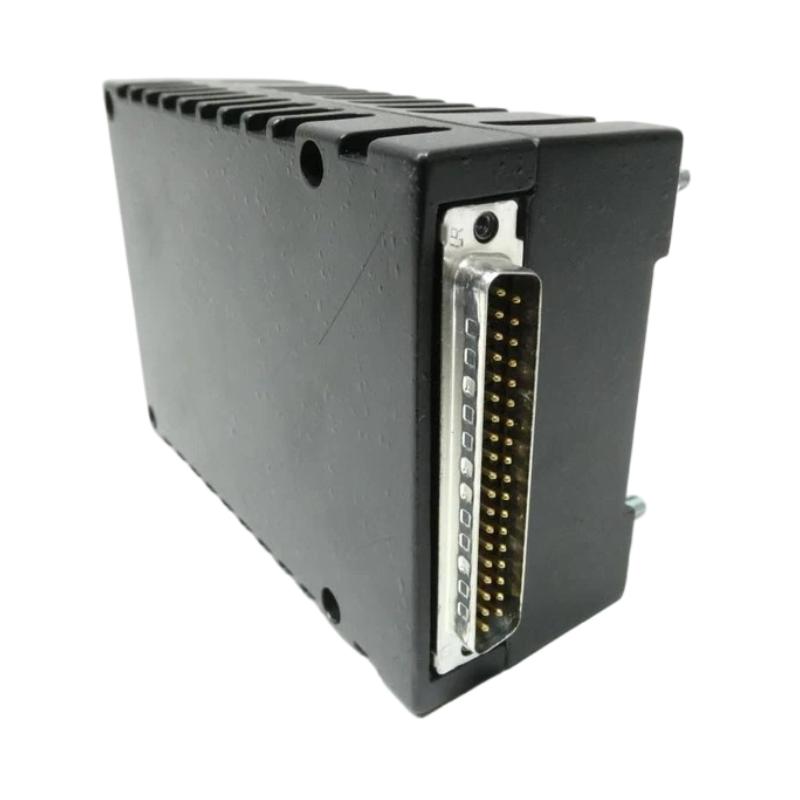
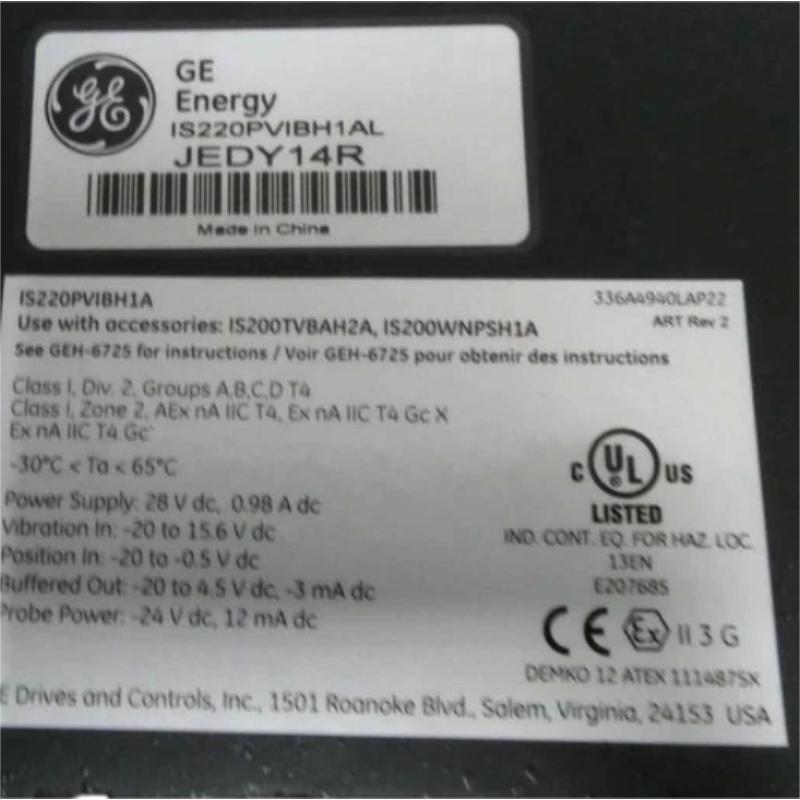
- GE
- IS220PVIBH1AL
- Electrical Vibration Module
- USA
- 160.5 × 102 × 45 mm
- 0.7 kg
- Xiamen, China
- New & In Stock
- T/T, PayPal, Western Union
- 1 Year
- 1-3 Working Days
- DHL, UPS, TNT, FedEx and EMS.
- 24-Hour Service
- COO
- 46
Our advantage

Global Logistics
We have a 10-year logistics and express cooperation agreement, so our products can be shipped to any place in the world.

Brand new and original
Our products are imported in bulk from the place of origin. Because of the cooperative relationship, our products are all original and 100% new.

24-hour service
We provide 7*24 hours service to our customers. We will be there whenever you need us.

Price advantage
All our products are priced very favorably because we have our own warehouse and supply.
| Company Information | |||
| [email protected] | |||
| Mobile | +8615980777398 | ||
| +8615980777398 | |||
| 15980777398 |
Product Overview
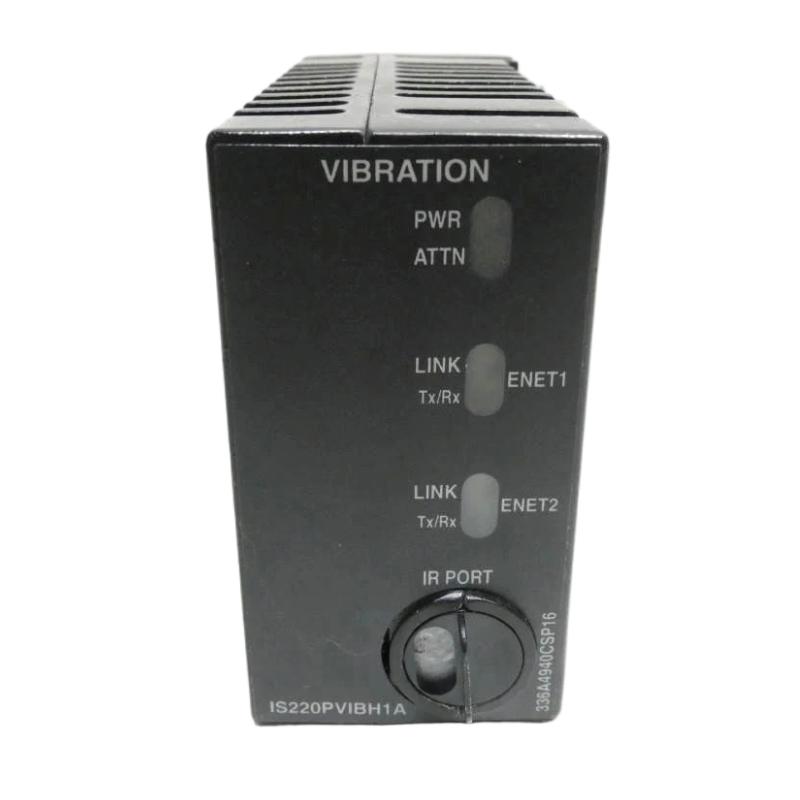
The GE IS220PVIBH1AL Electrical Vibration Module is a specialized industrial monitoring component designed to interface electrical vibration-related signals with compatible turbine and industrial automation systems. Vibration monitoring is an important part of rotating-equipment condition assessment because changes in electrical or mechanical vibration behavior can provide useful information about equipment operating conditions.
In industrial environments, vibration monitoring is commonly used with turbines, generators, motors, compressors, pumps, and other rotating machinery. By continuously acquiring vibration-related signals, the control and monitoring architecture can provide operators and maintenance personnel with information that supports equipment diagnostics, alarm management, condition monitoring, and preventive maintenance.
The GE IS220PVIBH1AL has listed dimensions of 160.5 × 102 × 45 mm and a listed weight of approximately 0.7 kg. Its compact industrial form factor allows it to be incorporated into appropriately designed control cabinets and monitoring systems.
The exact electrical vibration signal type, input configuration, sensor compatibility, measurement range, frequency response, signal-conditioning characteristics, terminal assignments, isolation, and diagnostic capabilities should be verified against the applicable hardware revision and host-system configuration before installation or replacement.
Technical Specifications
| Parameter | Specification |
|---|---|
| Manufacturer | General Electric (GE) |
| Model | IS220PVIBH1AL |
| Product Type | Electrical Vibration Module |
| Product Family | GE IS220 Series |
| Primary Function | Electrical vibration signal acquisition and monitoring |
| Measurement Type | Vibration-related electrical signal |
| Application | Turbine and rotating-equipment monitoring |
| Dimensions | 160.5 × 102 × 45 mm |
| Weight | 0.7 kg |
| Installation | Compatible GE industrial control equipment |
| System Role | Vibration monitoring interface |
| Typical Application | Turbines, generators, motors, and industrial rotating machinery |
The exact input channels, supported sensor or signal types, electrical ranges, frequency characteristics, signal-conditioning functions, terminal configuration, isolation, and diagnostics should be confirmed from the applicable system documentation.
What Is the GE IS220PVIBH1AL?
The GE IS220PVIBH1AL is an Electrical Vibration Module intended to provide an interface between vibration-related electrical signals and a compatible industrial control or monitoring architecture.
Rotating machinery produces vibration as part of normal operation. However, changes in vibration characteristics can indicate developing mechanical or electrical conditions.
An electrical vibration monitoring architecture can be represented as:
Rotating Equipment → Vibration Sensor / Electrical Signal → IS220PVIBH1AL → Monitoring System → Operator / Maintenance Response
The module forms part of the signal acquisition and monitoring layer.
Depending on the complete application, vibration-related information can be used for condition monitoring, alarm generation, trend analysis, equipment diagnostics, and other control-system functions.
Understanding Electrical Vibration Monitoring
Electrical vibration monitoring involves acquiring an electrical representation of vibration or a related dynamic machine condition.
The measurement chain may involve a sensing element, signal-conditioning equipment, wiring, an input module, and control-system software.
A general signal path is:
Machine Condition → Sensor / Signal Source → Electrical Signal → Input Module → Data Processing → Monitoring System
The electronic signal must be transferred reliably because vibration information can be used to identify changes in machine behavior.
The exact measurement method used with the IS220PVIBH1AL depends on the associated sensor and system architecture.
Importance of Vibration Monitoring
Vibration analysis is widely used as a condition-monitoring technique for rotating machinery.
Changes in vibration may be associated with:
- Mechanical imbalance
- Shaft misalignment
- Bearing deterioration
- Coupling problems
- Mechanical looseness
- Rotor-related conditions
- Structural resonance
- Lubrication problems
- Electrical machine abnormalities
- Changes in operating conditions
Vibration monitoring does not by itself identify the exact cause of a machine problem. Instead, it provides information that can be combined with other measurements and maintenance observations.
Role in Industrial Automation
The IS220PVIBH1AL can form part of a larger industrial monitoring architecture.
A simplified structure is:
Machine → Vibration Measurement → IS220PVIBH1AL → Controller / Monitoring System → HMI / SCADA
The resulting information can support:
- Equipment status monitoring
- Vibration alarms
- Condition assessment
- Maintenance planning
- Historical trend analysis
- Diagnostic investigations
- Equipment protection strategies
The exact functions depend on the configuration of the host control system.
Turbine and Rotating Equipment Applications
Gas Turbines
Gas turbines contain high-speed rotating components that require continuous monitoring.
Vibration-related measurements can provide information about changes in mechanical or electrical operating conditions.
Steam Turbines
Steam turbine systems also require monitoring of rotating components, bearings, shafts, and associated equipment.
Vibration data can contribute to condition-monitoring and maintenance strategies.
Generators
Electrical generators contain rotating assemblies where vibration behavior can provide useful information about equipment condition.
Motors
Large industrial motors can experience imbalance, bearing wear, alignment problems, or electrical operating abnormalities that may affect vibration.
Pumps
Industrial pumps are commonly monitored for vibration because mechanical problems can develop during continuous operation.
Compressors
Compressors often operate under demanding mechanical conditions, making vibration monitoring useful for predictive maintenance.
Electrical Vibration Signal Acquisition
The quality of vibration monitoring depends on the complete measurement chain.
Important factors include:
- Sensor selection
- Sensor installation
- Signal source condition
- Cable integrity
- Electrical interference
- Grounding
- Shielding
- Connector condition
- Module configuration
- Control-system processing
A fault in any one of these areas can produce an abnormal vibration indication.
For example, a damaged cable may create intermittent signal changes that resemble an unstable machine condition.
Installation Guidelines
The GE IS220PVIBH1AL should be installed by qualified personnel familiar with the associated industrial control and monitoring system.
Verify the Hardware
Confirm the complete model identification:
GE IS220PVIBH1AL
The hardware should be compared with the system documentation before installation.
Inspect the Module
Check the module for:
- Physical damage
- Connector damage
- Contamination
- Signs of overheating
- Mechanical deformation
- Loose components
Verify the Signal Source
The vibration sensor or electrical signal source should be inspected for correct installation and physical condition.
Check Wiring
Verify all wiring against the approved installation documentation.
Confirm Cabinet Installation
Ensure that the module is installed in the intended cabinet location with appropriate access for connectors and maintenance.
Sensor and Signal Installation
Vibration measurements can be strongly affected by the physical installation of the sensor.
Important considerations include:
Sensor Mounting
The sensor should be installed according to the requirements of the specific measurement system.
Mechanical Contact
Poor mechanical coupling can reduce measurement quality or introduce unwanted signals.
Cable Routing
Signal cables should be routed away from sources of excessive electrical interference where appropriate.
Connector Integrity
Connectors should be secure and free from contamination.
Grounding
Grounding and shielding should follow the design of the complete monitoring system.
Wiring and EMC Considerations
Electrical vibration signals may be sensitive to electromagnetic interference.
Potential sources of interference include:
- Variable speed drives
- Motors
- Contactors
- Switching power supplies
- High-current conductors
- Industrial communication equipment
Good installation practices include appropriate cable routing, shielding, grounding, and separation from high-power circuits.
The exact EMC requirements should be determined from the complete system design.
Commissioning Procedure
Following installation, the IS220PVIBH1AL should be commissioned systematically.
Step 1: Hardware Inspection
Verify that the module is installed correctly and that all connectors are secure.
Step 2: Signal-Source Inspection
Confirm that the vibration sensor or electrical signal source is correctly installed.
Step 3: Wiring Verification
Check the field wiring against approved documentation.
Step 4: Diagnostic Check
Review available system diagnostics for hardware or communication problems.
Step 5: Signal Verification
Confirm that the expected vibration-related signal is being received.
Step 6: Baseline Establishment
Where appropriate, record normal vibration behavior under known operating conditions.
Step 7: Trend Monitoring
Observe the signal during operation and compare it with expected equipment behavior.
For critical turbine or power-generation applications, commissioning should follow approved plant procedures.
Troubleshooting the GE IS220PVIBH1AL
Vibration-related problems should be diagnosed systematically.
A useful sequence is:
Machine → Sensor / Signal Source → Wiring → Connector → IS220PVIBH1AL → Controller → Monitoring Software
No Vibration Signal
Possible causes include:
- Sensor failure
- Signal-source failure
- Cable damage
- Loose connector
- Incorrect wiring
- Power issue
- Module fault
- Configuration problem
The sensor and wiring should be checked before replacing the input module.
Excessive Vibration Indication
An unexpectedly high indication may represent either a genuine equipment condition or a measurement problem.
Possible causes include:
- Actual machine vibration
- Sensor mounting issue
- Sensor damage
- Electrical interference
- Cable problem
- Configuration error
- Input-module problem
The physical condition of the equipment should be evaluated before concluding that the electronic module is defective.
Unstable Signal
Possible causes include:
- Loose connections
- Damaged wiring
- Poor grounding
- Electrical interference
- Sensor degradation
- Mechanical instability
- Input-channel problems
Trend analysis can help determine whether the variation follows actual machine operating conditions.
Mechanical Condition Versus Electrical Measurement Fault
A vibration alarm should not automatically be interpreted as an electronic module failure.
A useful diagnostic approach is:
Verify Machine Condition → Verify Sensor → Verify Wiring → Verify Module → Verify Configuration
If mechanical symptoms occur at the same time as a vibration increase, the machine condition should be investigated carefully.
If the machine remains stable while the electronic measurement changes unexpectedly, the instrumentation chain should be inspected.
This approach helps separate genuine equipment problems from measurement-system faults.
Preventive Maintenance
Regular maintenance can improve the reliability of vibration monitoring.
Inspect Sensors
Check the physical installation, mounting, cable connection, and sensor condition.
Inspect Cables
Look for:
- Damaged insulation
- Mechanical abrasion
- Loose connections
- Moisture
- Excessive bending
Inspect Connectors
Ensure that connectors remain clean and securely engaged.
Monitor Vibration Trends
Historical trends can provide useful information about gradual equipment changes.
Review Diagnostics
Control-system diagnostic information should be reviewed during scheduled maintenance.
Maintain Cabinet Conditions
The cabinet should be protected against excessive heat, dust, moisture, and vibration.
Physical Dimensions and Cabinet Planning
The GE IS220PVIBH1AL has listed dimensions of:
160.5 × 102 × 45 mm
The listed weight is:
0.7 kg
These characteristics should be considered during:
- Cabinet layout
- Module installation
- Cable routing
- Maintenance access
- Replacement planning
- Spare-parts management
Additional clearance may be required for connectors, wiring, service access, and neighboring components.
Integration with HMI and SCADA
Vibration information can be incorporated into higher-level monitoring systems.
A simplified architecture is:
Vibration Signal → IS220PVIBH1AL → Control / Monitoring System → HMI / SCADA
Depending on the application, operators may monitor:
- Current vibration condition
- Alarm states
- Equipment status
- Historical trends
- Diagnostic information
- Maintenance indicators
The exact data presented to operators depends on the host system and application software.
Vibration Alarms and Condition Monitoring
Vibration monitoring becomes more valuable when combined with alarm and trend strategies.
A general process may be:
Signal Acquisition → Signal Evaluation → Threshold / Trend Analysis → Operator or Maintenance Response
Depending on the application, the system may generate an alarm when vibration exceeds a configured operating limit.
Trend analysis can also identify gradual changes that may not immediately exceed an alarm threshold.
The actual alarm limits and protection logic are application-specific and should not be inferred from the module model number.
Replacement Considerations
When replacing the GE IS220PVIBH1AL, technicians should verify:
- Complete model number
- Revision designation
- Cabinet location
- Sensor type
- Signal characteristics
- Connector arrangement
- Field wiring
- Host control system
- Application configuration
A different vibration module should not automatically be considered a direct substitute.
Even modules with similar physical dimensions may have different electrical interfaces, sensor requirements, or system functions.
Engineering Best Practices
Reliable vibration monitoring requires coordination between mechanical, electrical, instrumentation, and control-system engineering.
Maintain Sensor Installation Quality
The sensing device should be mounted according to the requirements of the measurement application.
Protect Signal Wiring
Cables should be protected against mechanical damage and excessive electrical interference.
Establish Normal Operating Baselines
Normal vibration behavior should be documented where practical.
Use Trend Monitoring
Historical data can help distinguish gradual equipment degradation from short-term process changes.
Investigate Persistent Changes
Significant or persistent changes should be evaluated according to the equipment maintenance strategy.
Maintain Documentation
Sensor locations, wiring, module identification, and system configuration should be clearly documented.
Key Advantages
Dedicated Vibration Monitoring Interface
The IS220PVIBH1AL provides an interface for vibration-related electrical signals within compatible industrial monitoring architectures.
Compact Industrial Design
With listed dimensions of 160.5 × 102 × 45 mm, the module can be incorporated into appropriately designed control and monitoring cabinets.
Lightweight Construction
The listed weight of 0.7 kg facilitates handling during installation and maintenance.
Supports Condition Monitoring
Vibration information can help maintenance teams monitor the condition of rotating machinery.
Suitable for Turbine and Industrial Applications
Vibration monitoring is particularly useful for turbines, generators, motors, compressors, pumps, and other rotating equipment.
Integration with Automated Monitoring
Vibration information can be incorporated into controller, HMI, SCADA, alarm, and maintenance systems.
Technical FAQs
What is the GE IS220PVIBH1AL?
The GE IS220PVIBH1AL is an Electrical Vibration Module designed to interface vibration-related electrical signals with compatible GE industrial control and monitoring systems.
What is the purpose of the IS220PVIBH1AL?
Its purpose is to support the acquisition and monitoring of vibration-related signals as part of a larger industrial equipment condition-monitoring architecture.
What are the dimensions of the IS220PVIBH1AL?
The listed dimensions are 160.5 × 102 × 45 mm.
How much does the IS220PVIBH1AL weigh?
The listed weight is approximately 0.7 kg.
Why is vibration monitoring important?
Changes in vibration can provide information about developing mechanical or electrical conditions in rotating equipment and can support predictive maintenance strategies.
What can cause an abnormal vibration reading?
Possible causes include actual machine vibration, sensor problems, poor sensor mounting, damaged wiring, electrical interference, grounding problems, configuration errors, or module faults.
Can another GE vibration module replace the IS220PVIBH1AL?
A different module should not be assumed to be interchangeable. The complete model number, revision, sensor compatibility, electrical characteristics, and host-system requirements should be verified.
How should the IS220PVIBH1AL be maintained?
Maintenance should include inspection of the module, sensor, mounting arrangement, wiring, connectors, cabinet environment, diagnostics, and vibration trends.
Is the IS220PVIBH1AL suitable for turbine applications?
It can form part of a compatible turbine and rotating-equipment vibration-monitoring architecture where electrical vibration signal acquisition is required.
Conclusion
The GE IS220PVIBH1AL Electrical Vibration Module is a specialized industrial monitoring component designed to interface vibration-related electrical signals with compatible GE automation and condition-monitoring systems. Vibration monitoring provides valuable information for assessing the operating condition of turbines, generators, motors, pumps, compressors, and other rotating equipment.
The module has listed dimensions of 160.5 × 102 × 45 mm and a weight of 0.7 kg, making it suitable for appropriately designed industrial control and monitoring installations.
Reliable vibration measurement depends on the complete measurement chain. Sensor installation, signal-source condition, cable integrity, grounding, electrical interference, connectors, module configuration, and actual machine behavior can all influence the resulting measurement.
For this reason, abnormal vibration readings should be investigated systematically, beginning with the physical equipment and signal source and continuing through the wiring, module, controller, and monitoring software.
For installation, replacement, and commissioning work, the complete GE IS220PVIBH1AL model designation should be verified carefully. Exact sensor compatibility, input characteristics, signal ranges, frequency response, terminal assignments, isolation, and diagnostic functions should be confirmed against the applicable hardware revision and system documentation before the equipment is returned to normal operation.