

ProductPRODUCT
Featured products



Contact Us
- GE
- IS220PDIIH1A
- Isolated I/O Module
- USA
- 158 x 50 x 107 mm
- 0.9 kg
- Xiamen, China
- New & In Stock
- T/T, PayPal, Western Union
- 1 Year
- 1-3 Working Days
- DHL, UPS, TNT, FedEx and EMS.
- 24-Hour Service
- COO
- 24
Our advantage

Global Logistics
We have a 10-year logistics and express cooperation agreement, so our products can be shipped to any place in the world.

Brand new and original
Our products are imported in bulk from the place of origin. Because of the cooperative relationship, our products are all original and 100% new.

24-hour service
We provide 7*24 hours service to our customers. We will be there whenever you need us.

Price advantage
All our products are priced very favorably because we have our own warehouse and supply.
| Company Information | |||
| [email protected] | |||
| Mobile | +8615980777398 | ||
| +8615980777398 | |||
| 15980777398 |
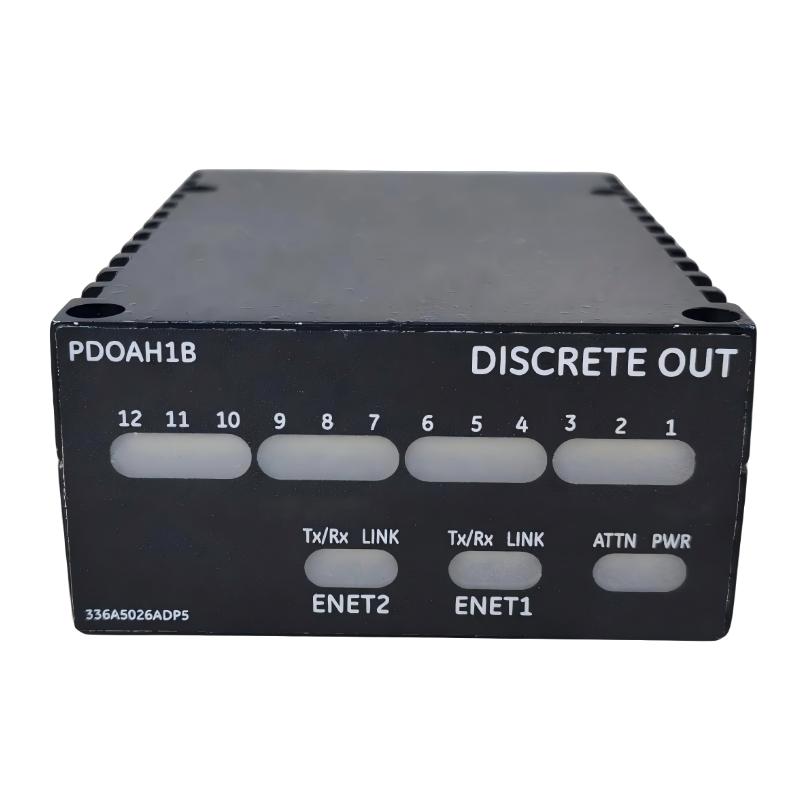
Product Overview
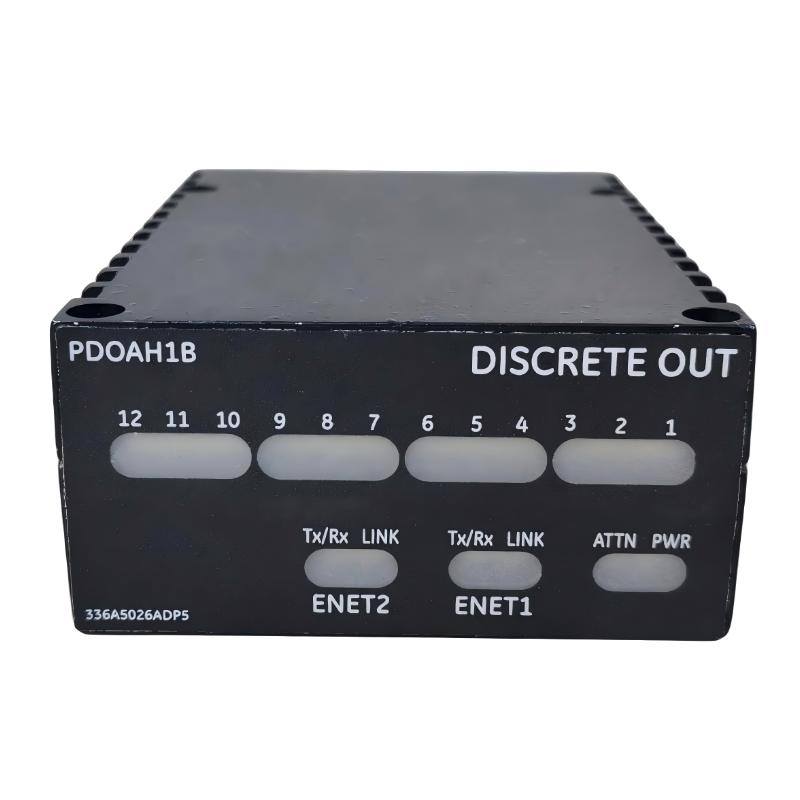
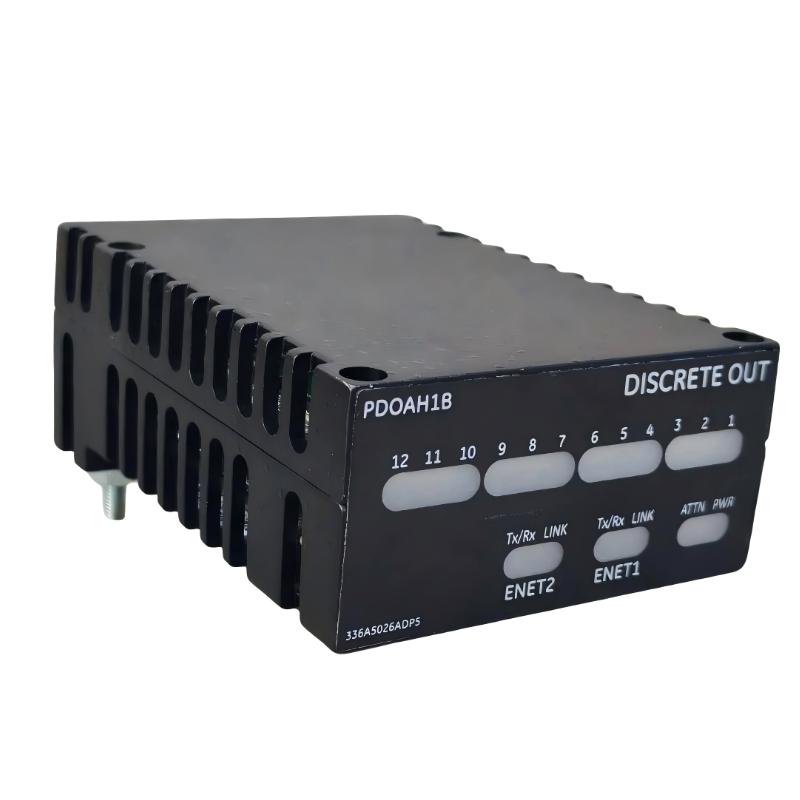
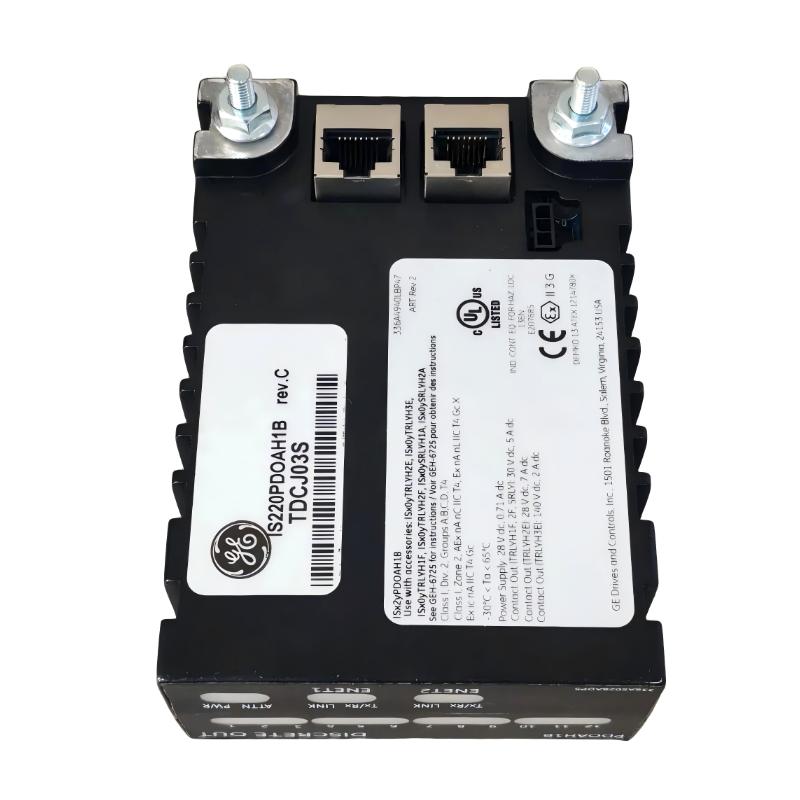
The GE IS220PDIIH1A Isolated I/O Module is a specialized industrial automation interface designed to connect field signals with a compatible GE control system. As an isolated I/O module, it forms an important interface between field devices and control electronics, helping separate signal domains while supporting reliable process monitoring and equipment control.
The GE IS220PDIIH1A has listed dimensions of 158 × 50 × 107 mm and a weight of 0.9 kg. Its compact industrial form factor allows it to be incorporated into control cabinets and automation assemblies where reliable field signal interfacing is required.
I/O interface equipment is essential in industrial control systems because controllers generally cannot connect directly to every field device without suitable signal interfaces. Sensors, switches, transmitters, actuators, relays, and other field equipment must be connected to the control architecture through appropriate I/O hardware.
The isolated design of the IS220PDIIH1A provides an additional interface layer between field-side signals and the control system. Isolation can be particularly important in industrial environments where different electrical potentials, switching transients, grounding conditions, and electrical noise may affect signal integrity.
The exact channel configuration, signal types, electrical ratings, isolation characteristics, terminal assignments, communication interfaces, and supported field-device types should be verified for the specific IS220PDIIH1A hardware configuration before installation.
Technical Specifications
| Parameter | Specification |
|---|---|
| Manufacturer | General Electric (GE) |
| Model | IS220PDIIH1A |
| Product Type | Isolated I/O Module |
| Primary Function | Field signal interfacing and isolated I/O processing |
| Dimensions | 158 × 50 × 107 mm |
| Weight | 0.9 kg |
| Installation | Industrial control equipment / automation cabinet |
| Application | Industrial process monitoring and equipment control |
| Interface Role | Field devices to control-system interface |
| Design | Isolated industrial I/O architecture |
| System Integration | Compatible GE control architecture, subject to configuration |
The dimensions and weight above are the product information supplied for this article. Exact input/output channel counts, voltage ranges, current ratings, isolation specifications, terminal arrangements, and other electrical characteristics should be confirmed against the applicable hardware documentation.
What Is the GE IS220PDIIH1A?
The GE IS220PDIIH1A is an Isolated I/O Module used as part of an industrial control and instrumentation architecture.
The primary role of an I/O module is to provide an interface between field equipment and the controller.
A simplified signal path can be represented as:
Field Device → IS220PDIIH1A → Control System
Depending on the application, field devices can include sensors, switches, transmitters, status contacts, actuators, and other industrial equipment.
The module receives or interfaces with field information and makes that information available to the associated control architecture. For output-related functions, the control system can similarly send commands toward field equipment through the appropriate I/O interface.
The isolation function provides separation between electrical signal domains where required by the system architecture.
Understanding Isolated I/O
Electrical isolation is an important concept in industrial automation.
Industrial control systems can contain equipment operating at different electrical potentials. Long field cables, motors, variable speed drives, switching devices, and power equipment can also introduce electrical disturbances.
An isolated I/O architecture can help separate the field-side electrical environment from sensitive control electronics.
A conceptual structure is:
Field Circuit
↓
Isolation / I/O Interface
↓
Control Electronics
This separation can help reduce the direct transfer of unwanted electrical disturbances between different sections of an automation system.
The exact isolation method and electrical performance of the IS220PDIIH1A should be verified from the applicable device configuration rather than assumed from the general product category.
Role in Industrial Control Systems
The GE IS220PDIIH1A can occupy an important position between field instrumentation and the control processor.
A typical industrial architecture may contain:
Field Sensors and Devices
↓
I/O Interface
↓
Control Processor
↓
Control Logic
↓
Output Interface
↓
Actuators and Equipment
The I/O module therefore contributes to the movement of information between the physical process and the digital control system.
Input information can be used for:
- Process monitoring
- Equipment status
- Alarm conditions
- Interlocks
- Sequence control
- Diagnostic functions
- Control decisions
Output information can be used to control appropriate external equipment when supported by the specific configuration.
Field Signal Interface
One of the most important functions of an industrial I/O module is translating the physical state of field equipment into usable control-system information.
For example, a field device may indicate:
- Equipment running
- Equipment stopped
- Valve position
- Switch state
- Alarm condition
- Process status
- Equipment availability
The I/O architecture allows the control system to interpret these conditions.
In the opposite direction, the controller may issue commands such as:
- Start
- Stop
- Enable
- Reset
- Open
- Close
- Alarm indication
The actual signal types and channel functions must be confirmed for the specific IS220PDIIH1A configuration.
Importance of Electrical Isolation
Industrial environments can contain significant electrical noise.
Sources of interference may include:
- Motors
- Variable frequency drives
- Contactors
- Transformers
- Switching power supplies
- Long field cables
- High-current equipment
- Ground-potential differences
Isolation can help prevent electrical disturbances from directly propagating between field circuits and sensitive control electronics.
It can also be useful when different equipment sections operate under different electrical conditions.
For this reason, isolated I/O is often considered an important part of robust industrial control architecture.
Industrial Applications
Power Generation and Process Control
GE control systems are commonly associated with demanding industrial control environments where reliable field signal acquisition and equipment control are essential.
An isolated I/O module can contribute to the interface between field equipment and the control architecture.
Turbine and Auxiliary Equipment
In turbine-related automation systems, I/O interfaces may be used to collect equipment status and provide control signals to auxiliary systems.
The exact application of the IS220PDIIH1A depends on the host control architecture and installed configuration.
Industrial Process Monitoring
Process plants require continuous information from field equipment.
I/O interfaces can provide the control system with information related to equipment status, alarms, and process conditions.
Manufacturing Automation
Manufacturing systems contain numerous field devices that must communicate with controllers.
Isolated I/O can provide an interface between industrial equipment and control electronics while helping maintain signal separation.
Utility Systems
Water systems, compressed-air systems, cooling equipment, and other industrial utilities may require distributed field monitoring and control.
An I/O module can serve as part of the interface architecture connecting these devices to the control system.
Installation and Cabinet Planning
The listed dimensions of the GE IS220PDIIH1A are:
158 × 50 × 107 mm
The listed weight is:
0.9 kg
These dimensions should be considered when planning cabinet space and module arrangement.
Installation planning should include:
- Mounting position
- Cable routing
- Connector accessibility
- Field wiring space
- Adjacent equipment
- Ventilation
- Service clearance
- Grounding
- Electrical noise sources
The module should be installed in an environment compatible with the requirements of the complete GE control system.
Wiring and Signal Integrity
Correct wiring is essential for isolated I/O systems.
Field Wiring
Field wiring should be correctly identified before connection. Incorrect wiring can result in missing signals, false status indications, or unexpected equipment behavior.
Cable Routing
Signal cables should be routed appropriately in relation to high-power conductors.
Where the installation requires it, control and signal wiring should be separated from sources of high electrical noise.
Grounding
Appropriate grounding practices are important for reliable industrial signal transmission.
The grounding method should follow the requirements of the complete control architecture.
Connector Inspection
Connectors should be inspected for:
- Loose connections
- Damaged terminals
- Corrosion
- Contamination
- Mechanical stress
A poor connection can produce intermittent faults that are difficult to diagnose.
Signal Isolation and Noise Management
Signal integrity depends on more than the I/O module itself.
A complete installation should consider:
- Field cable quality
- Cable length
- Cable routing
- Grounding
- Shielding where applicable
- Nearby switching equipment
- Power equipment
- Cabinet layout
- Environmental conditions
If a signal is unstable, engineers should investigate the complete electrical environment before replacing the I/O module.
System Integration
The IS220PDIIH1A can form part of a larger GE industrial automation system.
A typical architecture may include:
| System Component | Typical Function |
|---|---|
| Field Sensors | Detect process conditions |
| Switches | Provide discrete equipment status |
| IS220PDIIH1A | Provides isolated I/O interfacing |
| Control Processor | Executes control logic |
| Communication Infrastructure | Transfers control and diagnostic data |
| HMI | Displays operating information |
| SCADA | Provides supervisory monitoring |
| Actuators | Execute control commands |
| Drives | Control motor equipment |
The exact relationship between these components depends on the host GE control platform.
Commissioning Procedure
A structured commissioning process helps verify both the hardware and the connected field circuits.
Step 1: Verify Module Identification
Confirm the complete model:
GE IS220PDIIH1A
The product identification should be checked before installation or replacement.
Step 2: Inspect the Module
Check the housing, connectors, mounting arrangement, and visible condition.
Step 3: Verify Cabinet Installation
Confirm that the module is installed correctly and that sufficient wiring and service space is available.
Step 4: Check Field Wiring
Verify each field connection against the applicable system documentation.
Step 5: Verify Control-System Configuration
Confirm that the control system recognizes and is configured for the installed I/O hardware.
Step 6: Test Field Signals
Check individual input or output functions under controlled conditions.
Step 7: Verify Isolation and Signal Behavior
Where applicable, confirm that signals behave correctly without unexpected interference between field circuits and control electronics.
Step 8: Perform Functional Testing
Run the associated process or equipment through its required operating sequence.
Troubleshooting the GE IS220PDIIH1A
When troubleshooting the IS220PDIIH1A, it is important to inspect the entire signal chain.
A useful diagnostic path is:
Field Device → Wiring → I/O Module → Control System → Application Logic
No Input Signal
If the control system does not receive an expected field signal, inspect:
- Field device
- Field power
- Wiring
- Terminals
- Connector condition
- Module installation
- Control-system configuration
A sensor or wiring problem can create symptoms similar to an I/O module fault.
Incorrect Input State
If the signal is present but the control system reports the wrong state, investigate:
- Field-device condition
- Wiring polarity or arrangement
- Configuration
- Signal interference
- Grounding
- I/O interface condition
Output Does Not Operate
For an output-related problem, check:
- Control logic
- Output command
- Module configuration
- Field wiring
- External power
- Relay or actuator
- Downstream equipment
The fault may exist outside the I/O module.
Intermittent Signal
Intermittent problems can be caused by:
- Loose connections
- Damaged cables
- Connector problems
- Electrical interference
- Grounding problems
- Temperature-related issues
- Field-device degradation
Trend monitoring can be useful when investigating intermittent behavior.
Preventive Maintenance
Regular maintenance helps maintain the reliability of industrial I/O equipment.
Recommended activities include:
- Inspect connectors.
- Check field wiring.
- Inspect for corrosion or contamination.
- Verify secure mounting.
- Monitor abnormal temperature conditions.
- Check cabinet cleanliness.
- Inspect cable routing.
- Review recurring diagnostic alarms.
- Maintain system configuration records.
Maintenance should be performed as part of the broader GE control-system maintenance program.
Replacement Considerations
When replacing a GE IS220PDIIH1A, technicians should verify the complete model designation.
Important information includes:
- Complete part number
- Hardware identification
- Revision information
- Existing installation position
- Connector arrangement
- Field wiring
- Control-system configuration
- Associated I/O architecture
The supplied physical specifications are:
Dimensions: 158 × 50 × 107 mm
Weight: 0.9 kg
A physically similar GE I/O module should not automatically be considered a direct replacement. Electrical function, signal configuration, system compatibility, and hardware revision should all be verified.
Cabinet Layout and Mechanical Considerations
The 158 × 50 × 107 mm dimensions should be included when designing or modifying a control cabinet.
Engineers should consider:
- Module footprint
- Cable entry
- Connector access
- Wiring channels
- Adjacent modules
- Heat dissipation
- Maintenance access
- Future expansion
The listed 0.9 kg weight is also useful for handling, transportation, and installation planning.
Fault Isolation Strategy
When an isolated I/O channel behaves unexpectedly, replacing the module immediately is not always the most efficient diagnostic approach.
A structured isolation process can be used.
Check the Field Device
Confirm that the sensor, switch, transmitter, or actuator is operating correctly.
Check the Wiring
Verify continuity, terminals, connectors, and cable condition.
Check the I/O Interface
Determine whether the module receives or produces the expected signal.
Check the Controller
Verify that the control system recognizes the I/O and processes the signal correctly.
Check the Application Logic
Confirm that the control program interprets the signal correctly.
This process helps distinguish between field-device faults, wiring faults, configuration issues, and hardware failures.
Engineering Considerations for Isolated I/O
Isolated I/O modules are particularly valuable when electrical separation is important.
When designing an automation system, engineers should consider:
- Potential differences between equipment
- Electrical noise
- Grounding strategy
- Signal cable routing
- Field-device power
- Switching transients
- Cabinet layout
- Maintenance accessibility
The goal is not simply to install the I/O module but to create a complete signal path that remains stable under normal industrial operating conditions.
Key Advantages
The GE IS220PDIIH1A Isolated I/O Module provides several useful characteristics for industrial automation applications:
- Dedicated isolated I/O interface
- Compact 158 × 50 × 107 mm form factor
- Listed weight of 0.9 kg
- Supports integration between field devices and control electronics
- Useful for industrial process monitoring
- Can contribute to equipment control architectures
- Suitable for applications where signal separation is important
- Supports structured troubleshooting of field signal paths
- Can be integrated into compatible GE control systems
- Suitable for control cabinet installation
Technical FAQs
What is the GE IS220PDIIH1A?
The GE IS220PDIIH1A is an Isolated I/O Module designed to provide an interface between industrial field devices and a compatible GE control system.
What are the dimensions of the IS220PDIIH1A?
The listed dimensions are 158 × 50 × 107 mm.
How much does the IS220PDIIH1A weigh?
The listed weight is 0.9 kg.
What is the purpose of isolated I/O?
Isolated I/O provides an interface between field signals and control electronics while maintaining electrical separation between relevant signal domains.
Why is electrical isolation useful in industrial automation?
Industrial environments can contain electrical noise, switching transients, and differences in electrical potential. Appropriate isolation can help protect signal integrity and reduce unwanted interaction between field circuits and control electronics.
What can cause an incorrect I/O signal?
Possible causes include field-device faults, damaged wiring, loose connectors, incorrect configuration, electrical interference, grounding problems, or I/O hardware faults.
What should be checked before replacing the IS220PDIIH1A?
The complete model number, hardware identification, field wiring, connector arrangement, control-system configuration, and application requirements should be verified.
Can another GE I/O module replace the IS220PDIIH1A?
A different GE I/O module should not automatically be considered interchangeable. Its electrical function, signal configuration, hardware revision, and system compatibility must be verified first.
Are exact channel counts and electrical ratings included?
No. The confirmed information supplied for this article is the GE IS220PDIIH1A model, its Isolated I/O Module product type, dimensions of 158 × 50 × 107 mm, and weight of 0.9 kg. Exact channel counts, signal ranges, current ratings, isolation specifications, and terminal assignments should be verified for the specific hardware configuration.
Conclusion
The GE IS220PDIIH1A Isolated I/O Module is a specialized industrial interface component designed to connect field equipment with a compatible GE control architecture. Its isolated I/O function can help provide a controlled interface between field circuits and industrial control electronics, making this type of module valuable in environments where signal integrity and electrical separation are important.
With listed dimensions of 158 × 50 × 107 mm and a weight of 0.9 kg, the module provides a compact physical solution for industrial control cabinets and automation equipment. It can contribute to process monitoring, equipment status acquisition, control signaling, and other field-interface functions depending on the actual system configuration.
Reliable operation depends on the complete signal chain rather than the module alone. Field devices, wiring, grounding, connectors, control-system configuration, and application logic should all be considered during installation and troubleshooting.
For replacement or maintenance, the complete GE IS220PDIIH1A identification should be verified before installation. Correct field wiring, appropriate cabinet planning, systematic commissioning, and structured fault diagnosis are essential for maintaining reliable communication between industrial field equipment and the control system.