Product Overview
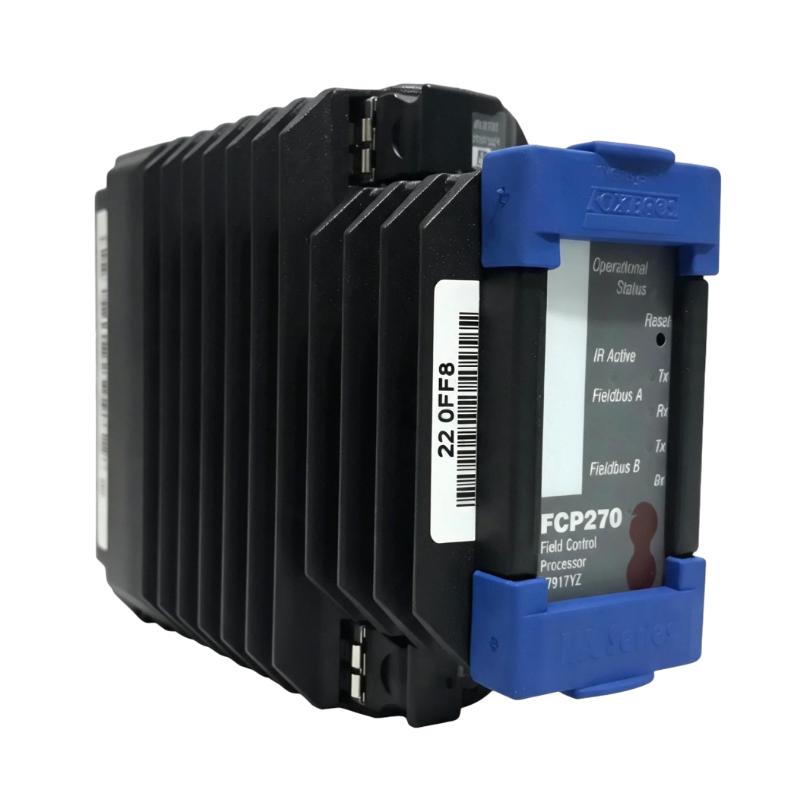
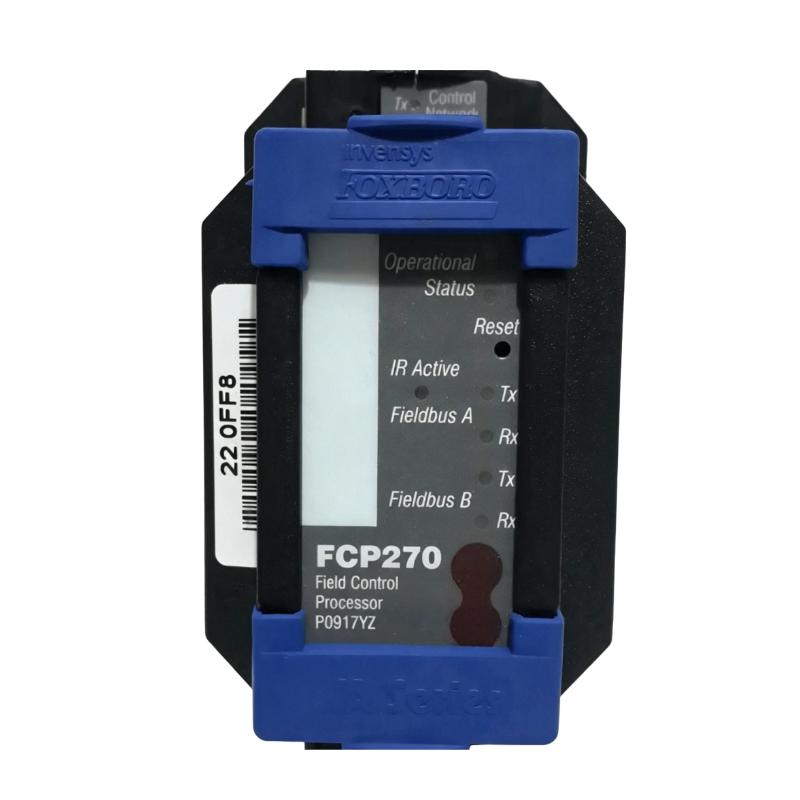
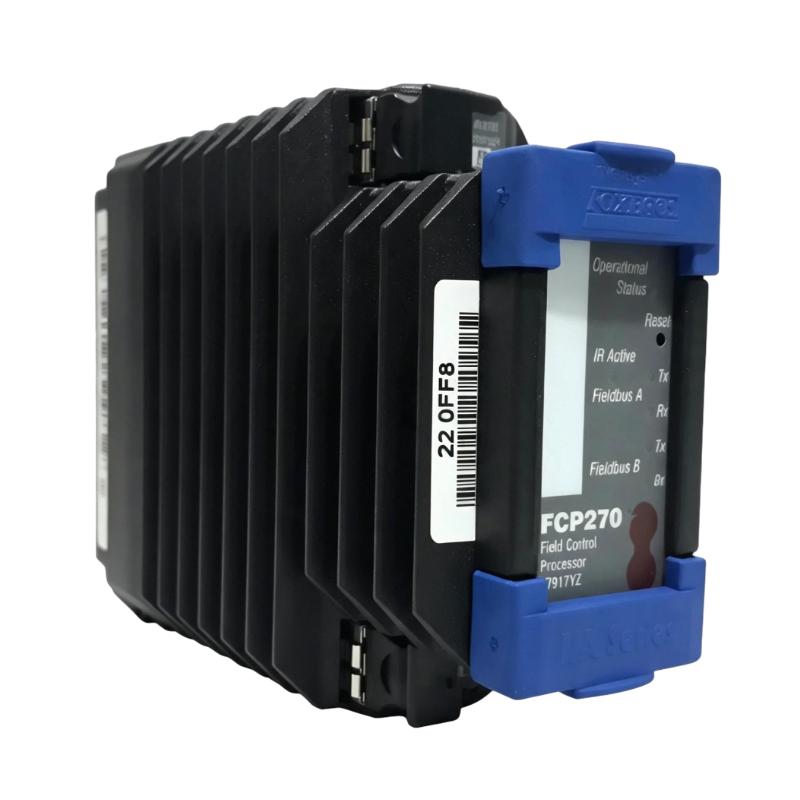
The Foxboro FCP270 P0917YZ Field Control Processor is a distributed field-mounted controller designed for Foxboro I/A Series and Foxboro Evo distributed control system (DCS) architectures. It performs real-time process control, data acquisition, alarm processing, logic execution, timing, and sequential control together with connected Fieldbus Modules (FBMs).
Unlike a conventional communication module, the FCP270 is an actual field control processor. It executes the control strategies required to regulate industrial processes and provides a direct processing layer between field I/O equipment and the higher-level DCS control network.
The FCP270 is designed around a highly distributed control concept. Instead of concentrating all control processing in a central cabinet, field control processors can be positioned close to the process equipment and associated I/O modules. This approach can reduce communication distances between the controller and field devices while creating a scalable control architecture.
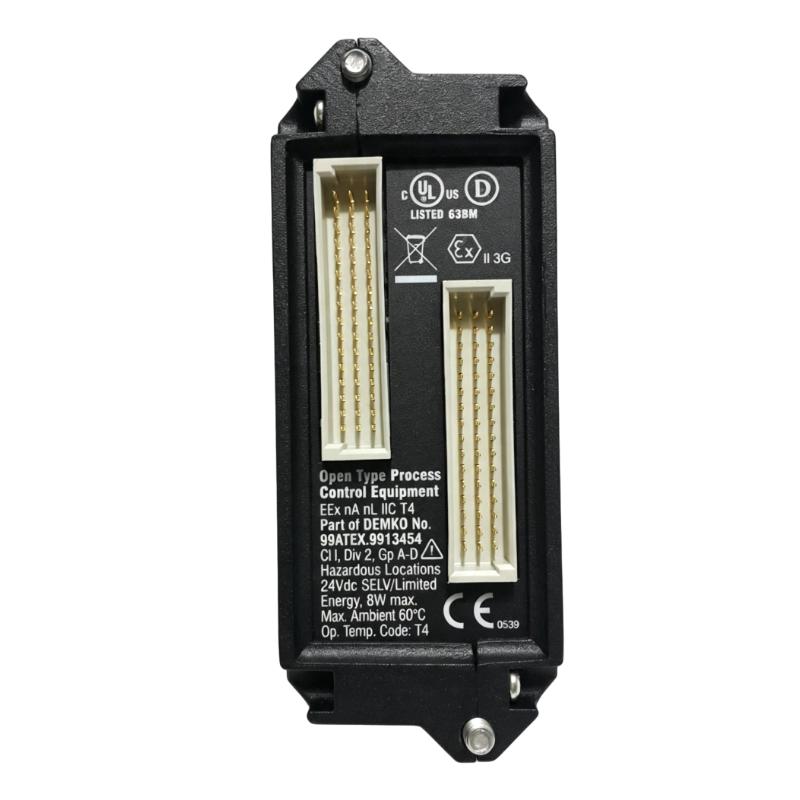
The P0917YZ is the ordering identification associated with the FCP270 Field Control Processor. The module supports connection to the Foxboro control network through fiber-optic Ethernet and can work with compatible Fieldbus Modules.
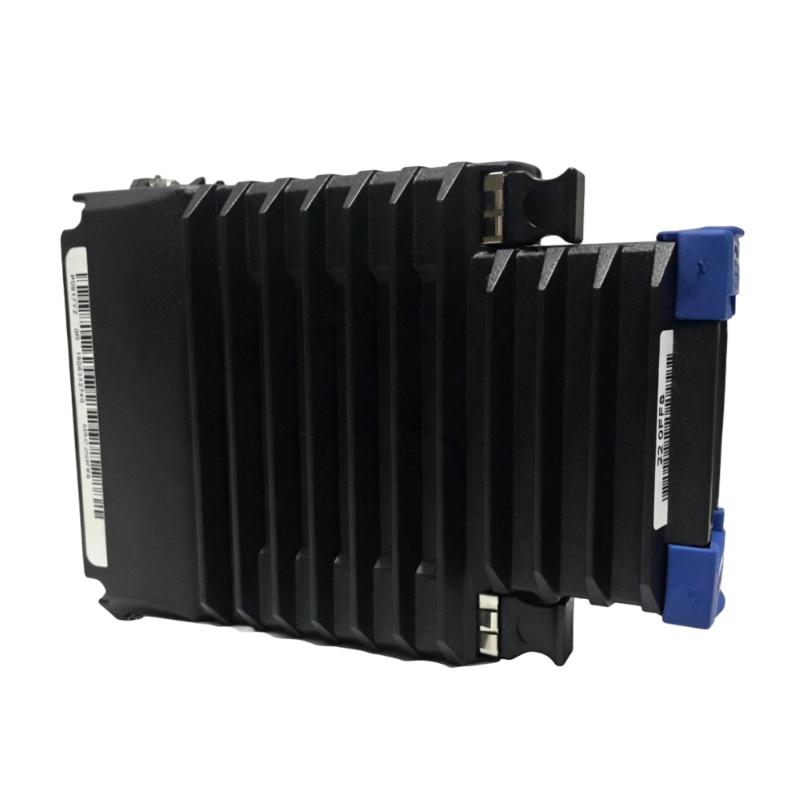
The supplied physical dimensions of the Foxboro FCP270 P0917YZ are 147 × 51.5 × 114 mm, with an approximate weight of 0.6 kg. Its compact industrial construction makes it suitable for field enclosures and distributed control-system installations.
The FCP270 can also be deployed in a fault-tolerant configuration. In this arrangement, two FCP270 processor modules are installed in adjacent positions on a compatible baseplate, allowing the control architecture to provide improved availability for critical process applications.
Technical Specifications
| Parameter |
Details |
| Manufacturer |
Foxboro |
| Model |
FCP270 |
| Part Number |
P0917YZ |
| Product Type |
Field Control Processor |
| System |
Foxboro I/A Series / Foxboro Evo |
| Main Function |
Distributed Process Control |
| Controller Type |
Field-Mounted Control Processor |
| Memory |
16 MB SDRAM / 32 MB Flash |
| Input Voltage |
24 VDC typical |
| Power Consumption |
Approx. 8.5 W maximum per non-fault-tolerant module |
| Control Network |
Fiber-Optic Ethernet |
| Network Speed |
100 Mbps |
| Fieldbus Communication |
HDLC-based Fieldbus |
| 200 Series FBM Capacity |
Up to 32 FBMs |
| Expanded 200 Series FBM Capacity |
Up to 128 with suitable expansion architecture |
| 100 Series FBM Capacity |
Up to 64 FBMs |
| Operating Temperature |
0 to +60°C |
| Installation |
Field-mounted / Enclosure-mounted |
| Dimensions |
147 × 51.5 × 114 mm |
| Weight |
Approx. 0.6 kg |
| Application |
Industrial DCS / Process Automation |
Function and Working Principle
The primary function of the FCP270 P0917YZ is to execute the control strategy associated with a specific process area.
The controller receives process data from connected Fieldbus Modules, processes the configured control algorithms, and sends the resulting commands back toward the field devices.
A simplified control architecture is:
Field Instruments
↓
Fieldbus Modules
↓
FCP270 Field Control Processor
↓
Foxboro Control Network
↓
Supervisory / Operator Systems
The FCP270 performs several important control functions, including:
- Regulatory control
- Logic control
- Sequential control
- Timing functions
- Data acquisition
- Alarm detection
- Alarm processing
- Process calculations
- Communication with field I/O
- Communication with the DCS control network
Because the controller is located close to the field I/O, the architecture can distribute control processing across different process areas.
What Is the Foxboro FCP270 P0917YZ Used For?
The Foxboro FCP270 P0917YZ is used to control and monitor industrial processes within a Foxboro DCS environment.
It is particularly suitable for distributed process-control applications where individual process units can have their own dedicated control processor.
Typical control functions include:
- Temperature control
- Pressure control
- Flow regulation
- Level control
- Motor control
- Valve control
- Sequential operations
- Equipment interlocking
- Alarm monitoring
- Process calculations
The FCP270 receives information from field instruments through compatible FBMs and executes the configured control strategy.
For example, a temperature transmitter can send a process measurement through an I/O module to the FCP270. The processor compares the measured value with the configured setpoint and executes the appropriate control algorithm. The resulting output can then be transmitted to a compatible control valve or other final control element.
Role in Industrial Control Systems
The FCP270 is one of the key processing components in a distributed Foxboro control architecture.
A typical system can be represented as:
Process Sensors
↓
Fieldbus Modules
↓
FCP270
↓
Fiber-Optic Control Network
↓
DCS Supervisory Layer
↓
Operator Workstations
The controller performs the actual process-control calculations while the higher-level systems provide operator visualization, engineering configuration, historical information, alarms, and system management.
This distributed architecture provides several benefits.
Distributed Processing
Control processing can be positioned near the associated process equipment.
Reduced Centralization
Instead of requiring every control loop to be processed by a single central controller, control functions can be distributed across multiple FCP270 processors.
Scalable Architecture
Additional field control processors can be added as the plant expands.
Improved Availability
Fault-tolerant FCP270 configurations can be used where continuous process control is important.
Localized Control
Each FCP270 can manage a specific process area while communicating with the broader DCS network.
Fieldbus and Network Communication
The FCP270 communicates with connected field I/O through compatible fieldbus infrastructure and connects to the Foxboro control network using fiber-optic Ethernet.
The controller supports communication with Foxboro Fieldbus Modules, allowing field signals to be exchanged with the control processor.
Depending on the system configuration, the FCP270 can support:
- 200 Series FBMs
- 100 Series FBMs
- Fieldbus Interface equipment
- Fieldbus Expansion Modules
- Fiber-optic control-network infrastructure
The FCP270 can support up to 32 200 Series FBMs directly within the applicable architecture. With a suitable Fieldbus Expansion Module 100 (FEM100), the architecture can support a larger number of 200 Series FBMs.
This makes the processor suitable for distributed process-control applications ranging from individual process units to larger plant sections.
Fault-Tolerant Operation
One of the important characteristics of the FCP270 architecture is its ability to support fault-tolerant operation.
A fault-tolerant FCP270 configuration uses two processor modules installed in adjacent positions on a compatible FCP270 baseplate.
The architecture can be represented as:
FCP270 Primary
↕
FCP270 Secondary
↓
Fieldbus / Control Network
If one processor becomes unavailable, the redundant architecture can maintain process-control availability according to the configured system design.
This capability is particularly useful in applications where an unexpected controller failure could result in:
- Production interruption
- Process instability
- Equipment shutdown
- Loss of monitoring
- Unplanned maintenance
Fault tolerance should always be considered as a system-level function rather than a characteristic provided by one processor module operating by itself.
Industrial Applications
The Foxboro FCP270 is suitable for a wide range of continuous and batch process industries.
Oil and Gas
The FCP270 can be used for:
- Refinery process control
- Gas processing
- Crude oil processing
- Pump control
- Compressor control
- Pressure regulation
- Flow control
Petrochemical
Large petrochemical facilities often divide their process control architecture into individual process areas. FCP270 processors can provide localized control for these areas.
Chemical Processing
The controller can execute control strategies for:
- Reactors
- Mixing systems
- Heat exchangers
- Pumps
- Valves
- Storage systems
Power Generation
FCP270-based architectures can support process monitoring and control associated with power-generation systems and auxiliary processes.
Water and Wastewater
Distributed control processors can be used for:
- Pump stations
- Filtration systems
- Chemical dosing
- Water treatment
- Flow control
- Level control
Manufacturing
The FCP270 can also be applied to continuous manufacturing systems requiring distributed process control and industrial networking.
Installation and System Integration
The FCP270 P0917YZ should be installed within a compatible Foxboro system architecture and enclosure.
A general installation process includes:
- Verify the FCP270 model and P0917YZ part number.
- Confirm compatibility with the existing Foxboro DCS.
- Inspect the processor for physical damage.
- Verify the correct FCP270 baseplate.
- Install the processor into the designated position.
- Connect the appropriate power supply.
- Connect the fieldbus infrastructure.
- Connect the fiber-optic control-network interface.
- Verify all physical connections.
- Apply power to the processor.
- Check processor status indicators.
- Load or verify the appropriate configuration.
- Confirm communication with the DCS.
- Verify communication with connected FBMs.
- Test control functions before returning the process to normal operation.
The actual commissioning procedure depends on the software version, DCS architecture, FBM configuration, and redundancy arrangement.
Compatible System Components
The FCP270 normally operates as part of a larger Foxboro control system.
| Component |
Function |
| FCP270 P0917YZ |
Distributed Process Control |
| Fieldbus Module (FBM) |
Field Signal Processing |
| FEM100 |
Fieldbus Expansion |
| FBI100 |
Fieldbus Interface |
| FBI200 |
Fieldbus Interface |
| FCM100Et |
Fieldbus Communication |
| P0926DF-0B |
Fault-Tolerant Connection Hardware |
| P0904HA |
Power Module |
| Fiber-Optic Network |
Control-Network Communication |
| DCS Controller Infrastructure |
System Coordination |
| Operator Workstation |
Process Monitoring |
| Engineering Workstation |
System Configuration |
| Field Instruments |
Process Measurement |
| Control Valves |
Final Control Elements |
The exact combination of components depends on the Foxboro I/A Series or Foxboro Evo architecture being used.
Maintenance and Inspection
Preventive maintenance of the FCP270 should focus on processor health, power quality, communication connections, environmental conditions, and system diagnostics.
| Inspection Item |
Purpose |
| Power Supply |
Verify stable operating power |
| Status Indicators |
Check processor condition |
| Fiber Connection |
Verify control-network communication |
| Fieldbus Connections |
Confirm I/O communication |
| Cabinet Temperature |
Prevent overheating |
| Ventilation |
Maintain suitable operating conditions |
| Processor Housing |
Check for physical damage |
| Network Diagnostics |
Identify communication faults |
| FBM Status |
Confirm field I/O availability |
| Configuration |
Verify correct control strategy |
Because the FCP270 is a control processor, maintenance should be carefully coordinated with plant operating procedures.
Common Troubleshooting Symptoms
| Symptom |
Possible Cause |
| FCP270 Does Not Start |
Power-supply problem |
| Processor Offline |
Network or hardware fault |
| FBMs Not Communicating |
Fieldbus communication problem |
| Control Network Lost |
Fiber/network connection issue |
| Unexpected Controller Reset |
Power instability |
| Process Data Missing |
FBM or communication problem |
| Alarm Communication Lost |
Controller/network issue |
| Redundant Processor Fault |
One processor or connection problem |
| Control Loop Not Updating |
Configuration or I/O communication issue |
| Intermittent Communication |
Fiber, connector, or network problem |
When troubleshooting the FCP270, it is important to determine whether the problem originates in the processor, power system, fieldbus, control network, or connected I/O equipment.
Troubleshooting Procedure
Step 1: Check Power
Verify that the FCP270 receives the required DC power.
Step 2: Check Processor Status
Inspect the available status indicators and determine whether the processor is operating normally.
Step 3: Check the Control Network
Verify the fiber-optic network connection between the FCP270 and the Foxboro control network.
Step 4: Check Fieldbus Communication
Determine whether the processor can communicate with the connected FBMs.
Step 5: Check I/O Status
If only specific process signals are affected, inspect the associated FBM and field wiring.
Step 6: Check Configuration
Verify that the processor has the correct control configuration and system identification.
Step 7: Check Redundancy
For fault-tolerant installations, verify the condition of both processor modules and their associated baseplate connections.
Step 8: Review Diagnostics
Use the DCS diagnostic information to identify whether the problem originates from the processor, communication network, or field I/O system.
Recommended Alternative Models
| Model |
Product Type |
Key Feature |
Typical Application |
| FCP270 P0917YZ |
Field Control Processor |
Distributed Process Control |
Foxboro DCS |
| FCP280 |
Field Control Processor |
Newer Control-Processor Architecture |
Foxboro Evo / DCS |
| ZCP270 P0926CP |
Control Processor |
Distributed Control Processing |
Foxboro DCS |
| FCP270 Fault-Tolerant Pair |
Redundant Controller |
High Availability |
Critical Process Control |
| FEM100 |
Fieldbus Expansion Module |
Expands FBM Connectivity |
Large DCS Networks |
| FBI200 |
Fieldbus Interface |
Fieldbus Network Integration |
Distributed I/O |
| FBI100 |
Fieldbus Interface |
Fieldbus Connectivity |
I/A Series |
| FCM100Et P0926GS |
Communication Module |
Fieldbus Communication |
DCS Communication |
The FCP270 should not be replaced solely based on physical dimensions. Processor architecture, firmware, communication interfaces, fieldbus compatibility, system generation, redundancy requirements, and control configuration must all be considered.
Key Advantages
- Designed for Foxboro I/A Series and Evo DCS architectures
- Provides distributed process-control capability
- Performs regulatory and logic control
- Supports timing and sequential control
- Provides data acquisition
- Supports alarm detection and notification
- Supports communication with Fieldbus Modules
- Supports distributed field-mounted control
- Supports fiber-optic control-network communication
- Can be used in fault-tolerant configurations
- Supports large numbers of compatible FBMs with appropriate expansion architecture
- Compact industrial design
- Dimensions of 147 × 51.5 × 114 mm
- Approximate weight of 0.6 kg
- Suitable for continuous process-control applications
- Designed for industrial control environments
Technical FAQs
What is the Foxboro FCP270 P0917YZ?
The Foxboro FCP270 P0917YZ is a Field Control Processor designed to perform distributed process control within Foxboro I/A Series and Foxboro Evo DCS architectures.
What is the main function of the FCP270?
Its main function is to execute control strategies, process field data, perform regulatory and logic control, and communicate with connected Fieldbus Modules and the DCS control network.
Is the FCP270 a PLC?
The FCP270 is a DCS Field Control Processor rather than a conventional PLC. It is designed specifically for distributed process-control architectures.
What are the dimensions?
The supplied dimensions are:
147 × 51.5 × 114 mm
What is the weight?
The supplied weight is:
Approximately 0.6 kg
What power supply does the FCP270 use?
The FCP270 is associated with a 24 VDC typical input power arrangement.
How much power does it consume?
The typical technical specification identifies approximately 8.5 W maximum consumption per non-fault-tolerant processor module.
How many FBMs can the FCP270 support?
The FCP270 architecture supports up to 32 200 Series FBMs, with higher capacity possible when an appropriate fieldbus expansion architecture is used. It can also support compatible 100 Series FBM configurations.
Can the FCP270 operate redundantly?
Yes. A fault-tolerant FCP270 architecture uses two processor modules installed in adjacent positions on a compatible baseplate.
What communication network does the FCP270 use?
The FCP270 connects to the Foxboro control network through fiber-optic Ethernet, while field communication is handled through compatible fieldbus interfaces and FBMs.
What equipment works with the FCP270?
Typical associated equipment includes FBMs, fieldbus interfaces, FEM100 expansion equipment, communication modules, power modules, fiber-optic network infrastructure, field instruments, and control-system workstations.
Where is the FCP270 used?
Typical applications include oil and gas, petrochemical, chemical processing, power generation, water treatment, and other continuous industrial process-control environments.
Conclusion
The Foxboro FCP270 P0917YZ Field Control Processor is a key processing component within Foxboro distributed control architectures. Unlike a simple communication or interface module, the FCP270 performs actual process-control functions, including regulatory control, logic processing, timing, sequential control, data acquisition, and alarm management.
Its distributed design allows control processing to be positioned close to the associated field equipment and I/O infrastructure. Through compatible Fieldbus Modules and fiber-optic control-network communication, the FCP270 can connect localized process-control functions with the wider DCS architecture.
The FCP270 also supports fault-tolerant configurations in which two processor modules operate together on a compatible baseplate. This makes the architecture suitable for process applications where controller availability is especially important.
For the product specified in this article, the Foxboro FCP270 P0917YZ has dimensions of 147 × 51.5 × 114 mm and an approximate weight of 0.6 kg. Its associated technical characteristics include 24 VDC typical input, approximately 8.5 W maximum consumption per non-fault-tolerant module, 16 MB SDRAM, 32 MB Flash, and fiber-optic Ethernet control-network communication.
For system integrators, maintenance engineers, and DCS professionals, the FCP270 should be evaluated as part of the complete Foxboro control architecture rather than as an isolated processor. Compatibility with the baseplate, FBMs, fieldbus interfaces, communication network, power infrastructure, software configuration, and redundancy arrangement should be confirmed before installation or replacement.
Overall, the Foxboro FCP270 P0917YZ provides a compact, distributed, and scalable control-processing solution for demanding industrial automation and continuous process-control applications.