

ProductPRODUCT
Featured products
Contact Us
- Allen Bradley
- MPL-D310P-HJ72AA
- Low-Inertia Brushless Servo Motors Product
- USA
- 215 mm ×203.2 mm × 325 mm
- 42.7 kg
- Xiamen, China
- New & In Stock
- T/T, PayPal, Western Union
- 1 Year
- 1-3 Working Days
- DHL, UPS, TNT, FedEx and EMS.
- 24-Hour Service
- COO
- 7
Our advantage

Global Logistics
We have a 10-year logistics and express cooperation agreement, so our products can be shipped to any place in the world.

Brand new and original
Our products are imported in bulk from the place of origin. Because of the cooperative relationship, our products are all original and 100% new.

24-hour service
We provide 7*24 hours service to our customers. We will be there whenever you need us.

Price advantage
All our products are priced very favorably because we have our own warehouse and supply.
| Company Information | |||
| [email protected] | |||
| Mobile | +8615980777398 | ||
| +8615980777398 | |||
| 15980777398 |
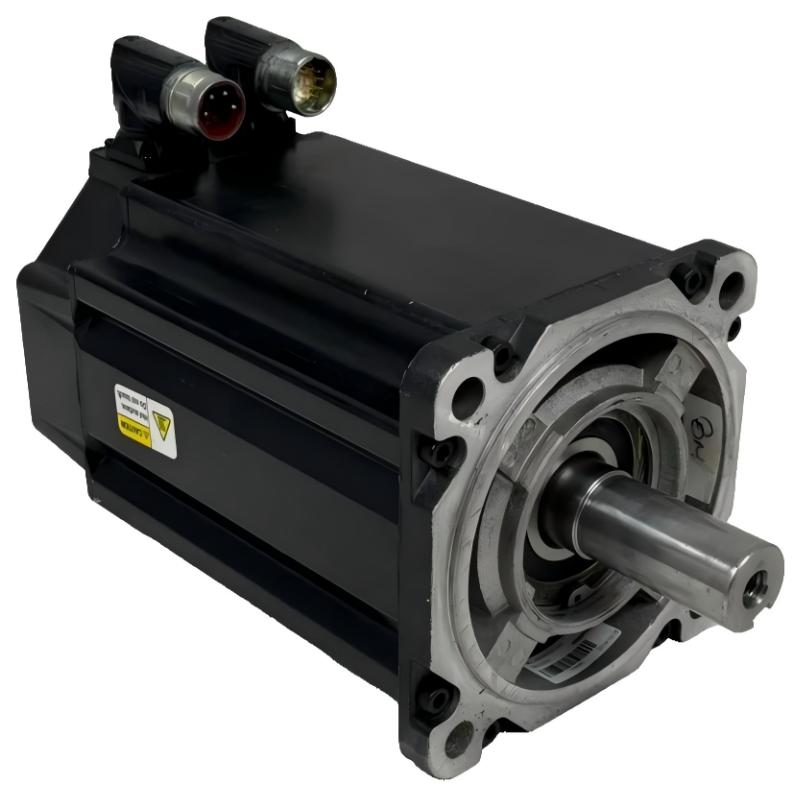
Allen-Bradley MPL-D310P-HJ72AA Servo Motor: Product Overview, Technical Specifications, Applications, Advantages, and Related Models
1. Product Introduction
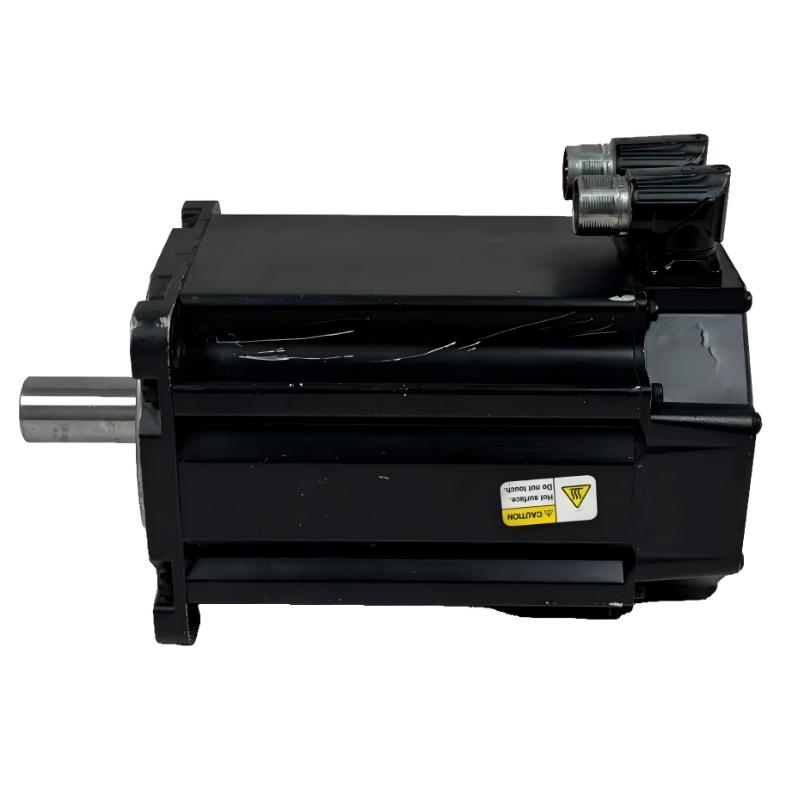
The Allen-Bradley MPL-D310P-HJ72AA is a compact, low-inertia brushless AC rotary servo motor from the MPL family of the MP-Series. It is designed for industrial motion-control systems that require controlled rotation, repeatable positioning, rapid speed changes, and coordinated movement between machine axes.
The motor is intended to operate as part of a servo system comprising a compatible servo drive, motion controller, motor power cable, feedback connection, and mechanical load. In a correctly configured system, encoder feedback allows the drive to regulate the motor’s movement in response to position, speed, or torque commands.
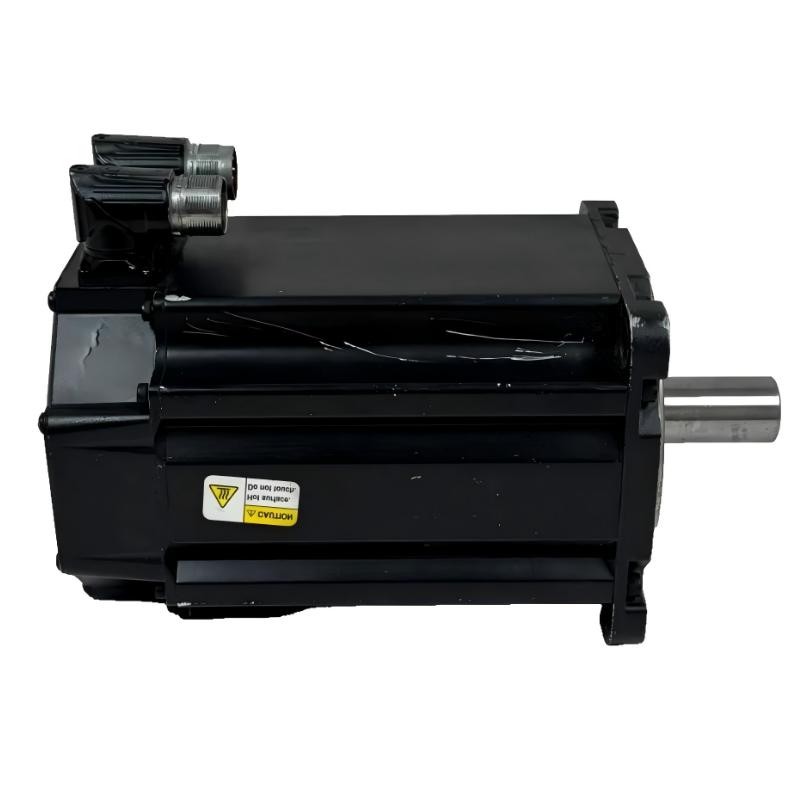
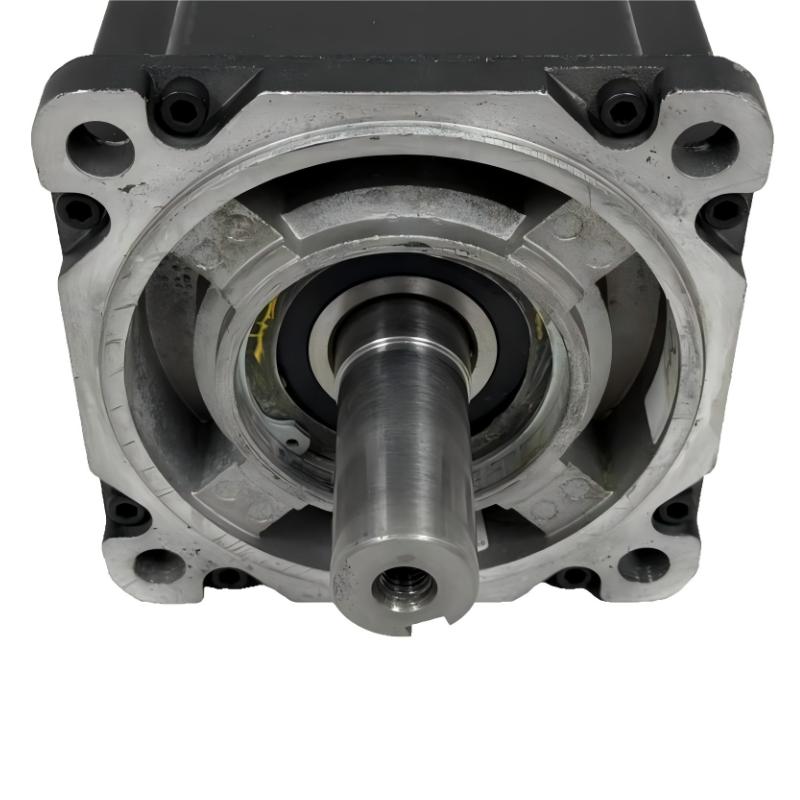
This model uses a small frame and short magnet stack, making it a candidate for applications where installation space is limited and the machine needs responsive rotary motion. Its catalog configuration is associated with a keyed shaft extension, a right-angle SpeedTEC DIN connector that can rotate through 180 degrees, and an incremental encoder. The HJ72AA configuration does not include a motor-mounted holding brake.
The model has been discontinued, and a designated engineering replacement is listed as MPL-D310P-SJ72AA. When planning a repair or replacement, the original motor’s exact specifications and the replacement’s mechanical and electrical compatibility should be confirmed before ordering.
2. Product Identification and Basic Information
|
Parameter |
Specification |
|---|---|
|
Model |
|
|
Brand |
Allen-Bradley |
|
Product family |
MP-Series |
|
Motor series |
MPL low-inertia servo motors |
|
Product type |
Brushless AC rotary servo motor |
|
Motor construction |
Permanent-magnet brushless servo |
|
Voltage class |
D-series voltage configuration; confirm the exact rated voltage from the motor nameplate and applicable technical data |
|
Frame size |
3 |
|
Nominal frame dimension |
100 mm (3.94 in.) |
|
Magnet stack length |
10 = 25.4 mm (1.0 in.) |
|
Speed designation |
P configuration |
|
Catalog speed reference |
Confirm the rated speed for the D-series configuration before application sizing |
|
Feedback |
Incremental encoder configuration; confirm exact resolution for this catalog revision |
|
Shaft |
Keyed shaft extension |
|
Connector |
SpeedTEC DIN connector, right-angle |
|
Connector orientation |
Rotatable through 180° |
|
Brake |
No holding brake |
|
Mounting |
IEC metric |
|
Mounting holes |
Free mounting holes, Type FF |
|
Shaft seal |
Standard configuration generally listed without a shaft seal; verify the supplied unit |
|
Lifecycle status |
Discontinued |
|
Replacement candidate |
MPL-D310P-SJ72AA, subject to compatibility checks |
|
Overall dimensions |
Confirm from the mechanical drawing for the exact catalog number |
|
Weight (kg) |
Approximately 4.44 kg in one commercial listing; verify the net weight of the actual unit |
|
Typical applications |
Automated machinery, indexing, positioning, packaging, assembly, and material handling |
Dimension and weight note: The 100 mm frame designation and 25.4 mm magnet stack length are identification dimensions, not the motor’s complete outside dimensions. The actual overall length, flange dimensions, shaft projection, connector clearance, and mounting-hole spacing should be obtained from the mechanical drawing.
The stated weight of approximately 4.44 kg is a reference value rather than a guaranteed net weight for every revision or supplied unit. For installation calculations, shipping arrangements, or replacement planning, confirm the physical dimensions and mass of the motor being supplied.
3. Detailed Technical Parameters
|
Parameter |
Description |
|---|---|
|
Model |
MPL-D310P-HJ72AA |
|
Product family |
MP-Series |
|
Motor series |
MPL low-inertia |
|
Motor type |
Brushless rotary servo motor |
|
Frame size |
3 |
|
Nominal frame dimension |
100 mm |
|
Magnet stack length |
25.4 mm |
|
Voltage class |
Confirm the D-series voltage specification from the motor nameplate |
|
Speed configuration |
P |
|
Rated speed |
Verify against the exact motor performance table |
|
Feedback type |
Incremental encoder configuration |
|
Encoder resolution |
Confirm the exact resolution for this catalog revision |
|
Shaft configuration |
Keyed shaft extension |
|
Connector |
SpeedTEC DIN, right-angle, rotatable 180° |
|
Brake configuration |
No motor-mounted holding brake |
|
Mounting flange |
IEC metric |
|
Mounting holes |
Type FF |
|
Rated output power |
Confirm from the applicable motor performance table |
|
Continuous stall torque |
Confirm from the applicable motor performance table |
|
Peak torque |
Confirm from the applicable motor performance table |
|
Rotor inertia |
Confirm from the applicable motor performance table |
|
Overall length |
Confirm from the mechanical drawing |
|
Overall width and height |
Confirm from the mechanical drawing |
|
Shaft projection |
Confirm from the mechanical drawing |
|
Weight (kg) |
Approximately 4.44 kg as a commercial listing reference; verify the exact unit |
|
Protection rating |
Confirm the applicable rating and whether a shaft seal is fitted |
|
Product status |
Discontinued |
|
Replacement evaluation |
MPL-D310P-SJ72AA is a designated replacement candidate; verify complete compatibility |
3.1 Understanding the frame and stack dimensions
The 100 mm frame designation gives a useful indication of the motor’s mounting scale. The 25.4 mm magnet stack indicates a short stack configuration within the MPL family.
These values help narrow down suitable models, but they do not provide enough information to design a mounting bracket or confirm a direct replacement. The motor’s flange geometry, bolt-hole positions, shaft dimensions, total length, and connector location must be checked separately.
3.2 Feedback and control
An incremental encoder provides position feedback relative to a reference or count established by the control system. Depending on the machine architecture, the system may need a homing or referencing procedure to establish a known position after startup.
The exact encoder resolution, signal format, and drive interface should be confirmed before commissioning. A motor that fits mechanically may still be incompatible with a drive if the feedback system or supported motor configuration differs.
3.3 Brake configuration
The HJ72AA configuration does not include a motor-mounted holding brake. This can be suitable for horizontal motion or for machinery that uses a separate mechanical arrangement to hold the load.
If the axis can move under gravity, or if a load must remain stationary after power is removed, a suitable external holding mechanism or a correctly specified brake-equipped motor may be necessary. Active servo torque should not be treated as a substitute for a mechanical holding solution.
4. Operating Principle
The MPL-D310P-HJ72AA operates as part of a closed-loop servo system. A controller sends a movement command to a compatible drive, and the drive regulates the electrical power supplied to the motor. The encoder provides feedback that allows the control system to monitor motor movement and correct errors within the capabilities of the system.
In position-control applications, the controller commands the motor to move to a target position. In speed-control applications, the drive regulates rotational speed. Torque-control operation is also possible where supported by the drive and control architecture.
The low-inertia design is intended to help the motor respond to changes in commanded speed. This can be useful in equipment that repeatedly starts, stops, indexes, or changes direction. However, the actual response depends on the driven load, transmission, drive sizing, control-loop tuning, and mechanical rigidity.
The motor should therefore be selected according to the full machine duty cycle rather than speed designation alone. Continuous torque, peak torque, acceleration requirements, thermal conditions, and the load’s reflected inertia all affect whether a particular motor is suitable.
5. Main Product Features
5.1 Compact low-inertia construction
The small frame and short magnet stack can be advantageous when a machine has limited installation space. The low-inertia design is intended for applications that benefit from responsive acceleration and deceleration.
Compact size does not automatically mean that the motor can deliver the torque needed by every small machine. Its performance should be checked against the required torque, speed, and duty cycle.
5.2 Incremental encoder feedback
The encoder allows the compatible drive to monitor motor movement and regulate position or speed. It is useful for repetitive motion and coordinated machine functions.
Because incremental feedback is based on position counts, the machine’s reference strategy should be considered during system design. Homing procedures, reference sensors, drive behavior after power loss, and the controller’s position-tracking method all affect the complete system.
5.3 Keyed shaft extension
The keyed shaft is designed for use with compatible mechanical couplings, pulleys, gears, and other transmission components. A correctly fitted coupling helps transfer torque and maintain alignment.
The shaft diameter, key dimensions, usable shaft length, and permissible radial and axial loads should be checked before selecting the driven component.
5.4 Rotatable right-angle connector
The right-angle SpeedTEC DIN connector provides a practical cable connection for compact machinery. Its rotatable arrangement can help reduce interference with nearby machine components.
Cable clearance, bend radius, connector access, and maintenance space should be considered before the motor is installed. The cable should not be twisted or forced into a position that places excessive stress on the connector.
5.5 Metric mounting arrangement
The IEC metric mounting configuration can simplify integration into machinery designed around metric dimensions. The exact flange and mounting-hole geometry must still be checked against the installation drawing.
Even a motor with a similar frame size may have a different shaft projection, total length, or connector clearance. These differences are especially important in retrofit applications where existing brackets and couplings will be reused.
5.6 Brake-free configuration
The absence of a motor-mounted brake can be appropriate where the load does not require motor-shaft holding after power is removed. It may also suit systems with a separate holding mechanism.
For vertical axes or gravity-loaded equipment, the brake-free configuration needs particular care. The machine designer must determine how the load will be restrained when the servo drive is disabled or power is lost.
6. Product Applications

6.1 Packaging machinery
Packaging equipment uses servo motion for feeding, indexing, cutting, sealing, and product transfer. A compact servo motor may be suitable for mechanisms where space is limited and repeated movements must be controlled.
The motor’s torque and speed must match the required cycle time, material load, and acceleration profile.

6.2 Automated assembly
Servo motors can drive indexing tables, component feeders, fixtures, and positioning mechanisms. Encoder feedback allows the motion controller to monitor movement and coordinate the motor with other machine functions.
Final positioning accuracy depends on the complete mechanical system, including backlash, fixture rigidity, shaft alignment, and controller settings.

6.3 Machine tools and precision machinery
A servo motor can be used in feed mechanisms, rotary positioning assemblies, and auxiliary machine axes. The compact frame may be useful where larger motors are difficult to install.
The required torque, operating speed, and mechanical load must be checked before choosing this model for a machine-tool application.

6.4 Material handling
Servo-driven mechanisms can position products, operate transfer units, and control smaller conveyor or indexing assemblies. The incremental feedback system can support repeatable motion where the control system has an appropriate referencing strategy.
For gravity-loaded or vertical axes, the absence of an integrated holding brake must be considered in the mechanical and safety design.

6.5 Printing and converting equipment
Servo motors can control feed rollers, rotary mechanisms, and indexing functions in printing or converting equipment. Feedback helps coordinate motion and maintain the commanded speed or position.
Actual performance depends on roller diameter, material tension, transmission ratios, load variation, and the control system’s synchronization requirements.
Other possible applications include inspection machines, electronic component handling, specialized production equipment, and compatible industrial automation retrofits. Suitability must be verified against the motor’s electrical ratings, mechanical interface, environmental limits, and drive compatibility.
7. Product Advantages
|
Advantage |
Practical benefit |
Important consideration |
|---|---|---|
|
Compact frame |
Can fit into space-constrained machine layouts |
Verify complete mounting and shaft dimensions |
|
Low-inertia design |
Can support responsive acceleration and deceleration |
Load inertia and drive tuning remain important |
|
Incremental feedback |
Supports closed-loop position and speed control |
Confirm resolution, interface, and homing requirements |
|
Keyed shaft |
Provides a positive mechanical coupling interface |
Check key and shaft dimensions |
|
Rotatable right-angle connector |
Allows flexibility in cable routing |
Maintain cable bend radius and connector clearance |
|
Metric mounting |
Can simplify integration into metric machine designs |
Confirm flange and bolt-hole geometry |
|
Brake-free configuration |
Suitable for applications where motor holding is not required |
A separate holding solution may be needed |
|
Related replacement option |
Provides a starting point for replacement evaluation |
Verify the complete electrical and mechanical configuration |
7.1 Efficient use of installation space
The small frame and short stack make the model worth evaluating for compact mechanisms. This can be useful when the motor must fit within a restricted machine envelope or around other moving components.
Space savings should be evaluated alongside heat dissipation, cable clearance, maintenance access, and the torque needed by the application.
7.2 Controlled, repeatable motion
Encoder feedback allows the drive to regulate motor movement. This supports repeatable positioning and speed control when the motor, drive, and mechanics are correctly configured.
The encoder alone does not guarantee a particular machine accuracy. Mechanical backlash, load changes, vibration, and reference strategy can all affect the final result.
7.3 Flexible mechanical integration
The keyed shaft and metric mounting arrangement offer familiar mechanical interfaces for many industrial machines. The right-angle connector can also help when cable space is limited.
The full drawing remains essential, especially for a replacement project. Similar catalog numbers should not be assumed to have identical shaft geometry, overall length, or connector clearance.
8. Brand and Product Series
|
Item |
Description |
|---|---|
|
Brand |
Allen-Bradley |
|
Product family |
MP-Series |
|
Motor series |
MPL |
|
Series description |
Low-inertia brushless servo motors |
|
Product category |
Industrial AC rotary servo motors |
|
Control approach |
Closed-loop servo control with encoder feedback |
|
Shaft configuration |
Keyed shaft extension |
|
Connector configuration |
Right-angle SpeedTEC DIN, rotatable 180° |
|
Brake configuration |
No motor-mounted holding brake |
|
Mounting arrangement |
IEC metric |
|
Typical system components |
Motion controller, compatible servo drive, motor power cable, feedback cable, and driven load |
|
Product lifecycle |
Discontinued |
|
Replacement consideration |
MPL-D310P-SJ72AA, subject to compatibility checks |
The MPL series is intended for industrial applications that need controlled rotary motion and responsive dynamic behavior. Different models provide different frame sizes, magnet stack lengths, speed configurations, feedback arrangements, connectors, and brake options.
The series name is useful for narrowing the selection, but it does not prove that two motors are interchangeable. A complete comparison should include electrical ratings, feedback compatibility, mechanical dimensions, and the drive configuration.
9. Understanding the Model Number
The following table gives a practical overview of the catalog code. It should be used as a general identification aid rather than a substitute for the complete catalog-code specification.
|
Code element |
General interpretation |
|---|---|
|
MPL |
MPL low-inertia brushless servo motor family |
|
D |
D-series voltage configuration; verify the exact rating on the nameplate and technical data |
|
3 |
Frame-size designation associated with a nominal 100 mm frame |
|
10 |
Stack designation associated with 25.4 mm |
|
P |
Speed configuration designation |
|
H |
Feedback/configuration code; confirm the exact encoder specification for this revision |
|
J |
Keyed shaft configuration |
|
7 |
Right-angle, rotatable SpeedTEC DIN connector configuration |
|
2 |
No motor-mounted holding brake |
|
AA |
Additional catalog configuration code; verify its detailed meaning in the applicable documentation |
The model number identifies the general configuration, but it does not provide all the values needed for engineering calculations. Rated speed, continuous torque, peak torque, output power, rotor inertia, allowable shaft loads, and thermal limits should be obtained from the exact motor performance data.
10. Five Related MPL-Series Models
The models below provide a starting point for comparing similar motors, alternate speed configurations, or designated replacement options. Where a complete technical value has not been confirmed, it is marked for verification rather than estimated.
|
Model |
Voltage class |
Frame / stack |
Feedback |
Brake |
Speed reference |
Overall dimensions |
Weight (kg) |
|---|---|---|---|---|---|---|---|
|
MPL-D310P-SJ72AA |
Confirm exact rating |
100 mm / 25.4 mm nominal |
Confirm exact feedback configuration |
No brake indicated by suffix |
Verify exact rating |
Confirm mechanical drawing |
Verify exact unit |
|
MPL-D310P-HK72AA |
Confirm exact rating |
100 mm / 25.4 mm nominal |
Confirm exact feedback configuration |
No brake indicated by suffix |
Verify exact rating |
Confirm mechanical drawing |
Verify exact unit |
|
MPL-B310P-HJ72AA |
460 V class |
100 mm / 25.4 mm |
Incremental encoder; confirm resolution |
No brake |
Catalog descriptions commonly list 5000 RPM |
Confirm mechanical drawing |
Approximately 2.7–3.63 kg in technical/commercial listings; verify exact unit |
|
MPL-A310P-HJ72AA |
230 V class |
100 mm / 25.4 mm |
Incremental encoder; confirm resolution |
No brake |
Catalog descriptions commonly list 5000 RPM |
Confirm mechanical drawing |
Verify exact unit |
|
MPL-B310P-SJ72AA |
460 V class |
100 mm / 25.4 mm nominal |
Confirm exact feedback configuration |
No brake indicated by suffix |
Verify exact rating |
Confirm mechanical drawing |
Verify exact unit |
10.1 MPL-D310P-SJ72AA
This is the designated replacement candidate for the discontinued MPL-D310P-HJ72AA. It should be the first model evaluated for a replacement project because it is identified as the engineering replacement for the target catalog number.
Before ordering, confirm the mechanical fit, electrical ratings, feedback interface, connector arrangement, drive compatibility, and any configuration changes. A designated replacement may require changes to cabling, setup parameters, or installation details.
10.2 MPL-D310P-HK72AA
This is a related D-series model with a different configuration code. It may be useful for comparison during maintenance or sourcing, but the exact meaning of the H and K configuration differences must be checked before assuming equivalent feedback or mechanical characteristics.
Do not substitute it solely because the frame and stack designations appear similar.
10.3 MPL-B310P-HJ72AA
This related MPL motor is associated with a 460 V class configuration, a 100 mm frame, a 25.4 mm magnet stack, a keyed shaft, a right-angle connector, and no holding brake. Catalog descriptions commonly identify the P configuration at 5000 RPM.
Its voltage class differs from the target D-series motor, so it should only be considered if the drive and electrical system support the selected configuration. Confirm the exact encoder and performance specifications before making a substitution.
10.4 MPL-A310P-HJ72AA
This related model is associated with a 230 V class configuration and the same general small-frame MPL construction. It can be a comparison option when the system uses a compatible lower-voltage servo drive.
The different voltage class is a major selection constraint. Confirm drive voltage, motor current, feedback compatibility, speed, torque, and mechanical fit before evaluating it for a machine.
10.5 MPL-B310P-SJ72AA
This is another related 460 V class model in the MPL family. It may be worth comparing when evaluating a replacement with a different feedback or configuration code.
The exact encoder interface and operating ratings should be verified. Similar frame and stack dimensions alone are not enough to establish direct interchangeability.
11. Five Additional Allen-Bradley Models to Consider
The following products broaden the selection to other servo motor configurations and drive families. They are not all direct replacements for the MPL-D310P-HJ72AA.
|
Model |
Product type |
General configuration |
Voltage / speed reference |
Dimensions |
Weight (kg) |
|---|---|---|---|---|---|
|
MPL-B330P-HJ72AA |
Servo motor |
MPL low-inertia, larger stack than the 310 configuration |
460 V class; confirm exact speed |
Obtain exact frame, stack, and overall drawing |
Verify exact unit |
|
MPL-B520K-MJ72AA |
Servo motor |
MPL low-inertia, different frame and feedback configuration |
Confirm exact rating |
Obtain exact mechanical drawing |
Verify exact unit |
|
MPL-B980E-MJ74AA |
Servo motor |
Larger MPL configuration with multi-turn feedback and holding brake |
460 V class; E speed designation |
Frame 300 mm, stack 203.2 mm; overall dimensions to be confirmed |
Verify exact unit |
|
Kinetix 5500 |
Servo-drive family |
Drive platform for compatible servo motion systems |
Depends on exact drive catalog number |
Depends on exact drive model |
Depends on exact drive model |
|
Kinetix 5700 |
Servo-drive family |
Modular servo-drive platform for multi-axis systems |
Depends on exact drive catalog number |
Depends on exact drive model |
Depends on exact drive model |
11.1 MPL-B330P-HJ72AA
This model is a larger-stack candidate within the MPL family. A different stack configuration can affect the motor’s torque and performance characteristics, so it may be worth evaluating where the load requirements differ from those of the 310 configuration.
Confirm the frame, stack, rated speed, continuous torque, peak torque, and mounting drawing before considering it for the application.
11.2 MPL-B520K-MJ72AA
This is a different MPL configuration with a different frame and feedback-code arrangement. It may be useful for comparison in a new machine design where the original 310 frame is not a fixed requirement.
The full electrical and mechanical specifications should be compared against the required motion profile. It should not be treated as a drop-in replacement without confirming mounting dimensions, shaft details, and drive compatibility.
11.3 MPL-B980E-MJ74AA
This model represents a larger MPL configuration with a multi-turn absolute feedback arrangement and a motor-mounted holding brake. It may be relevant where the application needs a different torque or frame-size range and a holding-brake function.
Its frame and stack are substantially different from those of the D310P motor. It is therefore a broader application alternative, not a direct mechanical substitute.
11.4 Kinetix 5500
Kinetix 5500 is a servo-drive family rather than a motor. It is included because a servo motor must be matched with a compatible drive.
The exact drive catalog number is necessary to check voltage class, current ratings, feedback support, controller compatibility, physical dimensions, and weight. Do not assume that every drive in this family supports every motor configuration.
11.5 Kinetix 5700
Kinetix 5700 is another servo-drive family used in industrial motion-control systems. It may be relevant to a broader system upgrade or multi-axis machine design.
Compatibility depends on the exact drive, motor, feedback interface, power architecture, and controller. The drive family’s name alone is not enough to confirm that it can operate the MPL-D310P-HJ72AA.
12. How to Choose a Suitable Replacement
|
Selection factor |
What to check |
Why it matters |
|---|---|---|
|
Voltage class |
Motor nameplate and drive input/output ratings |
Prevents electrical incompatibility |
|
Rated speed |
Required operating speed and allowable speed range |
Ensures the motor can meet the motion profile |
|
Continuous torque |
Torque required throughout the production cycle |
Helps avoid continuous overload |
|
Peak torque |
Acceleration, deceleration, and short-duration loads |
Determines whether transient demands can be met |
|
Feedback |
Encoder type, resolution, and drive support |
Ensures correct closed-loop operation |
|
Mechanical dimensions |
Frame, flange, shaft, key, and total length |
Prevents mounting and coupling problems |
|
Brake requirement |
Whether the axis must hold position when power is removed |
Critical for vertical or gravity-loaded axes |
|
Connector and cables |
Connector type, orientation, and cable compatibility |
Reduces installation and commissioning problems |
|
Thermal requirements |
Duty cycle, ambient temperature, and cooling |
Affects continuous operating capability |
|
Product lifecycle |
Discontinued status and replacement options |
Helps plan maintenance and future sourcing |
For an existing installation, begin with the nameplate and the current drive configuration. Record the motor catalog number, drive catalog number, feedback and power cables, mounting dimensions, shaft details, and machine duty cycle.
For the discontinued MPL-D310P-HJ72AA, the designated MPL-D310P-SJ72AA replacement is the logical first candidate to evaluate. However, the replacement should be confirmed against the machine’s electrical and mechanical requirements before purchase or commissioning.
13. Installation and Commissioning Considerations
Mechanical installation: Verify the mounting face, bolt pattern, shaft dimensions, keyway, total length, and connector clearance. Align the motor and driven load correctly, and avoid excessive radial or axial loading.
Electrical connection: Use the correct power and feedback cables for the selected motor and drive. Confirm grounding, connector compatibility, and the applicable wiring requirements before energizing the system.
Feedback configuration: Verify that the drive supports the motor’s encoder type and resolution. Check the reference or homing procedure, especially if the machine relies on an incremental encoder.
Servo tuning: Set the acceleration, deceleration, speed, and control-loop parameters for the actual load. Do not assume that the settings for another motor are suitable without checking the complete configuration.
Load holding: The target motor has no motor-mounted holding brake. If the axis can move after power loss, implement a suitable holding and safety strategy before commissioning.
Environmental conditions: Check temperature, contamination, vibration, moisture exposure, and the required protection rating. Do not assume suitability for washdown or other demanding environments without confirming the exact rating.
Safety checks: Verify stopping behavior, interlocks, emergency-stop operation, and any required mechanical restraints. Testing should be performed by qualified personnel using the applicable machine procedures.
14. Maintenance and Troubleshooting
|
Symptom |
Possible cause |
Recommended check |
|---|---|---|
|
Motor does not start |
Drive fault, wiring issue, disabled command, or configuration mismatch |
Check drive status, enable signals, wiring, and motor configuration |
|
Position error |
Feedback problem, incorrect reference, or mechanical backlash |
Inspect encoder cables, reference procedure, alignment, and tuning |
|
Excessive heating |
Overload, high duty cycle, poor cooling, or incorrect settings |
Compare the motion profile with motor ratings and check cooling |
|
Vibration or unusual noise |
Misalignment, loose mounting, coupling issues, or unstable tuning |
Inspect mounting, shaft alignment, coupling, and control settings |
|
Unexpected axis movement after power loss |
No integrated holding brake or inadequate external restraint |
Review the load-holding and safety arrangement |
|
Feedback fault |
Damaged cable, connector issue, or incompatible drive configuration |
Check feedback wiring and supported encoder interface |
|
Intermittent operation |
Loose connection, electrical interference, or thermal problem |
Inspect grounding, cable routing, connections, and temperature |
|
Replacement does not fit |
Different shaft, flange, connector position, or total length |
Compare the complete mechanical drawings |
Maintenance should follow the applicable service procedures and operating conditions. Any inspection or repair involving the motor, encoder, or drive should be carried out by qualified personnel.
15. Final Product Summary
The Allen-Bradley MPL-D310P-HJ72AA is a compact, low-inertia brushless servo motor from the MPL family of the MP-Series. Its main identifying characteristics are a 100 mm frame, 25.4 mm magnet stack, keyed shaft, incremental feedback configuration, rotatable right-angle connector, and no motor-mounted holding brake.
Its compact design makes it a candidate for industrial machinery that needs controlled rotary movement within a limited installation space. Encoder feedback supports closed-loop motion control, while the keyed shaft and metric mounting arrangement provide familiar mechanical interfaces.
The model is discontinued, so replacement planning is particularly important. MPL-D310P-SJ72AA is the designated replacement candidate, but the full catalog specifications and system compatibility should be checked before purchase.
The most important details to verify are:
-
The exact voltage class and motor performance ratings.
-
Rated speed, continuous torque, peak torque, and output power.
-
Encoder resolution and drive compatibility.
-
Mounting dimensions, shaft geometry, and overall length.
-
Verified net weight in kilograms.
-
Power and feedback cable requirements.
-
Whether the machine requires a separate holding mechanism.
-
The replacement model’s electrical, mechanical, and configuration differences.
These checks help ensure that the selected motor will work correctly with the machine, rather than relying only on a similar model designation.