

ProductPRODUCT
Featured products
Contact Us
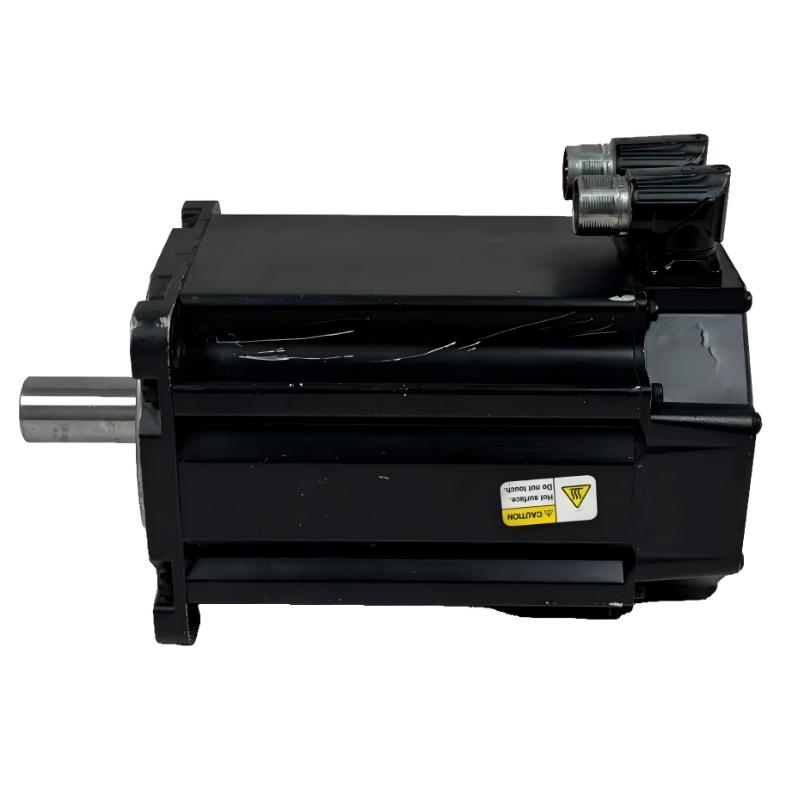
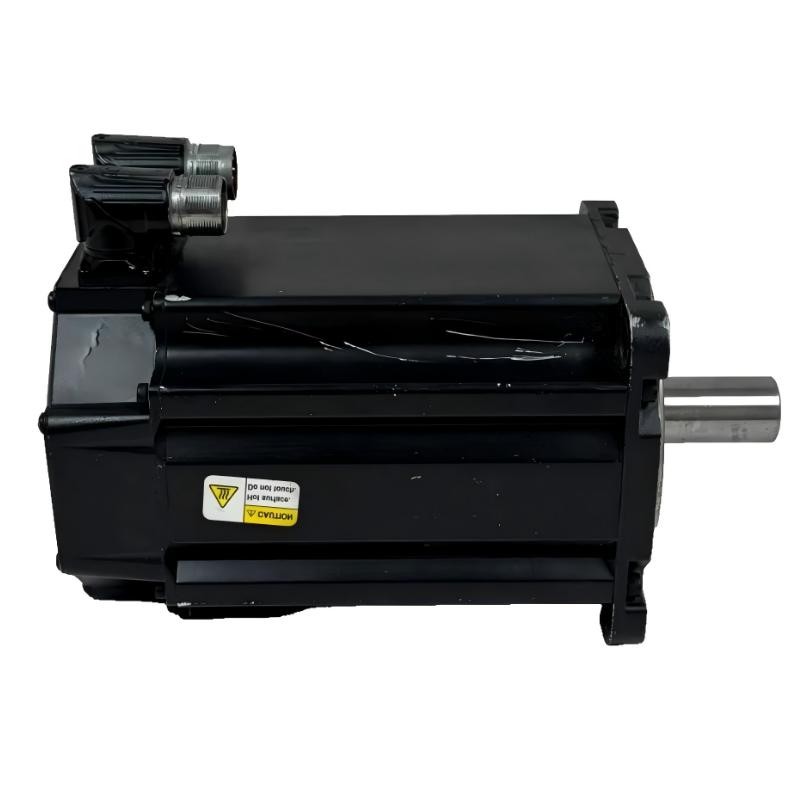
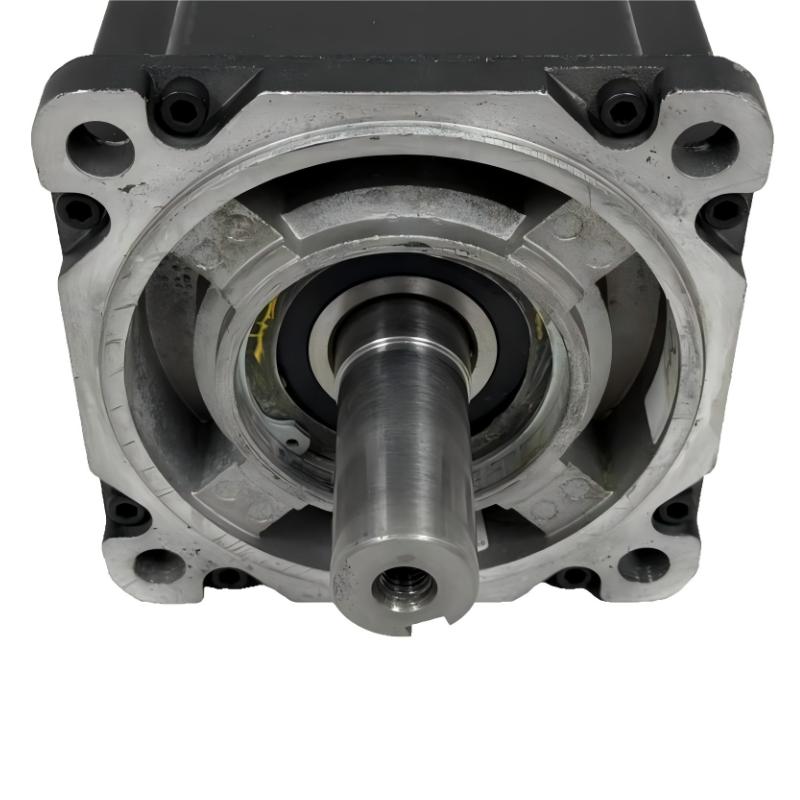
- Allen Bradley
- MPL-B980E-MJ72AA
- Low-Inertia Brushless Servo Motors Product
- USA
- 215 mm ×203.2 mm × 325 mm
- 42.7 kg
- Xiamen, China
- New & In Stock
- T/T, PayPal, Western Union
- 1 Year
- 1-3 Working Days
- DHL, UPS, TNT, FedEx and EMS.
- 24-Hour Service
- COO
- 16
Our advantage

Global Logistics
We have a 10-year logistics and express cooperation agreement, so our products can be shipped to any place in the world.

Brand new and original
Our products are imported in bulk from the place of origin. Because of the cooperative relationship, our products are all original and 100% new.

24-hour service
We provide 7*24 hours service to our customers. We will be there whenever you need us.

Price advantage
All our products are priced very favorably because we have our own warehouse and supply.
| Company Information | |||
| [email protected] | |||
| Mobile | +8615980777398 | ||
| +8615980777398 | |||
| 15980777398 |
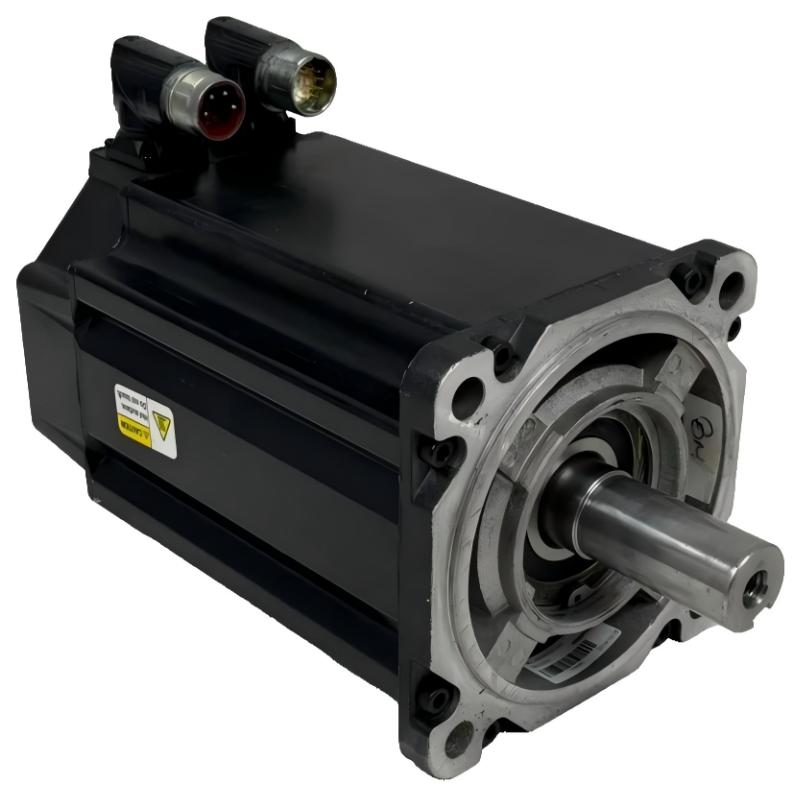
Allen-Bradley MPL-B980E-MJ72AA Low-Inertia Brushless Servo Motor: Product Overview and Technical Specifications
1. Product Introduction
The Allen-Bradley MPL-B980E-MJ72AA is a low-inertia, brushless AC rotary servo motor designed for industrial motion-control systems that require accurate positioning, controlled acceleration, and repeatable rotational movement. It belongs to the MPL family of low-inertia servo motors and is intended for use in automated machinery where the motor must respond reliably to commands from a compatible servo drive.
This model is specified for a 460 V AC supply class, with a 300 mm frame size, a 203.2 mm magnet stack length, and a multi-turn high-resolution absolute feedback encoder. Its catalog configuration includes a keyed shaft extension and a right-angle SpeedTEC DIN connector that can be rotated through 180 degrees for installation flexibility. The MJ72AA configuration does not include a holding brake.
The motor is suited to applications in which a machine needs to move components to defined positions, maintain coordinated movement between axes, or perform repeated cycles with controlled speed and acceleration. Typical examples include packaging equipment, material-handling systems, machine tools, converting machinery, and automated assembly equipment.
A servo motor should not be selected on rated speed alone. The drive system, required torque, load inertia, acceleration profile, duty cycle, mounting arrangement, feedback compatibility, and braking requirements must all be considered together. The MPL-B980E-MJ72AA should therefore be evaluated as part of a complete motion-control system rather than as an isolated motor.
2. Product Identification and Basic Information
|
Parameter |
Specification |
|---|---|
|
Model |
MPL-B980E-MJ72AA |
|
Brand |
Allen-Bradley |
|
Product type |
Brushless AC rotary servo motor |
|
Product family |
MP-Series |
|
Motor series |
MPL low-inertia servo motors |
|
Motor construction |
Permanent-magnet brushless servo motor |
|
Supply voltage class |
460 V AC |
|
Frame size |
9; nominal frame dimension 300 mm |
|
Magnet stack length |
203.2 mm |
|
Speed designation |
E; catalog configuration listed at 2250 RPM |
|
Feedback |
Multi-turn, high-resolution absolute encoder |
|
Shaft configuration |
Keyed shaft extension |
|
Connector |
SpeedTEC DIN, right-angle, rotatable 180° |
|
Brake |
No holding brake |
|
Mounting standard |
IEC metric |
|
Mounting arrangement |
Free mounting holes, Type FF |
|
Shaft seal |
Standard configuration is generally listed without a shaft seal; confirm the exact revision |
|
Overall dimensions |
Confirm from the mechanical drawing for the exact catalog revision |
|
Weight (kg) |
Approximately 45.36 kg in one published listing; confirm the exact unit and revision before shipping or installation |
|
Intended use |
Industrial servo motion control |
The 300 mm frame dimension and 203.2 mm magnet stack length describe specific motor dimensions; they are not the complete overall length, width, and height. For a machine layout, replacement project, or mounting check, use the exact mechanical drawing to verify shaft projection, flange dimensions, bolt-hole spacing, connector clearance, and total motor length.
Weight information can vary between catalog listings and commercial records, especially where shipping weight or packaging weight is confused with the motor’s net weight. The approximately 45.36 kg value should be treated as a planning reference rather than a guaranteed shipping or installation weight.
3. Detailed Technical Parameters
|
Parameter |
Detailed specification |
|---|---|
|
Model |
MPL-B980E-MJ72AA |
|
Rated voltage class |
460 V AC |
|
Motor type |
Brushless rotary servo |
|
Rotor design |
Low-inertia permanent-magnet rotor |
|
Catalog speed designation |
2250 RPM |
|
Frame size |
300 mm |
|
Magnet stack length |
203.2 mm (8.0 in.) |
|
Feedback type |
Multi-turn high-resolution absolute encoder |
|
Shaft |
Keyed shaft extension |
|
Brake option |
No brake fitted |
|
Connector type |
SpeedTEC DIN |
|
Connector orientation |
Right-angle connector, rotatable 180° |
|
Mounting |
IEC metric |
|
Mounting holes |
Type FF |
|
Rated output power |
Confirm against the applicable motor performance table and exact revision |
|
Continuous stall torque |
Confirm against the applicable motor performance table and exact revision |
|
Peak torque |
Confirm against the applicable motor performance table and exact revision |
|
Rotor inertia |
Confirm against the applicable motor performance table and exact revision |
|
Overall dimensions |
Not specified here; obtain the exact mechanical drawing |
|
Weight (kg) |
Approximately 45.36 kg in one listing; verify the physical unit |
|
Environmental protection |
Confirm the exact protection rating and installation conditions for the unit supplied |
|
Compatible drive |
Must be selected according to feedback protocol, voltage class, current, firmware, and drive-family compatibility |
Important speed-rating note: The model designation is commonly associated with a 2250 RPM catalog configuration. Other third-party descriptions may quote a different speed, and the detailed motor performance tables can show different operating ratings depending on how the value is defined. For engineering calculations, use the official performance data for the exact catalog number and revision rather than treating a reseller’s speed description as the complete rated-performance specification.
Mechanical and installation considerations
The keyed shaft provides a positive mechanical interface for compatible couplings, pulleys, or other transmission components. The key and coupling must be correctly sized and installed to avoid excessive shaft loading, misalignment, or vibration.
The rotatable right-angle connector can help reduce cable interference in crowded machine enclosures. However, the cable bend radius, connector orientation, motor access, and cable-routing path should be checked during the design stage.
Because this model is supplied without a holding brake, the application must not depend on this motor alone to hold a vertical or gravity-loaded axis safely at standstill. If the machine requires holding torque while power is removed, assess an appropriate braking arrangement or external mechanical holding device as part of the system design.
4. Product Operating Principle
The MPL-B980E-MJ72AA operates as part of a closed-loop servo system. A motion controller sends a position, speed, or torque command to a compatible servo drive. The drive regulates electrical power supplied to the motor, while the feedback encoder reports the motor’s rotational position to support controlled movement.
The system can use this feedback to correct position or speed errors during operation. When properly sized and configured, this makes it suitable for machine functions that need repeatable movement, controlled acceleration, and coordinated operation with other axes.
The multi-turn absolute encoder is an important feature for systems that need position information across multiple shaft rotations. Its exact initialization, retention, and communication behavior depends on the encoder implementation and the compatible drive. The controller and drive must be configured for the specific feedback interface.
The motor’s low-inertia design is particularly relevant when the machine frequently accelerates, decelerates, or changes direction. Lower rotor inertia can reduce the effort required to change the motor’s rotational speed, although the complete response of the machine still depends on the attached load, coupling, transmission, servo tuning, and drive capacity.
5. Main Product Features
5.1 Low-inertia motor design
The low-inertia design is intended for motion applications that benefit from responsive speed changes. It can be advantageous in indexing equipment, automated handling, and repetitive production machinery where acceleration and deceleration occur frequently.
Actual machine response depends on the inertia of the entire mechanical system. A heavy load, flexible coupling, long transmission, or poorly tuned control loop can reduce the benefits of a low-inertia motor.
5.2 Multi-turn absolute feedback
The multi-turn high-resolution encoder provides detailed position feedback. It supports accurate motion control and can be useful when a machine needs to track shaft position over multiple rotations.
Feedback performance depends on the selected drive and control architecture. Before installation, confirm that the drive supports the motor’s specific encoder protocol and that any required interface or conversion hardware is included.
5.3 Keyed shaft extension
The keyed shaft is designed to work with compatible mechanical transmission components. A properly matched coupling or pulley can transfer torque while maintaining alignment between the motor and driven equipment.
The keyway, shaft diameter, usable shaft length, and permissible radial and axial loads must be checked against the mechanical drawing. Incorrect coupling selection can result in vibration, premature bearing wear, or shaft damage.
5.4 Rotatable right-angle connector
The right-angle SpeedTEC DIN connector is designed to provide a practical cable connection in industrial installations. Its rotatable orientation can help accommodate different cabinet layouts and machine geometries.
The connector must be positioned without placing undue stress on the cable or obstructing access for maintenance. Use compatible cables and follow the specified connection and grounding practices.
5.5 No-brake configuration
The MJ72AA configuration does not include a motor holding brake. This can be appropriate for horizontal axes or systems where an external mechanism manages load holding.
For vertical axes, suspended loads, or applications where movement after power loss could create a hazard, a separate holding solution may be necessary. A servo motor’s active torque control should not be treated as a substitute for a safety-rated mechanical holding arrangement.
6. Product Applications

6.1 Packaging machinery
Servo-driven packaging equipment can use controlled rotary motion for indexing, cutting, sealing, feeding, and product transfer. The motor’s feedback capability can help the controller coordinate repeated movements and maintain consistent cycle timing. Suitability depends on the required torque, cycle rate, and the actual machine load.

6.2 Automated assembly
In automated assembly equipment, servo motors can position components, move fixtures, and operate indexing mechanisms. Absolute feedback can be useful where the control system needs reliable shaft-position information. The final positioning accuracy also depends on backlash, fixture rigidity, transmission design, and calibration.

6.3 Machine tools and production machinery
Servo motion systems are commonly used for feed mechanisms, rotary positioning, and coordinated machine axes. Before choosing this motor, compare the required continuous and peak torque with the machine’s cutting forces, transmission ratio, acceleration requirements, and duty cycle.

6.4 Material handling
The motor may be suitable for driven rollers, transfer mechanisms, positioning tables, and other automated material-handling functions. Load inertia, conveyor resistance, start-stop frequency, and the need to hold a load during power loss should be evaluated before final selection.

6.5 Printing and converting equipment
Servo motors can control rollers, feed mechanisms, and rotary components in printing and converting systems. Feedback-based control can help coordinate movement between axes, but web tension, roller diameter, transmission design, and synchronization requirements determine the final system performance.
Other possible applications include electronic component handling, inspection machinery, specialized production equipment, and retrofit projects that require a compatible servo motor replacement. The motor should only be used where its electrical, mechanical, thermal, and control characteristics match the machine requirements.
7. Product Advantages
|
Advantage |
Practical benefit |
Important consideration |
|---|---|---|
|
Low-inertia design |
Can support responsive acceleration and deceleration |
Load inertia and drive tuning still determine overall response |
|
Multi-turn absolute feedback |
Provides detailed rotational position information |
Confirm encoder and drive compatibility |
|
Keyed shaft |
Supports a positive mechanical coupling arrangement |
Verify shaft and key dimensions |
|
Rotatable right-angle connector |
Offers flexibility when routing motor cables |
Maintain proper cable bend radius and clearance |
|
Industrial servo construction |
Suitable for integration into controlled automated machinery |
Follow specified operating and installation limits |
|
IEC metric mounting |
Can simplify mechanical integration into metric-based machine designs |
Confirm flange and bolt pattern from the drawing |
|
No-brake version |
Appropriate where a holding brake is not required |
Not suitable as a stand-alone holding solution for every vertical axis |
|
Established servo product family |
May simplify standardization in existing compatible installations |
Check exact drive, feedback, and revision compatibility before replacement |
7.1 Control precision
The feedback encoder gives the motion controller information needed to regulate motor movement. This is valuable for repeatable positioning and coordinated motion, particularly where the machine must perform the same movement many times during a production shift.
Precision should not be judged by encoder resolution alone. Backlash, shaft compliance, mechanical vibration, mounting stiffness, load variation, and control-loop settings all affect the accuracy achieved at the machine’s working point.
7.2 Responsiveness in repetitive motion
A low-inertia rotor can be beneficial when the machine repeatedly accelerates and decelerates. It may help the control system change speed efficiently when the mechanical load is correctly matched to the motor.
The motor should nevertheless be sized using the complete motion profile. A fast acceleration command does not automatically mean the motor can deliver the required torque continuously or operate at the requested speed under every load condition.
7.3 Flexible integration
The IEC metric mounting arrangement and rotatable connector provide useful installation options. These features can simplify the physical layout in some machines, particularly where space is limited around the motor and cable entry.
They do not eliminate the need to verify mounting dimensions, shaft alignment, connector clearance, cable access, and maintenance space.
7.4 Practical replacement potential
The model can be a candidate for maintenance or retrofit work where the existing machine was designed around the same motor configuration. However, a matching frame size alone is not enough to confirm interchangeability.
A replacement should be checked against the complete catalog number, electrical ratings, shaft configuration, feedback protocol, connector style, brake requirement, mechanical dimensions, and compatible drive setup.
8. Brand and Product Series
|
Item |
Description |
|---|---|
|
Brand |
Allen-Bradley |
|
Product family |
MP-Series |
|
Motor series |
MPL |
|
Series description |
Low-inertia brushless servo motors |
|
Product category |
Industrial AC rotary servo motors |
|
Main purpose |
Closed-loop position, speed, and torque control |
|
Typical system components |
Motion controller, compatible servo drive, motor power cable, feedback connection, and driven mechanical load |
|
Configuration-specific feature |
Multi-turn absolute encoder, keyed shaft, right-angle connector, no holding brake |
|
Selection priority |
Match motor, drive, feedback, load, mechanical interface, and safety requirements |
The MPL series is intended for industrial applications that benefit from low-inertia servo performance. Within the broader MP-Series family, different motor families and configurations can be selected according to load inertia, torque requirements, speed, frame size, and installation conditions.
When selecting a replacement from the same series, do not assume that every MPL motor is electrically or mechanically interchangeable. Catalog suffixes can represent meaningful differences in speed, feedback, connector arrangement, and brake configuration.
9. Model Number Interpretation
The following is a practical interpretation of the main configuration elements in MPL-B980E-MJ72AA. Confirm the complete catalog-code definition against the documentation for the exact product revision before ordering or engineering a replacement.
|
Code element |
General meaning |
|---|---|
|
MPL |
MPL low-inertia brushless servo motor family |
|
B |
460 V class configuration |
|
9 |
Frame size designation corresponding to a nominal 300 mm frame dimension |
|
80 |
Magnet stack designation corresponding to 203.2 mm |
|
E |
Speed configuration designation |
|
M |
Multi-turn high-resolution absolute feedback configuration |
|
J |
Keyed shaft extension |
|
7 |
SpeedTEC DIN connector, right-angle and rotatable configuration |
|
2 |
No holding brake |
|
AA |
Remaining catalog configuration code; verify its complete meaning in the applicable product documentation |
The model code is useful for identifying the basic configuration, but it should not be used as a substitute for a detailed motor specification sheet. In particular, it does not provide every value needed to calculate continuous power, peak torque, thermal limits, permissible shaft loads, or installation clearances.
10. Five Related MPL-Series Models
The following models are related alternatives within the same general low-inertia motor family. The exact specifications and availability of each complete suffix should be confirmed before purchasing. The nominal frame and stack dimensions below are only suitable for preliminary comparison; they do not replace the mechanical drawings.
|
Model |
Voltage class |
Speed designation / nominal speed |
Feedback |
Shaft |
Brake |
Dimensions |
Weight (kg) |
|---|---|---|---|---|---|---|---|
|
MPL-B980B-MJ72AA |
460 V AC |
B / 1000 RPM |
Multi-turn absolute |
Keyed |
No brake |
Frame 300 mm; stack 203.2 mm; overall dimensions to be confirmed |
Approx. 45.36 kg reference; verify |
|
MPL-B980C-MJ72AA |
460 V AC |
C / 1500 RPM |
Multi-turn absolute |
Keyed |
No brake |
Frame 300 mm; stack 203.2 mm; overall dimensions to be confirmed |
Verify exact unit |
|
MPL-B980D-MJ72AA |
460 V AC |
D / 2000 RPM |
Multi-turn absolute |
Keyed |
No brake |
Frame 300 mm; stack 203.2 mm; overall dimensions to be confirmed |
Verify exact unit |
|
MPL-B980E-MJ74AA |
460 V AC |
E / 2250 RPM catalog designation |
Multi-turn absolute |
Keyed |
24 V DC holding brake |
Frame 300 mm; stack 203.2 mm; overall dimensions to be confirmed |
Verify exact unit |
|
MPL-B960D-MJ72AA |
Confirm exact unit |
D / speed and performance to be verified |
Multi-turn absolute configuration indicated by suffix |
Keyed configuration indicated by suffix |
No brake indicated by suffix |
Obtain exact frame and stack dimensions from drawing |
Verify exact unit |
10.1 MPL-B980B-MJ72AA
This is a lower-speed configuration within the B980 model group. It may be worth evaluating when a machine’s required speed is lower and the motion profile favors that configuration. Verify the required continuous torque, peak torque, speed range, and drive current before choosing it as an alternative.
10.2 MPL-B980C-MJ72AA
This model is associated with a 1500 RPM speed designation. It may be considered for machinery that operates at a moderate speed and needs controlled positioning or repeated motion cycles. Confirm its exact performance curves against the application load rather than comparing models on nominal speed alone.
10.3 MPL-B980D-MJ72AA
This configuration is associated with a 2000 RPM speed designation. It is a related option to consider when evaluating the B980 model group for different operating-speed requirements. Its brake-free arrangement is similar to the target model’s arrangement, but the drive settings and performance ratings still need to be checked.
10.4 MPL-B980E-MJ74AA
This model is closely related to the target MPL-B980E-MJ72AA but has a different brake configuration. The MJ74AA version is associated with a 24 V DC holding brake, while the MJ72AA version has no brake.
The brake-equipped model may be more appropriate for applications where the system design requires a motor-mounted holding brake. It is essential to distinguish a holding brake from a dynamic stopping device and to verify the brake’s specified operating limits.
10.5 MPL-B960D-MJ72AA
This model is included as a related MPL-family candidate, but the complete catalog specification should be checked before treating it as a direct substitute. Differences in frame size, stack length, torque capability, dimensions, and weight can affect mechanical compatibility and performance.
Selection recommendation: If the goal is a direct replacement for MPL-B980E-MJ72AA, start by comparing other B980E variants. If the goal is a new machine design, compare the complete motion profile and mechanical interface before narrowing the options.
11. Five Additional Allen-Bradley Models to Consider
The models below represent other options in the broader industrial motion-control portfolio. Some are motors from related MP-Series families, while others are servo-drive products. They are not all direct replacements for the MPL-B980E-MJ72AA.
Where a precise dimension or mass is not listed, it is marked for verification instead of being estimated from another product. This is particularly important for servo drives, where the enclosure size and weight vary with power rating and hardware revision.
|
Model |
Product type |
Series / family |
Main role or configuration |
Dimensions |
Weight (kg) |
|---|---|---|---|---|---|
|
MPL-B980D-MJ74AA |
Servo motor |
MPL low-inertia |
460 V class, B980D speed configuration, multi-turn feedback, keyed shaft, holding brake |
Frame 300 mm; stack 203.2 mm; overall dimensions to be confirmed |
Verify exact unit |
|
MPL-B980E-MJ74AA |
Servo motor |
MPL low-inertia |
Related E configuration with 24 V DC holding brake |
Frame 300 mm; stack 203.2 mm; overall dimensions to be confirmed |
Verify exact unit |
|
MPL-B880C-SJ72AA |
Servo motor |
MPL low-inertia |
Related model with a different frame and single-turn feedback configuration indicated by the code |
Verify exact frame, stack, and overall dimensions |
Verify exact unit |
|
MPM-B1653E-MJ72AA |
Servo motor |
MPM medium-inertia |
Alternative motor family for applications where the load and inertia requirements differ |
Obtain exact mechanical drawing |
Verify exact unit |
|
Kinetix 5500 |
Servo drive family |
Kinetix |
Drive family for compatible servo motion systems |
Depends on the exact drive catalog number |
Depends on the exact drive catalog number |
11.1 MPL-B980D-MJ74AA
This is a related B980 motor configuration with a holding brake. It is worth considering when the application needs a similar motor family but also requires a brake. Before making a substitution, verify speed, torque, brake performance, feedback compatibility, and mounting dimensions.
11.2 MPL-B980E-MJ74AA
This option retains the E speed configuration designation while adding a holding-brake configuration. It may be relevant for applications that need the target model’s general motor family but require a motor-mounted brake. The drive and brake control circuit must support the selected configuration.
11.3 MPL-B880C-SJ72AA
This is a related MPL-series model with a different frame designation and a different feedback-code configuration. It should be treated as an alternative for engineering evaluation rather than as a direct drop-in replacement. Confirm the frame size, shaft geometry, feedback interface, electrical ratings, and mounting dimensions before comparing it with the B980E.
11.4 MPM-B1653E-MJ72AA
The MPM family is associated with medium-inertia servo motors. A medium-inertia motor may be worth considering when the application has a different load-inertia profile from the one for which a low-inertia motor is best suited.
The choice between MPL and MPM should be based on the load, transmission, required dynamic response, torque, speed, and drive compatibility. A higher-inertia motor is not automatically better for heavy loads, and a low-inertia motor is not automatically the best choice for every high-speed application.
11.5 Kinetix 5500
Kinetix 5500 is a servo-drive family rather than a motor model. It is included because drive compatibility is a critical part of a servo replacement or system expansion.
A motor and drive must match in terms of voltage class, continuous and peak current, feedback interface, supported motor configuration, and control-system requirements. The exact drive catalog number is necessary to confirm compatibility, physical dimensions, and weight.
12. How to Choose Between the Related Models
|
Selection factor |
What to compare |
Why it matters |
|---|---|---|
|
Operating speed |
Required continuous and maximum speed |
A speed designation alone does not describe the complete usable operating range |
|
Continuous torque |
Torque required throughout the duty cycle |
Prevents continuous overload and excessive heating |
|
Peak torque |
Acceleration, deceleration, and transient load demands |
Determines whether the motor can meet short-duration motion demands |
|
Load inertia |
Motor inertia and reflected load inertia |
Affects response, stability, and tuning |
|
Feedback |
Encoder type and drive support |
Determines whether the motor can communicate correctly with the drive |
|
Brake requirement |
Whether the axis must be held when power is removed |
Critical for vertical axes and gravity-loaded mechanisms |
|
Mechanical fit |
Frame, flange, bolt pattern, shaft, and total length |
Prevents installation and coupling problems |
|
Electrical interface |
Voltage, current, cables, connectors, and drive ratings |
Ensures the complete system is electrically compatible |
|
Thermal conditions |
Ambient temperature, duty cycle, cooling, and enclosure |
Affects allowable continuous operation |
|
Product revision |
Complete catalog number and hardware revision |
Helps avoid incompatibility between superficially similar variants |
For a machine that already uses the MPL-B980E-MJ72AA, the first step is to record the existing motor nameplate, drive catalog number, feedback cable, motor cable, mechanical dimensions, and application settings. These details make it much easier to identify a suitable replacement without introducing avoidable commissioning work.
13. Installation and Commissioning Considerations
Mechanical installation: Confirm the mounting face, hole spacing, shaft diameter, key dimensions, shaft projection, and clearance around the connector. The motor must be mounted on a suitable rigid structure, and the driven load must be aligned correctly.
Electrical connection: Use the specified motor power and feedback cables. Follow the wiring diagrams, grounding requirements, connector instructions, and cable-routing guidance for the exact motor and drive combination.
Feedback configuration: Confirm that the servo drive recognizes the motor’s feedback type and catalog configuration. Incorrect feedback selection or an unsupported interface can prevent correct operation.
Servo tuning: Review the load inertia, acceleration, deceleration, speed limits, and control-loop settings. A replacement motor should not automatically inherit every parameter from a previous unit unless the replacement and application are confirmed to be equivalent.
Brake and load holding: This target model has no holding brake. If the machine includes a vertical axis or a load that could move when torque is removed, implement an appropriate holding and safety strategy before commissioning.
Thermal and environmental conditions: Check ambient temperature, cooling requirements, contamination, vibration, and the required enclosure or protection level. Do not assume that the motor is suitable for washdown, hazardous locations, or other special environments without confirming its rating.
Safety verification: Before putting the machine back into service, verify the stopping strategy, interlocks, emergency-stop behavior, and any required mechanical restraints. Testing should be performed by qualified personnel using the procedures applicable to the machine.
14. Maintenance and Troubleshooting
|
Symptom |
Possible causes |
Suggested checks |
|---|---|---|
|
Motor does not start |
Drive fault, wiring issue, disabled command, or incompatible configuration |
Check drive status, wiring, enable signals, and configuration |
|
Position error or unstable movement |
Feedback issue, tuning problem, mechanical backlash, or excessive load |
Check feedback signals, mechanical alignment, load inertia, and tuning |
|
Excessive heating |
Overload, excessive duty cycle, poor cooling, or incorrect settings |
Compare the motion profile with motor ratings and check cooling |
|
Unusual noise or vibration |
Misalignment, loose mounting, bearing damage, or unstable control loop |
Inspect mounting, coupling, load mechanics, and drive tuning |
|
Unexpected movement after power loss |
No holding brake or insufficient external holding provision |
Review the axis design and implement a suitable holding solution |
|
Feedback-related drive fault |
Incorrect cable, damaged connector, or unsupported feedback interface |
Verify cable compatibility, connector condition, and drive support |
|
Intermittent operation |
Loose connections, cable damage, electrical interference, or thermal issues |
Inspect connections, grounding, cable routing, and operating temperature |
Maintenance should be based on the machine’s operating environment and the applicable maintenance instructions. Avoid opening or modifying the motor unless the work is permitted by the relevant service procedure and carried out by qualified personnel.
15. Product Selection Summary
The Allen-Bradley MPL-B980E-MJ72AA is a low-inertia brushless AC servo motor intended for controlled industrial motion. Its main identifying features are the 460 V class configuration, 300 mm frame, 203.2 mm magnet stack, multi-turn high-resolution absolute feedback, keyed shaft, rotatable right-angle connector, and no-brake arrangement.
The main reasons to consider this model are its feedback-based motion-control capability, low-inertia design, and integration features for industrial machinery. Its suitability for a particular application depends on verified motor performance, load requirements, compatible drive hardware, mechanical fit, and the machine’s safety design.
For related-model selection, the B980 variants provide a useful starting point when evaluating different speed or brake configurations. Models from other MPL or MPM configurations can also be considered, but only after checking the full specifications and mechanical interfaces.
For procurement, maintenance, or replacement, the most important details to verify are:
-
The complete catalog number and revision.
-
The exact rated speed, continuous torque, peak torque, and output power.
-
The drive and encoder compatibility.
-
The required brake configuration.
-
The mechanical drawing and overall dimensions.
-
The verified net weight in kilograms.
-
The motor, feedback, and power cable requirements.
-
The operating conditions and required safety measures.
These checks help ensure that the selected motor is not merely similar by model name, but actually suitable for the intended machine and operating conditions.