

ProductPRODUCT
Featured products



Contact Us
- Emerson
- VE4003S7
- Isolated Input Module
- USA
- 107 x 41 x 105 mm
- 0.36 kg
- Xiamen, China
- New & In Stock
- T/T, PayPal, Western Union
- 1 Year
- 1-3 Working Days
- DHL, UPS, TNT, FedEx and EMS.
- 24-Hour Service
- COO
- 37
Our advantage

Global Logistics
We have a 10-year logistics and express cooperation agreement, so our products can be shipped to any place in the world.

Brand new and original
Our products are imported in bulk from the place of origin. Because of the cooperative relationship, our products are all original and 100% new.

24-hour service
We provide 7*24 hours service to our customers. We will be there whenever you need us.

Price advantage
All our products are priced very favorably because we have our own warehouse and supply.
| Company Information | |||
| [email protected] | |||
| Mobile | +8615980777398 | ||
| +8615980777398 | |||
| 15980777398 |
Product Overview
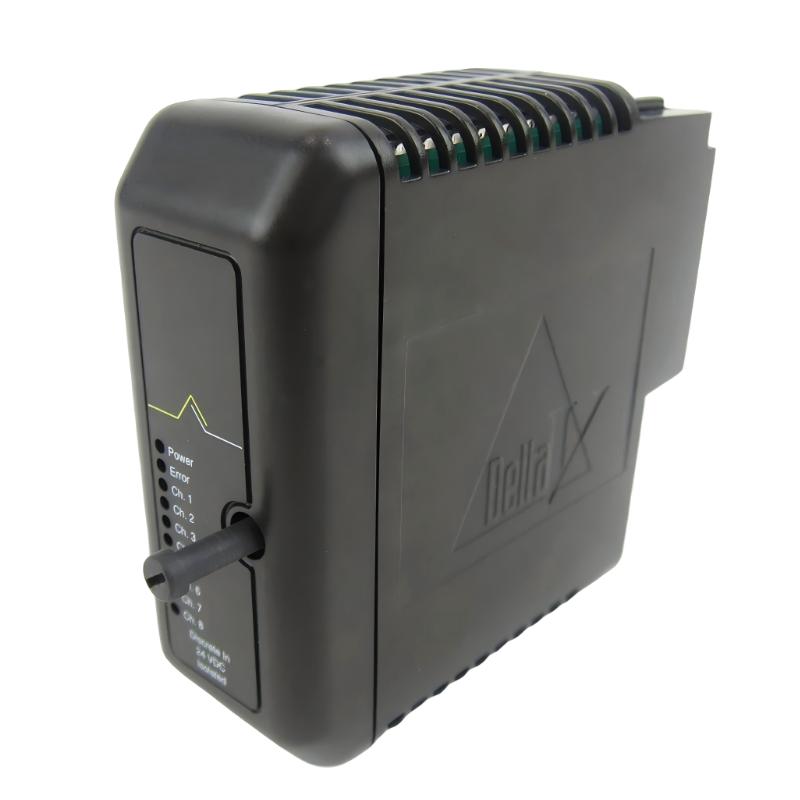
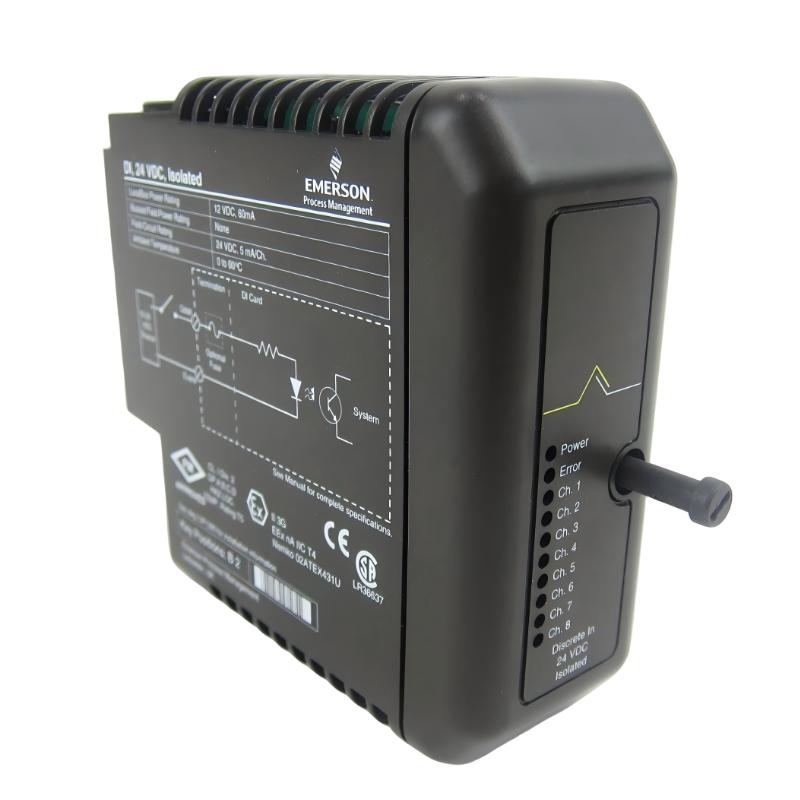
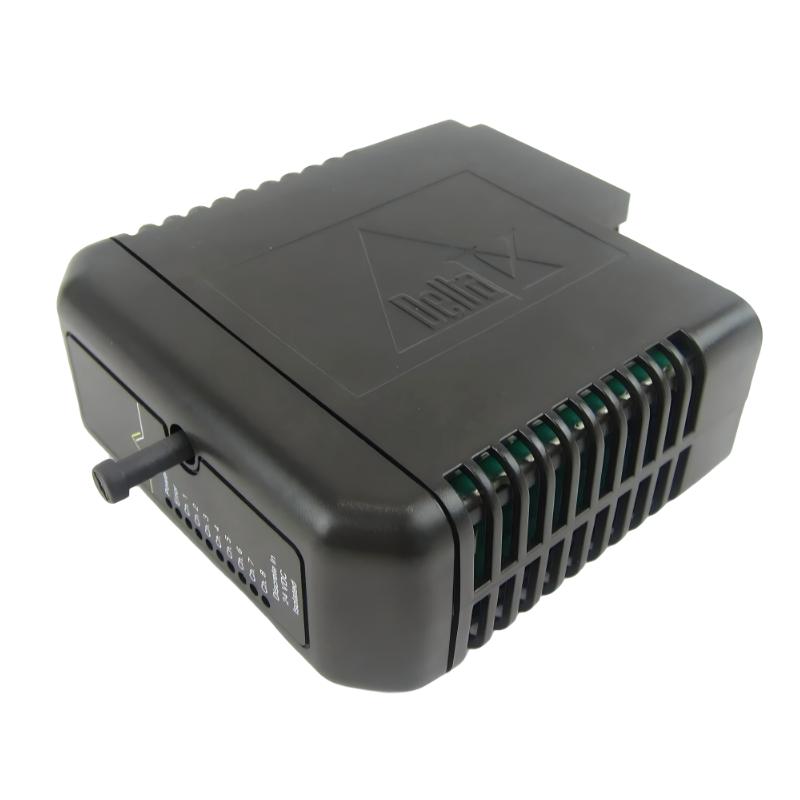
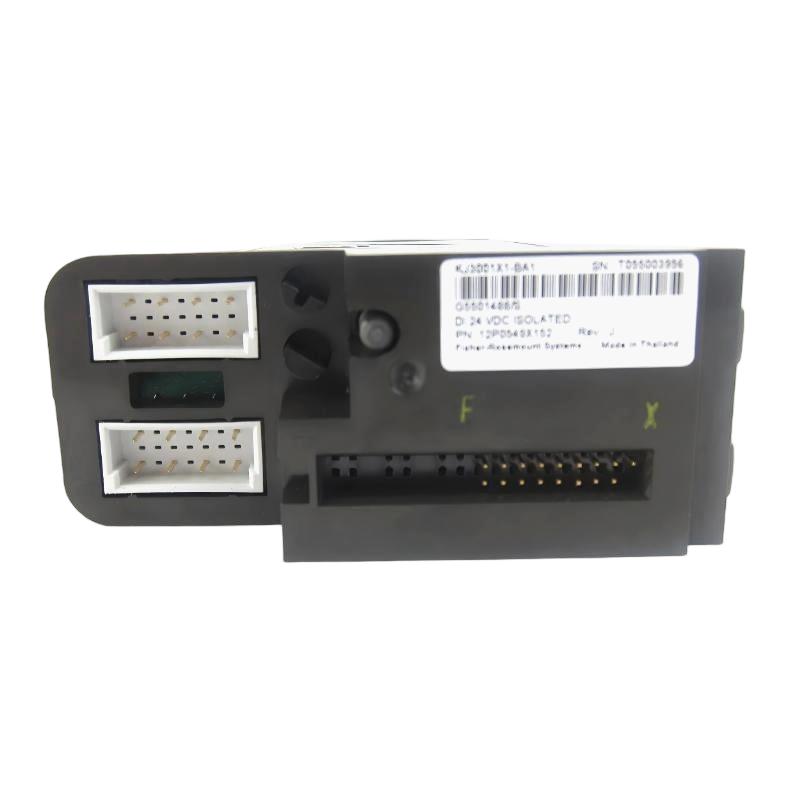
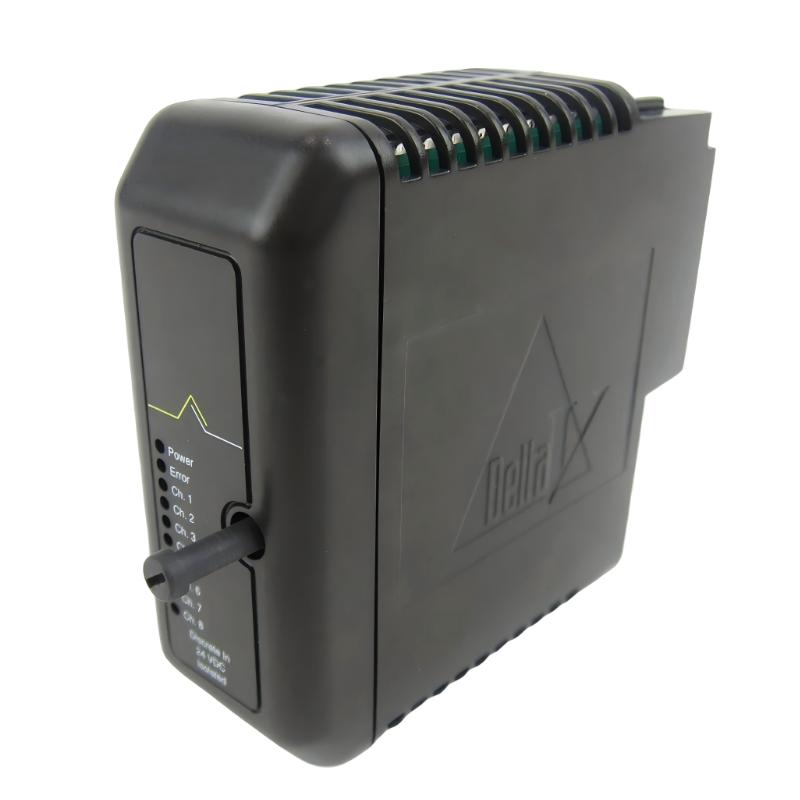
The Emerson VE4003S7 Isolated Input Module is an industrial automation I/O component designed to provide isolated input signal acquisition within compatible Emerson process control systems. As part of an industrial distributed control architecture, the module serves as an interface between field-level devices and the control system, allowing process signals to be collected, monitored, and incorporated into automation strategies.
Input modules are fundamental components in process automation because industrial facilities continuously receive information from sensors, transmitters, switches, monitoring devices, and other field equipment. An isolated input architecture adds an important layer of electrical separation between signal circuits, helping system designers manage potential differences in electrical reference and reduce the impact of unwanted interference between connected circuits.
The Emerson VE4003S7 is therefore suitable for applications where reliable input signal acquisition and electrical isolation are important considerations. The module can contribute to process monitoring, alarm handling, equipment supervision, control logic, and data acquisition when correctly integrated into the appropriate Emerson control-system architecture.
The supplied physical dimensions are 107 × 41 × 105 mm, and the listed weight is 0.36 kg. Its compact construction allows the module to be incorporated into industrial I/O assemblies and control cabinets while maintaining convenient access for installation and maintenance.
The exact signal types, channel configuration, isolation method, input ranges, terminal assignments, electrical ratings, and supported field devices should be verified against the applicable Emerson system documentation and hardware revision before engineering, installation, or replacement.
Technical Specifications
| Parameter | Specification |
|---|---|
| Manufacturer | Emerson |
| Product Family | VE Series / Process Automation |
| Model | VE4003S7 |
| Product Type | Isolated Input Module |
| Primary Function | Isolated field input signal acquisition |
| Interface Role | Field device to control-system interface |
| Signal Type | Input signals |
| Isolation | Isolated input architecture |
| Application | Industrial process control and automation |
| Installation | Compatible Emerson I/O architecture |
| Dimensions | 107 × 41 × 105 mm |
| Weight | 0.36 kg |
| Typical Applications | Process monitoring, equipment status, alarms and control |
What Is the Emerson VE4003S7?
The Emerson VE4003S7 Isolated Input Module is an industrial I/O component designed to receive input information from field devices while providing an isolated interface within a compatible process automation system.
In a modern process plant, field instruments are distributed across pumps, vessels, pipelines, compressors, heat exchangers, production machinery, and utility systems. These devices continuously provide information about the physical condition of the process.
The input module forms part of the connection between these field devices and the automation controller.
A simplified architecture is:
Field Device → Field Wiring → VE4003S7 → I/O Architecture → Controller → HMI / Operator Station
The isolation characteristic is particularly relevant when different signal circuits may operate at different electrical potentials or when protection against unwanted signal interaction is required.
Understanding Isolated Input Modules
Electrical isolation is an important concept in industrial control-system design.
In a non-isolated arrangement, signal circuits may share electrical references with other parts of the system. Depending on the installation, this can create opportunities for ground-related disturbances, common-mode voltage, or interference to affect signal quality.
An isolated input arrangement provides electrical separation between appropriate parts of the signal path.
A simplified representation is:
Field Circuit → Isolation Boundary → Control-System Circuit
The exact implementation of isolation depends on the hardware design and system architecture.
Isolation can be useful for:
- Reducing unwanted electrical interaction
- Managing differences in electrical potential
- Improving signal integrity
- Supporting more robust field-device integration
- Reducing the impact of certain grounding problems
- Protecting associated control electronics from inappropriate signal conditions
However, isolation should not be treated as a substitute for correct grounding, shielding, wiring, and system design.
Function and Working Principle
Field Signal Reception
The VE4003S7 receives input information from compatible field devices through the appropriate field interface.
The connected device may represent a process measurement, equipment state, or another automation signal depending on the specific system configuration.
Electrical Isolation
The signal path incorporates an isolation function designed to electrically separate appropriate field and control-side circuits.
This separation can help prevent disturbances on one side of the interface from being directly transferred into the other circuit.
Signal Conditioning
Industrial input signals may require conditioning before they can be interpreted by the control system. Depending on the architecture, signal conditioning can include filtering, conversion, validation, or other interface functions.
Exact signal-conditioning characteristics should be confirmed for the specific VE4003S7 configuration.
Data Transfer to the Control System
After the input information has been received and processed, it becomes available to the associated I/O and control architecture.
The controller can then use the information for:
- Monitoring
- Alarms
- Control logic
- Equipment status
- Interlocks
- Sequencing
- Diagnostics
- Process optimization
Role in Industrial Control Systems
The VE4003S7 Isolated Input Module can serve as a field-level interface within a larger distributed control system.
A typical control architecture may contain:
Field Sensors and Devices
↓
Isolated Input Interface
↓
I/O Subsystem
↓
Controller
↓
Control Strategy
↓
HMI / SCADA / Historian
This architecture allows field information to be collected and processed centrally while maintaining the electrical interface required by the plant design.
In a process plant, the input may be used to indicate whether equipment is operating correctly, whether a process condition has reached a specified state, or whether an abnormal condition requires operator attention.
Industrial Applications
Oil and Gas
Oil and gas facilities contain extensive field instrumentation and electrical equipment. Isolated input interfaces can be incorporated into monitoring and control systems where field circuits require electrical separation from control electronics.
Chemical Processing
Chemical plants frequently operate complex process equipment with numerous field signals. Isolation can be valuable when integrating field devices into larger control architectures.
Power Generation
Power-generation systems contain equipment operating at different electrical potentials and across geographically distributed areas. Isolated I/O can form part of the plant monitoring and control infrastructure.
Water and Wastewater Treatment
Water-treatment facilities use sensors, switches, pumps, valves, and other equipment throughout the treatment process. Input modules provide a connection between these field devices and the automation system.
Pharmaceutical Manufacturing
Pharmaceutical processes require reliable monitoring of production equipment and process conditions. Isolated input interfaces can be incorporated into control architectures where signal integrity and electrical separation are important.
Food and Beverage
Automated food and beverage facilities use process instruments and equipment-status signals throughout production lines. Isolated input modules can contribute to reliable data acquisition.
General Manufacturing
Industrial manufacturing systems can use isolated input interfaces for equipment monitoring, machine status, production sequencing, alarms, and process automation.
System Integration
The VE4003S7 should be installed as part of a compatible Emerson I/O architecture.
A complete installation may include:
| Component | Function |
|---|---|
| Field Sensor | Detects a process condition |
| Field Transmitter | Produces a process signal |
| Field Switch | Provides equipment or status information |
| Field Wiring | Transfers the signal |
| Terminal Assembly | Provides field termination |
| VE4003S7 | Provides isolated input interface |
| I/O Infrastructure | Connects the input module to the control system |
| Controller | Executes control logic |
| HMI | Provides operator visualization |
| Historian | Stores process information |
| Alarm System | Reports abnormal conditions |
The exact arrangement depends on the Emerson system and application.
Installation Guidelines
Verify the Model
Before installation, confirm the module identification:
Emerson VE4003S7
The part number, hardware revision, and associated system documentation should also be checked where applicable.
Inspect the Module
Before installation, inspect the module for:
- Physical damage
- Connector damage
- Corrosion
- Contamination
- Signs of overheating
- Damaged mounting features
- Loose components
Any abnormal condition should be investigated before the module is installed.
Verify the I/O Location
The VE4003S7 should be installed only in a compatible I/O position.
The associated carrier, terminal assembly, and system architecture should be confirmed before installation.
Check Field Wiring
Verify all field connections against approved engineering documentation.
Important checks include:
- Terminal identification
- Signal polarity where applicable
- Field-device compatibility
- Shielding
- Grounding
- Cable routing
- Instrument power
Confirm Isolation Requirements
Where electrical isolation is required for a particular application, engineers should confirm that the selected module and complete system architecture provide the intended isolation arrangement.
Commissioning Procedure
A systematic commissioning procedure helps prevent wiring and configuration problems.
1. Hardware Inspection
Confirm that the VE4003S7 is correctly positioned and securely installed.
2. I/O System Verification
Check the associated I/O infrastructure and controller for diagnostic conditions.
3. Field Device Check
Verify that connected field devices are correctly powered and operating normally.
4. Input Signal Verification
Check that the expected field signal reaches the appropriate input interface.
5. Configuration Check
Confirm that the configured input point corresponds to the physical field device.
6. Functional Testing
Change the field-device condition in a controlled manner and verify the corresponding response in the control system.
7. Alarm and Interlock Verification
Where applicable, verify that alarms, interlocks, and control sequences respond correctly to the input condition.
Troubleshooting the Emerson VE4003S7
Input faults should be investigated from the field device through the complete signal path.
No Input Signal
If the control system does not receive a valid input, inspect:
- Field device
- Instrument power
- Field cable
- Terminal connections
- Module installation
- I/O diagnostics
- System configuration
A failed field device can produce symptoms similar to an input-module fault.
Incorrect Input Value
An incorrect input may be caused by:
- Incorrect configuration
- Signal incompatibility
- Wiring errors
- Field-device problems
- Grounding conditions
- Electrical interference
- Incorrect scaling
- Hardware faults
Measurements should be checked at multiple points where practical.
Unstable Signal
An unstable signal may be related to:
- Electrical interference
- Poor shielding
- Grounding problems
- Loose connections
- Damaged cables
- Field-device instability
- Process fluctuations
- Input-interface problems
Isolation can reduce certain forms of electrical interaction, but correct installation practices remain essential.
Intermittent Input
An intermittent signal can result from:
- Loose terminals
- Damaged wiring
- Connector problems
- Field-device degradation
- Vibration
- Temperature-related behavior
- Electrical interference
A detailed inspection of the complete signal path is recommended.
Preventive Maintenance
Preventive maintenance should cover the input module, associated field wiring, and connected instrumentation.
Inspect Connections
Check connectors and terminals for looseness, corrosion, contamination, or mechanical damage.
Inspect Field Cables
Look for insulation damage, excessive bending, moisture ingress, and other physical problems.
Monitor System Diagnostics
Regularly review available I/O and controller diagnostic information.
Maintain Cabinet Conditions
Keep the control cabinet clean and properly ventilated. Excessive heat, dust, moisture, and vibration can affect electronic equipment.
Maintain Field Devices
The accuracy and reliability of an input system depend heavily on the connected field equipment. Sensors and transmitters should therefore be maintained according to their appropriate procedures.
Replacement Considerations
When replacing an Emerson VE4003S7 Isolated Input Module, the exact model and system configuration should be verified before removing the existing hardware.
Important checks include:
- Complete model designation
- Hardware revision
- I/O location
- Connector arrangement
- Terminal configuration
- Signal type
- Isolation requirements
- Field-device compatibility
- Control-system configuration
The supplied physical dimensions are:
107 × 41 × 105 mm
The supplied weight is:
0.36 kg
These values can be used for cabinet planning, transportation, spare-parts inventory, and mechanical replacement planning.
Physical similarity between modules does not guarantee electrical or functional compatibility.
Cabinet Installation and Environmental Considerations
The compact 107 × 41 × 105 mm form factor allows the VE4003S7 to be installed in a relatively small I/O footprint.
When planning the cabinet arrangement, engineers should consider:
- Available mounting space
- Adjacent modules
- Connector access
- Field-wire routing
- Maintenance access
- Heat dissipation
- Cabinet ventilation
- Separation from high-power equipment
The listed module weight is 0.36 kg, which should also be considered when planning equipment handling and installation.
Signal Integrity and Electrical Isolation
One of the important considerations when using an isolated input module is maintaining signal integrity throughout the installation.
Good engineering practice includes appropriate:
- Cable routing
- Shielding
- Grounding
- Field termination
- Instrument installation
- Electrical separation
Even when an input interface provides isolation, poor wiring practices can still introduce noise or measurement problems.
For critical process signals, technicians should verify the field signal, module input, system value, and process reference independently when troubleshooting.
Compatible System Components
The VE4003S7 may form part of an Emerson process automation installation containing:
- Field Sensors
- Process Transmitters
- Equipment Status Devices
- Terminal Assemblies
- I/O Carriers
- Control Processors
- Operator Stations
- Engineering Workstations
- HMI Systems
- Alarm Systems
- Historical Data Systems
The exact combination of compatible components should be confirmed for the target Emerson control-system architecture.
Related Emerson Models
| Model | Product Type | General Function |
|---|---|---|
| VE4003S1 | Analog Input Module | Analog process signal acquisition |
| VE4003S2 | Analog Input Card | Analog input processing |
| VE4003S2B3 | Input Module with Terminal Blocks | Field signal acquisition and termination |
| VE4003S2B4 | Input Module with Terminal Blocks | Process input interface |
| VE4003S2B5 | Analog Input Card | Analog process signal acquisition |
| VE4003S2B6 | Analog Input Module | Analog measurement interface |
| VE4003S2B7 | Analog Input Module | Process signal acquisition |
| VE4003S2B9 | Input Module with Terminal Blocks | Analog input and field connection |
| VE4002S2 | Discrete Output Card | Discrete output control |
| VE4002S2T1 | Standard I/O Terminal Block | Field termination |
| VE3006 | Digital Input Module | Digital field signal acquisition |
These are related Emerson automation components, but they should not be treated as direct replacements for the VE4003S7 without confirming electrical, mechanical, and system-level compatibility.
Engineering Best Practices
For reliable operation of the Emerson VE4003S7 Isolated Input Module, engineers should treat the module as part of a complete field-to-controller signal chain.
Maintain accurate records for each connected input point, including the field device, wiring location, signal characteristics, engineering configuration, alarm settings, and control function.
Field cables should be properly routed and protected from unnecessary exposure to sources of electrical interference.
Grounding and shielding should follow the approved engineering design. The isolation function of the input module should not be used as a replacement for proper electrical installation practices.
During troubleshooting, verify the field device and wiring before concluding that the input module has failed.
For critical control applications, spare modules should be correctly identified and stored in suitable environmental conditions.
Key Advantages
Isolated Input Interface
The VE4003S7 provides an isolated input interface for compatible industrial automation applications.
Compact Construction
With supplied dimensions of 107 × 41 × 105 mm, the module can be incorporated into compact I/O installations.
Improved Electrical Separation
The isolated architecture can help manage electrical differences between field circuits and control-system electronics.
Industrial Process Integration
Input information can be incorporated into monitoring, alarming, sequencing, diagnostics, and control strategies.
Suitable for Distributed Automation
The module can form part of a larger Emerson process control architecture when correctly matched to the target system.
Technical FAQs
What is the Emerson VE4003S7?
The Emerson VE4003S7 is an Isolated Input Module designed to provide field input signal interface functionality within a compatible Emerson industrial automation system.
What does an isolated input module do?
An isolated input module receives field information while providing electrical separation between appropriate sections of the signal path. This can help manage differences in electrical potential and reduce certain forms of unwanted signal interaction.
Why is electrical isolation important?
Isolation can be useful when field devices and control electronics have different electrical references or when the system design requires additional separation between signal circuits.
What are the dimensions of the VE4003S7?
The supplied dimensions are 107 × 41 × 105 mm.
How much does the VE4003S7 weigh?
The supplied weight is 0.36 kg.
Is the VE4003S7 a PLC CPU?
No. The VE4003S7 is an input I/O module. It provides field signal interface functionality and works as part of a larger control-system architecture.
Can another Emerson input module replace the VE4003S7?
Replacement should not be based solely on physical dimensions or general product-family similarity. Signal characteristics, isolation requirements, hardware revision, termination, and system configuration should all be verified.
What can cause an isolated input to fail?
Possible causes include field-device failure, damaged wiring, loose connections, incorrect configuration, electrical interference, installation problems, or hardware failure.
How should the module be maintained?
Maintenance should include inspection of connectors, field wiring, cabinet conditions, system diagnostics, and connected field devices. Accurate system documentation should also be maintained.
Conclusion
The Emerson VE4003S7 Isolated Input Module is a specialized industrial automation I/O component designed to provide isolated field signal acquisition within a compatible Emerson process control architecture. By creating an interface between field-level devices and the control system, the module can support process monitoring, equipment supervision, alarm handling, sequencing, diagnostics, and automated control.
The supplied physical dimensions of the VE4003S7 are 107 × 41 × 105 mm, with a listed weight of 0.36 kg. Its compact construction makes it suitable for integration into industrial I/O assemblies and control cabinets where efficient space utilization is important.
For installation, commissioning, troubleshooting, and replacement, the complete Emerson VE4003S7 identification should be verified together with the applicable system architecture, hardware revision, field wiring, isolation requirements, and configuration. Proper signal wiring, grounding, shielding, field-device maintenance, and systematic commissioning are essential for achieving reliable operation of the complete industrial automation system.