

ProductPRODUCT
Featured products
Contact Us
- Emerson
- SE4015
- Pulse Count Discrete Input Card
- USA
- 131 × 41.8 × 130.8 mm
- 0.4 kg
- Xiamen, China
- New & In Stock
- T/T, PayPal, Western Union
- 1 Year
- 1-3 Working Days
- DHL, UPS, TNT, FedEx and EMS.
- 24-Hour Service
- COO
- 67
Our advantage

Global Logistics
We have a 10-year logistics and express cooperation agreement, so our products can be shipped to any place in the world.

Brand new and original
Our products are imported in bulk from the place of origin. Because of the cooperative relationship, our products are all original and 100% new.

24-hour service
We provide 7*24 hours service to our customers. We will be there whenever you need us.

Price advantage
All our products are priced very favorably because we have our own warehouse and supply.
| Company Information | |||
| [email protected] | |||
| Mobile | +8615980777398 | ||
| +8615980777398 | |||
| 15980777398 |
Product Overview
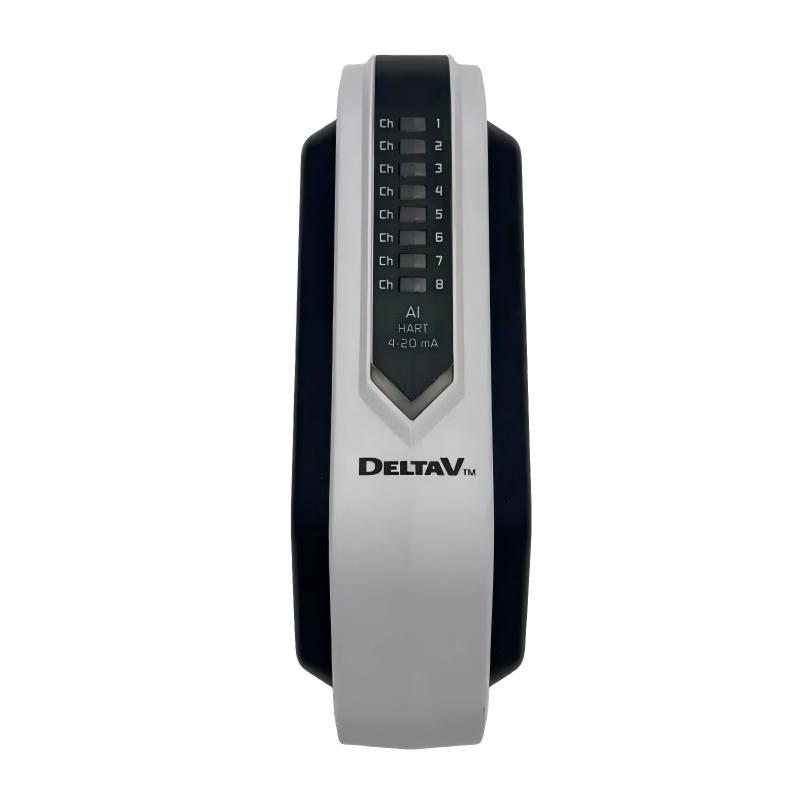
The Emerson SE4015 DeltaV S-series Pulse Count Discrete Input Card is an industrial I/O module used for collecting and processing pulse signals from field devices within a DeltaV automation system.
In process industries, many measurement and monitoring devices generate pulse-based signals rather than continuous analog values. These pulse signals can represent flow totals, equipment speed, rotation counts, or operating cycles. The SE4015 provides an interface between pulse-generating field devices and the DeltaV control system, allowing pulse information to be converted into usable process data.
As part of the DeltaV S-series I/O platform, the SE4015 is installed within a modular control architecture and works together with DeltaV controllers, carriers, terminal blocks, and engineering tools. It supports applications where accurate pulse detection and counting are required for process monitoring and equipment operation analysis.
During commissioning and maintenance, engineers typically verify pulse source compatibility, wiring connections, input configuration, module diagnostics, and DeltaV database settings to ensure correct signal acquisition.
Technical Specifications
| Parameter | Specification |
|---|---|
| Manufacturer | Emerson |
| Model | SE4015 |
| Product Family | DeltaV S-series |
| Product Type | Pulse Count Discrete Input Card |
| Main Function | Pulse Signal Acquisition and Counting |
| System Role | Field Pulse Measurement Interface |
| Dimensions | 131 × 41.8 × 130.8 mm |
| Weight | 0.4 kg |
Product Features
The Emerson SE4015 DeltaV S-series Pulse Count Discrete Input Card provides pulse signal monitoring capability for industrial automation applications.
Key characteristics include:
- Emerson DeltaV S-series I/O module
- Model SE4015
- Designed for pulse counting applications
- Collects digital pulse signals from field equipment
- Supports equipment monitoring based on pulse events
- Integrates with DeltaV distributed control systems
- Suitable for measurement and counting applications
- Provides an interface between pulse devices and controllers
The input configuration should be matched with the connected pulse source and the requirements of the DeltaV control strategy.
Working Principle
The SE4015 operates by detecting incoming pulse signals from field devices and recording pulse changes for use by the DeltaV control system.
The typical signal path is:
Pulse Generating Device → Terminal Connection → SE4015 Pulse Input Card → DeltaV Controller → Control Application
Field devices generate electrical pulses according to physical movement, measurement output, or equipment operation. The module detects these pulse transitions and processes the count information before transferring the data to the controller.
The collected pulse information can be used for:
- Flow totalization
- Rotational speed monitoring
- Equipment cycle counting
- Production quantity calculation
- Operating status analysis
The module converts discrete pulse activity into meaningful operational information for process monitoring and control.
Role in a DeltaV Automation System
The Emerson SE4015 functions as a specialized input interface within a DeltaV automation architecture.
A typical system structure is:
Field Pulse Device → Pulse Count Input Card → DeltaV Controller → Operator / Engineering System
The module receives pulse-based information from field equipment and provides the processed data to DeltaV applications.
Compared with standard discrete input modules, pulse count modules are optimized for applications where the frequency or quantity of signal transitions carries important process information.
Industrial Applications
The Emerson SE4015 DeltaV S-series Pulse Count Discrete Input Card is commonly used in applications requiring pulse-based measurement and monitoring.
| Application | Typical Use |
|---|---|
| Oil & Gas Systems | Monitoring flow-related pulse signals |
| Water Treatment Plants | Tracking pump operation and flow measurement |
| Manufacturing Equipment | Counting production cycles |
| Energy Systems | Monitoring equipment operation frequency |
| Process Plants | Collecting pulse-based instrumentation data |
| Rotating Equipment | Monitoring speed-related signals |
The final application depends on the pulse source type and DeltaV system configuration.
Installation and Maintenance
Proper installation and configuration are important for accurate pulse signal acquisition.
Recommended maintenance procedures include:
- Confirm module model before installation
- Verify S-series carrier compatibility
- Check pulse input wiring
- Confirm signal source compatibility
- Review input configuration parameters
- Monitor module diagnostic information
- Inspect terminal connections
- Verify pulse counting values
- Record maintenance activities
When replacing the pulse input card, engineers should confirm scaling, counting configuration, and signal mapping before returning the system to service.
Related Components
The SE4015 works together with various DeltaV system components.
| Component | Function |
|---|---|
| DeltaV Controller | Processes pulse data and executes control logic |
| S-series Carrier | Provides module mounting and communication |
| Terminal Block | Connects field pulse wiring |
| Engineering Workstation | Configures module parameters |
| Operator Station | Displays process information |
| Pulse Transmitters / Sensors | Generate input pulse signals |
Together, these components form a complete pulse monitoring and control solution.
Recommended Related Models
| Model / Product Family | Product Type | Typical Application |
|---|---|---|
| Emerson SE4015 | DeltaV S-series Pulse Count Input Card | Pulse measurement applications |
| Emerson DeltaV S-series Discrete Input Modules | Digital Input Hardware | Status monitoring |
| Emerson DeltaV S-series Analog Input Cards | Measurement Input Modules | Continuous signal acquisition |
| Emerson DeltaV CHARMs Input Modules | Modular I/O Interface | Flexible field connection |
| Emerson DeltaV S-series I/O Cards | Automation Hardware | Process control systems |
Model selection should consider pulse frequency, field device type, application requirements, and existing DeltaV architecture.
Key Advantages
- Emerson DeltaV S-series pulse input module.
- Designed for pulse signal acquisition.
- Supports counting and monitoring applications.
- Integrates with DeltaV control systems.
- Helps collect equipment operating information.
- Suitable for industrial measurement applications.
Technical FAQs
What types of devices typically provide pulse signals to the SE4015?
Pulse sources may include flow meters, speed sensors, counters, and other field devices that output digital pulse signals.
How does a pulse count input card differ from a standard discrete input card?
A standard discrete input mainly detects ON/OFF states, while a pulse count module focuses on tracking signal transitions and accumulated pulse information.
What should be checked if the pulse count value is incorrect?
Engineers should verify the pulse source, wiring, input configuration, scaling parameters, and module diagnostic status.
Why is pulse frequency an important factor when configuring the SE4015?
The pulse frequency determines how accurately the module can detect and process incoming signal changes for the intended application.