

ProductPRODUCT
Featured products
Contact Us
- Emerson
- SE4003S6B1
- RTD Input Card
- USA
- 131 × 41.8 × 130.8 mm
- 0.45 kg
- Xiamen, China
- New & In Stock
- T/T, PayPal, Western Union
- 1 Year
- 1-3 Working Days
- DHL, UPS, TNT, FedEx and EMS.
- 24-Hour Service
- COO
- 66
Our advantage

Global Logistics
We have a 10-year logistics and express cooperation agreement, so our products can be shipped to any place in the world.

Brand new and original
Our products are imported in bulk from the place of origin. Because of the cooperative relationship, our products are all original and 100% new.

24-hour service
We provide 7*24 hours service to our customers. We will be there whenever you need us.

Price advantage
All our products are priced very favorably because we have our own warehouse and supply.
| Company Information | |||
| [email protected] | |||
| Mobile | +8615980777398 | ||
| +8615980777398 | |||
| 15980777398 |
Product Overview
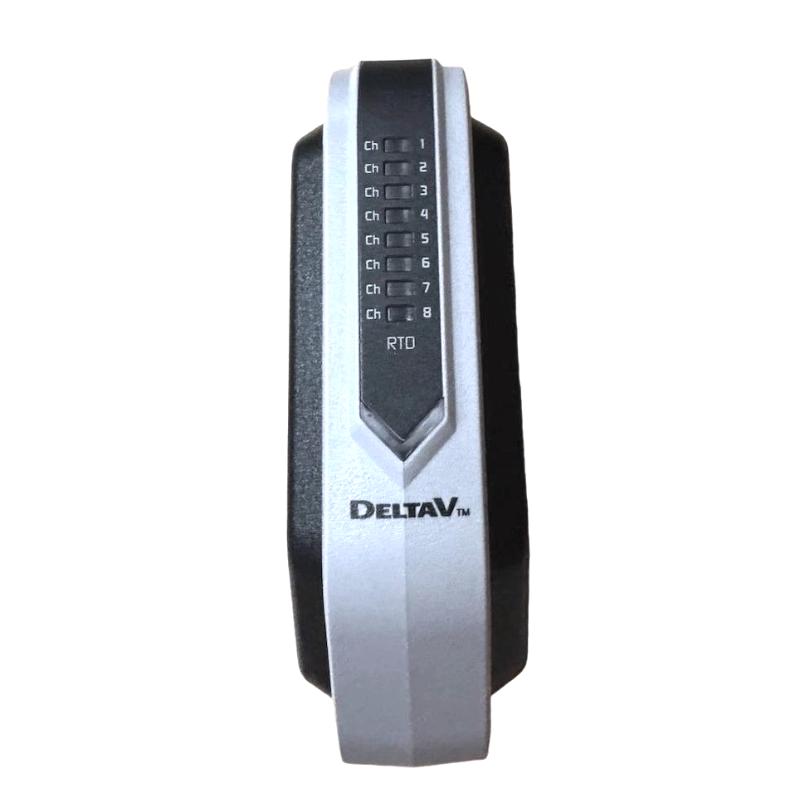
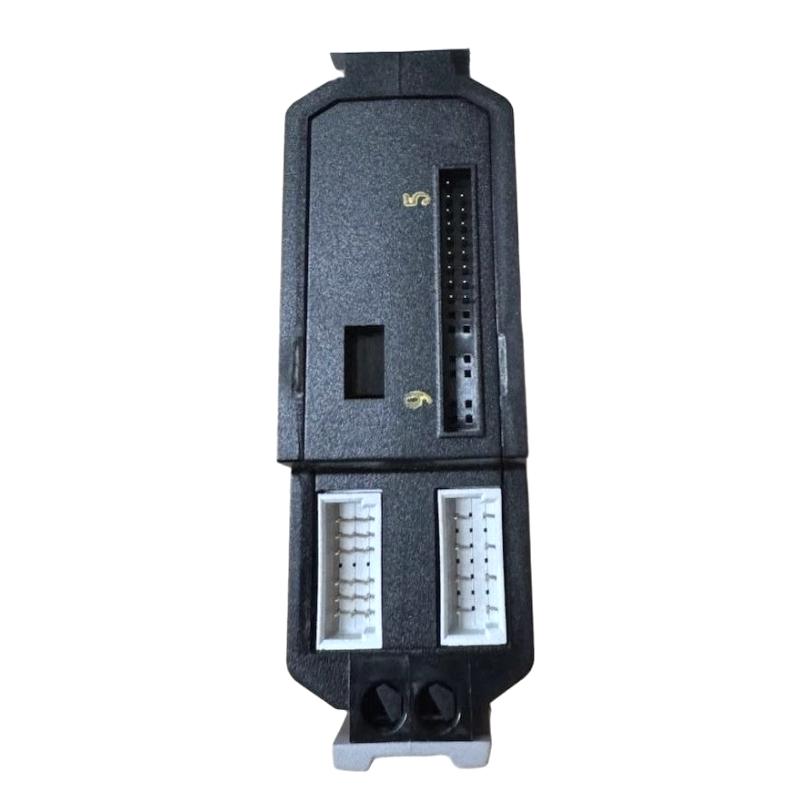
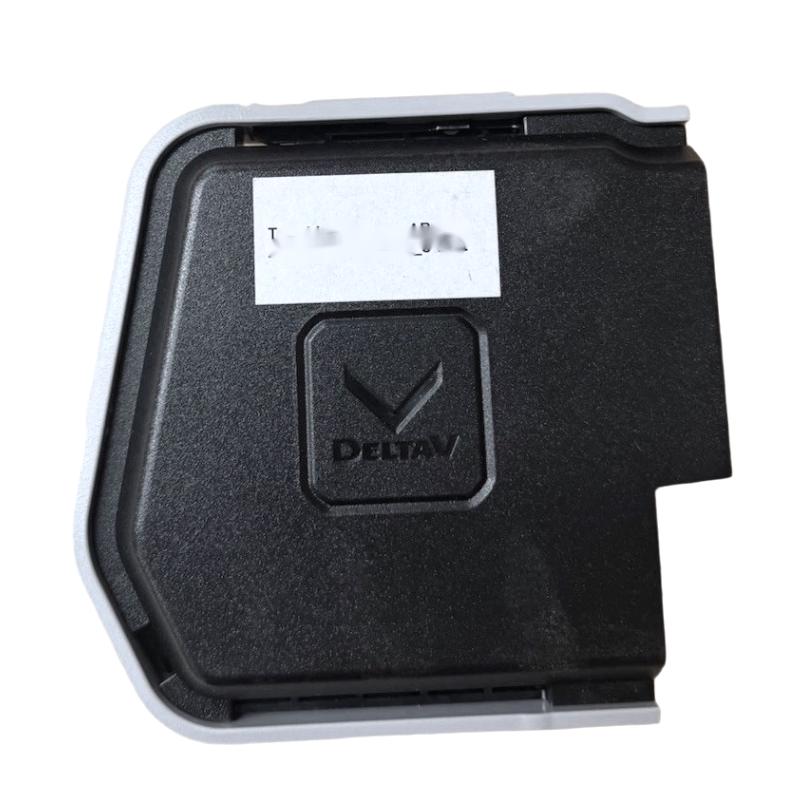
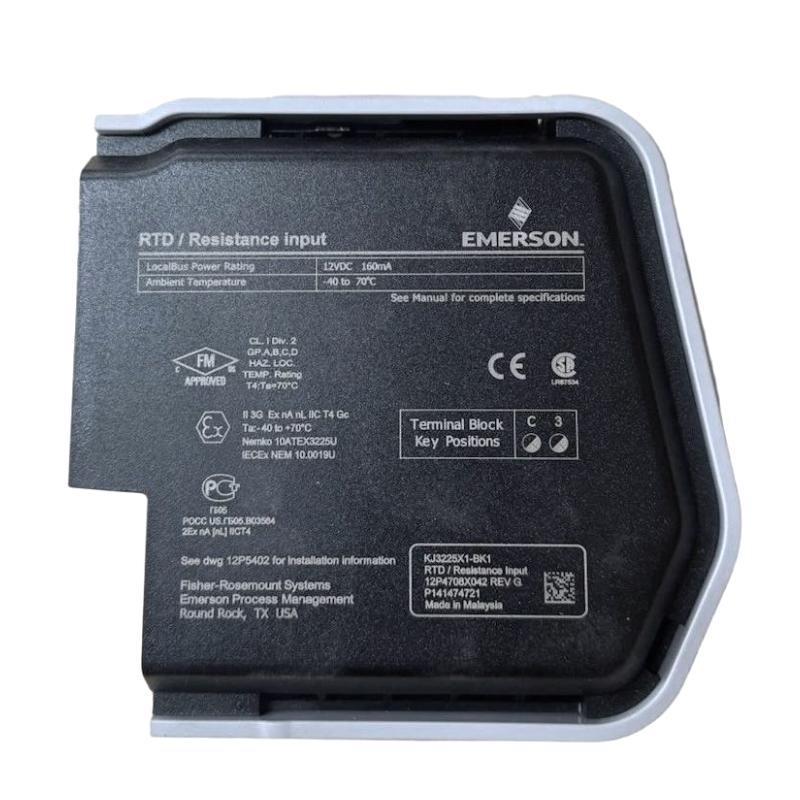
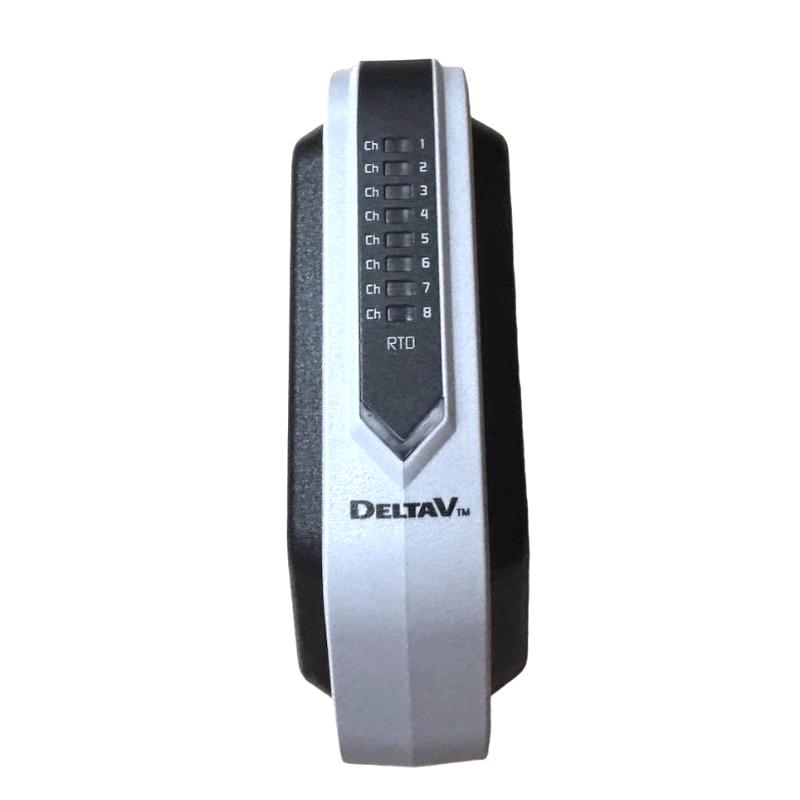
The Emerson SE4003S6B1 DeltaV S-series RTD Input Card is an industrial I/O module used for acquiring resistance temperature detector (RTD) signals from field temperature sensors and transferring temperature measurement data into the DeltaV control system.
Temperature monitoring is a critical function in many process industries, where accurate measurement is required for equipment protection, process regulation, and operational optimization. RTD input modules provide a dedicated interface for connecting temperature sensors to the automation system, allowing controllers to continuously monitor thermal conditions.
The SE4003S6B1 belongs to the DeltaV S-series I/O family and is integrated into DeltaV distributed control architectures with controllers, carriers, terminal blocks, and engineering configuration tools. It enables field temperature signals to be collected and processed within automated process control applications.
During maintenance and commissioning, engineers typically verify sensor wiring, RTD type configuration, channel settings, module diagnostics, and DeltaV database parameters to ensure accurate temperature measurement.
Technical Specifications
| Parameter | Specification |
|---|---|
| Manufacturer | Emerson |
| Model | SE4003S6B1 |
| Product Family | DeltaV S-series |
| Product Type | RTD Input Card |
| Main Function | Temperature Signal Acquisition |
| System Role | Field Temperature Measurement Interface |
| Dimensions | 131 × 41.8 × 130.8 mm |
| Weight | 0.45 kg |
Product Features
The Emerson SE4003S6B1 DeltaV S-series RTD Input Card provides dedicated temperature measurement input capability for process automation systems.
Key characteristics include:
- Emerson DeltaV S-series I/O module
- Model SE4003S6B1
- Designed for RTD temperature sensor applications
- Collects temperature measurement signals from field sensors
- Integrates with DeltaV control architectures
- Supports continuous temperature monitoring
- Suitable for industrial instrumentation systems
- Provides an interface between RTD sensors and control logic
The module configuration should be matched with the connected RTD sensor type and the DeltaV system settings.
Working Principle
The SE4003S6B1 RTD Input Card operates by measuring resistance changes from RTD temperature sensors and converting them into temperature values that can be processed by the DeltaV control system.
The typical signal path is:
RTD Sensor → Terminal Block → SE4003S6B1 RTD Input Card → DeltaV Controller → Operator / Engineering System
RTD sensors change electrical resistance according to temperature variations. The input card detects these resistance changes, processes the measurement information, and transfers temperature data to the controller.
The collected temperature information can be used for:
- Process temperature monitoring
- Control loop operation
- High and low temperature alarms
- Equipment protection
- Historical data analysis
The module provides the connection between physical temperature measurement and automated process management.
Role in a DeltaV Automation System
The Emerson SE4003S6B1 functions as a temperature measurement interface within a DeltaV distributed control system.
A typical system structure is:
Temperature Sensor → RTD Input Card → DeltaV Controller → Process Control Application
The module receives temperature information from field sensors and makes the data available for control strategies, operator displays, and alarm management.
In industries where temperature directly affects product quality or equipment safety, stable RTD signal acquisition is essential for maintaining reliable operation.
Industrial Applications
The Emerson SE4003S6B1 DeltaV S-series RTD Input Card is commonly used in applications requiring accurate temperature monitoring.
| Application | Typical Use |
|---|---|
| Oil & Gas Facilities | Monitoring equipment and process temperatures |
| Chemical Plants | Controlling reaction and process temperatures |
| Power Generation | Monitoring machinery and system temperatures |
| Pharmaceutical Production | Maintaining process temperature conditions |
| Food Processing | Managing production temperature parameters |
| Manufacturing Systems | Monitoring thermal equipment conditions |
The actual application depends on the temperature sensor arrangement and DeltaV system design.
Installation and Maintenance
Proper installation and configuration are important for reliable temperature measurement.
Recommended maintenance procedures include:
- Verify module model before installation
- Confirm S-series carrier compatibility
- Check RTD sensor wiring
- Verify terminal connections
- Confirm sensor type configuration
- Review input channel parameters
- Monitor module diagnostics
- Inspect field sensor condition
- Record calibration information
When replacing an RTD input card, engineers should confirm sensor configuration and temperature scaling before restoring normal operation.
Related Components
The SE4003S6B1 operates together with various DeltaV system components.
| Component | Function |
|---|---|
| DeltaV Controller | Processes temperature data and executes control logic |
| S-series Carrier | Provides module mounting and communication |
| Terminal Block | Connects RTD field wiring |
| Engineering Workstation | Configures input parameters |
| Operator Station | Displays temperature information |
| RTD Sensors | Provide temperature measurement signals |
These components form a complete temperature monitoring and control system.
Recommended Related Models
| Model / Product Family | Product Type | Typical Application |
|---|---|---|
| Emerson SE4003S6B1 | DeltaV S-series RTD Input Card | Temperature signal acquisition |
| Emerson DeltaV S-series Analog Input Cards | Analog Measurement Modules | Process monitoring |
| Emerson DeltaV CHARMs Temperature Input Modules | Modular Temperature Interface | Flexible instrumentation |
| Emerson DeltaV S-series I/O Cards | Automation Hardware | Distributed control systems |
| Emerson DeltaV Controller Modules | Control Processing Hardware | Process automation |
Model selection should consider sensor type, temperature range, process requirements, and existing DeltaV system configuration.
Key Advantages
- Emerson DeltaV S-series RTD input module.
- Designed for industrial temperature measurement.
- Provides direct interface with RTD sensors.
- Supports DeltaV distributed control systems.
- Helps maintain accurate process temperature monitoring.
- Suitable for critical process applications.
Technical FAQs
What type of sensor is used with the SE4003S6B1 RTD Input Card?
The module is designed for RTD temperature sensors, which measure temperature changes through variations in electrical resistance.
Why are RTD input modules preferred for temperature monitoring applications?
RTD sensors provide stable and accurate temperature measurement, making them suitable for industrial processes requiring reliable thermal monitoring.
What should be checked if the displayed temperature differs from the actual value?
Engineers should inspect sensor wiring, RTD configuration, channel parameters, calibration settings, and field sensor condition.
Why must the RTD sensor type be configured correctly in DeltaV?
Different RTD characteristics affect resistance-to-temperature conversion, so incorrect settings can result in inaccurate temperature readings.