

ProductPRODUCT
Featured products
Contact Us
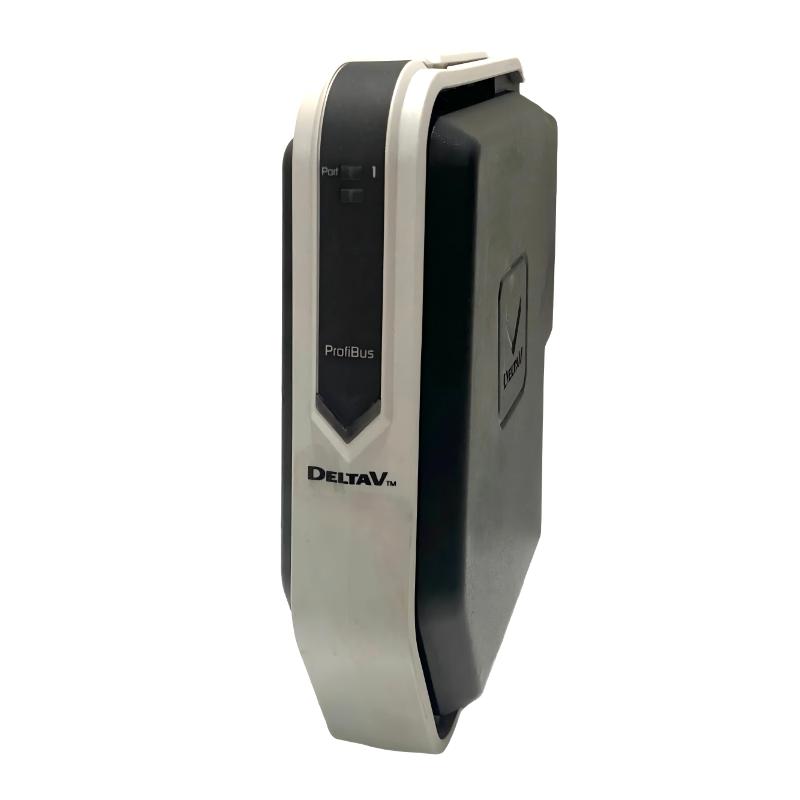
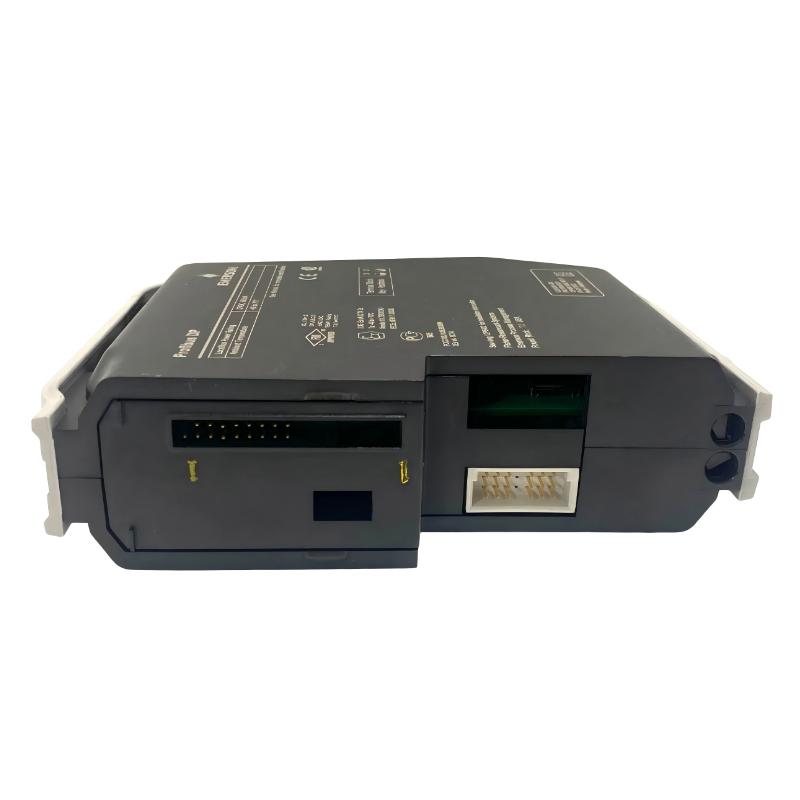
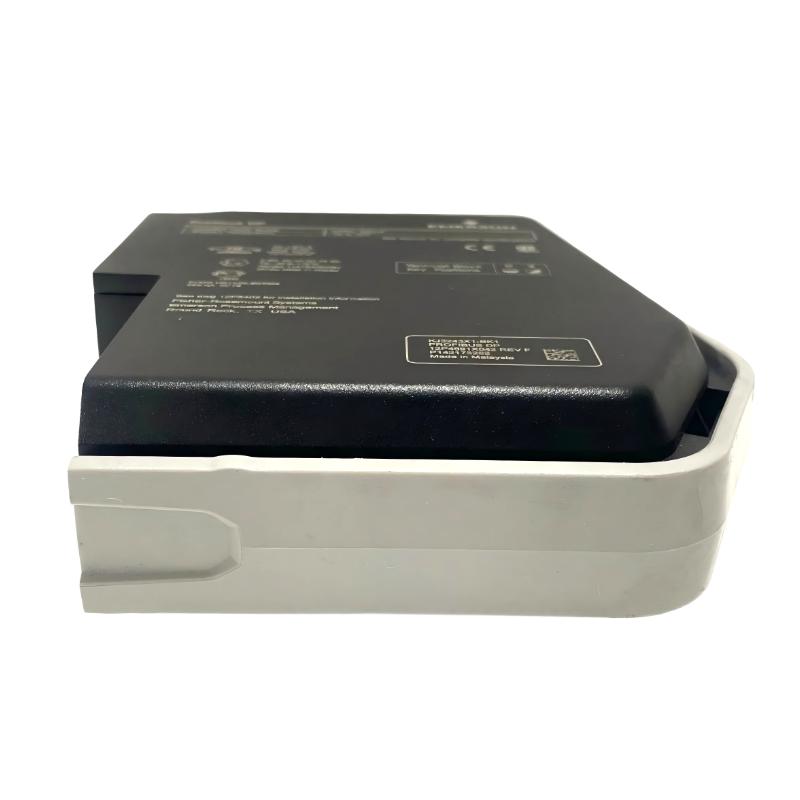
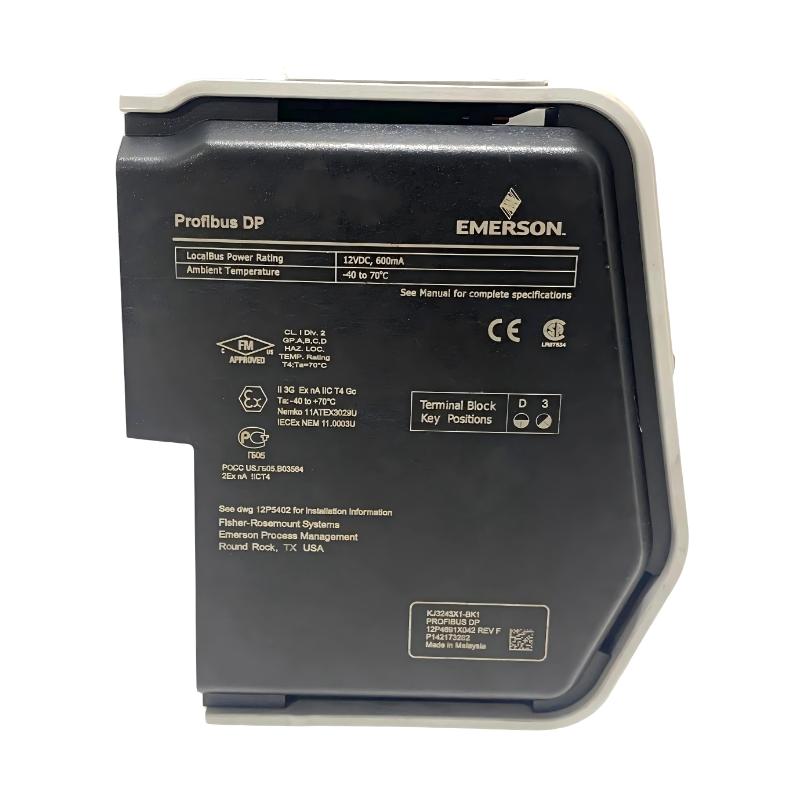
- Emerson
- SE4001S5T2B5
- Sequence of Event Input Card
- USA
- 131 × 41.8 × 130.8 mm
- 0.4 kg
- Xiamen, China
- New & In Stock
- T/T, PayPal, Western Union
- 1 Year
- 1-3 Working Days
- DHL, UPS, TNT, FedEx and EMS.
- 24-Hour Service
- COO
- 56
Our advantage

Global Logistics
We have a 10-year logistics and express cooperation agreement, so our products can be shipped to any place in the world.

Brand new and original
Our products are imported in bulk from the place of origin. Because of the cooperative relationship, our products are all original and 100% new.

24-hour service
We provide 7*24 hours service to our customers. We will be there whenever you need us.

Price advantage
All our products are priced very favorably because we have our own warehouse and supply.
| Company Information | |||
| [email protected] | |||
| Mobile | +8615980777398 | ||
| +8615980777398 | |||
| 15980777398 |
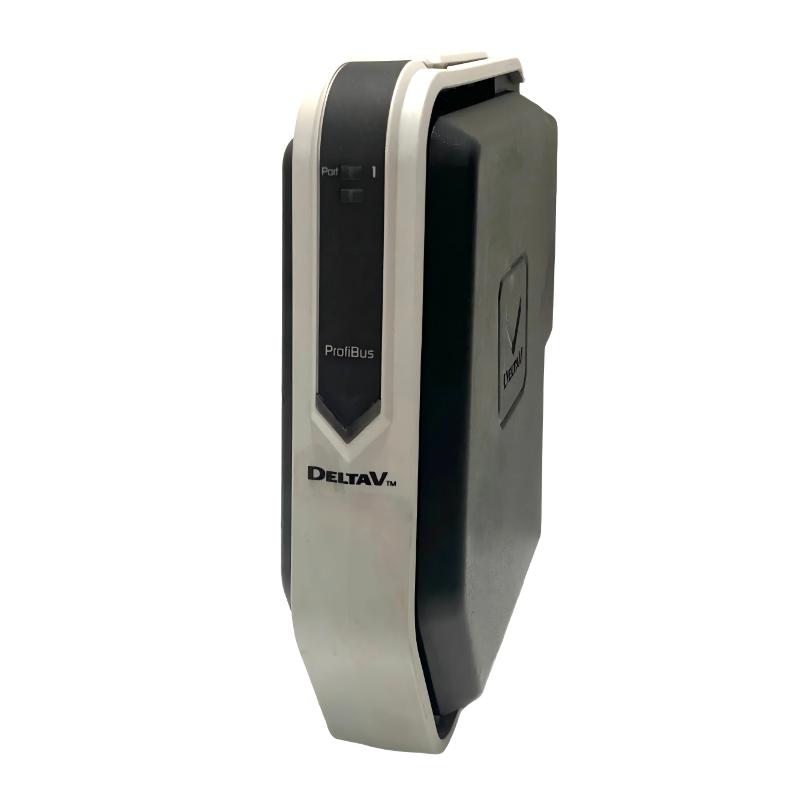
Product Overview
The Emerson SE4001S5T2B5 DeltaV S-series Sequence of Event Input Card is used in DeltaV systems where the order and timing of discrete events matter as much as the actual ON/OFF state.
A standard discrete input can tell a control system whether a contact is active or inactive. Sequence-of-event monitoring goes a step further by recording changes in discrete conditions with time-related information, allowing engineers to reconstruct what happened during a process upset, equipment trip, or sequence transition.
This distinction becomes valuable in applications involving several events occurring within a short period. Consider a compressor shutdown: a protection contact may change state, a permissive may disappear, a valve may begin moving, and another equipment status may change almost immediately afterward. Looking only at the final states may not reveal which event occurred first. SOE information can help establish the sequence.
The SE4001S5T2B5 therefore fits applications where event chronology is important for trip analysis, alarm investigation, interlock diagnostics, equipment sequencing, and process-event reconstruction.
Within the DeltaV architecture, the card interfaces with discrete field signals while the control and monitoring environment uses the resulting event information for analysis and operational decisions. The actual value of SOE data depends on correct field wiring, channel configuration, time association, and system setup.
For maintenance engineers, this means that replacement work should not stop after confirming that an input changes state. The timing behavior and event records should also be verified when the card is part of a sequence-of-event monitoring application.
Technical Specifications
| Parameter | Specification |
|---|---|
| Manufacturer | Emerson |
| Model | SE4001S5T2B5 |
| Product Family | DeltaV S-series |
| Product Type | Sequence of Event Input Card |
| Primary Function | Sequence-of-Event Discrete Signal Acquisition |
| System Role | Time-Associated Event Input |
| Application | Process Control / Event Monitoring |
| Installation | Emerson DeltaV Control System |
| Dimensions | 131 × 41.8 × 130.8 mm |
| Weight | 0.4 kg |
Product Features
The SE4001S5T2B5 is intended for applications where the chronological relationship between discrete events needs to be retained.
- Emerson DeltaV S-series Sequence of Event Input Card
- Model SE4001S5T2B5
- Intended for discrete event monitoring
- Focuses on event sequence and timing
- Suitable for process-event investigation
- Useful for trip and shutdown analysis
- Applicable to alarm and interlock diagnostics
- Supports event reconstruction within a DeltaV environment
- Suitable for applications with closely spaced discrete events
- Relevant to control-system maintenance and replacement
The event-recording requirements should be considered when configuring or replacing an SOE input card.
Working Principle
The SE4001S5T2B5 monitors discrete field-state changes and associates those changes with event timing within the DeltaV control environment.
A simplified signal path is:
Field Contact / Equipment Status → SE4001S5T2B5 → DeltaV System → SOE / Event Analysis
Suppose several protection signals change during an equipment shutdown.
Without sequence information, the operator may only see that several signals eventually became active.
With sequence-of-event monitoring, the system can establish a chronological relationship such as:
Event A → Event B → Event C → Equipment Trip
This distinction can be critical during troubleshooting.
For example:
Low-Lube-Oil Condition → Protection Contact Changes → Trip Command → Equipment Stops
The sequence helps engineers determine whether the low-oil condition occurred before the trip or whether the trip was initiated by another event.
The card therefore serves as the field-facing portion of an event-monitoring chain. It captures discrete state transitions, while the DeltaV environment uses the event information for operational display, historical analysis, diagnostics, and sequence reconstruction.
The actual timestamping behavior and resolution depend on the complete system architecture and configuration, so engineers should not assume that every discrete input card offers the same event-recording capability.
Why Sequence of Events Monitoring Matters
In a process plant, the final alarm list after a disturbance can contain many simultaneous or near-simultaneous messages. Determining the first meaningful event is often more useful than simply counting the number of alarms.
Consider a pump protection sequence:
Pump Running
↓
Abnormal Condition Detected
↓
Protection Contact Changes
↓
Pump Stop Command
↓
Pump Stopped Feedback
Several signals may change within a very short period.
An SOE input system allows engineers to examine the timing relationship between these transitions. This can help separate:
- Initiating events
- Consequential alarms
- Interlock actions
- Equipment feedback
- Operator actions
- Protection responses
For commissioning and troubleshooting teams, this historical sequence can significantly improve the understanding of an intermittent process event.
Role in a DeltaV S-series Control Architecture
The SE4001S5T2B5 occupies the field-event acquisition layer of the DeltaV system.
A simplified architecture is:
Field Devices → SE4001S5T2B5 → DeltaV Control Environment → Event / Alarm Analysis
| System Element | Function |
|---|---|
| SE4001S5T2B5 | Captures discrete event transitions |
| DeltaV Controller / System | Processes configured input information |
| S-series I/O Infrastructure | Provides the field I/O architecture |
| Field Contacts | Generate discrete state changes |
| Protection Devices | Generate trip or fault events |
| Interlock Signals | Indicate process permissive conditions |
| Event History | Retains event information for analysis |
| HMI / Operator Interface | Displays system and equipment states |
| Engineering Station | Supports configuration and diagnostics |
The card becomes particularly valuable when several discrete signals must be analyzed in relation to one another.
Sequence-of-Event Applications
SOE monitoring is commonly used where the timing of a state transition can help explain a process event.
Typical examples include:
Equipment Trip Investigation
When a turbine, compressor, pump, or other major asset trips, engineers can review the order in which protection and status signals changed.
Interlock Analysis
Multiple permissives may control whether equipment can start or continue operating. SOE information can help identify which condition changed first.
Alarm Investigation
A large number of alarms may appear during a disturbance. Event timing can help distinguish an initiating condition from secondary alarms.
Startup and Shutdown Sequences
Discrete feedback from valves, motors, breakers, and other devices can be analyzed against the intended operating sequence.
Intermittent Fault Diagnosis
Some equipment faults disappear before maintenance personnel reach the machine. Historical event information can provide evidence of what occurred before the condition cleared.
Industrial Applications
| Application | Typical Use |
|---|---|
| Oil and Gas | Trip and shutdown event analysis |
| Power Generation | Turbine and generator event monitoring |
| Chemical Processing | Interlock and sequence analysis |
| Petrochemical Plants | Process disturbance investigation |
| Water Treatment | Pump and equipment event monitoring |
| Manufacturing | Machine sequence diagnostics |
| Utilities | Protection-event analysis |
| Process Automation | Historical discrete-event reconstruction |
Installation and Maintenance
SOE applications require attention not only to whether an input changes state, but also to whether the event is correctly identified and recorded.
Recommended practices include:
- Confirm the complete SE4001S5T2B5 model.
- Verify the intended DeltaV S-series I/O position.
- Review the existing SOE channel configuration.
- Document field wiring before removal.
- Identify each event source.
- Check field contacts and protection devices.
- Inspect termination connections.
- Verify wiring integrity.
- Confirm channel assignments.
- Review event-related configuration.
- Inspect the I/O card and connectors.
- Install the replacement card according to the approved procedure.
- Restore field connections carefully.
- Verify input-state changes.
- Confirm event records are generated correctly.
- Check the timing relationship between representative events.
- Verify event identification at the DeltaV system level.
- Test alarms and interlocks associated with the channels.
- Compare recorded events with the expected process sequence.
- Record the final configuration after maintenance.
If the input state appears correct but the SOE record is missing, duplicated, incorrectly associated, or out of sequence, troubleshooting should include the field signal, I/O channel, configuration, system event handling, and time-related system settings.
Compatible System Components
The SE4001S5T2B5 normally operates as part of a broader event-monitoring architecture.
| Component | Function |
|---|---|
| Emerson SE4001S5T2B5 | DeltaV S-series Sequence of Event Input Card |
| DeltaV Control System | Processes event information |
| S-series I/O Infrastructure | Connects field signals to the control system |
| Field Contacts | Generate discrete events |
| Protection Relays | Generate fault and trip conditions |
| Interlock Devices | Generate permissive or blocking signals |
| Event History / Logging | Retains event information |
| HMI | Displays event and equipment status |
| Engineering Station | Configuration and diagnostics |
The exact system arrangement depends on the plant’s DeltaV architecture and SOE implementation.
Recommended Related Models
For related-product SEO, the following models focus on DeltaV discrete input, sequence-of-event, and associated control-system applications.
| Model / Product Family | Product Type | Typical Application |
|---|---|---|
| Emerson SE4001S5T2B5 | DeltaV S-series Sequence of Event Input Card | Time-associated discrete event monitoring |
| Emerson SE4001S3T2B2 | DeltaV S-series Discrete Input Card | General discrete field-state acquisition |
| Emerson SE4001S2T2B4 | DeltaV S-series Discrete Input Card | Equipment status monitoring |
| Emerson SE4001S2B3 | DeltaV M-series Discrete Input Card | Discrete field inputs |
| Emerson SE4001S2T1B2 | DeltaV M-series Discrete Input Card | Equipment-state monitoring |
| Emerson SE4001S2T2B3 | DeltaV M-series Discrete Input Card | Discrete field signals |
| Emerson SE4001S2T2B6 | DeltaV M-series Discrete Input Plus Card | Enhanced discrete input applications |
Key Advantages
- Emerson DeltaV S-series Sequence of Event Input Card.
- Model SE4001S5T2B5.
- Captures discrete event transitions.
- Suitable for applications where event order matters.
- Useful for trip and shutdown investigation.
- Supports analysis of alarms and interlocks.
- Helps reconstruct closely spaced process events.
- Suitable for DeltaV process-control environments.
- Useful for maintenance and event-diagnostic applications.
Technical FAQs
What makes an SOE input card different from a conventional discrete input card?
A conventional discrete input primarily reports the current state of a field signal. An SOE application focuses on recording state transitions with timing information so that engineers can determine the order in which events occurred.
Why is SOE information useful after a process trip?
A trip can generate many alarms and status changes within a short period. Reviewing their chronological order can help identify the initiating condition and distinguish it from alarms or equipment responses that occurred afterward.
What should be investigated if an SOE event is missing even though the field contact changed?
Check the field device, wiring, termination, input channel, channel configuration, and event-handling configuration. It is important to establish whether the signal failed to reach the card or whether the input reached the system but was not recorded as expected.
How should an SE4001S5T2B5 replacement be tested?
Testing should include representative state changes from the connected field devices and confirmation that the corresponding events appear correctly in the DeltaV environment. Where event order is critical, multiple controlled transitions should also be checked to verify that the recorded sequence matches the actual test sequence.