
NewsNEWCENTER
Featured products
Contact Us
Emerson Introduces Rosemount 8795 Magnetic Flow Sensor to Improve Data Center Cooling Reliability
2026-10-10Emerson has introduced the Rosemount 8795 Magnetic Flow Sensor, a new flow measurement solution specifically designed for data center hydronic cooling applications. Announced on October 8, 2026, the product addresses the growing demand for reliable cooling infrastructure as data centers expand to support artificial intelligence, cloud computing, and other energy-intensive digital services.
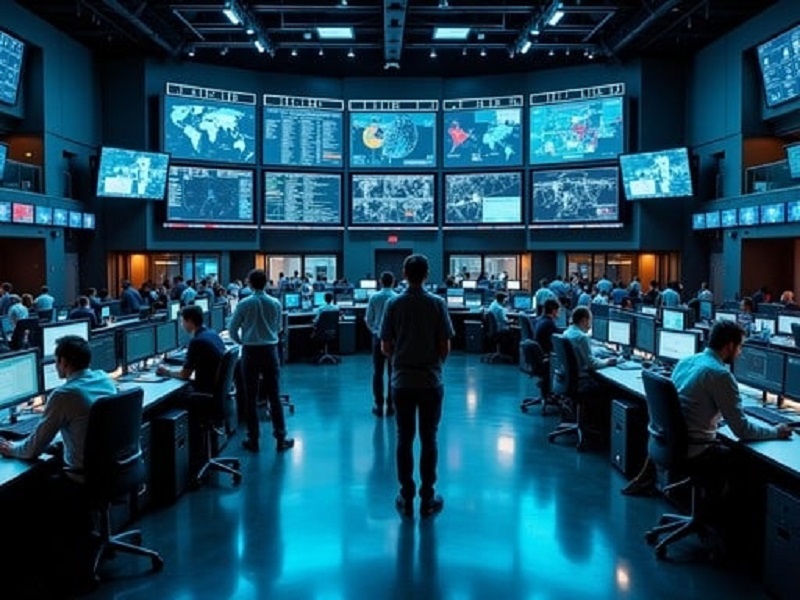
Reliable Flow Measurement for AI Data Centers
Data centers depend on stable cooling performance to maintain the operating conditions required by servers, networking equipment, and power infrastructure. As computing density increases, cooling systems must manage larger thermal loads while maintaining high availability.
Hydronic cooling systems circulate water or other cooling fluids through pipes, heat exchangers, and cooling distribution equipment. Accurate flow measurement helps operators verify circulation, identify abnormal operating conditions, and maintain appropriate cooling performance.
The Rosemount 8795 is designed to provide accurate and repeatable flow measurements in these demanding applications. By addressing data center-specific installation and commissioning requirements, the sensor is intended to simplify equipment selection and integration.
The Importance of Magnetic Flow Measurement
Magnetic flow meters measure the flow of electrically conductive liquids using electromagnetic principles. Because the measurement method does not rely on moving mechanical parts inside the flow stream, magnetic flow technology can be useful in industrial liquid-handling applications where reliable measurement and reduced mechanical wear are important.
In data center cooling systems, flow measurements can help operators evaluate circulation through cooling loops and identify deviations from expected operating conditions.
When integrated with automation and monitoring systems, flow data can also support performance trending, alarm generation, and maintenance planning.
Integration with Industrial Automation Systems
Flow measurement is most valuable when it can be incorporated into the facility’s wider monitoring and control architecture.
Depending on the selected configuration, industrial flow instrumentation can provide information to PLCs, building management systems, SCADA platforms, and other supervisory applications. Control systems can use this information alongside temperature, pressure, and equipment-status measurements to monitor cooling performance.
For system integrators, commissioning typically involves verifying the meter’s installation, checking configuration parameters, confirming signal transmission, and validating readings against expected operating conditions.
Correct installation is particularly important in cooling applications, where pipe configuration, fluid properties, electrical grounding, and commissioning procedures can affect measurement performance.
Supporting Predictive Maintenance and Energy Efficiency
Continuous flow monitoring can help operators identify changes that may indicate cooling-system problems. For example, unexpected flow reductions may justify checking pumps, filters, valves, or piping restrictions.
Combining flow information with temperature and pressure data can provide a more complete understanding of system performance. Maintenance teams can then investigate developing problems before they cause significant disruption.
Accurate measurement can also help operators evaluate whether cooling equipment is operating as intended. However, energy savings depend on the overall system design, control strategy, equipment efficiency, and operating conditions rather than on the flow sensor alone.
Why This Development Matters
The expansion of AI computing is increasing the importance of dependable data center infrastructure. Cooling systems are no longer simply auxiliary facilities; they are essential to maintaining the availability of high-density computing equipment.
Emerson’s Rosemount 8795 illustrates how established industrial measurement technologies are being adapted to the requirements of modern digital infrastructure.
For automation engineers and facility operators, the combination of reliable flow instrumentation, integrated control systems, and continuous performance monitoring can improve visibility into cooling operations and support more effective maintenance decisions.
Conclusion
Emerson’s introduction of the Rosemount 8795 Magnetic Flow Sensor highlights the growing connection between industrial instrumentation and AI data center infrastructure.
By targeting hydronic cooling applications, the product is designed to help operators improve flow measurement reliability and simplify deployment in mission-critical environments.
As data centers continue to expand, accurate instrumentation, dependable automation, and effective cooling-system monitoring will remain essential to maintaining operational availability and supporting the next generation of digital infrastructure.