

ProductPRODUCT
Featured products
Contact Us
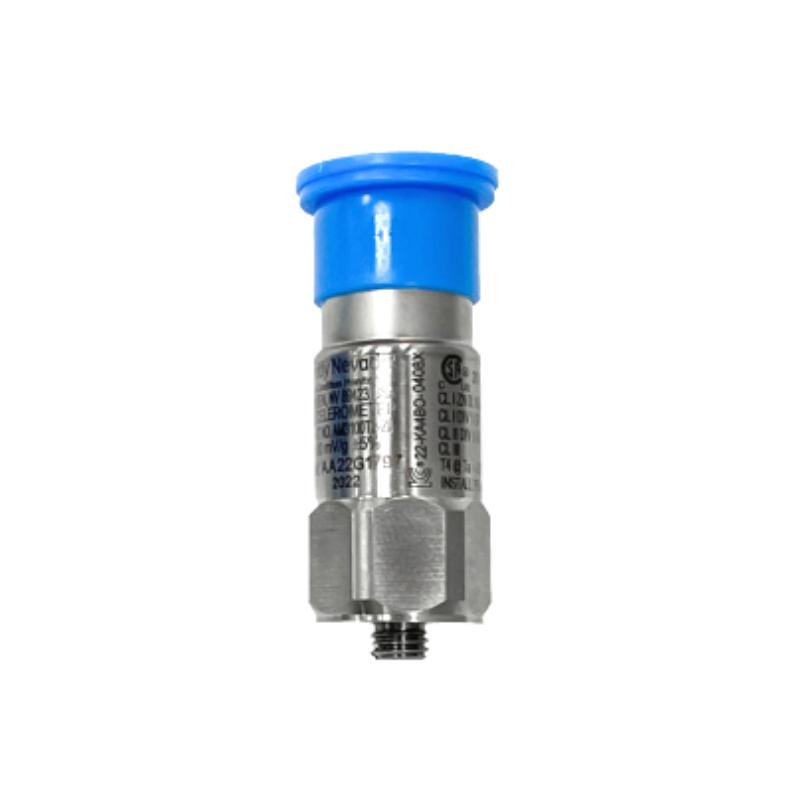
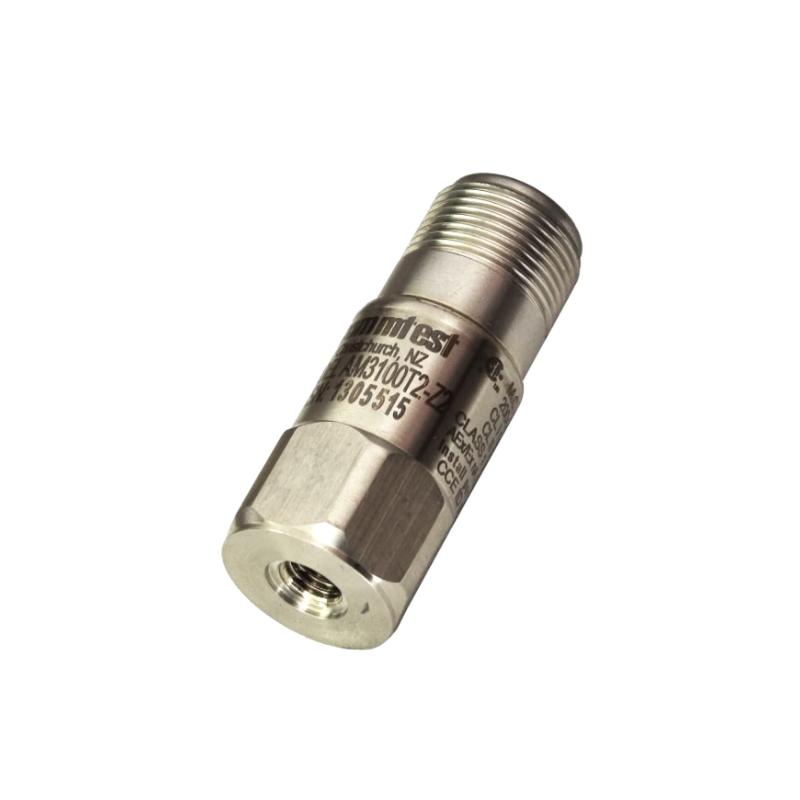
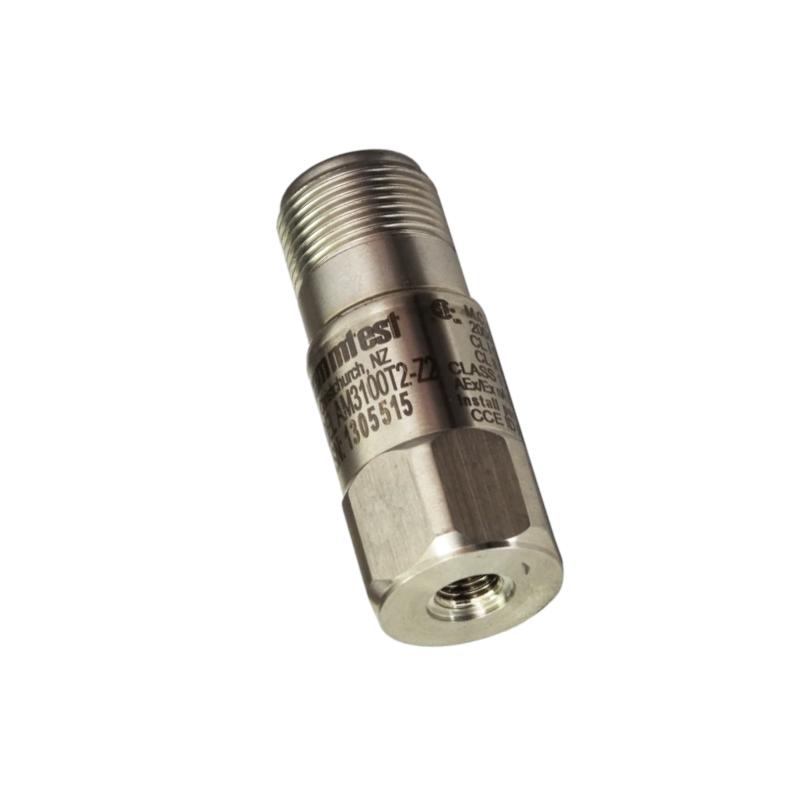
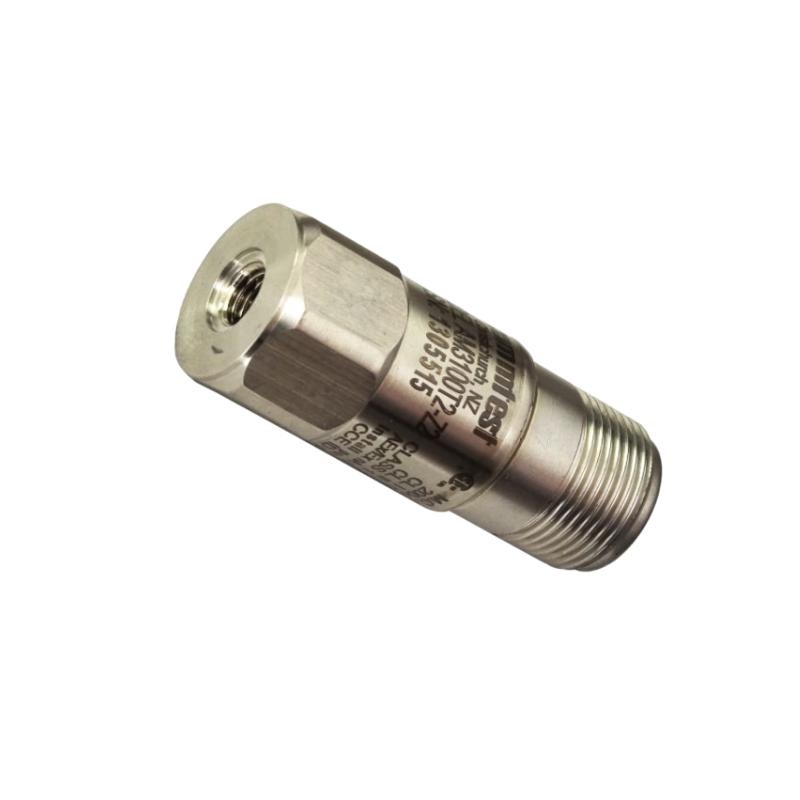
- Bently Nevada
- AM3100T2-Z2
- General Purpose IEPE Accelerometer
- USA
- 31.24 × 23.37 mm
- 0.062 kg
- Xiamen, China
- New & In Stock
- T/T, PayPal, Western Union
- 1 Year
- 1-3 Working Days
- DHL, UPS, TNT, FedEx and EMS.
- 24-Hour Service
- COO
- 4
Our advantage

Global Logistics
We have a 10-year logistics and express cooperation agreement, so our products can be shipped to any place in the world.

Brand new and original
Our products are imported in bulk from the place of origin. Because of the cooperative relationship, our products are all original and 100% new.

24-hour service
We provide 7*24 hours service to our customers. We will be there whenever you need us.

Price advantage
All our products are priced very favorably because we have our own warehouse and supply.
| Company Information | |||
| [email protected] | |||
| Mobile | +8615980777398 | ||
| +8615980777398 | |||
| 15980777398 |
Product Overview
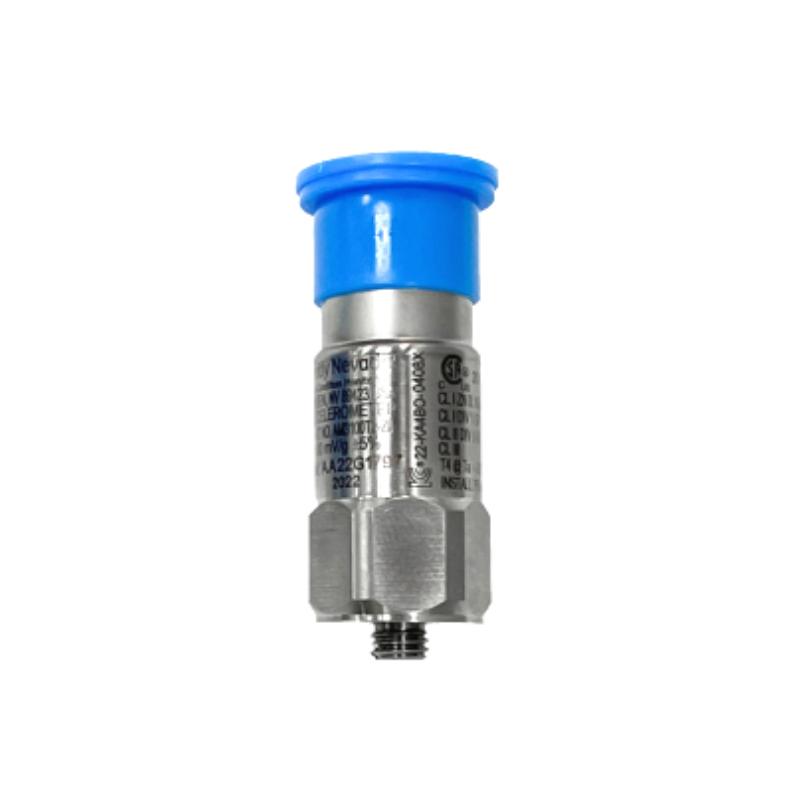
The Bently Nevada AM3100T2-Z2 General Purpose IEPE Accelerometer is a case-mounted vibration sensor used to measure acceleration on industrial machinery. It uses a piezoelectric sensing element and integrated electronics to convert mechanical vibration into an electrical signal that can be processed by compatible monitoring and data acquisition equipment.
This model is particularly suited to applications where engineers need to capture a broad range of vibration frequencies. Its 100 mV/g sensitivity and 0.4–14,000 Hz frequency response make it useful for monitoring vibration on motors, pumps, compressors, fans, and other rotating equipment. The top-exit connector arrangement is also relevant when selecting a sensor for an existing mounting location with limited clearance around the sides.
The AM3100T2-Z2 belongs to Bently Nevada’s IEPE accelerometer series and carries a Zone 2 hazardous-area rating. Its stainless-steel case, hermetically sealed construction, and case-isolated electrical design support use in demanding industrial measurement environments. It can be incorporated into permanent machine monitoring installations or vibration data collection arrangements, depending on the connected instrumentation.
When replacing an existing accelerometer, engineers should compare more than the sensor’s overall size. Sensitivity, frequency response, excitation current, connector pinout, mounting thread, hazardous-area requirements, and data acquisition input must all match the intended measurement system. These details determine whether the sensor can measure the required vibration accurately and operate correctly with the existing instrumentation.
Technical Specifications
| Parameter | Specification |
|---|---|
| Manufacturer | Bently Nevada |
| Model | AM3100T2-Z2 |
| Product Family | IEPE Accelerometer Series |
| Product Type | General Purpose IEPE Accelerometer |
| Sensing Element Design | PZT ceramic / shear |
| Sensor Orientation | Top exit |
| Sensitivity | 100 mV/g ±5% at 25°C |
| Acceleration Range | 80 g peak |
| Amplitude Nonlinearity | 1% |
| Frequency Response, ±10% | 0.7–9,000 Hz |
| Frequency Response, ±3 dB | 0.4–14,000 Hz |
| Resonant Frequency | 30 kHz |
| Transverse Sensitivity | ±5% of axial, maximum |
| Voltage Supply | 18–30 V DC |
| Current Regulation | 2–10 mA |
| Bias Output Voltage | 12 V DC |
| Maximum Output Impedance | 100 Ω |
| Case Material | 316L stainless steel |
| Mounting | 1/4-28 UNF tapped hole |
| Connector | Top-exit, 2-pin MIL-C-5015 style |
| Grounding | Case isolated, internally shielded |
| Temperature Range | -55°C to +120°C |
| Hazardous-Area Rating | Zone 2 |
| Sealing | Hermetic |
| Dimensions | 31.24 × 23.37 mm |
| Weight | 0.062 kg |
Product Features
- 100 mV/g sensitivity: Converts acceleration into a proportional electrical output for vibration measurement.
- Wide frequency response: Covers frequencies from 0.4 Hz to 14 kHz at the ±3 dB response limits.
- 80 g peak acceleration range: Supports vibration measurements with substantial acceleration amplitudes.
- Top-exit connector: Provides an upward cable connection suitable for installations where connector orientation affects access and routing.
- Integrated IEPE electronics: Uses an integrated electronic circuit with constant-current excitation.
- Stainless-steel housing: Uses 316L stainless steel for the sensor case.
- Hermetically sealed construction: Seals the sensing assembly against environmental exposure.
- Electrical shielding and isolation: Supports signal integrity and helps reduce grounding-related problems in permanent installations.
- Zone 2 rating: Suitable for applications covered by the sensor’s applicable hazardous-area certification.
- Broad operating temperature range: Supports installations operating from -55°C to +120°C.
Working Principle
The AM3100T2-Z2 uses a piezoelectric sensing element to detect mechanical acceleration. When the sensor is mounted on a machine casing or bearing housing, vibration applies dynamic force to the internal sensing structure. The piezoelectric element converts this mechanical excitation into an electrical response, and the integrated IEPE electronics condition the signal for transmission to the connected measurement system.
The measurement chain is:
Machine Surface → AM3100T2-Z2 Accelerometer → Shielded Cable → IEPE-Compatible Input → Vibration Monitoring or Data Acquisition System
The sensor’s sensitivity of 100 mV/g establishes the relationship between acceleration and output voltage within its specified operating conditions. The receiving equipment can use this signal to examine vibration amplitude, frequency components, and changes in machine behavior.
Frequency response is important when deciding which vibration characteristics to measure. Lower-frequency response can support the evaluation of slower vibration components, while the upper-frequency range is useful for examining higher-frequency vibration generated by bearings, structural resonance, and other mechanical phenomena. The actual diagnostic capability depends on the sensor mounting, measurement bandwidth, acquisition settings, and analysis method.
The AM3100T2-Z2 requires an appropriate DC excitation source with constant-current operation. Because the sensor contains integrated electronics, it should be connected to an IEPE-compatible input rather than treated as a passive piezoelectric element.
Role in an Industrial Vibration Monitoring Architecture
The AM3100T2-Z2 serves as the vibration measurement point within a machine monitoring arrangement. It detects acceleration at the selected mounting surface and sends the resulting signal to the equipment responsible for acquisition, analysis, display, or condition monitoring.
| System Element | Function |
|---|---|
| AM3100T2-Z2 Accelerometer | Measures machine acceleration and produces an electrical output |
| Mounting Stud or Approved Mounting Fixture | Secures the accelerometer to the measurement surface |
| Shielded, Twisted-Pair Cable | Carries the sensor output to the measurement input |
| IEPE Constant-Current Supply | Provides the excitation required by the integrated sensor electronics |
| Data Acquisition System | Samples and records the acceleration signal |
| Vibration Analysis Software | Examines amplitude, frequency content, and vibration trends |
| Plant Monitoring System | Integrates measurement information into the maintenance or monitoring workflow |
The sensor’s output is a measurement signal, not a direct machine trip command. Alarm limits, diagnostic rules, and protective actions depend on the receiving system and its configuration.
For permanent installations, engineers should verify cable routing, mounting stiffness, electrical grounding, channel configuration, and the required hazardous-area installation conditions. A well-matched measurement chain helps prevent wiring and mounting issues from being mistaken for changes in machine condition.
Industrial Applications
| Application | Typical Use |
|---|---|
| Electric Motors | Measuring casing vibration for condition assessment and trend analysis |
| Industrial Pumps | Tracking vibration changes associated with imbalance, looseness, or other mechanical conditions |
| Compressors | Collecting vibration data for machinery diagnostics |
| Fans and Blowers | Monitoring vibration amplitude and frequency components |
| Gearboxes | Measuring vibration associated with gear engagement and mechanical transmission |
| Machine Tools | Capturing vibration during operation and testing |
| Process Equipment | Collecting acceleration data in industrial environments |
| Hazardous Industrial Areas | Vibration measurement in installations covered by the applicable Zone 2 requirements |
| Predictive Maintenance | Recording vibration trends to identify developing changes in machine behavior |
| Portable Vibration Testing | Supporting measurement and diagnostic work using compatible IEPE data acquisition equipment |
Installation and Maintenance
- Verify the sensor model: Confirm that AM3100T2-Z2 matches the required measurement channel, sensitivity, connector arrangement, and hazardous-area application.
- Inspect the mounting surface: Ensure that the selected measurement point is clean, flat, and suitable for rigid accelerometer mounting.
- Check the mounting thread: Verify the 1/4-28 UNF mounting interface and use the appropriate stud or mounting fixture for the application.
- Orient the connector correctly: Allow sufficient clearance for the top-exit connector and the connected cable.
- Secure the sensor properly: Follow the applicable mounting and torque requirements to maintain a consistent mechanical connection and avoid damaging the housing or thread.
- Select the correct cable: Use shielded, twisted-pair cabling suitable for the sensor’s connector and electrical interface. Keep the cable within the recommended length of 100 feet.
- Verify IEPE excitation: Confirm that the measurement input provides compatible constant-current excitation within the specified 2–10 mA range and 18–30 V DC supply requirements.
- Check the connector pinout: Confirm the signal, common, and ground connections before energizing the measurement circuit.
- Route the cable carefully: Avoid unnecessary cable tension, sharp bends, abrasion, and routes exposed to excessive mechanical damage.
- Confirm channel scaling: Set the acquisition channel for 100 mV/g sensitivity and select a sampling rate and measurement bandwidth appropriate for the required vibration frequencies.
- Inspect the measurement result: Check for clipping, excessive electrical noise, unstable bias voltage, or unexpected changes in the measured vibration signal.
- Record the installation details: Document the sensor location, mounting arrangement, cable route, channel identification, and baseline measurements for future comparison.
For recurring vibration measurements, use the same mounting location and installation method wherever practical. Differences in mounting stiffness, sensor orientation, or cable handling can influence measurement repeatability.
Related Components
| Component | Function |
|---|---|
| 1/4-28 to 1/4-28 Mounting Stud | Provides a threaded mounting interface for the accelerometer |
| 1/4-28 to M6×1 Mounting Stud | Adapts the accelerometer mounting thread to an M6×1 interface where suitable |
| Shielded, Twisted-Pair Cable | Carries the sensor signal to the acquisition equipment |
| IEPE Signal Conditioner | Supplies constant-current excitation and provides a compatible signal interface |
| Vibration Data Acquisition System | Samples and records acceleration measurements |
| Vibration Analysis Software | Processes recorded data for frequency analysis and condition assessment |
| Calibrated Vibration Reference Equipment | Supports sensor verification and measurement-system checks |
Recommended Related Models
| Model | Product Type | Typical Application |
|---|---|---|
| Bently Nevada AM3100T2-Z0 | General Purpose IEPE Accelerometer | Similar top-exit configuration with a Zone 0 rating |
| Bently Nevada AS3100S2-Z2 | General Purpose IEPE Accelerometer | Side-exit configuration for installations where cable orientation requires a different arrangement |
| Bently Nevada AP3500T2-Z1 | IEPE Accelerometer | Top-exit configuration with 500 mV/g sensitivity and a 10 g acceleration range |
| Bently Nevada AP3500S2-Z1 | IEPE Accelerometer | Side-exit configuration with 500 mV/g sensitivity and a 10 g acceleration range |
| Bently Nevada 181M6049 | IEPE Accelerometer | Alternative sensor configuration with 100 mV/g sensitivity and a 60 g acceleration range |
These models differ in mounting configuration, sensitivity, acceleration range, frequency response, or hazardous-area rating. They should be selected according to the required measurement range, installation geometry, and applicable certification rather than treated as direct replacements without a compatibility check.
Key Advantages
- Measures vibration across a broad frequency range.
- Provides 100 mV/g sensitivity for general-purpose acceleration measurement.
- Combines piezoelectric sensing with integrated IEPE electronics.
- Uses a 316L stainless-steel case and hermetically sealed construction.
- Supports Zone 2 applications covered by the applicable product certification.
- Offers a top-exit connection for installations requiring that cable orientation.
Technical FAQs
What does the 100 mV/g sensitivity mean on the AM3100T2-Z2?
It describes the nominal relationship between acceleration and sensor output. Under the specified operating conditions, an acceleration change of 1 g corresponds to an output change of approximately 100 mV, within the sensor’s stated tolerance and operating range.
Can the AM3100T2-Z2 connect directly to a standard voltage input?
Only if that input also supports the sensor’s IEPE excitation requirements or is used with a suitable external IEPE signal conditioner. A passive voltage input without the required constant-current supply will not operate the integrated sensor electronics as intended.
What should be considered when measuring high-frequency vibration?
The mounting interface, mechanical stiffness, cable condition, acquisition bandwidth, and sampling rate all affect the measurement. The sensor has a specified ±3 dB frequency response extending to 14 kHz, so the acquisition system must support the frequency range needed for the intended analysis.
Is the AM3100T2-Z2 interchangeable with the AS3100S2-Z2?
They are related models with the same nominal sensitivity and Zone 2 rating, but their cable-exit arrangements differ. The AM3100T2-Z2 uses a top-exit configuration, while the AS3100S2-Z2 uses a side-exit configuration. Mounting clearance, cable routing, and the required frequency response should be checked before selecting an alternative.