

ProductPRODUCT
Featured products
Contact Us
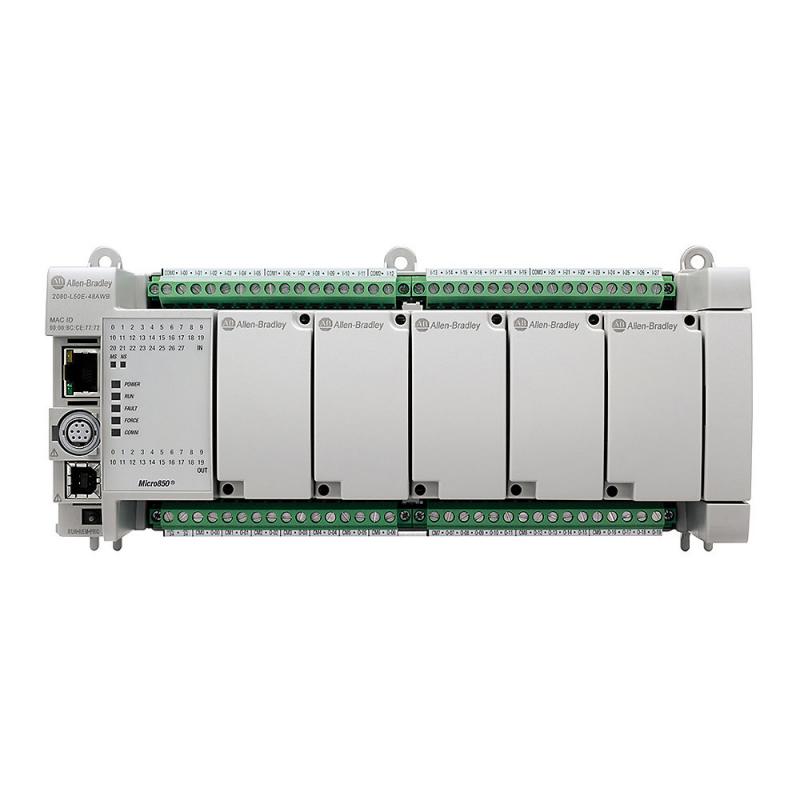
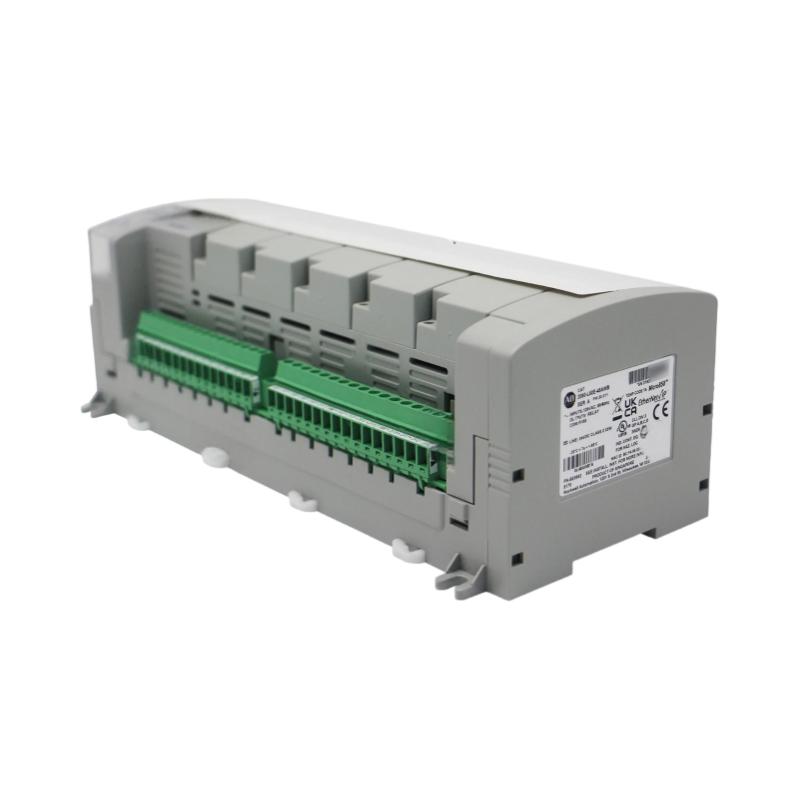
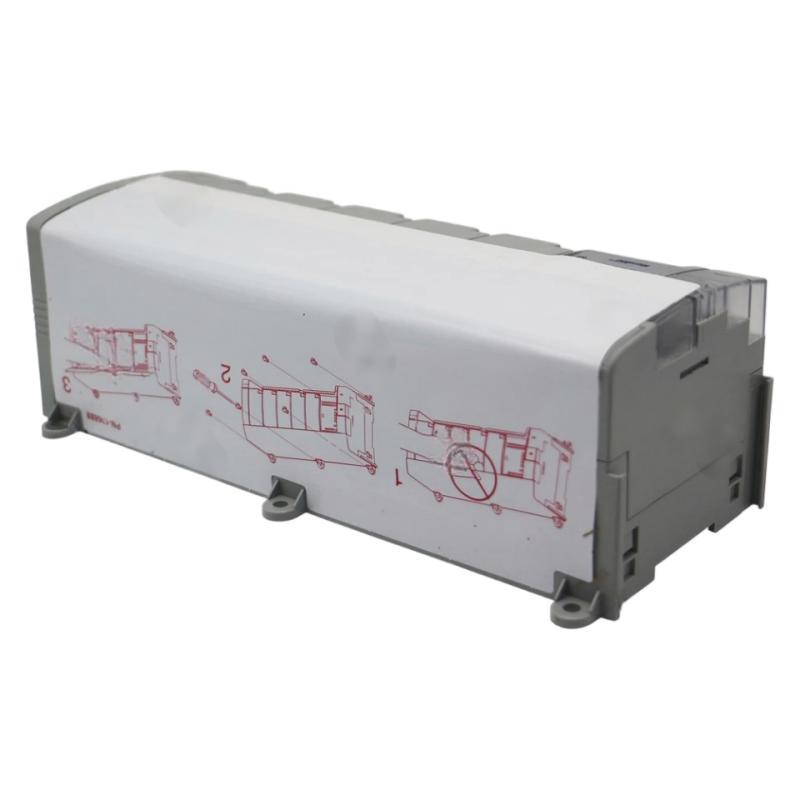
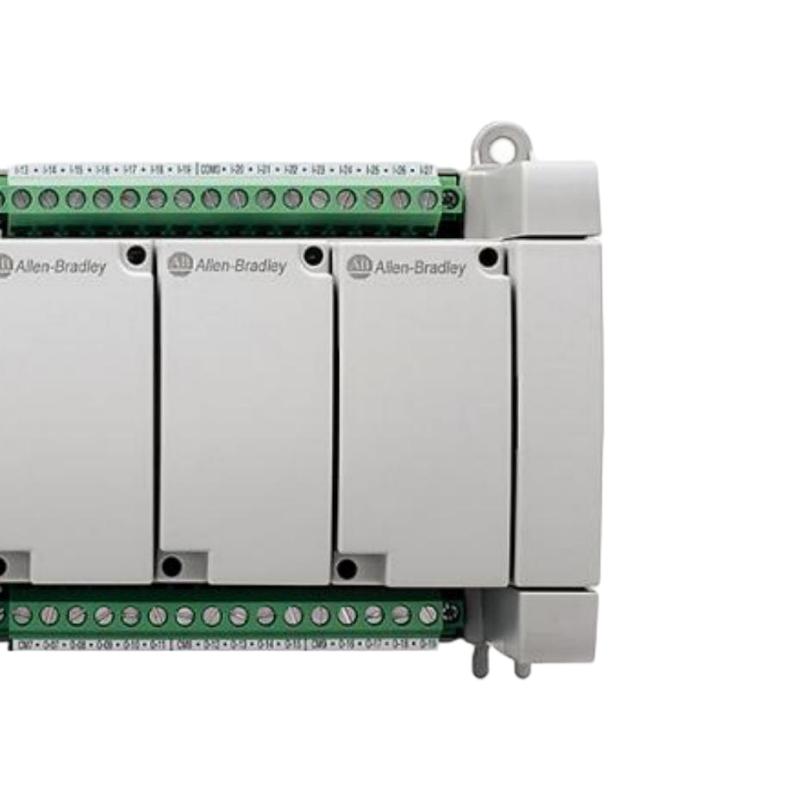
- Allen Bradley
- 2080-L50E-48AWB
- Micro850 Programmable Controller
- USA
- 238 x 80 x 90 mm
- 0.725 kg
- Xiamen, China
- New & In Stock
- T/T, PayPal, Western Union
- 1 Year
- 1-3 Working Days
- DHL, UPS, TNT, FedEx and EMS.
- 24-Hour Service
- COO
- 5
Our advantage

Global Logistics
We have a 10-year logistics and express cooperation agreement, so our products can be shipped to any place in the world.

Brand new and original
Our products are imported in bulk from the place of origin. Because of the cooperative relationship, our products are all original and 100% new.

24-hour service
We provide 7*24 hours service to our customers. We will be there whenever you need us.

Price advantage
All our products are priced very favorably because we have our own warehouse and supply.
| Company Information | |||
| [email protected] | |||
| Mobile | +8615980777398 | ||
| +8615980777398 | |||
| 15980777398 |
Product Overview
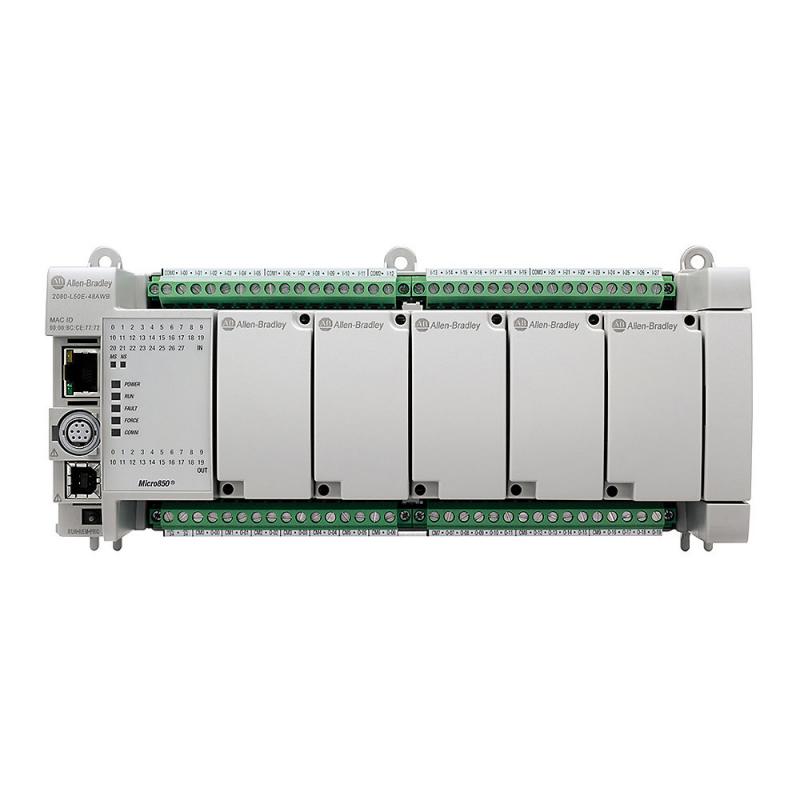
The Allen-Bradley 2080-L50E-48AWB Micro850 Programmable Controller is a compact programmable logic controller (PLC) designed for industrial machine automation, equipment control, and distributed control applications. Manufactured by Rockwell Automation, this controller belongs to the Micro850 family and combines integrated digital I/O, communication interfaces, and expansion capabilities in a compact controller platform.
The Micro850 series is designed for applications that require reliable machine-level control without the complexity of a large modular PLC system. It can coordinate sensors, actuators, motors, relays, and other automation devices through user-defined control logic.
The 2080-L50E-48AWB provides 48 integrated I/O points, consisting of 28 digital inputs for 120 V AC signals and 20 relay outputs. This arrangement makes it suitable for machines that use AC-powered field signals and relay-controlled loads. The controller operates from a 24 V DC power supply and supports Ethernet-based communication through its embedded Ethernet port.
In addition to Ethernet, the controller provides an embedded USB programming port and non-isolated RS-232/RS-485 serial communication. Five plug-in module slots allow users to add compatible functions according to application requirements. The Micro850 platform also supports compatible local expansion modules, providing additional flexibility when the integrated I/O is insufficient.
The 2080-L50E-48AWB is suitable for small and medium-sized automation systems, including packaging equipment, material handling, production machinery, and standalone industrial machines. Its integrated I/O and communication features help reduce the need for separate hardware in compact control panels.
Technical Specifications
| Parameter | Specification |
|---|---|
| Brand | Allen-Bradley |
| Manufacturer | Rockwell Automation |
| Model | 2080-L50E-48AWB |
| Product Series | Micro850 |
| Product Type | Programmable Logic Controller |
| Controller Classification | 48-point Micro850 Controller |
| Total I/O Points | 48 |
| Digital Inputs | 28 points |
| Input Signal Type | 120 V AC |
| Digital Outputs | 20 points |
| Output Type | Relay |
| Controller Supply Voltage | 24 V DC |
| Ethernet Interface | Embedded Ethernet |
| USB Interface | Embedded USB programming port |
| Serial Communication | Non-isolated RS-232/RS-485 |
| Plug-in Module Slots | 5 |
| Maximum Power Consumption | 11 W without plug-in and expansion I/O modules; up to 33 W with compatible modules and expansion I/O |
| Approximate Dimensions | 238 × 80 × 90 mm |
| Approximate Weight | 0.725 kg |
| Mounting | Industrial control-panel installation |
| Programming Platform | Connected Components Workbench |
| Lifecycle Status | Active |
Note: Dimensions are presented in the order supplied. The manufacturer’s technical data lists the dimensions as 90 × 238 × 80 mm (H × W × D). The stated weight is approximately 0.725 kg and is identified in the technical data as shipping weight.
Function and Working Principle
The 2080-L50E-48AWB operates as the central processing unit of a Micro850-based control system. It receives input signals from field devices, executes the user-developed control program, and updates its output states according to the programmed logic.
1. Digital Input Signal Acquisition
The controller provides 28 digital input points designed for 120 V AC signals. These inputs allow the PLC to monitor the operating conditions of external devices.
Typical input devices include:
- Limit switches
- AC-powered proximity or detection circuits with suitable interfaces
- Push buttons and selector switches
- Machine status contacts
- Auxiliary relay contacts
- Equipment interlock signals
When an input changes state, the controller reads the corresponding signal and makes the information available to the control program. The PLC can then evaluate the input condition and determine the appropriate control response.
For example, a limit switch may indicate that a conveyor has reached a specified position. The PLC can use this signal to stop the conveyor, activate another mechanism, or continue the next step of a machine sequence.
The 120 V AC input specification is important when selecting field devices and designing wiring. These inputs should not be treated as 24 V DC inputs.
2. Relay Output Control
The controller provides 20 relay outputs for switching compatible external electrical loads.
Relay outputs can be used to control devices such as:
- Control relays
- Contactors
- Indicator lamps
- Solenoid valves
- Auxiliary machine circuits
- Other appropriately rated switching loads
The PLC program determines when each output should change state. For example, when the required operating conditions are satisfied, the controller can energize a relay output to activate a contactor coil.
Relay outputs provide flexibility for switching different types of loads, subject to their electrical ratings. They are not equivalent to high-speed transistor outputs and should not be selected for applications requiring rapid pulse generation or high-frequency switching.
3. Program Execution
The controller executes a user-developed program to process input information and coordinate machine operations.
A typical control sequence may include:
- Reading the current states of connected input devices.
- Evaluating operating conditions and interlocks.
- Executing programmed logic and calculations.
- Updating output states.
- Communicating status information to connected systems.
This repeated process allows the PLC to coordinate equipment operation according to defined production requirements.
4. Communication and Data Exchange
The embedded Ethernet interface supports communication with compatible industrial devices and software. The controller can exchange information with supervisory systems, operator interfaces, engineering computers, and other supported network devices.
Its USB programming interface provides a connection for controller configuration and program transfer. The RS-232/RS-485 serial interface supports compatible serial communication applications.
The available communication method should be selected according to the requirements of the connected equipment and the supported protocols.
5. Expansion Functionality
The Micro850 controller includes five plug-in module slots. Compatible plug-in modules can add application-specific functions without requiring a complete change of the base controller.
The Micro850 platform also supports compatible local expansion I/O modules. This makes it possible to extend the controller’s I/O capacity when a machine requires additional signals.
Before adding modules, engineers should verify the supported module types, slot limitations, firmware requirements, power consumption, and system configuration.
Role in Industrial Automation Systems
The 2080-L50E-48AWB can serve as the main machine controller in a compact industrial automation system. It coordinates field signals, executes control logic, and communicates with other devices.
PLC-Based Machine Control
The controller can manage the operating sequence of a machine by monitoring input conditions and controlling relay outputs.
For example, in a small packaging machine, the PLC may monitor product detection switches, safety-related status contacts, and machine-position signals. Based on the programmed sequence, it can control conveyor contactors, pneumatic valve circuits, and indicator lamps.
The exact control architecture depends on the machine’s electrical design and the required safety functions.
HMI Integration
An HMI can provide operators with access to machine status, operating commands, alarms, and process information.
The 2080-L50E-48AWB can exchange data with compatible operator interfaces through its communication interfaces. This allows the HMI to display operating conditions and provide permitted control commands.
A properly designed HMI and PLC system can improve equipment visibility and simplify routine operation.
Industrial Network Communication
The embedded Ethernet interface allows the controller to participate in supported industrial communication networks.
It can exchange information with compatible devices, including other controllers, operator interfaces, and engineering workstations. Network configuration should account for addressing, communication settings, network topology, and cybersecurity requirements.
Equipment Monitoring
The controller can collect operating information from connected sensors and status contacts. This information can be used to identify machine conditions, manage operating sequences, and support maintenance activities.
For more advanced monitoring, PLC data may be transferred to an HMI, SCADA system, or other compatible supervisory platform.
Industrial Applications
The 2080-L50E-48AWB is designed for machine-level automation and applications requiring a compact controller with integrated AC digital inputs and relay outputs.
1. Packaging Machinery
Packaging machines often require coordinated control of conveyors, product sensors, sealing equipment, and auxiliary mechanisms.
The Micro850 controller can monitor machine conditions through its digital inputs and operate compatible relay-controlled devices through its outputs.
Typical applications include:
- Product detection
- Conveyor sequence control
- Packaging-cycle coordination
- Machine status monitoring
- Auxiliary equipment control
Its integrated I/O can simplify the design of compact packaging-machine control panels.
2. Material Handling Systems
Small material-handling systems use sensors, switches, and motors to move products between different processing or storage locations.
The controller can monitor position switches and equipment status signals while controlling contactors and other compatible devices.
It may be used in conveyor sections, transfer mechanisms, sorting equipment, and small automated handling machines.
3. Industrial Pumping Equipment
Pumping systems often require automatic start and stop control based on pressure switches, level switches, or external process signals.
The controller can process these input conditions and operate compatible pump contactors through relay outputs.
Typical functions include:
- Pump start and stop sequencing
- High- and low-level signal monitoring
- Alternating pump operation
- Equipment status indication
- Alarm condition handling
The motor power circuit should use appropriately rated contactors and protection devices rather than connecting a motor directly to an unsuitable PLC output.
4. HVAC and Building Equipment
Industrial ventilation and auxiliary building systems often require control of fans, pumps, dampers, and operating status signals.
The Micro850 controller can manage suitable discrete control sequences and exchange information with compatible supervisory equipment.
Its Ethernet and serial communication interfaces can support integration into a broader monitoring architecture when the required protocols and devices are compatible.
5. Assembly and Production Machinery
Assembly machines use a combination of sensors, switches, actuators, and electrical control devices.
The 2080-L50E-48AWB can coordinate machine sequences, monitor operating conditions, and control relay-driven equipment.
It may be used in dedicated assembly stations, auxiliary production equipment, and small automated manufacturing cells.
6. Standalone Industrial Machines
The controller’s integrated I/O and communication interfaces make it suitable for standalone machines that do not require a large centralized PLC rack.
Examples include:
- Small processing machines
- Industrial washing equipment
- Auxiliary production units
- Machine testing equipment
- Compact automated workstations
The final controller selection should account for the number and type of I/O points, communication requirements, program complexity, and future expansion needs.
Installation and System Integration
Correct installation is essential for stable controller operation and reliable signal processing.
1. Verify the Power Supply
The 2080-L50E-48AWB requires a 24 V DC controller supply. Confirm that the power supply provides an appropriate voltage and sufficient current capacity for the controller and connected plug-in modules.
The 120 V AC digital input circuits are separate from the controller’s 24 V DC supply requirement. These voltage levels must be handled according to the wiring diagrams and electrical specifications.
2. Install the Controller
The controller should be installed in a suitable industrial control cabinet. Allow adequate space for wiring, ventilation, maintenance, and access to the communication interfaces.
The supplied dimensions are 238 × 80 × 90 mm. The manufacturer’s dimensional data lists 90 × 238 × 80 mm in height, width, and depth order.
Verify the actual mounting requirements and installation clearances before preparing the panel.
3. Connect Digital Inputs
The 28 digital inputs are designed for 120 V AC signals. Field wiring should be arranged according to the manufacturer’s terminal diagrams and electrical installation instructions.
Input wiring should be clearly identified and separated appropriately from communication and other sensitive signal wiring.
Check the voltage and electrical characteristics of each connected device before energizing the system.
4. Connect Relay Outputs
The 20 relay outputs should be connected to loads that remain within the applicable output ratings.
For higher-current devices, motors, and inductive loads, use suitable external contactors, interposing relays, and protective components.
Do not assume that every output can directly drive every field load. Verify the electrical ratings, switching frequency, load type, and protection requirements.
5. Configure Communication
Configure the Ethernet interface according to the network design. This normally includes the controller’s IP address, subnet information, and other relevant communication parameters.
For serial connections, verify the required RS-232 or RS-485 wiring arrangement, communication settings, and supported protocol.
Keep network and control wiring organized to simplify troubleshooting and maintenance.
6. Program and Commission the Controller
The Micro850 controller can be programmed using Rockwell Automation’s Connected Components Workbench software.
A typical commissioning process includes:
- Establishing communication between the programming computer and controller.
- Confirming the controller catalog number and firmware.
- Creating or transferring the control program.
- Configuring the I/O and communication parameters.
- Testing input signal states.
- Testing relay output operation.
- Verifying interlocks and machine sequences.
- Recording the final program and configuration.
Before placing the machine into service, test the control logic under safe conditions and verify that all required protective and emergency-stop functions are implemented through an appropriate safety architecture.
Compatible System Components
The 2080-L50E-48AWB can be integrated with compatible devices in a Micro850-based automation system.
| Component | Function | Integration Considerations |
|---|---|---|
| 24 V DC power supply | Provides controller operating power | Verify voltage range and available current capacity |
| 120 V AC field devices | Provide digital input signals | Match the controller’s AC input specification |
| Contactors | Switch motors and larger electrical loads | Select according to motor and load ratings |
| Interposing relays | Interface PLC outputs with external circuits | Confirm coil voltage and contact ratings |
| HMI panel | Provides operator control and monitoring | Verify supported communication and data configuration |
| Ethernet switch | Connects network devices | Select industrial-grade equipment where required |
| RS-232/RS-485 devices | Provide serial communication | Confirm wiring, protocol, and communication parameters |
| Micro850 plug-in modules | Add compatible controller functions | Check slot availability and module compatibility |
| Micro800 expansion I/O modules | Extend system I/O capacity | Verify controller compatibility and expansion limits |
| Programming computer | Supports configuration and maintenance | Use compatible Connected Components Workbench software |
The components listed above are examples of equipment that may be used in a complete installation. They are not necessarily supplied with the controller.
Alternative Models and Replacement Considerations
When selecting a replacement for the 2080-L50E-48AWB, engineers should compare the I/O configuration, power supply requirements, communication interfaces, and available expansion functions.
| Alternative Model or Family | Considerations |
|---|---|
| Allen-Bradley 2080-L50E-48QWB | Related Micro850 controller with a different input and output configuration; verify exact electrical requirements |
| Allen-Bradley 2080-L50E-48QVB | Another Micro850 48-point configuration; compare input and output signal types |
| Allen-Bradley 2080-L50E-24AWB | Smaller Micro850 configuration; may not provide sufficient I/O for a 48-point application |
| Allen-Bradley Micro850 controller family | Offers related configurations for different machine-control requirements |
| Allen-Bradley Micro870 | A higher-capacity Micro800 family option for applications requiring different I/O and expansion capabilities |
A replacement should not be selected based only on the Micro850 family name. Verify:
- Total number of digital inputs and outputs.
- AC or DC input signal requirements.
- Relay or transistor output type.
- Controller supply voltage.
- Communication interfaces and supported protocols.
- Plug-in and expansion module compatibility.
- Firmware and programming software requirements.
- Physical dimensions and mounting arrangements.
- Existing PLC program compatibility.
The 2080-L50E-48AWB is the active replacement for the discontinued 2080-LC50-48AWB catalog number. For replacement projects involving the older controller, engineers should still verify firmware, program conversion, wiring, and application compatibility before commissioning.
Key Advantages
Integrated 48-Point I/O
The controller provides 28 digital inputs and 20 relay outputs in one compact unit. This can reduce the need for separate base I/O modules in suitable machine-control applications.
120 V AC Digital Inputs
Its 28 AC input points support applications where field devices provide 120 V AC signals, helping simplify integration with compatible electrical control circuits.
Relay Output Flexibility
The 20 relay outputs can switch compatible AC or DC control loads within their rated limits. External contactors or relays can be used for loads requiring additional switching capacity.
Embedded Ethernet Communication
The integrated Ethernet interface supports communication with compatible industrial devices and software, reducing the need for a separate Ethernet communication module.
Multiple Programming and Communication Interfaces
The embedded USB programming port and RS-232/RS-485 serial interface provide additional connection options for engineering and system integration.
Five Plug-in Module Slots
The five plug-in slots allow compatible functions to be added according to application requirements, helping adapt the controller to different machine configurations.
Compact Controller Design
The Micro850 platform combines processing, integrated I/O, and communication functions in a compact controller format suitable for smaller industrial control panels.
Technical FAQs
1. What is the Allen-Bradley 2080-L50E-48AWB?
It is a Micro850 programmable logic controller manufactured by Rockwell Automation. It provides 48 integrated I/O points, including 28 digital inputs and 20 relay outputs.
2. How many input and output points does this controller have?
The controller has 28 digital inputs and 20 relay outputs, providing 48 integrated I/O points in total.
3. What voltage do the digital inputs support?
The 2080-L50E-48AWB has 120 V AC digital inputs. It should not be confused with Micro850 variants designed for 24 V DC input signals.
4. What power supply does the controller require?
The controller uses a 24 V DC supply. The power supply should be selected with sufficient capacity for the controller and any connected plug-in or expansion modules.
5. Does the controller support Ethernet communication?
Yes. The controller has an embedded Ethernet interface for communication with compatible industrial devices and software.
6. Does it support serial communication?
Yes. It provides a non-isolated RS-232/RS-485 serial interface. The selected connection method must match the requirements of the connected device.
7. How many plug-in modules can be installed?
The controller provides five plug-in module slots. The actual modules supported depend on the Micro850 hardware and configuration requirements.
8. Which software is used to program the Micro850?
Rockwell Automation’s Connected Components Workbench software is used for Micro850 controller programming, configuration, and maintenance.
9. Can the relay outputs directly control motors?
The relay outputs can control compatible circuits within their electrical ratings, but they should not be assumed to directly switch every motor. Motor contactors, overload protection, and appropriate external control devices are normally required.
10. Is the 2080-L50E-48AWB still active?
Rockwell Automation currently lists the 2080-L50E-48AWB as an active product. Its lifecycle status should be checked with the manufacturer when planning long-term equipment procurement.
Procurement and Maintenance Recommendations
When purchasing the 2080-L50E-48AWB, verify the complete catalog number and inspect the product label. This is particularly important because the Micro850 family includes several variants with different input and output configurations.
Confirm that the controller has 120 V AC digital inputs and 20 relay outputs. A visually similar Micro850 controller may use 24 V DC inputs or transistor outputs and may therefore be unsuitable as a direct replacement.
For new or surplus equipment, check the product condition, packaging, manufacturing information, and available warranty. Confirm whether the controller is supplied with accessories or plug-in modules, since these may be separate items.
During maintenance, inspect terminal connections, power supply stability, cabinet temperature, and communication wiring. Keep an updated backup of the PLC program and configuration. Document firmware versions and any modifications made during commissioning.
For replacement projects, review the existing PLC program, I/O wiring, Ethernet configuration, serial communication settings, and connected expansion modules before removing the original controller.
Conclusion
The Allen-Bradley 2080-L50E-48AWB Micro850 Programmable Controller is a compact industrial PLC designed for machine automation and equipment control. It provides 48 integrated I/O points, consisting of 28 digital inputs for 120 V AC signals and 20 relay outputs.
With 24 V DC controller power, embedded Ethernet, USB programming, RS-232/RS-485 serial communication, and five plug-in module slots, the controller offers flexible integration options for a range of small and medium-sized industrial automation systems.
Its combination of integrated I/O, communication functions, and expansion capability makes it suitable for packaging machines, material handling equipment, pumping systems, and standalone production machinery. Correct model identification, electrical compatibility, and appropriate commissioning are essential for reliable operation.